Technology
Unisound Releases U2: A Native Agentic Large Model Built for Execution, Capable of Autonomously Decomposing and Completing 100+ Steps in Complex Real-World Workflows
Published
2 hours agoon
By
HONG KONG, June 8, 2026 /PRNewswire/ — Just now, Unisound officially released U2, its new-generation general-purpose large language model.
As a native agentic large model built for individuals, developers, and organizations, U2 is guided by a clear technical proposition: high intelligence density × high Token value. Instead of blindly stacking parameters, it pursues high intelligence density, using fewer activated resources to carry stronger capabilities. Instead of simply competing on output length, it pursues high Token value, making every call move closer to a deliverable result.
Unlike traditional large language models, which are often more oriented toward single-turn Q&A or short-chain generation, U2 places greater emphasis on continuous execution for real-world tasks. Across complex office work, software engineering, deep research, and multi-tool collaboration scenarios, U2 can autonomously decompose and advance complex workflows of 100+ steps, connecting requirement understanding, task planning, environment interaction, tool use, process correction, and result validation into a complete execution loop—moving beyond “providing answers” toward “getting work done.”
Top-tier performance in authoritative evaluations, demonstrating U2’s core strength
In the latest series of authoritative capability evaluations in China and overseas, U2 has entered the top tier of mainstream large models across several key capability areas:
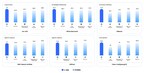
On GPQA Diamond, which measures knowledge and complex reasoning capability, U2 scored 87.9, outperforming GLM-5.1, Hy3 preview, DeepSeek-V4-Flash (High), and MiniMax M2.7, showing stable understanding, reasoning, and problem-solving capability on highly challenging knowledge questions.
On SWE-Bench Verified, which evaluates real-world software engineering capability, U2 scored 75, placing it among the top tier of mainstream models.
On Claw-Eval (pass@3), an end-to-end evaluation of autonomous Agent execution capability, U2 scored 76.9, outperforming Hy3 preview, DeepSeek-V4-Flash (High), and MiniMax M2.7. This further validates its stable performance in tool use, workflow orchestration, and task delivery.
On GDPval, which evaluates real-world office and knowledge-work delivery capability, U2 scored 72.9, demonstrating solid professional office productivity. Compared with traditional question-answering benchmarks, GDPval focuses more on whether a model can complete high-value deliverables in real work scenarios, including document analysis, report writing, spreadsheet processing, chart generation, slide creation, and other typical office tasks.
Together, these results send an important signal: U2 does not win through a single isolated capability. Instead, it delivers systematic performance across reasoning, coding, Agent execution, and office delivery.
Hybrid Thinking + Harness joint training: bringing native model capabilities into real workflows
For Unisound, U2 is not merely a model codename. It represents our renewed thinking about the value of large models in the AI 2.0 era. We believe that today’s large models should no longer be evaluated only by parameter scale or content generation length. When AI truly enters real workflows, users care not only whether a model can produce an impressive answer, but whether it can actually complete the task.
Therefore, from the beginning of its design, U2 was not intended to be a general-purpose model limited to chat scenarios. It is a native agentic large model built for task execution.
To enable a model to truly complete tasks, larger parameters alone are not enough. Real workflows are often complex, dynamic, and long-chain. The model must quickly understand goals, decompose tasks, and search for solution paths, while also performing logical calibration, constraint checking, and result verification at critical points. Traditional explicit Chain-of-Thought (CoT) offers stronger interpretability, but often requires generating large volumes of intermediate reasoning text, resulting in higher Token consumption and inference latency. Fully relying on latent-space reasoning, while more efficient, may lead to logical drift in complex tasks and lacks sufficient controllability and verification capability.
To resolve this tension, U2 innovatively introduces a Hybrid Thinking mechanism. It does not choose between explicit CoT and implicit reasoning. Instead, within the same reasoning process, it dynamically switches thinking modes according to task stage, complexity, and uncertainty.
At the early stage of a task, U2 prioritizes efficient exploration in latent space, completing path search, task decomposition, candidate solution generation, and execution planning without decoding every intermediate thought into visible Tokens. When the task reaches critical judgment, complex constraint handling, or result convergence, the model switches to explicit reasoning, using a readable and verifiable reasoning process to complete logical calibration, process verification, and final decision-making.
Furthermore, U2 introduces Bounded Latent Rollout and Entropy-aware Switching, enabling the model to dynamically adjust its thinking mode based on uncertainty in the reasoning process. When implicit exploration remains stable, the model maintains efficient reasoning. When uncertainty rises and the reasoning path may diverge, it promptly returns to explicit Chain-of-Thought, using deterministic Tokens for precise derivation and result convergence.
This means U2 is not simply shortening the reasoning chain. It is reconstructing the division of labor in model thinking: high-cost stages such as open-ended exploration and path planning are internalized more into latent space, while logical verification, constraint calibration, and result convergence are left to explicit reasoning. As a result, U2 can reduce ineffective reasoning steps and redundant intermediate text while maintaining reliability and controllability in complex tasks, achieving “fewer Tokens, deeper thinking.”
On the knowledge foundation, U2 further applies high-knowledge-density data screening and purification to filter duplicated, low-quality, and hallucinated data, and to perform knowledge-point-level refinement and extraction. Combined with sparse knowledge encoding and a knowledge distillation architecture, U2 compresses redundant model parameters and solidifies high-value knowledge capabilities into a more efficient model structure.
At the task execution layer, U2 introduces an Agent-Harness collaborative training paradigm. We believe Harness should not simply be an external wrapper, but should co-evolve with model capabilities. Therefore, U2 incorporates the improvement of native Agent capability and the iterative optimization of Harness into the same training loop: on one hand, Harness continuously optimizes the task execution chain according to U2’s model characteristics; on the other hand, high-quality execution trajectories generated in real tasks feed back into the model, further strengthening its capabilities in task planning, tool use, process correction, and result acceptance.
Ultimately, this complete closed loop must be grounded in a pragmatic training system. We did not train U2 to merely memorize correct answers. Instead, through curriculum learning, process supervision, trajectory comparison, and multidimensional rewards, we teach it how to plan, execute, correct errors, and validate results in complex tasks. With Agent-Harness co-evolution, U2 can continuously strengthen long-chain execution capability in real task trajectories, truly moving from “able to chat” to “able to complete tasks.”
Three core capabilities supporting a closed loop of task delivery
Around real task delivery, U2 focuses on strengthening three core capabilities: Reasoning, Coding, and Agent.
In Reasoning, U2 emphasizes low-deviation execution and long-horizon logical stability. When facing complex, multi-step tasks, the model must not only answer local questions, but also maintain goal consistency over time, dynamically balance budget, time, constraints, and feasible paths, and ultimately produce a better solution.
In Coding, U2 is no longer limited to code generation. It is oriented toward end-to-end engineering delivery. It can generate code from natural-language requirements, understand multi-file project structures, maintain consistency across interfaces, dependencies, and invocation logic, and continuously advance task completion through environment debugging and autonomous debugging.
In Agent capability, U2 focuses on improving multi-tool collaboration, long-process orchestration, and environment interaction. When facing open-ended goals, it can decompose task priorities, understand the capability boundaries of APIs, combine calls across different tools, and adjust execution strategies based on feedback from external systems.
Together, these three capabilities form U2’s closed loop of task delivery: first understanding and planning, then execution and collaboration, and finally verification and delivery. This is why U2 is better suited to being tested in real work scenarios, rather than remaining at the level of single-turn dialogue or isolated capability demos.
Application scenario: from a single answer to task completion
U2 has autonomous task execution capability from requirement understanding to complete deliverable generation, and can be widely applied to the following four typical scenarios:
1. Full-spectrum interface design
Responsive web development: Generate multi-page websites with production-grade layouts, real navigation flows, and complete interaction states based on design requirements, with one-click packaging and deployment support.
Mobile Web App: Build native-like social applications, including Feed streams, Stories, posting entrances, notifications, personal profiles, image grids, and bottom navigation, with all resources localized.
Design system implementation: Automatically constrain colors, fonts, spacing, and other style systems while adapting to both PC and mobile interfaces, enabling end-to-end output from visual design to code.
2. Deep research and analysis
Industry and policy research: Retrieve and clean multi-source data across platforms, then output structured research reports in formats including Word, PPT, and HTML deep-dive webpages with dynamic interactive charts.
Data visualization analysis: Automatically generate interactive charts such as timelines, trend curves, and heatmaps to support expert-level analysis and presentation.
Multi-format compliant delivery: Support one-click export of documents that meet formatting requirements, serving different scenarios such as internal sharing and external reporting.
3. Immersive interactive game development
Classic casual games: Independently complete the closed loop of algorithm design, code writing, and debugging, delivering playable and interactive HTML5 games such as Tetris.
Physics simulators: Build simulators for multi-pendulum chaotic systems, particle motion, and other scenarios based on real physics formulas, supporting parameter adjustment and real-time trajectory rendering.
4. Efficient office automation
Business report analysis: Capture core metrics such as sales, costs, and inventory across systems, then automatically generate visual dashboards and Word reports with trend charts and anomaly annotations.
Industry landscape analysis: Aggregate data on market structure, technology routes, and policy drivers, then output interactive competitive matrices and presentation-ready PPTs.
Periodic business reviews: Fully autonomously orchestrate data cleaning, cross-validation, and report generation workflows, automating core business review processes for organizations.
For Unisound, the release of U2 is not just a routine model upgrade. It is a critical move in our long-term journey toward native agentic large models.
From benchmark results to closed-loop delivery in real scenarios, we aim to use higher intelligence density and higher Token value to turn every call into tangible productivity.
U2 is now officially available on Unisound Token Hub, open to individuals, developers, and organizations.
Experience it here: https://maas.unisound.com/models/u2
You may like
Technology
Expanding its partnership with non-profits, EZVIZ upgrades its Green Initiative to make a true impact on harmony between humans and nature with a week-long advocacy campaign
Published
25 minutes agoon
June 8, 2026By
HOOFDDORP, Netherlands, June 8, 2026 /PRNewswire/ — EZVIZ, a world-leading smart home brand, announced to enter a new chapter of its EZVIZ Green Initiative by expanding environmental protection with two multi-year projects. Under the theme “Clean. Conserve. Coexist.”, the brand is launching a green advocacy week across the World Environment Day and World Oceans Day to engage partners and users in larger joint actions. By combining calls for climate resilience and ocean protection, EZVIZ responds to environmental issues with a larger proposition of sustainable coexistence between humans and nature.
“In the new phase, EZVIZ Green eyes on ecological vitality that benefits both people and other creatures,” said Joanne Cao, EZVIZ Board Secretary and Director of the ESG Committee. Highlighting its year-long projects with Treedom, a world-leading tree planting platform, and Plastic Bank, a global pioneer in ocean protection, EZVIZ tries to involve local communities more deeply to balance environmental protection with economic value. This aligns with the United Nations’ appeal to repair the relationship between humans and the planet. By building a positive cycle where people can gain from a vital ecosystem, it helps shape sustainability that endures over time, fulfilling its role as the participant in the UNGC and contributing to the SDGs.
“Like humans, all creatures are stakeholders of this planet,” said Cao. “With our Green Initiative, we aim to help create healthy ecosystems where nature and people complement each other.”
The EZVIZ Green upgrade drives change from land to sea through partnerships with Treedom and Plastic Bank. With Treedom, EZVIZ supports local farmers in planting trees, integrating agriculture with forestry across 11 countries. Estimated to reduce more than 738.2 tons of CO₂ in the next decade at the current scale, the growing global forest is expected to exceed 6,000 trees by 2027, further improving food security and economic development. In the new collaborative year, forest cover will extend to more regions across Southeast Asia, South America, and Africa, focusing on vital ecological areas like Ecuador to offset climate change.
Through Plastic Bank, EZVIZ helps combat plastic pollution by engaging collectors worldwide to gather bottles for additional income. To date, it has enabled the recycling of 1,000,000 bottles, prevented 20,000 kg of plastic from polluting water, and empowered collectors from 29 communities with exchanged social benefits. This year, EZVIZ concentrates on Southeast Asia, home to one of the world’s longest coastal archipelagos, to implement more careful and systematic plastic recycling, creating leverage to boost marine biodiversity and economic stability.
As part of the Initiative, EZVIZ also synergizes external cooperation with internal practices to amplify its impact. It strives for green innovation and launched the 4G battery camera family this year, which minimizes energy consumption without compromising safety. Innovation is in high gear to enhance wild animal detection, offering greater protection for both users and wildlife in remote areas.
View original content to download multimedia:https://www.prnewswire.com/apac/news-releases/expanding-its-partnership-with-non-profits-ezviz-upgrades-its-green-initiative-to-make-a-true-impact-on-harmony-between-humans-and-nature-with-a-week-long-advocacy-campaign-302793323.html
SOURCE EZVIZ
Technology
A Banner Year for Banks–and the Moment to Shift Gears on Growth, AI, and Innovation
Published
25 minutes agoon
June 8, 2026By
BCG report finds that financial institutions delivered record shareholder returns in 2025; and for the first time in years, more than 80% of global bank equity is trading above book valueHowever, financial institutions still rank very low in price-to-earnings multiples. Closing that gap and sustaining value creation will require the industry to revise its approach. Acting from a position of strength, institutions have earned the right to invest boldly in AI, growth, and active portfolio reshapingFinancial institutions plan to invest 2% of revenue in AI this year. When placed at the center of strategy and deployed at scale, such investment yields significant productivity uplift across banking domainsAlthough the threat to disintermediate banks’ customer relationships that AI agents pose has never been stronger, banks have a window to respond with their own agentic propositions to engage customers, leveraging the trust they have earned over decadesFinancial institutions have stronger M&A momentum than any other sector globally. Conditions for portfolio reshaping are the most favorable in over a decadeThe best opportunities for innovation lie at the intersection of three structural forces: AI, nonbank financial institutions, and digital assets
BOSTON, June 8, 2026 /PRNewswire/ — Financial institutions had a banner year in 2025, outperforming every other industry including information technology. In addition, a majority of global bank equity now trades above book value. This recovery is genuine and durable, built on improved profitability, disciplined cost management, and strengthened balance sheets.
Having earned the right to act decisively from a position of strength, institutions now have the opportunity to deal with a persistent issue: price-to-earnings multiples have remained largely unchanged. Sustaining strong returns will require improving multiples, building on outsized growth, and developing a business model that is less reliant on the balance sheet—not merely defending existing profitability.
These are among the findings of Time to Shift Gears? Financial Institutions Have Earned the Right to Be Bolder on Productivity, Growth, and Innovation, a new report from Boston Consulting Group (BCG) released today. Drawing on BCG’s proprietary analysis of 1,498 financial institutions globally, the report examines how the sector can build on its strongest performance since the global financial crisis to create durable long-term value.
For the first time in many years, 80% of global bank equity (excluding China) trades above book value, giving institutions the mandate and the financial firepower to act boldly. The report warns, however, that if institutions default to returning capital through buybacks and dividends rather than reinvesting in scalable growth, they risk ceding ground to faster-moving competitors.
“Financial institutions have had an exceptional year, but the market is telling them something important: past performance is not enough,” said Saurabh Tripathi, global leader of the Financial Institutions practice at BCG and a coauthor of the report. “The P/E discount reflects genuine investor scepticism about whether banks can deliver sustained, compounding growth. Institutions that act now to redesign their operating models, redeploy capital into growth, and build AI into their strategic core have a real opportunity to close that gap. Those that don’t will find that it widens.”
The Productivity Paradox and How AI Is Breaking It
Despite years of significant technology investment, operating expenses relative to assets have shown only marginal improvement across most global banking markets, and financial industry headcount has grown at approximately 2% annually over the past three years. Digitization has layered technology onto existing processes rather than fundamentally reimagining them.
AI will change the rules of the game. New players have demonstrated outsized growth on the back of a truly scalable operating model. AI offers every institution the opportunity to get there. The report notes that winners are deploying AI at enterprise scale rather than running isolated AI pilots. Results across credit underwriting, wealth management, engineering, and operations are already material. Financial institutions plan to invest 2% of revenue in AI this year, with only the tech industry spending more. But targeting a genuine operating and business model redesign will be critical.
“The productivity problem in banking is structural, not cyclical, and incremental digitization has not solved it,” said Andreas Biffar, a managing director and partner at BCG and a coauthor of the report. “The institutions that are pulling ahead are rebuilding how they operate from the ground up, with AI at the center. The gains are already measurable, and the gap between leaders and laggards is widening faster than was anticipated one or two years ago.”
Bold Growth Requires a Clear View of Disruption
For institutions trading above book value, investing and targeting scalable growth is now the primary value lever. AI is expanding the addressable market in ways that were not previously economical, opening new opportunities in wealth management, lending, and other fee-based opportunities. At the same time, disciplined M&A, backed by the strongest conditions for portfolio reshaping in a decade, offers a complementary route to step-change value creation.
As the report warns, realizing these opportunities requires navigating a landscape that is shifting structurally. Nonbank financial institutions continue to strengthen their position across global revenue pools, digital assets are scaling rapidly toward mainstream financial infrastructure, and AI itself is compressing margins even as it enables growth. The institutions best situated to win are those that position themselves at the intersection of these forces, rather than simply defending against them.
Bold Ambition Demands Bold Execution
Capturing this opportunity demands more than strategy. It requires a fundamental redesign of how institutions are structured and run. The report’s final chapter sets out what such a redesign looks like in practice: concentrating investment on a small number of high-impact AI bets chosen with rigorous discipline, building five foundational enablers—technology, data, risk and compliance, operating model, and talent—at enterprise scale rather than piecemeal, and ensuring the CEO personally owns the transformation rather than merely sponsoring it. The contours of the intelligent financial institution are already visible in early movers. The window to build toward it is open now, but it will not stay open indefinitely.
Download the publication here:
https://www.bcg.com/publications/2026/future-of-finance-2026-time-to-shift-gears
Media contact:
Bruce Wraight
wraight.bruce@bcg.com
About Boston Consulting Group
Boston Consulting Group bridges the gap between ambition and outcomes for the world’s leading companies and organizations. We are built for this era of unprecedented change — bringing strategic clarity rooted in over 60 years of deep domain knowledge, combined with applied AI shaped by our practitioners. BCG works shoulder-to-shoulder with CEOs across industries and geographies to deliver transformative impact at scale: stronger returns, transferred capabilities, and change that sticks. For more information, visit bcg.com.
View original content to download multimedia:https://www.prnewswire.com/news-releases/a-banner-year-for-banksand-the-moment-to-shift-gears-on-growth-ai-and-innovation-302793381.html
SOURCE Boston Consulting Group (BCG)
Technology
Winning firms will focus on what they can control, weather the rest, as triple-shock brakes private equity’s latest revival –Bain & Company 2026 Midyear PE report
Published
25 minutes agoon
June 8, 2026By
Trifecta of early-year shocks puts brakes on global PE’s latest revival for a second consecutive year as ‘Groundhog Day’ dynamic hits dealmaking again
Winning firms need to lean into value creation, AI adoption, disciplined bets, talent and operational execution as PE confronts a more challenging era
MSCI data shows ‘SaaSpocalypse’ hit private software valuations less than listed SaaS players – even as investors refocus on more AI-proof sectors; separate MSCI analysis shows over 75% of assets still exit at valuations above next-to-last marks, maintaining historical pattern
Ontra’s NDA-based leading indicator for PE deal activity points to deal flow remaining roughly flat through July 2026: stable, but far from a broad-based recovery
BOSTON and LONDON, June 8, 2026 /PRNewswire/ — The global private equity recovery that was gathering momentum at the start of this year has stalled once again, as three rapid-fire market shocks dampened dealmaking, fundraising, and exit activity in the first half of the year, Bain & Company concludes in its 2026 Private Equity Midyear Report, released today.
But as the PE industry grapples with the latest market disruptions, Bain urges that winning PE players should focus on what they can control, while weathering other challenges. The best placed firms will lean into value creation plans, including proactively harnessing AI, and focus scarce resources on disciplined bets to create a true ‘right to win’, Bain advises.
Today’s report charts an 18-month-long ‘Groundhog Day’ dynamic in global PE. A year ago, early optimism was dashed by tariff turmoil. This year, the buyout market had largely shaken off those concerns, with dealmaking back on the rise, only for that revival to be derailed once again. This time, the setback was triggered by abrupt jolts, in quick succession, from an AI-driven rout in software valuations, redemption stress in private credit, and the energy price spike triggered by the Iran conflict.
Bain’s analysis finds that, by midyear, the reversal in PE market conditions sparked by these shocks has been sharp and wide-ranging: bid-ask spreads have widened, investment committees have pulled back, and recovering exit momentum has again run out of steam. Select PE transactions do continue to clear at high prices, but these deals are mostly those involving top-tier assets, Bain reports.
Yet despite these headwinds, Bain’s analysis also emphasizes a backdrop for PE dealmakers where there is nothing fundamentally broken in financial markets. Pumped-up public equities continue to defy gravity, the global economy remains in expansion mode, debt markets are open, and there is abundant dry powder to fund deals.
With intensifying pressure on PE general partners (GPs) to buy and sell companies, Bain concludes that it would not take much to unlock a wave of new dealmaking in the second half of 2026, but cautions that a truly sustained PE upturn will depend on the market finding a more fundamental equilibrium lasting more than a quarter or two.
“There’s no question the fog will lift eventually – it always does. The firms best positioning themselves to lead out of the present slump are giving intense attention to what they can control now, not what they can’t,” said Hugh MacArthur, chairman of the global PE practice at Bain & Company. “Private equity has entered a much more difficult and competitive era. Generating consistent outperformance will require an ever-sharper strategic focus and, crucially, the disciplined value creation system to back it up.”
Bain’s analysis sets out a clear prescription for PE’s demanding new era under which leading firms can shape a differentiated right to win, building repeatable models for underwriting deals and operational value creation. With hold periods for PE portfolios lengthening, firm resources constrained, and persistent market disruption, Bain also cautions that for PE players the premium on specialization, operational capability, talent, and disciplined execution to set the conditions for success has never been higher.
“The hard work done in market downturns to develop competitive capabilities is often what determines who leads in the next cycle,” said Rebecca Burack, head of the global Private Equity practice at Bain & Company. “The uncertainty that’s slowing down dealmaking will resolve eventually. The critical opportunity right now is to determine where you can win, and to dig in to make it happen.”
Dislocations leave green and red zones for dealmakers as technology valuations slump
Amid 2026’s ‘Groundhog Day’ dynamic of market revival followed by renewed retreat, Bain’s analysis of the first-half’s dislocations finds a general slowdown in investment and buyout activity, but with an uneven trend across sectors. With the PE industry’s overhang of dry powder, GPs are being forced to hunt for deals where they can find them, across ‘green zones’ where greater conviction exists, and ‘red zones’ for sectors suffering the greatest uncertainty.
The technology sector falls somewhere in between these green and red zones, Bain concludes. As anxieties over AI’s impact clouded valuations for the tech industry, and particularly the software sector, tech deal value slumped by 70% from Q4 2025 to Q1 2026, as fewer large software transactions cleared, the analysis notes.
Proprietary data shows ‘SaaSpocalypse’ hit private software valuations less, even as investors refocus on more ‘AI-proof’ sectors
Bain’s report also provides the first concrete view of how that AI-fueled uncertainty and so-called ‘SaaSpocalypse’ in software have translated into private company valuations in software and tech, via a proprietary MSCI analysis of Q1 buyout marks. Through March 31, software valuations in PE portfolios declined by roughly 8% overall. This was far less than the corresponding public market correction affecting the sector, but still meaningful. The decline was also notably more muted in Europe, where software marks fell 4.2%, versus 8.9% in the US.
As tech-focused GPs adjust to the new realities of an AI-inflected world, Bain’s analysis warns that uncertainty over tech and software companies’ valuations is likely to persist for buyers and sellers, as well as in other sectors significantly impacted by AI. In the meantime, Bain reports that PE firms are rotating capital and investment resources towards businesses perceived as less exposed to near-term AI disruption and macro volatility as PE firms seek deals that allow underwriting confidence.
Deal cost index shows record high, intensifying imperative for ‘new math’ on value creation and stronger earnings
Bain’s analysis also sets out a ‘deal cost index’ combining purchase multiples and financing costs that have been pushed up by interest rate levels. A record level for this index shows that PE deals are now arguably more expensive than at any point in the industry’s history, Bain finds. It notes that while entry multiples have occasionally been higher in the past, and interest rates have been higher in some periods, the combined measure is near all-time highs.
The expensiveness of deals in turn magnifies the imperative for PE to generate operational value and earnings growth, the report observes. Bain’s ’12 is the new 5′ framework, introduced in its 2026 Global PE Report, captures the new math needed: a deal that required only 5% annual EBITDA growth to generate a 2.5x return a decade ago now requires closer to around 10% to 12%.
NDA data points to stable short-term conditions but with signs of a broad-based upturn still to be seen
Considering the outlook for PE for the rest of 2026, Bain examines a leading indicator of likely prospects, using early signal data from Ontra, an AI workflow platform for private markets that processes a significant volume of the industry’s non-disclosure agreements (NDAs).
Historically, there has been a strong correlation between NDA activity and deal closings roughly three months later. Bain reports that the latest Ontra NDA data points to PE deal activity remaining roughly flat through July 2026, signaling stable conditions but with signs of a broad-based recovery still to emerge.
Exit logjam and liquidity crunch persist but MSCI data shows valuation marks still hold at realization
Alongside investments, PE exit activity also remains stalled, with Bain reporting little signs of progress towards easing the industry’s exit logjam or the resulting liquidity crunch that has slowed the PE capital cycle for years, despite optimism on this at the end of last year.
The industry is coming off a four-year stretch of record-low distributions as a percentage of net asset value (NAV), with the implied capital cycle and holding periods for PE assets now running to approximately seven years – well beyond historical norms. In parallel, PE firms are sitting on around 33,000 unsold portfolio companies.
Growing tension around valuations reflects a self-reinforcing dynamic in the GP-LP model, Bain suggests. A recent poll by the Institutional Limited Partners Association (ILPA) found a majority of LPs losing confidence in any GP when the discount to last mark for assets exceeds 5% on a full exit. Bain’s analysis finds that this is creating a powerful incentive for GPs to hold on to portfolio companies and wait for them to “grow into” marks, rather than risk a markdown that could prove fatal to fundraising. Yet the longer assets sit, the more LPs question whether stated valuations reflect intrinsic value.
Despite these tensions, today’s report cites a second proprietary MSCI analysis that offers the more reassuring data point that roughly 75% of buyout assets are still exiting above their next-to-last quarterly mark – the GP valuation preceding the final mark before sale, and a cleaner measure of valuation accuracy before significant price discovery occurs during an active sale process. This is broadly consistent with historical patterns, suggesting that in spite of growing skepticism about private market valuations, the premium that buyers have historically paid above marks on exit has not disappeared.
Fundraising remains a grind as LP patience sees its limits tested
With exits continuing to drag and the impact on PE’s liquidity and capital cycle preventing the return of capital to LPs, fundraising by GPs also remains mired in the doldrums, Bain reports. It notes that fundraising is the last part of the capital flywheel to recover during PE upturns, with current conditions proving this again.
Overall momentum in fundraising remains uninspiring despite several headline fund closings so far in 2026, including KKR’s North America Fund XIV and Bain Capital’s Asia Fund VI, Bain says. It concludes that this reflects a bifurcated market in which funds with strong distributions to LPs in relation to paid-in capital (DPI) and internal rates of return (IRR), can still hit targets quickly, but where the broader picture remains difficult.
In what Bain suggests may be an early warning sign for GPs, a recent ILPA poll found that while a large majority of LPs are maintaining or increasing their buyout allocations, roughly one in five indicated that they are reducing allocations to buyouts through the strategic asset allocation process, due to liquidity pressures or concerns about long-term returns. With negotiating leverage continuing to shift in the LPs’ favor, winning a fresh funding commitment now comes at an increasing cost in terms of fees or co-investment for the average GP, Bain cautions
Controlling the controllable: four imperatives for winning firms
Bain’s report identifies four principles defining the firms best positioned to lead out of the current slump:
Apply the new deal math: With purchase multiples and financing costs simultaneously at record highs, maintaining past performance requires a dramatically increased focus on value creation—and the specialized capabilities to execute it rapidly.Lean hard into AI as an accelerator: AI is rapidly becoming one of private equity’s most important value creation levers. Inaction has become a strategic choice, not a neutral decision. The companies seeing the greatest impact are redesigning workflows, strengthening data foundations, and scaling use cases that change the economics of the business.Don’t get caught in the middle: The holding period’s middle phase is where value creation is most often lost. With duration risk to be managed aggressively, sponsors must take a disciplined approach to refreshing value creation plans—while also resetting management incentives and talent where needed.Focus resources on the winners: Portfolio resources are limited while active portfolio company counts have roughly doubled over the last decade. There is more value in turning a 3x deal into a 5x than a 1x into a 1.5x. The biggest overall return often comes from making winners even better, not spreading resources evenly.
Media contacts
Dan Pinkney (Boston) — Email: dan.pinkney@bain.com
Gary Duncan (London) — Email: gary.duncan@bain.com
Ann Lee (Singapore) — Email: ann.lee@bain.com
About Bain & Company
Bain & Company works with leaders worldwide to solve their toughest challenges and deliver enduring results. Since 1973, we’ve partnered with clients, including private equity and portfolio companies, to build the capabilities they need to stay ahead of change and help them redefine their industries. We measure our success by our clients’ success, and we proudly hold the highest levels of client advocacy in our field.
Bain is consistently recognized globally as one of the best places to work. We operate as one global team, uniting strategists, industry and functional experts, technologists, and advisors with a vibrant ecosystem of technology partners.
Notes to Editors
Bain & Company was founded in 1973 and today has 19,000 employees across 67 cities in 40 countries. We have worked with more than two-thirds of the Global 500 and more than 9,000 companies worldwide. Bain has pledged to deliver $2 billion in pro bono consulting to nonprofit, public-sector and charitable organizations by 2035. The firm is consistently recognized as a Leader in major analyst rankings across multiple areas, including digital business, innovation, strategy, experience design, customer experience, and carbon-zero transformation.
View original content to download multimedia:https://www.prnewswire.com/news-releases/winning-firms-will-focus-on-what-they-can-control-weather-the-rest-as-triple-shock-brakes-private-equitys-latest-revival-bain–company-2026-midyear-pe-report-302793107.html
SOURCE Bain & Company
Expanding its partnership with non-profits, EZVIZ upgrades its Green Initiative to make a true impact on harmony between humans and nature with a week-long advocacy campaign
A Banner Year for Banks–and the Moment to Shift Gears on Growth, AI, and Innovation
Winning firms will focus on what they can control, weather the rest, as triple-shock brakes private equity’s latest revival –Bain & Company 2026 Midyear PE report
Send Rakhi to UK swiftly with UK Gifts Portal
Whiteboard Series with NEAR | Ep: 45 Joel Thorstensson from ceramic.network
New Gooseneck Omni Antennas Offer Enhanced Signals in a Durable Package
Why You Should Build on #NEAR – Co-founder Illia Polosukhin at CV Labs
Whiteboard Series with NEAR | Ep: 45 Joel Thorstensson from ceramic.network
NEAR End of Year Town Hall 2021: The Open Web World, MetaBUILD 2 Hackathon and 2021 recap
Trending
-
Near Videos5 days agoPrivate AI Shouldn’t Require Trust
-
Coin Market5 days agoModern robots impress, but are years away from replacing humans
-
Coin Market5 days agoUS Treasury issues sanctions on Iran, targets 4 crypto exchanges
-
Technology5 days agoAmazon Claims No. 1 Spot on the Fortune 500
-
Coin Market5 days agoMastercard expands support to USDC, PYUSD, RLUSD stablecoin settlement
-
Technology4 days agoARTAN Bio Raises $200,000 in Decentralized Funding to Advance Longevity Science Through Mutation-Specific Codon Suppression
-
Coin Market5 days agoCrypto turns ‘contrarian bet’ as AI stocks draw investor attention: Bitwise
-
Coin Market5 days agoBitcoin’s crash to $65K triggers $1.8B in crypto liquidations