DMCC Future of Trade 2026 report finds global trade will be shaped by AI, tariff shock, critical minerals and clean tech competition More than 80% of global trade leaders expect slow trade growth with ongoing disruption, while only 4% expect best-case scenarioAI-related goods made up 43% of global merchandise trade growth in first half of 2025, growing five times faster than non-AI goodsNearly one fifth of goods imports impacted by tariffs or similar measuresSouth-South trade accounts for around 35% of global trade, outpacing North-North flowsFuture of Trade 2026 launches in London before follow up events in Dubai and SingaporeFull report can be accessed and downloaded here: www.futureoftrade.com
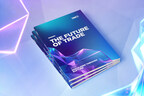
DUBAI, UAE, June 10, 2026 /PRNewswire/ — DMCC, the leading international business district that drives the flow of global trade through Dubai, today launched its Future of Trade 2026 report that finds that global trade will remain resilient over the next two years but fundamentally reshaped by artificial intelligence, structural tariff volatility, supply chains designed for resilience, and a contest for industrial advantage in critical minerals and infrastructure powering global clean energy and technologies.
To view the Multimedia News Release, please click:
https://www.multivu.com/dmcc/9402751-en-ai-tariffs-critical-minerals-competition-reshape-global-commerce-dmcc-trade-report
The report, Future of Trade 2026: Rebuilding Through Rupture, comes as businesses confront a sharp deterioration in the predictability of the global trade landscape. Nearly 20% of global merchandise imports are now subject to tariffs or similar restrictions, up from 12.6% a year earlier, while more than four in five business leaders surveyed by DMCC expect slow growth, continued supply chain disruption and prolonged geopolitical volatility in the coming years. Almost 12% expect a worst-case scenario driven by escalating conflict, tariffs, sanctions and financial fragmentation. Only 4% expect a best-case outcome.
At the same time, AI is rapidly emerging as the dominant driver of trade growth. Trade in AI-related goods, including semiconductors, servers and data-centre hardware, expanded by more than 20% in the first half of 2025, compared with less than 4% growth for non-AI goods. Although AI-related goods account for only 15% of global trade by volume, they generated 43% of total trade growth during the period, according to the report.
The report forecasts merchandise exports to slow to 1.9% in 2026, down from 4.6% in 2025, before marginally recovering to 2.6% in 2027. Services exports are forecast to continue outpacing goods.
Ahmed Bin Sulayem, Executive Chairman and Chief Executive Officer, DMCC, said: “AI-related goods accounted for 43% of global trade growth in the first half of 2025, despite representing just 15% of global trade by volume. This underscores where global trade is heading. We are entering a new phase in which competitiveness will be defined not only by cost or geography, but by technology, connectivity, energy access, and the ability to adapt quickly to disruption. In a more complex and fragmented environment, the role of globally connected hubs becomes even more important.
“Dubai has positioned itself at the centre of these shifts by remaining open, agile, and deeply connected to global markets. With almost 27,000 companies in our district, DMCC sees these changes unfolding in real time across commodities, technology, finance, and trade. The businesses and economies that will lead over the next decade are those building resilience, investing in technology, and creating stronger connections across global markets.”
Feryal Ahmadi, Deputy CEO and Chief Operating Officer, DMCC, said: “The trade environment is becoming more complex, but also more connected. AI is already improving efficiency across customs, logistics, compliance and trade finance, and we are now moving towards practical, operational deployment. Stablecoins, tokenisation and wholesale central bank digital currencies are beginning to support faster and more flexible settlement in certain corridors. Data regulation, cybersecurity and digital governance are becoming increasingly important considerations for businesses operating internationally.
“In this environment, trade hubs like DMCC have an important role to play in anticipating the needs of global businesses and ensuring they can continue to operate, grow and adapt through periods of disruption and change. The companies that will perform best are those investing in technology, building operational resilience and remaining agile as global trade continues to evolve.”
The Future of Trade 2026 is the sixth and tenth-anniversary edition of DMCC’s biennial flagship report on the changing nature of global trade. It draws on 12 roundtables with over 200 senior leaders, policymakers and trade experts across key global trade centres, alongside a survey of more than 130 leading businesses and trade practitioners.
Four Forces Shaping the Future of Trade
The report identifies four structural forces reshaping global commerce: AI moving from experimentation to operational deployment; the breakdown of a stable tariff framework; the shift from efficiency-led to resilience-led supply chains; and the energy transition becoming a contest for industrial and geopolitical advantage.
The Growing AI Divide
One of the report’s most consequential findings is the widening gap between businesses treating AI as a strategic priority and those still running pilots. Fewer than 15% of firms surveyed describe their AI deployment as fully integrated; more than a quarter report no meaningful adoption at all. With agentic AI systems beginning to take on complex logistics, compliance and trade finance decisions, the report warns that this gap will harden into a structural competitive divide. Meanwhile, AI-related goods such as semiconductors, servers and data centre hardware, expanded 20% in the first half of 2025, five times the rate of non-AI merchandise. The WTO estimates that sustained AI-related trade growth could add 0.5 percentage points to global export volumes.
The end of the tariff rulebook
The dismantling of rules-based trade has accelerated faster than most forecasters anticipated. The Trump administration’s tariff regime, though legally contested and partially struck down by the Supreme Court in February 2026, has been rapidly replaced by Section 122 and Section 301 instruments covering 90-95% of US imports. More than half of respondents now expect trade to become more regional and bloc-based. Only 17% anticipate a more multilateral outcome.
Supply chains built for resilience
The “China + 1” diversification model has been overtaken in many sectors by broader “China + many” strategies. U.S. imports from Vietnam rose 345% between 2014 and 2024; imports from India rose 94% and from Mexico 72% over the same period, while imports from China contracted 5%. The 2026 conflict with Iran which precipitated the closure of the Strait of Hormuz, through which 25% of global seaborne oil and 19% of LNG transits, has added urgency and sent Brent crude above $120 per barrel, reducing tanker transits by approximately 90% from pre-conflict levels. The report notes that 45% of businesses have already engaged in onshoring, nearshoring or friendshoring. Among DMCC’s own survey respondents, those describing their supply chains as more regionalised and resilience-driven nearly double those describing them as more globalised and efficiency-driven.
The energy transition as new industrial contest
Clean energy investment reached a record $2.3 trillion in 2025, outpacing fossil fuel investment by $102 billion. But the transition has become as much a competition for industrial advantage as an environmental imperative. China controls 94% of global sintered permanent magnet production, an input critical to EVs, wind turbines, AI data centres and defence systems, and leads refining for 19 of 20 strategic minerals tracked by the IEA. With average lead times of 16 years from mineral discovery to production, the report argues that supply diversification is a long-term solution to a near-term problem.
The next generation of finance
The global trade finance gap has held at $2.5 trillion, with SMEs and developing-economy exporters bearing a disproportionate share. The report identifies next-generation financial infrastructure as a potential partial remedy, with global stablecoin supply exceeding $300 billion in early 2026, B2B stablecoin payments growing 733% year-on-year in 2025, and the first cross-border CBDC transaction on the mBridge platform successfully processed in November 2025.
Rise of South-South trade
One of the report’s quieter but structurally significant findings is the continued rise of South-South trade and growing influence of middle powers. Flows between developing economies now account for approximately 35% of global trade, outpacing North-North flows, and accelerating. The IMF forecasts that by 2030, emerging and developing economies will account for around two-thirds of global growth. The report points to the UAE, India and Singapore as global “connectors” and examples of middle power economies capturing redirected trade and investment flows through infrastructure and diversified trade relationships.
DMCC’s Future of Trade 2026 report puts forward a series of key recommendations to businesses and governments to support trade resilience and growth:
Policy Recommendations for Businesses:
Build resilience as a continuous operating discipline. Map single-country, single-route and single-supplier dependencies; stress-test tariff, sanctions, shipping disruption and energy price scenarios; and maintain strategic inventories where continuity is critical.Scale AI in high-friction trade processes. Prioritise demand forecasting, customs, compliance, documentation, logistics routing, trade finance and risk assessment where measurable savings and productivity gains can be tracked.Treat data as a trade asset. Invest in clean, interoperable data systems and map exposure to data localisation and cross-border data rules before entering or expanding in key markets.Build optionality in payments and finance. Maintain traditional banking relationships while testing fintech, tokenised and digital settlement rails in corridors where speed, cost and liquidity advantages are clear.Secure critical inputs. Assess exposure to semiconductors, compute, energy, water and critical minerals, and build supplier diversification and long-term sourcing arrangements where supply concentration poses material risk.
Policy Recommendations for Governments:
Use trade agreements to set practical digital standards. Prioritise AI, data, e-commerce, paperless trade and digital identity provisions, rather than relying on tariff schedules alone.Accelerate paperless trade. Set clear timelines for electronic bills of lading, digital customs, e-invoicing and interoperable documentation, while funding SME adoption to avoid widening the digital divide.Expand trade finance access. Work with banks, development finance institutions and fintechs to lower due diligence costs, improve risk assessment and channel finance to SMEs and developing economy exporters.Build resilient trade corridors. Invest in ports, logistics, energy grids, data centres and customs systems that can absorb route disruption and support AI-enabled trade.Develop critical minerals and clean technology partnerships. Use long-term offtake agreements, recycling capacity, standards alignment and transparent supply chains to reduce chokepoints without fragmenting markets further.
Use long-term offtake agreements, recycling capacity, standards alignment and transparent supply chains to reduce chokepoints without fragmenting markets further.
Report launch
Ahmed Bin Sulayem, DMCC’s Executive Chairman and CEO, unveiled the report to a packed crowd at One Marylebone in London, UK. Following the London launch, DMCC will present the report to key business stakeholders in Dubai and Singapore.
The Future of Trade is DMCC’s biennial flagship research on the changing nature of global trade. The report examines the impact of global economic trends, geopolitics, technology, sustainability, trade finance and infrastructure on the future of the trade landscape, with recommendations for businesses and governments navigating a more fragmented and fast-moving global economy.
To read the full report by DMCC, please visit: www.futureoftrade.com
About DMCC
DMCC is a leading international business district that drives the flow of global trade through Dubai. We make it easier for our members to do business, helping them access the world’s fastest growing markets from a dynamic district that offers everything they need to thrive. This approach is why we are the preferred location for over 26,000 top multinationals and high-impact startups, contributing significantly to Dubai’s position as a global hub for trade and innovation. DMCC is where the world does business.
For more information, visit dmcc.ae.
View original content:https://www.prnewswire.com/apac/news-releases/four-in-five-business-leaders-expect-permanent-disruption-as-ai-tariffs-and-critical-minerals-competition-reshape-global-commerce-finds-dmcc-future-of-trade-report-302795889.html
SOURCE DMCC









 Technology5 days ago
 Technology5 days ago


 Technology3 days ago
 Technology5 days ago
 Technology4 days ago
 Coin Market4 days ago