Connect with us

Technology

Deep Tech Firm Makes the Oceans Transparent

Published

on

BMRT’s Generation 2 Platform Demonstrates Maritime, Underwater, and Long-Range Detection Capabilities Including a Previously Undisclosed 970-Mile U-235 Event

STUART, Fla., June 17, 2026 /PRNewswire/ — Base Molecular Resonance™ Technologies (“BMRT”) today announced a series of major advancements in maritime and long-range detection capabilities utilizing its proprietary Base Molecular Resonance™ (BMR™) technology platform, including unprecedented offshore and underwater detection results achieved with its Generation 2 platform following the successful completion of a separate U.S. government-sponsored field study.

The results mark the first operational deployment of BMRT’s Generation 2 (“Gen 2”) platform in a true maritime environment and further reinforce the company’s position at the intersection of advanced physics, national security, and resonance-based detection technologies.

“These results fundamentally alter how the world should think about shielding, distance, underwater concealment, and the movement of strategic materials,” said Robert “Bo” Short, Co-Founder and CEO of BMRT. “The oceans have historically served as a sanctuary for concealment, transport, and strategic ambiguity. With this technology those assumptions collapse.”

Unlike previous demonstrations, which emphasized long-range performance in land-based settings as well as controlled tethered aerial scenarios, the Generation 2 maritime testing initiative was specifically designed to assess precision detection capabilities within a maritime operating environment. Rather than pursuing maximum standoff distances, the effort focused on validating target discrimination, environmental stability, and detection precision from mobile maritime platform.

Maritime Detection Results — Generation 2 Platform
Operating from maritime vessels offshore, BMRT conducted a series of advanced detection exercises with the following results:

Standoff Detection — Maritime Platform
From a maritime platform positioned approximately 1,500 feet offshore, the Gen 2 system successfully detected ten individual nitrocellulose-based propellant targets located inside a vehicle on land.

Single-Target Detection — Maritime Platform
While operating from a maritime vessel, the system successfully detected a single trace quantity of nitrocellulose-based propellant positioned on a floating object at an approximate distance of 270 feet.

Multi-Target Detection — Extended Range
From a maritime platform, the system detected two discrete nitrocellulose-based propellant targets positioned on a floating object at approximately 450 feet, demonstrating enhanced range performance with increased target mass.

Subsurface Detection — Maritime Platform
In underwater trials, trace quantities of nitrocellulose-based propellant were submerged at depth to evaluate system performance through water. Despite the extremely low target mass, detection remained precise and stable, performing as though the water itself were effectively absent from the detection environment.

Previously undisclosed demonstrations utilizing BMRT’s Generation 1 platform had already revealed evidence suggesting that water may actually enhance certain resonance propagation behaviors associated with the company’s proprietary physics architecture.

Previously Undisclosed 970-Mile U-235 Detection Event
BMRT also publicly disclosed for the first time details surrounding a long-range detection event involving U-235.

During a demonstration attended by representatives from an elite U.S. Combatant Command, BMRT’s Generation 2 system reportedly detected U-235 from Stuart, Florida, across the Gulf of America to the South Texas Project Electric Generating Station near Bay City, Texas, a distance of approximately 970 miles.

Military representatives present during the demonstration independently recorded the system’s line-of-bearing data, plotted the vectors onto a map, and determined that the resulting detection path landed directly on top of the nuclear generating facility.

The result exceeded BMRT’s previously documented Generation 1 long-range performance by approximately 323 miles.

Until now, BMRT had not publicly discussed its Generation 1 U-235 and Pu-239 long-range detection capabilities. During validation work conducted by the Centre for Applied Innovation at York St John University in York, England, long-range exercises involving both U-235 and Pu-239 demonstrated the system’s ability not only to detect nuclear material signatures, but also to geospatially localize them with exceptional precision. Multiple independent observation points enabled triangulation of the source region, with the resulting convergence providing strong confirmation of the detected location at extended ranges.

BMRT stated that it is now releasing portions of this information due to the continued maturation of the technology, the successful evolution into its Generation 2 architecture, and the increasing strategic importance of transparent discussions surrounding nuclear detection, maritime security, counter-proliferation, and strategic deterrence.

“We are entering an era where the movement of strategic materials can no longer remain hidden by distance, shielding, terrain, or water,” said Lee Duke, BMRT‘s Co-Founder and President. “The implications for global security, maritime monitoring, counter-proliferation operations, and nuclear transparency are profound.”

BMRT indicated that it is currently developing the architecture for its Generation 3 (“Gen 3”) platform, which is expected to substantially extend both precision and standoff capabilities.

Strategic Implications
BMRT believes these advancements have implications far beyond conventional detection applications, including:

Maritime domain awarenessCounter-proliferation operationsUnderwater threat detectionPort and coastal securityStrategic border protectionDetection of shielded nuclear and radiological materialsCounter-smuggling operations involving weapons, narcotics, and explosivesMonitoring strategic material movement across land and maritime environments

The company further stated that ongoing testing increasingly suggests that resonance propagation characteristics through water may amplify certain aspects of the technology’s performance, a phenomenon BMRT believes could fundamentally reshape assumptions surrounding subsea concealment and maritime strategic mobility.

“As our technology continues to scale the way our testing and data suggests, the ability to monitor strategic nuclear traffic across maritime environments could become one of the most consequential national security advancements of this generation,” said Short.

For more information, visit www.BMRT.io

Investment Inquiries
Robert “Bo “Short
Co-Founder & CEO
bo@bmrt.io

Media Contact
Bryan Adams
Chief Marketing Officer
bryan@bmrt.io

About Base Molecular Resonance™ Technologies (BMRT)
BMRT has discovered a new area of quantum physics that utilizes resonant frequencies to detect particle interactions at subatomic levels. This technology, called Base Molecular Resonance™ (BMR™), can detect any compound or biological substance, including every element on the periodic table, and up to 200 cancers and other diseases. With over 20 years of prototyping and testing proving its unmatched detection capabilities, BMRT™ has the potential to save millions of lives by pinpointing weapons, explosives, and other physical threats both up close and at great distances and detecting cancers and other diseases long before they present clinical symptoms. The non-invasive, harmless, and instant scan has broad implications in Cancer Diagnostics, Public Safety, Law Enforcement, National Security, and Military Services. BMRT currently holds 20 patent assets and has received an independent $60.3 billion intellectual property valuation across 56 global use cases. To better understand how BMR™ technology works: Click Here

View original content to download multimedia:https://www.prnewswire.com/news-releases/deep-tech-firm-makes-the-oceans-transparent-302803063.html

SOURCE Base Molecular Resonance Technologies, LLC

Continue Reading

Technology

Cole Haan Completes Global SAP S/4HANA Transformation Across Three Regions in 18 Months with Applexus’ AI-Powered Delivery

Published

on

By

Three regions. One global cutover. A complex transformation accelerated by AI-powered delivery.

SEATTLE, Nov. 11, 2026 /CNW/ — Applexus Technologies, an AI-first SAP consulting firm, announced the successful go-live of Cole Haan on SAP S/4HANA for fashion and vertical business, completing a complex global transformation across three regions in just 18 months. The program integrated end-to-end business processes across planning, buying, supply chain, wholesale, retail, direct-to-consumer and finance in a single global cutover.

For global fashion and retail brands, the move from the legacy SAP Apparel and Footwear Solution (AFS) to SAP S/4HANA requires a migration strategy that delivers clear business value. Applexus is redefining what’s possible through an AI-enabled delivery model that addresses the speed, risk, cost and customer effort that have traditionally been barriers to S/4HANA modernization. This approach simplifies complexity, accelerates transformation and preserves the capabilities that make each business unique.

Cole Haan’s transformation spanned operations across North America, Europe and Asia, replacing a 20-year-old SAP AFS environment and a separate retail merchandising system. The transformation also included establishing a modern cloud-based enterprise data platform and AI foundation. The program demonstrated that a large-scale transformation can be achieved while maintaining business continuity with no disruption to wholesale shipments or store operations during the single global cutover.

At the center of this transformation was Applexus’ proprietary AI-powered selective migration platform, CeleRITE, which analyzed legacy code, interfaces, data, configurations and access controls to determine what to retain, modernize or retire. This approach reduced technical debt, preserved essential business functionality and established a cleaner, unified SAP S/4HANA foundation.

“Applexus has challenged the traditional approach to SAP transformation,” said Chris Couch, GM of SAP Solutions, Applexus Technologies. “Cole Haan demonstrates what is possible when deep industry expertise and AI-powered delivery come together. We were able to deliver a complex global transformation in just 18 months, creating a faster, lower-risk path to S/4HANA and a compelling business case for modernization.”

“Replacing a 20-year-old system across three regions in a single cutover was one of the biggest projects in Cole Haan’s history, and our teams in every region delivered it without disrupting our business or our customers,” said Tom Linko, CFO and Executive Vice President, Global Operations at Cole Haan. “We now have one global system supporting our wholesale, retail, and digital operations, giving us a simpler, more scalable way to support our growth and a foundation to put data and AI to work across the business. Applexus has been a valuable partner in helping us achieve this transformation.”

About Applexus Technologies

Applexus Technologies is a global intelligent enterprise partner specializing in SAP transformation, Business AI, Data & Analytics and Pricing. Combining deep industry expertise, proprietary AI-powered tools and an AI-enabled delivery model, Applexus helps enterprises navigate complex transformations and accelerate business outcomes.

Learn more at www.applexus.com.

About Cole Haan

Cole Haan is a global American lifestyle brand distributed in more than 100 countries worldwide. For nearly a century, Cole Haan has combined time-honored craft with modern innovation to create footwear and lifestyle accessories that bring style and comfort together in unexpected ways. Today, the brand continues to build on that legacy with a growing collection designed for modern life.

Learn more at colehaan.com and follow @colehaan.

View original content to download multimedia:https://www.prnewswire.com/news-releases/cole-haan-completes-global-sap-s4hana-transformation-across-three-regions-in-18-months-with-applexus-ai-powered-delivery-302935892.html

SOURCE Applexus Technologies Private Limited

Continue Reading

Technology

EBSCO Information Services Introduces Environment Source Ultimate to Support Full-Text Environmental Research

Published

on

By

~ New full-text database supports research in environmental studies, sustainability, and environmental science ~

IPSWICH, Mass., Nov. 11, 2026 /PRNewswire/ — EBSCO Information Services (EBSCO) announces the release of Environment Source Ultimate, a full-text research database supporting interdisciplinary study across environmental sciences. The database provides access to journals, magazines, professional publications, and e-books covering environmental research and sustainability.

Designed to support students, faculty, and researchers, Environment Source Ultimate features 1,147 active full-text journals and magazines, along with a companion collection of 100 EBSCOhost eBooks from leading publishers. This breadth of content provides interdisciplinary perspectives on environmental issues ranging from ecology and natural resource management to renewable energy and environmental health. Subjects covered include:

Agricultural EducationBotanyEcologyEnvironmental EducationEnvironmental HealthEnvironmental Management & ProtectionEnvironmental SciencesEnvironmental TechnologyForests and ForestryGeography & CartographyHydrologyMarine SciencesMeteorologyOceanographyRenewable Energy

EBSCO Director of Product Management for Research Databases, Kimberly Clarkson said the database reflects the interdisciplinary nature of environmental research. “Environmental research increasingly crosses traditional disciplinary boundaries, connecting areas such as science, energy, agriculture, health, and natural resource management. Environment Source Ultimate gives researchers access to a broad range of full-text content that can help them explore these connections and examine environmental questions from multiple perspectives.”

Learn more about Environment Source Ultimate, EBSCO’s full-text database for environmental science, sustainability, and related research.

About EBSCO Information Services
EBSCO Information Services (EBSCO) helps people find, access, and apply trusted information. Through its world-renowned EBSCOhost research databases, along with EBSCOhost AI Exchange, EBSCO delivers high-quality research content and advanced search & discovery technologies to more than 79,000 institutions across the library, education, healthcare, and corporate markets in 150+ countries. EBSCO is also the leading provider of journal and book subscription & acquisition management services, and a major provider of clinical decision-support solutions. For more information, visit the EBSCO website. Visit our blog at EBSCOpost or follow us on X, Facebook, LinkedIn and Instagram.

View original content to download multimedia:https://www.prnewswire.com/news-releases/ebsco-information-services-introduces-environment-source-ultimate-to-support-full-text-environmental-research-302936015.html

SOURCE EBSCO Information Services

Continue Reading

Technology

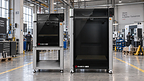
Raise3D Launches the T450 and T700, the Most Affordable Large-Format 3D Printers with an Actively Heated Chamber

Published

on

By

The T450 and T700 offer build volumes of 450 × 350 × 400 mm and 700 × 500 × 1,000 mm, starting at US$4,999 / €4,999 and US$15,999 / €15,999, with actively heated chambers and fiber-ready nozzles; both debut at Formnext 2026.

FRANKFURT, Germany, Nov. 11, 2026 /PRNewswire/ — Raise3D today introduced the T450 and T700, the most affordable large-format industrial 3D printers with an actively heated chamber, extending its T Series to build volumes of 450 × 350 × 400 mm and 700 × 500 × 1,000 mm. Both will be shown for the first time at Formnext 2026 in Frankfurt from November 17 to 20.

Raise3D also announced a 100 mm build-height increase for its RMS220 selective laser sintering (SLS) printer, enabled by a software update, and introduced the B520 automated sandblaster for polymer powder bed parts. Raise3D completed a US$15 million funding round in November 2026, supporting development across large-format FFF, SLS and DLP, hardware-software integration, application development, and expansion into new applications and markets.

What Makes the Best Large-Format 3D Printer for Production?

Two questions decide the machine: whether the part can be produced in one piece, and whether the printer can run long jobs in a factory environment while continuing to make parts that meet specification. Both put pressure on motion control across a large working area and on process stability over multi-day prints, which is what the T Series is built around.

T450 and T700: Build Volume and Specifications

Model

Build volume (W × D × H)

Build volume

Heated chamber

Standard nozzle

US price

Europe price

T450

450 × 350 × 400 mm

63 L

up to 70°C

0.4 mm

US$4,999

€4,999

T700

700 × 500 × 1,000 mm

350 L

up to 60°C

0.6 mm

US$15,999

€15,999

The T450 suits jigs and fixtures, casting patterns, large prototypes and production aids. The T700 suits large tooling, patterns and other large-format applications. Both use fused filament fabrication (FFF) and share one tech platform.

T450 and T700 Highlights

Big parts in one piece: build volumes of 450 × 350 × 400 mm and 700 × 500 × 1,000 mm, so suitable jigs, tooling and patterns do not have to be split, bonded and finished.Steady motion across a long span: a 4MD CoreXY system with four frame-mounted motors, designed to reduce vibration, surface ringing and the risk of layer shifts.High-flow extrusion: TwinFlow™ feeds two filament paths into one nozzle, reaching up to 600 mm/s and 80 mm³/s under the reference test conditions[1], and switches to two materials for soluble supports or dual-color parts.Actively heated chamber: Air Flow Manager 2 adjusts the chamber by material, holding up to 70°C on the T450 and 60°C on the T700 for large ABS and nylon parts, and switching to directed cooling with an automatic top vent for lower-temperature materials such as PLA.Fiber-ready hot end: a 420°C nozzle and 120°C build plate, with a copper-chromium-zirconium base and solid silicon carbide tip for compounds such as PET CF, PPA CF and PPS CF.Built for long runs: camera monitoring, spaghetti, flow and run-out detection, power-loss recovery and an emergency stop, with RFID material identification, mesh leveling and ideaMaker support.

CEO Edward Feng said:

“Larger build areas open up applications that were previously limited by size. A scoliosis brace is one of them. It has to be printed in one piece, because a brace that is split into sections and bonded back together does not have the strength a brace needs to hold the spine. Adolescent idiopathic scoliosis affects around 1 to 3 percent of teenagers, and a build area that is too small only covers a child’s torso. On the T450, an adolescent brace fits inside the 450 × 350 mm build area with room to spare, so it comes off the machine as a single part. The same reasoning applies to tooling, patterns and production aids.”

Application Example: Battery Cell Transport Trays

Power-battery manufacturing puts that constraint at a different scale. Jigs and fixtures must suit different products and production lines, and conventional machining can involve long lead times and design constraints, particularly for high-mix, low-volume requirements.

For cell-transport trays, Raise3D used the T450 and T700, alongside material, structural design and process optimization. Production time fell from about 40 days to 10 days, and tray weight from about 8 kg to 2 kg, reductions of approximately 75% in both. The gain came from the combination of build area, extrusion throughput and material choice, which is the combination the T Series is built around.

From FFF to SLS: RMS220 Adds 100 mm of Build Height

Work with production customers has shown that the limit on part size is not specific to FFF. The same pressure appears in selective laser sintering (SLS), where build height decides how tall a part can be and how many parts fit in one build.

Raise3D’s RMS220 SLS printer now offers a build volume of 220 × 220 × 450 mm (approximately 21.8 L), up from 220 × 220 × 350 mm (17 L). The additional 100 mm of Z height increases build height and build volume by approximately 30%, and is enabled through a software update on existing machines, without a hardware change.

The taller build space allows suitable components that previously exceeded the 350 mm height to be produced in a single build and provides more room for nesting.

B520: Automated Sandblasting for Powder Bed Parts

The same customer conversations surfaced a second constraint, one that comes after the print. Print services often run powder bed parts from more than one machine brand, and all of those parts need cleaning and surface treatment.

The B520 is an automated sandblaster for polymer powder bed parts. Its enclosed workstation combines automatic blasting, air blow-off and ionization, and a manual mode allows operators to reach deep recesses and shielded areas. Suitable parts can be processed as a programmed batch. The independent system supports the RMS220 as well as third-party SLS, MJF, SAF and HSS equipment, and its standard and large baskets have internal volumes of 24.8 L and 75.5 L, respectively.

The RMS220 update widens what can be built in one cycle; the B520 addresses what happens to those parts afterwards.

Availability and Pricing

The T450 is priced at US$4,999 in the United States and €4,999 in Europe; the T700 at US$15,999 and €15,999. Prices for the two industrial 3D printers exclude configuration, tax, shipping and service terms, which are set in the regional quotation. Deliveries of the T450 begin by the end of December 2026, with the T700 expected by the end of January 2027. Buy T450/ T700 now.

Join Raise3D at Formnext 2026

Both printers will be at Formnext 2026 in Frankfurt from November 17 to 20, in Hall 12.1, Stand D21.

[1] The reference test conditions for TwinFlow™’s maximum volumetric flow of 80 mm³/s: Raise3D Hyper Speed ABS V2 filament, 250°C nozzle temperature and a 0.4 mm nozzle, printing a single-wall smooth structure. Actual performance depends on material, nozzle, layer height, model and print settings.

About Raise3D

Raise3D develops 3D printers, materials, software and additive manufacturing solutions for professional and industrial applications. With offices in the United States, Europe and Asia, the company has built an ecosystem integrating FFF, DLP and SLS technologies to support workflows from prototyping to end-product production. Its quality and environmental management systems are certified to ISO 9001:2015 and ISO 14001, respectively. To Learn more, visit www.raise3d.com.

Watch the Raise3D T450 video.

Raise3D Media Kit

View original content to download multimedia:https://www.prnewswire.com/news-releases/raise3d-launches-the-t450-and-t700-the-most-affordable-large-format-3d-printers-with-an-actively-heated-chamber-302936187.html

SOURCE Raise3D

Continue Reading

Trending