Connect with us

Technology

“The Floor Runs on Us”: Vention Powers the Future of Software-Defined Automation at Automate 2026

Published

on

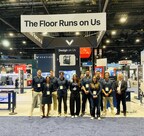
Under the theme “The Floor Runs on Us,” Vention showcases software-defined automation through integrated hardware, software, motion control, cloud connectivity, and Physical AI.Vention’s entire Automate 2026 booth (2848) runs on MachineMotion™ AI, powered by NVIDIA Jetson and NVIDIA Isaac, CUDA-accelerated libraries, and open models, including NVIDIA FoundationPose. Live demos across three locations feature collaborative and industrial robotics powered by FANUC and Universal Robots.Vention expands its collaboration with Universal Robots by introducing a co-branded, purpose-built environment where UR sales teams and their customers can design, configure, and quote UR automation cells end-to-end.Vention also expands its industrial automation capabilities with FANUC to deliver advanced control and streamlined deploymentNVIDIA-powered Rapid Operator AI demonstrations at both the Vention and Universal Robots booths showcase intelligent bin-picking with real-time perception and autonomous grasping.

CHICAGO, June 24, 2026 /PRNewswire/ – At Automate 2026, Vention showcases software-defined automation under the theme “The Floor Runs on Us,” demonstrating how its full-stack platform unifying hardware, software, AI, and robotics accelerates the shift to software-defined manufacturing.

At Booth #2848, Vention presents a fully connected automation ecosystem powered entirely by MachineMotion™ AI, its next-generation AI-enabled automation controller. From AI-driven robotics and industrial motion control to modular workstations and cloud-based software, the booth demonstrates how manufacturers can deploy and scale automation using a unified hardware-and-software platform.

Expanding the Partnership with Universal Robots

At Automate 2026, Universal Robots showcases Vention’s Rapid Operator AI deep bin-picking application using a UR12e cobot and a new digital twin creation platform for robotic work cells at Booth #1250.

Built on Vention’s MachineBuilder™ technology through a strategic collaboration with Teradyne Robotics, the platform accelerates the design and deployment of Universal Robots-based automation through pre-configured templates, simulation tools, and digital-first validation capabilities, while connecting partners to Vention’s exclusive automation marketplace of Universal Robots-vetted UR+ components, from end-of-arm tooling to 7th-axis systems, creating new opportunities to expand reach, accelerate adoption, and serve manufacturers at scale.

FANUC and Vention Advance Industrial Robotics

FANUC and Vention expand industrial robotics capabilities within MachineLogic™, Vention’s cloud-native programming environment. At Vention’s booth, a FANUC LR Mate showcases high-speed industrial tending programmed entirely in the cloud – with collision-free path planning driven by NVIDIA’s FoundationStereo AI model, enabling autonomous path computation and motion generation.

At the FANUC booth (#1001), visitors can experience a machine tending application featuring a FANUC CRX-10iA collaborative robot integrated with MachineMotion AI, highlighting simplified deployment and accelerated CNC automation.

Physical AI and the Future of Manufacturing

Vention’s Automate 2026 presence also highlights the growing role of Physical AI in manufacturing through live demonstrations of AI-driven robotic perception, adaptive motion, and autonomous decision-making.

A centerpiece of the booth is the “Send Us Your Parts” program, in which manufacturers can bring real production parts directly to Vention for evaluation with Rapid Operator AI, the company’s turnkey deep bin-picking solution for unstructured manufacturing environments. The initiative provides manufacturers with a practical way to evaluate AI-driven bin-picking in real-world production environments.

Unified Automation in Action

Visitors to the Vention booth can experience six live demonstrations built on the company’s integrated automation stack, including:

A Rapid Series Palletizer powered by a FANUC CRX-30 collaborative robotHigh-speed industrial tending with a FANUC LR Mate robot and AI-driven collision-free path planningRapid Operator AI, a deep bin-picking solution powered by the NVIDIA Isaac technologies open robot development platform, NVIDIA CUDA-accelerated libraries, open models, NVIDIA Jetson source reference framework and Vention’s GRIIP™ software using a UR12e cobotAn overhead 7th-axis range extender integrated with a UR20 cobot in a live welding applicationDaisy-chained motors and actuators controlled through MachineMotion AI’s cabinet-free architectureA modular workstation and factory infrastructure platform designed for rapid customization, deployment, and expansion across the shop floor

The booth also features demonstrations of Vention’s Manufacturing Automation Platform, bringing Design, Simulate, Deploy, and Operate workflows together in a single unified experience, showcasing the complete end-to-end automation journey on one software-defined automation platform.

Empowering the Developer Community

During Automate, Vention hosted a Developer Workshop on June 23. The event brought together more than 20 developers and automation professionals for hands-on sessions covering cloud-to-edge programming, MachineLogic workflows, No-code and Python-based automation, and software-defined Automation.

For more information, visit Vention.com.

Media Relations

Christine Boivin
Christine.boivin@vention.cc
+1.514.293.3423

About Vention

Vention is leading the future of industrial automation with the world’s only AI-powered full-stack platform, unifying hardware, software, and physical AI into one seamless experience. With over 25,000 machines deployed worldwide and a community of more than 4,000 factories, Vention enables businesses to design, program, deploy, and operate turnkey or custom automation solutions in just days. Vention brings together intelligent software and modular hardware to deliver automation that works right the first time. Visit Vention.com to learn more.

View original content to download multimedia:https://www.prnewswire.com/news-releases/the-floor-runs-on-us-vention-powers-the-future-of-software-defined-automation-at-automate-2026-302809371.html

SOURCE Vention Inc.

Continue Reading
Click to comment

Leave a Reply

Your email address will not be published. Required fields are marked *

Technology

Premarket Acquires Maklare AI to Build Residential Real Estate’s First Demand Intelligence Platform

Published

on

By

Maklare AI co-founder and CEO Oliver Wenner joins Premarket as chief operating officer

NEW YORK, June 25, 2026 /PRNewswire/ — Premarket, the agent-only platform centralizing private real estate listings across brokerages into a single searchable network, today announced the acquisition of Maklare AI, a New York-based artificial intelligence company focused on structuring demand-side data in residential real estate. As part of the transaction, Maklare AI co-founder Oliver Wenner joins Premarket as chief operating officer, bringing AI capabilities that accelerate Premarket’s intelligence roadmap.

The acquisition comes at a pivotal moment for the residential real estate industry. The rapid fragmentation of listing data — as brokerages and portals move inventory out of shared listing layers and into siloed networks — has created an acute information problem not only for agents but also for buyers and sellers. Premarket was built to solve it: a shared operating layer that centralizes siloed private inventory and buyer demand, giving agents a complete view of the market before it becomes public.

What has remained entirely opaque until now is the demand side.

Residential real estate has long operated with near-complete opacity on buyer demand, relying on anecdotal agent intelligence and historical transaction data to make critical pricing and timing decisions. Maklare AI was founded on the thesis that this opacity is not inevitable. The company developed proprietary AI infrastructure to structure previously siloed and unstructured demand data — extracting actionable signals from buyer behavior, preferences, and intent that have historically disappeared the moment a conversation ends.

Placing those capabilities inside Premarket — across its $4 billion in active New York City private inventory and thousands of active buyers — creates something that has not existed before in residential real estate: a forward-looking demand intelligence platform built on live, structured data from both sides of the private market.

“Real estate listing data is rapidly fragmenting,” said Brett Helberg, founder and CEO of Premarket. “Premarket exists to rebuild that shared infrastructure — but on better terms for every agent, brokerage, and their clients. Bringing Oliver and Maklare’s AI capabilities into Premarket means we can now do that for both supply and demand simultaneously. It’s a meaningful acceleration of everything we’re building.”

For Wenner, the move brings together parallel bodies of work on the same structural problem. “Real estate has always been a supply-side industry — the stock of available properties is generally known, tracked, and marketed,” said Wenner. “The demand side has operated in complete opacity. Agents know their own clients, but the market has no structured view of aggregate demand, directional intent, or forward-looking buyer signals. At Maklare, we built the AI infrastructure to change that. Inside Premarket, with real inventory and real buyers at scale, we can build the demand intelligence layer this market has never had.”

Premarket is currently live in New York City and expanding to additional markets. Integration of Maklare AI’s capabilities is underway across the platform’s agent subscriber base.

About Premarket

Premarket is the agent-only platform for private real estate listings, centralizing off-market and pre-market inventory across brokerages into a single, searchable network. Built as neutral infrastructure for the residential real estate market, Premarket gives agents access to listings and buyer demand before they reach the public markets. The company is based in New York City and is expanding nationally.

To learn more or apply for platform access, visit www.premarket.nyc 

About Maklare AI

Maklare AI developed proprietary artificial intelligence infrastructure for demand-side intelligence in residential real estate, applying AI to structure previously siloed and unstructured buyer data and extract actionable demand signals from the private listing market. Founded in New York City, Maklare AI was acquired by Premarket in 2026.

Media Contact
Brett Helberg | brett@premarket.nyc

View original content to download multimedia:https://www.prnewswire.com/news-releases/premarket-acquires-maklare-ai-to-build-residential-real-estates-first-demand-intelligence-platform-302811053.html

SOURCE Premarket, Inc.

Continue Reading

Technology

Premarket Acquires Maklare AI to Build Residential Real Estate’s First Demand Intelligence Platform

Published

on

By

Maklare AI co-founder and CEO Oliver Wenner joins Premarket as chief operating officer

NEW YORK, June 25, 2026 /PRNewswire/ — Premarket, the agent-only platform centralizing private real estate listings across brokerages into a single searchable network, today announced the acquisition of Maklare AI, a New York-based artificial intelligence company focused on structuring demand-side data in residential real estate. As part of the transaction, Maklare AI co-founder Oliver Wenner joins Premarket as chief operating officer, bringing AI capabilities that accelerate Premarket’s intelligence roadmap.

The acquisition comes at a pivotal moment for the residential real estate industry. The rapid fragmentation of listing data — as brokerages and portals move inventory out of shared listing layers and into siloed networks — has created an acute information problem not only for agents but also for buyers and sellers. Premarket was built to solve it: a shared operating layer that centralizes siloed private inventory and buyer demand, giving agents a complete view of the market before it becomes public.

What has remained entirely opaque until now is the demand side.

Residential real estate has long operated with near-complete opacity on buyer demand, relying on anecdotal agent intelligence and historical transaction data to make critical pricing and timing decisions. Maklare AI was founded on the thesis that this opacity is not inevitable. The company developed proprietary AI infrastructure to structure previously siloed and unstructured demand data — extracting actionable signals from buyer behavior, preferences, and intent that have historically disappeared the moment a conversation ends.

Placing those capabilities inside Premarket — across its $4 billion in active New York City private inventory and thousands of active buyers — creates something that has not existed before in residential real estate: a forward-looking demand intelligence platform built on live, structured data from both sides of the private market.

“Real estate listing data is rapidly fragmenting,” said Brett Helberg, founder and CEO of Premarket. “Premarket exists to rebuild that shared infrastructure — but on better terms for every agent, brokerage, and their clients. Bringing Oliver and Maklare’s AI capabilities into Premarket means we can now do that for both supply and demand simultaneously. It’s a meaningful acceleration of everything we’re building.”

For Wenner, the move brings together parallel bodies of work on the same structural problem. “Real estate has always been a supply-side industry — the stock of available properties is generally known, tracked, and marketed,” said Wenner. “The demand side has operated in complete opacity. Agents know their own clients, but the market has no structured view of aggregate demand, directional intent, or forward-looking buyer signals. At Maklare, we built the AI infrastructure to change that. Inside Premarket, with real inventory and real buyers at scale, we can build the demand intelligence layer this market has never had.”

Premarket is currently live in New York City and expanding to additional markets. Integration of Maklare AI’s capabilities is underway across the platform’s agent subscriber base.

About Premarket

Premarket is the agent-only platform for private real estate listings, centralizing off-market and pre-market inventory across brokerages into a single, searchable network. Built as neutral infrastructure for the residential real estate market, Premarket gives agents access to listings and buyer demand before they reach the public markets. The company is based in New York City and is expanding nationally.

To learn more or apply for platform access, visit www.premarket.nyc 

About Maklare AI

Maklare AI developed proprietary artificial intelligence infrastructure for demand-side intelligence in residential real estate, applying AI to structure previously siloed and unstructured buyer data and extract actionable demand signals from the private listing market. Founded in New York City, Maklare AI was acquired by Premarket in 2026.

Media Contact
Brett Helberg | brett@premarket.nyc

View original content to download multimedia:https://www.prnewswire.com/news-releases/premarket-acquires-maklare-ai-to-build-residential-real-estates-first-demand-intelligence-platform-302811053.html

SOURCE Premarket, Inc.

Continue Reading

Technology

With $420M in FEMA Funding Open, Flood Preparedness Faces an Operational Test

Published

on

By

As agencies decide where to invest, governments and businesses are looking beyond flood studies and risk maps to their operational flood risk management strategy

DENVER, June 25, 2026 /PRNewswire/ — More than $420 million in federal emergency management funding is now available through two FEMA programs, with applications due July 15. The funding window gives state and territorial emergency management agencies an immediate decision to make: Which preparedness investments will materially improve outcomes when the next disaster occurs?

For flood-prone communities, that investment is becoming increasingly focused on operational flood risk management.

Flood preparedness has traditionally focused on flood studies and scenario-based maps – understanding where water may go and which properties are at risk. Those questions remain essential, but they do not capture the full cost of a flood—or provide all the information needed to manage one.

Floods are dynamic events that often evolve rapidly. The true cost is disruption: roads that become impassable, communities and campgrounds needing to evacuate, employees who cannot reach work, delayed emergency response, interrupted utilities, closed stores, stalled deliveries, and communities cut off from essential services.

Many emergency preparedness programs still focus primarily on exposure, while leading organizations are increasingly investing in capabilities that support preparedness through operational decision-making.

The static flood map tells only part of the story

Physical damage is the most visible measure of a flood. Buildings take on water, equipment is destroyed and roads require repair.

But an organization does not need to be inundated to lose the ability to operate.

A hospital may remain dry while flooded roads prevent patients, employees, or medical supplies from reaching it. A retailer may avoid structural damage but still lose revenue through delayed distribution or access for employees and customers. A warehouse may be unaffected while disruptions elsewhere in the transportation network delay deliveries across several states.

Utilities and telecommunications providers face similar challenges. A facility may remain functional, but crews may be unable to reach it. A single inaccessible substation, tower, or pump station can affect services well beyond the immediate flood footprint.

For local governments, road closures can disrupt evacuation routes, school transportation, waste collection, public works, and emergency services at the same time. When routes close, a flood can isolate neighborhoods and force response agencies to reroute already-limited personnel and equipment.

These are not secondary consequences. They are central to the economic, public-safety, and community costs of flooding.

Critical infrastructure systems are highly interconnected, meaning a disruption in transportation, power, communications, or water can produce cascading effects across other services. Effective resilience planning must therefore account for dependencies, not just individual assets.

Traditional planning answers a different question

FEMA flood maps, engineering studies, and hazard mitigation plans remain fundamental to responsible floodplain management.

Flood Insurance Rate Maps were developed to identify flood hazard areas and support insurance, mitigation, and regulatory decisions. Engineering flood studies help governments design infrastructure, guide development, and prioritize long-term risk-reduction projects.

They were not designed to forecast flood impact for an approaching hurricane or provide a continuously updated view of how a specific storm may affect a road, facility, or service over the next several hours.

That distinction is important. The limitation is not that traditional flood maps lack value. It’s that strategic risk planning and live operational decision-making serve different purposes.

A flood map may show that a facility is within or outside a defined hazard area. An operational team must determine whether that facility is likely to be affected during the current event, whether access will be lost, and whether protective action is needed now.

Preparedness programs built primarily around exposure tend to ask:

Where could flooding occur?

Operationally prepared organizations are also asking:

What will the flooding disrupt, when will action be required, and where should limited resources go first?

Leading organizations are investing in decision readiness

The next phase of resilience is not simply more data; it is better alignment between available information and the decisions people must make under pressure.

For emergency managers, that may mean identifying communities at risk of losing road access and positioning resources before routes close.

For transportation agencies, it may mean anticipating closures, protecting critical corridors, and coordinating detours across jurisdictions.

For utilities and telecommunications providers, it may mean prioritizing facilities where disruption would affect the greatest number of customers.

For retailers, logistics operators, and other multi-site businesses, it may mean identifying at-risk locations, communicating with employees, protecting inventory, adjusting deliveries, and making closure decisions before unsafe conditions develop.

Business continuity teams have historically planned for downtime and recovery. Increasingly, they are looking for enough location-specific visibility to reduce that downtime in the first place.

“Leading emergency operations centers are adopting operational forecasting systems and real-time localized intelligence,” said Juliette Murphy, CEO and co-founder of FloodMapp. “This does not replace risk maps, which remain critical to understanding long-term exposure. These agencies and organizations are entering the next phase of their preparedness journey by using advanced, dynamic flood forecasting to anticipate which roads, assets, and public facilities may be affected. It is about having tools that are fit for purpose. Emergency management is not development planning; it involves making high-consequence decisions under pressure to protect people and assets. Emergency managers need the right tool for the job.”

This shift does not eliminate uncertainty. Flood events will always involve changing conditions, incomplete information, and competing priorities. Operational readiness means giving decision-makers sufficient lead time and context to take proportionate, defensible action.

The shift is already underway

Recent public-sector initiatives show how preparedness is moving closer to operational decisions.

During the July 2025 flooding in Texas, state responders used live flood-impact information to help establish a common view of conditions across more than 22 affected counties. The need was not simply to know that significant flooding was occurring, but to understand where communities and structures were being affected as response operations unfolded.

Queensland councils are applying the same principle to public road safety by connecting current flood-impact information with navigation alerts. In this case, operational intelligence is translated into a direct decision for the public: whether a road can be travelled safely.

Commercial organizations are confronting parallel questions, even when their responsibilities differ. Leading retailers are leveraging predictive intelligence to decide whether to close a location or deploy a temporary flood barrier 24 hours before flood impact. A logistics team rerouting deliveries, and a utility positioning repair crews are all trying to understand the likely operational consequences of the same hazard.

The common thread is a move away from treating flood information as a static planning resource and toward using it as part of daily risk, continuity, and response operations.

The FEMA deadline sharpens the investment question

FEMA’s fiscal year 2026 Emergency Management Performance Grant Program provides $337.25 million to support all-hazards emergency preparedness. A further $82.96 million is available through the Emergency Operations Center Grant Program to support emergency operations centers and improve coordination across organizations and jurisdictions. Both opportunities close July 15.

Eligibility, allowable costs, and application processes differ between the two programs. But the funding window raises a strategic question that extends beyond any individual grant:

Will preparedness investments produce more information, or will they improve decisions?

The distinction should shape how agencies evaluate capabilities.

Can teams identify emerging impacts early enough to act? Can information be shared across departments and jurisdictions? Does it support field operations as well as leadership briefings? Can it help agencies prioritize limited people, equipment, and funding? Is it connected to established procedures for warnings, closures, evacuations, and continuity of operations?

Technology alone cannot answer those questions. Governance, staffing, training, communications, and trusted local relationships remain essential. New information is valuable only when agencies have defined how it will change an operational decision.

The same test applies in the private sector. A business may understand that several facilities face flood exposure, but unless that information informs staffing, inventory, logistics, and safety decisions, risk awareness has not become resilience.

Preparedness is changing

Organizations do not need to choose between long-term risk planning and operational readiness. They need both.

Flood maps and engineering studies support safer development, infrastructure investment, insurance, and mitigation. Operational information helps governments and businesses manage the disruption that remains when a flood is approaching or already underway.

The organizations leading in resilience are connecting those two perspectives. They understand where risk exists, but they are also preparing to answer the questions that arise when conditions begin to change:

Which people and locations are most vulnerable? Which services may be interrupted? Which routes will remain accessible? What must be protected first? And how early can action begin?

The organizations that respond most effectively to flooding are increasingly the ones that understand operational consequences before they become operational crises.

About FloodMapp

FloodMapp provides operational, impact-based flood forecasting and real-time impact intelligence to support preparation, response, and recovery. Updated hourly and delivered into existing GIS and operations systems, FloodMapp maps flood extent, depth, and impacts to the built environment.

To request a short demonstration, contact sales@floodmapp.com. FloodMapp is headquartered in Brisbane, Australia, with a U.S. hub in Denver, Colorado. Learn more at www.floodmapp.com

View original content to download multimedia:https://www.prnewswire.com/news-releases/with-420m-in-fema-funding-open-flood-preparedness-faces-an-operational-test-302811054.html

SOURCE FloodMapp

Continue Reading

Trending