From ‘User-Managed Energy’ to ‘Energy Serving Users’: Whither the Next-Generation HEMS?
MUNICH, June 25, 2026 /PRNewswire/ — In recent years, with the rapid adoption of residential photovoltaics, energy storage, electric vehicles (EVs), and dynamic electricity tariffs, home energy systems are undergoing a significant transformation from device management to energy orchestration. Concurrently, a new wave of Artificial Intelligence (AI) technologies, powered by Large Language Models (LLMs) and Agentic AI, is shaping the future of next-generation Home Energy Management Systems (HEMS).
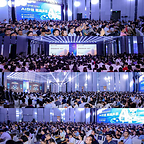
On June 22, EcoFlow hosted a new product launch event in Munich, officially unveiling its next-generation smart home energy management system – OASIS 3.0. As the central pillar of EcoFlow’s intelligent energy ecosystem, OASIS evolved from the energy management capabilities of the EcoFlow App first released in 2020, before undergoing a systematic upgrade in 2023 to formally establish the OASIS system architecture. Powered by the EcoFlow App – the world’s NO. 1 smart home energy App with 3.4 million users, EcoFlow is shifting the industry focus from device connectivity to deeper user understanding. This marks a new era: moving from user-managed energy to energy that proactively serves the user.
Against this backdrop, EcoFlow concurrently hosted a roundtable forum during the launch event. Representatives from academia, industry, user communities, and corporate technology sectors were invited to discuss Towards a Truly Proactive and Self-Evolving Home Energy System. The forum explored core challenges in home energy management, new opportunities presented by Agentic AI technology, and the future development of smart home energy systems.
The forum’s distinguished panelists included Dr. Anurag Mohapatra, Group Leader at CoSES, Munich Institute of Integrated Materials, Energy and Process Engineering (MEP), Technical University of Munich (TUM); Thomas Haupt, Initiator and Project Manager of the HEMS-Finder research project; Felix Goldbach, a YouTuber, speaker, and podcaster, best known for his channel Money for Future; and Dr. Xiaoke Yang, EcoFlow’s AI Technology Lead. Their perspectives offered comprehensive insights into the evolution of next-generation HEMS.
HEMS: A Major Building Block of the Future Energy System
Before the panel discussion, Prof. Dr. rer. nat. Thomas Hamacher, Chair of Renewables and Sustainable Energy Systems and Director of the Munich Institute of Integrated Materials, Energy and Process Engineering (MEP) at the Technical University of Munich (TUM), delivered a keynote speech titled “HEMS: A Major Component in a Smarter and More Flexible Power Grid.” He noted that HEMS will become a major building block of future smart grids and power systems. As electricity becomes the central final energy carrier, economic competitiveness, sustainability, and resilience will be key priorities for the future energy system. Future power grids may be organized through a hierarchical structure of “Energy Cells”, ranging from individual devices and households to buildings and districts. Within this structure, HEMS will play an important role in coordinating active energy resources, providing flexibility, and enhancing system resilience. Looking ahead, the future power system could be simpler and more resilient than many expect, with the key challenge being to think simple and focus on real tasks.
From ‘Device Connection’ to ‘User Understanding’: The Real Challenges of HEMS
During the roundtable discussion, panelists highlighted the practical challenges still facing current home energy management systems.
Dr. Anurag Mohapatra noted that device integration and system interoperability remain widespread industry challenges. Despite claims of support for open protocols, compatibility issues between different devices and installation complexity continue to compromise user experience. He further emphasised that there is still a lack of industry benchmarks, making system comparison difficult and preventing clear technical baselines across vendors.
Thomas Haupt offered a market-centric view, noting that the primary concerns in the German home energy system market revolve around device communication capabilities, installation service infrastructure, and cross-system compatibility. He further added that it is often unclear what each system is actually designed to do, making it difficult to compare solutions and effectively transfer knowledge to installers, which in turn led to his initiative, the HEMS Finder project. For most users, a system’s stability, reliability, and ease of installation often outweigh its complex intelligent features.
Felix Goldbach, a content creator and user representative with a long-standing focus on home energy applications, shared observations from a user’s perspective. He emphasized that most users do not want to constantly monitor or adjust systems, and that AI can meaningfully help by keeping interaction simple and minimal.
From a technical standpoint, Dr. Xiaoke Yang observed that many HEMS still suffer from “functional silos”, where prediction, optimisation, and user interaction are fragmented. Furthermore, there is a significant gap between system operation and user understanding. Making system complexity transparent and comprehensible to users remains a major challenge.
From Rule Execution to User Understanding: HEMS Enters the Agentic AI Era
The rapid advancement of AI has frequently brought up discussions about the impact of LLMs and Agentic AI technology on the home energy sector.
Dr. Yang stated that over the past decade, HEMS has evolved from rule-driven to AI-prediction-driven stages. With the rapid advancement of LLMs and Agentic AI, home energy systems are poised to enter a new phase.
In this new phase, systems will no longer merely execute predefined logic and algorithms. Instead, they will comprehend user intentions and dynamically reconfigure functional units. For instance, users could simply express needs like “I’m travelling next week, please minimise electricity costs” or “We’re hosting a party this weekend, prioritise comfort.” The system would then automatically translate these into energy optimisation goals, intelligently coordinate generation, storage, charging, and household loads, and execute the resulting plan after user confirmation.
This “Agentic HEMS”, capable of self-evolving based on user needs, ensures that AI serves user decisions rather than making decisions for them.
This self-evolving approach is also designed to address some fundamental challenges facing modern home energy systems, including fragmented device ecosystems, dynamic and unpredictable external conditions, and diverse energy needs across households. Rather than following fixed optimisation strategies, the system continuously learns from user preferences, adapts to changing conditions, and intelligently coordinates energy assets across the home. Over time, it becomes increasingly personalised, resilient, and autonomous, helping users achieve their goals with less effort while always keeping them in control.
Dr. Anurag Mohapatra also suggested that it makes sense to apply AI in a data-native environment. At the same time, he stressed that fallback layers and engineering backups must be in place. The verifiability of system decisions must also be clearly demonstrated.
What Users Care About: Beyond the AI Label
How AI capabilities translate into tangible user experience was also a key point of discussion.
Anurag agreed that the most important systems are those users barely notice, operating reliably in the background. He further noted that In Germany, where grid reliability is already high, HEMS must integrate into infrastructure-level expectations, becoming invisible background intelligence rather than a constantly visible tool.
Thomas Haupt further elaborated, suggesting that the ideal future home energy system might be the one that requires as little user input as possible. He added that AI-driven HEMS can bring benefits to end users.
Felix Goldbach engaged the audience by asking how many installers are already selling equipment bundled with a HEMS. He noted that, driven by the rise of dynamic tariffs, HEMS is rapidly becoming a standard feature rather than a niche offering.
Dr. Xiaoke Yang concurred, stating that the key to next-generation HEMS lies in AI truly understanding users, making complex decisions effectively, and returning every critical decision-making power to the user. This involves a technical pathway where users set goals, AI develops plans, users confirm, and the system executes. He emphasised that continuous learning and optimisation should ultimately aim to alleviate the user’s energy management burden. Beyond operational efficiency, data security is another critical requirement: all user data must remain user-owned, locally operable and controllable, and protected through robust security mechanisms. Together, these principles define an “AI you control”.
From Smart Systems to Open Ecosystems: Next-Generation HEMS Needs Common Standards
Achieving worry-free and user-friendly energy management requires more than just AI capabilities. Fundamental functionalities like device interconnection, energy service access, and grid coordination still necessitate unified, open industry standards.
As previously noted by Dr. Anurag Mohapatra and Thomas Haupt, a core challenge lies in communication interfaces and device interoperability. While intelligent capabilities are crucial for HEMS, their value can only be fully realised within a unified, open, and sustainable ecosystem.
Dr. Xiaoke Yang stated that as home energy systems progressively move towards an AI Agent-driven era, technical innovation from a single company alone cannot resolve industry coordination issues. To foster long-term healthy industry development, EcoFlow has received official approval for an LF Energy project and plans to collaborate with industry partners to co-create next-generation HEMS benchmark scenarios. The goal is to address long-standing industry pain points such as device interconnection, data interoperability, and transparency in system validation scenarios by promoting an benchmarking platform. He concluded that future home energy systems should not be closed silos. Instead, they should be built upon open ecosystems and unified standards. Also with the increasing number and diversity of flexible resources, HEMS plays an increasingly important role in providing flexibility and enhancing the resilience of larger power grids. Only when devices, energy service providers, and grid systems can coordinate efficiently can the full value of smart energy management be unleashed.
Future HEMS will gradually evolve from energy scheduling tools into intelligent energy agents capable of understanding user needs, proactively formulating strategies, and continuously optimising their own capabilities within open ecosystems and unified standards. As an important pioneer of this transformation, EcoFlow is advancing this vision through OASIS 3.0, driving home energy management toward a smarter, more efficient, and more sustainable future.
ABOUT ECOFLOW
EcoFlow is a global pioneer in eco-friendly energy solutions, driving the transition toward smarter, cleaner and more independent power. Founded in 2017, EcoFlow is No. 1 in smart home energy storage solutions, empowering millions of users to take control of their energy at home and beyond. With operational headquarters in Seattle, Düsseldorf, Irvine, Tokyo and Birmingham, and a business and data centre in Singapore, EcoFlow operates as a global ecosystem spanning research, operations, and manufacturing. Its innovative technologies serve over 6 million users across 140 markets and redefine how the world takes control of its energy. https://www.ecoflow.com/eu
View original content:https://www.prnewswire.co.uk/news-releases/ecoflow-new-product-launch-roundtable-forum-focuses-on-self-evolving-smart-energy-302810684.html








 Technology5 days ago
 Technology5 days ago
 Technology5 days ago
 Coin Market4 days ago

 Technology5 days ago
 Technology5 days ago
 Technology5 days ago