Connect with us

Technology

The Traditional American Backyard Replaces Conventional Neighborhood Development in a New Educational Segment Featuring Realm on “All Access hosted by Andy Garcia”

Published

on

How the evolution of single-family zoning into dynamic multi-unit properties is providing a blueprint for sustainable suburban growth.

LOS ANGELES, July 1, 2026 /PRNewswire/ — The conceptual design of American residential neighborhoods is experiencing a fundamental transformation as single-family properties adapt to modern density demands. Realm collaborated with the production team of “All Access hosted by Andy Garcia” during a filming session on June 8, 2026, to document this quiet revolution in construction. Scheduled for distribution to Public Television, the educational segment examines how decentralized housing initiatives are altering urban planning frameworks. The feature highlights the operational shift toward maximizing existing land assets to address broader socioeconomic challenges.

Instead of relying entirely on traditional commercial developers, individual property owners are increasingly driving local housing expansion. The program illustrates how modern platforms synthesize complex municipal databases and historical pricing indexes to simplify the construction process. By providing homeowners with clear architectural baselines and verified builder networks, the methodology eliminates much of the historical friction associated with building secondary units. This structural shift empowers communities to expand organically, turning standard residential properties into diverse tools for economic resilience.

“Nearly 75% of residential land in American cities is still reserved for single-family housing. Today’s zoning reforms are unlocking a powerful opportunity: giving families the ability to build for themselves, their parents, their children, and their communities on land they already own. Expanding housing doesn’t have to mean changing the character of our neighborhoods….it can mean empowering homeowners to help solve one of the country’s biggest challenges while creating more flexibility, financial security, and opportunity for their own families.”

— Liz Young, Founder & CEO, Realm

The momentum behind secondary residential units is heavily accelerated by sweeping legislative changes designed to bypass traditional municipal bottlenecks. Pioneered by West Coast housing policies, states across the country are implementing streamlined permitting processes that effectively remove historical barriers to neighborhood densification. These updated regulatory frameworks not only simplify immediate zoning approvals but also pave the way for formalizing millions of previously unpermitted structures. This legislative shift reflects a growing national acknowledgement that solving the housing availability crisis requires highly adaptable, decentralized zoning regulations that support organic community expansion.

Beyond standard economic pressures, evolving environmental factors are fundamentally altering residential construction requirements in high-risk regions. In the wake of recent environmental emergencies such as intense regional wildfires, traditional whole-home reconstruction frequently encounters severe logistical delays and prohibitive material expenses. Consequently, secondary dwelling structures are rapidly emerging as flexible, accelerated alternatives for displaced residents within established disaster zones. Specialized construction planning methods allow families to re-establish secure living arrangements quickly, illustrating how modern accessory units serve as vital, resilient infrastructure during periods of unexpected community recovery.

About “All Access hosted by Andy Garcia”: “All Access hosted by Andy Garcia” is an educational Public Television program that highlights leading companies, innovative technologies, and paradigm-shifting trends across various industries. Through high-quality documentary segments, the show provides audiences with deep insights into the advancements shaping the modern world. For more information, please visit allaccessptv.com.

About Realm: Realm is an advisory service homeowners rely on for major renovations, from ADUs to remodels to whole-home rebuilds. Working from the largest database of real-world renovation projects in the United States, Realm gives each homeowner a dedicated advisor who shapes the project around their budget, their priorities, and how they live, then prices it honestly and matches them with a vetted contractor who stands behind quality work. The result is a home that finally fits your life: more room as the family grows and spaces that match how you actually spend your days. To learn more, visit realmhome.com.

View original content to download multimedia:https://www.prnewswire.com/news-releases/the-traditional-american-backyard-replaces-conventional-neighborhood-development-in-a-new-educational-segment-featuring-realm-on-all-access-hosted-by-andy-garcia-302814878.html

SOURCE All Access

Continue Reading
Click to comment

Leave a Reply

Your email address will not be published. Required fields are marked *

Technology

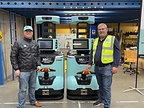
Hanshow Spotlights Smart Cart Ecosystem at CGF Global Summit 2026, Reimagining the In-Store Value Chain

Published

on

By

VIENNA, July 2, 2026 /PRNewswire/ — Hanshow, a global leader in digital store solutions, hosted a CGF Roundtable titled “Smart Cart Revolution in Physical Retail” at the 2026 Consumer Goods Forum Global Summit, bringing together senior leaders across the retail value chain to examine how Smart Carts are redefining the future of physical stores.

Reframing the Challenge: Three Paradoxes of Physical Retail

The Special Session was moderated by Philippe Brochard, Chairman of the Advisory Board at Hanshow, who opened the discussion by positioning Smart Carts not as a standalone device, but as a strategic response to deeper industry misalignments between operational challenges, shopper expectations, and brand requirements.

Philippe outlined three unresolved paradoxes shaping the future of stores: digitally empowered shoppers navigating in physical store environments; the need to deliver trusted, contextual guidance without intrusive selling; and growing demand from brands for measurable, proof-based retail media.

Retailers are facing growing pressure from loss prevention challenges, labor shortages, and operational complexity; Smart Carts offer a practical response to these challenges while unlocking something larger: reconnecting physical stores with digitally empowered shoppers by embedding digital intelligence, contextual guidance, and measurable retail media capabilities into the shopping journey. Achieving this shift elevates Smart Carts from a single innovation to a transformation platform, enabled through collaboration across the in-store value chain.

When Ecosystems Win: Reimagining the In‑Store Value Chain

Turning this vision into everyday retail execution requires more than a single technology layer. It depends on the close integration of reliable hardware, advanced software, real‑time personalization, retail media capabilities, and seamless store operations. The panel brought together leaders from retailer operations, software platforms, and retail media to provide a full value-chain perspective on how Smart Carts can move from an innovation concept to a scalable in-store deployment.

Michel Itié, Director of Transformation at Infomil (E.Leclerc), shared operational insights from scaling Scan & Go and in‑store digitalization in physical retail environments. He highlighted the importance of reliability, store readiness, and execution discipline to ensure Smart Carts deliver value for both shoppers and store teams.

“Scan & Go is already deeply embedded in shopper behavior, with strong adoption and high-value baskets in physical stores. However, there is still a significant gap between usage and monetization,” said Michel Itié. “By evolving into a retail media platform, it can unlock new value for both retailers and brands, directly at the moment of purchase where decisions are made.”

Florian Burgstaller, CEO of shopreme, focused on the role of a Smart Cart operating system as the connective layer between digital shopper expectations and the physical realities of store, enabling advanced loss prevention, frictionless checkout, and contextual engagement without overwhelming the shopper.

“The future of brick‑and‑mortar retail cannot be built on isolated solutions anymore, retailers need connected ecosystems that make innovation scalable and give them the flexibility to respond to continuously changing environments,” said Florian. He highlighted that shopreme’s collaboration with Hanshow and Lucky Cart “bring digital precision into the physical store and help retailers move beyond silos, creating scalable, measurable experiences directly at the point of sale.”

Romain Charles, CEO of Lucky Cart, addressed the “proof paradox” from the brand perspective, explaining how Smart Carts now enable online‑level retail media precision inside physical stores, with measurable outcomes and deployment‑ready technology available today.

“The future of retail is ‘Smart Commerce’, where digital precision enables a personalized in-store experience,” added Romain. “A shopper-first strategy means technology serves, never intrudes — a true co-pilot. By re-enchanting stores with intelligent, meaningful experiences, we bring the best of both online and in-store, creating incremental value for brands and retailers.”

Together, the speakers reinforced a shared conclusion: the Smart Cart revolution extends far beyond the cart itself. The next step is coming together: a joint reimagination of the in-store value chain through ecosystem collaboration in a way physical retail has not been able to do before.

From Vision to Action: Re-enchanting the Intelligent Store

Extending the discussion beyond the stage, Hanshow showcased its Store Digital Twin at its exhibition booth, demonstrating how real‑time intelligence connects shoppers, products, operations, and retail media into an integrated ecosystem.

“Smart Cart with Retail Media stack embedded and immediately activable is the ultimate bridge between online and offline, delivering the same level of shoppers targeting and experience,” said Philippe Brochard, Chairman of the Advisory Board at Hanshow. “With Store Digital Twin, we move from isolated touchpoints to a living, real‑time representation of the store ecosystem. This is how we truly re‑enchant the physical retail experience and restore its relevance and resilience in an era of digital‑first, agentic commerce.”

Building on this vision, Hanshow will continue to strengthen ecosystem power, enabling retailers to transform physical stores into adaptive, performance‑driven, and experience‑led environments.

View original content to download multimedia:https://www.prnewswire.co.uk/news-releases/hanshow-spotlights-smart-cart-ecosystem-at-cgf-global-summit-2026-reimagining-the-in-store-value-chain-302816833.html

Continue Reading

Technology

Hanshow Spotlights Smart Cart Ecosystem at CGF Global Summit 2026, Reimagining the In-Store Value Chain

Published

on

By

VIENNA, July 2, 2026 /PRNewswire/ — Hanshow, a global leader in digital store solutions, hosted a CGF Roundtable titled “Smart Cart Revolution in Physical Retail” at the 2026 Consumer Goods Forum Global Summit, bringing together senior leaders across the retail value chain to examine how Smart Carts are redefining the future of physical stores.

Reframing the Challenge: Three Paradoxes of Physical Retail

The Special Session was moderated by Philippe Brochard, Chairman of the Advisory Board at Hanshow, who opened the discussion by positioning Smart Carts not as a standalone device, but as a strategic response to deeper industry misalignments between operational challenges, shopper expectations, and brand requirements.

Philippe outlined three unresolved paradoxes shaping the future of stores: digitally empowered shoppers navigating in physical store environments; the need to deliver trusted, contextual guidance without intrusive selling; and growing demand from brands for measurable, proof-based retail media.

Retailers are facing growing pressure from loss prevention challenges, labor shortages, and operational complexity; Smart Carts offer a practical response to these challenges while unlocking something larger: reconnecting physical stores with digitally empowered shoppers by embedding digital intelligence, contextual guidance, and measurable retail media capabilities into the shopping journey. Achieving this shift elevates Smart Carts from a single innovation to a transformation platform, enabled through collaboration across the in-store value chain.

When Ecosystems Win: Reimagining the In‑Store Value Chain

Turning this vision into everyday retail execution requires more than a single technology layer. It depends on the close integration of reliable hardware, advanced software, real‑time personalization, retail media capabilities, and seamless store operations. The panel brought together leaders from retailer operations, software platforms, and retail media to provide a full value-chain perspective on how Smart Carts can move from an innovation concept to a scalable in-store deployment.

Michel Itié, Director of Transformation at Infomil (E.Leclerc), shared operational insights from scaling Scan & Go and in‑store digitalization in physical retail environments. He highlighted the importance of reliability, store readiness, and execution discipline to ensure Smart Carts deliver value for both shoppers and store teams.

“Scan & Go is already deeply embedded in shopper behavior, with strong adoption and high-value baskets in physical stores. However, there is still a significant gap between usage and monetization,” said Michel Itié. “By evolving into a retail media platform, it can unlock new value for both retailers and brands, directly at the moment of purchase where decisions are made.”

Florian Burgstaller, CEO of shopreme, focused on the role of a Smart Cart operating system as the connective layer between digital shopper expectations and the physical realities of store, enabling advanced loss prevention, frictionless checkout, and contextual engagement without overwhelming the shopper.

“The future of brick‑and‑mortar retail cannot be built on isolated solutions anymore, retailers need connected ecosystems that make innovation scalable and give them the flexibility to respond to continuously changing environments,” said Florian. He highlighted that shopreme’s collaboration with Hanshow and Lucky Cart “bring digital precision into the physical store and help retailers move beyond silos, creating scalable, measurable experiences directly at the point of sale.”

Romain Charles, CEO of Lucky Cart, addressed the “proof paradox” from the brand perspective, explaining how Smart Carts now enable online‑level retail media precision inside physical stores, with measurable outcomes and deployment‑ready technology available today.

“The future of retail is ‘Smart Commerce’, where digital precision enables a personalized in-store experience,” added Romain. “A shopper-first strategy means technology serves, never intrudes — a true co-pilot. By re-enchanting stores with intelligent, meaningful experiences, we bring the best of both online and in-store, creating incremental value for brands and retailers.”

Together, the speakers reinforced a shared conclusion: the Smart Cart revolution extends far beyond the cart itself. The next step is coming together: a joint reimagination of the in-store value chain through ecosystem collaboration in a way physical retail has not been able to do before.

From Vision to Action: Re-enchanting the Intelligent Store

Extending the discussion beyond the stage, Hanshow showcased its Store Digital Twin at its exhibition booth, demonstrating how real‑time intelligence connects shoppers, products, operations, and retail media into an integrated ecosystem.

“Smart Cart with Retail Media stack embedded and immediately activable is the ultimate bridge between online and offline, delivering the same level of shoppers targeting and experience,” said Philippe Brochard, Chairman of the Advisory Board at Hanshow. “With Store Digital Twin, we move from isolated touchpoints to a living, real‑time representation of the store ecosystem. This is how we truly re‑enchant the physical retail experience and restore its relevance and resilience in an era of digital‑first, agentic commerce.”

Building on this vision, Hanshow will continue to strengthen ecosystem power, enabling retailers to transform physical stores into adaptive, performance‑driven, and experience‑led environments.

View original content to download multimedia:https://www.prnewswire.co.uk/news-releases/hanshow-spotlights-smart-cart-ecosystem-at-cgf-global-summit-2026-reimagining-the-in-store-value-chain-302816833.html

Continue Reading

Technology

Data Center Heat Exchangers Market worth $14.40 billion by 2032 – Exclusive Report by MarketsandMarkets™

Published

on

By

DELRAY BEACH, Fla., July 2, 2026 /PRNewswire/ — According to MarketsandMarkets™, “Data Center Heat Exchangers Market by Type (Air-to-Air, Liquid-to-Liquid, Liquid-to-Air, Refrigerant-Based), Cooling Technology, Application, Data Center Type (Hyperscale, Colocation, Enterprise, Edge & Micro), and Region – Global Forecast to 2032″, The data center heat exchangers market is projected to grow from USD 7.67 billion in 2026 to USD 14.40 billion by 2032, at a CAGR of 11.1% over the forecast period. Key drivers of the market include the rapid growth of AI and high-performance computing (HPC), the accelerating adoption of liquid cooling, and the expansion of hyperscale and colocation data centers. 

Download PDF Brochure: https://www.marketsandmarkets.com/pdfdownloadNew.asp?id=147052541

Data Center Heat Exchangers Market Size & Forecast:

• Market Size Available for Years: 2021-2032
• 2026 Market Size: USD 7.67 billion
• 2032 Projected Market Size: USD 14.40 billion
• CAGR (2026-2032): 11.1% 

Data Center Heat Exchangers Market Trends & Insights:

The data center heat exchangers market is emerging as a critical segment of the global data center cooling industry, driven by the growing need to manage heat from modern computing infrastructure. Heat exchangers play a vital role, transferring thermal energy from servers, cooling distribution units (CDUs), and liquid cooling loops to facility cooling systems, keeping the entire setup stable and equipment performing at its best. The market is gaining momentum from the rapid rollout of AI-driven workloads, high-performance computing (HPC) systems, and hyperscale cloud facilities, which are significantly increasing thermal loads inside data centers. Meanwhile, operators are working to boost energy efficiency, cut cooling costs, and handle higher rack densities, so advanced heat exchanger technologies are being adopted widely across liquid cooling architectures. On the technology front, innovations in plate heat exchangers, microchannel designs, and heat recovery systems are improving cooling efficiency and supporting sustainability goals. With growing investments in AI-ready infrastructure, edge data centers, and environmentally sustainable cooling approaches, heat exchangers are becoming indispensable for enabling the next generation of high-density, energy-efficient, scalable operations that hold up under heavy demand.North America is the fastest growing country, in terms of value, with the CAGR of 10.9% during the forecast period.Liquid-to-liquid heat exchangers accounted for 42.9% of the market, in terms of value, in 2025.Direct-to-chip cooling is expected to dominate the data center heat exchangers market during the forecast period.Hyperscale data centers accounted for a major share of the data center heat exchangers market in terms of value in 2025.Server and IT hardware cooling accounted for 54.3% of the market, by application, in 2025.Vertiv, Schneider Electric, Alfa Laval, Rittal, and STULZ collectively held roughly half of the global market in 2025, though the competitive landscape is broadening as niche thermal specialists gain traction.Tranter Inc., Advanced Thermal Solutions, Inc., and thermowave, among others, have distinguished themselves as startups and SMEs by securing strong footholds in specialized niche areas, underscoring their potential as emerging market leaders.

Browse in-depth TOC on “Data Center Heat Exchangers Market”

150 – Tables
70 – Figures
250 – Pages

Request Sample Pages : https://www.marketsandmarkets.com/requestsampleNew.asp?id=147052541

By type, liquid-to-liquid heat exchangers are expected to dominate the global market throughout the forecast period.

Liquid-to-liquid heat exchangers are the dominant product category in the data center heat exchanger market. This dominance reflects the architecture of modern liquid cooling deployments, in which facility-side chilled water loops must interface efficiently with rack- or CDU-level coolant loops that carry heat away from processors. Plate heat exchangers – the most prevalent liquid-to-liquid variant – offer high thermal efficiency in a compact footprint, lower maintenance requirements than shell-and-tube alternatives, and straightforward scalability by adding plate packs. The broad adoption of this technology by hyperscale operators in their standard reference architecture has cemented its position as the market anchor.

Air-to-liquid heat exchangers, most implemented as rear-door heat exchangers, are the fastest-growing product type by unit volume. The RDHx format has a structural advantage: it requires no server-level modifications, can be retrofitted to existing racks, and scales linearly with rack density, making it the de facto preferred migration pathway for operators moving away from air cooling without committing to a full liquid system transformation. As Al server density increases and more facilities cross the threshold where RDHx becomes the economically optimal solution, this segment will continue to see above-market growth rates.

By cooling technology, direct-to-chip cooling is expected to dominate the global data center heat exchangers market during the forecast period.

Direct-to-chip liquid cooling systems, in which cold plates are mounted in direct contact with CPUs, GPUs, and other heat-generating silicon, account for the leading share of high-value heat exchanger deployments. The technology is architecturally demanding but thermally superior: it removes heat at the source before it can raise ambient temperatures, enable much higher chip operating performance, and make it possible to operate without significant mechanical air-cooling infrastructure. Hyperscalers deploying NVIDIA Blackwell and next-generation GPU clusters are standardizing on direct-to-chip architectures, making this the technology segment most closely tied to AI infrastructure investment trends.

Free cooling and adiabatic heat exchanger solutions are the fastest-growing technology segment on a percentage basis in geographies with favorable ambient conditions. Northern European data centers, particularly in the Nordics and Ireland, have long exploited mild climates to minimize reliance on mechanical cooling, and the heat exchanger products enabling this architecture to have evolved significantly. As operators in warmer climates invest in hybrid systems that use free cooling for a meaningful share of annual operating hours, this segment is expanding its addressable market beyond traditional cold-weather geographies.  

By application, server & IT hardware cooling is expected to dominate the global data center heat exchangers market during the forecast period.

Server & IT hardware cooling dominates application demand, accounting for the substantial majority of heat exchanger procurement value. This is inherent to the physics of data centers: IT equipment, including servers, storage, and networking, generates the preponderance of heat that must be managed, and the trend toward denser, higher-power hardware is compounding this already dominant demand signal. Cold plate systems, CDU heat exchangers, and rack-level liquid cooling assemblies all fall within this application category and are experiencing sustained growth as server power continues to climb.

Energy recovery and waste heat reuse is the fastest-growing application segment, albeit from a smaller base. As regulatory pressure mounts and sustainability commitments intensify, operators are increasingly specifying heat exchanger systems that deliver usable heat at temperatures suitable for district heating integration, typically 60-80°C. Manufacturers are responding with heat exchanger designs optimized for high leaving water temperatures, and consulting engineering firms are developing waste heat valorization business models that turn this application from a compliance cost into a revenue opportunity.

Request Customization: https://www.marketsandmarkets.com/requestCustomizationNew.asp?id=147052541

North America is poised to dominate the global data center heat exchangers market throughout the forecast period.

North America is the largest regional market for data center heat exchangers, reflecting the United States’ unrivaled position as the global center of gravity for hyperscale cloud computing, AI research, and technology infrastructure investment. The US particularly the Northern Virginia corridor (Loudoun County’s “Data Center Alley”), Phoenix, Dallas, Atlanta, and Silicon Valley host the world’s largest hyperscale campuses. AWS, Microsoft Azure, and Google Cloud are in multi-year, multi-billion-dollar capacity expansion cycles that include next-generation liquid cooling infrastructure as a standard design element. Canada is emerging as a secondary growth market, with Ontario and Quebec attracting hyperscale investment drawn by lower energy costs, hydroelectric power availability, and a favorable regulatory environment. Mexico, though smaller, is seeing growing colocation investment tied to nearshoring-driven enterprise demand.

Key Players

Key players in this market include Vertiv Group Corp. (US), Schneider Electric (France), Alfa Laval (Sweden), Rittal GmbH & Co. KG (Germany), and STULZ GmbH (Germany) and others.

Get access to the latest updates on Data Center Heat Exchangers Companies and Data Center Heat Exchangers Market Size

Browse Adjacent Market: Equipment Machine & Tooling Research Reports & Consulting

Related Reports:

Heat Exchanger Market – Global Forecast to 2030

Plate & Frame Heat Exchanger Market – Global Forecast to 2030

Air-Cooled Heat Exchanger Market – Global Forecast to 2029

Microchannel Heat Exchanger Market – Global Forecast to 2028

Plate and Tube Heat Exchanger Market – Global Forecast to 2028

About MarketsandMarkets™

MarketsandMarkets™ has been recognized as one of America’s Best Management Consulting Firms by Forbes, as per their recent report.

MarketsandMarkets™ is a blue ocean alternative in growth consulting and program management, leveraging a man-machine offering to drive supernormal growth for progressive organizations in the B2B space. With the widest lens on emerging technologies, we are proficient in co-creating supernormal growth for clients across the globe.

Today, 80% of Fortune 2000 companies rely on MarketsandMarkets, and 90 of the top 100 companies in each sector trust us to accelerate their revenue growth. With a global clientele of over 13,000 organizations, we help businesses thrive in a disruptive ecosystem.

The B2B economy is witnessing the emergence of $25 trillion in new revenue streams that are replacing existing ones within this decade. We work with clients on growth programs, helping them monetize this $25 trillion opportunity through our service lines – TAM Expansion, Go-to-Market (GTM) Strategy to Execution, Market Share Gain, Account Enablement, and Thought Leadership Marketing.

Built on the ‘GIVE Growth’ principle, we collaborate with several Forbes Global 2000 B2B companies to keep them future-ready. Our insights and strategies are powered by industry experts, cutting-edge AI, and our Market Intelligence Cloud, KnowledgeStore™, which integrates research and provides ecosystem-wide visibility into revenue shifts.

MarketsandMarkets™ SalesPlay is an AI-driven Revenue Intelligence Co-Pilot designed to help revenue teams prioritize the right accounts, identify critical changes early, and surface opportunities ahead of demand, so pipeline builds naturally and deals close with greater consistency.

To find out more, visit www.MarketsandMarkets™.com or follow us on TwitterLinkedIn and Facebook.

Contact:
Mr. Rohan Salgarkar
MarketsandMarkets™ INC.
1615 South Congress Ave.
Suite 103, Delray Beach, FL 33445
USA: +1-888-600-6441
Email: sales@marketsandmarkets.com
Visit Our Website: https://www.marketsandmarkets.com/


View original content to download multimedia:https://www.prnewswire.co.uk/news-releases/data-center-heat-exchangers-market-worth-14-40-billion-by-2032—exclusive-report-by-marketsandmarkets-302816725.html

Continue Reading

Trending