Connect with us

Technology

Shanghai to host pioneering international AI conference

Published

on

WAIC 2026 unites industry leaders to advance dialogue and collaboration

BEIJING, July 7, 2026 /PRNewswire/ — A news report from China Daily:

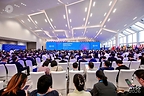
The 2026 World Artificial Intelligence Conference and High-Level Meeting on Global AI Governance, set to take place in Shanghai from July 17 to 20, will provide a global stage for fostering collaboration, governance and innovation in the field of AI.

Under the theme “AI Partnership for a Brighter Future”, the event aims to highlight AI’s transformative potential as a collaborative force while addressing shared challenges and opportunities through international cooperation, cutting-edge research and public engagement.

The conference is jointly organized by national entities such as the Ministry of Foreign Affairs, the National Development and Reform Commission, the Ministry of Industry and Information Technology, the Ministry of Education and the Ministry of Science and Technology, alongside the Shanghai government. With a focus on the transformation of AI from a technical tool to a collaborative partner, the event aims to boost global governance and shared growth of cities and industries.

“China looks forward to taking the conference as an opportunity to further strengthen international cooperation on AI with all parties,” said Zhou Haibing, deputy head of the National Development and Reform Commission, at a recent news conference.

Zhou emphasized that AI governance is a global issue vital to the future of humanity, adding that China remains steadfast in its commitment to multilateralism, openness and inclusivity.

By promoting international cooperation and offering Chinese solutions to global AI-related challenges, the country aims to balance growth and security, ensuring that AI development serves the greater good, the senior official noted.

Unprecedented scale

This year’s WAIC is set to achieve new milestones in scale and influence, bringing together over 1,400 prominent guests, including leading industry figures, top executives and venture capitalists. Twelve national ministries and commissions, eight key national laboratories, more than 10 international organizations, over 10 prestigious research institutes and 20-plus world-class universities will all take part. This edition marks a record-breaking gathering of professional expertise and industry influence in the event’s history.

Complementing the extensive conference agenda is an exhibition that spans 100,000 square meters across three key locations in Shanghai. The Shanghai World Expo Exhibition and Convention Center will act as a comprehensive display hub for AI applications, enabling companies to showcase a wide range of solutions across multiple industries. Meanwhile, the West Bund area will offer a futuristic technology exploration area, and the Zhangjiang area will emphasize smart infrastructure as a driving force for innovation.

This exhibition will boast participation by more than 1,100 companies from across the globe, collectively presenting over 3,000 advanced exhibits. Among these, more than 300 new AI solutions are set to make their global debut.

Furthermore, key categories — such as intelligent computing and embodied AI — will feature contributions from upwards of 200 companies each, showcasing the scope and depth of entrepreneurship in the field.

This year, 180 one-person companies, or OPCs, and startups representing the most dynamic and fast-growing areas of AI innovation will showcase their outcomes. Selected from a pool of 1,200 applicants, these companies are largely focused on industry applications, embodied and terminal AI solutions, infrastructure, and cutting-edge technologies. The first two sectors have emerged as particularly competitive arenas.

Creative format

A groundbreaking component of this year’s conference is the debut of WAIC Academic, a high-level international academic forum that represents a significant milestone for AI scholarship. As one of the most closely watched initiatives of the event, WAIC Academic will feature a world-class lineup spearheaded by Turing Award recipients and renowned academicians from China and beyond. 

To date, the forum has received 332 paper submissions, of which 284 have been accepted. The contributions come from more than 10 countries, including the United States, the United Kingdom, Japan, Singapore, France and Spain.

Participating institutions include renowned international universities such as Princeton, Cambridge, Imperial College London and Nanyang Technological University, along with top Chinese universities such as Tsinghua University, Peking University, Shanghai Jiao Tong University and Fudan University.

To invigorate innovation and cultivate young talent, the conference has revamped its awards system, which includes the SAIL (Super AI Leader) Award, the Young Outstanding Paper Award and the Yunfan Award.

New initiatives include an OPC challenge and a youth-focused competition designed to encourage individual innovation, as well as a host of AI-themed events tailored for younger participants. These efforts are aimed at nurturing the next generation of leaders, bridging the gap between theory and practice, and empowering promising talents to shape the future of AI innovation.

In addition to its industry-led events, WAIC 2026 will engage directly with the public through its innovative WAIC City Walk program. This initiative invites Shanghai’s residents and visitors to explore AI applications in their daily lives via six curated thematic routes.

These routes connect more than 30 unique AI-focused landmarks, including shopping malls, museums, experience centers and neighborhoods, spread across 16 districts in Shanghai. By transforming the entire city into an interactive exhibition space, the program allows people to experience the tangible benefits of AI and its role in facilitating Shanghai’s ongoing digital transformation.

From global AI governance discussions to localized industry applications, and from large-scale exhibitions to inclusive community activities, WAIC 2026 promises to present AI development in its most dynamic and multifaceted forms. By integrating themes of global governance, academic excellence, industrial collaboration and public engagement, the conference sets a bold vision for the next phase of AI development.

View original content to download multimedia:https://www.prnewswire.com/news-releases/shanghai-to-host-pioneering-international-ai-conference-302820217.html

SOURCE China Daily

Continue Reading
Click to comment

Leave a Reply

Your email address will not be published. Required fields are marked *

Technology

/C O R R E C T I O N — Lazada Group/

Published

on

By

In the news release, Lazada Joins Meta’s Affiliate Partnerships Programme to Streamline Social Shopping in Southeast Asia, issued 08-Jul-2026 by Lazada Group over PR Newswire, we are advised by the company that the first paragraph contains incomplete information. The complete, corrected release follows:

Lazada Joins Meta’s Affiliate Partnerships Programme to Streamline Social Shopping in Southeast Asia

SINGAPORE, July 8, 2026 /PRNewswire/ — Lazada, Southeast Asia’s leading eCommerce platform, has joined Meta’s Facebook Affiliate Partnerships programme, enabling content creators across Singapore, Malaysia, Thailand, Indonesia, Vietnam and the Philippines to tag Lazada products directly within their Facebook and earn commissions on every completed purchase, with Instagram integration expected to follow.

The launch comes as creator-led commerce continues to reshape how Southeast Asians discover and shop online. Video commerce now accounts for approximately 25% of the region’s eCommerce GMV[1], while 82% of Southeast Asian consumers purchased products based on influencer recommendations in 2024[2]. By bringing Lazada’s affiliate ecosystem closer to the content people already engage with daily, the partnership creates a more direct bridge between inspiration, product discovery and purchase.

Turning Everyday Content into Earning Opportunities

Historically, the path from content to commission has involved multiple steps, from external links to app redirects to separate checkout pages, which often results in lost conversions for creators, brands, and businesses alike.

With this partnership, creators can now connect their Lazada affiliate accounts directly to Facebook today and soon on Instagram, search Lazada’s product catalogue, and tag items within their content in Reels or Feed posts. When a follower clicks through and completes a purchase on Lazada, the creator earns a commission, all within a single, uninterrupted experience.

For brands and sellers on Lazada, opening their product catalogues to creators unlocks a new avenue for discovery and conversion. For shoppers, it makes product discovery more intuitive. Instead of moving from a creator’s post to a separate link or searching for the item manually, they can tap directly from the content that inspired them and continue their shopping journey on Lazada.

“Through this partnership with Meta, we’re making it easier for shoppers to move from discovering products on Facebook and Instagram to completing their purchase on Lazada. By creating a more seamless path from discovery to checkout, we’re helping brands and sellers connect with customers more effectively while delivering a better shopping experience across Southeast Asia,” said Jared Chan, Head of Regional Affiliate, Lazada Group.

Building on Lazada’s Investment in Creator Commerce

The partnership with Meta builds on Lazada’s broader commitment to strengthening creator commerce across Southeast Asia. In 2025, Lazada announced an annual US$100 million investment in the LazAffiliate Programme to support creators, brands and sellers through enhanced commissions, campaign incentives, personalised voucher pools, custom storefronts and performance tools.

Together with Meta’s Affiliate Partnerships, this investment reflects Lazada’s continued focus on making affiliate marketing more accessible, measurable and rewarding for creators, while helping brands and sellers tap into trusted creator-led product discovery across the region.

How It Works

Lazada affiliates can get started through the following steps:

1. Enable Professional Mode on their Facebook or Instagram profile

2. Navigate to Affiliate Partnerships via the Monetisation tab

3. Connect their Lazada affiliate account and complete the sign-up process

4. Begin tagging Lazada products directly in Facebook and Instagram content

To learn more or join the LazAffiliate community, visit:

ID: https://lzdaff.co/LazAffiliatesApp
MY: https://pages.lazada.com.my/wow/gcp/my/aia/share-affiliate?from=promote
PH: https://lzd.co/LAZAFFREGISTER
SG: https://pages.lazada.sg/wow/gcp/sg/aia/share-affiliate?from=promote
TH: https://pages.lazada.co.th/wow/gcp/lazada/channel/th/marketing/Affiliate-Home VN: https://pages.lazada.vn/wow/gcp/vn/aia/affiliate

About Lazada Group 

Lazada Group is Southeast Asia’s pioneer eCommerce platform. For the last 14 years, Lazada has been accelerating progress in Indonesia, Malaysia, the Philippines, Singapore, Thailand and Vietnam through commerce and technology. Today, a thriving local ecosystem links about 160 million active users to more than one million actively selling sellers every month, who are transacting safely and securely via trusted payments channels and Lazada Wallet, receiving parcels through a homegrown logistics network that has become the largest in the region. 

View original content to download multimedia:https://www.prnewswire.com/apac/news-releases/lazada-joins-metas-affiliate-partnerships-programme-to-streamline-social-shopping-in-southeast-asia-302819150.html

SOURCE Lazada Group

Continue Reading

Technology

Bounteous Earns ET Edge Recognition for AI-Led Enterprise Modernization

Published

on

By

Award recognizes the company’s innovation in delivering enterprise AI solutions through proprietary AI platform Bounteous Arc™

BENGALURU, India, July 8, 2026 /PRNewswire/ — Bounteous, an AI services firm, has been named among ET Edge’s Most Innovative Organisations 2026 in the “Innovation in AI-Led Enterprise Modernization” category. The recognition reflects the company’s commitment to helping enterprises achieve AI-led outcomes at scale.

The ET Edge Most Innovative Organisations platform is an initiative of The Times Group, themed “Redefining Excellence Through Innovation, Impact & Transformation.” It spotlights enterprises that go beyond incremental change to transform products, processes, and business models. The platform celebrates organizations shaping the future of business and society across areas including AI, deep tech, sustainability, and customer experience.

The ET Edge evaluation framework assesses organizations across key dimensions, including Innovation Vision & Leadership Commitment, Innovation Portfolio & Differentiation, Execution Excellence & Scalability, Measurable Impact & Business Outcomes, and Ecosystem, Culture & Future Readiness.

“Enterprises are moving beyond AI concepts and looking for partners who can deliver tangible value in complex, real-world environments,” said Ketan Somani, President, Global Markets and Regional CEO, EMEA & APAC at Bounteous. “This recognition reflects the strength of our teams and the work we’re doing with clients to apply AI across business-critical functions, improve productivity, and support long-term growth using Bounteous Arc™, our proprietary platform.”

“This recognition reinforces our belief that enterprise AI success isn’t defined by pilots, but by the ability to operationalize AI at scale,” said Kumar Vikas, EVP, Data & AI at Bounteous. “Businesses today are looking to AI to improve product development, platform performance, process scalability, and the way people experience technology.”

Bounteous remains focused on helping organizations deploy AI where it can create meaningful business value while preparing their people, processes, and operating models to work alongside intelligent agents. Through Bounteous Arc™, the company’s proprietary platform for designing, deploying, and operating intelligent agents at enterprise scale, Bounteous helps enterprises build the governance, security, and operational controls needed to deploy AI responsibly across the business.

About Bounteous

Bounteous is a global AI Services firm where agentic engineering and human experience converge to deliver transformative business outcomes for the enterprise. We help organizations design, build, and scale AI-driven products, platforms, and processes. With more than 5,000 team members worldwide, Bounteous helps organizations take AI from experimentation to enterprise scale. Bounteous is backed by New Mountain Capital, a New York-based growth-oriented investment firm that emphasizes business building.

View original content to download multimedia:https://www.prnewswire.com/in/news-releases/bounteous-earns-et-edge-recognition-for-ai-led-enterprise-modernization-302820132.html

Continue Reading

Technology

As Ebola Surges, 3 in 4 Americans Back Restoring U.S. Aid to Fight It, per New Echelon-Rockefeller Foundation Poll

Published

on

By

Conducted ahead of America’s 250th anniversary, the survey finds nine in ten Americans (90%) across the political spectrum support funding programs to prevent disease outbreaks abroad, the highest-testing program area in the survey.Those who primarily support President Trump are the least concerned about Ebola spreading to the U.S., yet more than one in two (52%) back restoring U.S. aid to contain the outbreak, along with 60% of Republican-leaners and 89% of Democrat-leaners.

NEW YORK, July 8, 2026 /PRNewswire/ — With the Ebola outbreak the third-largest on record, and growing, survey data from The Rockefeller Foundation and Echelon Insights shows that 75% of Americans – including more than one in two (52%) who primarily support President Trump – agree that the United States should restore disease prevention aid to contain the virus. An American Perspective on Foreign Aid, which evaluated Americans’ opinions on foreign assistance ahead of the nation’s 250th anniversary, also reveals near universal support across political party lines (90%) for funding overseas disease prevention programs. The findings suggest that despite the official closure of the U.S. Agency for International Development (USAID) one year ago this month, Americans across the political spectrum continue to see disease prevention abroad as a core U.S. interest, not a partisan one.

“Twelve years ago, Ebola reminded the world the hard way what happens when we are unprepared. This outbreak is doing the same—and may become far worse,” said Dr. Rajiv J. Shah, President of The Rockefeller Foundation and former USAID Administrator, who led USAID during the 2014 Ebola outbreak in West Africa, one of the costliest in history. “The answer now is not to rebuild the old system but to build a smarter one, pairing AI-powered surveillance and real-time data with strong local health systems where outbreaks spread fastest. This is not charity, it’s national security, and as this data shows, Americans across the political spectrum already know it.”

In May 2026, the Democratic Republic of the Congo (DRC) declared a new Ebola outbreak, caused by the Bundibugyo virus, that has since spread into Uganda. The World Health Organization declared a Public Health Emergency of International Concern on May 17. With more than 1,500 confirmed cases and over 500 deaths reported as of July 5, and counts still climbing, it is already the third-largest Ebola outbreak on record, and the Centers for Disease Control and Prevention (CDC) has warned it could become one of the largest ever recorded. There is no approved vaccine or treatment for the Bundibugyo strain, and conflict and weak health infrastructure in eastern DRC complicate detection and treatment. While U.S. officials consider the domestic risk low, the CDC raised its response to its highest level in late June. Aid workers and former U.S. officials have pointed to U.S. funding cuts for disease surveillance as a factor that hampered detection and response, a characterization the U.S. State Department disputes (see statement).

Americans’ Views on Foreign Aid to Fight Ebola:
More than 2,000 adults were surveyed by U.S.-based Echelon Insights, commissioned by The Rockefeller Foundation’s public charity, RF Catalytic Capital (RFCC), from June 12-16, 2026 across all 50 states, balanced across party, region, age, gender, and race/ethnicity. Three of the questions were directly tied to the Ebola outbreak as follows:

“How concerned are you about the potential spread of Ebola into the United States?” After responding, they were presented with the following information: “For over 20 years, the U.S. government has provided aid to the Democratic Republic of the Congo to combat the spread of Ebola, including surveillance, pandemic response, and healthcare infrastructure. Since 2018, U.S. global health aid to the Congo has prevented the spread of seven outbreaks, saving countless lives. In 2026, the World Health Organization declared a new Ebola outbreak in the Congo, featuring a rare and especially lethal strain of the virus. Health experts have pointed to cuts in U.S. funding for disease monitoring and pandemic response as key factors behind the latest outbreak.””Would you support or oppose restoring U.S. disease prevention aid to help contain this new Ebola outbreak in the Congo?” Immediately following their response, they were asked:”In light of the recent Ebola outbreak, would you support or oppose the U.S. government changing course to restore some or all global health aid?”

Across all three questions, a clear majority favored restoring aid:

Broad Support for Action on the Ebola Outbreak. Three in four Americans (75%) support restoring Ebola-specific aid to DRC, including more than one out of every two who primarily support President Trump (52%, a net +18), 60% among Republican-leaners overall, and 89% among Democrat-leaners. That support holds even though Americans aren’t especially alarmed by the threat at home: more than one in two (54%) are very or somewhat concerned about Ebola spreading to the U.S. Concern is lowest among those who primarily support President Trump (37%) and Republican-leaners (40%), compared with 68% of Democrat-leaners.A Mandate to Restore Global Health Funding. 72% support the U.S. changing course to restore some or all global health funding worldwide in light of the outbreak, including 46% among those who primarily support President Trump, 56% among Republican-leaners overall, and 88% among Democrat-leaners.

“This poll makes clear that Americans remember what too many in Washington forget about outbreaks: diseases don’t check your party registration or your passport,” said Dr. John A. Gans, former Chief Speechwriter at the Pentagon, author of White House Warriors, and current Senior Vice President at The Rockefeller Foundation. “One year after USAID’s razing, three in four Americans, across every political line, understand that stopping deadly diseases at their source is a matter of national security, not just generosity. The lesson for Washington is clear: don’t doubt the generosity and concerns of Americans, act on them.”

Additional Global Health Findings from the Poll Include:

An Overwhelming Mandate for Global Health Security. Nine in ten Americans (90%) support funding overseas disease prevention programs, the single highest-testing program area in the whole survey. Support is 82% among those who primarily support President Trump, 85% among Republican-leaners overall, and 94% among Democrat-leaners. Support for global health funding more broadly reaches 84% overall, including 68% among those who primarily support President Trump, 74% among Republican-leaners overall (81% among Republicans who prioritize the Party over Trump), and 93% among Democrat-leaners.Support Holds When Americans See the Human Cost. When told experts estimate aid cuts could cause over 9 million preventable deaths by 2030, primarily from disease and malnutrition, 70% said they would support restoring aid funding, including 47% among those who primarily support President Trump, 55% among Republican-leaners overall, and 85% among Democrat-leaners.A Proven Success Story Resonates. The story of U.S.-funded tuberculosis programs in Bangladesh, which cut TB deaths by 35% over a decade, was convincing to 77% of Americans, including 58% among those who primarily support President Trump, 65% among Republican-leaners overall, and 88% among Democrat-leaners.

Dr. Shah concludes: “When presented with a real-world example of a fast-moving threat that can easily cross borders and where U.S. foreign aid can save lives, most Americans want their government to help. The findings also point to a path forward. Americans support foreign aid when they understand its purpose, its cost, and its impact.” Read the full Statement from Dr. Rajiv J. Shah, President of The Rockefeller Foundation, on New Public Opinion Research on Foreign Aid Programs.

An American Perspective on Foreign Aid is the latest research commissioned by The Rockefeller Foundation’s Build the Shared Future Initiative, through which the 113-year-old philanthropic organization aims to inspire and inform global cooperation and international development work that matches the challenges of the 21st century, including efforts to align with governments around the world on country-led solutions that maximize every dollar of remaining aid and stimulate new investments.

Recent research includes The Impact of Two Decades of Humanitarian and Development Assistance and the Projected Mortality Consequences of Current Defunding to 2030, which examines the human costs of the historic slashing of official development assistance (ODA) in 2025 by the U.S. and other wealthy nations. Those cuts exceeded the modeling assumptions used in an earlier Rockefeller Foundation-supported study by the Barcelona Institute for Global Health (ISGlobal), published in The Lancet Global Health. That study warned that at least 9.4 million additional people, including 2.5 million children under the age of five, could die by 2030 across 93 low- and middle-income countries.

About The Rockefeller Foundation
Investing $30 billion over the last 113 years to promote the well-being of humanity, The Rockefeller Foundation is a pioneering philanthropy built on unlikely partnerships and innovative solutions that deliver measurable results for people in the United States and around the world. We leverage scientific breakthroughs, artificial intelligence, and new technologies to make big bets across energy, food, health, and finance with our partners and our affiliated public charity, RFCC. For more information, follow us on LinkedIn @the-rockefeller-foundation, X @RockefellerFdn, Instagram @rockefellerfdn, and YouTube @RockefellerFdn, and sign up for our newsletter at www.rockefellerfoundation.org/subscribe.

Note to Editors: Methodology
Echelon Insights conducted a survey on behalf of The Rockefeller Foundation to better understand voters’ attitudes on foreign aid. The survey was fielded online from June 12-16, 2026 in English among a sample of 2,022 voters in the likely electorate nationwide using non-probability sampling, with a base sample of N=1,512 Registered Voters in the Likely Electorate Nationwide and an oversample of N=510 Republican Voters, achieving a total of 1,080 Republican voters in the sample. This oversample was included in order to be able to more closely examine opinions within this cohort of respondents. The sample was drawn from the Lucid sample exchange based on demographic quota targets for registered voters in the likely electorate nationwide, and matched to the L2 voter file to verify respondents’ voter registration status. Measures taken to ensure data quality included measures to prevent duplicate responses, questions designed to disqualify inattentive respondents, and the removal of respondents from the data file who answered more than one-third of the questions they were asked in less than one-third of the median response time per question. The sample was weighted to reflect modeled turnout and demographic characteristics of the population of voters in the 2026 likely electorate nationwide based on a probabilistic model that incorporates data from the U.S. Census Bureau’s American Community Survey and Current Population Survey Voting and Registration Supplement, as well as L2 voter file data. Weighting dimensions included gender, age, race/ethnicity, education, region, and turnout probability, as well as gender by age, education by gender, race by age, race by education, and age by education. The sample was also weighted on party affiliation to reflect an even balance between Republican/Republican-leaning and Democratic/Democratic-leaning voters. Calculated the way it would be for a random sample and adjusted to incorporate the effect of weighting, the margin of sampling error is ± 2.5 percentage points. To download a full copy of An American Perspective on Foreign Aid, visit: https://www.rockefellerfoundation.org/reports/an-american-perspective-on-foreign-aid/.

Note to Editors: Statement From Dr. Rajiv J. Shah, President of The Rockefeller Foundation, on New Public Opinion Research on Foreign Aid Programs
As the United States approaches its 250th anniversary, new polling shows that the American people want an active, engaged relationship with the world. They recognize that helping vulnerable people and building a safer, healthier, and more prosperous world is an investment in America’s own security and prosperity. At a moment when many U.S. and world leaders are pulling back from global engagement, a report published today by Echelon Insights, supported by The Rockefeller Foundation, finds that Americans across political parties back efforts that prevent disease outbreaks, feed hungry children, reduce suffering, and create opportunity. The polling shows that 72% of Americans believe foreign aid keeps the U.S. safer from threats. Support is even stronger for specific types of aid: preventing disease outbreaks (90%), humanitarian and disaster relief (90%) and global health (84%). As an example, after receiving information about the current Ebola outbreak in the Democratic Republic of the Congo respondents overwhelmingly (3 in 4) supported restoring U.S. foreign aid funding to fight the disease. When presented with a real-world example of a fast-moving threat that can easily cross borders and where U.S. foreign aid can save lives, most Americans want their government to help. The findings also point to a path forward. Americans support foreign aid when they understand its purpose, its cost, and its impact. They overwhelmingly favor strengthening and modernizing effective programs rather than eliminating them, and they want resources focused where they can save the most lives and deliver the greatest results. Americans’ support for foreign aid and global engagement remains strong. The opportunity before us is to answer that call by building a more modern model of development — one that is country-led, results-driven, and capable of meeting today’s challenges through innovation, partnership, and impact. In the 21st century, foreign aid should deliver better outcomes for vulnerable communities while continuing to advance America’s long-term interests. Americans are ready to help build what comes next. Their leaders should listen. Available here: https://www.rockefellerfoundation.org/news/statement-from-dr-rajiv-j-shah-president-of-the-rockefeller-foundation-public-opinion-research-foreign-aid-programs/

View original content to download multimedia:https://www.prnewswire.co.uk/news-releases/as-ebola-surges-3-in-4-americans-back-restoring-us-aid-to-fight-it-per-new-echelon-rockefeller-foundation-poll-302820085.html

Continue Reading

Trending