Connect with us

Technology

States Should Not Mistake Long-Term Investing for Abandonment

Published

on

WASHINGTON, July 14, 2026 /PRNewswire/ — The Investment Company Institute released the following Viewpoints blog:

Millions of Americans buy mutual funds, ETFs, stocks, and other securities with the intention of holding them for years. They may not log in often. They may not trade. They may not check their balances until they need the money. That is not a sign they have walked away from their investments; it is ordinary buy-and-hold investing.

But some states are making it easier to treat these investors as if they are missing. By adding a so-called “inactivity standard” to their unclaimed property laws, states can seize and liquidate securities accounts simply because the owner has not logged in, traded, contributed, or otherwise contacted the account provider for a set period of time—even though the investor is not lost and has not abandoned the account. 

The consequences of escheatment, the legal process by which a state takes custody of abandoned property, can be severe. Once a securities account escheats to a state, the state liquidates the securities. When owners try to reclaim their account, they may receive only the value of the securities when they were sold, and not the dividends, interest, or appreciation they may have earned had the investments remained intact and untouched. 

Florida and California show that states have a choice: protect long-term investors or put their savings at risk. 

Florida and the Majority of States Show a Better Way Forward

Florida recently showed why these protections matter. After the state changed its unclaimed property law in 2024 and moved from a “returned communication standard” to an inactivity standard for securities, more than $1 billion in additional assets escheated to the state, much of it prematurely. Lawmakers recognized the gravity of the problem immediately. This past June, Governor Ron DeSantis signed legislation strengthening protections for investors who remain reachable, even when they have not actively engaged with their account for some time. 

The new Florida standard recognizes how investors engage with their accounts today. It incorporates both a returned communication standard and a 10-year period to show an indication of interest, or activity, in an account. It also allows investors to demonstrate continued interest by securely accessing a website, engaging through a mobile app, or responding to an account notice, among other actions. 

California Should Follow Florida’s Lead

Under California law, the standard is vague, and securities may in some cases be deemed abandoned when an account provider has lost contact with the securities’ owner. That is why the standard for determining abandonment is so critical. An inactivity standard can blur the difference between an investor who is truly lost and an investor who is simply staying the course. 

California now has an important opportunity to protect long-term investors by passing AB 2031, sponsored by Assemblywoman Cottie Petrie-Norris. This legislation would clarify California’s Unclaimed Property Law and help prevent inappropriate escheatment of securities. That means the 7.8 million California households that own mutual funds or ETFs would not be treated as missing when account communications are still being delivered by mail or electronically and are not returned as undeliverable.

Keeping Long-Term Investments in Investors’ Hands

Unclaimed property laws should not be used to take possession of securities owned by investors who are still reachable and still invested.

Florida has taken the right step, joining a majority of states in recognizing that ordinary long-term investing should not be treated as abandonment. California should follow suit by passing AB 2031 right away. Other states should then follow Florida and California and modernize their laws to protect investors from these same risks.

What Forced Liquidation Can Cost a Long-Term Investor
Imagine a long-term investor with $50,000 in mutual fund shares. She receives electronic statements, reinvests dividends, and keeps a valid address on file with the account provider. Because she is saving for the future, she does not log in or trade for several years.

Then one day she checks her account and finds her securities are gone. The state has taken custody and sold them. If she later files a claim, she may recover only the $50,000 sale-date value. Had the money remained invested and earned 7% annually, it could have grown to more than $98,000 over 10 years.

That is nearly $50,000 in potential gains lost because inactivity was mistaken for abandonment.

Contact: media@ici.org

View original content to download multimedia:https://www.prnewswire.com/news-releases/states-should-not-mistake-long-term-investing-for-abandonment-302825626.html

SOURCE Investment Company Institute

Continue Reading

Technology

SOUTHWEST AIRLINES BRINGS LIVE GAMING TO 35,000 FEET, POWERED BY STARLINK

Published

on

By

Twitch creators compete and livestream in real time from a Starlink-equipped Southwest aircraft en route to TwitchCon

DALLAS, Nov. 12, 2026 /PRNewswire/ — Southwest Airlines Co. (NYSE: LUV) brought gaming to 35,000 feet with the first-ever live gaming tournament in the sky, bringing Twitch creators onboard a special flight from Austin to San Diego on their way to TwitchCon. Powered by Starlink’s fastest WiFi in the sky, creators competed head-to-head while livestreaming the action to the Twitch community in real time.

This one-of-a-kind activation showcased what faster, reliable connectivity can make possible onboard as Southwest expects to become the first major U.S. airline to equip its entire fleet with Starlink in fall 2027.

Game Mode: On
The tournament added a new spin to Southwest’s history of creating unexpected moments onboard, turning the cabin into a gaming arena and giving creators a new way to connect with their communities from the sky. The experience extended well beyond the aircraft, with the livestream bringing viewers along for the flight and creating moments creators could continue sharing with their followers after touchdown.

“Gaming is all about connection, competition, and sharing the moment with a community, which made bringing a live tournament onboard such a natural fit for Southwest,” said Sabrina Callahan, Senior Vice President and Chief Digital & Marketing Officer at Southwest Airlines. “Southwest is known for making the journey memorable for our Customers, and this was a unique way to unite the energy of TwitchCon with the power of Starlink at 35,000 feet.”

Going All-In on Ultra-Fast WiFi 1
From Nintendo Switch systems and gaming laptops to tablets and phones, Starlink’s high-speed, low-latency connectivity gives Customers more ways to play, stream, work, and stay connected using the devices they bring onboard.

“Our Customers want to stay connected in the air just as they do on the ground, and Starlink is helping us deliver that experience,” said Lisa Hingson, Vice President Customer Experience & Innovation. “Livestreaming a gaming tournament shows what this technology can do, made possible by Starlink’s constellation of thousands of low-Earth orbit satellites. Whether Customers want to stream, work, or simply stay connected along the way, we’re investing in an inflight experience that gives them more freedom to spend their time onboard the way they want.”

The carrier offers free WiFi to all Rapid Rewards Members, thanks to T-Mobile. Customers can join Rapid Rewards to unlock access to free WiFi, tier benefits, and points by flying qualifying flights or spending with eligible partners. Members can purchase points to earn a reward to book their favorite destination or a new Southwest route. All Rapid Rewards rules and regulations apply at Southwest.com/rrterms. 

TwitchCon 2026 takes place November 13 to 15 at the San Diego Convention Center, bringing together streamers, creators, developers and communities for live shows, panels, game demos and fan meet-ups. More information about attending TwitchCon San Diego is available online.

ABOUT SOUTHWEST AIRLINES CO.
Southwest Airlines Co. operates one of the world’s most admired and awarded airlines, offering its one-of-a-kind value and Hospitality at 121 airports across 12 countries. Southwest took flight in 1971 to democratize the sky through friendly, reliable, and low-cost air travel and now carries more air travelers flying nonstop within the United States than any other airline.2 By empowering its more than 73,0003  People to deliver unparalleled Hospitality, the maverick airline cherishes a passionate loyalty among more than 134 million Customers carried in 2025. Southwest leverages a unique legacy and mission to serve communities around the world including harnessing the power of its People and Purpose to put communities at the Heart of its success. Learn more by visiting Southwest.com/citizenship.

1 Where available. Available only on WiFi-enabled designated aircraft.

2 Based on U.S. Dept. of Transportation quarterly Airline Origin & Destination Survey as of Q4 2025.

3 Fulltime-equivalent active Employees as of June 30, 2026.

Cautionary Statement Regarding Forward-Looking Statements
This press release contains forward-looking statements within the meaning of Section 27A of the Securities Act of 1933, as amended, and Section 21E of the Securities Exchange Act of 1934, as amended. Specific forward-looking statements include, without limitation, statements related to (i) the Company’s initiatives, strategic priorities, focus areas, core strengths, goals, and opportunities, including with respect to product offering enhancements; and (ii) the Company’s expectations with respect to timing of and Customer response to its product offering enhancements. These forward-looking statements are based on the Company’s current estimates, intentions, beliefs, expectations, goals, strategies, and projections for the future and are not guarantees of future performance. Forward-looking statements involve risks, uncertainties, assumptions, and other factors that are difficult to predict and that could cause actual results to vary materially from those expressed in or indicated by them. Factors include, among others, (i) the impact of geopolitical conflicts, fears or actual outbreaks of diseases, extreme or severe weather and natural disasters, actions of competitors (including, without limitation, pricing, scheduling, capacity, and network decisions, and consolidation and alliance activities), governmental actions, consumer perception, consumer uncertainties with respect to trade policies, tariffs, or government shutdowns, economic conditions, fears or actual acts of terrorism or war, sociodemographic trends, and other factors beyond the Company’s control, on consumer behavior and the Company’s results of operations and business decisions, plans, strategies, and results; (ii) the Company’s ability to timely and effectively implement, transition, operate, maintain, and protect the technology systems, cybersecurity measures, artificial intelligence and other emerging technology capabilities, and infrastructure necessary to support its operations and initiatives; (iii) the Company’s ability to effectively execute and evolve its strategic plans, initiatives, product offerings, and policies, including related consumer behavior and response; (iv) the impact of fuel price changes, fuel price volatility, and fuel availability on the Company’s business plans and results of operations; (v) the impact of the Federal Aviation Administration and other governmental regulations and actions, including with respect to government shutdowns and Air Traffic Control staffing shortages and inefficiencies, as well as the Company’s ability to obtain any required governmental approvals, on the Company’s business plans, results, and operations; (vi) the Company’s dependence on The Boeing Company (“Boeing”) and Boeing suppliers with respect to the Company’s aircraft deliveries, fleet and capacity plans, operations, maintenance, strategies, and goals; (vii) the Company’s dependence on other third parties, including with respect to technology, revenue management, distribution channels, operational reliability, fuel supply, maintenance, and the impact on the Company’s operations and results of operations of any third-party delays or nonperformance; (viii) the impact of labor matters on the Company’s business decisions, plans, strategies, and results; (ix) the Company’s ability to obtain and maintain adequate infrastructure and equipment to support its operations and initiatives; (x) the Company’s dependence on its workforce, including its ability to employ and retain sufficient numbers of qualified Employees with appropriate skills and expertise to effectively and efficiently maintain its operations and execute the Company’s plans; (xi) the cost and effects of the actions of activist shareholders; and (xii) other factors, as described in the Company’s filings with the Securities and Exchange Commission, including the detailed factors discussed under the heading “Risk Factors” in the Company’s Annual Report on Form 10-K for the fiscal year ended December 31, 2025.


View original content to download multimedia:https://www.prnewswire.com/news-releases/southwest-airlines-brings-live-gaming-to-35-000-feet-powered-by-starlink-302938581.html

SOURCE Southwest Airlines Co.

Continue Reading

Technology

X-Sense XR0A-iR Makes Smart Radon Monitoring Accessible Through Lowe’s U.S. Stores

Published

on

By

NEW YORK, Nov. 12, 2026 /PRNewswire/ — X-Sense‘s XR0A-iR Wi-Fi Smart Radon Detector is available at Lowe’s stores across the United States. With an MSRP of $99.99, it offers a reusable solution for continuous home radon monitoring.

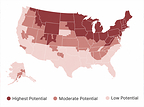
Its retail presence includes locations in Pennsylvania, Colorado and Iowa, extending access in states with significant radon concerns. Pennsylvania reports elevated radon in approximately 40% of tested homes, while Iowa is classified entirely within EPA’s highest radon-potential zone.(Pennsylvania DEP, Iowa HHS)

Radon is an invisible, odorless radioactive gas that can enter homes from the ground. EPA estimates that it causes approximately 21,000 U.S. lung cancer deaths annually and is the leading cause of lung cancer among nonsmokers. (EPA)

For routine monitoring, the XR0A-iR reduces reliance on repeated paid professional visits and eliminates mailing samples for each check, saving scheduling time and recurring testing expenses. Unlike single-use mail-in kits, it provides ongoing readings and trends without laboratory processing.

The C-NRPP-certified XR0A-iR offers measurement accuracy within ±10% at 5.4 pCi/L (200 Bq/m³) after seven days of monitoring, at a 95% confidence level. The detector connects to 2.4 GHz Wi-Fi for remote readings and app notifications. Its LCD displays radon levels and trend arrows, while up to 999 days of monitoring help reveal changes over time. Saved history survives battery replacement, and PDF reports or XLSX/CSV exports support professional consultation. Simple setup and up to two years of battery life make ongoing use convenient.

Home monitoring complements professional assessment and mitigation. EPA recommends fixing homes at 4 pCi/L or higher and considering reduction between 2 and 4 pCi/L. The detector measures radon; reducing elevated levels requires appropriate action. (EPA guidance)

Availability through Lowe’s brings radon monitoring into everyday home improvement shopping. Customers should check local stock before visiting.

About X-Sense

X-Sense has helped protect more than 15 million households worldwide through its range of smoke, carbon monoxide, and radon detectors, as well as environmental sensors. Its products combine smart features with long-term reliability and ease of use. X-Sense is committed to making innovative home safety solutions accessible to every household.

View original content to download multimedia:https://www.prnewswire.com/news-releases/x-sense-xr0a-ir-makes-smart-radon-monitoring-accessible-through-lowes-us-stores-302938594.html

SOURCE X-Sense

Continue Reading

Technology

Cohere Deepens Commitment to Japan with Sovereign AI Investments and Growing Enterprise Adoption

Published

on

By

Establishment of a new Japanese legal entity, expanded sovereign AI initiatives, and local enterprise partnerships accelerate Cohere’s growth in Japan

TOKYO, Nov. 13, 2026 /PRNewswire/ — Cohere, a leading provider of sovereign AI for enterprises and governments, today announced significant momentum in Japan, including plans to establish a Japanese legal entity and expand investments in sovereign AI initiatives tailored to the country’s regulatory, linguistic, and industrial requirements.

The announcement comes as Japanese organizations increasingly seek secure AI solutions that give them greater control over sensitive data and intellectual property. Cohere’s enterprise-grade models and North platform enable advanced AI deployments in private, highly secure environments, helping meet stringent security, data residency, and compliance requirements as regulatory and cybersecurity demands grow.

“Japan is emerging as one of the world’s leading markets for secure, sovereign AI,” said Andrew Chang, Vice President of APAC, Cohere. “Organizations across both the public and private sectors are moving beyond experimentation and deploying AI in mission-critical environments. We’re proud to deepen our local presence in Japan and work alongside some of the country’s most important institutions and enterprises as they build AI capabilities that reflect their own requirements, values, and strategic priorities.”

Building AI for Japan
The company has been building its local team under the leadership of Hyonju Cho, Cohere Japan Country Manager, while partnering with Japanese organizations to advance domestic AI capabilities. The company has partnered with Fujitsu to support the development and deployment of sovereign AI technologies, including Takane, a large language model (LLM) optimized for the Japanese market.  As announced  by Japan’s Digital Agency, Takane is among the domestic LLMs selected for evaluation in GENAI, the generative AI environment developed as part of the Agency’s Government AI efforts.

Today, Cohere’s products are deployed by organizations operating in the public sector and advanced manufacturing, reflecting growing demand for secure AI systems that enable organizations to retain control over their data and operations.

To support this growth, Cohere plans to establish a legal entity in Japan, strengthening its ability to serve customers locally and invest further in the country’s rapidly expanding AI ecosystem. As part of this commitment, Cohere is investing in its growing partner ecosystem in Japan, including a training and certification program designed to help local Japanese partners build expertise deploying secure, enterprise-grade AI solutions.

Japan has become one of Cohere’s fastest-growing markets globally, driven by strong demand from organizations seeking enterprise AI that can be deployed securely and adapted to local requirements. The establishment of a legal entity in Japan reflects Cohere’s long-term commitment to building a global ecosystem of frontier AI model builders that can retain choice, security, and control as they build the critical infrastructure of the future.

Cohere is also continuing its initiative to expand its Model Vault offering in Japan, a proprietary AI inference infrastructure that enables secure, region-localized deployment of AI models. Backed by local compute clusters, this initiative allows customers to run fully in-region inferencing for their AI workloads, ensuring customer prompts and model responses remain within Japan while supporting sovereign inferencing and maintaining strong privacy and security protections.

Enabling AI Adoption in Highly Regulated Industries
Cohere’s platform is designed to address complex requirements around security, privacy, compliance, and data residency, with deployment flexibility across public cloud, private cloud, on-premises, and fully air-gapped environments, making Cohere a trusted partner for governments and enterprises operating regulated industries.

Cohere’s record-setting Series E funding, targeting up to CAD $7 billion and representing a CAD $35.7 billion valuation, will accelerate frontier model development, expand enterprise-scale compute infrastructure, and strengthen its full-stack AI platform with purpose-built solutions tailored to regulated industries. The acquisition of AISLE establishes Cohere Cyber, enhancing security and threat detection capabilities for organizations operating in highly sensitive environments. Together, these investments signal Cohere’s ability to support Japanese organizations with secure AI deployments at scale.

Cohere’s continued investments in Japan reflect its belief that organizations increasingly want AI they can deploy on their own terms, with greater control over how it is developed, deployed, and governed.

About Cohere
Cohere, founded in 2019, is a leading provider of sovereign AI for regulated industries and governments that enables organizations to own, operate and govern their AI systems with greater control over their data, infrastructure, and deployment. Our all-in-one platform provides maximum security, privacy, and deployment flexibility across public and private clouds, on-premises environments, and fully air-gapped settings. Headquartered in Toronto, Cohere operates in San Francisco, London, New York, Berlin, Montreal, Ottawa, Singapore, Paris, Tokyo, United Arab Emirates, and Seoul, serving customers worldwide. For more information, visit cohere.com.

View original content to download multimedia:https://www.prnewswire.com/apac/news-releases/cohere-deepens-commitment-to-japan-with-sovereign-ai-investments-and-growing-enterprise-adoption-302937158.html

SOURCE Cohere Inc

Continue Reading

Trending