Connect with us

Technology

Waton Financial to Bring MoTA’s Multi-Agent Investment Platform to Individual Investors

Published

on

HONG KONG, July 14, 2026 /PRNewswire/ — With MoTA’s public beta scheduled for Q3 2026, the Nasdaq-listed AI company is betting that institutional-grade portfolio intelligence should be available to a much broader group of investors – not only the wealthiest.

One figure highlights a fundamental challenge in wealth management: 1.2%, the average annual fee charged by a human financial advisor to manage assets. On a $500,000 portfolio, that translates into $6,000 a year. Investors with smaller portfolios are often offered little more than a questionnaire and a standardized basket of ETFs marketed as “personalized” advice. Waton Financial Limited (Nasdaq: WTF) believes its AI agent platform, MoTA, can offer an alternative.

The premise is straightforward, but the model behind it is more ambitious. MoTA – short for Manager of Trading Agent — doesn’t scale advisory costs by headcount. Instead, it brings together a team of four or more specialized AI agents that analyze cross-market data, monitor portfolio risk, construct portfolios, and translate their findings into clear, actionable insights. Similar multi-agent architectures have been used by hedge funds for years. MoTA’s proposition is to make this approach available to individual investors, with economics that do not depend on whether an account holds four figures or seven.

“For decades, the industry has treated high-quality financial advice as a premium service,” said Tony Zhou, Waton’s Chairman and CTO. “That made sense when good advice depended on a human advisor with a CFA charter and a Bloomberg terminal. AI changes the economics. An AI agent does not get tired, does not require a minimum AUM requirement, and has no incentive to recommend the fund that pays the highest commission.”

That distinction matters. MoTA’s advisory engine is not a single model generating generic, one-size-fits-all allocations. It is an orchestration layer – what the company calls its Agent Orchestration Engine – that coordinates multiple specialized agents. A research agent analyzes fundamental data and technical signals. A risk agent monitors position sizing and correlations. An allocation agent aligns recommendations with user-defined goals, such as retiring in 15 years, making a down payment on a home in three, or funding a child’s education in 10. An advisory agent then presents the reasoning – not just the conclusion – in language users can question, refine, or act on.

What the Agent Talents Market Makes Possible

In June, MoTA Alpha launched alongside a feature still relatively uncommon in fintech: a marketplace for AI agents. The Agent Talents Market allows third-party developers to build and list their own specialized agents, ranging from retirement-planning specialists and ESG screeners to tax-loss-harvesting agents. This architecture means MoTA’s advisory capabilities are not limited to Waton’s internal R&D; they can expand as more developers build on the platform.

For individual investors, the difference can be substantial. A traditional wealth management firm typically assigns each client a single advisor, with additional support often reserved for larger accounts. MoTA, by contrast, allows users to deploy multiple teams, each comprising four or more specialized AI agents. One team might monitor Hong Kong small-cap stocks while another tracks the user’s exposure to U.S. technology stocks, with both working simultaneously. Because AI agents can operate continuously without charging by the hour, this model offers broader coverage at a fundamentally different cost structure.

Delivering that level of flexibility, however, depends on building a broad and diverse ecosystem of specialized agents. Rather than relying solely on agents developed in-house, Waton is also working with external partners and third-party developers to expand the range of capabilities available through the platform.

Waton’s partnerships with Panda AI and Tsinghua-linked X-Tech, announced in March, are intended to support the development of this ecosystem. The company expects the first third-party advisory agents to become available in the marketplace by late 2026.

Why Pixel Art

MoTA’s visual identity draws on 8-bit pixel art, featuring neon green against deep purple, CRT-style scan lines, and typefaces reminiscent of a 1990s Game Boy. It is an unconventional choice for a financial product.

“Most fintech apps use the same blue-and-white, highly serious visual language,” Zhou said. “That aesthetic can make finance seem complicated and best left to professionals. We wanted to send the opposite message. Pixel art means anyone can pick this up. People do not need a finance degree to play a video game, and they should not need one to play a more active role in managing their money.”

The idea behind the design is simple: understanding finance is not just about having the right knowledge, but also about making it easy for people to get started and stay involved. Many people lose interest because investing can feel complicated and time-consuming. MoTA is designed to make the experience feel more approachable, so more people can take an active interest in managing their investments.

The Numbers Behind the Narrative

Waton listed on Nasdaq in April 2025 at $4.00 per share. The company currently holds approximately $29.88 million in combined cash and segregated cash, with a net cash position of about $28.08 million. Waton believes this gives it sufficient runway to take MoTA through public beta and into its advisory rollout without raising additional capital.

The broader market outlook also points to strong growth. Global robo-advisory assets are projected to reach approximately $72 billion by 2030, representing annual growth of about 30%. Yet many existing products remain broadly similar, relying on passive ETF portfolios and limited personalization, while user satisfaction has plateaued. MoTA is betting that investors want a service that goes beyond a risk-tolerance questionnaire and scheduled portfolio rebalancing.

MoTA’s public beta is scheduled for Q3 2026 and will initially include onboarding tools for new investors, personalized analysis of U.S. and Hong Kong equity portfolios, and goal-based planning. Future plans include services for high-net-worth clients, digital asset allocation, and deeper integration with Waton’s brokerage infrastructure.

About Waton Financial Limited

Waton Financial Limited (Nasdaq: WTF) is the world’s first Nasdaq-listed AI agent holding company. Its flagship product, MoTA (Manager of Trading Agent), is an AI-powered investment platform designed to support users across the investment process, from trade execution to intelligent analysis and advisory services. Powered by a multi-agent architecture, MoTA combines advanced investment capabilities with a distinctive pixel-art interface. Waton also serves brokerage firms worldwide through its Broker Cloud platform and a range of SaaS and AI infrastructure solutions.

Disclaimer: This press release contains forward-looking statements. Actual results may differ materially from those expressed or implied. This is not investment advice. Past performance does not guarantee future results.

View original content:https://www.prnewswire.com/news-releases/waton-financial-to-bring-motas-multi-agent-investment-platform-to-individual-investors-302824691.html

SOURCE Waton Financial

Continue Reading
Click to comment

Leave a Reply

Your email address will not be published. Required fields are marked *

Technology

Globe Bags Back-to-Back Recognition in TIME’s World’s Most Sustainable Companies, Remains Only Philippine Telco on Global List

Published

on

By

TAGUIG CITY, Philippines, July 15, 2026 /PRNewswire/ — For the second consecutive year, Globe has been recognized in TIME and Statista’s World’s Most Sustainable Companies 2026, becoming the only Philippine telecommunications company included in the global ranking and one of only two Philippine companies recognized this year, underscoring its commitment to responsible business practices and long-term value creation.

Selected from more than 5,000 of the world’s largest and most influential companies, the ranking evaluates organizations across more than 20 key performance indicators in a four-step process covering sustainability criteria: Sustainable Business, Commitment and Ratings, Reporting and Transparency, and Environmental and Social Stewardship. The final list recognizes the top 750 companies worldwide.

Globe’s inclusion reflects more than a sustainability milestone. The recognition places Globe alongside many of the world’s most respected companies, reinforcing that Philippine businesses can compete globally on sustainability, transparency, and responsible governance. As sustainability stands as a vital benchmark for investors, customers, regulators, and communities, recognitions such as these demonstrate that Philippine businesses can meet the same standards of accountability and long-term thinking expected of leading global organizations.

“Earning a place on this global ranking shows that Philippine companies can meet the highest global standards for sustainability, transparency, and responsible governance,” said Carl Cruz, President and CEO of Globe. “Our sustainability practice continues to strengthen, it has become a measure of how we build trust, create long-term value, and remain competitive in a rapidly changing world.”

The recognition comes at a time when sustainability is increasingly viewed as a measure of corporate trust. Beyond environmental performance, the ranking evaluates companies on factors such as governance, transparency, accountability, external ratings, and social impact. These are the same qualities that shape confidence among customers, investors, regulators, employees, and communities. As expectations continue to evolve, trust is no longer built solely through products and services, but through how organizations create value, manage risks, and deliver on their commitments over the long term.

Globe’s inclusion in the ranking reflects its commitment to responsible business practices and measurable outcomes. Through its decarbonization strategy, the company achieved a 15.13% year-on-year reduction in gross Scope 1 and 2 greenhouse gas emissions and a 9.49% reduction in gross Scope 3 emissions, outpacing its annual reduction target of 4.2% for Scope 1 and 2 and 2.5% for Scope 3. Most recently, it has also expanded its use of renewable energy, transitioning approximately 700 sites as of end-May 2026 and targeting at least 3,000 sites by 2028 as part of its broader sustainability agenda.

As businesses navigate growing expectations around environmental, social, and governance performance, Globe continues to integrate sustainability into the way it operates, invests, and serves its stakeholders. The recognition from TIME and Statista reinforces the company’s belief that sustainable growth and trusted leadership go hand in hand.

ABOUT GLOBE

Globe Telecom, Inc. is a leading digital platform in the Philippines with interests in telecommunications, fintech, venture building, shared services, and digital marketing. It is listed on the Philippine Stock Exchange under the symbol GLO. The company delivers a full suite of mobile, broadband, data, and managed services to meet the needs of consumers and businesses. A UN Global Compact Participant, Globe is the first publicly listed Philippine firm with approved near- and long-term science-based targets under the SBTi. It was named one of TIME and Statista’s Most Sustainable Companies in 2026. Its back-to-back inclusion in the Fortune Southeast Asia 500 in 2024 and 2025 affirms its growth and leadership. Its principals are Ayala Corporation and Singtel, prominent industry leaders in the region.

View original content to download multimedia:https://www.prnewswire.com/apac/news-releases/globe-bags-back-to-back-recognition-in-times-worlds-most-sustainable-companies-remains-only-philippine-telco-on-global-list-302824597.html

SOURCE Globe Telecom, Inc.

Continue Reading

Technology

A Hitachi Group site selected as “Global Lighthouse Factory” by the World Economic Forum, marking the Group’s second designation

Published

on

By

Hitachi Vantara’s Norman, Oklahoma, U.S. advanced storage manufacturing site newly selected as a “Lighthouse” in recognition of the results achieved through AI-driven utilization as part of Hitachi’s Customer Zero initiativeHitachi will further enhance HMAX by drawing on cutting-edge AI expertise and technologies developed through its in-house operations, and accelerate AI Transformation, across the Hitachi Group and for customers

SANTA CLARA, Calif., July 14, 2026 /PRNewswire/ — Hitachi, Ltd. (TSE:6501, “Hitachi”) and Hitachi Vantara LLC (“Hitachi Vantara”), a Hitachi Group company, announced that Hitachi Vantara’s storage manufacturing facility in Norman, Oklahoma, United States, has been selected by the World Economic Forum (“WEF”) as one of its “Lighthouse” facilities—the world’s most advanced factories leading the Fourth Industrial Revolution technologies, utilizing technologies such as AI and robotics. This marks the second Hitachi Group’s site to receive this recognition, following Hitachi’s Omika Works *1, which was designated a “Lighthouse” in 2020.

The Norman facility serves as an end-to-end digital manufacturing and supply chain hub, producing advanced data infrastructure that supports AI-driven business transformation. The facility has comprehensively deployed AI across its operations. By applying Agentic AI to global demand forecasting and inventory management, the facility achieved a 77% reduction in lead time from order receipt to shipment and a 50% reduction in inventory. This selection was based on recognition of the facility’s comprehensive initiatives, including the establishment of a resilient supply chain leveraging AI which has enabled it to respond immediately to demand fluctuations and help significantly reduce CO₂ emissions.

By incorporating the cutting-edge AI technologies and insights gained through these in-house practices pursued by positioning our company as “Customer Zero”, Hitachi will drive the further advancement of HMAX by Hitachi, a next-generation suite of AI-powered solutions that brings the power of AI to social infrastructure, and accelerate the AI Transformation(“AX”) of the Hitachi Group and our customers. Going forward, Hitachi will expand these initiatives gained at the Norman facility to global production sites such as Hitachi Rail, drive AX in the OT (Operational Technology) domain as One Hitachi, and pursue a spiral-up approach to strengthen HMAX with proven technologies and use cases derived from real-world practice.

Hitachi is committed to strengthening and delivering HMAX through “One Hitachi”. By accelerating AX at customer field across a broad range of industries worldwide, Hitachi will contribute to sustainable business growth through enhanced sustainability, productivity, and resilience.
*1 Hitachi’s press release issued on January 10, 2020: Hitachi’s Omika Works Recognized as an “Advanced 4th Industrial Revolution Lighthouse” by the World Economic Forum

Background
The Global Lighthouse Network is a WEF initiative recognizing best-in-class operational sites and value chains that have achieved exceptional performance in productivity, supply chain resilience, customer centricity, sustainability and talent. Since Hitachi’s Omika Works was selected as a “Lighthouse” in 2020—the first Japanese company to receive this distinction—Hitachi has positioned the site as a factory showcasing Hitachi’s Lumada and has been accelerating global efforts to deploy the cutting-edge digital technologies cultivated on-site both within and outside the Group.

Today, demand for data infrastructure that supports corporate business transformation is rapidly increasing, driven by the rapid proliferation of AI and other factors. At the Norman site in the United States, we manufacture highly reliable storage solutions like Hitachi Virtual Storage Platform One (VSP One), a storage solution that delivers a foundation for AI-ready infrastructure. The facility was grappling with challenges such as improving decision-making speed and optimizing resource allocation to swiftly respond to a complex product lineup comprising approximately 3,000 variants attributed to global shifts in demand and increasingly customized customer requirements. Consequently, the two companies collaborated to introduce cutting-edge AI and digital technologies at this site. Moving beyond data utilization to include autonomous AI-driven decision-making and control, they promoted end-to-end supply chain transformation from order receipt to shipment, positioning the site as a “Customer Zero” showcase of HMAX Industry.

Specific Initiatives

AI-Driven Demand Forecasting and Optimization of Management Processes
By leveraging AI, Hitachi and Hitachi Vantara have optimized the entire process seamlessly from customer touchpoints to back-end planning. First, AI uses business meeting data from the system to forecast monthly demand, improving demand forecast accuracy by approximately 19%. In addition, for requests for proposals received by sales representatives, AI automatically generates draft responses based on technical information and past proposal content, reducing response time to customers by approximately 26%. As a result, the company can respond swiftly to rapidly changing market environments and meet customers’ sophisticated needs promptly.

Optimization of the Entire Global Supply Chain
The Norman site established a “Global Inventory Control Tower” that consolidates inventory and supplier information from sites around the world into a single dashboard. By using AI to calculate the optimal safety stock level for each part, the site has succeeded in reducing global inventory by approximately 50% while mitigating the risk of stockouts. This has helped improve cash flow and minimize inventory assets.

Realizing Autonomous Manufacturing Operations with AI
On the manufacturing floor, the Norman site promoted autonomous operations utilizing Agentic AI. Agentic AI automates the configuration setup of complex software, which varies by customer, by retrieving and integrating information from multiple systems. As a result, the site achieved a dramatic 84% reduction in the lead time for configure-to-order production. In addition, the “Real-Time Work Navigator” detects and corrects deviations from standard work procedures in real time using digital work instructions and image recognition powered by AI Vision. These initiatives have reduced training time for new workers by 80%, enabling both high-quality manufacturing and flexible workforce allocation.

Comment from Kiva Allgood, Managing Director at the World Economic Forum (WEF)
“The world’s leading manufacturers are no longer optimizing individual processes; they are reimagining entire operating systems. The newest Lighthouse sites show how intelligence is becoming embedded into the fabric of operations, enabling organizations to respond faster, learn continuously and unlock new levels of performance across their value chains.”

Comment from Jun Abe, Executive Vice President, Head of Digital Systems & Services Sector, Hitachi
“I am extremely proud that the Norman site has been selected as a WEF “Lighthouse”, following the selection of Omika Works in 2020. Under a true One Hitachi approach, we have positioned our own manufacturing sites as Customer Zero and have been driving transformation through the comprehensive use of AI. The results achieved at the Norman site using Agentic AI are a practical example that is unique to Hitachi, combining our strengths in IT, OT and products. Going forward, we will provide the expertise and use cases gained through this initiative to customers around the world through HMAX, contributing to enhanced resilience and sustainable growth across industry as a whole.”

Comment from Akinobu Shimada, CEO of Hitachi Vantara and President of Hitachi Vantara Japan
“As AI accelerates business around the world, robust data infrastructure to support it has become more important than ever. We are honored that the World Economic Forum has recognized the end-to-end supply chain transformation we achieved at Hitachi Vantara’s flagship manufacturing site. By applying cutting-edge AI technologies and embedding the expertise gained through this transformation into our solutions, including the VSP One data platform and Hitachi iQ, we are helping our customers accelerate innovation, strengthen data resilience, and gain the most value from their data across their hybrid cloud environments.”

Related Links
HMAX | Lumada: Hitachi
Hitachi iQ | Hitachi Vantara
Hitachi Virtual Storage Platform One | Hitachi Vantara
The Gap Between AI-Capable and AI-Ready | Hitachi Vantara 

Trademark Notice
All trademarks and product names are the property of their respective owners.

About the Global Lighthouse Network
The Global Lighthouse Network is a World Economic Forum initiative recognizing best-in-class operational sites and value chains that have achieved exceptional performance in productivity, supply chain resilience, customer centricity, sustainability and talent. The initiative is counseled by an advisory board of industry leaders who are working together to shape the future of global manufacturing. The advisory board includes Aramco, Foxconn Industrial Internet, Koç Holding, McKinsey & Company, Schneider Electric, Siemens, and Tata Steel. Sites and value chains that join the network are designated by an independent panel of experts. The next round of applications to join the Global Lighthouse Network will open in November 2026.

About Hitachi, Ltd.
Through its Social Innovation Business (SIB) that brings together IT, OT(Operational Technology) and products, Hitachi aims to be a global leader in continuously transforming social infrastructure through digital, contributing to a harmonized society where the environment, wellbeing, and economic growth are in balance. Hitachi operates worldwide across four sectors – Digital Systems & Services, Energy, Mobility, and Connective Industries – as well as a Strategic SIB Business Unit focused on new growth areas. With Lumada at its core, Hitachi creates value by combining data, technology and domain knowledge to solve customer and social challenges. Revenues for FY2025 (ended March 31, 2026) totaled 10,586.7 billion yen, with 606 consolidated subsidiaries and approximately 290,000 employees worldwide. Visit us at www.hitachi.com.

About Hitachi Vantara
Hitachi Vantara is transforming the way data fuels innovation. A wholly owned subsidiary of Hitachi Ltd., Hitachi Vantara provides the data foundation the world’s leading innovators rely on. Through data storage, infrastructure systems, cloud management and digital expertise, the company helps customers build the foundation for sustainable business growth. To learn more, visit www.hitachivantara.com.

View original content to download multimedia:https://www.prnewswire.com/news-releases/a-hitachi-group-site-selected-as-global-lighthouse-factory-by-the-world-economic-forum-marking-the-groups-second-designation-302825493.html

SOURCE Hitachi Vantara

Continue Reading

Technology

The University of Western Australia appoints SRM Technologies as Information Technology Partner for its India Branch Campuses

Published

on

By

Admissions now open at https://bit.ly/4wBV333 for UWA India’s Mumbai and Chennai campuses, with scholarships available for eligible students.

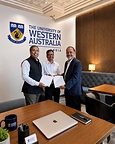
MELBOURNE, Australia, July 15, 2026 /PRNewswire/ — The University of Western Australia (UWA), a Global Top 100 university and founding member of Australia’s prestigious Group of Eight (Go8), has appointed SRM Technologies as its Information Technology partner for the establishment of UWA’s India International Branch Campuses in Mumbai and Chennai.

Kannan Natarajan, Global Head – Education & Public Sector Business, SRM Technologies, and Director, SRM Technologies Australia Pty Ltd. said: “Education technology is one of SRM Technologies’ core strengths. Our ability to rapidly implement and manage complete digital ecosystems for international universities establishing campuses in India has become a key differentiator. We are proud to partner with The University of Western Australia in building a world-class digital campus experience.”

David Das, Chief Operating Officer, UWA India, said on the appointment, “As we establish UWA’s India International Branch Campuses, it was critical to partner with an organisation that understands both the higher education sector and the technology required to support a world-class student experience. SRM Technologies brings proven expertise in delivering integrated digital campus solutions, and this partnership will ensure our campuses in Mumbai and Chennai are equipped with secure, scalable and future-ready technology from day one.”

The partnership will see SRM Technologies design, implement and manage the University’s end-to-end digital campus ecosystem, enabling UWA India to deliver a seamless student, academic and administrative experience from day one. The entire technology environment is being deployed within an accelerated five-month implementation timeline, supporting UWA India’s launch for the 2026-27 academic year.

The appointment further strengthens SRM Technologies’ position as a leading digital transformation partner for international universities establishing operations in India through comprehensive, end-to-end technology solutions. Under the multi-year engagement, SRM Technologies’ Education Technology Business Unit is implementing and managing UWA India’s complete technology ecosystem, including Admissions, Student Information System, finance, human resources, campus networking, enterprise applications, IT infrastructure and managed support services. The integrated platform has been designed to provide a secure, scalable and future-ready digital foundation for UWA’s India campuses.

Beyond implementation, SRM Technologies will provide ongoing application management, infrastructure operations and technology support, ensuring a reliable and connected digital experience for students, faculty and staff.

Manivannan S, CEO, SRM Technologies, said: “Education has been at the heart of SRM for over four decades. As universities worldwide respond to increasing student mobility, international branch campuses, and the growing adoption of hybrid learning, we see tremendous opportunities to help institutions modernize their digital ecosystems. Our strategic focus is on Australia and the United States, where we combine deep EdTech expertise with an outcome-based delivery approach to help education institutions accelerate their digital transformation and deliver exceptional experiences for students, faculty, and administrators.”

SRM Technologies also serves on the Victorian Government’s School Software Panel in Australia, delivering Unified School Management System solutions across K-12 education institutions.


View original content to download multimedia:https://www.prnewswire.co.uk/news-releases/the-university-of-western-australia-appoints-srm-technologies-as-information-technology-partner-for-its-india-branch-campuses-302824921.html

Continue Reading

Trending