Connect with us

Technology

Infrastructure AI Announces Event-Driven Blockchain Intelligence to Enable High-Speed Autonomous Infrastructure

Published

on

New Autonomous Triple-Ledger Architecture introduces an event-first blockchain framework designed to deliver machine-speed infrastructure response while preserving trust, security, governance, transparency, and auditability

SOMERSET, N.J., July 16, 2026 /PRNewswire/ — Infrastructure AI today announced a major architectural advancement in its mission to establish the global standard for Autonomous Infrastructure: the Autonomous Triple-Ledger Architecture, an event-driven blockchain intelligence framework designed to enable critical infrastructure to think, act, transact, and govern itself at machine speed—without sacrificing trust, security, transparency, or accountability.

As artificial intelligence advances from automation toward true autonomy, buildings, airports, hospitals, utilities, transportation networks, industrial facilities, data centers, and smart cities are evolving into intelligent environments capable of perceiving conditions, making decisions, coordinating resources, and executing actions. This transformation creates an urgent requirement for a trusted digital governance framework capable of supporting potentially millions of intelligent agents, billions of infrastructure assets and devices, and vast volumes of autonomous transactions.

Infrastructure AI’s new architecture addresses a fundamental challenge: traditional blockchain systems can introduce processing latency that is unacceptable in real-time infrastructure operations. A fire alarm cannot wait for blockchain consensus. A hospital cannot delay a critical response while a ledger validates a transaction. An airport cannot postpone an operational decision while multiple blockchains synchronize. In autonomous infrastructure, the physical world must respond first.

Infrastructure AI’s answer is Event-First Autonomous Blockchain Processing: Infrastructure responds first. Blockchain follows.

Under this model, operational events are immediately analyzed and acted upon by autonomous agents. Decisions, control actions, service requests, procurement processes, and other critical activities proceed without waiting for blockchain confirmation. In parallel, blockchain services perform validation, registration, consensus, synchronization, governance verification, and audit logging asynchronously in the background. The result is a new paradigm in which blockchain becomes an invisible trust layer rather than an operational bottleneck.

At the foundation of the architecture are three distinct but interconnected blockchain domains: the Agent Governance Blockchain, which gives every autonomous agent a unique digital identity and blockchain passport defining its authority, responsibilities, permissions, security policies, and operational boundaries; the Infrastructure Asset Blockchain, which creates a persistent digital identity and lifecycle record for buildings, equipment, utilities, transportation systems, and other physical assets; and the Infrastructure Marketplace Blockchain, which provides the trusted commercial environment through which autonomous agents, infrastructure owners, manufacturers, contractors, service providers, utilities, insurers, suppliers, and financial institutions can interact and transact.

“Autonomous infrastructure cannot be built on intelligence alone. It must be built on trust,” said Dilip Rahulan, Co-Founder and Executive Chairman of Infrastructure AI. “As millions of autonomous agents begin making decisions and taking actions across the physical world, we need a new class of trusted agents operating with verified identities, defined authority, enforceable boundaries, and complete accountability. Our vision is to establish the global standards, security disciplines, and governance principles necessary for the infrastructure fraternity to embrace autonomy with confidence.”

At the center of the framework is the Autonomous Blockchain Orchestration Engine, an intelligent coordination layer that prioritizes events, routes transactions, synchronizes ledgers, resolves conflicts, enforces governance policies, and enables cross-ledger intelligence. Rather than requiring every agent or infrastructure system to interact directly with multiple blockchain environments, the orchestration engine coordinates blockchain processes in parallel while real-world infrastructure continues operating at machine speed.

This architecture is designed for deployment through Infrastructure AI’s Infrastructure Intelligence Interface Module™, creating a scalable pathway for embedding autonomous intelligence and trusted governance into both existing and newly deployed infrastructure. The module brings AI agents, edge intelligence, digital twins, operational intelligence, and blockchain governance closer to physical assets—potentially accelerating the global deployment of autonomous infrastructure across buildings, factories, utilities, transportation systems, campuses, and cities.

The emergence of cross-ledger intelligence adds another transformative dimension. Agent governance records can inform marketplace decisions. Infrastructure events can activate authorized agents. Marketplace transactions can update asset lifecycle histories. Together, the three independent ledgers operate as one intelligent ecosystem, creating a trusted foundation for a living autonomous infrastructure economy.

“The transition to autonomous infrastructure demands more than technological innovation; it requires an entirely new discipline of trust,” said Glen Allmendinger, Co-Founder of Infrastructure AI and President of Harbor Research. “We are creating an environment where intelligent agents can collaborate with infrastructure assets, enterprises, and each other within clearly governed boundaries. Establishing common standards for agent identity, authority, security, accountability, and interoperability will be fundamental to building confidence across the global infrastructure community.”

Through its Galaxy Agentic Operating System (GAOS), Infrastructure Intelligence Interface Module™, Agent Passport architecture, digital twins, autonomous agents, and Autonomous Triple-Ledger Architecture, Infrastructure AI is building a foundation for infrastructure systems capable of perceiving, reasoning, deciding, acting, transacting, learning, and governing themselves.

The company’s Event-Driven Blockchain Intelligence vision represents a decisive shift in blockchain architecture for the physical world: operational events execute at machine speed while trust, governance, validation, and auditability are preserved asynchronously in the background.

The result is a scalable foundation for a new generation of trusted autonomous infrastructure—and a significant step toward establishing the global standards required for the next industrial revolution.

About Infrastructure AI

Infrastructure AI is pioneering the future of Autonomous Infrastructure through its Galaxy Agentic Operating System (GAOS), autonomous AI agents, digital twins, blockchain-based governance, Infrastructure Intelligence Interface Modules™, and intelligent infrastructure marketplace. The company’s mission is to establish the global standard for infrastructure capable of thinking, acting, transacting, learning, collaborating, and governing itself securely and autonomously.

www.infrastructureai.org

View original content to download multimedia:https://www.prnewswire.com/news-releases/infrastructure-ai-announces-event-driven-blockchain-intelligence-to-enable-high-speed-autonomous-infrastructure-302827154.html

SOURCE Infrastructure AI

Continue Reading

Technology

CCIEE 2026 Data Center Intelligent Construction Technology Forum Held in Malaysia

Published

on

By

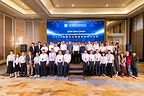
KUALA LUMPUR, Malaysia, Oct. 10, 2026 /PRNewswire/ — On September 16, the CCIEE 2026 Data Center Intelligent Construction Technology Forum was held in Kuala Lumpur, Malaysia. Cloud vendors, ICT equipment providers, design institutes, system integrators, renowned universities, industry associations, and industry chain partners from China, Malaysia, Singapore, and other countries and regions gathered to discuss development visions and shape a shared future for cooperation. Liu Fujian, Vice President and Chief Engineer of CCIEE, attended the event and delivered a speech.

In his remarks, Liu Fujian said that the global computing power market is experiencing rapid growth, and intelligent construction is becoming a key capability supporting the upgrading of computing power infrastructure. CCIEE will fully leverage its whole-chain service advantages, strengthen industrial ecosystem collaboration, and combine its professional strengths to promote deep integration of the innovation chain and industrial chain. It will deepen technological innovation cooperation, increase resource investment, and work with partners to advance the iterative upgrading of modular construction technologies. It will also seize opportunities in the Southeast Asian market, continue to cultivate key markets, and promote the upgrading of data center construction methods toward industrialization, intelligence, and green development, so as to jointly build a new, open, collaborative, green, and efficient ecosystem for digital infrastructure.

At the forum, guests held in-depth discussions on topics such as intelligent construction of data centers, modular rapid delivery, green computing power and liquid cooling infrastructure, and localized practices in Southeast Asia, sharing cutting-edge views and practical experience. Delegates agreed that Southeast Asia has become a core growth pole for global data center construction. Intelligent construction technologies driven by digitalization, modularization, and smart solutions are profoundly changing the development and construction models of data centers. Promoting standards alignment and mutual recognition, green power cooperation, and industrial collaboration has become a common mission for the entire industry. Taking this forum as a new starting point, all parties will work together to bring data center intelligent construction to new levels and achieve new breakthroughs.

View original content to download multimedia:https://www.prnewswire.com/apac/news-releases/cciee-2026-data-center-intelligent-construction-technology-forum-held-in-malaysia-302905038.html

SOURCE CCIEE

Continue Reading

Technology

Amap and Sands China mark the delivery of the first Tutu robots, with expected indoor navigation and 3D resort previews

Published

on

By

MACAU, Oct. 10, 2026 /PRNewswire/ — Amap, Alibaba Group’s location-based services platform, and Sands China today marked the delivery of the first batch of Tutu robot dogs at a ceremony at NBA House at The Venetian in Macau.

Tutu is taking on a new role as Sands China’s Robotic Guide No. 001, after the NBA House. The robots will begin providing visitor guidance at Sands Resorts Macau.

Under the partnership, Amap will also provide resort-wide indoor navigation, drawing on spatial information about floors, walkways, shops and public facilities. Using its spatial intelligence technology, Amap will build 3D models of selected resort areas, allowing visitors to preview from different viewing angles in the Amap app before arriving.

Welcoming Guests From NBA House to the Resorts

At the ceremony, Tutu walked autonomously from the waiting area to the stage, navigating around obstacles before stopping at the center. It moved without a remote control or leash.

Dr. DeVonne Iao, Senior Vice President and Chief Marketing Officer of Resort Marketing at Sands China, presented Tutu with its staff badge. The robot raised a front paw for a handshake and greeted the guests: “It is an honor to become Sands China’s Robotic Guide No. 001. I look forward to providing more services in the future.”

“We are delighted to welcome Tutu. This is our new step to bring tourism and technology together, and we look forward to Tutu making the resort experience more convenient and welcoming for visitors,” Iao said.

Amap and Sands China will explore how Tutu can serve different settings across the resorts, matching its spatial intelligence capabilities to Sands China operational needs.

Successful Navigation at NBA House

At NBA House, Tutu’s duties ranged from recommending food and exchanging fist bumps with fans to guiding children to restrooms.

During one interaction, a visitor extended a handshake with Tutu. The robot raised its front paw and reciprocated. When asked to sit, it sat down. After several exchanges, the visitor asked, “Can you take me somewhere to eat?” Tutu stood up and began leading the way.

Throughout the 11-hour workday, Tutu gave way to pedestrians, completed 214 requests for directions to facilities such as restrooms and service counters, and answered 4,546 questions in Chinese and English. It maintained the context of its tasks as visitors switched between languages and asked follow-up questions. The Tutu robots traveled more than 40 kilometers throughout NBA House — equivalent to 456 laps around a basketball court.

A Starting Point for Long-Term Service

The first activation with NBA House is just the beginning of Tutu’s long-term services. At NBA House, Tutu operated amid shifting crowds, background noise and frequent changes in requests, completing its assigned services. Moving from NBA House to the resorts brings a different set of challenges: longer service periods, visitor requests spread across more locations and closer coordination with existing staff workflows. All of these will require reliable equipment, effective task scheduling and coordination among multiple robots.

“Today is more than Tutu’s first day on the job — it is the start of long-term service,” said Zhou Haijing, Chief Financial Officer of Amap. “The true value of this partnership lies in Tutu’s ability to deliver reliable service during peak periods and become an integral part of the resorts’ service operations.”

Amap and Sands China will continue to refine the service, combining Sands China’s resort operating experience with Amap’s technology. The partnership will provide further practical experience in deploying embodied AI in tourism and hospitality settings.

View original content to download multimedia:https://www.prnewswire.com/news-releases/amap-and-sands-china-mark-the-delivery-of-the-first-tutu-robots-with-expected-indoor-navigation-and-3d-resort-previews-302905030.html

SOURCE Amap

Continue Reading

Technology

Sungrow Powers WKV’s Largest Utility-Scale BESS in Sri Lanka

Published

on

By

COLOMBO, Sri Lanka, Oct. 10, 2026 /PRNewswire/ — Sungrow, a globally leading supplier of PV inverters and energy storage systems, announced the successful commissioning and commercial operation launch of WKV Hydro Technics (Pvt) Ltd’s 10 MW/40 MWh Battery Energy Storage System (BESS) in Galle, Sri Lanka on September 10, 2026. WKV Group, a subsidiary of Khen Energy Limited, deployed Sungrow’s PowerTitan 2.0 solution, enhancing grid flexibility and delivering fast‑response energy storage capacity to support renewable energy integration.

Sri Lanka is expanding renewable generation, with the country’s long-term power plan targeting 70% of electricity generation from renewable energy sources by 2030, led by solar and wind. As the share of variable renewable generation grows, the power system requires more flexible resources that can respond quickly to fluctuations in supply and changing demand patterns. Electricity demand typically reaches its daily peak at around 7 p.m, placing additional pressure on the grid during the evening. Against this backdrop, Sri Lanka’s power-sector planning has identified utility-scale battery energy storage as an important grid-support technology for maintaining system reliability and enabling greater renewable energy integration.

PowerTitan 2.0 Designed for Local Project Requirements

End-to-end intelligent management: The system integrates station-level control with intelligent battery management, continuously tracking battery status and optimizing operation to support system stability and long-term performance.Full-stack pre-commissioning capability: PowerTitan 2.0 integrates the battery system and PCS into an all-in-one AC-DC block, with key components pre-assembled before delivery. This simplifies on-site installation and commissioning, contributing to a 50% reduction in grid-connection time.Built for a challenging coastal environment: Located approximately 500 meters from the sea, the project operates in a hot, humid and corrosive environment. PowerTitan 2.0 is designed to withstand challenging environmental conditions, supporting reliable long-term operation. The system is designed for an operational life of at least 15 years.

The project strengthens the grid’s peak-shaving and frequency-regulation capabilities, providing fast and flexible support as electricity demand and renewable generation fluctuate. By storing electricity when supply is available and dispatching it when needed, the BESS can help improve system efficiency, enhance supply reliability and create greater flexibility to integrate renewable energy.

“The commissioning of this Project is not only a technological milestone but a national achievement. By partnering with Sungrow, we have demonstrated how foresight, innovation, and collaboration can reshape Sri Lanka’s energy landscape. This project is a testament to what can be accomplished when industry leaders work together toward a shared vision of sustainability and resilience,” said Sudath Pathmal, Chief Operating Officer of WKV Group.

Accelerated Delivery Through Close Coordination

The project set a benchmark for rapid, high-quality delivery in challenging conditions. From thermal commissioning to pre-SAT, the project was completed in just one week, followed by formal SAT and commercial operation within five days. The accelerated delivery was supported by:

Proactive pre-project enablement: Technical parameters were pre-configured, with auxiliary power, liquid-cooling inspections, and grid-connection planning completed ahead of commissioning to minimize on-site delays.On-site cross-team support: Sungrow’s technical and delivery experts provided on-site support through SAT and COD, helping WKV complete testing and transition into commercial operation within the compressed schedule.

The project demonstrates Sungrow’s ability to combine integrated technology, coordinated project execution and hands-on customer support to address the practical demands of utility-scale energy storage projects. Building on its experience across global markets, Sungrow will continue to support customers in deploying reliable energy storage solutions that enhance grid flexibility and enable greater renewable energy integration.

Media Contact:
Luly Wang
luly.wang@sungrow-hq.com


View original content to download multimedia:https://www.prnewswire.com/apac/news-releases/sungrow-powers-wkvs-largest-utility-scale-bess-in-sri-lanka-302905032.html

SOURCE Sungrow

Continue Reading

Trending