Connect with us

Technology

D.Law Introduces TREO — the Litigation Operating System Built In-House by the Firm That Runs On It

Published

on

TREO — Time, Records, Evidence, Outcomes — is in full use across D.Law at 100% staff adoption.

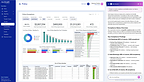
PASADENA, Calif., Aug. 6, 2026 /PRNewswire/ — D.Law, one of California’s largest plaintiff-side employment law firms, today introduced TREO, powered by D.Law — a Litigation OS designed, engineered, and built entirely in-house.

Not case management software. An operating system for how a case actually runs.

Every lawyer knows the problem with the first one. The software on the market is always missing something. So firms stitch together three or four systems, write workarounds for the gaps, and train their people to live inside the seams. The work gets done. But it gets done in spite of the tools, not because of them.

D.Law spent years inside those tools. Then the firm’s technology team stopped waiting for the market to catch up and built what the practice actually needed.

TREO is organized around the four things that decide a case:

Time — deadlines, statutes, and calendars that hold, so nothing depends on someone remembering.Records — every document where it belongs, retrievable in seconds, not searched for.Evidence — facts, exhibits, and testimony connected to the claims they support.Outcomes — visibility into what is actually moving a case forward, and what isn’t.

Adoption inside the firm is the proof.

100% of D.Law’s staff — every attorney, every paralegal, every intake and support team member — works in TREO. Not a pilot. Not a department. 200+ people, all of them.

Each of them is getting four to five hours back a week.

“We built TREO because we needed it. We built it well enough that it doesn’t have to stay ours,” said Emil Davtyan, founder of D.Law. “We think of ourselves as a technology company that practices employment law, not a law firm that happens to use software. We stopped calling this category case management a long time ago, because managing a case isn’t the job. Running one is. TREO is the first system we’ve used that was built for the second thing.”

TREO was built by D.Law’s internal technology team under Chief Technology Officer Valeri Tavadyan.

“We had something most software teams never get — the users were down the hall,” Tavadyan said. “Every feature in TREO exists because someone handling real cases told us what was breaking. That feedback loop is the product.”

Davtyan is blunt about what that means. “We didn’t build an internal tool that happens to work well. We built software. Software rarely stays in one building.”

What’s next

TREO was built for D.Law, and that is who it serves today. It is the system the firm runs on and the backbone of how D.Law continues to grow.

The work ahead is the same work that produced it — keep building, keep perfecting the practice, keep raising the standard for the people doing the work.

About D.Law

D.Law is a California employment law firm representing employees — not employers — in wrongful termination, discrimination, harassment, retaliation, and wage and hour matters. Founded by Emil Davtyan and headquartered in Pasadena, the firm employs a team of more than 200 and has been recognized as an Inc. Best Workplace in back-to-back years (2025 and 2026). Learn more at www.d.law.

About TREO

TREO — Time, Records, Evidence, Outcomes — is a Litigation OS developed in-house by D.Law’s technology team. Built for plaintiff-side practice and in full use across a firm of more than 200, TREO unifies deadline management, document handling, evidence organization, and case analytics in a single system.

Contact: Armen Petrosyan, armen@d.law 

View original content to download multimedia:https://www.prnewswire.com/news-releases/dlaw-introduces-treo–the-litigation-operating-system-built-in-house-by-the-firm-that-runs-on-it-302845263.html

SOURCE D.Law, Inc.

Continue Reading
Click to comment

Leave a Reply

Your email address will not be published. Required fields are marked *

Technology

University of Phoenix research chair presents pilot findings on AI-assisted empathy at 2026 American Psychological Association convention

Published

on

By

Dr. Rodney Luster shares early findings and ethical considerations for using generative AI as an adjunct to psychotherapy and counselor training.

PHOENIX, Aug. 7, 2026 /PRNewswire/ — Rodney Luster, PhD, University research chair and chair of the Center for Leadership and Entrepreneurial Research (CLER) in the University of Phoenix College of Doctoral Studies, presented pilot research examining the potential use of generative artificial intelligence to support structured empathy practice at the 2026 American Psychological Association annual convention.

Luster’s virtual poster, “In-Session AI Reflection and Empathy: Pilot Findings and Practice Implications,” will be presented August 8 as part of the Society for the Advancement of Psychotherapy, Division 29 virtual poster session. The study explored whether professionally facilitated engagement with researcher-constructed AI personas could provide a repeatable environment for practicing perspective-taking, emotional labeling, validation and repair-oriented communication.

Key points from the pilot study include:

Ten adults completed two facilitated AI-persona encounters and pre- and post-experience empathy assessments.Mean empathy assessment scores increased from 23.10 to 25.80, with nine of 10 participants recording higher post-experience scores.The research emphasizes that generative AI should be considered an adjunctive process tool, not a standalone intervention or substitute for instructors, supervisors, clinicians or human relationships.The exploratory findings demonstrate feasibility and a promising association, not evidence that AI independently caused lasting changes in empathy.

“Empathy is central to effective counseling, yet it can be difficult to practice and assess consistently,” Luster said. “This small pilot explored whether professionally facilitated AI personas could offer a repeatable, transcript-rich environment for structured rehearsal and reflection. The goal is not to replace instructors, supervisors or human relationships, but to examine how AI might responsibly support the work they already do.”

Pilot study explores structured empathy practice

Generative AI is increasingly used by individuals to reflect on interpersonal conflict and emotional distress, but clinicians and counselor educators have limited research-based guidance on whether AI-facilitated reflection can support processes associated with therapeutic change.

The pilot study examined structured interactions with AI personas created by the researchers to present participants with complex relational experiences. Participants were guided to consider multiple viewpoints, identify and label emotions, respond with curiosity and validation, and develop language oriented toward relational repair.

Participants completed an eight-item empathy self-assessment before and after the experience. Researchers also reviewed the interaction transcripts for indicators such as perspective taking, empathic concern, emotional labeling, continuity tracking, curiosity and meaning-making.

The transcripts allowed researchers to examine not only participants’ final responses, but also how their communication developed throughout each interaction. According to the pilot findings, progression appeared to depend on accumulated relational safety rather than a single “correct” response.

Early findings suggest potential for guided reflection

Mean empathy scores increased by 2.70 points, from 23.10 before the facilitated experiences to 25.80 afterward. The study reported a within-person effect size of dz = 0.89, and nine of the 10 participants increased their assessment scores.

Nine participants also reached the third level of the researchers’ relational progression framework, which represented disclosure of an underlying emotional wound. Qualitative findings included:

Greater emotional clarityIncreased openness to alternative perspectivesReduced certainty in hostile interpretations of another person’s actionsGreater readiness to use repair-oriented languageIncreased recognition of emotional meaning across an interaction

The results are preliminary. The small pilot did not include a control group, and the findings should not be interpreted as proof that AI caused durable changes in empathy. Participant expectations, the facilitation process and other factors may have contributed to the observed changes.

Ethical use depends on clinician oversight

Luster’s presentation placed significant emphasis on the ethical and professional guardrails required when integrating generative AI into psychotherapy or counselor preparation.

The proposed implementation framework maintains that clinicians, instructors and supervisors must retain responsibility for interpreting AI-generated material and determining how, or whether, it should be incorporated into an individual’s treatment or learning experience.

Considerations outlined in the presentation include:

Providing clear informed-consent languageProtecting client privacy and confidentialityEstablishing appropriate therapeutic and instructional boundariesDocumenting the use of AI-assisted exercisesPreserving client autonomyReviewing AI-generated output rather than accepting it uncriticallyRecognizing circumstances in which AI-assisted activities may be inappropriate

The presentation identified potential contraindications involving high-acuity situations, paranoia or impaired reality testing, heightened suggestibility and increased privacy vulnerability. These guardrails reinforce the study’s central position that generative AI should strengthen rather than replace human relationships and professional judgment.

Implications for research and practice

The pilot suggests that professionally facilitated AI personas may offer a structured setting for rehearsing difficult conversations, receiving immediate relational feedback and reviewing detailed transcripts with an instructor, supervisor or clinician.

Potential applications identified in the presentation include guided reflection involving relationship rupture, workplace conflict, values-based decision-making and supervised counselor empathy practice. The approach may allow participants to practice communication responses repeatedly before applying them in interpersonal or professional settings.

Further research is needed to determine whether the findings can be replicated and whether observed changes continue over time. Recommended next steps include studies with larger and more demographically diverse samples, controlled comparisons, independent validation of the researchers’ relational progression framework and assessment of outcomes across different participant and clinical populations.

View the presentation abstract and poster on the APA 2026 program website.

About Rodney Luster

Rodney Luster, PhD, LPC, is a University research chair and chair of the Center for Leadership and Entrepreneurial Research in the University of Phoenix College of Doctoral Studies. CLER supports applied, multidisciplinary research related to leadership, organizational strategy, industrial-organizational research and transformative learning. Luster’s scholarship examines relational dynamics, difficult conversations and practical approaches that may help individuals and organizational leaders navigate complex interpersonal experiences. He also publishes regularly on the Psychology Today blog.

About the College of Doctoral Studies

University of Phoenix’s College of Doctoral Studies focuses on today’s challenging business and organizational needs, from addressing critical social issues to developing solutions to accelerate community building and industry growth. The College’s research program is built around the Scholar, Practitioner, Leader Model which puts students in the center of the Doctoral Education Ecosystem® with experts, resources and tools to help prepare them to be a leader in their organization, industry and community. Through this program, students and researchers work with organizations to conduct research that can be applied in the workplace in real time.

About University of Phoenix

University of Phoenix is Built for Real Life. 50 Years Strong. The University innovates to help working adults enhance their careers and develop skills in a rapidly changing world through flexible online learning, relevant courses, academic AI pillars, and skills-mapped curriculum for associate, bachelor’s and master’s degree programs. Active students and alumni have access to Career Services for Life® resources including career guidance and tools. For more information, visit phoenix.edu.


View original content to download multimedia:https://www.prnewswire.com/news-releases/university-of-phoenix-research-chair-presents-pilot-findings-on-ai-assisted-empathy-at-2026-american-psychological-association-convention-302846323.html

SOURCE University of Phoenix

Continue Reading

Technology

Happiest Baby Announces Voluntary Recall for Extra-Small and Extra-Large SNOO Sack Accessories

Published

on

By

LOS ANGELES, Aug. 7, 2026 /PRNewswire/ — Today, Happiest Baby announced a voluntary recall of its extra-small (XS) and extra-large (XL) SNOO Sacks®. This action follows a communication from the U.S. Food and Drug Administration (FDA), advising Happiest Baby that the Company needed to obtain FDA’s premarket authorization for those two sizes.

Out of an abundance of caution, customers are asked to discontinue use and discard their XS and XL SNOO Sacks.

This recall does not include the SNOO Smart Sleeper or the small, medium, and large SNOO Sacks. SNOO Smart Sleeper® and the small, medium, and large SNOO Sacks received FDA

De Novo authorization in 2023. In addition, it does not affect any Sleepea® swaddle sacks, including XS and XL Sleepeas. (Sleepea sacks have no wings and are only designed for use outside of a SNOO.)

The XS and XL SNOO Sacks were launched after the original FDA De Novo submission and, as a result, were not part of the FDA review.

Note: The XS SNOO Sack is ¾” narrower and 2″ shorter than the FDA-authorized small size sack. The XL SNOO Sack is ½” wider and 3″ longer than the FDA-authorized large size sack. The FDA stated that these changes could result in a fit that was too loose or too tight. Happiest Baby has not received any reports of injury in connection with the use of XS or XL SNOO Sacks.

Anyone who purchased an XS or XL SNOO Sack, in the U.S. from Happiest Baby’s website can apply for a refund or exchange for a small, medium, or large SNOO Sack by visiting http://happiestbaby.com/xs-xl-support. Customers who purchased an XL SNOO Sack from Amazon should contact Amazon directly (888-280-4331).

Happiest Baby remains committed to meeting the highest standards for quality, safety, and family wellbeing. SNOO remains the first and only baby bed granted FDA De Novo authorization for keeping babies safely positioned on the back—all naps, all night.

Consumers with further questions are encouraged to contact Happiest Baby Customer Care at http://happiestbaby.com/help.

ABOUT HAPPIEST BABY

Happiest Baby, Inc. is a mission-driven company dedicated to enhancing the health and well-being of children, parents, and healthcare workers. Co-founded by world-renowned pediatrician Dr. Harvey Karp and his wife, Nina Montée Karp, the company creates innovative, science-backed content and products such as the SNOO Smart Sleeper, Sleepea swaddle, and the SNOObie white noise machine.

Dr. Karp is the author of the celebrated parenting books and videos, The Happiest Baby on the Block, The Happiest Toddler on the Block, The Happiest Baby’s Guide to Great Sleep: Birth to Five. They have been translated into dozens of languages and helped millions of families worldwide.

CONTACT
press@happiestbaby.com 

View original content:https://www.prnewswire.com/news-releases/happiest-baby-announces-voluntary-recall-for-extra-small-and-extra-large-snoo-sack-accessories-302846331.html

SOURCE Happiest Baby, Inc.

Continue Reading

Technology

AMTD IDEA’s Receipt of NYSE Letter Regarding ADS Trading Price’s Below Compliance Standards

Published

on

By

PARIS and NEW YORK and SINGAPORE, Aug. 7, 2026 /PRNewswire/ — AMTD IDEA Group (NYSE: AMTD; SGX: HKB) (“AMTD IDEA” or the “Company”), today announced that it has received a letter from the New York Stock Exchange (the “NYSE”), notifying the Company that it is below compliance standards due to the trading price of the Company’s American depositary shares (the “ADSs”).

Pursuant to Section 802.01C of the NYSE’s Listed Company Manual, a company will be considered to be below compliance standards if the average closing price of its security as reported on the consolidated tape is less than US$1.00 over a consecutive 30 trading-day period. The Company has six months (the “Cure Period”) following receipt of the notice to regain compliance with the minimum share price requirement. The Company can regain compliance at any time during the Cure Period if on the last trading day of any calendar month during the Cure Period the Company has a closing share price of at least US$1.00 per ADS and an average closing share price of at least US$1.00 per ADS over the 30 trading-day period ending on the last trading day of that month. In the event that at the expiration of the six-month Cure Period, both a US$1.00 per ADS closing share price on the last trading day of the Cure Period and a US$1.00 per ADS average closing share price over the 30 trading-day period ending on the last trading day of the Cure Period are not attained, the NYSE will commence suspension and delisting procedures.

The Company intends to monitor the market conditions of its listed securities and will consider various measures to cure the non-compliance caused by adverse effects on its trading price and avoid any potential delisting. The Company remains confident in its long-term strategy, business fundamentals and growth prospects and plans to continue the execution of its share repurchase programs as previously announced.

As of August 7, 2026, the Company has repurchased 4,417,036 ADSs under the existing repurchase programs.

About AMTD IDEA Group

AMTD IDEA Group (NYSE: AMTD; SGX: HKB) represents a diversified institution and digital solutions conglomerate group, connecting companies and investors with global markets. Its comprehensive one-stop business services plus digital solutions platform addresses different clients’ diverse and inter-connected business needs and digital requirements across all phases of their life cycles. AMTD IDEA Group is uniquely positioned as an active super connector between clients, business partners, investee companies, and investors, connecting the East and the West. For more information, please visit www.amtdinc.com or follow us on X (formerly known as “Twitter”) at @AMTDGroup.

Safe Harbor Statement

This press release contains statements that may constitute “forward-looking” statements pursuant to the “safe harbor” provisions of the U.S. Private Securities Litigation Reform Act of 1995. These forward-looking statements can be identified by terminology such as “will,” “expects,” “anticipates,” “aims,” “future,” “intends,” “plans,” “believes,” “estimates,” “likely to,” and similar statements. Statements that are not historical facts, including statements about the beliefs, plans, and expectations of AMTD IDEA Group are forward-looking statements. Forward-looking statements involve inherent risks and uncertainties. Further information regarding these and other risks is included in the filings of AMTD IDEA Group with the SEC. All information provided in this press release is as of the date of this press release, and AMTD IDEA Group does not undertake any obligation to update any forward-looking statement, except as required under applicable law.

For more information, please contact:

IR Office
AMTD IDEA Group
EMAIL: ir@amtdinc.com

View original content:https://www.prnewswire.com/news-releases/amtd-ideas-receipt-of-nyse-letter-regarding-ads-trading-prices-below-compliance-standards-302846338.html

SOURCE AMTD IDEA Group

Continue Reading

Trending