Connect with us

Technology

Found Industries Opens Cambridge Headquarters and Found Metals Process Development Center

Published

on

New facility will accelerate the scale-up of domestic gallium and other critical-mineral refining technologies while Found maintains a Boston presence for its energy projects

CAMBRIDGE, Mass., Aug. 7, 2026 /PRNewswire/ — Found Industries, an MIT spinout developing technologies to strengthen domestic critical-materials and energy production, this week announced the opening of its new headquarters and Found Metals Process Development Center in Cambridge, Massachusetts.

Found Industries opens new Cambridge center to scale domestic critical-mineral refining.

The new facility expands Found’s capacity to transform laboratory discoveries into industrial processes that can operate continuously using real-world feedstocks. The company’s scientists, engineers and technicians will develop, build and test systems for recovering critical metals from existing industrial streams and produce qualified products for customers across the U.S. industrial base.

The opening was celebrated with a ribbon-cutting ceremony featuring U.S. Department of Energy Associate Deputy Secretary Alex Fitzsimmons; Massachusetts Lieutenant Governor Kim Driscoll; MIT President Emeritus Rafael Reif; MIT Professor Elsa Olivetti, co-director of the MIT Mineral Stewardship Consortium; Massachusetts Undersecretary of Economic Development Zenobia Moochhala; and leaders from government, MIT, industry and the Greater Boston innovation community.

“The opening of this center marks Found’s transition from scientific breakthrough to industrial scale-up,” said Dr. Peter Godart, founding president and CEO of Found Industries. “Gallium and other critical metals already move through industrial streams in the United States, but we have yet to extract them at scale. This is fundamentally a processing and, more importantly, a technology bottleneck. Our goal is to unlock new domestic production using the infrastructure and resources already in front of us.”

Found began as Found Energy, based on research Godart initiated at NASA’s Jet Propulsion Laboratory and continued during his doctoral work at MIT. The company’s original technology activates aluminum so that it can react with water to generate hydrogen and heat, creating a new use for an abundant and energy-dense material.

As Found developed and scaled its energy platform, the company encountered broader vulnerabilities across the supply chains for materials used in semiconductors, defense systems, energy infrastructure and advanced manufacturing. Found Metals was established to address those vulnerabilities through new processes that recover critical metals directly from industrial feedstocks, residues and byproducts. Found Metals’ process does not rely on any foreign-controlled materials or reagents, enabling a fully domestic pathway for recovering and refining critical materials from resources already present within U.S. industrial infrastructure.

Gallium is one of Found Metals’ initial priorities. The material is essential to advanced semiconductors, radar, communications, data centers, space-based solar systems and power electronics, yet the United States produces virtually none of the primary gallium it consumes. Found is developing processes to recover gallium from a variety of industrial process streams, with a technology pipeline that includes indium, germanium, antimony and other critical materials.

In May 2026, Found Industries and ARES Strategic Mining Inc. (CSE: ARS) (OTC: ARSMF) (FRA: N8I1) announced a memorandum of understanding to evaluate the recovery of gallium, germanium and other strategic critical materials from ARES-owned or controlled feedstocks associated with the Lost Sheep Mine in Utah. The companies are evaluating opportunities to apply Found Metals’ technology to feedstock assessment, process integration, piloting, scale-up and potential commercialization.

“Found Industries is a shining example of the technological innovation and growth that Massachusetts is known for,” said Lieutenant Governor Driscoll. “The company’s expansion in Cambridge represents exactly the type of growth we want in the Commonwealth, including advanced manufacturing, energy and critical technologies that can strengthen domestic supply chains, create good jobs and make the United States more competitive.”

The Process Development Center is designed to address one of the most difficult stages in industrial technology development: moving from a successful laboratory experiment to a reliable, continuously operating system. Work at the facility will include process integration, testing with representative industrial feedstocks, equipment development, product qualification and preparation for deployment with industrial partners.

“The United States and allied countries need more than new mines,” said Professor Olivetti. “We need to treat existing industrial waste streams, refining residues, scrap streams and byproducts as strategic mineral resources. Found’s strategy builds critical-minerals capacity around industrial partners that already have the feedstocks, sites, utilities, logistics and operations needed to move quickly.”

The U.S. Department of Energy is supporting Found’s domestic gallium work through the Technology for Recovery and Advanced Critical-material Extraction-Gallium, or TRACE-Ga, program. Found was selected to advance its Direct Feedstock Extraction technology, a continuous electrochemical process designed to recover gallium directly from dilute liquors without ion-exchange preconcentration or significant modification of the underlying mineral production circuits.

Found’s initial domestic gallium projects have also received support from the U.S. Department of Defense and the Massachusetts Clean Energy Center, alongside private investment. The company has received additional support through organizations including Activate, Elemental Impact and Innoventure Labs as it has progressed from scientific research to commercial development.

“Found Industries is exactly the kind of company that the country needs today,” said Reif. “It is a science-based innovation company translating research into technology that addresses major national challenges in industrial manufacturing and supply chains. The semiconductor and aluminum industries need the capabilities that Found is developing.”

“Found Industries is a bipartisan success story and a Department of Energy success story,” said Fitzsimmons. “Critical-mineral supply chains are essential to our economic growth, national security and long-term competitiveness. Scaling technologies from the laboratory to the marketplace requires federal, state and private-sector partners working together, and we look forward to continuing our partnership with Found.”

While the Cambridge facility will serve as Found Industries’ headquarters and primary metals process-development hub, the company will maintain a presence in Boston supporting its energy projects. Found is advancing a broader pipeline of energy and critical-materials projects in the United States and internationally.

“This facility gives our team the tools to turn ambitious projects into functioning industrial systems,” Godart said. “Greater Boston has long been a world-leading center for scientific discovery. Our opportunity now is to connect those discoveries to manufacturing and industrial deployment, making this a region that not only invents the future, but builds it.”

About Found Industries

Found Industries develops technologies to restore critical-materials and energy production using abundant resources and existing industrial infrastructure. Found Energy develops systems that use activated aluminum to generate hydrogen and heat, while Found Metals develops processes to recover gallium and other critical materials from industrial streams. For more information, visit found-industries.com.

View original content to download multimedia:https://www.prnewswire.com/news-releases/found-industries-opens-cambridge-headquarters-and-found-metals-process-development-center-302845639.html

SOURCE Found Industries

Continue Reading

Technology

GOFO White Paper Highlights Structural Shift in U.S. Last-Mile Delivery

Published

on

By

The white paper examines changing carrier dynamics, fragmented e-commerce demand and strategies for shippers navigating an evolving parcel market.

LOS ANGELES, Nov. 9, 2026 /PRNewswire/ — GOFO, a technology-driven global last-mile delivery carrier, highlights a structural shift in the U.S. parcel market in its industry white paper, How Fragmenting E-Commerce Is Rebuilding the U.S. Last Mile, first introduced at PARCEL Forum 2026 in September. Drawing on third-party market research, industry data and customer case studies, the report examines how changing strategies among established carriers and increasingly fragmented e-commerce demand are creating room for a broader range of delivery networks and reshaping carrier selection for shippers.

A Changing U.S. Parcel Market

According to ShipMatrix data cited in the white paper, U.S. domestic parcel volume reached 23.9 billion packages in 2025, an increase of 0.4% year over year (ShipMatrix, 2026). Amazon Logistics surpassed USPS as the nation’s largest domestic parcel carrier by volume, delivering 6.7 billion packages, up 9.9%, compared with USPS’s 6.6 billion (ShipMatrix, 2026).

Amazon’s expansion represents a significant development in a market historically dominated by UPS, FedEx and USPS. Meanwhile, UPS has been reducing lower-value Amazon volume, FedEx is emphasizing higher-value shipment segments, and USPS continues competing for lightweight e-commerce deliveries while adjusting its pricing and service mix.

On the demand side, e-commerce is becoming increasingly fragmented. According to eMarketer estimates cited in the report, Amazon accounted for approximately 40.5% of U.S. retail e-commerce sales in 2025, with the remaining 59.5% distributed across other marketplaces, retailer websites and direct-to-consumer channels (eMarketer, 2025). This diversification is creating more varied shipment patterns, fulfillment arrangements and delivery requirements.

The Rise of Alternative Carriers

As traditional carrier strategies and e-commerce demand evolve, alternative delivery networks are expanding their presence in the U.S. parcel market. ShipMatrix’s “Other Carriers” category, which includes retailers’ own delivery networks and independent regional carriers, reached approximately 2.5 billion packages in 2025, with reported growth of 13% (ShipMatrix, 2026).

The white paper identifies a range of emerging operating models, including cross-border specialists, technology-enabled urban delivery platforms and super-regional networks. Rather than following a single standardized approach, these carriers serve different geographic markets, shipment profiles and fulfillment needs.

This evolving landscape is giving shippers a broader range of delivery options. The report recommends evaluating carriers based on total transportation costs, geographic coverage, service reliability and technology integration, while maintaining diversified carrier relationships to reduce dependence on individual networks.

Customer Case Studies Highlight the Importance of Carrier Readiness

Drawing on GOFO’s experience with Dr. Squatch and ShipMonk, the white paper illustrates how alternative carriers can support shippers when existing delivery arrangements are disrupted.

According to the case studies, Dr. Squatch expanded its relationship with GOFO from a monitored pilot to a core carrier arrangement after an existing provider became unavailable at short notice. During the transition, the average calendar transit time improved from 3.75 to 3.15 days.

ShipMonk faced an unplanned carrier transition within its Economy delivery tier. GOFO became operational within ShipMonk’s Virtual Carrier Network in 10 days and completed onboarding across its network nodes within 35 days. Over a comparable off-peak period, average transit time improved from 2.56 to 2.10 business days.

Both cases illustrate how advance carrier integration and diversified delivery options can support service continuity during unexpected disruptions.

Looking Ahead

The white paper concludes that U.S. last-mile delivery is undergoing a long-term structural realignment rather than a temporary market cycle. As delivery networks diversify, operational flexibility, real-time shipment visibility and technology integration are expected to become increasingly important in carrier evaluation.

For shippers, adapting to this environment will require delivery strategies that balance cost, coverage, reliability and flexibility across different fulfillment models.

The full white paper, How Fragmenting E-Commerce Is Rebuilding the U.S. Last Mile, provides additional market analysis, customer case studies and a detailed carrier evaluation framework. It is available on GOFO’s website.

About GOFO

GOFO is a technology-driven global last-mile delivery carrier founded in Los Angeles in August 2023. Guided by the brand philosophy “Drive Efficiency, Deliver Trust”, GOFO combines advanced technology with localized operations to provide reliable and scalable delivery solutions. GOFO’s network spans 47 U.S. states, supported by more than 300 hubs and stations. In Canada, GOFO has established a delivery network anchored by two primary hubs in Vancouver and Toronto, with service coverage across five provinces. Supported by an integrated North American network, automated sortation, intelligent routing, and disciplined operations, GOFO provides GOFO Parcel for standard parcel delivery and GOFO Ground for heavyweight, oversized, and complex shipments, delivering efficient, reliable, and scalable last-mile solutions across diverse markets. More information is available at gofo.com.

Media Contact:

Cindy L.
Public Relations, GOFO
public.relations@gofo.com
LinkedIn


View original content to download multimedia:https://www.prnewswire.com/news-releases/gofo-white-paper-highlights-structural-shift-in-us-last-mile-delivery-302934176.html

SOURCE GOFO

Continue Reading

Technology

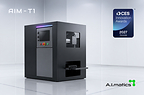
A.I.Matics’ AIM-T1 Named CES Innovation Awards® 2027 Honoree in Two Categories

Published

on

By

AI vision inspection platform recognized in Artificial Intelligence and Construction & Industrial Tech

SEOUL, South Korea, Nov. 9, 2026 /PRNewswire/ — A.I.Matics’ AIM-T1, an AI vision inspection platform that helps electronics manufacturers identify defects and adapt inspections to new products, has been named a CES 2027 Innovation Awards Honoree in two categories: Artificial Intelligence and Construction & Industrial Tech.

AIM-T1 is designed for quality, process and manufacturing engineers working with products such as camera modules, semiconductor packages and printed circuit board assemblies. It addresses a recurring challenge in electronics production: maintaining consistent inspection as product designs and manufacturing requirements change.

Introducing a new product can require manufacturers to collect defect images, revise inspection criteria and adjust imaging equipment. These tasks can place additional demands on experienced inspectors and AI engineers, particularly in facilities with frequent product changeovers.

AIM-T1 combines modular imaging hardware with software-defined inspection to help teams adapt their inspection workflows on a common platform. The system uses reference samples of acceptable products to establish inspection criteria and identify deviations that may indicate defects.

The platform incorporates world model technology and in-context learning. Its optical system combines liquid lens technology with electronic focus stacking to capture images at multiple focal planes without mechanical Z-axis movement. Camera resolution, lens magnification, lighting and inspection configurations can be adjusted to suit different applications.

Operators can use a dedicated software interface to configure inspection criteria, review results and refine inspection models. The platform is designed to reduce reliance on specialized expertise for each product changeover by making inspection knowledge easier to reuse.

For electronics manufacturers reshoring production or adding regional capacity, transferring inspection expertise is an important part of bringing new facilities online. AIM-T1 is designed to make inspection workflows easier to reuse across products and production lines, helping quality and manufacturing teams establish inspection processes at new locations.

Organized by the Consumer Technology Association (CTA), the CES Innovation Awards program recognizes outstanding design and engineering in consumer technology products. CES 2027 will take place Jan. 6–9 in Las Vegas.

A.I.Matics plans to showcase AIM-T1 at CES 2027 and meet with manufacturers, automation equipment integrators and potential distribution partners. Booth and meeting details will be announced once confirmed.

For product information, visit https://vision.aimatics.ai/. 

* The CES Innovation Awards are based upon descriptive materials submitted to the judges. CTA did not verify the accuracy of any submission or of any claims made and did not test the item to which the award was given.

About A.I.Matics

A.I.Matics is a South Korean Vision AI company and a subsidiary of Dreamtech. Established as an in-house venture at Hyundai Motor Company in 2000 and incorporated in 2003, the company built its expertise in automotive vision recognition by supplying lane departure warning systems to automakers. Today, it develops industry-specific AI solutions for transportation, logistics and manufacturing.

The company combines its proprietary AI engine, aimNet, with imaging technology and application software to help businesses identify risks, detect anomalies and make operational decisions. Its portfolio includes AI-powered driver safety cameras, the aid fleet management platform and AIM-T1, a software-defined AI vision inspection platform for advanced electronics manufacturing. The company also develops intelligent process and operations management solutions and AI chatbots for logistics call centers.

For more information, visit https://www.aimatics.ai/en.

View original content to download multimedia:https://www.prnewswire.com/news-releases/aimatics-aim-t1-named-ces-innovation-awards-2027-honoree-in-two-categories-302934209.html

SOURCE A.I.Matics

Continue Reading

Technology

The 19th Europe-China Business and Technology Cooperation Fair boosts business cooperation

Published

on

By

BEIJING, Nov. 10, 2026 /PRNewswire/ — This is a report from China.org.cn:

The 19th Europe-China Business and Technology Cooperation Fair was held in Chengdu, Sichuan province, from Oct. 21 to 23, bringing together businesses and institutions from China and Europe to explore opportunities in trade, investment, and technological innovation.

Co-organized by the China Chamber of International Commerce and the European Union Chamber of Commerce in China, the fair featured the theme “Dialogue and Cooperation for Shared Benefits and Prosperity.”

This year’s fair attracted more than 1,800 participants from over 30 countries, representing 869 enterprises and institutions. Delegations from Portugal, Switzerland, France, the United Kingdom, Spain, and other countries attended, alongside multinational companies including CMA CGM, Saint-Gobain, ABB, AstraZeneca, Bayer, and Siemens.

For the first time, the fair introduced an intelligent matchmaking system, complemented by manual coordination, to improve connections between businesses. A total of 174 Chinese and foreign companies held 365 one-on-one matchmaking meetings, generating more than 160 cooperation intentions and helping turn business discussions into potential projects.

The fair focused on sectors including new energy and environmental protection, biomedicine, agri-food, intelligent robotics, cutting-edge technologies, vocational education, and commercial legal services. Investment and trade promotion events were also held by Hainan, Tianjin, Taicang in Jiangsu province, and other regions to connect with European partners. Participants also visited industrial parks and enterprises to explore opportunities and facilitate project development.

The event also saw progress in regional and international partnerships. Loja, Spain, and Pengzhou, Sichuan province, signed a letter of intent to establish a friendly cooperative relationship. More than 20 Portuguese enterprises and institutions attended the fair, while Portugal’s secretary of state for agriculture delivered remarks at a sub-event. The United Kingdom, the fair’s country of honor, was also involved in organizing a China-Europe exchange on cross-border cooperation in biomedicine.

As global economic recovery remains uneven, the fair continues to provide a platform for China-Europe dialogue and business exchanges, fostering cooperation in technology, market access, and investment.

The 19th Europe-China Business and Technology Cooperation Fair boosts business cooperation

http://www.china.org.cn/2026-11/06/content_118764228.shtml

View original content:https://www.prnewswire.co.uk/news-releases/the-19th-europe-china-business-and-technology-cooperation-fair-boosts-business-cooperation-302934225.html

Continue Reading

Trending