Connect with us

Technology

Agentic AI Initiatives Stall When Prototypes Lack Production Discipline, Says Info-Tech Research Group

Published

on

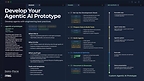
Organizations that successfully design agentic AI prototypes often stall at implementation, with many enterprises struggling to move agents from design concept to working prototype. Info-Tech has published a new blueprint, Develop Your Agentic AI Prototype, that provides a five-phase methodology to help teams engineer reproducible, observable, and defensible agentic AI prototypes with the guardrails, observability, and evaluations leaders need to make confident scaling decisions.

ARLINGTON, Va., Aug. 14, 2026 /PRNewswire/ — As interest and experimentation in agentic AI continue to accelerate, many organizations are finding that the gap between a promising design and a working, evidence-generating prototype is wider than expected. New findings from Info-Tech Research Group reveal that in order to produce evidence of solution feasibility, viability, and security, agentic AI prototypes require sound architecture, observability, evaluation, cost controls, guardrails, and governance built into the engineering process from the start.

To help organizations move from concept to implementation, the global research and advisory firm has released Develop Your Agentic AI Prototype, a technical blueprint designed for teams that are ready to engineer agentic AI prototypes. The framework provides a structured pathway for transforming agentic AI concepts into measurable, investment-ready systems that leadership can confidently assess and scale.

As organizations race to capitalize on agentic AI opportunities, many teams encounter implementation barriers that prevent promising concepts from advancing beyond isolated demos. Fragile demos often fail when exposed to real-world conditions, cannot scale beyond individual developer environments, or lack the performance evidence required to justify additional investment. According to Info-Tech’s analysis, building sustainable agentic AI systems requires new engineering patterns to address hurdles such as environmental fragility, invisible costs, security gaps, and what the firm describes as “evaluation theater,” when a demo is treated as a meaningful evaluation.

“Organizations have discovered that building an impressive agentic AI demo is relatively easy, but engineering a system that is observable, reliable, secure, and defensible is a very different challenge entirely,” says Meagan Peters, senior research analyst at Info-Tech Research Group. “The organizations that succeed will be the ones that treat agentic AI development as an engineering discipline, not just an experimentation exercise.”

Info-Tech’s research highlights three critical insights organizations must embrace to successfully operationalize agentic AI initiatives:

Autonomy isn’t a substitute for architecture – Production readiness doesn’t come from the model; it comes from the architecture underneath it.You can’t optimize what you can’t see – Every run requires tracing for what the agent saw, what it did, where it failed, how long it took, and what it cost.Evaluation turns a demo into a decision – Clear evidence on performance, cost, and reliability turns a demo into an approved investment.

Info-Tech’s Five-Phase Framework to Develop an Agentic AI Prototype

Info-Tech’s blueprint outlines a practical five-phase methodology for developing defensible agentic AI prototypes:

Set up the development stack – Establish a reproducible development environment and runnable repository.Prepare data and build tools – Develop agent-ready data and custom tools for each integration point.Build agents – Create a runnable agentic system with guardrails and human-in-the-loop controls.Evaluate and optimize – Create an observable, measured, and optimized prototype.Document and showcase – Deliver a prototype demonstration and evidence pack that support scaling decisions.

The blueprint is designed specifically for organizations that have already completed Info-Tech’s Develop Your Agentic AI Prototype blueprint and are ready to transition into technical implementation. Supporting resources include coding tutorials, a development template, end-to-end examples, and presentation materials that help teams clearly communicate evaluation results, risk analysis, cost projections, and ROI considerations to leadership stakeholders.

In addition to implementation guidance, the research emphasizes embedding observability, cost controls, guardrails, and human oversight directly into the engineering process rather than layering them on afterward. By integrating these controls from the start, organizations can improve reliability, strengthen governance, and increase stakeholder confidence in agentic AI systems.

The blueprint also provides organizations with a structured approach to demonstrating measurable value. Through evidence packs that include evaluation results, cost projections, and validated demonstrations, leadership teams gain the transparency needed to make informed scaling and funding decisions.

For timely and exclusive commentary from AI implementation expert Meagan Peters of Info-Tech Research Group and access to the complete Develop Your Agentic AI Prototype blueprint, please contact pr@infotech.com.

About Info-Tech Research Group

Info-Tech Research Group is the “get things done” partner for over 30,000 IT, HR, and marketing leaders worldwide. The fastest growing research and advisory firm, Info-Tech enables leaders to make well-informed decisions and transform their organizations through AI, strategic foresight, step-by-step methodologies, practical tools, industry-leading advisory, and training programs. For nearly 30 years, tens of thousands of private and public organizations have trusted Info-Tech to lead their most important initiatives through periods of change and deliver outcomes that truly matter.

To learn more about Info-Tech’s HR research and advisory services, visit McLean & Company, and for data-driven software buying insights and vendor evaluations, visit the firm’s SoftwareReviews platform.

Media professionals can register for unrestricted access to research across IT, HR, and software, and hundreds of industry analysts through the firm’s Media Insiders program. To gain access, contact pr@infotech.com.

For information about Info-Tech Research Group or to access the latest research, visit infotech.com and connect via LinkedIn and X.

View original content to download multimedia:https://www.prnewswire.com/news-releases/agentic-ai-initiatives-stall-when-prototypes-lack-production-discipline-says-info-tech-research-group-302852086.html

SOURCE Info-Tech Research Group

Continue Reading
Click to comment

Leave a Reply

Your email address will not be published. Required fields are marked *

Technology

Karsan Autonomous e-ATAK Begins Passenger Service at the World-Famous Efteling Theme Park

Published

on

By

ISTANBUL, Aug. 15, 2026 /PRNewswire/ — Developing advanced transportation solutions with its vision of staying one step ahead in the future of mobility, Karsan is further strengthening its global leadership in autonomous public transportation with another landmark project. As part of the project launched at the world-renowned Efteling theme park, Karsan Autonomous e-ATAK began carrying passengers on August 12, 2026, connecting Efteling’s main public transport hub with hotels, accommodation facilities and visitor amenities in the area. Commenting on the project, Karsan CEO Utku Ayyarkın said: “We are extremely proud that Karsan Autonomous e-ATAK has become the first autonomous bus to operate on public roads in the North Brabant region of the Netherlands. Following our operation at Rotterdam The Hague Airport, this second autonomous deployment in the Netherlands further strengthens our position in Europe with another important reference project. The fact that Autonomous e-ATAK has been selected for Efteling, a globally recognized destination welcoming millions of visitors every year, is an important testament to the maturity of our technology and the confidence our partners place in Karsan. At Karsan, we do not simply anticipate the future of mobility; we make our advanced technology solutions part of everyday life. Through autonomous projects implemented across different countries and use cases, we are turning the future of public transportation into reality today. We will continue to lead the wider adoption of autonomous public transportation, particularly across Europe and on a global scale.”

One of the pioneering brands driving the transformation of electric and autonomous public transportation in Europe, Karsan is adding another real-world deployment to its portfolio of advanced mobility solutions. Autonomous e-ATAK, which began operating at Efteling, one of the Netherlands’ leading tourist destinations, will serve a route of approximately 6 kilometers. The vehicle will carry passengers between Efteling Hoofdingang and Wonderhotel stops in mixed traffic using SAE Level-4 autonomous driving technology.

Designed to be accessible to passengers with disabilities and offered free of charge, the service will connect Efteling’s main public transport hub with hotels, accommodation facilities and visitor amenities in the surrounding area. In doing so, the project will support not only the advancement of autonomous technology but also a more accessible, inclusive and sustainable approach to mobility.

A Landmark Collaboration for Autonomous Mobility at Efteling!

The official launch of the project took place at Efteling on August 10, 2026. Representatives from Efteling, Arriva, Province of North Brabant, the Municipality of Loon op Zand, Netherlands Vehicle Authority (RDW) and Dutch Automated Mobility, attended the launch ceremony. Covered by Dutch national and trade media, the event brought together public authorities, technology companies and public transport operators for an important milestone in autonomous mobility. Implemented through the collaboration of Karsan, Arriva, the Province of North Brabant, the Municipality of Loon op Zand, SmartwayZ.NL, Dutch Automated Mobility, Applied Autonomy and ADASTEC, the project stands out as a compelling example of strong public-private cooperation shaping the future of autonomous mobility in Europe. 

Photo: https://mmx.prnewswire.com/media/MS1970184/Efteling-Karsan-Autonomous.jpg?id=OA2888191&token=eyJhbGciOiJkaXIiLCJlbmMiOiJBMjU2R0NNIn0..PMxuJ-J-hzAmxs0X.ZxiDa4f1szgqo7GvneE2_0jbYQ1f6AeLN101B8bdhA3KBlqi26osbUSmyxbHw3oWwwpgaBqeGB5vrXjj5MPXr5bnODvMhDx7aq9gIjSXU0dFULOOu5H-fiqBYtKn9tZrEno.n8970jXjz8HXPvqXk3QZYg

Logo: https://mmx.prnewswire.com/media/MS1811739/KARSAN-Logo.jpg?id=OA2888190

View original content to download multimedia:https://www.prnewswire.com/news-releases/karsan-autonomous-e-atak-begins-passenger-service-at-the-world-famous-efteling-theme-park-302852309.html

SOURCE KARSAN OTOMOTİV SAN.VE TİC.A.Ş.

Continue Reading

Technology

5 Cloud Engineering Career Lessons The Apex Institute Teaches on “The 1% Move”

Published

on

By

Host Tayo Lusi, founder of The Apex Institute, breaks down the recurring lessons behind cloud engineering careers that pay $300K to $500K.

The five cloud engineering career lessons tech professionals take from The 1% Move podcast are: pick one high leverage skill, build proof instead of collecting certificates, describe your work in money rather than tools, understand that positioning sets the offer before the interview, and interview while you still have a job.

BOWIE, Md., Aug. 15, 2026 /PRNewswire/ — Plenty of skilled tech professionals sit at $120,000 to $150,000 for years. They are not bad at their jobs. Most are good engineers. But engineering and career positioning are two different skills, and almost nobody teaches the second one.

That gap is why Tayo Lusi started The 1% Move, a weekly podcast where he talks with cloud engineers, hiring managers and career coaches about what actually moves someone from a comfortable salary to a life changing one. The first episode releases Tuesday, August 18, 2026. Five lessons keep surfacing in these conversations. Here they are, in plain language.

What is the first career lesson for tech professionals?

Pick one high leverage skill, not five. The market does not pay for a long list of tools. It pays for depth in one area that costs a company real money when it breaks.

Most people collect. A certificate here, a course badge there, and eventually a resume full of logos with no real depth anywhere. Depth is what gets priced.

Right now that depth lives in cloud infrastructure. It is the layer everything else sits on top of, and when it fails the cost is immediate and expensive. The U.S. Bureau of Labor Statistics projects continued growth in computer and information technology occupations through the decade, and the roles nearest the infrastructure are the hardest ones to fill.

The fix is easy to say and hard to do. Choose one lane and go twelve months deep before adding anything else. If you are not sure which lane, the free Cloud Engineering Career Path Roadmap lays out the four highest leverage options and what to learn in what order.

Why does proof beat certificates in a tech job search?

 2. Proof beats certificates. A certificate says you studied something. A working project says you made decisions under pressure on a real system, which is what hiring managers are actually buying.

Hiring managers feel this difference even when they cannot explain it. Two candidates look similar on paper, and one of them still feels more trustworthy. The gap is almost always proof.

A built project that solved a real problem outweighs any badge, because it shows judgment rather than memory. The action step is direct. Build and document three real projects, and for each one write down the problem, the fix and the result. That is the difference between a resume that gets skipped and one that gets a callback. The free Cloud Project Portfolio Blueprint covers the five tests a project has to pass before it counts as evidence.

How should engineers describe their work to get paid more?

     3. Talk about your work in money, not tools. Saying you used a tool tells a hiring manager almost nothing. Saying you cut deploy time and saved the team hours every week tells them everything.

This is where Tayo says most engineers lose the most value, and it has nothing to do with their skill level. One sentence is a tool name. The other is a business outcome. Companies do not hire tools. They hire outcomes.

The action step is to rewrite every resume line as an outcome with a number attached. Not what you touched. What changed because you touched it.

“The gap between a $150K engineer and a $350K engineer is usually not talent,” Tayo said. “It is proof and positioning. That is fixable in months, not years.”

Is the salary offer decided before the interview?

     4. Mostly, yes. Positioning, referrals and how you showed up early in the process quietly set the range before anyone says a number out loud. Negotiation usually moves the final ten percent, not the whole offer.

This one surprises people the most, because it means the highest leverage work happens before the calendar invite exists. It happens in the relationships you built and the proof you carried into the room.

That does not make negotiation optional. The last ten percent of a $300,000 offer is $30,000, and most people leave it on the table because they freeze on the call. The free Tech Salary Negotiation Scripts give you word for word language for every stage of that conversation.

Why should you interview when you do not need the job?

     5. Because desperation prices you low. Most people only interview after they lose a job or cannot stand the current one. Interviewing while employed gives you real market data instead of a guess.

Take two interviews a quarter, even while employed, even while happy. Not to leave. To learn what someone with your skill set is worth this quarter, rather than finding out once a year during a review written by someone with a fixed budget.

If you do not know your number going in, start with the free Cloud Engineering Salary Benchmark, which shows you where to pull your real range from primary sources in about thirty minutes.

What do these lessons look like on the podcast?

Each episode is one guest and one real story. Tayo sits down with a cloud engineer, hiring manager or career coach and walks through how one of these lessons played out in their own career, and what changed after.

The format stays simple on purpose. No panels, no filler. One person, one turning point, and the specific decision that moved their income.

“Every guest on the show says a version of the same thing,” Tayo said. “The money moved when they changed how they talked about their own work.”

Where can you listen to The 1% Move?

The 1% Move releases new episodes weekly starting Tuesday, August 18, 2026, on Apple Podcasts, Spotify and YouTube.

Episodes cover cloud engineering career growth, the modern AWS career path and practical tech career advice from people who have lived it.

Listen to the podcast now: Apple Podcasts  |  Spotify  |  YouTube

Take the next step

Know your number before your next review. Get the free Cloud Engineering Salary Benchmark and see what your skills are worth on the open market.

Ready to move faster? Book your free career strategy call

About The Apex Institute

The Apex Institute is a career accelerator that trains professionals in cloud engineering and AI infrastructure skills. The program is led by founder Adetayo Ibijemilusi, known online as Tayo Lusi, a certified cloud engineer and career coach. Students have reported more than $11 million in job offers to date across 41 people. Individual results vary and are not typical. Learn more at apexedu.io.

Media Contact
Tayo Lusi
contact@apexedu.io

View original content:https://www.prnewswire.com/news-releases/5-cloud-engineering-career-lessons-the-apex-institute-teaches-on-the-1-move-302852311.html

SOURCE The Apex Institute

Continue Reading

Technology

Meant Launches as LegitScript-Certified GLP-1 Telehealth Platform with Included Coaching and Supplement Kit

Published

on

By

MANASSAS, Va., Aug. 15, 2026 /PRNewswire/ — Online weight-care programs are everywhere right now, and it isn’t always easy to tell which ones have real clinical oversight behind them. Meant enters that space as a LegitScript-certified telehealth platform, pairing GLP-1 treatment with clinical evaluation, ongoing coaching and a supplement kit – all part of one program.

How Telehealth Is Changing Access to Weight Care?

Telehealth makes it easy to see a provider without leaving home, and that convenience is a big reason more people are exploring GLP-1 treatment. But convenience alone isn’t enough – people also want support that continues after the first visit, which is where Meant’s program comes in: an assessment, a provider review, treatment for those who qualify, a Care Coach and a supplement kit, all built into one plan.

Clinical decisions are handled by OpenLoop Health, whose licensed providers review each patient’s history, decide who qualifies and hold the final call on whether to prescribe. Nothing here is automatic, and treatment isn’t guaranteed for every applicant. That review is only one part of the program – Meant pairs it with coaching for the parts of a weight-care journey a prescription alone doesn’t cover.

What’s Included in the Program?

Personalized Clinical Evaluation: An online health assessment, reviewed by a licensed provider, to help determine whether GLP-1 treatment may be a fit.Ongoing Care Coaching: A private Care Coach who stays with patients throughout the program for guidance and support.Integrated Wellness Support: A supplement kit included with every plan, alongside medication and coaching when clinically appropriate.

Where to Learn More?

Anyone curious about how the assessment works, what the coaching looks like, or how the program is put together can find more details at Meant.

About Meant

Meant is a health and wellness technology company built around personalized GLP-1 weight-care support, delivered through telehealth. The platform brings together an online clinical assessment, licensed oversight through OpenLoop Health, ongoing Care Coach support and supplemental wellness resources. Meant itself does not diagnose or prescribe – that side of care is handled by its clinical partners.

Meant. health, inc.
support@meant.health
1-512-879-9187
10199 Dean Drive, Manassas, VA 20110, USA.


View original content:https://www.prnewswire.com/news-releases/meant-launches-as-legitscript-certified-glp-1-telehealth-platform-with-included-coaching-and-supplement-kit-302852077.html

SOURCE Meant

Continue Reading

Trending