Connect with us

Technology

GitKraken Introduces GitLens 19, Bringing Human and AI Workflows Together in One Workbench

Published

on

The reimagined Commit Graph gives developers one place to understand, coordinate, review, and ship work across coding agents and modern development workflows.

SCOTTSDALE, Ariz., Aug. 14, 2026 /PRNewswire/ — Artificial intelligence has fundamentally changed software development. GitKraken’s 2026 State of AI in Engineering report, based on a survey of 554 developers and engineering leaders, found that 96.4% of engineering organizations now use AI coding tools. Coding agents are becoming teammates.

Developers can now generate more code in a day than they once wrote in a week. Coding agents are becoming teammates. Parallel development is becoming the norm.

But while code generation has accelerated, shipping software has not.

The bottleneck has moved.

GitKraken’s research found that 84% of developers already report higher productivity with AI coding tools. The next challenge isn’t writing more code. It’s understanding, reviewing, and merging it with confidence. The next challenge is helping teams move code from plan to merge faster. GitKraken calls this the Code Flow era, and believes that is where the next inflection point of developer productivity will be.

As coding agents become part of everyday development, software teams are managing more branches, more pull requests, more worktrees, and more parallel streams of work than ever before. Every change still flows through Git before it reaches production, making Git the shared coordination point between developers, coding agents, and software delivery.

That shift is accelerating quickly. GitKraken’s research found the percentage of developers whose primary way of working is autonomous AI has nearly quadrupled in the past nine months, growing from 7.6% to 28%.

GitKraken believes the next wave of developer productivity will not come from generating more code. It will come from helping developers understand, validate, and merge that code faster.

Today, GitKraken released GitLens 19, the biggest evolution of GitLens to date.

GitLens has long helped developers understand repository history and collaborate more effectively without leaving their Individual Development Environment (IDE) or Agentic Development Environment (ADE). With GitLens 19, GitKraken takes the next step by transforming the Commit Graph from a history visualization into the central workspace for modern development workflows.

At the center of the update is a completely reimagined Commit Graph. Once a place to visualize repository history, it has evolved into a developer workbench where developers can review changes, compare revisions, compose meaningful commits, automate rebases, resolve conflicts, and manage parallel development from a single Git-aware workspace.

“AI has fundamentally changed how software gets written, but it hasn’t changed what it takes to ship great software,” said Eric Amodio, Founder and CTO of GitKraken. “Developers still need to understand what changed, review it, organize it, and merge it with confidence. GitLens 19 reflects that new reality. The Commit Graph is no longer just where you inspect history. It’s where modern development work happens.”

Modern software development no longer happens in a straight line.

Developers constantly move between AI-generated changes, multiple worktrees, long-running feature branches, pull requests, and parallel streams of work. Traditional workflows were designed for a world where developers wrote every line of code themselves.

Today’s development environment demands something different.

GitLens 19 is built for that reality.

Instead of jumping between terminals, Git views, pull requests, code reviews, and multiple tools, developers can now complete the majority of their workflows from a single workspace designed to help them stay in control as development becomes increasingly parallel and AI-assisted.

GitLens 19 introduces:

A reimagined Commit Graph that evolves from a history viewer into the central workspace for modern Git workflows.Review to inspect changes earlier, compare revisions, understand AI-generated work, and provide feedback before code reaches a pull request.Compose to organize related changes into clean, intentional commits by grouping, moving, and refining work before it is shared.Compare to instantly inspect commits, branches, revisions, and working changes, making it easier to understand exactly what changed before merging.AI-powered Rebase that intelligently automates rebases, reducing the need to manually step through traditional interactive rebase operations while keeping developers in control of the final result.AI-powered Merge Conflict Resolution that helps developers resolve conflicts faster with intelligent suggestions while preserving full Git context.Manage stacked pull requests by breaking larger changes into smaller, dependent PRs that are easier to review, understand, and ship.Stacked Pull Requests to break larger changes into smaller, dependent pull requests that are easier to review and ship, while keeping relationships between branches and PRs clear.Repository-wide context that brings active branches, worktrees, incoming changes, and AI-assisted development together in a single view, making parallel development easier to understand and manage.

GitLens 19 represents more than a major product release. It reflects the GitKraken’s vision for where software development is heading within the IDE.

GitLens 19 is available today for your favorite IDEs like VS Code, Cursor, and Antigravity.

Learn more at gitkraken.com/gitlens.

Contact:
GitKraken
Kate Adams
***@gitkraken.com

Photos:
https://www.prlog.org/13164556

Press release distributed by PRLog

View original content:https://www.prnewswire.com/news-releases/gitkraken-introduces-gitlens-19-bringing-human-and-ai-workflows-together-in-one-workbench-302851472.html

SOURCE GitKraken

Continue Reading

Technology

Dingdong to Report Third Quarter 2026 Financial Results on November 12, 2026

Published

on

By

SHANGHAI, Nov. 10, 2026 /PRNewswire/ — Dingdong (Cayman) Limited (“Dingdong” or the “Company”) (NYSE: DDL), a leading fresh grocery e-commerce company in China, with advanced supply chain capabilities, today announced that it will report its unaudited financial results for the third quarter ended September 30, 2026, before U.S. markets open on November 12, 2026.

About Dingdong (Cayman) Limited

Dingdong is the leading fresh grocery e-commerce company in mainland China, with sustainable long-term growth. The Company directly provides users and households with fresh groceries, prepared food, and other food products through delivering a convenient and excellent shopping experience supported by an extensive self-operated frontline fulfillment grid. Leveraging its deep insights into consumers’ evolving needs and its strong food innovation capabilities, Dingdong has successfully launched a series of private label products spanning a variety of food categories. Many of Dingdong’s private label products are produced at its own production plants, allowing it to more efficiently produce and offer safe and high-quality food products. Dingdong aims to be the first choice for fresh and food shopping.

For more information, please visit: https://ir.100.me.


View original content:https://www.prnewswire.com/news-releases/dingdong-to-report-third-quarter-2026-financial-results-on-november-12-2026-302935824.html

SOURCE Dingdong (Cayman) Limited

Continue Reading

Technology

Sanya hosts side event of the 7th Symposium on Global Maritime Cooperation and Ocean Governance

Published

on

By

Report on Southeast Asian Youth Perceptions of Maritime Issues released

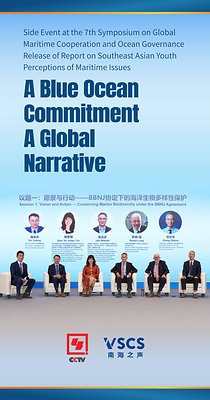
BEIJING, Nov. 10, 2026 /PRNewswire/ — A side event of the 7th Symposium on Global Maritime Cooperation and Ocean Governance was held at China Media Group (CMG) Sanya Studio on November 8. More than 10 Chinese and international participants discussed how to put into practice the Agreement under the United Nations Convention on the Law of the Sea on the Conservation and Sustainable Use of Marine Biological Diversity of Areas beyond National Jurisdiction (BBNJ Agreement), and how to communicate ideas about ocean conservation to audiences worldwide.

Experts at the event described the BBNJ Agreement, which entered into force in January this year, as a landmark victory for multilateralism in global ocean governance. They said it charts a course for all parties to work together to protect marine biodiversity.

Jiao Nianzhi, an academician of the Chinese Academy of Sciences, described marine biodiversity as a toolbox for humanity, saying that protecting it means safeguarding humanity’s future. Aileen Tan, chairperson of the Sub-Commission for the Western Pacific of UNESCO’s Intergovernmental Oceanographic Commission, said the BBNJ Agreement gives the ocean “breathing space” and stressed the need for scientists from different countries to work together on ocean conservation. She cited Malaysia-China cooperation in marine scientific research as a good example and expressed hope that China would play a greater leadership role. Ronán Long, director of the WMU-Sasakawa Global Ocean Institute at the World Maritime University in Sweden, said China’s strong data capabilities could help accelerate the implementation of the Agreement’s provisions on sharing non-monetary benefits arising from marine genetic resources.

Participants also highlighted China’s efforts and achievements in promoting maritime cooperation and advancing marine ecological restoration, among other areas. The side event was jointly hosted by CMG’s Chinese Language Programming Center, the Huayang Center for Maritime Cooperation and Ocean Governance, the National Institute for South China Sea Studies and other organizations.

During the symposium, CMG’s Chinese Language Programming Center and CMG Institute jointly released the Report on Southeast Asian Youth Perceptions of Maritime Issues. The report presents the concerns and expectations of young people in Southeast Asian countries, including Indonesia, Malaysia, Singapore and Thailand, regarding ocean-related issues.

The report finds that Southeast Asian youth have a positive outlook on maritime cooperation with China. Nearly 80 percent of respondents are willing to take part in China-ASEAN youth exchanges on ocean-related issues. The report also notes that Southeast Asian youth are concerned about broader issues of ocean governance and look to China to shoulder greater responsibilities and play a larger role in global ocean governance.

View original content to download multimedia:https://www.prnewswire.com/news-releases/sanya-hosts-side-event-of-the-7th-symposium-on-global-maritime-cooperation-and-ocean-governance-302935814.html

SOURCE China Media Group (CMG)

Continue Reading

Technology

Why Brisbane Airport selected LG for its landmark digital infrastructure upgrade

Published

on

By

Australia’s third-largest airport now runs passenger information across 950 LG displays monitored centrally via LG SuperSign CMS

News summary

Brisbane Airport manages approximately 950 LG commercial displays from a single platform LG SuperSign CMS deployed on-premise to meet strict security and operational controls for critical infrastructureLG SuperSign CMS offers leadership, operations and ICT team remote visibility and control of entire display fleetLG’s embedded System-on-Chip allows real-time flight information (FIDS), gate information, wayfinding and operational messaging to be directly pushed to display screens without external media playersBrisbane Airport’s transition to LG’s SuperSign CMS has driven down operational costs significantlyDeployed in partnership with Australian integrator Programmed, this digital overhaul forms a key part of Brisbane Airport’s ongoing $5 billion Future BNE transformation

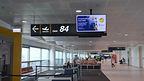
SYDNEY, Nov. 11, 2026 /PRNewswire/ — LG Electronics (LG) has partnered with Brisbane Airport Corporation (BAC), replacing a previously fragmented digital signage system with a modern network of approximately 950 LG commercial displays centrally managed by LG SuperSign CMS. Covering the domestic and international terminals, baggage handling areas, and car parks, these LG screens deliver real-time flight information displays (FIDS), gate information, passenger wayfinding, and operational communications reliably across a 24/7 environment.

As Australia’s third largest airport preparing for a forecast surge in passenger numbers ahead of the major event in 2032, Brisbane Airport needed to replace an increasingly unreliable, ageing network with a simplified, scalable solution that its lean ICT team could operate day-to-day.

“The reliability of the displays is essential. Without them working, people are lost — quite literally,” says Michael Kerr, Integrated Operations Manager at BAC.

To address these critical demands, LG worked alongside local integrator Programmed to deploy a centralised digital signage network driven by LG SuperSign CMS. The platform provides ICT and operations teams with comprehensive visibility across the entire display fleet remotely, replacing an otherwise manual process of physical, daily check-ups.

“LG SuperSign has been a game changer for my team. We just don’t have the arms and legs to go around and check those 950 screens on a daily basis. The monitoring capabilities really give us that eyes-on view of what’s across our infrastructure,” says Anthony Tully-Smith, ICT Applications Manager at BAC.

One system, diverse displays

BAC’s new estate involves a range of LG display solutions tailored to specific passenger zones. This includes:

43- and 49-inch LG commercial panelsLG Ultra Stretch displays in totemsLG 49XE-series high-brightness outdoor displays110-inch LG UM5K indoor screensA 136-inch LG LAPA-series All-in-One LED in international arrivals

With LG’s embedded System-on-Chip (SoC) platform and internal web page player, real-time flight information and content now play directly on the screens. This removes the need for external media players, simplifying the network architecture.

“We’ve taken what was a fragmented digital signage system, not very visible to management, now to an integrated modern solution with centralised management and health visibility,” says Graham Wands, Business Development Manager at Programmed. “LG SuperSign enables us to take a proactive stance and make sure that the FIDS and other signage are highly available and always visible to passengers.”

Built for critical infrastructure

As a privately owned critical infrastructure operator, BAC needed full control of its content. LG SuperSign CMS is deployed on-premise to meet the airport’s security and operational-control requirements. LG’s device hardening helps reduce the risk of unauthorised content, such as USB sideloading.

The project also supports the airport’s ESG goals; LG UH series screens carry Carbon Trust footprint-reduction certification, LG offers a free e-waste program, and power consumption can be monitored and optimised from LG SuperSign CMS.

“At an airport, a screen is only as useful as the information on it, and how quickly someone knows when it stops working. Brisbane Airport shows what happens when displays and management software are planned together as operational infrastructure, with a local integrator who knows the site. We’re grateful to Brisbane Airport and Programmed for the partnership, and we look forward to supporting the airport as it grows,” says Chris Wilson, Sales General Manager – Information Display at LG Electronics Australia.

Looking ahead

BAC sees LG as a long-term partner as it progresses its $5 billion Future BNE transformation, paving the way for the expansion of Terminal 3 and more LED and messaging capabilities ahead of the 2032 games. By transitioning from a fragmented legacy setup, BAC has unlocked a foundation built for long-term operational efficiency.

“For me, managing an ageing infrastructure before we moved to the new LG digital displays was costing us quite a lot from a maintenance and an ongoing perspective,” says Tully-Smith, “The move to the new LG SuperSign, but also the new LG screens, has driven down my operational cost significantly across the airport.”

This newfound efficiency has helped BAC focus on what’s most critical – passenger experience.

“It’s important for us to have a partner like LG. The innovation and the fresh thought that team brings has really helped me accelerate the digital experience across all of our terminals,” says Tully-Smith.

Read the full case study: LG Displays and SuperSign CMS power Brisbane Airport’s digital transformation

LG SuperSign CMS is purchased separately.

About LG Electronics
LG Electronics is focused on developing new innovations across information displays. We are committed to providing commercial electronic products that help businesses perform better. We offer a wide range of products, including information displays, digital signage for advertising, commercial system air conditioners, VRF systems and tailored solutions for different vertical markets.

About Brisbane Airport Corporation
Brisbane Airport Corporation (BAC), the operator of Brisbane Airport (BNE), is a private, unlisted Queensland company that proudly takes on the challenge of connecting Australia to the world. BAC’s passion and perseverance have cemented BNE as Queensland’s most important gateway, a leading hub for Australia, and an award-winning source of pride for its communities.

About Programmed
Programmed is a leading provider of Facility Management, Maintenance, and Staffing solutions across Australia and New Zealand. Programmed employs over 32,000 people every year across a broad range of industries and partners with more than 10,000 customers, small and large.

View original content to download multimedia:https://www.prnewswire.com/apac/news-releases/why-brisbane-airport-selected-lg-for-its-landmark-digital-infrastructure-upgrade-302935816.html

SOURCE LG Electronics

Continue Reading

Trending