Connect with us

Technology

The Hidden B2B Revenue Leak: Companies Are Paying for First Meetings Their Sales Teams Fail to Convert

Published

on

Revenue Growth Agent founder and CEO Matt Oess argues that B2B companies may be spending more to generate sales meetings when the bigger problem is their teams’ failure to convert those meetings into qualified opportunities

CAPE CORAL, Fla., Aug. 17, 2026 /PRNewswire/ — B2B companies are spending heavily to generate first meetings, increasingly using AI sales prospecting to scale demand generation and sales outreach. But Matt Oess, founder and CEO of Revenue Growth Agent, argues that many may be overlooking a more costly problem: sales teams are failing to convert those conversations into qualified opportunities.

“When companies respond to weak pipeline by buying more meetings without examining what happens inside them, they may simply be paying to scale poor sales execution,” said Oess, a B2B sales and revenue growth executive with more than 20 years of experience. “The question should not only be, ‘How do we book more meetings?’ It should be, ‘Why aren’t we converting more of the meetings we already have?'”

In his article, Why the First B2B Sales Meeting Is the New Conversion Battleground, Oess argues that the first sales conversation has become a critical conversion point. Buyers are deciding whether the seller understands their organization, priorities, and business problem well enough to justify continuing with them.

When sellers arrive underprepared, conduct shallow discovery, or pitch too early, the promise of buyer interest can disappear before a qualified opportunity emerges.

“A first meeting is not pipeline,” Oess said. “It is an expensive opportunity to earn the right to a second conversation.”

Why Don’t More B2B Sales Meetings Automatically Create More Qualified Pipeline?

Sales and marketing teams often track meetings booked and pipeline created, but those metrics do not show how effectively first conversations convert into qualified opportunities.

Consider a software company that spends $100,000 to generate 50 first meetings. At a 10% conversion rate, five become qualified opportunities, each effectively costing $20,000. Improving conversion to 20% would produce 10 qualified opportunities and cut that cost to $10,000 — without increasing demand-generation spend.

“The economics change dramatically when a sales team gets better at converting the conversations the company already paid to create,” Oess said. “Before adding more campaigns or appointment volume, revenue leaders should understand where existing buyer interest is being lost.”

That loss often happens in the first conversation when sellers lack context, conduct shallow discovery, fail to establish business impact or urgency, or leave without clear qualification and next steps. The result is a meeting that appears productive but never becomes a qualified opportunity.

Why Is the First B2B Sales Meeting a Critical Conversion Point?

B2B organizations should treat the first sales meeting as a conversion stage, not just an activity metric.

“Strong discovery begins before the meeting starts,” Oess said. “When sellers understand the prospect’s company, role, priorities, and business context, they can ask more relevant questions and uncover deeper business issues.”

Effective prospect intelligence gives sellers context before the call, helping them understand the account, the buyer’s role, likely priorities, and relevant business issues before discovery begins.

By the end of the conversation, sellers should be able to answer four questions:

What’s the real problem, not just the presenting one?What’s the impact, in numbers, and who besides the buyer feels it?What’s forcing action now?Who else has to say yes, and what does each of them need to see?What happens if they do nothing, and what else are they considering?

Without those answers, a first meeting should not be mistaken for a qualified opportunity.

How Can B2B Sales Teams Improve First Meeting Conversion Rates?

To help sales teams improve execution, Oess recommends organizing the first meeting process around four disciplines summarized in the PREP framework:

Prepare around the prospect: Build relevant company, industry, role, and business context before the meeting.Reveal the full business problem: Move beyond surface-level pain to uncover operational, financial, and strategic consequences.Establish qualification: Clarify urgency, desired outcomes, decision criteria, stakeholders, risks, and the path forward.Preserve momentum: Deliver timely, buyer-specific follow-up that reflects the conversation, reinforces value, and confirms commitments and next steps.

The framework is designed to help sales representatives move from generic discovery toward a more disciplined conversation in which both seller and buyer can determine whether a meaningful opportunity exists.

Which B2B Sales Metric Best Measures First Meeting Conversion Performance?

Sales leaders should track first-meeting-to-qualified-opportunity conversion, not just meeting volume. The metric shows whether buyer conversations are producing enough business understanding, urgency, qualification, and momentum to justify both the buyer’s continued engagement and the seller’s continued investment of time and resources.

It can also help distinguish poor lead quality from weak sales execution. If weak-fit prospects dominate the calendar, demand generation may be the issue. If strong-fit prospects attend meetings but leave without a clear business case, qualification outcome, or next step, the problem is likely execution.

“Revenue leaders need to know whether they have a demand problem or a conversion problem,” Oess said. “Spending more on lead generation will not solve weak first meeting execution.”

AI can help organizations identify more target accounts, personalize outreach, scale prospecting, and generate more sales conversations. But increasing the supply of meetings does not automatically improve what happens once a buyer joins the call.

“AI is making it easier to generate activity,” Oess said. “The next competitive advantage is using AI to make those conversations more effective.”

Revenue Growth Agent is an AI-native sales execution platform that provides AI meeting prep and post-call analysis to help B2B sales teams improve the quality and consistency of first meeting execution. As a sales call prep tool, the platform provides company- and deal-specific preparation before meetings, analyzes call transcripts after conversations, identifies discovery and qualification gaps, and connects buyer insights with approved messaging, case studies, and proof points.

To read Oess’ full article, go to: https://www.revenuegrowthagent.com/post/how-to-convert-b2b-sales-meetings-into-qualified-pipeline.

About Revenue Growth Agent
Revenue Growth Agent is an AI-native sales execution platform that helps B2B sales teams convert more first meetings into qualified opportunities, a stronger pipeline, and tailored proposals. Trained on each company’s sales process, messaging, proof points, and customer outcomes, the platform gives reps practical guidance before, during, and after discovery calls. Revenue Growth Agent helps sellers prepare faster, run sharper discovery, identify deal risks, and turn call insights into stronger next steps and proposal content. By embedding enterprise-grade sales methodology into daily execution, Revenue Growth Agent helps every sales rep perform with more confidence, consistency, and relevance, improving lead conversion, pipeline quality, and qualified opportunity momentum. Founded in 2024 by a veteran sales operator, Revenue Growth Agent is built on more than 20 years of experience developing B2B sales teams inside Fortune 100 and growth-stage companies. It serves SaaS and high-tech companies, professional services firms, outsourced sales organizations, private equity and venture capital firms, and fractional revenue teams. For more information, visit https://www.revenuegrowthagent.com/.

Media Contact:
Michiko Morales
Gabriel Marketing Group (for Revenue Growth Agent)
Phone: 202-805-2345
Email: michim@gabrielmarketing.com  

View original content to download multimedia:https://www.prnewswire.com/news-releases/the-hidden-b2b-revenue-leak-companies-are-paying-for-first-meetings-their-sales-teams-fail-to-convert-302852247.html

SOURCE Revenue Growth Agent

Continue Reading
Click to comment

Leave a Reply

Your email address will not be published. Required fields are marked *

Technology

ByteLens Turns Operator Data Into Compounding Knowledge

Published

on

By

Accelerating every operator’s journey to autonomous operations, inside their own network.

AMSTERDAM, Aug. 17, 2026 /PRNewswire/ — ByteLens today launched its AI-native operational intelligence product for telecom operators. It warns of faults before customers are affected, pinpoints the cause across vendors and domains in seconds, and repairs fault types the operator has approved. Human judgment stays where it is needed.

Fragmented data with no intelligence inside is the industry’s most imminent problem. Operators are not short of data. They have become short of knowledge that lasts. An incident is solved once, and the knowledge quite often leaves with the engineers.

Prevention is the point. ByteLens learns the patterns that precede an outage, fixes the cause, and keeps the record: the reasoning, the fix, the engineer’s correction. The next similar fault starts there, not from zero.

It runs on open telemetry standards operators already produce, alongside existing monitoring. No new agents. No re-architecture. No second copy. ByteLens spans the operator’s data estate, enriching it with every fault resolved.

ByteLens replaces the dashboard, not the engineer. It shapes what it knows to each persona inside the operator and answers in conversation. Ask a question, get an answer, not a screen.

“Autonomous operations arrive when the network handles what it has already learned to handle, and the engineer sees only what needs a human,” said Anil Jain, Co-Founder and Chief Executive Officer, ByteLens.

“Expertise stops living in individual heads and becomes something the operator owns,” said Yogesh Malik, Co-Founder and Chief Product Officer, ByteLens.

“ByteLens is addressing one of the industry’s most important operational challenges,” said Ruza Sabanovic, Executive Director, CP Group. “I wish them every success.”

“Networks are rich in data but lack actionable insight,” said Jai Prakash, a career telecom CTO. “AI has to be built into how the network runs, not added later.”

ByteLens arrives full. Deep telecom intelligence meets the operator’s own data estate. The two compound into an advantage no competitor can copy. Autonomy follows one resolved fault at a time, running with live network data at four tier-1 operators.

What the network learns, the operator keeps.

About ByteLens

ByteLens is an AI-native operational intelligence product with cross-domain root-cause correlation for telecom operators. Founded in Amsterdam by Yogesh Malik and Anil Jain, with three decades in the industry, and engineers in Europe, India and the US. www.bytelens.ai

Media Contacts

sowmya@claritypr.in


View original content:https://www.prnewswire.co.uk/news-releases/bytelens-turns-operator-data-into-compounding-knowledge-302852753.html

Continue Reading

Technology

Digital Asset Clearing Center Completes CertiK Security Audit of Smart-Contract for DACC ChainFusion™

Published

on

By

Named Gold Winner in Banking-as-a-Service Innovation at the Juniper Research Fintech Payments Awards 2026

HONG KONG, Aug. 17, 2026 /PRNewswire/ — Digital Asset Clearing Center (DACC), the leading cross-border bank grade Web3 global independent clearing ecosystem for Hong Kong, today announced that CertiK, the largest Web3 security services provider, has completed a security audit of the in-scope smart-contract code supporting specified components of DACC ChainFusion™ technology platform.

The audit assessed the in-scope smart contract code for potential vulnerabilities, including risks associated with privileged functions, role-based permissions, access-control logic, and other security-relevant aspects of the audited smart contracts. The resulting findings and recommendations were documented in CertiK’s final audit report. The engagement comes amid the continued development of Hong Kong’s digital bond ecosystem and growing interest in bond tokenisation. DACC ChainFusion™ is designed to bridge traditional finance with public and private blockchain networks. 

“As institutional adoption of tokenised assets grows and with Hong Kong positioning itself to capture this market as well as introduce tokenised assets for retail, we support this effort to be the direct regulatory interface for digital assets from inception to distribution through our DACC ChainFusion™ technology,” said Serra Wei, co-founder and Chairwoman of the Digital Asset Clearing Center. “A stronger foundation for tokenised markets starts with security. As part of our process to support retail digital asset bonds, DACC engaged CertiK to conduct a smart-contract review of the DACC ChainFusion™ platform.”

A smart-contract security audit is an important component of assessing the code that supports defined on-chain asset-issuance and lifecycle processes. Smart-contracts can support key processes throughout the lifecycle of tokenised assets, from issuance and ownership records to programmed events and settlement workflows. For issuers, investors and financial institutions, confidence in smart-contract architecture is fundamental. Featuring bank-grade hot-cold wallet segregation and real-time KYT/AML transaction screening, DACC ChainFusion™ is designed with security, transparency, and national grade operational controls. 

“CertiK is committed to delivering comprehensive security solutions that help protect digital assets and strengthen security across the Web3 ecosystem,” said Yuannan Yang, Director of Security Engineering at CertiK. “As tokenised assets become more closely integrated with mainstream financial markets, security needs to be considered from the outset. DACC has made that a clear priority in the development of ChainFusion™, and we value the opportunity to work with its team on this important step.”

To showcase the innovation behind DACC ChainFusion™, Juniper Research awarded Digital Asset Clearing Center a Gold Winner in the Banking-as-a-Service Innovation category of its Fintech Payments Awards 2026. The Juniper Research Future Digital Awards recognise start-ups and established players shaping the future of financial services. Entries are reviewed by a Juniper Research analyst panel, assessed against a rigorous set of criteria, and verified by the firm’s judging panel.

About CertiK

CertiK is the largest Web3 security service provider, headquartered in New York. Since its founding in 2017, the company has grown into a trusted risk management partner for regulators, institutions, and Web3 innovators worldwide.

CertiK delivers AI-powered, full-lifecycle risk management solutions that integrate directly into institutional clients’ system development lifecycles (SDLC). To date, CertiK has detected more than 119,000 vulnerabilities and protected over $600 billion in digital assets across 150+ countries and regions. Operating under SOC 2 Type II and ISO 27001 standards, CertiK works closely with regulators worldwide on digital asset policy development and regulatory consultation.

About Digital Asset Clearing Center (Hong Kong)

Digital Asset Clearing Center (https://dacc.hk) is an award-winning open financial market infrastructure aiming to establish Hong Kong’s first bank grade Web3 global independent clearing ecosystem with CIPS integrations. Through a unified dual-core clearing rail, bank-grade hybrid custody, AI automated back office and a Delivery-vs-Payment and cross border stablecoin liquidity hub, DACC creates an institutional cross-border bridge that routes traditional CIPS/e-CNY fiat flows into RWA tokenized assets. DACC provides authorised institutional participants with real-time, secure, and regulatory-compliant services. As the direct regulatory interface for tokenised assets from inception to distributions, DACC follows the Core Criteria of Circulars announced by the SFC and HKMA. Where CIPS Meets Tokenisation

View original content:https://www.prnewswire.com/apac/news-releases/digital-asset-clearing-center-completes-certik-security-audit-of-smart-contract-for-dacc-chainfusion-302852756.html

SOURCE Digital Asset Clearing Center

Continue Reading

Technology

Meitav Investment House Reports Record Second Quarter 2026 Results: Net Profit Attributed to Shareholders Up 31%, Adjusted EBITDA Margin Expands to 43.2%, and Net Profit Up 25% Year-Over-Year

Published

on

By

Management to Host a Conference Call in English Today at 8:30 a.m. EST/3:30 p.m. Israel Time

TEL AVIV, Israel, Aug. 17, 2026 /PRNewswire/ — Meitav Investment House (TASE: MTAV), Israel’s leading investment house, announced today record financial results for the second quarter ended June 30, 2026, marking another quarter of strong profitability, alongside continued growth in assets under management, net inflows, and revenues.

Second Quarter 2026 Financial Highlights

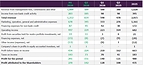
Net profit attributed to shareholders increased 31 % year-over-year, and 11% sequentially, to NIS 142 million (~$48 million).Record adjusted EBITDA margin expanded to 43.2%, up from 42.3% in the first quarter of 2026 and approximately 41.8% in the second quarter of 2025.Net profit increased 25% year-over-year to NIS 151 million (~$51 million).Basic EPS increased 23% year-over-year, and 8% sequentially, to NIS 1.70.Total revenues increased 28% year-over-year, and 3% sequentially, to NIS 614 million (~$206 million).Record revenue from AUM-based activities increased 37% year-over-year to NIS 414 million (~$139 million).Operating profit increased 37% year-over-year to NIS 224 million (~$75 million).Net inflows of over NIS 14 billion (~$4.7 billion) remained strong across long-term and short-term savings products, reflecting continued client trust and platform momentum.Total AUM (excluding alternative investments) reached a record NIS 463 billion (~$155 billion) as of June 30, 2026, up approximately 14% compared to December 31, 2025, and up approximately 9% compared to March 31, 2026.G&A expenses were NIS 168 million (~$56 million) in Q2 2026, down slightly from NIS 169 million (~$53 million) in Q1 2026, and up 8% year-over-year from NIS 156 million in Q2 2025.

Second Quarter 2026 Segment Highlights

Long-term savings (LTS) revenues reached NIS 268 million (~$90 million), up 42% year-over-year and 11% sequentially, driven by strong client deposit inflows and market share gains. The Company recorded an increase in its market share in the provident funds activity, reaching 14.3%.Mutual funds and ETFs revenues reached NIS 128 million (~$43 million), up 29% year-over-year, reflecting continued strong demand for actively managed equity and fixed income strategies, though down modestly (4%) reflecting a normal range of quarter-to-quarter variability.Meitav Trade revenues reached NIS 75 million (~$25 million), up 17% year-over-year, on continued growth in the Company’s consolidated retail and institutional brokerage segment.Non-bank credit revenues reached NIS 105 million (~$35 million), up 7% year-over-year.The Company completed a full exchange tender offer for the outstanding shares of Peninsula Group Ltd. (“Peninsula”), our non-bank financial company providing credit and financing solutions to small and medium-sized enterprises. Following the offer, Peninsula became a reporting wholly owned private subsidiary of the Company.The Company’s issuer and Series D bond ratings were upgraded by Midroog, an affiliate of Moody’s, from Aa3.il to Aa2.il, with a Stable Outlook, reflecting continued confidence in Meitav’s growth trajectory and financial position.

First Half 2026 vs. First Half 2025

Total revenues increased 30% to NIS 1,212 million (~$407 million) in H1 2026, from NIS 930 million in H1 2025.Revenue from AUM-based activities increased 37% to NIS 805 million (~$270 million), from NIS 587 million.Operating profit increased 45% to NIS 447 million (~$150 million), from NIS 308 million.Adjusted EBITDA increased 39% to NIS 518 million (~$174 million), from NIS 373 million, with adjusted EBITDA margin expanding to 42.7% from 40.1%.Net profit increased 28% to NIS 291 million (~$98 million), from NIS 228 million.Net profit attributed to shareholders increased 32% to NIS 270 million (~$91 million), from NIS 204 million.Basic EPS increased 24% to NIS 3.23, from NIS 2.60.

“Our second quarter results reflect the continued growth in profitability and disciplined execution across the platform,” said Ilan Raviv, Chief Executive Officer of Meitav Investment House. “Net profit attributed to shareholders grew 31% year-over-year, and our adjusted EBITDA margin expanded to over 43%, our strongest margin on record, a trend we believe reflects the increasing scalability of our business.

With first-half results tracking ahead of plan, we are confident in our ability to exceed our full-year guidance. The Company now expects full-year 2026 profitability to increase by more than 25% compared to 2025, subject to market conditions.

We were also pleased to see that our credit rating was upgraded during the quarter, a strong vote of confidence in our financial profile, risk management and growth trajectory.

On the strategic side, we also completed the exchange tender offer for Peninsula, our non-bank SME credit business, which is now a wholly owned subsidiary. Full ownership allows us to  leverage our capabilities in the non-bank credit segment, expand our operations, optimize capital utilization, and reduce costs.

Lastly, we continue to advance our AI initiatives, which are increasingly delivering measurable impact across client service and back-office operations. For example, in our provident and pension company, currently, 55% of written communications with clients are handled by AI tools, and the information provided to clients is personalized rather than general; responses are precise, and service is available around the clock.”

Einat Rom, Chief Financial Officer of Meitav Investment House, added:

“Our growth this quarter was driven by continued strength across our asset management franchise. Total AUM reached a new high, reflecting both strong net inflows and investment performance. We continued to lead the market in terms of inflows into our core savings products, provident and study funds, and mutual funds. The actively managed mutual funds, our highest-margin product, led the market consistently throughout the first half of the year. That leadership continued into July, with inflow data showing our net inflows running more than double the second-largest competitor. We believe this reflects the strength of our distribution platform, the appeal of our products, and the trust our clients continue to place in us.”

Assets Under Management and Business Momentum

As of June 30, 2026, Meitav’s assets under management (AUM), including alternative investments, totaled NIS 464.5 billion (~$156 billion), an increase of approximately 13.6% compared to approximately NIS 409 billion as of December 31, 2025.

AUM grew steadily throughout the second quarter, from NIS 427.2 billion at the end of Q1 2026, to NIS 449.6 billion as of April 30, 2026, to NIS 464.2 billion as of May 31, 2026, before reaching the June 30 record of NIS 464.5 billion. AUM was comprised of NIS 242.4 billion in Meitav Provident & Pension Funds, NIS 118.9 billion in Meitav Mutual Funds, NIS 101.6 billion in Meitav Portfolio Management (including approximately NIS 7.5 billion in portfolios invested in mutual funds managed by Meitav Mutual Funds), and NIS 1.6 billion in Alternative Investments.

As highlighted through the Company’s monthly reporting framework, business momentum remained strong throughout the quarter, in net client inflows, credit portfolio, and retail brokerage client base. The Company continued to lead the market in net inflows into provident and pension funds and mutual funds, particularly its actively managed mutual funds, throughout the first half of 2026, a trend that has continued into July.

This consistent inflow dynamic has continued into the second quarter of 2026, supporting AUM growth despite market-driven variability. These results reflect ongoing demand for Meitav’s investment products, continued growth in mandatory pension contributions, and the Company’s strong positioning across both long-term savings (LTS) and short-term savings (STS) activities.

Non-Bank Credit

The Company’s non-bank credit activities continued to expand during the second quarter of 2026, with revenues of NIS 105 million (~$35 million), up 7% year-over-year and 7% sequentially. The credit portfolio grew steadily through the quarter, from NIS 3.67 billion as of March 31, 2026, to NIS 3.75 billion as of April 30, 2026, to NIS 3.76 billion as of May 31, 2026, to NIS 4.02 billion (~$1.35 billion) as of June 30, 2026, reflecting continued expansion in our client base while maintaining a disciplined approach to risk management.

Retail and Institutional Brokerage

Meitav Trade revenues reached NIS 75 million (~$25 million) in Q2 2026, up 17% year-over-year. Client activity remained steady throughout the second quarter, with the retail brokerage client base growing from approximately 123,500 as of March 31, 2026, to approximately 125,500 as of April 30, 2026, to approximately 128,000 as of May 31, 2026, to approximately 130,000 as of June 30, 2026, reflecting continued robust client acquisition.

Alternative Investments

The Company continued to expand its alternative investment offerings during the second quarter of 2026 including our Meitav Access platform. Total AUM in alternative investments amounted to approximately NIS 1.6 billion as of June 30, 2026, up from approximately NIS 1.5 billion as of March 31, 2026.

Conference Call Dial-in Details

Today, August 17, 2026, at 11:00 a.m. Israel time, Ilan Raviv, CEO and Einat Rom, CFO will hold a conference call in Hebrew to discuss the Company’s financial results. Interested investors are encouraged to use the link below to join the call:

Link to join the Hebrew conference call: https://bit.ly/4w5rcjK

Also today, at 3:30 p.m. Israel time / 8:30 a.m. Eastern time, Ilan Raviv, CEO and Einat Rom, CFO will hold a conference call in English to discuss the Company’s financial results. Interested investors are encouraged to use the link below to join the call:

Link to join the English conference call: https://bit.ly/4pkJgns

A recording of the conference will be available here.

U.S./Canada Toll-Free Dial-in Number: 1-888-349-0106
Israel Toll-Free Dial-in Number: 972 3-374-1008
International Dial-In Number: 1-412-902-0131

The conference calls will be accompanied by a presentation which will be published on the Meitav website at https://www.meitav.co.il/en/investor_relations/, on the Investor Relations page, the Israel Securities Authority reporting website (MAGNA), and the Tel Aviv Stock Exchange website (Maya). Archived recordings of the conference calls will be available on the Meitav website the following business day.

The conference calls do not replace the need to review the Company’s immediate reports and financial statements, including forward-looking information, as defined in the Israeli Securities Law, section 32A of the Securities Law,1968.

It should be clarified that this notice does not constitute an offer and/or invitation to purchase the Company’s securities.

About Meitav Investment House

Meitav Investment House (TASE: MTAV) is Israel’s largest investment house, managing financial assets of approximately NIS 464.5 billion for over 1.6 million clients as of June 2026. Established in 1979, the firm specializes in provident and pension funds, mutual funds, and tailored portfolio management, offering advanced, technology-driven financial solutions. In addition, Meitav has a large retail brokerage platform, institutional brokerage activity, credit activities and alternative asset management.

For more information, please visit: https://www.meitav.co.il/en 

Company Contact

Einat Rom, CFO
einat.rom@meitav.co.il 

Investor Relations Contact

Miri Segal
MS-IR LLC
msegal@ms-ir.com

Forward-Looking Statements

Certain matters discussed in this press release, including projections, guidance and other statements regarding future events or the Company’s future financial performance, constitute forward-looking statements as defined under applicable securities laws. Forward-looking statements are based on current expectations and assumptions that are subject to risks and uncertainties, including market conditions, regulatory developments and other factors that may cause actual results to differ materially from those expressed or implied in these statements. Meitav undertakes no obligation to update these forward-looking statements to reflect events or circumstances after the date hereof or to reflect the occurrence of unanticipated events.

All financial information is presented in New Israeli Shekels (NIS). U.S. dollar amounts are presented solely for convenience at an exchange rate of 1 USD = 2.978 NIS as of June 30, 2026 and do not represent actual amounts received or paid. 

View original content to download multimedia:https://www.prnewswire.com/news-releases/meitav-investment-house-reports-record-second-quarter-2026-results-net-profit-attributed-to-shareholders-up-31-adjusted-ebitda-margin-expands-to-43-2-and-net-profit-up-25-year-over-year-302852758.html

SOURCE Meitav Investment House

Continue Reading

Trending