Connect with us

Technology

Liquid Group and PagBrasil Launch RoamQR™-Pix Cross-Border QR Payments in Brazil

Published

on

Phase 1 goes live, enabling participating RoamQR™-enabled wallets of users in Asia to make seamless QR payments across Brazil via the Pix networkPhase 2 expansion will enable Pix users from Brazil to make seamless QR payments when travelling to Singapore and other participating markets connected through the RoamQR™ network

SINGAPORE and SÃO PAULO, Aug. 21, 2026 /PRNewswire/ — Liquid Group and PagBrasil today announced the successful launch of Phase 1 of their cross-border QR payment collaboration, enabling participating banking apps and digital wallets connected to Liquid Group’s RoamQR™ network to make seamless QR payments at participating merchants across Brazil through the Pix network, one of the world’s most widely adopted real-time payment ecosystems.  

Of significance, the launch represents RoamQR™’s first operational payment corridor into Latin America, extending the network beyond Asia, and reinforcing Liquid Group’s vision of connecting trusted domestic payment ecosystems globally.

Following the Memorandum of Understanding signed at the Singapore FinTech Festival at end-2025, Liquid Group and PagBrasil subsequently entered into a definitive commercial agreement and successfully completed technical integration, certification and operational readiness, bringing the partnership from strategic collaboration to live commercial service.

Users of participating RoamQR™-enabled banking apps and digital wallets can now simply scan standard Pix QR codes at participating merchants across Brazil – using the payment applications they already use at home – without downloading another application or changing the way they pay.

Jeremy Tan, Chief Executive Officer, Liquid Group, commented: “Today’s launch marks an important milestone in RoamQR™’s global expansion, bringing our first live interoperability connection into Latin America. By connecting the RoamQR™ network with Brazil’s Pix ecosystem, we are extending seamless cross-border payment acceptance into one of the world’s largest QR payment markets, while allowing consumers and merchants to continue using the payment experiences they already know and trust. As more domestic payment systems join the RoamQR™ network, we move closer to our vision of enabling travellers to ‘Scan Local. Pay Global.’ wherever they go.”

The launch also supports growing travel, tourism and commercial exchanges between Asia and Latin America by enabling travellers to pay overseas using familiar payment applications while providing merchants with access to an expanding base of international visitors. Brazilian merchants continue to display their existing Pix QR codes while gaining access to eligible international visitors from the expanding RoamQR™ network, without requiring additional hardware, software or system integrations.

As one of the world’s largest and most widely adopted real-time payment ecosystems, Pix has transformed the way consumers and merchants transact across Brazil. This activation connects participating financial institutions and payment providers on the RoamQR™ network to their trusted domestic payment infrastructure, demonstrating how national payment systems can be interconnected internationally while retaining the familiar payment experiences consumers and merchants already use today.

Phase 2 of Liquid Group and PagBrasil’s collaboration

As additional payment networks join RoamQR™, each new connection expands cross-border payment acceptance across Asia, Latin America and beyond, bringing the industry closer to a truly interoperable global QR payment network. Participating members also gain access to an expanding ecosystem of international payment acceptance through a single connectivity framework, reducing the need for multiple bilateral integrations.

In establishing a fully interoperable two-way payment corridor, Phase 2 of the collaboration will enable Pix users from Brazil to make seamless QR payments when travelling to Singapore and other participating markets connected through the expanding RoamQR™ network, subject to implementation readiness and relevant regulatory approvals.

Together, Liquid Group and PagBrasil are helping shape the next generation of real-time cross-border payments by connecting trusted domestic payment ecosystems across continents, bringing consumers closer to a future whereby paying overseas is as simple and familiar as paying at home.

Ralf Germer, CEO, PagBrasil, said: “One of the most compelling aspects of real-time payments is that they create value for everyone involved. Travelers can pay abroad using the banking app or digital wallet they already know and trust, with the purchase amount displayed in their home currency before they confirm the transaction. At the same time, merchants can welcome international customers using the same Pix QR Codes they already accept every day, without making any changes to their existing payment infrastructure. Connecting Pix to the RoamQR™ network brings these two worlds together. By linking trusted domestic payment ecosystems, we are making cross-border payments as seamless and intuitive as domestic ones, while strengthening tourism, commerce, and economic connections across regions.”

-END-

About Liquid Group

Liquid Group is a Singapore-based fintech company building an interoperable digital payment infrastructure that connects national payment systems, digital wallets, payment applications and merchant acquirers, enabling seamless cross-border payments.

RoamQR™ is Liquid Group’s interoperable cross-border QR payment network that connects national QR payment systems, banks, digital wallets, payment applications and merchant acquirers through a single interoperability framework. It enables consumers to scan and pay overseas using their familiar home payment applications while allowing merchants to accept international QR payments through their existing domestic QR infrastructure. By connecting domestic national QR payment systems through a common interoperability layer, RoamQR™ is making cross-border QR payments simpler, more secure and more accessible. Through its RoamQR™ network and payment orchestration platform, Liquid Group helps financial institutions and payment providers unlock secure, interoperable and scalable payment connectivity, supporting the growth of tourism, commerce and the digital economy. For more information, visit www.liquidgroup.sg

About PagBrasil 

Headquartered in Porto Alegre (Brazil), with offices in São Paulo and Barcelona, PagBrasil is a Brazilian technology company specialized in payment solutions for businesses worldwide. Driven by the mission to transform the Brazilian and global markets, the company offers a robust and secure payment infrastructure designed to maximize merchant conversion and enhance the consumer experience. Throughout more than 15 years of history, its forward-looking vision has led to the development of exclusive products such as the fraud prevention solution PagShield®, as well as PagStream®, a subscription and recurring payments management platform. PagBrasil is the first Brazilian company to offer Apple Pay and Google Pay in a plug-and-play solution for e-commerce. The company has also introduced disruptive solutions built on Pix infrastructure, including 1-Click Pix, Pix for international payments, and RoamingPay. PagBrasil is an official partner of leading e-commerce platforms, with optimized solutions for VTEX and Shopify. Its global operations already connect businesses in more than 45 countries to Brazilian consumers, ensuring high availability, platform stability, and excellence in service. Visit www.pagbrasil.com for more.


View original content to download multimedia:https://www.prnewswire.com/apac/news-releases/liquid-group-and-pagbrasil-launch-roamqrpix-cross-border-qr-payments-in-brazil-302856973.html

SOURCE Liquid Group

Continue Reading
Click to comment

Leave a Reply

Your email address will not be published. Required fields are marked *

Technology

OnTime Posts 140.7% Revenue Surge to RMB 4.035 Billion, Gross Profit Tops RMB 500 Million in H1 2026


Published

on

By

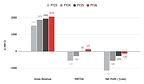
HONG KONG, GUANGZHOU and SHENZHEN, China, Aug. 22, 2026 /PRNewswire/ — Chinese mobility technology and service provider OnTime (9680.HK) announced its first-half 2026 financial results on August 19, achieving record highs in revenue, gross profit and order volume. The company posted a 156.3% jump in gross profit, topping RMB 500 million, with gross margin expanding to 12.4% and net losses narrowing 45.2% year-on-year. 

For the first half of 2026, OnTime generated revenue of RMB 4.035 billion, a 140.7% increase from the same period last year. Total orders rose 150.6% to 184 million, propelling daily orders past the one-million mark for the first time.

Beyond its core mobility services — which continued to deliver robust revenue growth — OnTime’s technology services segment saw revenue soar 274.4%, with a gross margin of 22.7%, reflecting strong momentum, improved profitability and a more favorable business mix. According to company disclosures, the tech services division expanded into embodied AI in the first half of 2026, a move expected to broaden the company’s prospects in AI and make the segment a key driver of future growth.

Revenue Doubles to RMB 4.035 Billion; Gross Profit Tops RMB 500 Million and Losses Narrow 45.2%

OnTime’s first-half revenue reached RMB 4.035 billion, with year-on-year growth accelerating sharply — up 79 percentage points from the same period in 2025.

The company said it has adopted AI tools and automation across its R&D and operational workflows to improve efficiency, with the benefits of operating leverage beginning to be reflected in its financial performance.

Gross profit surged 156.3% to RMB 501 million, outpacing revenue growth for the period. The company’s gross margin has improved consistently — climbing from 5.1% for full-year 2024 to 11.7% in the first half of 2025, and further to 12.4% in the first half of 2026. Meanwhile, net losses narrowed by 45.2% compared with a year earlier.

Mobility Services Orders Surge 150.6%; Robotaxi Expansion Accelerates

Mobility services and technology services are jointly driving the company’s revenue gains.

OnTime’s core mobility services — including both ride-hailing and Robotaxi — generated RMB 3.92 billion in first-half revenue, up 139.5% year-on-year. Growth was fueled by a 149.2% increase in gross transaction value to RMB 5.064 billion and a 150.6% jump in total orders to 184 million.

Daily orders reached 1.015 million, up 150.7% year-on-year — a critical industry milestone that places OnTime in the “million-daily-orders club,” a benchmark widely recognized as an indicator of scale in China’s ride-hailing market.

During the period, OnTime’s mobility services gross margin improved to 12.1%, driven primarily by greater scale and operational efficiencies that lowered per-order costs.

Robotaxi, a strategic priority for OnTime, has seen significant growth since the start of 2026. The company now operates more than 550 Robotaxi vehicles across key areas including Guangzhou’s Nansha and Science City districts, Shenzhen’s Bao’an and Nanshan districts, and the Hengqin Guangdong-Macao In-Depth Cooperation Zone.

OnTime’s “Robotaxi+” industrial ecosystem continues to expand. In March, autonomous driving developer Pony.ai deployed its next-generation Robotaxi vehicles into OnTime’s fleet. In April, OnTime partnered with chipmaker Black Sesame Technologies to co-develop production-ready Robotaxi solutions alongside other ecosystem partners. Most recently in August, OnTime’s Robotaxi services were integrated into Alipay and Tencent’s mobility platforms, accelerating the development of a Robotaxi service network combining its own platform with third-party platforms.

AI-Powered Tech Services Revenue Tops RMB 100 Million; Gross Margin Hits 22.7%

OnTime’s technology services segment — which generates revenue primarily from AI-driven data solutions — surpassed RMB 100 million in first-half revenue for the first time, up 274.4% year-on-year, making it the company’s fastest-growing business line. The segment delivered a gross margin of 22.7%.

According to previously disclosed results, technology services revenue grew 175.8% year-on-year in H1 2024, 207.0% in H1 2025 and 274.4% in H1 2026, demonstrating a clear acceleration in the segment’s growth.

OnTime began building its AI data services business in 2023, leveraging real-world mobility scenarios captured from its ride-hailing platform to develop autonomous driving data solutions. The company offers end-to-end data services — from raw data collection to standardized dataset delivery — with data assets spanning perception data, behavioral data, synthetic data and multimodal training datasets.

According to company filings, OnTime is accelerating the commercialization of its technology services business. The filings also note that its AI data capabilities currently serve autonomous driving data needs and are now extending into emerging fields such as embodied AI and large model training.

In June 2026, OnTime launched a dedicated embodied AI data platform, formally expanding its service scope into this high-growth segment. A month later, the company listed its data assets on the Automotive Industry Trusted Data Space — a China-based data-sharing initiative — further establishing compliant, standardized channels for the exchange of data assets.


View original content:https://www.prnewswire.com/apac/news-releases/ontime-posts-140-7-revenue-surge-to-rmb-4-035-billion-gross-profit-tops-rmb-500-million-in-h1-2026–302857659.html

SOURCE Ontime

Continue Reading

Technology

Elseland Unveils 20 Games Created with AI, Advancing AI Game Development at Scale

Published

on

By

What began as a solo AI experiment has grown into a team production system that turns diverse ideas into playable games faster.

SINGAPORE and LOS ANGELES, Aug. 21, 2026 /PRNewswire/ — Elseland today unveiled 20 new original games created with AI across every stage of production. The collection will join the growing catalog on Elseland’s open world game platform and spans match 3, puzzle, arcade, action, hypercasual and interactive narrative genres. It demonstrates how AI game development can help teams explore more ideas and move from concept to playable experience faster.

The titles mark an important step in Elseland’s evolution from a founder led experiment into a team operation built for continuous AI game production. By developing multiple genres in parallel, the team can test concepts earlier, refine gameplay faster and turn more original ideas into complete playable games.

From a Solo Experiment to an AI Game Production System

Elseland’s AI game development journey began in April, when founder Phil Liu started exploring how far one person could take the creation of a 3D open world with AI.

Over the following months, that individual experiment evolved into a team production system supported by specialized AI agents. Under the team’s creative direction, AI is used throughout visual creation, 3D modeling, gameplay logic, level design, balancing and narrative development.

The system allows the team to test concepts earlier, explore several creative directions at once and refine playable builds more efficiently. Instead of using AI for only one part of development, Elseland connects it across the full production process.

The 20 new games represent the clearest demonstration of this capability to date. They show how a single AI production framework can support different visual styles, gameplay systems and narrative formats.

Twenty New Games Across Multiple Genres

The collection highlights the range of games that Elseland can produce through its AI based workflow.

Match 3 and visual world building

Candy Kingdom takes players into a colorful 3D confectionery world created through AI assisted modeling. The game combines match 3 mechanics with storytelling, character skins and environmental exploration.

Spatial and logic puzzles

The collection includes 3D Sudoku and an animal themed sliding puzzle inspired by Klotski. Both games reinterpret familiar logic challenges through new visual styles and spatial interactions.

Social and casual experiences

Capybara Poker Lounge introduces a relaxed card game experience centered on playful characters, humor and a distinctive social setting.

Arcade, action and hypercasual games

The lineup also features runners, action titles and arcade experiences designed for immediate play, short sessions and replayability.

Interactive stories and role playing

A narrative game reverses the familiar cat and mouse chase by placing the mouse in pursuit of the cat. Another title explores AI powered tabletop role playing, allowing the adventure to develop in response to player choices.

Together, these titles show how AI can support not only faster production, but also broader creative experimentation across genres.

An Open World Universe Filled with Playable Experiences

Elseland is an open world game universe where players can explore, discover and instantly enter a growing variety of games.

Players can move through different environments, encounter minigames and switch between experiences whenever they choose. A visit to Elseland might begin with a puzzle, continue with an arcade challenge and lead into a story driven adventure.

By connecting different types of games within one universe, Elseland aims to make discovering a new experience part of the experience itself.

Over time, the platform also plans to introduce more opportunities for creators to test ideas, remix gameplay mechanics and build character driven worlds for others to explore.

The Next Step for Elseland

Following the release of these 20 new games, Elseland plans to introduce a larger AI powered 3D world connecting characters, minigames and explorable locations.

The environment will allow players to discover experiences through places, quests and encounters rather than selecting every game from a conventional menu. This will move Elseland closer to its long term vision of a continuously expanding universe shaped by new games, characters and stories.

“Elseland began with a simple question: how far can one person take game creation with AI?” said Phil Liu, founder of Elseland. “What started as a 3D open world experiment has grown into a team production system. AI helps us explore more ideas and shorten the distance between an idea and something people can actually play. It gives creators more freedom to focus on what makes a game original, engaging and fun.”

To explore Elseland and play the latest games, visit elseland.ai or follow Elseland on X at @Elselandai.

About Elseland

Elseland is an open world online game platform where players can explore, discover and instantly play free online games, minigames and interactive worlds. Its growing catalog spans puzzle, arcade, action, strategy, simulation and story games. Elseland also uses AI across game development to create new mechanics, characters and playable experiences more efficiently.

View original content to download multimedia:https://www.prnewswire.com/news-releases/elseland-unveils-20-games-created-with-ai-advancing-ai-game-development-at-scale-302854045.html

SOURCE Elseland

Continue Reading

Technology

Zum Appoints Matthew Klein as VP of Software Sales

Published

on

By

Klein will lead Zum’s software-only business as the company’s unified, AI-powered Zum CMX solution expands nationwide, reimagining student mobility for 6,500+ schools

REDWOOD CITY, Calif., Aug. 21, 2026 /PRNewswire/ — Zūm, a leader in student mobility, today announced the appointment of Matthew Klein as Vice President of Software Sales, strengthening its team as Zum scales its AI-powered Zum CMX™ solution nationwide.

Some of the largest school districts in the country, including Boston Public Schools, Los Angeles Unified School District and Virginia Beach City Public Schools, have chosen Zum CMX to modernize their in-house student mobility operations and improve reliability, visibility and the experience for families. As more districts look to modernize their in-house operations, Zum CMX provides the technology and intelligence designed to deliver a safer, more reliable and efficient student mobility experience. Reliable student mobility starts with Zum CMX.

“Zum CMX was built from the ground up for one purpose: transforming student mobility,” said Ritu Narayan, Founder and CEO of Zum. “We built the entire platform around the unique complexities of getting students to and from school. With every new district we serve, our technology gets smarter, learning from an increasingly large and diverse mobility network. That singular focus on student mobility is what makes Zum CMX fundamentally different and has created tremendous momentum for the business. We are excited to have Matt join the team to build on that momentum and help scale Zum CMX to districts across the country.”

Prior to Zum, Klein spent eight years building and leading Coursera’s government business, scaling it to help governments reskill citizens and public workforces. He began his career in public health with the Clinton Health Access Initiative. Klein holds an MBA from UC Berkeley and a BA in Political Science from Haverford College.

“I come from an EdTech background, and Zum’s mission immediately resonated with me,” Klein said. “Reliable student mobility is fundamental to access to education, and Zum has built technology that is dramatically improving the experience for students, families and school districts while making the underlying system more efficient. I’m excited to help scale Zum CMX so districts across the country can benefit from a fundamentally better way to deliver student mobility.”

Zum CMX is a unified, AI-powered system purpose-built for student mobility, connecting routing, dispatch, drivers, schools, families, safety and operations in real time. Rather than layering technology onto fragmented legacy systems, CMX provides districts with a single connected platform to optimize resources and deliver greater visibility, coordination and accountability across their mobility networks.

Today, Zum supports more than 6,500 schools across 19 states, with partnerships spanning many of the nation’s largest school districts, including Los Angeles Unified, San Francisco Unified, Seattle Public Schools, Oakland Unified, Boston Public Schools, the School District of Philadelphia, Omaha Public Schools and St. Louis Public Schools. Zum’s continued investment in CMX and software leadership reflects its next phase of growth: bringing the technology powering its nationwide mobility network to more districts across the country.

To learn more about how Zum is leading the nation in redefining student mobility, visit www.ridezum.com.

About Zum

Zum is redefining mass mobility with Zum CMX, which connects and coordinates people, vehicles, and operations in real time. In the student mobility market, Zum is addressing a daily source of anxiety and disruption by providing a reliable, transparent, and efficient mobility experience for students and families. Learn more at www.ridezum.com. Today, more than 6,500 schools in 19 states have relied on the Zum CMX™ system.

Media Contact

Jenny Mayfield
VP, Communications, Zum

press@ridezum.com 

View original content to download multimedia:https://www.prnewswire.com/news-releases/zum-appoints-matthew-klein-as-vp-of-software-sales-302857587.html

SOURCE Zūm

Continue Reading

Trending