Connect with us

Technology

Arbitrum Foundation Reports First Half 2026 Progress Update

Published

on

The network processed 478 million transactions in the half, taking its lifetime total to 2.7 billion, with ecosystem GDP of $206 million for the period and $1.7 billion cumulative since launchAverage monthly stablecoin transfer volume exceeded $70 billion and Arbitrum ranked first by tokenised real-world asset deploymentsIncome of $6.19 million accrued to the ArbitrumDAO across four lines in the half and the collective gross margin on protocol revenue rose to more 97%Arbitrum Expansion Program licence fees were 35% of ArbitrumDAO income in July, the first month with Robinhood Chain on mainnet

GEORGE TOWN, Cayman Islands, Sept. 2, 2026 /PRNewswire/ — The Arbitrum Foundation today published its Bi-Annual Progress Update for the first half of 2026, covering the six months to 30 June. The report sets out activity across Arbitrum One and the Arbitrum Chains built on its technology, together with the Foundation’s own operational and financial details. It also carries the headline figures for ArbitrumDAO’s income and treasury. The ecosystem’s income accrued across four lines in this period and in July the Arbitrum Expansion Program became a material line as Robinhood Chain came onto mainnet.

“The first half of 2026 shows the Arbitrum ecosystem’s financial profile broadening. It now looks like a diversified economic enterprise, with four income lines at a blended gross margin above 97% and an expansion programme that accounted for 35% of the ArbitrumDAO’s July income, the first month Robinhood Chain was on mainnet,” said Brendan Ma, Head of Investment Strategy, the Arbitrum Foundation.

“The demand behind those numbers comes from the convergence of traditional finance and onchain finance that is happening today on the Arbitrum platform. Against subdued market conditions across the industry, the ecosystem’s growth has accelerated since the half ended. On July’s figures, total income for the third quarter is already on track to exceed the second quarter by more than 40%.”

Ecosystem income and margins

Income of $6.19 million accrued to the ArbitrumDAO from four lines during the half: Arbitrum One transaction fees, Timeboost, Arbitrum Expansion Program (AEP) licence fees and treasury income. The collective gross margin on protocol revenue exceeded 97%, up from more than 90% for full-year 2025.

Under the Arbitrum Expansion Program, Arbitrum chains that settle outside Arbitrum One and Arbitrum Nova return 10% of net protocol revenue to the Arbitrum ecosystem. Robinhood Chain went live on mainnet on 1 July 2026 and contributes under the programme. In July, AEP licence fees of $360,000 were 35% of ArbitrumDAO income.

Enterprise adoption and the Arbitrum barbell strategy

Arbitrum’s barbell strategy places a liquid public chain, Arbitrum One, at one end and purpose-built Arbitrum chains for enterprises at the other, both on the same technology stack. Each Arbitrum chain contributes to the ecosystem: chains settling to Arbitrum One through the fees they pay and chains settling elsewhere under the AEP. Robinhood Chain, a dedicated Arbitrum chain built by Robinhood and settling to Ethereum, launched its public testnet in February 2026 and processed more than 200 million transactions before its mainnet launch on 1 July. The chain follows Robinhood’s issuance of tokenised stocks and ETFs on Arbitrum One in June 2025.

Arbitrum ended the half ranked first by tokenised real-world asset deployments, according to RWA.xyz, with more than 2,000 assets deployed. Ecosystem GDP was $206 million for the half, taking the cumulative figure since launch to $1.7 billion. LG Electronics announced a pilot onchain advertising network on Arbitrum, Mastercard expanded stablecoin settlement support to assets on the network and PayPal’s PYUSD peaked at $475 million on Arbitrum in the first quarter.

The Arbitrum Foundation took part in more than 15 capital markets events and engaged with more than 150 institutional investors in the half. Independent research coverage also grew. FalconX, a digital asset prime brokerage with $11 billion in assets under management, published a report to its institutional client base that described Arbitrum as “the AWS of blockchains” and modelled Robinhood Chain’s effect on long-term protocol economics. Canary Capital, which manages approximately $400 million, initiated coverage with a report covering Robinhood Chain, the adoption trajectory and the long-term investment case for the platform.

ARB supply and capital discipline

As of 17 August 2026, approximately 9.23 billion ARB, or 92.3% of total supply, was unlocked or held in the ArbitrumDAO treasury. The remaining 0.77 billion ARB, 7.7% of total supply, is the balance of the original vesting schedule, with the final vest arriving in March 2027.

ARB holders govern the ArbitrumDAO and direct its assets and income. In addition to the income described above, the DAO held $125 million in non-native treasury assets, excluding ARB, at 30 June 2026, which supports the capital flexibility to pursue opportunities to grow the Arbitrum ecosystem and the DAO‘s income.

The Foundation, which holds ARB in its own treasury, allocates capital predominantly through milestone-based funding, releasing funds against delivery to limit the market impact of ecosystem spending and aligning major capital deployments with performance milestones. In the six months to 30 June, less than $200,000 of the Foundation’s ecosystem grants was issued upfront without milestone conditions.

Report availability

The Bi-Annual Progress Update H1 2026 is available at The Arbitrum Foundation Documents.

The Annual Transparency Report 2025 is available here.

Contact

Alex Speirs, PR & Communications – Arbitrum Foundation – alexander.speirs@arbitrum.foundation

About the Arbitrum Foundation

The Arbitrum Foundation is a Cayman Islands foundation company that is tasked with developing and nurturing the Arbitrum ecosystem. The Foundation operates as a neutral steward in order to support the ArbitrumDAO, the continuous innovation of the Arbitrum technology and the development and education of the Arbitrum community. ArbitrumDAO’s token holders direct protocol upgrades and treasury allocation. The Foundation executes on those priorities through grants, partnerships, research, education and developer programmes. It publishes regular transparency reports covering ecosystem growth, technical development, governance and its own finances. More information is available at arbitrum.foundation.

About Arbitrum

Arbitrum is the finance-native blockchain platform providing infrastructure for applications, tokenisation and dedicated blockchain environments. Arbitrum hosts one of the largest financial ecosystems on Ethereum, with deep liquidity and predictable execution at scale. It powers the programmable economy, where markets, transactions and business processes run automatically in software. For businesses launching dedicated environments, Arbitrum provides configurable execution, fee models, compliance and governance, so organisations can define how their systems operate while remaining connected to shared liquidity and a global settlement layer.

View original content to download multimedia:https://www.prnewswire.com/news-releases/arbitrum-foundation-reports-first-half-2026-progress-update-302866991.html

SOURCE Arbitrum Foundation

Continue Reading

Technology

Haloid Poll: Majority of Public Safety and Commercial Radio Administrators Would Consider Starlink Integration With LMR Two-Way Radio Networks, but Disruption Unlikely

Published

on

By

STONY BROOK, N.Y., Oct. 25, 2026 /PRNewswire/ — Following Starlink’s announced entry into the mobile communications space, Haloid’s consulting team polled government and business land mobile radio (LMR) administrators on whether Starlink could replace, or complement, their LMR systems. We found that most radio administrators were receptive to the nascent technology but did not see it as a replacement for their LMR networks.

Sixty-seven percent of radio administrators said they would be willing to integrate Starlink technology if it allowed them to expand coverage or lower infrastructure costs. When asked whether Starlink could completely replace their LMR networks, fewer than 15 percent said yes; the vast majority believed Starlink is not as reliable as the custom networks they have built. Among administrators who already use two-way radio over cellular (also known as push-to-talk over cellular, or PoC), however, nearly 80 percent said that Starlink’s satellite coverage, combined with its newly acquired cellular spectrum, would make it more desirable than the industry’s wireless incumbents because it could eliminate dead spots where cellular does not reach.

In the U.S., hundreds of thousands of radio users rely on traditional cellular carriers for push-to-talk communications, and that number grows each year. While the migration to two-way radio over cellular has affected the LMR industry, it has not replaced it. Many public safety agencies never made the switch, citing the risk that cellular networks could go down during weather events, power outages, or cyberattacks and jeopardize emergency communications.

In fact, during recent cellular outages, Starlink was used to provide emergency communications to affected areas, because its satellite connectivity does not depend on cell towers. But Starlink’s integration with the 800 MHz cellular spectrum — “Starlink 2.0,” as some experts are calling it — exposes it to some of the same vulnerabilities as traditional wireless carriers.

While Starlink’s satellite service might still function if local cell towers go down, a critical portion of an agency’s communications might rely on local towers using the 800 MHz spectrum, leaving the agency vulnerable in a storm or outage.

Expect evolution, not disruption

“Just like cellular didn’t replace LMR, we don’t see Starlink as an existential risk,” said Jeremy Alicandri, President of Haloid Solutions. He expects Starlink to accelerate the industry’s evolution toward shared communications infrastructure, also known as hybrid LMR. “We have public safety customers already using Starlink in their vehicles to extend the coverage of their radios. This trend will continue as Starlink devices become more ubiquitous.”

The stock prices of Verizon, T-Mobile, and AT&T were affected by Starlink’s recent announcement. LMR stocks such as L3Harris, JVCKENWOOD, and BK Technologies, maker of the Bendix King brand, have been unaffected, as Wall Street views Starlink as unlikely to replace LMR technology for the same reasons cellular did not. “But it may be too early to predict the industry’s winners and losers,” Alicandri added. “The cellular incumbents have many advantages, including low-cost devices, existing infrastructure, and their own satellite ambitions.”

About Haloid Solutions Research

Haloid’s Starlink poll drew on respondents to its LMR brand loyalty study, which measures radio administrators’ sentiment toward the ownership and after-sales experience. Haloid’s LMR research is sponsored by investors in the mission-critical communications space.

View original content to download multimedia:https://www.prnewswire.com/news-releases/haloid-poll-majority-of-public-safety-and-commercial-radio-administrators-would-consider-starlink-integration-with-lmr-two-way-radio-networks-but-disruption-unlikely-302918986.html

SOURCE HALOID SOLUTIONS

Continue Reading

Technology

Newborn Town and Viggle Launch AI-Powered 3D Interactive Game, Bringing World Models to Social Gaming

Published

on

By

HONG KONG, Oct. 26, 2026 /PRNewswire/ — Recently, Newborn Town’s game-oriented social platform TopTop has launched “Slap Showdown”, an AI-powered 3D interactive mini-game developed in collaboration with Viggle, a company specializing in physics-native world models. The launch brings world model technology into social gaming, offering users a more personalized and engaging interactive experience.

Developed by TopTop and powered by Viggle’s self-developed Joint Space-Time (JST) world model, “Slap Showdown” lets users turn uploaded photos into customized 3D characters and take them straight into the game.

Launched in September, “Slap Showdown” has gained particular traction in Japan, among Spanish-speaking users in North America, and across the Middle East. It is now available in multiple countries and regions worldwide.

From Better Gameplay to a Richer Ecosystem: How World Models Could Redefine Social Gaming on TopTop

In terms of gameplay, “Slap Showdown” combines AI-generated 3D characters with multiplayer interaction. Players can simply upload a photo from their phone and generate a personalized 3D character in around 30 seconds, whether it’s an anime protagonist, a cyberpunk cyborg, or a LEGO minifigure. They can then bring their custom characters into the game and face off against other players in fun, interactive battles.

As players use controls such as press-and-hold, tap, and drag, the 3D characters respond with realistic, physics-based movements. This takes AI-generated characters beyond visual customization, integrating them directly into the gameplay experience.

According to TopTop’s operations team, “Slap Showdown” has attracted a growing base of highly engaged, high-spending-potential players in its first month since launch. The game has recorded a 97% match completion rate, while its game-start rate has also exceeded the platform-wide average.

The depth of user engagement is further illustrated by individual player activity. One player in Japan completed 1,041 matches over 22 days, reaching a daily peak of 151 matches and averaging one match every 9.5 minutes. Another particularly avid player in Eastern Europe completed 735 matches in just 11 days, averaging 66.8 matches per day and peaking at 126 matches in a single day.

For a UGC-driven social gaming platform such as TopTop, mini-games serve as entry points and traffic drivers, while social features underpin retention and monetization. Personalized 3D avatars add another dimension to that experience. Beyond their visual appeal, they give users new ways to express themselves, interact with friends and share memorable moments. In turn, richer gameplay and more meaningful social interactions can help improve retention, attract new users and strengthen engagement across the platform.

“Slap Showdown” marks a successful step in TopTop’s efforts to deepen its application of AI technology, as well as a starting point for using world models to enhance gaming and social experiences. TopTop’s operations team said future game releases could make greater use of AI-powered 3D generation, extending beyond avatars to include customized environments. Existing games could also be revitalized by the introduction of new gameplay features, potentially driving stronger retention and user acquisition.

Beyond enriching gameplay, world model capabilities could also reshape social interaction itself, enabling more immersive, face-to-face experiences in virtual spaces. “We’re constantly exploring how AI can transform gaming and social interaction, while bringing new energy and capabilities to our UGC ecosystem,” TopTop’s operations team said.

Viggle Unveils Physics-Native Model JST-2, Setting Its Sights on Becoming the Infrastructure Layer for Physical AI

The world model technology powering “Slap Showdown” is provided by Viggle.

Founded in 2022, Viggle has focused on developing physics-native world foundation models. Its self-developed JST model can generate 3D characters, motion and environments directly, providing a foundation for gaming and a growing range of AI applications.

Viggle previously attracted widespread attention with Meme Maker, its AI-powered video creation product. The tool enables users to animate static characters and generate videos by applying specified movements, making AI character animation and video creation more accessible. In August 2024, Viggle raised USD 19 million in a Series A funding round led by Silicon Valley venture capital firm Andreessen Horowitz (a16z).

However, video creation was an early application of this technology. Viggle’s longer-term ambition is to make JST a foundational technology for AI-powered experiences across gaming, social platforms and other applications.

Viggle is now further expanding its technological boundaries. On 19 October, Viggle launched JST-2 in full, likening its significance for world models to GPT-2’s role in the evolution of language models.

Unlike many world models that infer physical structure indirectly from pixels, JST-2 is built around a physics-native architecture designed to learn the structure and dynamics of the 3D world directly. Its underlying representation consists of units resembling digital “atoms.” Each has a defined position in three-dimensional space, along with physical properties such as material, color and mass, and information describing how it moves and responds to forces. This allows the model to do more than generate convincing images. It can represent and generate 3D characters, motion and scenes with an underlying understanding of their physical properties.

To support this approach, Viggle has developed an integrated technology stack spanning tokenization, model architecture, data engine, pre-training and post-training. After four years of research and development, JST-2 can generate characters, motion and scenes within a single unified architecture.

Compared with other approaches, JST-2 also demonstrates cost efficiency. JST-2 can generate a 3D scene in seconds, at an inference cost of less than one US cent. Once created, the content can be rendered locally without repeatedly running the foundation model to generate each frame.

It is noteworthy that world model technology remains at an early stage, but Viggle is already working toward more advanced capabilities.

Its next-generation model, JST-3, is intended to become a comprehensive world simulator. Such a system could underpin future game and graphics engines, while also serving as a virtual training environment for robotics and other forms of physical AI.

The longer-term goal is for JST-3 to learn the physical rules governing its simulated world directly from data, rather than relying on rules explicitly written by developers.

For Newborn Town, its investment in and partnership with Viggle represents an important step in exploring how advanced AI can reshape social gaming, promoting a deep integration of AI technology with its business operations.

As a leading global social entertainment company, Newborn Town has continued to deepen the use of AI across key areas in recent years, including product R&D, social recommendation systems, intelligent operations, safety and risk management, and marketing and user acquisition, supporting ongoing business growth.

Meanwhile, the company also continued to invest across the AI ecosystem, backing projects in areas including world models, AI companionship, AI Agents and AI interactive gaming. These investments have further enriched its AI application ecosystem, with Viggle among the AI companies previously backed by Newborn Town.

“Slap Showdown” represents an early step in bringing world models into social gaming. For Newborn Town and Viggle, the next challenge is to turn increasingly sophisticated AI capabilities into experiences that users find genuinely engaging — and compelling enough to keep coming back.

View original content to download multimedia:https://www.prnewswire.com/apac/news-releases/newborn-town-and-viggle-launch-ai-powered-3d-interactive-game-bringing-world-models-to-social-gaming-302918961.html

SOURCE Newborn Town

Continue Reading

Technology

HKICEC Launches First-Ever Global Mobile Exchange Pavilion at Mobile Electronics Show

Published

on

By

Charting a New Milestone with Outstanding Achievements

HONG KONG, Oct. 26, 2026 /PRNewswire/ — The Hong Kong International Communications Electronic Chamber (HKICEC) made a landmark debut at the Global Sources Mobile Electronics Show, held from October 18-21, 2026, with the inaugural launch of the HKICEC Global Mobile Exchange Pavilion. Spanning 600 square meters, the pavilion brought together nearly 60 industry leaders from mainland China, Hong Kong, India, Japan, the UAE, the US and the UK. As the largest themed pavilion in the mobile electronics sector and a premier highlight of the exhibition, this event marks a new developmental milestone for HKICEC. The pavilion underscores the chamber’s dedication to bridging global markets and serving the communications and electronics industry, injecting vital new momentum into the synergy between Hong Kong’s technology sector and international trade.

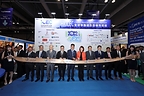
The grand opening ceremony on October 18 marked the official launch of the first B2B pavilion in Hong Kong and Asia dedicated exclusively to mobile communications equipment. The milestone event was officiated by a distinguished lineup of devices global business, including  Dr. the Hon. Starry Lee Wai King, GBS, JP, Member of the Standing Committee of the National People’s Congress and President of the Legislative Council; Mr. Zhu Xiaodong, Director of the Kowloon Affairs Department of the Liaison Office of the Central People’s Government in the HKSAR; Dr. the Hon. Horace Cheung Kwok Kwan SBS JP, Deputy Secretary for Justice, HKSAR; Mr. Liu Maozhou, Level 1 Bureau Rank Official, the Economic and Financial Department II, Liaison Office of the Central People’s Government in the HKSAR; Mr. Ho Lap Ki, Denny, JP, District Officer (Kwun Tong), Home Affairs Department; Mr James Liu, CEO of Global Sources; and Mr. Jacky Tse, Chairman of HKICEC, alongside HKICEC Management team. Together, they witnessed the official launch of the first B2B pavilion in Hong Kong and Asia dedicated to mobile communications equipment. The ceremony drew over a hundred political and business leaders, industry representatives, international exhibitors, and major media outlets, reflecting the event’s importance and the industry’s green trading development. Following the inauguration, officials toured the pavilion for high-level discussions with global exhibitors, signaling robust institutional backing for the industry and HKICEC’s strategic expansion.

During the four-day exhibition, the pavilion experienced a continuous flow of visitors. Communications and electronics suppliers and global buyers from overseas visited specifically for business matchmaking and negotiations, unlocking numerous commercial opportunities. Notably, the pavilion also featured a retrospective exhibit of 16 classic mobile phones, tracing the industry’s evolution from early ‘brick’ devices to Mainland China’s first official Apple release, the iPhone 3GS. The historical display proved to be a standout attraction, gathering large crowds throughout the event.

Beyond the exhibition floor, the chamber partnered with Global Sources to co-host an international forum on October 19. Under the theme ” From New Devices to New Life: Building a Global Mobile Device Lifecycle Ecosystem”, the event gathered experts from ecoATM, PCS Wireless, Cenwood, Our Hong Kong Foundation, and the Global Mobile Association. They engaged in profound discussions on cutting-edge topics including the global economic landscape, inventory management, ESG development, the circular ecology of new and used devices, and AI technology.  Attended by over 200 international representatives, the forum successfully catalyzed cross-border collaboration and established a new standard for sustainability discourse in the global mobile industry.

As a capstone to the comprehensive four-day events, HKICEC convened over 500 industry leaders, VIPs, and exhibitors for a high-profile networking banquet designed to accelerate cross-border business alliances. The gathering provided a premier platform for delegates to solidify collaborative ties and exchange strategic insights initiated from the pavilion. Ahead of the exhibition’s conclusion, a special ” Pearl Of The Orient • Victoria Harbour Cruise Party” was organized to showcase Hong Kong’s unique charm as a cosmopolitan city to global guests, providing a memorable networking experience against Hong Kong’s iconic skyline to formally cap off the week’s successes.

High-resolution images: https://bit.ly/3WqHMxu

View original content to download multimedia:https://www.prnewswire.com/apac/news-releases/hkicec-launches-first-ever-global-mobile-exchange-pavilion-at-mobile-electronics-show-302918996.html

SOURCE The Hong Kong International Communications Electronic Chamber (HKICEC)

Continue Reading

Trending