Connect with us

Technology

Agentic AI Foundation Launches MCPA Certification to Validate MCP Expertise

Published

on

The first official certification for MCP validates builders’ understanding of MCP architecture, security, and implementation as adoption of the protocol grows

The Model Context Protocol Associate (MCPA) is a new foundational, vendor-neutral certification validating engineering and platform builders’ understanding of the Model Context Protocol (MCP) concepts, architecture, and implementation considerations.The exam covers five domains: MCP Fundamentals, Architecture & Components, Interactions & Execution, Security & Governance, and Use Cases & Ecosystem.The MCPA is the first official certification validating MCP knowledge, and the first certification launched by the Agentic AI Foundation.

SAN FRANCISCO, Sept. 14, 2026 /PRNewswire/ — The Agentic AI Foundation (AAIF), the neutral home where the agentic stack is being built, announced the Model Context Protocol Associate (MCPA) – a new vendor-neutral credential aligned with emerging AI engineering, platform engineering, and AI governance roles, as the community convenes in Amsterdam for AGNTCon + MCPCon Europe this week.

Connecting AI models to the tools and services they need has become a critical part of building agentic systems, and MCP has become the standard for enabling those connections. MCP’s usage has grown at an astonishing rate. Across MCP’s Tier 1 SDKs, monthly downloads are approaching half a billion, with both the TypeScript and Python SDKs surpassing 1 billion downloads total. Usage in production is climbing just as fast. MCP tool calls from ChatGPT users reached 98 times their January level by August, and Resend passed one million MCP calls in a single month. That scale is exactly why a common way to validate MCP expertise is needed. The MCPA provides engineers, platform teams, and AI governance professionals a way to demonstrate their understanding of how the protocol works, how its components interact, and how to apply it responsibly.

“We built MCP so developers could rely on one open protocol instead of writing custom integrations for every system. Since then, it has grown exponentially. Giving developers the option to earn a certification in MCP will formalize a shared understanding of how the protocol works, while ensuring this expanding ecosystem continues to operate smoothly,” said David Soria Parra, co-creator and lead maintainer of MCP.

The MCPA is a 120-minute, online, proctored, multiple-choice exam covering five domains: MCP Fundamentals (16%), Architecture & Components (14%), Interactions & Execution (26%), Security & Governance (24%), and Use Cases & Ecosystem (20%). Candidates are tested on MCP hosts, clients, servers, and tools; message flow and protocol primitives; trust boundaries, permissions, and risk controls; and how MCP is applied across real-world agentic deployments. The certification is aligned with the latest MCP specification release, 2026-07-28, and is recommended for candidates who understand the internals of the MCP and are comfortable reasoning about how the protocol works and how its components communicate.

“MCP has quickly become the standard for connecting AI agents to external systems. As organizations increasingly adopt agentic AI, they need developers who understand how those connections work and how to implement them responsibly, including the permissions and trust boundaries involved. With the MCPA, developers can demonstrate that knowledge through an official certification, giving employers a shared benchmark for assessing the skills required for modern software development,” said Angie Jones, Vice President of Developer Experience, Agentic AI Foundation.

Now Available

The MCPA is live and open for enrollment. Individuals attending AGNTCon + MCPCon Europe in Amsterdam this week can enroll now at a 20% discount, and the same discount is available to those registering for AGNTCon + MCPCon North America, taking place October 22–23, 2026 in San Jose, California.

More information about the MCPA, including exam domains, prerequisites, and candidate resources, is available at training.linuxfoundation.org/certification/model-context-protocol-associate-mcpa.

About the Agentic AI Foundation
The Agentic AI Foundation (AAIF) is the neutral home where the agentic stack is being built. With founding projects including MCP, A2A, AGENTS.md, goose, agentgateway, and Agent Router, AAIF governs the core standards and protocols that enable agents to operate interoperably across platforms. Through transparent governance and broad industry participation, AAIF is driving adoption and ensuring agentic AI infrastructure evolves openly, predictably, and at production scale. For more information, please visit aaif.io.

Media Contact
Sarah Zonouzi
Agentic AI Foundation
pr@aaif.io

View original content to download multimedia:https://www.prnewswire.com/news-releases/agentic-ai-foundation-launches-mcpa-certification-to-validate-mcp-expertise-302877134.html

SOURCE Agentic AI Foundation

Continue Reading

Technology

Zydus Spine Surgeons Push the Boundaries of Complex Spine Care, Delivering Excellent Outcomes Across All Ages

Published

on

By

AHMEDABAD, India, Sept. 14, 2026 /PRNewswire/ — Over the past decade, India has witnessed a worrying rise in spine-related problems, not just among the elderly, but increasingly among young adults and teenagers. Spinal health issues are becoming a silent epidemic in the country. According to the World Health Organization (WHO), low back pain is now the leading cause of disability worldwide, and India is no exception.

“A spinal injury can be life-changing but with the right medical care and support from family, most patients are able to return to the lives they had before,” said Dr. Niraj Vasavada, Sr. Spine Surgeon in Ahmedabad with more than two decades of experience in rare and complex surgeries. To address the growing disease burden, Zydus Hospitals in Ahmedabad has built a dedicated, multidisciplinary spine care team backed by advanced surgical technology to handle even the most complex cases. Dr. Hitesh Modi, Sr. Spine Surgeon in Ahmedabad and one of the first PhD-qualified spine surgeons in Western India with 20 years of experience, adds “We strive to combine surgical skill and experience with advances in technology. At Zydus, our focus is on creating a coordinated environment where complex spine procedures can be planned and performed with appropriate expertise, technology, and multidisciplinary support.” The spine team also includes Dr. Prateek Lodha and Dr. Karan Chauhan.

One recent case illustrates the importance of coordinated care in an emergency. A 7-year-old child was rushed to the ER after being hit by a car in his housing society. Dr. Ketan Patel, Head of the Emergency Medicine, stabilised him and alerted the spine team and Dr. Ankit Mehta, Pediatric Intensivist, who then took over. 

“The child arrived with multiple wounds across his lower back and was unable to move. We dressed his wounds and reeled him in for a CT scan that confirmed multiple fractures at the L1 level of the vertebra,” said Dr. Niraj. The boy underwent emergency surgery for spinal fracture stabilisation to avoid further damage. Given the extent of his injuries, the surgical team expanded to include Dr. Amit Shah, Sr. GI Surgeon, Dr. Shailendra Singh, Sr. Plastic Surgeon, along with the anaesthesiology team including Dr. Parv, led by Dr. Meeta Agarwala.

“We had to place eight screws to stabilise the fractured section of his spine. We used the O-Arm for real-time imaging of the bone structure and intraoperative neuromonitoring (IONM) to get the best results,” said Dr. Niraj. The deformity was substantially corrected following surgery and with appropriate postoperative care and rehabilitation, the child was discharged within a week. 

Osteoporosis-related fractures are a recurring theme in revision spine surgery, particularly among the elderly, and have become considerably more difficult to treat when other health conditions complicate the picture. “An 80-year-old man consulted with the team, and he had a history of severe osteoporosis along with Parkinson’s disease, uncontrolled diabetes, and altered kidney functions,” said Dr. Hitesh Modi. He had been operated on twice elsewhere for osteoporotic compression fractures over a period of 1.5 years. Now he was developing paraparesis (weakness in both legs), his implants were loose, and he was in severe pain. He remained bedridden due to his condition, thus, a revision surgery to correct the spinal implant loosening was required in his case. Simultaneously, his Parkinson’s was also managed by Dr. Dinesh Saini, Neurologist & Movement Disorder Specialist, his diabetes was managed by Sr. Internal Medicine Specialists, Dr. Navneet Shah and Dr. Nimit Shah, and his kidney function was constantly monitored by the nephrology team. 

Dr. Hitesh Modi performed the surgery using IONM and O-arm surgical navigation to achieve precise results that were also possible due to real-time 3D guidance. Advanced technology such as intraoperative neuromonitoring (IONM) and the O-Arm have become central to how Zydus approaches complex spine surgery. The O-Arm provides real-time 3D imaging during surgery, helping the team understand spinal anatomy and verify the placement in real time. IONM, meanwhile, continuously monitors the nervous system throughout the procedure, helping surgeons make sure that nerve function stays intact during surgery. Combination of successful surgery, support from the multi-disciplinary team along with advanced technology and superior clinical acumen and extensive physiotherapy helped him gradually regain strength in his lower limbs, and he could walk again within a week. He continues to enjoy regular outings with his family, well into his eighties.

Lifestyle factors such as prolonged sitting, poor posture, and excessive mobile or laptop use accelerate spinal degeneration in younger patients, but age and lifestyle aren’t the only drivers. Rheumatoid arthritis (RA) is an autoimmune condition in which the immune system attacks the joints and weakens them over time. “We perform several revision and redo surgeries. One such case was of a 73-year-old woman who was struggling with RA for many years. She underwent two surgeries at another hospital, but the screws were not holding well as her bones grew increasingly brittle due to RA. She suffered excruciating pain, was bedridden for 8 months, and decided to consult with us,” said Dr. Niraj. “Our goal was to remove the misaligned screws from her earlier operations and replace them with new fixations, this time cemented directly into the bone to compensate for how fragile it had become. The surgery took eight hours and after removing the old ones, 14 new screws were placed with specialised bone cement for solid fixation”, Dr. Niraj added. With extensive physiotherapy as a part of postoperative spine rehabilitation, she recovered well and soon went home. It’s been more than a year now, and she has been doing well and has resumed her day-to-day activities.

Spinal conditions that develop gradually can be just as disruptive as sudden trauma, often stripping away basic daily function. On of the most common is scoliosis, which leads to an abnormal sideways curvature of the spine. Once the curve progresses past a certain point, typically once it exceeds 45 to 50 degrees, it usually requires surgical correction. Though it’s often seen in childhood, scoliosis can also develop or worsen over decades, eventually affecting a person’s ability to walk, sit, or carry out daily tasks. “An elderly woman had lived with scoliosis for years, and her spine bent so severely that it had completely affected her day-to-day activities. Her condition significantly affected her day-to-day activities, and she came to us for a solution,” said Dr. Prateek. Dr. Niraj Vasavada and his team built a 3D model of her spine for scoliosis surgery, and rehearsed the operation on it before entering the OT. “We used the model to understand her spine better, and ran a mock surgery to simulate exactly what we planned to do in the OT,” said Dr. Niraj. “The results were excellent and we could help her getting back to normalcy.”

With a global rise in spine-related disorders, India has increasingly become a preferred destination for patients seeking multidisciplinary care. With access to reputed surgeons and global health standards, Zydus Hospitals has become one such hub in Western India, drawing a growing number of patients from across the world, with African nations, including Tanzania, among the fastest-growing sources. Dr. Hitesh Modi, who regularly visits these countries for OPDs, recalls one such case of a 65-year-old patient and his family who consulted with his team. “He had been diagnosed with multiple myeloma that put severe pressure on his spinal cord”. Doctors in his home country told him surgery wasn’t possible; however, after the online consultation, his family decided to fly him to India. He had been paraplegic for 4 years and complained of persistent abdominal pain. Given the complexity of this case, the oncology and bone marrow transplant teams were also looped in and his treatment strategy was drawn in multiple stages. “We decided to first operate on his spine and performed a six-hour-long procedure,” he said. The surgery went well and his post-op recovery was also smooth. 

“When my father was wheeled out of the OT, I saw the slightest movement in his toes for the first time in years. I almost couldn’t believe it,” said the patient’s son. Extensive robot-assisted physiotherapy continued alongside treatment from the oncology team was done before a bone marrow transplant was planned. He was then placed under the care of Dr. Akanksha Garg, Hemato-oncologist and BMT specialist. Over the following four months, supported by a physiotherapy and rehabilitation team that stayed with him through every stage, he slowly regained the ability to walk independently. “We were thrilled with the results, and when we saw him walk without any support, we couldn’t help but admire the grit that helped him push through so many hurdles,” said Dr. Karan Chauhan, Spine Surgeon.

The spine team at Zydus has excelled advanced spine care solutions for a wide range of spinal conditions, ranging from conservative measures and pain management to minimal-access procedures and Safe Spine Surgery (SSS). Their expertise also includes extensive reconstruction of spinal deformities, vertebral fractures, hematoma, spinal stenosis, abscess, tumours, degenerative disc disease, herniated disc, spinal cyst excision, spinal root blocks, across lumbar, thoracic and cervical spine, and more.

To know more about their services, visit https://zydushospitals.com.


View original content to download multimedia:https://www.prnewswire.com/in/news-releases/zydus-spine-surgeons-push-the-boundaries-of-complex-spine-care-delivering-excellent-outcomes-across-all-ages-302876508.html

Continue Reading

Technology

Trina Storage and AMP-lify Sign MoU for 1 GWh of Grid-Connected Battery Storage Projects in Japan

Published

on

By

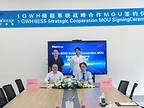
CHUZHOU, China, Sept. 14, 2026 /PRNewswire/ — Trina Storage, the energy storage business unit of Trinasolar, has signed a Memorandum of Understanding (MoU) with AMP-lify, a Japanese clean energy platform, to supply approximately 1 GWh of grid-connected battery energy storage system (BESS) equipment for AMP-lify’s projects. AMP-lify develops, constructs and operates grid-connected BESS, utility-scale solar, and onshore wind projects across Japan.

Under the MoU, Trina Storage will supply its Elementa 3 series BESS and provide related technical support for approximately 1 GWh of AMP-lify’s BESS projects. Trina Storage’s Japan team will support system configuration, technical consultation, delivery coordination and after-sales service.

Trina Storage’s Elementa 3 is equipped with Trina Storage in-house 587Ah high-capacity cell, providing up to 6.25 MWh per container for larger utility-scale sites. For projects affected by transport access, limited land or proximity to communities, the 1.56 MWh Elementa 3 Flex offers an approximately five-square-metre footprint, a weight of about 13 tonnes for standard-truck transport, operating noise of 65 dB or less and modular expansion.

Japan’s Seventh Strategic Energy Plan projects renewable energy at approximately 40–50% of power generation in fiscal year 2040 and calls for storage batteries to help balance renewable output. As variable renewable generation increases, developers need storage projects that combine appropriate system design with local execution and long-term support. Trina Storage’s BESS technology and Japan-based support are backed by its recognition as a BloombergNEF Tier 1 energy storage supplier for 11 consecutive quarters.

“Japan’s storage market needs projects that are technically sound and executable under local conditions. Working with Trina Storage’s technology and local support gives us a strong basis to move the projects from site evaluation through construction and into reliable operation,” said Martin Stein, Representative Director and CEO of AMP-lify.

“Japan’s storage market has distinct engineering and delivery requirements. Road weight limits and narrow site access affect transport, while mountainous terrain, limited land, community noise expectations, seismic design and coastal conditions influence system configuration. This MoU allows us to address those factors with AMP-lify from the earliest stages of development. By combining its local execution capabilities with our Elementa 3 portfolio and Japan-based technical support, we can configure each project around its site requirements while building toward the scale envisaged under this cooperation,” said Dr Leo Zhao, Head of Energy Storage, Trinasolar Asia Pacific.

View original content to download multimedia:https://www.prnewswire.com/apac/news-releases/trina-storage-and-amp-lify-sign-mou-for-1-gwh-of-grid-connected-battery-storage-projects-in-japan-302877175.html

SOURCE Trina Solar Energy Development Pte. Ltd.

Continue Reading

Technology

Solidion Technology Announces Stock Buyback Program

Published

on

By

Board Authorization Reflects Confidence in Solidion’s Long-Term Strategy and Commitment to Enhancing Shareholder Value

DALLAS, Sept. 14, 2026 /PRNewswire/ — Solidion Technology, Inc. (NASDAQ: STI) (“Solidion Technology” or “the Company”), an advanced battery technology solutions provider, today announced that its Board of Directors (“the Board”) has authorized a new stock buyback program, pursuant to which the Company intended to buyback up to $1.0 Million of the Company’s outstanding common stock.

The stock buyback program became effective on September 13, 2026 and will remain in effect until (i) the date on which the full amount authorized has been repurchased, (ii) March 14, 2028 or (iii) the date on which the authorization is terminated by the Board.

The authorization reflects the Board’s confidence in Solidion’s long-term strategy and provides the Company with additional flexibility in its approach to capital allocation. Solidion believes that the buybacks may represent an attractive use of capital while supporting the Company’s broader objective of creating long-term value for stockholders. Open-market repurchases are expected to be conducted in accordance with applicable federal securities laws, as well as applicable Nasdaq requirements and state law.

“The Board’s authorization of this stock buyback program reflects our confidence in Solidion’s long-term prospects and our commitment to disciplined capital allocation,” said Jaymes Winters, Chief Executive Officer of Solidion Technology. “We believe that our technology, intellectual property and strategic position provide a strong foundation for future growth. This program gives us the flexibility to act when we believe market conditions present an attractive opportunity to invest in Solidion and enhance long-term value for our stockholders.”

About Solidion Technology, Inc.

Headquartered in Dallas, Texas with pilot production facilities in Dayton, Ohio, Solidion’s (NASDAQ: STI) core business includes manufacturing of battery materials and components, as well as development and production of next-generation batteries for energy storage systems, including UPS systems serving the artificial intelligence (AI) data center market and electric vehicles for ground, aerospace, and sea transportation. Solidion holds a portfolio of over 385 patents, covering innovations such as high-capacity, silane gas free and graphene-enabled silicon anodes, biomass-based graphite, advanced lithium-sulfur and lithium-metal technologies.

For more information, please visit www.solidiontech.com or contact Investor Relations.

Forward-Looking Statements 

This press release contains forward-looking statements within the meaning of the Private Securities Litigation Reform Act of 1995. Solidion Technology Inc., (NASDAQ: STI) (the “Company,” “Solidion,” “we,” “our” or “us”) desires to take advantage of the safe harbor provisions of the Private Securities Litigation Reform Act of 1995 and is including this cautionary statement in connection with this safe harbor legislation. The words “forecasts” “believe,” “may,” “estimate,” “continue,” “anticipate,” “intend,” “should,” “plan,” “could,” “target,” “potential,” “is likely,” “expect” and similar expressions, as they relate to us, are intended to identify forward-looking statements. We undertake no obligation to publicly update any forward-looking statements, whether as a result of new information, future developments or otherwise, except as may be required by law.

Please follow us on:

LinkedIn: https://www.linkedin.com/company/solidion-tech
X: https://x.com/solidiontech?lang=en 

SOURCE Solidion Technology, Inc.

Continue Reading

Trending