Connect with us

Technology

Zhou Jianjun from Huawei: Building a Grid-Interactive AIDC Solution to Maximize Tokens Per Watt

Published

on

SHENZHEN, China, Sept. 17, 2026 /PRNewswire/ — The Green Energy Development Conference & International Digital Energy Expo 2026, kicked off  in Shenzhen. Zhou Jianjun, Vice President of Huawei and President of Global Marketing, Sales and Services, Huawei Digital Power, attended the opening ceremony and unveiled Huawei’s grid-interactive AI data center (AIDC) solution during the key industry achievement release session. This solution aims to tackle the new challenges of power acquisition, high-density power supply, high-density heat dissipation, and complex delivery, operation, and maintenance in AIDC construction during the AI era, by leveraging system-level compute-electricity synergy to maximize tokens per watt.

The Token Factory Era: Compute and Power Deeply Coupled

The global AI industry is rapidly accelerating from R&D to large-scale deployment. The fast iteration of large models and the surging demand for AI applications are driving exponential growth in token consumption. As the basic unit for invoking, consuming, and billing AI services, tokens are becoming increasingly valuable. Major global tech companies, operators, cloud service providers, and energy enterprises are ramping up investments in AI infrastructure. AIDC campuses are scaling from traditional megawatts to hundreds of megawatts or even gigawatts. Power acquisition, power supply and cooling in high-density compute scenarios, delivery, operation, and maintenance capabilities, and construction speed have become new challenges for AIDC construction.

Zhou Jianjun stated: “Electricity is essential for computing. Today, in the AI era, the startup, shutdown, and load fluctuations of a large AIDC campus can all impact grid operations.” He emphasized that as the penetration of renewable energy continues to rise, the power grid itself is also evolving, with local grid strength declining and volatility and uncertainty increasing. Future AIDCs must not only adapt to weak grids and maintain stable operation during grid fluctuations, but also support the grid and become a key “grid-friendly” node. Therefore, the integration of generation, grid, load, and storage has become an inevitable choice for AIDC development.

“3+1” Redefining a System-Level Grid-Interactive AIDC Solution

Huawei proposes a “3+1” system redefinition across three domains—Watt (electricity), Bit (digital), and Heat (thermal)—along with the construction model, to build a grid-interactive AIDC solution.

The core of the redefinition is as follows:

Watt (electricity): Shifting from stable power consumption to supporting the power grid.

On the generation-grid-storage side, Huawei enhances the AIDC facility’s adaptability to weak power grids and large load fluctuations through grid-forming control and energy storage synergy. The industry’s first 1000 V grid-forming inverter FusionSolar series and the world’s first 1000 V Smart String Grid Forming ESS Platform LUTERRA, both launched by Huawei, have significantly boosted the grid-forming capability of renewable energy. On the load side, Huawei builds an integrated grid-forming energy router based on the solid-state transformer (SST) technology. Moreover, Huawei has become the first vendor in the industry to pass the wideband oscillation damping test conducted by Shanghai Electrical Apparatus Research Institute, driving UPS in the AIDC era to evolve from “reliable power supply” to “grid-friendly.”

Heat (thermal): from “reliability of individual components” to “reliability of the entire system.”

The key to AIDC liquid cooling is not just cooling, but controllability; not just the reliability of individual components, but the reliability of the entire system from chips to cooling sources. Huawei’s Thermal Management Unit (TMU) and AI-enabled MW-level liquid cooling system provide a paradigm for highly reliable cooling in the AIDC industry.

Bit (digital): from “passive operation and maintenance” to “proactive sensing.”

AI capabilities are leveraged to redefine operations, enabling AIDC to achieve proactive sensing, optimization, and protection.

Construction model: from “traditional engineering” to “productization and prefabrication.”

AIDC can no longer rely entirely on traditional engineering methods. Through productization, prefabrication, and modularization, Huawei shifts complexity to the factory, leave simplicity to customers, and speed up compute rollout.

System-Level Innovation for the Next-Generation AIDC

Huawei’s grid-interactive AIDC solution is not a single product-level innovation, but an end-to-end solution built on system-level innovation. Its core value is clear and compelling: ensuring stable operation of high-value computing power with high reliability, generating more tokens per watt with high energy efficiency, enabling faster rollout of computing power with fast delivery, and supporting the power grid with grid-friendly features despite being a large load.

Zhou Jianjun said, “AI is opening up a new era of industry. In response to the opportunities brought by the AIDC industry transformation, Huawei deeply integrates digital technology, power electronics, thermal management, and energy storage management, and focuses on the new power system and core fields of AIDC to build comprehensive capabilities in renewable energy generation, grid forming and grid connection, power supply for high-density compute, liquid cooling, and compute-electricity synergy. Huawei is willing to work with global customers and partners to drive the AIDC industry toward high-quality, sustainable, and innovative development, enabling each watt to produce more tokens and powering the AI era forward.”

View original content to download multimedia:https://www.prnewswire.co.uk/news-releases/zhou-jianjun-from-huawei-building-a-grid-interactive-aidc-solution-to-maximize-tokens-per-watt-302881315.html

Continue Reading

Technology

Agoda Reveals Flexible Work Is Reshaping Travel, Fuelling Interest in Extended Overseas Stays Among Thai Travelers

Published

on

By

SINGAPORE, Sept. 18, 2026 /PRNewswire/ — Thai travelers are increasingly embracing extended overseas stays, according to accommodation search data from digital travel platform Agoda. For stays of 30 nights or longer, Da Nang, Bali, Tokyo, Kuala Lumpur, Ho Chi Minh City, and Seoul ranked among the most-searched overseas destinations.

The findings highlight how flexible working arrangements are reshaping travel habits, giving people greater freedom to choose when and where they work. As a result, travelers are no longer viewing travel as an escape from work, but instead are integrating work into the lifestyles they want, fueling the growth of longer stays and the rise of “bleisure” travel. These destinations are increasingly attracting month-long stays thanks to their combination of affordability, quality infrastructure, and appealing lifestyle offerings. For Thai travelers exploring the possibility of longer stays abroad, affordability, lifestyle, and reliable infrastructure appear to be just as important as traditional sightseeing attractions. Based on Agoda accommodation searches for stays of 30 nights or longer, Da Nang leads travel interest, reflecting its appeal as a destination that combines low living costs, modern amenities, and easy access to both beaches and city life. Bali remains a perennial favourite among digital nomads, thanks to its established co-working ecosystem and wellness-driven lifestyle, while Tokyo continues to attract strong interest for its world-class infrastructure and seamless connectivity. Kuala Lumpur is also gaining momentum, offering value for money alongside modern urban conveniences. Ho Chi Minh City and Seoul complete the top six, highlighting growing interest in destinations that balance affordability, culture, and quality of life.

The trend is equally evident in searches for long stays in Thailand. Accommodation search data for stays of 30 nights or more shows coastal and island destinations amongst the most popular rankings, reflecting strong interest in places that offer a better work-life balance alongside natural surroundings. Pattaya ranks first, with its combination of beachfront living, urban conveniences, and proximity to Bangkok making it an appealing option for extended stays. Phuket and Koh Samui follow closely behind, supported by strong international connectivity, established expatriate communities, and a broad range of accommodation options, from hotel to villas. Meanwhile, Hua Hin and Cha-am continue to attract attention from travelers seeking a more relaxed seaside lifestyle within easy reach of the capital.

Thailand’s southern islands also feature prominently in long-stay accommodation searches. Krabi, Koh Pha-ngan, Koh Tao, and Koh Lanta all rank among the most searched destinations, underscoring growing interest in locations that combine lifestyle appeal with the flexibility to work remotely. Koh Pha-ngan has evolved beyond its Full Moon Party reputation to become increasingly associated with wellness and digital nomad communities, while Koh Tao has climbed the rankings year-on-year, buoyed by its renowned diving scene and laid-back atmosphere.

Beyond the south, Koh Chang’s jungle-covered landscapes and slower pace of life have helped it emerge as an appealing alternative to Thailand’s more developed island destinations. Khao Lak and Rayong round out the top 15 most-searched destinations, reinforcing a broader trend in long-stay accommodation searches: travelers are increasingly drawn to locales that offer coastal living, lifestyle quality, and the flexibility to blend work and leisure from one location.

Akaporn Rodkong, Country Director, Thailand and Indochina at Agoda said: “The line between work and travel is becoming increasingly blurred as flexible working arrangements give people more freedom over when and where they work. Our data shows Thai travelers searching for longer stays in overseas cities that offer a compelling mix of lifestyle, affordability, and infrastructure, while international travelers exploring extended stays in Thailand continue to gravitate toward the country’s islands and coastal destinations. At Agoda, we’re committed to making it easy for travelers to discover the right stay for this evolving way of traveling, whether they’re working remotely, taking an extended break, or blending both.”

For those looking to reimagine their next trip through a bleisure lens, offers over 6 million holiday properties worldwide, alongside more than 300,000 experiences and over 130,000 flight routes. Whether working remotely for a month or simply extending a stay to experience a destination more deeply, travelers can find everything they need to plan their next extended trip at www.agoda.com or the Agoda app.

View original content to download multimedia:https://www.prnewswire.com/apac/news-releases/agoda-reveals-flexible-work-is-reshaping-travel-fuelling-interest-in-extended-overseas-stays-among-thai-travelers-302882973.html

SOURCE Agoda

Continue Reading

Technology

KERALAM CM ANNOUNCES ‘SARAL KERALAM’ TO FAST-TRACK INVESTMENT APPROVALS

Published

on

By

One State, One Approval, One Document | 75-day time-bound process for investments above ₹25 crore

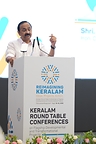
THIRUVANANTHAPURAM, India, Sept. 18, 2026 /PRNewswire/ — Keralam Chief Minister V.D. Satheesan today announced ‘SARAL Keralam – Simplified and Accelerated Regulatory Approvals and Licensing’, a major reform to simplify and accelerate statutory approvals for investment projects in Keralam.

Approved by the Cabinet, SARAL Keralam is based on the principle of ‘One State, One Approval, One Document’ and will establish a single statutory mechanism for final approval of eligible investment projects. The Chief Minister said the reform would simplify procedures, reduce delays and make state’s investment environment more predictable.

The mechanism will cover investments above ₹25 crore. Projects above ₹25 crore and up to ₹50 crore will be considered at the District level, while projects above ₹50 crore will come under the State-level mechanism. The State-level Approval Committee will be chaired by the Chief Secretary and the District-level Committee by the District Collector.

75 DAYS FOR FINAL APPROVAL

A maximum processing period of 75 days will be prescribed from submission of a complete application to final approval. This includes 10 days for preliminary scrutiny, 30 days for technical scrutiny, 15 days for appraisal and consolidation, and 20 days for the final decision. An Integrated Enterprise Clearance Certificate will be issued immediately after approval.

SARAL Keralam will be a one-stop mechanism for statutory approvals, rather than merely recommendations. Necessary amendments to the relevant Acts and Rules will transfer final approval authority to the State- and District-level Committees and simplify technical procedures.

A key feature is clear responsibility and accountability for departmental officers involved in appraisal and approval. Amendments to the Kerala State Service Rules are proposed to enable disciplinary action for delays, inaction, failure to act or a negative attitude in the discharge of duties.

At the same time, Departments will retain their technical scrutiny and inspection responsibilities. The framework will not dilute safeguards relating to safety, environmental protection, employee welfare or public health. There will be no deemed approval, and existing departmental mechanisms will continue for investments outside the specified categories.

The framework will also provide an appeal mechanism against rejection decisions and is intended to significantly reduce the regulatory burden associated with investment approvals.

₹25,700 CRORE INVESTMENT AFFECTED BY DELAYS

The reform seeks to address prolonged delays in investment approvals. KSIDC is monitoring 73 major investment projects, of which 47 remain stalled due to delays in statutory approvals and clearances. These projects represent investments of more than ₹25,700 crore and have the potential to generate approximately 88,000 employment opportunities.

The Chief Minister noted that some investment proposals have remained pending for five to seven years, and said SARAL Keralam is a major step towards bringing investments to Keralam by making approval procedures faster and simpler.

The Cabinet has approved the necessary statutory framework, including amendments to 19 existing laws, following detailed consultations with the concerned Departments and agencies.

View original content to download multimedia:https://www.prnewswire.com/in/news-releases/keralam-cm-announces-saral-keralam-to-fast-track-investment-approvals-302882990.html

Continue Reading

Technology

THE TOKYO PASS Renews Official Website, Redefining Wellness Tourism in Tokyo with “Museum Bathing (R)”

Published

on

By

-Commemorative 50% Discount Autumn Campaign for International Visitors to Tokyo-

TOKYO, Sept. 18, 2026 /PRNewswire/ — Tanseisha Co., Ltd., headquartered in Tokyo, announced the full renewal of an official website for THE TOKYO PASS, a digital platform offering seamless access to Tokyo’s cultural attractions and diverse experiences. To commemorate the renewal, the company will offer a limited-time 50% discount campaign this autumn, exclusively targeting international travelers visiting Tokyo.

Logo: https://www.mytokyopass.com/wp-content/uploads/ttplogored.jpg 

Image1: https://www.mytokyopass.com/wp-content/uploads/boutpass.jpg 

As global demand for wellness travel rises, this digital pass allows users to seamlessly access over 50 of Tokyo’s top cultural attractions, traditional gardens, and landmarks using only their smartphones, transforming a standard city tour into a wellness journey that restores both body and mind.

Image2: https://www.mytokyopass.com/wp-content/uploads/kiyo1200169.jpg 

At the core of this initiative is the uniquely Japanese concept of Museum Bathing (R). Immersing oneself in the tranquil spaces of historic museums and ancient gardens brings profound healing to the mind. In recent years, such experiences have gained attention for being associated with maintaining normal blood pressure, easing negative emotions like tension and fatigue, and supporting overall mental well-being. With THE TOKYO PASS, travelers can experience this global wellness trend right in the heart of the bustling metropolis.

Image3: https://www.mytokyopass.com/wp-content/uploads/img3-1.jpg 

By utilizing the digital pass, travelers can bypass the hassle of tedious advance bookings and waiting in line at local ticket counters. Visitors simply scan a QR code at the entrance to step instantly into serenity, providing a completely hassle-free and smooth experience.

Image4: https://www.mytokyopass.com/wp-content/uploads/img2.jpg 

Through the use of the pass, the entire city naturally transforms into a stage for wellness. The very journey of stepping from contemporary art museums to historic gardens becomes a time for mindful walking, allowing travelers to intimately experience Tokyo’s profound charm. To complete this physical and mental reset, while culinary experiences are not included in the pass, travelers are highly encouraged to stop by local eateries along their route to experience authentic “washoku” (traditional Japanese cuisine).

Image5: https://www.mytokyopass.com/wp-content/uploads/Cityscape-washoku.jpg 

Furthermore, using THE TOKYO PASS also leads to the protection of Japan’s cultural assets, contributing to passing down this precious cultural heritage to future generations.

Campaign Details & Relevant Links: https://www.mytokyopass.com/wp-content/uploads/Campaign-Details-Relevant-Links.pdf 

About THE TOKYO PASS: https://www.mytokyopass.com/wp-content/uploads/About-THE-TOKYO-PASS.pdf 

View original content:https://www.prnewswire.co.uk/news-releases/the-tokyo-pass-renews-official-website-redefining-wellness-tourism-in-tokyo-with-museum-bathing-r-302882825.html

Continue Reading

Trending