Connect with us

Technology

As Meditation Goes Mainstream, One Maker Rethinks Meditation Seats for Aging Bodies

Published

on

HŌM Furnishings introduces a line of meditation seats designed to help practitioners sit comfortably as their bodies age.

ASHLAND, Ore., Sept. 22, 2026 /PRNewswire/ — Meditation has moved well beyond the yoga studio and retreat center. Millions of people now incorporate meditation and mindfulness into their daily lives, yet one fundamental part of the practice has changed little: how people sit.

For longtime practitioners, particularly as they move into their 50s, 60s and beyond, the traditional meditation cushion can become increasingly difficult to use. Hips become less flexible. Knees and ankles complain. Lower backs tire. And the seemingly simple act of sitting cross-legged on the floor can become an obstacle to a practice that people want to maintain for years to come.

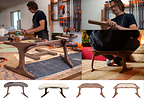
That problem led Ashland, Oregon furniture designer and longtime meditator Brad Boucher to rethink the meditation seat. After years of prototyping in his workshop, Boucher founded HŌM Furnishings, a small hardwood furniture company creating handcrafted meditation seats designed to provide support without disconnecting the practitioner from the floor.

“At a certain point, it became obvious that discomfort wasn’t a virtue,” says Boucher. “Strain wasn’t deepening the practice — it was shortening it.”

Rethinking How We Sit to Meditate

Traditional meditation cushions have served practitioners for generations, but they assume a degree of hip and lower-body flexibility that not everyone maintains throughout life.

Boucher’s approach was to preserve what matters about floor-based meditation while addressing the physical demands of getting there.

The result is a family of meditation seats that elevate the hips just enough to make a cross-legged position more accessible, while maintaining a grounded relationship with the floor. Curved rocker feet allow the pelvis to find a natural angle, while the open-front design provides additional room for the legs and feet.

The seats are deliberately understated. “The seat is meant to support practice in a way that gets no attention,” Boucher says. “Like the ground itself.” The philosophy reflects Boucher’s broader view of meditation: the physical setup should remove barriers rather than become another thing the practitioner has to think about. “A dedicated seat in a dedicated corner removes a surprising amount of friction,” Boucher says. “The body learns where it goes. The mind follows.”

From One Meditation Seat to a Four-Seat Collection

HŌM Furnishings launches with four handcrafted meditation seats, each designed around a different approach to posture, movement and home use.

The Bodhi is the original HŌM seat and Boucher’s daily meditation seat — the design that started the company.

The Self Shelf is designed for movement, featuring folding legs that allow practitioners to take their meditation seat wherever their practice goes.

The Chairish is a refined variation designed for shared living spaces and convenient storage, with a stackable design.

The Epiphany offers a more open, grounded form with a lower center of gravity and a handwoven seat.

All four seats are designed in Ashland, Oregon, and crafted from solid Acacia hardwood. The collection is currently available, with prices ranging from $249.99 to $399.99.

A Furniture Maker’s Answer to a Growing Challenge

For Boucher, the opportunity isn’t simply to create another meditation product. It is to reconsider what happens when a practice that people love meets a body that changes over time.

The question is particularly relevant as meditation becomes increasingly integrated into everyday life. A practice that may begin with a cushion on the floor can become more difficult to sustain when physical discomfort becomes part of the routine.

HŌM’s answer is neither a traditional chair nor an attempt to eliminate the experience of sitting on the floor. Instead, the company’s seats are designed to occupy the space between the two. The seats place you approx 9 to 11 inches off the ground, depending on the model.

“We’ve spent years thinking about what the body actually needs to sit well while preserving the essential qualities of traditional meditation posture,” says Boucher. “The goal isn’t to make meditation easier. It’s to remove unnecessary obstacles to doing it.”

That distinction is central to the HŌM design philosophy: create furniture that supports the practice without competing with it.

About HŌM Furnishings

HŌM Furnishings is a small hardwood furniture company based in Ashland, Oregon, founded by designer and longtime meditator Brad Boucher. The company creates handcrafted meditation seats and companion pieces designed to support a practice that integrates with daily life — not one that demands escape from it. Each piece is designed to last, designed to disappear beneath the practitioner, and designed to make the simple act of sitting down and slowing down more comfortable.

To learn more about HŌM Furnishings and its collection of handcrafted meditation seats, visit the HŌM Furnishings website homfurnishings.com.

Notes for editors

Brad Boucher is available for interviews, in-shop visits, and photography in Ashland, Oregon.High-resolution product images and lifestyle photography available on request.Two founder essays — “The Problem Contains the Solution” and “Sacred Space” — are available as background reading and for excerpting with attribution.Review units may be available for select outlets.

View original content to download multimedia:https://www.prnewswire.com/news-releases/as-meditation-goes-mainstream-one-maker-rethinks-meditation-seats-for-aging-bodies-302886363.html

SOURCE HoM Furnishings

Continue Reading

Technology

Medscape and Brazilian Society of Clinical Oncology Expand Partnership to Deliver Clinically Relevant Oncology Insights


Published

on

By

The strategic collaboration will expand access to global oncology insights for physicians across Brazil

NEWARK, N.J., Sept. 22, 2026 /PRNewswire/ — Medscape, the leading global digital platform for physicians and healthcare professionals, today announced the expansion of its strategic partnership with the Brazilian Society of Clinical Oncology (SBOC). This expanded partnership will provide Brazilian oncologists and other professionals who care for cancer patients with timely access to the latest advances in cancer research, treatment, and clinical practice.

The two-year agreement will focus on the development and publication of Portuguese-language educational and medical content designed to enhance knowledge and support day-to-day clinical practice of oncology professionals in Brazil. This announcement continues the editorial partnership between the two organizations, previously announced in 2022, which aimed to strengthen editorial content to tackle misinformation and inaccuracy of health information online. “Physicians are bombarded with a huge volume of information online, which varies in quality,” said Pablo Labbé, Group Vice President at WebMD/Medscape. “By working closely with SBOC, combining clinical expertise with our advanced Medscape AI technologies, we can help Brazilian physicians more easily identify and access peer-reviewed and validated clinical information from global sources. This in turn better allows medical developments to be translated into everyday clinical practice here in Brazil.”

Through the collaboration, thousands of oncology professionals across Brazil will gain access to expert-led reporting, congress updates, analysis of emerging clinical data, and educational resources from major international and national oncology meetings, all free and on-demand. “SBOC is committed to advancing oncology care in Brazil through education, scientific excellence, and professional development. This collaboration with Medscape creates an important new channel for knowledge sharing, benefiting oncologists across Brazil and, ultimately, their patients,” said Dr. Clarissa Baldotto, President of the Brazilian Society of Clinical Oncology (SBOC).

This announcement marks the latest in Medscape’s ongoing collaboration with leading academic institutions, professional societies and healthcare organizations, brought together by a shared commitment to advancing medical education and supporting healthcare professionals. “Partnerships with leading medical societies are central to Medscape’s mission of supporting healthcare professionals with trusted, clinically relevant education,” said Diane Leonis, Head of Commercial and Educational Partnerships, Medscape Brazil. “By deepening our collaboration with SBOC, we can connect Brazilian oncology professionals with timely insights from the global oncology community.”

SBOC is one of Brazil’s most recognized medical specialty societies and a leading advocate for oncology education and professional development. Founded in 1981, the organization represents clinical oncologists across Brazil and supports continuing medical education, research, professional advocacy, and healthcare policy development. 

This collaboration reflects Medscape’s continued investment in Brazil, one of its most engaged international markets for physician education.

About Medscape
Medscape is the leading source of clinical news, health information, and point-of-care tools for health care professionals. Medscape offers specialists, primary care physicians, and other health professionals the most robust and integrated medical information and educational tools. Medscape AI is the first and only medical-grade generative AI platform that synthesizes peer‑reviewed evidence, real-time medical news, and Medscape’s expert‑validated content in seconds, delivering clinically verified insights that healthcare professionals can trust. Built for global healthcare, Medscape AI is free to all 13+ million Medscape members and accessible in any language, in any country, and in any clinic. Medscape Education (medscape.org) is the leading destination for continuous professional development, consisting of more than 30 specialty-focused destinations offering thousands of free C.M.E. and C.E. courses and other educational programs for physicians, nurses, and other health care professionals. Medscape is a subsidiary of WebMD Health Corp., an Internet Brands company.

About the Brazilian Society of Clinical Oncology
The Brazilian Society of Clinical Oncology is the national organization representing clinical oncologists in Brazil. Founded in 1981, SBOC works to advance oncology through medical education, scientific research, professional development, healthcare policy engagement, and national and international collaboration. The organization is dedicated to promoting excellence in oncology practice and improving outcomes for patients with cancer across Brazil.

View original content to download multimedia:https://www.prnewswire.com/news-releases/medscape-and-brazilian-society-of-clinical-oncology-expand-partnership-to-deliver-clinically-relevant-oncology-insights-302886498.html

SOURCE Medscape

Continue Reading

Technology

$50 Million Gift Will Accelerate Growth of CU Anschutz Cerebrospinal Fluid Leak Program

Published

on

By

Landmark investment will expand patient access, accelerate research and establish a world-leading center for cerebrospinal fluid leak diagnosis and treatment.

AURORA, Colo., Sept. 22, 2026 /PRNewswire/ — University of Colorado Anschutz has received an anonymous $50 million gift to transform care for patients with cerebrospinal fluid (CSF) leaks, one of the most underdiagnosed and undertreated neurological conditions in medicine.

Inspired by the life-changing work of Andrew Callen, MD, his neurosurgical partner Peter Lennarson, MD, and the CSF Leak Program team, the landmark gift, one of the largest in campus history, will expand the already nationally recognized program by broadening access to specialized care, advancing research and diagnostic expertise and further solidifying CU Anschutz as one of the nation’s leading destinations for CSF leak diagnosis and treatment. At the same time, the investment will create opportunities for advances in radiology and collaborative research.

Cerebrospinal fluid is the clear liquid that surrounds and protects the brain and spinal cord. When the protective membrane surrounding the brain or spinal cord develops a defect, either through a tear or an abnormal connection to a vein, cerebrospinal fluid can escape, causing a range of often debilitating symptoms, including severe headaches, neck pain, hearing changes, dizziness and cognitive difficulties. Because symptoms frequently mimic other neurological disorders, patients often spend years searching for answers before receiving an accurate diagnosis.

“This extraordinary gift has the potential to transform the future of CSF leak care and speed advances across the neurosciences,” said John Sampson, MD, PhD, dean of the University of Colorado Anschutz School of Medicine. “First and foremost, this is about patients – reaching more people with the specialized care they need while accelerating research and innovation. This investment also creates opportunities for breakthroughs in areas such as neuroimaging, extending its impact well beyond the CSF Leak Program.”

“Too many patients spend years searching for answers to a condition that is still widely misunderstood,” said Andrew Callen, MD, associate professor of diagnostic radiology and director of the CSF Leak Program at the CU Anschutz School of Medicine. “This gift will help us reach more patients, reduce barriers to specialty care, and advance the research, innovation, and education needed to improve diagnosis and treatment. I’m fortunate to work alongside a multidisciplinary team that includes neurosurgery, headache neurology, advanced practice providers, nurses, technologists, researchers and coordinators, proving that this discipline is truly a team effort.”

According to CU Anschutz researchers in collaboration with the Spinal CSF Leak Foundation, who conducted the largest patient survey ever on CSF leaks, nearly 80% of patients reported being misdiagnosed and saw a median of more than six clinicians before receiving the correct diagnosis. More than 60% said they were unable to access specialized care because of long waitlists, while many traveled across state lines in search of treatment.

The gift provides the program with the flexibility to invest in its highest priorities, including expanding clinical capacity, recruiting physician-scientists, advancing research, supporting innovation, enhancing physician education and developing the infrastructure needed to further propel CU Anschutz as one of the world’s leading comprehensive programs dedicated to spinal CSF leak diagnosis, treatment, research, innovation, and education. This gift is also designed to reduce barriers to specialty care so that geography and financial circumstances become less of an obstacle to receiving expert evaluation and treatment.

Unlike many CSF leak programs, where treatment is part of broader neurology or radiology services, the CU Anschutz CSF Leak Program is designed to focus on CSF leak diagnosis, treatment, research, innovation and education. The investment will bring together specialized clinical care, advanced imaging, physician education, patient access initiatives and groundbreaking research under one coordinated mission.

“This remarkable gift allows us to build something that does not currently exist at this scale,” said Don Elliman, chancellor of CU Anschutz. “Together with our clinical partners at UCHealth University of Colorado Hospital, who have been important champions of this work, we have an opportunity to establish CU Anschutz as the definitive leader in CSF leak care and advance discoveries that will improve lives in Colorado and around the world.”

About the University of Colorado Anschutz
The University of Colorado Anschutz is a world-class academic medical campus leading transformative advances in science, medicine, education and patient care. The campus includes the University of Colorado’s health professional schools, more than 60 centers and institutes, and two nationally ranked independent hospitals – UCHealth University of Colorado Hospital and Children’s Hospital Colorado – which see nearly three million adult and pediatric patient visits each year. Innovative, interconnected and highly collaborative, CU Anschutz delivers life-changing treatments, exceptional patient care and top-tier professional training. The campus conducts world-renowned research supported by $890 million in funding, including $762 million in sponsored awards and $128 million in philanthropic gifts for research.

Find the latest CU Anschutz news here.

Contact: Kelsea Pieters, CU Anschutz
Kelsea.pieters@cuanschutz.edu Phone: (804) 314-1360

View original content to download multimedia:https://www.prnewswire.com/news-releases/50-million-gift-will-accelerate-growth-of-cu-anschutz-cerebrospinal-fluid-leak-program-302886497.html

SOURCE University of Colorado Anschutz

Continue Reading

Technology

In HelloNation, Dental Expert Kelvin Jung Outlines What Makes a Strong Dental Implant Candidate

Published

on

By

Bone Density and Gum Health Are Among the Key Factors in Dental Implant Candidacy.

CHAMPAIGN, Ill., Sept. 22, 2026 /PRNewswire/ — What does a dentist actually look for when evaluating whether a patient is a good fit for dental implants, and what options exist when someone does not meet the standard criteria? A HelloNation article breaks down the evaluation process, covering the clinical factors that affect candidacy and the alternatives available when traditional implants are not the most appropriate path forward.

The HelloNation article explains that the most essential requirement for dental implants is sufficient bone density in the jaw. The implant itself is a small titanium post placed directly into the jawbone, where it bonds with surrounding tissue through a process called osseointegration. When bone has deteriorated significantly after tooth loss, the jawbone may not be able to support the post without additional preparation, and procedures such as bone grafting may be needed before placement can proceed.

Gum health carries equal importance. The article notes that active periodontal disease creates conditions in which dental implants are more likely to fail. Patients with gum disease are typically treated and stabilized before any implant planning begins, and candidacy is reassessed once the infection has resolved and gum tissue is healthy.

Overall medical health also plays a meaningful role, the article explains. Conditions such as uncontrolled diabetes, certain autoimmune disorders, and some blood clotting issues can affect how the body heals after implant surgery. Smoking is another significant factor, as it impairs circulation and reduces the success rate of implant integration. Patients who smoke are not automatically disqualified, but they are typically counseled on how the habit affects outcomes before proceeding.

One of the most common questions Dental Experts hear from patients in the Champaign-Urbana area is whether age rules someone out for implants. The article is clear that age alone is rarely the deciding factor. Adults in their 60s, 70s, and beyond receive successful dental implants regularly, provided their bone density, gum condition, and general health meet the necessary thresholds. On the younger end, implants are generally deferred until jaw growth is complete, typically in the late teens or early 20s depending on the individual.

For patients who do not qualify for traditional implants, the article describes several alternatives. Implant-supported dentures offer a middle path for patients with more significant bone loss, anchoring a full arch with fewer implants while providing considerably more stability than conventional removable dentures. Dental bridges and traditional dentures remain options as well, though each involves trade-offs related to adjacent tooth structure, long-term bone health, and daily comfort.

Dental Expert Kelvin Jung of Q Dental is featured in the article as a source of perspective on how these evaluations and decisions play out for patients in Champaign-Urbana. The evaluation process typically begins with a comprehensive exam that includes X-rays or a cone beam CT scan to assess bone volume and density. That imaging gives the treating dentist a clear view of what is available to work with and whether any preparatory steps might improve a patient’s candidacy before moving forward with treatment planning.

Are You a Good Candidate for Dental Implants? What to Know Before Your Evaluation features insights from Kelvin Jung, Dental Expert of Champaign, Illinois, in HelloNation.

About HelloNation

HelloNation is America’s Good News Network, a premier media platform built on the idea that good news travels faster when real people tell real stories. Through its community-focused digital publications and innovative “edvertising” approach, HelloNation delivers expert-driven, good-news content that informs, inspires, and spotlights the leaders making a meaningful impact in their communities.

View original content to download multimedia:https://www.prnewswire.com/news-releases/in-hellonation-dental-expert-kelvin-jung-outlines-what-makes-a-strong-dental-implant-candidate-302886468.html

SOURCE HelloNation

Continue Reading

Trending