Technology
AutoTrust AI Releases JEV-27B, an Open Decision Model for Self-Hosted AI Agents
Published
2 months agoon
By
Trained in about 9.2 hours on one NVIDIA B200, JEV-27B adds fast, calibrated System 1 decisions to a frozen Qwen3.8-27B backbone while preserving its System 2 generation path.
SINGAPORE, Sept. 29, 2026 /PRNewswire/ — AutoTrust AI today released JEV-27B, an Apache-2.0 open-weights model designed to handle frequent, structured decisions inside AI agent workflows while retaining the underlying model’s full generation and reasoning path.
JEV-27B answers yes/no, multiple-choice and 0–5 rating questions in a single forward pass and returns a calibrated probability for every option. It runs on one NVIDIA B200 inside a customer’s own infrastructure and serves both fast System 1 decisions and deliberate System 2 generation from a single set of weights.
The model trains a 108.9-million-parameter decision block—about 0.4% of the full model—on top of a frozen Qwen3.8-27B backbone. AutoTrust reports that training took approximately 9.2 B200-hours. With the decision block switched off, all 164 HumanEval completions were byte-identical to those produced by the base model.
“Jev proved there is real demand for models that decide rather than write,” said Daniel Tang, AutoTrust AI’s chief executive and co-founder. “JEV-27B shows that this capability can run on one GPU inside a customer’s own infrastructure, next to a reasoning model. For companies that cannot send every decision to a third-party API, that changes both the cost and the risk.”
Evaluation and evidence
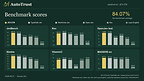
AutoTrust AI evaluated JEV-27B across six public text-decision benchmark groups. It reported scores of 88.70% on JevBench, 83.75% on Kev, 73.89% on OpenJev text, 92.91% on Nimble, 77.46% on VitaminC and 87.71% on MASSIVE-en, for an equal-weight six-group mean of 84.07%.
For additional context, AutoTrust AI also ran the hosted TypeSafe Jev 1.13 API on the same benchmark groups and reported a six-group mean of 83.85%, with JEV-27B scoring higher on four groups and lower on two. Because AutoTrust conducted this comparison itself, the figures should be read as internal comparative evidence—not as an independent third-party validation or a claim of across-the-board superiority.
For public baseline context, AutoTrust reproduced the scores published by TokenRhythm for NeoHorse-Jev, Open-Jev, Kev and Laya English. AutoTrust did not rerun those four external baselines. The pinned source table is available at https://huggingface.co/TokenRhythm/NeoHorse-Jev-4B/blob/b50e043e22e0e41e7fc0c244e4daa707b8124930/README.md. These figures are included as published benchmark context rather than as a new same-environment comparison by AutoTrust.
JEV-27B was also evaluated for fidelity to its distillation target. On 25,376 held-out questions labeled with Jev 1.13 probability distributions, JEV-27B reported a mean KL divergence of 0.017, where zero means identical distributions. On decision-models-under-pressure, an independent benchmark scored against human labels, JEV-27B reached 96% of Jev 1.13’s accuracy with 16 answer options. In that independent test, JEV-27B approached—but did not exceed—Jev 1.13.
AutoTrust AI measured a median decision latency of 137 milliseconds and sustained throughput of about 130 decisions per second on one B200. The model card also cites third-party measurements of 238 to 301 milliseconds and 23 decisions per second for Jev’s hosted API. These are not controlled, like-for-like results: the hosted API measurements include network time, while AutoTrust AI’s local measurements do not, and the hardware, serving and concurrency conditions differ.
How it works
AutoTrust AI uses the terms System 1 for fast, typed decisions and System 2 for deliberate generation and reasoning. JEV-27B serves both from one set of weights. It follows JEV-9B as the company’s second integrated System 1 and System 2 open model.
The model is built with AutoTrust AI’s Blocks of Experts recipe. A strong pretrained model, Alibaba’s open-weights Qwen3.8-27B, stays frozen as one expert block. A small, detachable block is trained for a single skill, and a router sends each request either to the fast decision block or to the deliberate generation block.
The decision block holds 108.9 million trained parameters, 0.4% of the model, and took about 9.2 hours to train on one NVIDIA B200. The reasoning path was left untouched. With the decision block switched off, JEV-27B scores 78.0% on the HumanEval coding test, and all 164 of its completions are byte-identical to the base model’s.
In a demonstration reel released with the model, a self-hosted JEV-27B served as the decision engine for 10 tasks. It played Doom, making 64 decisions in a target-practice scenario, and steered a simulated drone through a MuJoCo obstacle course. It ran a live Google Flights search from Zurich to London and verified 21 results, navigated Wikipedia to Gödel’s incompleteness theorems, flagged four regression risks in a sample change to authorization code and routed a billing-refund ticket to support.
“Every AI agent is really a long chain of small decisions—which button to press, which file to open, which queue a ticket belongs in,” said Josh Liu, AutoTrust AI’s chairman and co-founder. “Make each one fast, private and cheap, and you change the economics of the whole chain.”
AutoTrust AI said JEV-27B inherits Jev 1.13’s blind spots, including multi-hop reasoning, arithmetic, dates and adversarial inputs, and that its training data is English-centric. The company says the model is not meant for high-stakes decisions and recommends gating its answers on confidence.
Benchmark context and source notes
Scores are in percent. JEV-27B and the hosted TypeSafe Jev 1.13 API were measured by AutoTrust AI; this is not third-party validation. NeoHorse-Jev, Open-Jev, Kev and Laya English are published baselines reproduced from TokenRhythm and were not rerun by AutoTrust. TokenRhythm source (pinned revision): https://huggingface.co/TokenRhythm/NeoHorse-Jev-4B/blob/b50e043e22e0e41e7fc0c244e4daa707b8124930/README.md. Full AutoTrust methodology and source notes: https://huggingface.co/autotrust/JEV-27B.
Availability
JEV-27B is available under the Apache-2.0 license at huggingface.co/autotrust/JEV-27B. The release includes the weights, decision adapter, training and serving code, vLLM support and full evaluation reports. A demonstration reel is available at https://huggingface.co/spaces/autotrust/JEV-27B-Demo.
AutoTrust AI plans to build the JEV decision block into future models in its Guru family, which powers the ScienceGuru research platform. ScienceGuru is available for Windows and macOS at https://scienceguru.ai/. AutoTrust AI also offers customized sovereign deployments for enterprises.
JEV-27B was trained on SargeDev/jev-distill-corpus-v3, a public, Apache-2.0-licensed corpus of Jev 1.13’s outputs. It shares no weights or code with, and is not affiliated with or endorsed by, TypeSafe AI. Jev and TypeSafe are trademarks of their respective owners.
About AutoTrust AI
AutoTrust AI Pte. Ltd. is a Singapore-incorporated AI research company building the Guru family of foundation models and ScienceGuru, an AI research platform for scientists and research teams. Its Blocks of Experts architecture combines pretrained expert blocks with small trained adapters to build frontier-capable and sovereign models efficiently. Learn more at autotrust.ai.
View original content to download multimedia:https://www.prnewswire.com/apac/news-releases/autotrust-ai-releases-jev-27b-an-open-decision-model-for-self-hosted-ai-agents-302891725.html
SOURCE AutoTrust AI
You may like
Technology
Asia Pacific accounts for a third of the world’s fraud networks as identity fraud grows more complex: Sumsub
Published
56 minutes agoon
November 18, 2026By
The Sumsub Identity Fraud Report finds that one in three fraud network connections in the region emerge only after users pass identity checks, pointing to verified accounts being sold or handed over to fraudsters after onboarding.
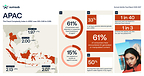
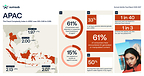
SINGAPORE, Nov. 18, 2026 /PRNewswire/ — Sumsub, the first AI-powered trust infrastructure, has released its Identity Fraud Report 2026-2027*. Now in its sixth edition, the report finds that Asia Pacific (APAC) accounted for a third (33%) of all fraud networks detected globally, more than any other region, and recorded close to a million confirmed fraud attempts, the highest of the six regions.
Fraud networks are coordinated groups of linked identities, accounts and devices run by organized fraudsters. Across APAC, around 1 in 40 approved people (2.4%) are linked to a detected fraud network, and around one-third of these links appear only after they have successfully passed identity verification. This suggests many legitimately verified accounts are later sold or handed over to fraudsters, often for use as money mules: accounts that receive and move stolen funds on a fraudster’s behalf.
Increasingly sophisticated tactics have led Sumsub to the creation of Sumsub’s new Fraud Complexity Index (FCI), which scores each confirmed case on the tooling, coordination and number of techniques behind it. This year, the report finds that the FCI rose from 2.1 to 2.2 globally.
Key APAC findings from the report include:
APAC hotspots for fraud networks: The Philippines recorded the largest number of networks in the region (17% of APAC networks), closely followed by India, while the largest single network was detected in Thailand, with 3,018 linked users.Fraud is becoming more complex: APAC’s FCI rose 14% to 2.09. Hong Kong’s FCI rose 7% to 1.97. APAC businesses also reported fraudster-operated AI agents (11%) more often than any other region.AI agents are adding new exposure: 61% of APAC businesses have detected or suspected fraud involving an AI agent, among the highest levels of any region. APAC businesses lead on limiting agent permissions and on suspending or revoking access, but these controls remain limited: only 15% can suspend or revoke an agent’s access, and 40% verify the human that authorizes one.Deepfake activity is spreading even where overall fraud is declining: Deepfakes rose sharply in Pakistan (+217%), the Philippines (+125%), India (+103%) and Hong Kong (+72%). In Indonesia, the overall fraud rate fell 64% while deepfakes increased 69%.APAC consumers are the most exposed to AI-generated content: 61% of APAC consumers have encountered AI-generated or manipulated content, the highest share of any region. Among those who experienced a fraud attempt, 44% said AI-generated content played a part.Singapore sees fewer, but more complex, attacks: Singapore’s fraud rate fell 36% year-on-year to 1.0%, while its FCI rose 9% to 2.13, above the APAC average. Deepfakes in Singapore fell 37%.Japan has the region’s highest and fastest-growing fraud rate: Japan’s fraud rate rose 219% year-on-year to 5.1%, the highest in APAC.Legitimate AI agents are being turned against businesses: Globally, among businesses that detected or suspected AI-agent fraud, 49% saw a legitimate agent manipulated by malicious instructions, and 30% saw an agent initiate a purchase, payment or transfer.
Verified accounts become building blocks for fraud networks
A single fraudulent account rarely tells the whole story. Fraud networks become visible through shared devices, contact details, payment instruments and document templates that an account-by-account review cannot show. Some of these links appear only after onboarding, as legitimately verified accounts are sold, compromised or otherwise repurposed. Passing KYC confirms an identity at a single point in time, but does not guarantee how an account will be used afterwards.
Businesses recognize the challenge, but few are equipped for it. 29% of APAC businesses say larger linked networks are making fraud harder to detect, the highest share of any region, yet only 25% use fraud network analysis.
In Southeast Asia, organized scam compounds have become highly mobile, relocating sites and reusing the same infrastructure when authorities intervene. Their human cost is significant: by April, Nepal reported that 612 of its citizens had been rescued from online scam centers across Southeast Asia and repatriated.
The impact is felt on both sides of the transaction. Among APAC businesses that experienced fraud, impersonation of a business, employee or supplier was the most commonly reported form of external fraud (42%), the highest of any region, followed by scam-induced payments (40%). Among APAC consumers, 79% experienced fraud in the past 12 months. Half of victims lost money, and 51% of those recovered none of it.
“A scam network is designed to look like a thousand ordinary people doing ordinary things. Every account is verified, and every document is real, because the person holding it was recruited, paid, or coerced into opening it, so nothing trips a wire on its own,” said Erin West, anti-scam advocate, former Deputy District Attorney and founder of Operation Shamrock, who has investigated scam compounds in Cambodia and Thailand. “Look past the person in front of you to the people behind them. The networks already cooperate beautifully with one another, and it’s time we caught up.”
Fraud grows more complex as it shifts across the region
While fraud rates fell in four of six regions globally, the FCI rose in all six. In APAC, it rose 14%, from 1.83 to 2.09.
Rather than rising everywhere at once, fraud is shifting between APAC markets and techniques. Japan’s fraud rate rose 219%, while Singapore’s fraud rate fell 36%, but its FCI rose 9%, above the regional average. In Hong Kong, fraud rate edged up 5% as deepfakes there rose 72%. APAC also leads all regions in the share of businesses saying deepfakes (31%) and synthetic identities (26%) are making fraud harder to detect while QR-code redirection (18%) and device or location manipulation (14%) were also reported more often than anywhere else.
The region also has strong foundations to respond. APAC leads every other region in digital identity wallet adoption: 50% of consumers have used a government digital identity wallet, and 65% say they would be comfortable using one. Banks and financial services remain the most trusted online category, with 74% of APAC consumers reporting high or full trust.
“Fraud in APAC isn’t rising everywhere at once. It is shifting between markets, techniques and stages of the customer lifecycle,” said Penny Chai, Vice President, APAC at Sumsub. “The region is home to some of the world’s most mature digital economies, alongside markets where digital services and organized scam operations are expanding quickly. Those markets are deeply connected, and fraud networks move easily between them. But APAC also has the tools to respond, from progressive regulation to world-leading digital identity adoption and high consumer trust in financial services. The task now is to use them together, so that trust doesn’t end at onboarding.”
Regulators and industry move towards collective action
Regulators across the region are shifting responsibility for scam payments and mule accounts towards the institutions that send, receive or facilitate them, and building new ways to share fraud intelligence. In Singapore, the Protection from Scams Act and the Scams (Countermeasures) and Other Matters Act 2026 give authorities new powers to protect people at risk of being scammed and to disrupt accounts and services linked to scams, while the National Scams List supports the exchange of information on suspicious scam accounts. Hong Kong has created a legally protected mechanism for banks to share information, and Thailand has embedded mule-account controls across banks, payment businesses and crypto operators.
The same collective approach is needed as AI agents take on more tasks. Launched in September, the Sumsub Agentic AI Council brings together cross-sector experts across APAC to develop practical guardrails for AI agents, including agent identity, delegated authority and accountability.
To explore the Sumsub Identity Fraud Report 2026-2027 in full, please download it here: http://sumsub.com/identity-fraud-report-2026/
About Sumsub
Sumsub is the first AI-powered trust infrastructure for compliance operations at scale. It connects identity and business verification, fraud prevention, transaction monitoring, and risk workflows, helping teams reduce manual work and enter new markets.
Trusted by over 4,000 clients across financial services, crypto, mobility, trading, marketplaces, education, and iGaming, including Bybit, Bitpanda, Wirex, Avis, Vodafone, Duolingo, and Kaizen Gaming.
*Methodology
The Sumsub Identity Fraud Report 2026-2027 analyzes more than 5.8 million fraud samples from Sumsub’s internal identity verification and user activity data, comparing 2025 and 2026 across multiple regions and industries. To ensure statistical reliability, only jurisdictions with more than 15,000 verification attempts during the reporting period were included. A network connection refers to a link between an applicant and a detected fraud network at any point in the applicant lifecycle, and is a risk signal rather than proof that the applicant is fraudulent.
The report also draws on Sumsub’s Fraud Exposure Survey 2026, conducted in August 2026 among more than 1,400 fraud and risk professionals and more than 1,500 end users across 21 markets, including Hong Kong, Indonesia, the Philippines, Singapore and Thailand in APAC.
View original content to download multimedia:https://www.prnewswire.com/apac/news-releases/asia-pacific-accounts-for-a-third-of-the-worlds-fraud-networks-as-identity-fraud-grows-more-complex-sumsub-302942447.html
SOURCE Sumsub
Technology
Archbridge Capital Partners Appoints Mark Jones as Chief Executive Officer
Published
56 minutes agoon
November 18, 2026By
Former Wells Fargo Global Head of FX and Co-Head of Macro to lead the firm’s next phase of growth and international expansion
HONG KONG, Nov. 18, 2026 /PRNewswire/ — Archbridge Capital Partners (“Archbridge”), a Hong Kong-based alternative fixed income investment manager focused on private credit, today announced the appointment of Mark Jones as Chief Executive Officer and Managing Partner, effective immediately. The newly created role reflects the firm’s ambition to institutionalise its platform and expand internationally. Jones joins Anthony Leung, Chief Investment Officer, and Jenny Wong, Chief Operating Officer, in the firm’s senior leadership.
Established in 2020, Archbridge has focused on private credit since 2023, expanding its investment offerings during that period. The firm now invests predominantly in secured, short-dated private credit across Asia Pacific, with a focus on disciplined underwriting and regular income distributions, an approach that has resonated with family offices in the region.
Jones brings 28 years of global financial markets experience across London, Hong Kong and New York. He previously served as Global Head of Foreign Exchange and Global Co-Head of Macro at Wells Fargo, where he was a member of the bank’s Management Committee. Earlier, he was Head of Wells Fargo Securities Asia and a Managing Director at UBS, leading FICC Distribution across EMEA and Asia Pacific. Before joining Archbridge, he advised private credit funds and alternative asset managers through Kingswood Capital Solutions and was a Venture Partner at Volution, a UK venture capital firm investing in high-growth fintech and AI companies.
As CEO, Jones will lead Archbridge’s global strategy and international expansion, with a focus on building out the firm, strategic partnerships and technology-led innovation across the investment platform. He will work closely with the firm’s investment and operating leadership.
“Mark has led fixed income businesses at the highest level across three continents,” said Anthony Leung, Chief Investment Officer. “His appointment is consistent with our ambition to significantly broaden both our investor and borrower client base.”
“Archbridge is built on strong relationships and disciplined execution,” said Jenny Wong, Chief Operating Officer. “Mark will help us scale internationally while strengthening our institutional capabilities.”
“Over 25 years in global banking, I have seen the evolving financing needs of businesses across Asia Pacific and the growing opportunity for specialist credit managers,” said Mark Jones, Chief Executive Officer. “Archbridge is well positioned to meet that demand by combining rigorous credit underwriting with enduring investor relationships through an institutional-grade platform.”
ABOUT ARCHBRIDGE CAPITAL PARTNERS
Established in 2020, Archbridge Capital Partners is a Hong Kong-based alternative fixed income investment manager focused on private credit. The firm seeks attractive risk-adjusted returns through disciplined credit underwriting, active portfolio management and capital preservation. Archbridge Capital Partners Limited is licensed by the Hong Kong Securities and Futures Commission for Type 4 (Advising on Securities) and Type 9 (Asset Management) regulated activities. archbridgecap.com
View original content to download multimedia:https://www.prnewswire.com/apac/news-releases/archbridge-capital-partners-appoints-mark-jones-as-chief-executive-officer-302943079.html
SOURCE Archbridge Capital Partners
Asia Pacific accounts for a third of the world’s fraud networks as identity fraud grows more complex: Sumsub
Archbridge Capital Partners Appoints Mark Jones as Chief Executive Officer
Send Rakhi to UK swiftly with UK Gifts Portal
Whiteboard Series with NEAR | Ep: 45 Joel Thorstensson from ceramic.network
Nullmax and Renesas Forge Strategic Partnership to Deliver Competitive ADAS Solutions for the Global Market
Why You Should Build on #NEAR – Co-founder Illia Polosukhin at CV Labs
Whiteboard Series with NEAR | Ep: 45 Joel Thorstensson from ceramic.network
NEAR End of Year Town Hall 2021: The Open Web World, MetaBUILD 2 Hackathon and 2021 recap
Trending
-
Technology5 days agoDomoAI Launches InkoAI Agent – One Sentence to Ready-to-Post Video
-
Coin Market5 days agoDOJ moves to seize $1.2B from Binance hack, disrupts FaceStealer scam
-
Near Videos4 days agoIllia Polosukhin on NEAR as encrypted Ethereum
-
Technology4 days agoInnovative Immunology Biotech Windward Bio Lists on Nasdaq
-
Technology3 days agoThe First Cartridge-Free Smart Waterless Diffuser Is Here. What Would You Fill It With?
-
Near Videos3 days agoBuilders of NEAR: Illia Polosukhin on knowing what your AI agent is running
-
Coin Market4 days agoMicrosoft confirms global outage resolved, rules out cyberattack
-
Coin Market4 days agoMegaETH parent cuts 20% of staff amid restructuring, AI push