Connect with us

Technology

UK Consumers Rethink How, When and Where They Dine Out as Budgets Tighten, Popmenu Study Finds

Published

on

Consumers currently spend 25% of their monthly food budget on restaurants, but most are cutting backSkipping alcohol, dining early and choosing children’s meals for adults are among ways consumers are managing spend at restaurants64% are good with restaurants using AI to enhance service

LONDON, Sept. 30, 2026 /PRNewswire/ — Economic pressure on UK households hasn’t caused consumers to give up on eating out, but they are getting creative with how they make their money go further. Today, UK consumers spend a quarter of their monthly food budgets on restaurants. Most (69%) say they are spending less on restaurants than they did a year ago, using cost-saving tactics such as replacing entrees with appetisers, eating children’s meals, drinking tap water, and collecting takeaways over delivery.

This is according to a new report by Popmenu, a restaurant technology leader that serves over 12,000 restaurants globally. The report, based on a study of 600 UK consumers from 31 August to 3 September 2026, explores current dining behaviours, preferences and expectations for restaurants.

“Two-thirds of Brits still eat out or order in at least once a week,” said Brendan Sweeney, CEO and Co-founder of Popmenu. “They’re just more intentional about every pound spent. Affordability is top of mind along with easy guest experiences and loyalty incentives. Digital hospitality is just as important to them as in-person hospitality and they’re happy for AI to help with both.”

How are leaner budgets influencing dining habits?

Half of UK consumers are cutting back on dinners at restaurants while others are curbing spend for other dayparts:

51% – Dinner30% – Lunch30% – Late-night bites21% – Breakfast20% – Snack

When asked how they keep eating out affordable, consumers pointed to the following:

52% – Choosing restaurants with less expensive menu items37% – Cutting back on alcohol34% – Drinking tap water instead of paying for a drink30% – Collecting orders rather than paying for delivery13% – Ordering a starter instead of a main12% – Ordering a children’s meal for an adult

Quick service (ex: McDonald’s), fast casual (ex: Nando’s) and casual (ex: Wagamama) restaurants remain the most visited types of restaurants.

What do consumers want from restaurants?

According to the research, they expect restaurants to make their choice easy: show up in search results, share visuals and reviews of dishes, offer deals and direct ordering, and provide incentives to come back.

SEO and AEO are table stakes: 88% use Google and other search engines to find restaurants; 19% use AI tools such as ChatGPT. Restaurants that rank high are chosen more often.Visuals close the deal: 89% are more likely to choose a menu with photos and reviews; 3 in 4 want to see dish videos.Direct ordering is preferred: 93% order on their phones, and 78% would download a restaurant’s app—63% are less likely to order if they’re sent to a third-party site.Value drives spending: 64% prefer restaurants with inexpensive meal options and special deals; 66% will spend more if there’s a discount.A little VIP treatment goes a long way: 51% are more likely to choose restaurants with a loyalty programme; 75% are willing to join a restaurant’s mailing list and 47% want to hear from their favourite spots at least once a week.AI is enhancing hospitality: 60% are ok with restaurants using AI to provide better, faster service, from answering phones and taking orders to preparing and serving food.

Survey Methodology

Popmenu conducted an anonymous, nationwide survey of 600 consumers, ages 18 and older, from 31 August to 3 September 2026.

About Popmenu

As a leader in restaurant technology, Popmenu is on a mission to make profitable growth easy for all restaurants. Digital marketing, online ordering, and on-premise technologies headline a powerful product suite infused with artificial intelligence (AI), automation, and deep data on guest preferences. The company consolidates tools needed to engage guests, serving as a digital control center for more than 12,000 independent restaurants and hospitality groups in the UK, US, Canada and Mexico. For more information, visit popmenu.co.uk.

Media Contact
Jennifer Grasz
VP of Marketing, Popmenu
Jennifer.Grasz@popmenu.com

View original content to download multimedia:https://www.prnewswire.co.uk/news-releases/uk-consumers-rethink-how-when-and-where-they-dine-out-as-budgets-tighten-popmenu-study-finds-302893180.html

Continue Reading

Technology

Coastal Runway Connecting the World: FashionTV Celebrate Gala at 2026 Qingdao Fashion Week Olympic Sailing Center

Published

on

By

QINGDAO, China, Sept. 30, 2026 /PRNewswire/ — A report from iQingdao: Co‑hosted with global fashion media FashionTV, the Celebrate Gala of 2026 Qingdao Fashion Week at the Olympic Sailing Center adopts the theme “MAISON: Craft Initiation • Boundless Symbiosis”. Transforming the coastal landscape of Fushan Bay into an international fashion venue, the event integrates the city landmark with an international fashion IP. Held from September 4 to 6 at Lover’s Dam of the Olympic Sailing Center, it draws on Qingdao’s century‑old textile heritage and coastal tourism resources, featuring model contests, brand runway shows, country‑themed presentations, a pet‑fashion crossover show and B2B fashion showroom sessions.

On September 4, the FTV International Supermodel Contest China Final and the international opening runway show kicked off, with participation by Chinese and overseas brands including Bosideng. September 5 featured Korea Brand Runway, collaborating with Seoul Fashion Week to boost Sino‑Korean fashion industrial cooperation. On September 6, home‑grown designers delivered the closing runway, alongside an innovative pet‑fashion show. Parallel Korean and Chinese fashion showrooms were set up to link runway presentations with order placement.

Combining targeted invitations with semi‑open public access, the event welcomed citizens and tourists, supported by full‑scale live‑streaming online. It hosted nearly 3,500 on‑site invited attendees and generated over 50 million total online impressions. Repurposing Olympic legacy sites as an international fashion exchange hub, the gala nurtures emerging talent, supports local brands’ global expansion, creates new “fashion‑plus‑ocean” tourism‑consumption scenarios, and fuels Qingdao’s development as an international fashion and creativity hub.

View original content to download multimedia:https://www.prnewswire.com/apac/news-releases/coastal-runway-connecting-the-world-fashiontv-celebrate-gala-at-2026-qingdao-fashion-week-olympic-sailing-center-302893948.html

SOURCE Iqingdao

Continue Reading

Technology

Asia New Vision Forum Innovation 2026 Opens in Singapore, Focusing on “Disruption Meets Resilience”

Published

on

By

SINGAPORE, Sept. 30, 2026 /PRNewswire/ — Asia New Vision Forum (ANVF) Innovation 2026 opened in Singapore on September 29. More than 300 policymakers, entrepreneurs and experts from across the globe gathered at the event to explore pathways toward sustainable development.

Launched by Caixin Global with support from the Singapore government, the Asia New Vision Forum has successfully held three editions since 2023. For its fourth edition in 2026, the forum launches the sub-brand “Innovation Forum”, marking its evolution from macro geopolitical dialogues toward practical business solutions and industry-level implementation.

Under the theme “Disruption Meets Resilience”, participants engaged in in‑depth discussions covering macro level topics including shifting geopolitical landscapes, advances in artificial intelligence, supply‑chain resilience, energy transition, biotechnology and investment in emerging markets, as well as practical issues such as real‑world AI deployment and transformations in Asian consumption, culture and tourism.

Wang Shuo, Editor-in-Chief of Caixin Media, delivered the opening remarks. He noted that the transformations we face today are twofold: the unraveling of the old order and AI reshaping everything. Both are sweeping in with overwhelming force, breaking down and building up at once. Resilience, he added, comes from meaning.

Heng Swee Keat, Co-Chair of ANVF, Former Deputy Prime Minister of Singapore, delivered the opening keynote address. He said that amid technological advances, the energy transition, supply-chain realignment and geopolitical tensions, countries need to build on stability to advance ongoing economic and industrial restructuring, while expanding their respective capabilities through cooperation.

The two-day forum features keynote addresses, panel discussions, the ASEAN Business Forum, fireside chats and closed-door meetings. Amiram Appelbaum, Chairman of Ofir SouthUp Ventures and former Chairman of the Israel Innovation Authority and former Israel Chief Scientist, also delivered a keynote focused on “Bridging Innovation Ecosystems: From National Strategy to Global Venture Creation.”

The opening panel, “Asia as a Stable Force: Navigating Through Geopolitical Disruptions,” brought together Yu Tiejun, President of the Institute of International and Strategic Studies and Professor at the School of International Studies, Peking University; Joseph Liow Chinyong, Dean of the Lee Kuan Yew School of Public Policy, National University of Singapore; and Yasuto Watanabe, Director and CEO of the ASEAN+3 Macroeconomic Research Office (AMRO), to examine Asia’s role as a stabilizing force in a volatile global environment.

Discussions on day one examined investment trends, China’s growth outlook, and the evolution of culture, travel and consumption, with participation from Patrick Lee, CEO of Singapore and CEO of ASEAN and South Asia, Standard Chartered; Jin Jianhua, General Manager of China Securities Co., Ltd.; Zhu Feng, Distinguished Professor and Former Dean of the School of International Studies, Nanjing University; Shen Minggao, Professor of Practice at the School of Management, Zhejiang University, and Vice Chairman of the China Chief Economist Forum; Feng Han, Head of Marketing, Trip.com; and He Jihong, Chief Strategy Officer, H World Group.

AI-focused sessions featured Zhang Tao, Chief Representative of the BIS Office of Asia and the Pacific; Chen Lihao, Deputy Director of Resources and Environment, the Central Committee of JIUSAN Society; Chen Feng, CEO of Arm Technology (China) Co., Ltd.; Allen Zhang, Founder and CEO of MATRIX Robotics; Chang Qing, Vice Chairman of Squirrel Ai Learning; and Xie Shuo, GM of Momenta Robotaxi, where panelists explored computing constraints and the deployment of AI in business and industry.

Beyond deployment, Gaurav Keerthi, CEO and Founder of StrongKeep Cybersecurity, and Gene Yu, Founder and CEO of Blackpanda Group, examined the cybersecurity implications of AI and geopolitical fragmentation in “The Invisible Battlefield: Cybersecurity in the Age of AI and Geopolitical Fragmentation”.

In the afternoon, a special focus on ASEAN was explored via the ASEAN Business Forum: The Future of Capital & Connectivity, where discussions centred on Asia’s growth engines, renminbi (RMB) internationalization and the evolving needs of a new generation of consumers. Cao Zhongming, Chinese Ambassador to Singapore, and Sim Tze Tzin, Malaysia’s Deputy Minister of Investment, Trade and Industry and Member of Parliament, delivered keynote addresses. Andy Lee, VP of International Business and GM for Southeast Asia Region, Alibaba Cloud Intelligence Group; Jean Lu, Chief Executive Officer and Executive Vice Chairperson, Standard Chartered Bank (China) Limited; Allen Zhu, Managing Partner, GSR Ventures; and Guan Tao, Chief Economist, Huafu Securities Co. Ltd., joined the discussions, amongst others.

Day two picks up momentum with dialogues around secure energy flows, medical innovation, critical-mineral supply chains, AI’s impact on companies and talent, and sustainable development. Grace Fu Hai Yien, Singapore’s Minister for Sustainability and the Environment and Minister-in-charge of Trade Relations, will join a fireside chat “From Singapore to Asia – The Sustainability Playbook,” while Tan Kiat How, Singapore’s Senior Minister of State, Ministry of Digital Development and Information and Ministry of Health, will deliver a keynote address on “Singapore’s National AI Strategy.” Other speakers include Dominic Barton, Chair of Rio Tinto and LeapFrog Investments and former Canadian Ambassador to China; Tai E Shyong, Professor at the National University of Singapore; and Helena Li, Executive President of Trinasolar.

ANVF Innovation 2026 concludes with an invitation-only gala dinner, where Yao Ming, International Advisory Board Member of Caixin Global Forum and Chairman of the YAO Foundation; Gita Wirjawan, Former Indonesian Minister of Trade; and Hua Fung Teh, Co-Founder and Group President of ONE Championship, will come together for a special dialogue on nurturing resilient future generations: “The Human Advantage: Growing Up, Staying Connected and Leading Through an Uncertain Future.”

For more information, please visit the Asia New Vision Forum: Innovation 2026

About Caixin Global

Caixin Global is a highly respected international source for macroeconomic, financial, and business news about China. Leveraging Caixin Media’s award-winning journalism, Caixin Global delivers reliable, independent reporting via its 24/7 digital platform (caixinglobal.com) and its print publication, Caixin: China Economics and Finance. Its conference division is dedicated to convening global elites to generate actionable insights in an era of rapid transformation.

View original content:https://www.prnewswire.com/news-releases/asia-new-vision-forum-innovation-2026-opens-in-singapore-focusing-on-disruption-meets-resilience-302893951.html

SOURCE Caixin

Continue Reading

Technology

Comfytemp Launches the Market’s First Electric Heating Patch for Period Cramps and Menstrual Comfort

Published

on

By

As women look for more convenient ways to manage period discomfort during their daily routines, Comfytemp introduces a new approach to menstrual comfort with the market’s first electric heating patch.

LOS ANGELES, Sept. 30, 2026 /PRNewswire/ — For millions of women, period cramps are a recurring part of everyday life. The discomfort can occur during work, school, travel, exercise, or other daily activities, making it difficult to rely on traditional comfort solutions that require users to stay in one place.

Heat has long been part of many women’s personal routines for managing menstrual discomfort. Traditional heating pads can provide soothing warmth, but their larger size and dependence on an outlet can make them difficult to use outside the home. Disposable menstrual heating patches offer greater portability, but they are designed for one-time use.

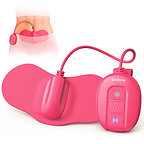
Recognizing the need for a more convenient option, Comfytemp, a consumer wellness brand focused on accessible home therapy technology, today announced the launch of its Electric Heating Patch, the market’s first electric heating patch designed specifically with period comfort in mind.

The product combines targeted electric heat with a compact, wearable design, giving women another option for incorporating warmth into their daily routines during their periods.

Rethinking Heat for Period Comfort

For many women, managing period cramps is not simply about finding something that provides warmth. The bigger challenge is finding a solution that fits into everyday life.

A traditional heating pad can be useful when relaxing at home, but it can be difficult to use while working at a desk, commuting, traveling, or taking care of everyday responsibilities. Users may need to remain near an electrical outlet or stay in one position for an extended period.

Disposable heating patches address some of these limitations by allowing users to move around while receiving warmth. However, their single-use design means that a new patch is needed each time.

Comfytemp saw an opportunity to approach menstrual heat therapy differently.

Rather than adapting a traditional heating pad into a smaller format, the company developed an electric heating patch specifically around the needs of women who want portable, targeted warmth during their periods.

“We know that period discomfort doesn’t always happen when you’re at home with time to rest,” said a spokesperson for Comfytemp. “Women may be working, traveling, studying, or simply going about their normal routines. We wanted to create a heating solution that could fit into those moments rather than asking women to change their routines around the product.”

Designed Around Everyday Period Routines

Menstrual discomfort can be unpredictable. It can begin before a period, continue through the first few days, or appear at different times throughout the menstrual cycle.

For women who regularly incorporate heat into their personal comfort routines, convenience can therefore be just as important as warmth itself.

Comfytemp’s Electric Heating Patch is designed to provide targeted warmth around areas commonly associated with menstrual discomfort, including the lower abdomen and lower back.

Its compact form is intended to make heat easier to incorporate into everyday activities. Women can use it while working, relaxing, traveling, or completing other daily routines where a traditional heating pad may be inconvenient.

The product is designed to offer an alternative to disposable warming patches while maintaining the portability that makes patches attractive in the first place.

Moving Beyond Disposable Heat Patches

Disposable heat patches have become a familiar option for women seeking portable warmth during their periods. Their convenience has made them particularly appealing for use outside the home.

However, the disposable nature of these products also means they are designed around short-term, single-use convenience.

Comfytemp’s approach is different.

By introducing electric heating technology into a compact patch-style format, the company is creating a reusable alternative for women who want portable heat without relying on a new disposable patch for every use.

This approach reflects a broader shift in how consumers think about personal wellness products. Rather than choosing between convenience and reusability, consumers increasingly expect products to deliver both.

For Comfytemp, the goal was to apply that expectation to one of the most common everyday wellness needs: menstrual comfort.

A More Convenient Option for Life During Your Period

The challenge of period discomfort extends beyond the discomfort itself.

Women may still need to attend meetings, work long shifts, travel, attend classes, exercise, or manage household responsibilities while experiencing menstrual symptoms.

This is where portability becomes an important part of product design.

Traditional heating pads are generally associated with rest and relaxation. Comfytemp’s Electric Heating Patch is designed for a different kind of use—bringing targeted warmth into situations where stopping what you’re doing may not be an option.

The compact design allows the product to become part of a daily routine rather than requiring the routine to revolve around the heating device.

Whether used during a workday, while traveling, or at home, the Electric Heating Patch is designed to give women greater flexibility in how they incorporate heat into their period comfort routines.

Creating a New Approach to Menstrual Comfort

The launch of the Electric Heating Patch represents Comfytemp’s continued focus on developing products around specific everyday consumer needs.

Rather than creating one-size-fits-all wellness products, the company continues to explore how familiar technologies can be redesigned around the way people actually live.

For menstrual comfort, that means looking beyond the traditional heating pad.

The Electric Heating Patch brings together the targeted warmth associated with heat therapy, the portability of a patch, and the convenience of an electric design in a product created specifically for women’s period routines.

“We believe wellness products should fit naturally into people’s lives,” the Comfytemp spokesperson added. “For women dealing with period discomfort, that means having options that are convenient enough to use wherever their day takes them.”

The Comfytemp Electric Heating Patch is now available through the company’s official website.

For more information, visit:
Comfytemp Electric Heating Patch

About Comfytemp

Comfytemp is a consumer wellness brand focused on making home therapy technology more accessible, practical, and convenient for everyday use. The company’s product portfolio includes heating therapy, cold therapy, TENS devices, red light therapy, air compression therapy, and other wellness solutions designed around real-life consumer needs.

By combining practical product design with accessible technology, Comfytemp continues to develop solutions that help consumers incorporate comfort and wellness into their everyday routines.

Media Contact:
Yuling Liu
Comfytemp
Email: yuling.liu@1caiweb.com

View original content to download multimedia:https://www.prnewswire.com/news-releases/comfytemp-launches-the-markets-first-electric-heating-patch-for-period-cramps-and-menstrual-comfort-302893977.html

SOURCE Comfytemp

Continue Reading

Trending