Connect with us

Technology

HOME FLIPPING PROFITS CONTINUE GRADUAL TWO-YEAR DECLINE

Published

on

Typical flipped home generated 21.5 percent profit in Q2 2026; Flipping rate dipped to 6.2 percent of all home sales

IRVINE, Calif., Oct. 1, 2026 /PRNewswire/ — ATTOM, the leading provider of property data, AI-powered intelligence, and real estate analytics solutions, today released its Q2 2026 U.S. Home Flipping Report showing that 77,991 single-family homes and condominiums were flipped in the second quarter, accounting for 6.2 percent of all home sales.

The flipping rate, measured as a percentage of total home sales nationwide, was down from 8 percent the previous quarter and 7.3 percent in the second quarter of last year. The overall number of flipped homes was higher than the previous quarter’s mark of 64,760 but lower than in the second quarter of 2025 when 80,477 homes were flipped.

Q2 2026 U.S. Home Flipping Historical Trends

The typical profit margin for a home flipped in the second quarter of 2026 was 21.5 percent, down from 25.7 percent in the previous quarter and 27.6 percent at the same time last year.

Nationwide, typical returns on investment and gross profits from flipping homes have been falling steadily for two years. In the second quarter of 2026, the typical gross profit, the difference between what flippers purchased and sold homes for, was $60,526. That was down from $66,932 in the previous quarter and $71,000 at the same time last year.

“Flippers are still making money in most markets, but the typical return continues to narrow,” said Rob Barber, CEO of ATTOM. “The second-quarter numbers continue the general downward trend in profit margins and gross profits we have seen over the past two years.”

Flipping rate drops across most metro areas

The flipping rate, as a percent of overall sales, declined quarter-over-quarter in 87.1 percent (162) of the 186 metropolitan statistical areas with sufficient data to analyze. Year-over-year, the flipping rate was down in 70.4 (131) of the metro areas.

The metros with the highest flipping rates in the second quarter of 2026 were Columbus, GA (13.6 percent of all home sales); Canton, OH (11.6 percent); Akron, OH (11.2 percent); Fayetteville, NC (10.9 percent); and Macon, GA (10.6 percent).

Among metros with populations over 1 million, the highest flipping rates were in Cleveland, OH (10.4 percent); Columbus, OH (9.5 percent); Memphis, TN (9.5 percent); Dallas, TX (9.4 percent); and Phoenix, AZ (8.9 percent).

Of those largest metros, the lowest flipping rates were in Rochester, NY (2.7 percent); Seattle, WA (4 percent); Washington, D.C. (4 percent); Pittsburgh, PA (4.5 percent); and Portland, OR (4.8 percent).

Flipped home profit margins declined from last quarter

Typical profit margins for home flippers declined quarter-over-quarter in 67.7 percent (126) of the 186 metro areas analyzed.

Among metros with populations over 1 million, the largest typical profit margins were in Pittsburgh, PA (81.5 percent); Buffalo, NY (76.6 percent); New Orleans, LA (75 percent); Virginia Beach, VA (63.4 percent); and Philadelphia, PA (62.8 percent).

In San Antonio, TX, the typical flipped home posted a loss on investment of 0.3 percent. After that, the lowest profit margins in metros with populations over 1 million were in Dallas, TX (1.8 percent); Austin, TX (2.8 percent); and Houston, TX (3.7 percent); and Salt Lake City, UT (4.7 percent).

Q2 2026 Home Flipping Profit Trends Historical Chart

Flipping returns are strongest between $100,000 and $400,000

The sweet spot for flipping homes continues to be properties acquired for between $100,000 and $200,000, which generated typical profit margins of 28 percent nationwide. Returns remained relatively strong for properties acquired for between $200,000 and $300,000, at 26 percent, and between $300,000 and $400,000, at 20 percent.

At the very bottom of the market, however, homes acquired for $50,000 or less generated a typical loss of $15,000, representing a negative 38 percent return.

Home flips took less time in second quarter

Nationwide, the typical home flipped in the second quarter of 2026 took 161 days from initial purchase to resale, down from 165 days in the previous quarter and 166 days in the second quarter of 2025.

Q2 2026 U.S. Avg Days to Flip Historical Chart

Share of homes flipped to FHA buyers ticks back up

The share of flipped homes sold to buyers using Federal Housing Administration-backed mortgages rose to 10.7 percent in the second quarter of 2026, up slightly from 10.1 the prior quarter but down from 12.3 percent at the same time last year.

The metro areas with the highest shares of flipped homes sold to FHA buyers were Baton Rouge, LA (28.2 percent of flipped homes); Reading, PA (25.3 percent); Tuscaloosa, AL (23.9 percent); Scranton, PA (23.4 percent); and El Paso, TX (22.3 percent).

Key Takeaways

Home flipping profitability continued its general downward trend in the second quarter of 2026, with both typical profit margins and gross profits declining from the previous quarter and a year ago. Flips accounted for a smaller share of overall home sales, while returns varied widely by metro area and purchase price.

Report methodology

ATTOM analyzed sales deed data for this report. A single-family home or condo flip was any arms-length transaction that occurred in the quarter where a previous arms-length transaction on the same property had occurred within the last 12 months. The average gross flipping profit is the difference between the purchase price and the flipped price (not including rehab costs and other expenses incurred, which flipping veterans estimate typically run between 20 percent and 33 percent of the property’s after-repair value). Gross flipping return on investment was calculated by dividing the gross flipping profit by the original purchase price.

In 2026, ATTOM expanded its property record coverage. As a result, transaction count-based metrics may reflect both market activity and broader data coverage compared to prior periods.

About ATTOM

ATTOM delivers AI-driven property intelligence built on the nation’s most trusted property data repository, covering 160+ million U.S. properties—99% of the population. Our engineered, multi-sourced, semantically rich real estate data spans property tax, deeds, mortgages, foreclosure, environmental risk, property conditions, natural hazards, neighborhood insights, and geospatial boundaries, rigorously validated for advanced analytics. ATTOM supports analytics, AI applications, and AI agents through flexible delivery options including APIs, bulk licensing, cloud delivery, and the MCP Server for AI-powered, agentic access to engineered property data, enabling organizations to automate analysis, power intelligent workflows, and scale property intelligence across industries.

Media Contact:
Megan Hunt
megan.hunt@attomdata.com

Data and Report Licensing:
datareports@attomdata.com

View original content to download multimedia:https://www.prnewswire.com/news-releases/home-flipping-profits-continue-gradual-two-year-decline-302895259.html

SOURCE ATTOM

Continue Reading

Technology

The Executive Leadership Council Announces 2026 Scholars, Investing $1.5 Million in the Next Generation of Business Leaders

Published

on

By

One hundred scholars across 46 colleges and universities join a leadership pipeline built to strengthen business for decades to come

WASHINGTON, Oct. 1, 2026 /PRNewswire/ — The Executive Leadership Council (ELC) today announced its Class of 2026 Scholars, awarding $1.5 million in scholarships to 100 students from colleges and universities across the country.

The 2026 class represents 46 institutions and a broad range of academic disciplines, from computer science, data and cybersecurity to finance, engineering, business and supply chain management. Nearly three-quarters of the scholars attend Historically Black Colleges and Universities (HBCUs), continuing the important role these institutions play in preparing talent for leadership across business and industry.

“For nearly 40 years, The ELC has understood that strong leadership pipelines must be built intentionally,” said Michael C. Hyter, President and CEO of The Executive Leadership Council. “These scholars are already demonstrating the academic excellence, leadership and drive that will prepare them to make meaningful contributions to the companies and institutions they will one day serve.”

This year’s scholars also represent a broad cross-section of colleges and universities across the country, bringing perspectives shaped by HBCUs, public research universities and private institutions, with academic interests spanning business, finance, engineering, technology, healthcare, public policy and the humanities.

Twenty-five are studying computer science, information technology, data or cybersecurity; 22 are pursuing finance, investment or banking; 17 are studying business, management or supply chain; and 10 are pursuing engineering. Others are studying accounting, economics, marketing, communications, public policy and related disciplines.

“For many students, especially those who are the first in their families to attend college, a scholarship can change what is possible long after graduation,” said Leah N. Wade, Senior Director of Philanthropy at The Executive Leadership Council. “Every dollar a student does not have to borrow gives them a stronger financial starting point as they enter the workforce. It gives them greater freedom to make decisions about their careers, begin building assets and create the conditions for economic mobility. We want these scholars to begin their professional lives with momentum, and investing in them now gives them an important head start.”

Beyond the classroom, 95 percent of this year’s scholars have documented leadership experience on campus and 65 percent have completed internships, giving many of them meaningful professional experience well before graduation. Thirty percent are the first generation in their families to attend college.

The announcement comes as The ELC approaches its 40th anniversary and looks toward the next chapter of its work: ensuring that the leadership pipeline remains strong, prepared and capable of meeting the demands of an increasingly complex business environment.

As The ELC enters its fifth decade, the Class of 2026 reflects the continuity at the center of its mission. Strengthening leadership over time begins well before an executive title. It begins by identifying promising talent, investing in preparation and creating the relationships and experiences that allow leadership to develop.

For The ELC and its partners, it means the scholarship represents the beginning of a longer relationship with emerging leaders who are still building their experience, networks and understanding of what leadership requires.

Academic institutions represented this year include: Alabama A&M University, Bowie State University, Case Western Reserve University, Clark Atlanta University, Clark University, Coppin State University, Delaware State University, Dillard University, Duke University, Fayetteville State University, Fisk University, Florida A&M University, Georgia Institute of Technology, Georgia State University, Grambling State University, Hampton University, Howard University, Indiana University, Johnson C. Smith University, Louisiana State University, Michigan State University, Morehouse College, Morgan State University, North Carolina A&T State University, North Carolina Central University, Prairie View A&M University, Santa Clara University, Spelman College, Texas A&M University, Texas Southern University, Texas Tech University, The Ohio State University, Tuskegee University, University of Connecticut, University of Georgia, University of Houston, University of Maryland, College Park, University of Michigan, University of Missouri, University of North Texas, University of Pennsylvania, University of South Carolina, University of South Florida, University of Texas at Austin, University of Virginia and Xavier University of Louisiana.

The 2026 ELC Scholars are supported through the Alvaro L. Martins Legacy, Ann Fudge Signature, Becton, Dickinson and Company, Cencora, Ecolab, HSBC, Lowe’s Marvin R. Ellison Emerging Leaders, O L Toliver Voices of Power Signature, Ronald C. Parker Legacy and Synchrony Scholarships, as well as The Coca-Cola Foundation’s Award for Excellence in Business Commentary.

The ELC Marks 40 Years of Developing Leaders
Founded in 1986, The ELC is celebrating its 40th anniversary in 2026, marking four decades of developing leaders who perform at the highest levels of business and strengthening the leadership pipeline that sustains that excellence.

The 2026 ELC Recognition Gala will take place Friday, October 30, at the Gaylord National Resort & Convention Center in National Harbor, Maryland. Hosted by Emmy Award-winning television journalist and Entertainment Tonight co-host Kevin Frazier, the black-tie celebration will feature a special musical performance by 10-time GRAMMY Award winner Chaka Khan. The Gala is the signature fundraising event of The ELC’s 2026 Gala Week, October 28–31, which will bring together more than 3,000 members, students, senior executives and business leaders as The ELC celebrates its 40th anniversary.

Gala Week is designed to span the leadership journey. The Honors Symposium connects ELC Scholars with senior executives and hiring managers as they prepare to enter the workplace. The Mid-Level Managers’ Symposium develops high-performing professionals preparing for greater leadership responsibility. Corporate Board Navigator helps ELC members prepare for corporate board service.

About The Executive Leadership Council
The Executive Leadership Council is an independent non-profit founded in 1986 that opens channels of opportunity for the development of global executives to positively impact business and our communities. Learn more here.

View original content to download multimedia:https://www.prnewswire.com/news-releases/the-executive-leadership-council-announces-2026-scholars-investing-1-5-million-in-the-next-generation-of-business-leaders-302896231.html

SOURCE The Executive Leadership Council

Continue Reading

Technology

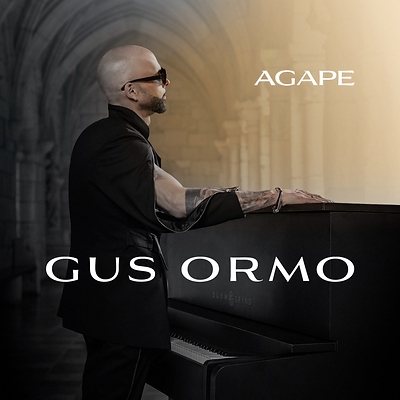
Gus Ormo Released AGAPE, An Instrumental Journey Where the Piano is the Main Character

Published

on

By

After 12 years of meticulous creative work, Gus Ormo presents a six-track album conceived as an expression of unconditional commitment to music.

MIAMI, Oct. 1, 2026 /PRNewswire/ — Singer and composer Gus Ormo presents AGAPE, a conceptual, instrumental, and intimate album that marks a milestone in his career. In this release, Ormo forgoes the use of his voice–previously known for his romantic songs– to make way for the piano, an instrument that now has a central role.

Amid life’s fast pace, the album invites audiences to connect with profound emotions through finely crafted instrumental compositions. In Ormo’s words: “In a world that makes us experience emotional numbness, this album is an invitation to feel without filters or the need for words. It’s my way to give back to music all it has given me.”

The name AGAPE was not chosen by chance: it is a declaration of principles. It comes from a Greek root meaning to love and give without expecting anything in return. This unconditional love also evokes the love that God–or even a mother– has for their children. This premise is easy to grasp, but putting it into practice requires courage.

In this album, unconditional love is manifested both in Ormo’s relationship with music and in his respect for his audience. For Gus Ormo, giving all of himself is not an exaggeration or a metaphor: it is the stark reality of a man who lives by and for music.

In a Romance With the Piano

Gus Ormo has always been a sensitive person. He recalls how, as a child, he would listen to records and feel music stirring his deepest emotions. Such sensitivity is uncommon at that stage of life, but it speaks volumes about the natural-born musician he is.

If Ormo’s songs are romantic, passionate, and erotic, watching him play at the piano is clear proof that eroticism needs no words: the instrument’s 88 keys are more than enough for sensuality to unfold and transcend.

First-rate Collaborations

AGAPE consists of six instrumental tracks, including “Claroscuro”, “Latidos”, and “Alma”, which stand out. It comes as no surprise that the piano occupies such a central place in Ormo’s life; he can wake up and lose himself in playing it. While others sleep, the artist is often composing, as though caught in a mystical trance.

It is also worth noting that Gus Ormo improvises on the piano, demonstrating that he is an exceptionally versatile artist.

Ormo brings his impressive talent as a pianist into dialogue with other musicians. It is not an ordinary collaboration, but an encounter with legendary figures such as Moto Fukushima and maestro Ed Calle, who performed as a saxophonist with Frank Sinatra. 

All of these elements add something special to this special and intimate album where we’ll find a new Ormo, who stands out on the piano without his distinctive singing voice, yet remains faithful to himself, his artistic principles, and his essence. For him, playing the piano means engaging in a conversation with the deepest part of his being. It is therapy, confession, redemption, and light.

AGAPE is now available on all major streaming platforms.

Listen here:

Claroscuro, Gus OrmoLatidos, Gus OrmoAGAPE, Gus Ormo, SpotifyListen to AGAPE on your favorite streaming platformFor more information, visit: https://www.gusormooficial.com/

Social Media:

YouTube

Instagram

TikTok

Facebook

View original content to download multimedia:https://www.prnewswire.com/news-releases/gus-ormo-released-agape-an-instrumental-journey-where-the-piano-is-the-main-character-302895897.html

SOURCE Gus Ormo

Continue Reading

Technology

Communication Boards in Your Community: How These Low-Tech, High-Visibility Tools Are a Powerful Force for Awareness and Connection

Published

on

By

ASHA Shares Information for October’s AAC Awareness Month

ROCKVILLE, Md., Oct. 1, 2026 /PRNewswire/ — For this year’s AAC Awareness Month (October), the American-Speech-Language-Hearing Association (ASHA) is spotlighting the importance of communication boards in public spaces.

Communication boards can help people of all ages share their wants, needs, and feelings in public areas.

Communication boards—one example of augmentative and alternative communication (AAC)—typically are large displays that include pictures of a dozen or more common vocabulary words that people might use in a public space such as a library or park. Such words might include slide, go, hi, play, bathroom, or book. They are useful for people of all ages who have limited or unreliable speech—these boards allow them to communicate with others and vice versa.

The theme for this year’s AAC Awareness Month is AAC in Everyday Life: Today, Tomorrow, and Beyond. The presence of communication boards is one of the more visible ways that people may experience AAC in their communities. In the United States, more than 2 million people use AAC to communicate. AAC takes many forms—from gestures and facial expressions, to picture- or text-based boards, to high-tech tools like tablets and speech-generating devices.

What is the benefit of putting large communication boards in public spaces?
Communication boards can help people of all ages share their wants, needs, and feelings in public areas. Although many people who use AAC as their primary means of communication may have individual communication boards or other personal AAC systems, large public communication boards can help to improve awareness of AAC in the greater community—and help everyone practice using it.

You may see portable communication boards in public as well—in locations like a stadium or a concert hall. These portable boards can serve as a temporary backup if the person’s primary AAC device is charging or if the AAC user needs faster access to vocabulary related to that particular place.

Anyone can benefit from having access to a communication board in public—even if they don’t have a communication or other disorder that affects their speech. For example, young children who are still learning to speak can often recognize and point to pictures before they can verbalize what they want. An adult who loses their voice temporarily can impart an urgent need in public if a board is available.

Why are these boards becoming more common?

The increasing presence of communication boards in public spaces reflects a growing need for the public to learn about AAC, which is commonly used by individuals who have a variety of conditions including but not limited to

apraxia of speech,aphasia,autism,cerebral palsy,developmental delays, andrare genetic conditions.

It also reflects an increasing desire for communities to be more inclusive to all populations.

“Public communication boards can help bridge gaps in understanding between people who have communication challenges and others in their communities,” says ASHA 2026 President Linda I. Rosa-Lugo, EdD, CCC-SLP, ASHA Fellow. “Communication is a two-way street, and we all bear responsibility for doing our part to have successful interactions.”

What are some tips for using a communication board?
If you’re interacting with someone who wants to use a communication board, use these strategies to help improve communication success:

Point as you speak. When you say a word that’s on the board, point to it—this connects pictures to spoken words.Give the person plenty of time. Allow extra time for your communication partner to look at the board—and even more time for them to choose a word.Keep at it. Stay consistent, especially when the other person uses the board. Communication with AAC takes time—and that’s OK!Position yourself well. Stand to the side of the board so both people can see the full display and have access to all the options. If you have a phone, take a picture of the board to use as you move around the building or playground.Offer choices if needed. Ask, “Are you thinking about this?” and point to words, one by one, watching for their response.

To learn more about AAC and communication disorders, visit www.helpingyoucommunicate.org.

About the American Speech-Language-Hearing Association (ASHA)
ASHA is the national professional, scientific, and credentialing association for 247,000 members, certificate holders, and affiliates who are audiologists; speech-language pathologists; speech, language, and hearing scientists; audiology and speech-language pathology assistants; and students. Audiologists specialize in preventing and assessing hearing and balance disorders as well as providing audiologic treatment, including hearing aids. Speech-language pathologists (SLPs) identify, assess, and treat speech, language, and swallowing disorders. www.asha.org

CONTACT:
Francine Pierson
301-296-8715
fpierson@asha.org 

View original content to download multimedia:https://www.prnewswire.com/news-releases/communication-boards-in-your-community-how-these-low-tech-high-visibility-tools-are-a-powerful-force-for-awareness-and-connection-302896248.html

SOURCE American Speech-Language-Hearing Association (ASHA)

Continue Reading

Trending