Technology
Tubeless Tires Market to Reach USD 257.192 Billion by 2035 as OEM Fitment, Two-Wheeler Conversion and Puncture-Safety Demand Accelerate, Reports Radial Insights
Published
46 minutes agoon
By
MIDDLETOWN, Del., Oct. 6, 2026 /PRNewswire/ — The global Tubeless Tires Market was valued at USD 150.001 billion in 2025 and is projected to expand from USD 157.501 billion in 2026 to USD 257.192 billion by 2035, registering a compound annual growth rate of 5.60% during the forecast period, according to the latest market intelligence study published by Radial Insights.
Tubeless construction has become the global standard across new passenger cars and light vehicles, while the next major growth phase is emerging from two-wheeler conversion in India and Southeast Asia, expanding replacement demand and increasing consumer preference for puncture-safe, lower-maintenance tire systems. OEM specifications, regulatory standards and improvements in air retention, rolling resistance and repairability are reinforcing adoption across passenger, motorcycle, commercial and selected off-road applications.
The new “Tubeless Tires Market Size, CAGR & Forecast, 2025-2035” study spans 245 pages and evaluates the market by vehicle type, rim type, sales channel, application, region climate and sealant use. The analysis covers OEM and aftermarket demand, passenger cars, two-wheelers, LCVs, commercial trucks and buses, OTR applications, standard and self-sealing tubeless systems, regional adoption patterns, competitive positioning and investment opportunities.
Near-Universal OEM Tubeless Fitment Establishes a Structural Demand Base
Global tubeless-tire demand is structurally supported by original-equipment fitment because every newly produced passenger or light vehicle creates an initial set of tubeless tires and establishes a future replacement cycle built around the same construction. OICA reported 96.4 million vehicles produced worldwide in 2025, up from 92.7 million in 2024, keeping OEM pull on tire manufacturing capacity elevated across major automotive markets.
The technology has already displaced tube-type construction across mainstream passenger vehicles. Michelin states that nearly all modern passenger-car tires are tubeless, while Bridgestone India says almost all new cars now use tubeless OE fitment. The architecture supports sealed rims, innerliner-based air retention and high-speed radial performance across passenger cars, crossovers, SUVs and pickup-derived light vehicles, making tubeless technology the reference standard rather than a premium exception.
This installed base also shapes the aftermarket because consumers replacing original tires generally remain within the tubeless ecosystem. Advanced alternatives such as airless tires remain comparatively early in commercialization, while manufacturers continue to invest in tubeless products aligned with new OEM requirements. Radial Insights estimates that near-universal OEM fitment contributes approximately 0.6 percentage points to overall market CAGR through 2035.
Key Insights From Radial Insights’ Tubeless Tires Study
Asia-Pacific Leads Global Demand: Asia-Pacific accounted for 51.64% of global tubeless tire demand in 2025, supported by high vehicle production, expanding two-wheeler sales and strong aftermarket activity.Passenger Cars and Two-Wheelers Lead Adoption: Passenger vehicles provide the largest installed base, while motorcycles and scooters represent the strongest conversion opportunity in emerging Asian markets.OEM Fitment Sets the Technology Standard: Near-universal tubeless installation on new passenger and light vehicles creates recurring replacement demand and normalizes compatible rims, valves and service practices.Replacement Conversion Expands in Emerging Markets: Puncture-safety, heat-dissipation and fuel-efficiency advantages are encouraging users to move away from legacy tube-type products.Self-Sealing Systems Create Premiumization: Sealant-enabled products are gaining attention in premium and high-utilization applications where reduced puncture downtime can justify higher prices.
Two-Wheeler Formalization Accelerates Tube-to-Tubeless Conversion
India and Southeast Asia provide one of the largest remaining conversion opportunities because high-volume motorcycle and scooter markets are moving toward organized OEM and dealer channels where tubeless fitments, standardized markings and compatible rims are increasingly common. SIAM reported 20.50 million two-wheeler sales in India in calendar 2025, while Indonesia recorded 6.41 million domestic motorcycle sales, giving these markets significant influence over the global two-wheeler tire mix.
Regulation and OEM product strategies are reinforcing this transition. India applies BIS certification under IS 15627 for pneumatic tires used on two- and three-wheeled motorcycles and requires tubeless products to carry appropriate TUBELESS or TL markings. High-volume models including Honda Activa variants and selected Yamaha and Honda products in Southeast Asia increasingly specify tubeless tires, expanding consumer familiarity and service-network capability.
As organized distribution expands, value shifts toward tubeless valves, compatible rims and higher-specification motorcycle radials. Apollo has also reported approvals from Triumph, KTM and Husqvarna for next-generation steel-belted radial motorcycle tires. Radial Insights estimates that two-wheeler formalization and conversion contribute approximately 0.9 percentage points to market CAGR, the largest modeled incremental contribution among the report’s quantified drivers.
Get Sample Report – https://www.radialinsights.com/report/tubeless-tires-market
Puncture Safety and Lower TCO Expand Replacement-Channel Conversion
In emerging-market replacement channels, the shift from tube-type to tubeless tires is increasingly driven by total-use economics rather than construction preference alone. Tubeless tires generally lose air more slowly after a small puncture, eliminate the separate inner tube and can often be repaired without removing the entire tire from the rim. These characteristics reduce roadside disruption for commuters, delivery riders and small commercial fleets that depend on vehicle availability for daily income.
Bridgestone India highlights slower pressure loss, easier puncture repair, improved heat dissipation and lower weight as important advantages over tube-type products, while Harley-Davidson similarly notes that tubeless assemblies generally run cooler, weigh less and can support efficiency. The benefits are particularly relevant in dense urban markets where punctures, heat and frequent stop-start operation increase maintenance exposure.
The technology ladder is also widening beyond standard tubeless construction. Michelin Selfseal is designed to maintain pressure after selected punctures, while manufacturer-approved repair kits support temporary restoration of mobility for minor tread-area damage. These developments give manufacturers additional room to differentiate on safety and uptime. Radial Insights estimates that puncture-safety and fuel-efficiency benefits contribute approximately 0.5 percentage points to overall market CAGR through 2035.
Self-Sealing Technology Creates a Premium Tubeless Opportunity
Standard tubeless tires remain the mainstream choice because they balance cost, performance and serviceability, but self-sealing systems are creating a higher-value subsegment. Integrated sealants can automatically close selected tread punctures or slow pressure loss, reducing the likelihood that a driver or fleet operator must stop immediately for roadside service. The value proposition is strongest in premium passenger vehicles, commercial applications and markets with poor road surfaces or elevated puncture risk.
For manufacturers, sealant technology provides a path to premiumization without changing the basic tubeless architecture already used by OEMs and service networks. Product development is therefore expanding around sealant chemistry, innerliner compatibility, TPMS integration and climate-specific performance. The report identifies innovation in self-sealing and puncture-resistant products as an important opportunity for suppliers seeking differentiation beyond conventional volume growth.
Tubeless Tires Market Snapshot, 2025-2035
Market Metric
Strategic Data Point
Historical Period
2020-2025
Base Year
2025
Forecast Period
2025-2035
2025 Market Size
USD 150.001 Billion
2026 Market Size
USD 157.501 Billion
2035 Forecast Market Size
USD 257.192 Billion
Forecast CAGR
5.60 %
Leading Region
Asia-Pacific
Asia-Pacific Market Share
51.64 %
Leading Vehicle Type
Passenger Cars
Major Application
On-Road
Important Emerging Segment
Self-Sealing Tubeless Tires
Primary Growth Driver
Near-Universal OEM Fitment
Report Length
245 Pages
Market Challenges
High initial costs and price sensitivity can slow tube-to-tubeless conversion in cost-conscious markets. Consumers and small fleet operators may prioritize the lowest upfront tire price even when tubeless construction offers better puncture behavior, easier repairs and lower maintenance over the product lifecycle. Manufacturers therefore need to balance product quality, localized pricing and service availability to sustain adoption in emerging markets.
Supply chain complexity creates another constraint. Tubeless tires depend on consistent innerliner materials, compatible rims, valves, steel reinforcement and increasingly advanced sealant systems, leaving manufacturers exposed to volatility in natural rubber, synthetic polymers, steel cord and specialty chemical inputs. Logistics disruptions or insufficient local component availability can slow conversion and raise finished-product costs.
Technology adoption also varies by vehicle class and geography. Passenger cars are already highly radialized and tubeless, but parts of the two-wheeler, commercial and off-road markets retain tube-type or legacy designs. Expanding the addressable market therefore requires certification, dealer training, compatible wheel systems and consumer education rather than tire production alone.
Recent Industry Developments
In October 2025, Goodyear launched Wrangler Outbound AT, Wrangler Workhorse AT 2 and Wrangler ElectricDrive AT across its consumer portfolio. The launches expand premium tubeless fitments for SUVs, light trucks, work vans and electric vehicles, strengthening replacement demand across utility-oriented applications.In January 2026, Michelin launched Anakee Adventure 2 worldwide as the flagship of its Trail motorcycle lineup for models such as BMW GS, Honda Africa Twin and Yamaha Tenere. Michelin said global Trail tire sales had doubled in six years, supporting premium tubeless motorcycle demand and broader OEM homologation.In June 2026, Continental said it developed a tire with Renault Group that achieves up to 35% lower rolling resistance than the threshold for the EU label’s top A rating. The collaboration highlights how efficiency-focused tubeless designs can improve EV range, vehicle economics and OEM differentiation.Also in June 2026, Bridgestone announced BATTLAX HYPERSPORT S23 as original equipment for Yamaha’s new YZF-R7 following collaboration from the early stages of vehicle development. The approval reinforces premium tubeless motorcycle demand where riders prioritize dry grip, wet drainage and precise road feedback.
Executive Q&A Summary
Q: What is the projected size of the Tubeless Tires Market?
A: The market is projected to grow from USD 157.501 billion in 2026 to USD 257.192 billion by 2035, registering a CAGR of 5.60%.
Q: Which region leads global tubeless tire demand?
A: Asia-Pacific leads the market with a 51.64% share, supported by high vehicle production, large two-wheeler markets and rapid conversion from tube-type products.
Q: What is the most important market opportunity?
A: The largest expansion opportunity lies in further tube-to-tubeless conversion across high-volume two-wheeler markets, supported by organized OEM channels, puncture-safety benefits and growing availability of compatible rims and service networks.
Competitive Landscape
The Tubeless Tires Market includes global leaders such as Bridgestone, Michelin, Goodyear and Continental alongside strong regional manufacturers including Apollo Tyres, MRF, CEAT and Maxxis. Competition is shaped by OEM homologation, passenger and motorcycle product breadth, puncture-resistance technologies, regional manufacturing scale and the ability to serve both factory-fit and replacement channels.
Leading suppliers are increasingly differentiating through lower rolling resistance, self-sealing systems, premium motorcycle radials, EV-compatible products and broader organized retail coverage. Asia-Pacific remains particularly competitive because global and regional manufacturers must balance scale and affordability with rapidly rising performance expectations. Strong dealer networks, compatible rim ecosystems and technical service capability will remain important as tubeless adoption expands into remaining tube-type segments through 2035.
Explore the Full Tubeless Tires Market Study
Automotive OEMs, tire manufacturers, two-wheeler producers, distributors, investors, suppliers and mobility companies can access the full Radial Insights study for detailed intelligence beyond headline market figures.
The complete 245-page report provides:
Tubeless Tires Market sizing and forecasts through 2035Passenger car, two-wheeler, LCV, truck-bus and OTR demand analysisDrop-center and reverse/OTR rim assessmentOEM versus replacement/aftermarket channel analysisOn-road and off-road application intelligenceStandard versus self-sealing tubeless technology analysisTwo-wheeler tube-to-tubeless conversion assessmentRegional and climate-specific demand opportunitiesCompetitive market share and company benchmarkingPricing, regulation, distribution and investment opportunity analysis
Request a Free Sample Report:
Visit https://www.radialinsights.com/report/tubeless-tires-market to access the Tubeless Tires Market study, review sample data tables and charts, examine the research methodology and request a free sample report.
International users can also visit www.radialinsights.jp.
Recently Published Reports –
https://www.radialinsights.com/report/us-tire-market-u-s
https://www.radialinsights.com/report/mexico-tire-market
https://www.radialinsights.com/report/germany-tire-market
https://www.radialinsights.com/report/uk-tire-market
https://www.radialinsights.com/report/france-tire-market
https://www.radialinsights.com/report/canada-tire-market
About Us
Radial Insights is North America’s leading specialist market research and strategic consulting firm dedicated exclusively to the global tire, rubber, and automotive industries. Headquartered in the United States, the firm delivers proprietary plant-level intelligence, dual-track validated market forecasts, competitive analysis, and custom advisory services spanning 160+ countries.
Its core assets include a continuously updated database tracking 284 tire manufacturing facilities across 38 countries, a rigorous dual-track methodology that reconciles bottom-up and top-down data within strict error tolerances, and 50–80 primary expert interviews per study with OEM purchasing managers, plant directors, and industry executives. Radial Insights supports tire manufacturers, suppliers, investors, and automotive stakeholders with actionable intelligence on market sizing, EV and mobility transitions, supply-chain dynamics, technology roadmaps, regulatory developments, and growth strategy.
Address
651 N Broad St
Suite 201
Middletown, DE 19709 US
Phone- +1 6505015505
Email- sales@radialinsights.com
Web: www.radialinsights.com
www.radialinsights.jp
View original content to download multimedia:https://www.prnewswire.com/news-releases/tubeless-tires-market-to-reach-usd-257-192-billion-by-2035-as-oem-fitment-two-wheeler-conversion-and-puncture-safety-demand-accelerate-reports-radial-insights-302900319.html
SOURCE Radial Insights
You may like
In the news release, KNOWIDEA Launches VeriPIE to Reduce Decision Risk with Verified AI Predictions, issued Oct. 6, 2026 by KNOWIDEA over PR Newswire, we are advised by the company that the original version contained incorrect information introduced by PR Newswire during transmission. The complete, corrected release follows:
KNOWIDEA Launches VeriPIE to Reduce Decision Risk with Verified AI Predictions
The Verified Predictive Intelligence Engine is available and in production at energy producers, financial institutions and manufacturers.
TORONTO, Oct. 6, 2026 /PRNewswire/ — KNOWIDEA launches VeriPIE, the Verified Predictive Intelligence Engine. VeriPIE connects to a company’s existing systems, predicts what happens next and what it is worth, and verifies every number in the recommendation.
VeriPIE is available today in the KNOWIDEA platform and in production with a Fortune 500 oil and gas producer, financial institution and industrial manufacturer.
Most companies decide using dashboards that describe the past, consulting reports that take eight to twelve weeks, or AI answers that are right most of the time. When a decision rests on a number no one can check, the risk sits with the executive’s intuition.
VeriPIE runs the same five steps on every question. It connects ERP, finance, operations and CRM data with external benchmarks, finds the drivers of the number in question, forecasts each option, weighs each prediction against the company’s risk tolerance, and delivers a recommendation with the judgments that need a human owner marked.
Each number traces to its source system, table, rows and dates. Claims that can be checked exactly are checked by code, not by another model. When evidence is missing, VeriPIE does not issue a verified recommendation and names the missing input.
“Every major decision is a prediction. The question is whether you can prove it before you bet the company on it. VeriPIE gives you the future with the work shown,” said Yatharth Sejpal, Co-founder and CEO of KNOWIDEA.
“Prediction without verification is a guess with better formatting. VeriPIE proves every part of a forecast that can be proven and names the part that cannot,” said Brian Zhengyu Li, Co-founder and CTO of KNOWIDEA.
VeriPIE sits on top of the ERP, data warehouse and BI tools a company already owns. To see it on your own data, bring one decision to a 30-minute session at knowidea.dev.
About KNOWIDEA
KNOWIDEA is a Toronto-based decision intelligence company. Learn more at knowidea.dev.
Media contact: Yatharth Sejpal, info@knowidea.dev
View original content:https://www.prnewswire.com/news-releases/knowidea-launches-veripie-to-reduce-decision-risk-with-verified-ai-predictions-302900366.html
SOURCE KNOWIDEA
Technology
RaySecur® Expands US Supply Base for Critical Security and Safety Components
Published
46 minutes agoon
October 6, 2026By
Partnership with Sked and Jackson County’s DTS Industries bring critical MailSecur components into U.S. manufacturing while connecting Kentucky jobs to the fight against fentanyl and concealed contraband.
BOSTON, Oct. 6, 2026 /PRNewswire/ — RaySecur®, the leader in real-time 4D T-ray security imaging, today announced a new partnership with DTS Industries to manufacture critical mechanical components and system calibration standards for its MailSecur® concealed threat and contraband detection systems in the United States.
MailSecur® is the first desktop T-ray screening system to receive Designated Status as a Qualified Anti-Terrorism Technology by the U.S. Department of Homeland Security under the Support Anti-Terrorism by Fostering Effective Technologies (SAFETY) Act. MailSecur help organizations detect concealed threats, including weapons, explosives, chemical and biological agents, as well as contraband such as narcotics concealed in powders, pills, liquids, and laced or soaked onto paper.
RaySecur’s systems are deployed worldwide across Fortune 500 companies, government agencies, and law enforcement and correctional facilities. In correctional environments, the technology provides a critical first-line layer of defense against fentanyl, opioids and other synthetic drugs that can be concealed in mail or laced on paper and pose serious risks to incarcerated individuals and correctional personnel.
“As a developer of national security and public safety technologies, strengthening our U.S. supply chain is a strategic priority,” said Alex Sappok, Ph.D., CEO of RaySecur. “Working with SKED allowed us to quickly identify outstanding manufacturing partners, and DTS distinguished itself through its technical capabilities. We look forward to growing together while supporting Eastern Kentucky manufacturing.”
“Eastern Kentucky continues to deliver a competitive workforce,” said Congressman Hal Rogers, founder of SKED. “I’m proud that DTS, a Jackson County company, has earned a partnership with RaySecur® to provide advanced manufacturing for this U.S. Department of Homeland Security SAFETY Act designated technology. It is a testament to the skilled and determined workforce in Kentucky’s Appalachian region. Thanks to SKED’s wide-spread network across the federal, state and local levels we have more local businesses connecting with major opportunities, like this, to create jobs where we need them the most.”
The partnership was facilitated through the Southeast Kentucky Economic Development Corporation (SKED), which helped RaySecur identify and evaluate potential manufacturing partners across the region.
“We’re so thankful that the RaySecur® team reached out with a list of needs and willingness to explore. Making connections is one way we bring opportunities to Southern and Eastern Kentucky,” said Brett Traver, Executive Director of SKED. “Given the opportunity, I know our people can deliver, and this is another example.”
Located in Jackson County, Kentucky, DTS Industries specializes in precision metal fabrication and finishing for highly engineered products and components. Its capabilities include precision forming, custom machining, laser cutting, assembly, and finishing services. The partnership will support U.S.-based manufacturing and skilled jobs in Kentucky while expanding production capacity for advanced security technologies that help protect people and organizations from concealed threats.
About SKED
The Southeast Kentucky Economic Development Corporation (SKED) works to improve the quality of life and economic vitality of its service region by promoting sustainable economic development and employment opportunities. SKED collaborates with local, state, and federal partners to attract investment, support businesses, and foster long-term regional growth.
About DTS Industries
Founded in 2019, DTS Industries provides engineering, custom manufacturing, and assembly services for mechanical and electrical components. The company serves customers requiring high-quality, precision-engineered products and is ISO 9001 certified.
About RaySecur
RaySecur®, the leader in real-time 4D T-ray imaging, is transforming concealed threat and contraband detection with MailSecur®. Organizations worldwide, including Global 2000 companies and government agencies, rely on RaySecur to identify hidden threats while maintaining operational efficiency. MailSecur is Designated as a Qualified Anti-Terrorism Technology by the U.S. Department of Homeland Security under the SAFETY Act and is backed by RaySecur’s 24/7 expert support. For more information, visit www.raysecur.com.
Peter Basile – VP Marketing – pbasile@raysecur.com
View original content to download multimedia:https://www.prnewswire.com/news-releases/raysecur-expands-us-supply-base-for-critical-security-and-safety-components-302900375.html
SOURCE RaySecur Inc.
Technology
Global Smart Refrigerator Market Set to Reach USD 14.30 Billion by 2034 as AI Integration, Connected Home Adoption and Energy-Efficient Technologies Accelerate, reports Maximize Market Research
Published
46 minutes agoon
October 6, 2026By
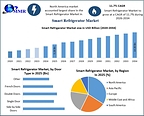
PUNE, India, Oct. 6, 2026 /PRNewswire/ — The Global Smart Refrigerator Market was valued at USD 5.28 Billion in 2025 and is projected to grow at a CAGR of 11.7% from 2026 to 2034, reaching USD 14.30 Billion by 2034, according to a new analysis by Maximize Market Research.
Explore 120 market data tables and 70 figures across 306 pages, along with a detailed Table of Contents covering the Global Smart Refrigerator Market.
Global Smart Refrigerator Market Size & Forecast
Market Size (Base Year 2025): USD 5.28 Billion
Forecast Market Size (2034): USD 14.30 Billion
CAGR (2026–2034): 11.7%
Base Year: 2025
Forecast Period: 2026–2034
Historical Period: 2020–2025
Global Smart Refrigerator Market Overview
The Global Smart Refrigerator Market continues to expand as consumers increasingly adopt smart homes, connected appliances, AI-enabled kitchens, and energy-efficient home technologies. Smart refrigerators combine advanced cooling with Wi-Fi connectivity, touchscreen displays, internal cameras, voice assistant integration, inventory management, food expiration tracking, remote diagnostics, and energy monitoring. Market growth is supported by rising disposable incomes, urbanization, premium appliance demand, smart home adoption, and growing consumer interest in convenience, food preservation, reduced food waste, and connected living. AI-powered cooling optimization, predictive maintenance, and personalized user experiences are further strengthening the Smart Refrigerator Market size, market share, market demand, and long-term market forecast.
The market is also being shaped by artificial intelligence, Internet of Things (IoT), cloud connectivity, smart inventory tracking, voice-controlled operation, internal cameras, inverter compressors, eco-friendly refrigerants, and sustainable refrigeration technologies. North America remains the leading regional market due to high smart-home penetration, strong purchasing power, premium appliance adoption, and established retail and e-commerce networks, while Asia Pacific is expected to record the fastest growth as urbanization, middle-class expansion, rising incomes, and smart appliance adoption increase across China, Japan, South Korea, and India. Manufacturers are increasingly focusing on energy efficiency, smart home integration, cybersecurity, software compatibility, premium product innovation, and connected kitchen ecosystems to improve their competitive position in the Smart Refrigerator Market.
Get Full PDF Sample Copy of Report: (Including Full TOC, List of Tables & Figures, Chart) @ https://www.maximizemarketresearch.com/request-sample/213712/
The Global Smart Refrigerator Market is evolving as consumers increasingly seek connected, intelligent, energy-efficient, and convenient kitchen appliances. AI-powered food management, IoT connectivity, voice assistants, touchscreen interfaces, remote monitoring, predictive maintenance, inverter technologies, and sustainable cooling systems are creating stronger market opportunities. Companies that combine smart functionality, energy efficiency, cybersecurity, seamless home integration, premium design, and continuous digital innovation are likely to shape the Smart Refrigerator Market through 2034.
Smart Refrigerator Market Growth Drivers, Opportunities & Key Highlights
The Global Smart Refrigerator Market is expanding as smart home adoption, connected appliances, AI-enabled kitchens, rising disposable incomes, and demand for energy-efficient home appliances continue to support growth. Side-by-side refrigerators remain a leading door type because of their large storage capacity, premium design, and integration of touchscreen displays, internal cameras, voice assistants, Wi-Fi connectivity, and AI-powered inventory management. Premium models also remain strong as consumers increasingly invest in advanced smart-home ecosystems and connected kitchen appliances.
New market opportunities are emerging through AI-powered food recognition, smart inventory tracking, voice control, predictive maintenance, eco-friendly refrigerants, inverter compressors, and remote monitoring. In 2026, Samsung expanded its Bespoke AI Refrigerator capabilities, GE Appliances introduced a smart French-door refrigerator with a built-in barcode scanner, LG showcased conversational AI and AI Fresh technologies, and Haier introduced a Wi-Fi-enabled side-by-side refrigerator with Smart Sense AI.
Key Market Highlights
USD 5.28 Billion: Market size in 2025USD 14.30 Billion: Projected market size by 203411.7% CAGR: Growth during 2026–2034North America: Leading regional marketAsia Pacific: Fastest-growing regionSide by Side Doors: Leading door typePremium: Leading price rangeAI, IoT and Smart Home Integration: Major technology growth driversEnergy Efficiency and Sustainable Refrigeration: Key long-term market opportunity
United States Smart Refrigerator Market Advances with AI-Powered Kitchen Innovation
In the United States, the Smart Refrigerator Market strengthened in 2026 as GE Appliances introduced its GE Profile 27.9-cu.-ft. Smart 4-Door French-Door Refrigerator with Kitchen Assistant at CES 2026. The model features a built-in barcode scanner that helps consumers create shopping lists, manage groceries, and support meal planning, with commercial availability announced for April 2026. This development reflects rising U.S. demand for AI-enabled appliances, smart food management, connected kitchens, digital convenience, and premium refrigeration technologies, while reinforcing the country’s role in smart-home and intelligent appliance innovation.
The Global Smart Refrigerator Market is segmented by Door Type, Price Range, Distribution Channel, End-User, and Region.
By Door Type, Side by Side Doors hold the leading position in 2025, supported by their premium design, large storage capacity, multiple compartments, spacious freezer sections, and strong integration of smart technologies such as touchscreen displays, internal cameras, voice assistants, Wi-Fi connectivity, and AI-powered inventory management. French Door models are expected to record the fastest growth as consumers increasingly prefer modern kitchen designs, flexible storage, AI-enabled food management, inverter compressors, and interactive displays.
By Price Range, Premium Smart Refrigerators account for the largest share in 2025 because of strong demand for AI, IoT connectivity, touchscreen interfaces, internal cameras, voice assistant integration, and energy-efficient inverter technologies. Economy models are expected to grow rapidly as manufacturers introduce more affordable refrigerators with Wi-Fi connectivity, smartphone applications, energy monitoring, and other essential smart features for middle-income consumers.
Get Insightful Data on Regions, Market Segments, Customer Landscape, and Top Companies (Charts, Tables, Figures and More) https://www.maximizemarketresearch.com/request-sample/213712/
North America Leads the Smart Refrigerator Market as Connected Homes and Premium Appliance Adoption Strengthen
North America remains the leading region in the Global Smart Refrigerator Market, supported by high penetration of smart home technologies, strong consumer purchasing power, and widespread adoption of connected household appliances. The United States remains the major contributor, driven by strong demand for premium refrigerators equipped with artificial intelligence, IoT connectivity, touchscreen displays, voice assistant integration, internal cameras, and energy-efficient cooling technologies. The presence of leading manufacturers, established retail and e-commerce networks, and increasing investment in smart home ecosystems continues to strengthen North America’s market position.
Asia Pacific is expected to record the fastest growth, supported by rapid urbanization, rising disposable incomes, expanding middle-class populations, and increasing smart home adoption across China, Japan, South Korea, and India. Europe continues to grow through strict energy-efficiency regulations and demand for sustainable connected appliances, while South America is developing through improving living standards and residential construction. The Middle East & Africa is also expanding as premium residential projects, hospitality infrastructure, urban development, and adoption of modern home appliances increase across major cities.
Global Smart Refrigerator Market Competitive Landscape
The Global Smart Refrigerator Market is highly competitive, with major companies focusing on artificial intelligence, Internet of Things connectivity, smart home integration, energy-efficient cooling, premium design, touchscreen interfaces, internal cameras, voice assistant compatibility, remote diagnostics, and AI-powered food management. Competition is increasingly centered on connected kitchen ecosystems, inverter compressors, eco-friendly refrigerants, predictive maintenance, cloud connectivity, and personalized user experiences.
Major players include Samsung Electronics, LG Electronics, Whirlpool Corporation, Haier Smart Home, BSH Hausgeräte, Electrolux, Panasonic, Hisense, Midea, GE Appliances, Sharp, and Hitachi. Recent developments show that competition is shifting toward AI-enabled features and smarter connected-home platforms. In 2026, Samsung expanded its Bespoke AI Refrigerator Family Hub with Google Gemini-powered AI Vision, GE Appliances introduced a smart 4-Door French-Door Refrigerator with a built-in barcode scanner, LG showcased a SIGNATURE refrigerator with conversational AI and AI Fresh technology, while Haier India introduced a Wi-Fi-enabled side-by-side refrigerator with Smart Sense AI and smart food-management capabilities. Across the market, companies are strengthening their positions through product launches, digital ecosystems, energy-efficiency innovation, smart-home partnerships, and premium connected appliance development.
Global Smart Refrigerator Market Recent Development
In 2026, Samsung Electronics expanded the capabilities of its Bespoke AI Refrigerator Family Hub with AI Vision powered by Google Gemini, marking a major development in the Global Smart Refrigerator Market. The upgraded system improves food recognition, Bixby voice control, personalized content, and stored-food tracking, helping consumers manage groceries and meal planning more efficiently. The development strengthens Samsung’s position in AI-enabled smart appliances and reflects the market’s growing focus on intelligent food management, voice interaction, connected home ecosystems, and personalized refrigerator experiences.
Immediate Delivery Available | Buy this Research Report (Insights, Charts, Tables, Figures and More) https://www.maximizemarketresearch.com/checkout/213712/
Smart Refrigerator Market –Key Players
North America
1. Whirlpool Corporation
2. GE Appliances
3. Sub-Zero Group, Inc.
4. Dacor, Inc.
5. Monogram Appliances
6. Viking Range, LLC
7. BlueStar Limited
8. Danby Products Ltd.
9. Perlick Corporation
10. Hestan Commercial Corporation
Europe
11. BSH Hausgeräte GmbH
12. Electrolux AB
13. Miele & Cie. KG
14. Liebherr Group
15. Smeg S.p.A.
16. Vestfrost Solutions A/S
17. Gorenje Group
18. Amica S.A.
19. Arçelik A.Ş.
20. Vestel
21. Candy Hoover Group
22. Franke Holding AG
23. CDA Appliances
24. Bertazzoni S.p.A.
25. Fisher & Paykel Appliances
Asia-Pacific
26. Samsung Electronics Co., Ltd.
27. LG Electronics Inc.
28. Haier Smart Home Co., Ltd.
29. Panasonic Holdings Corporation
30. Hisense Group
31. Midea Group Co., Ltd.
32. Sharp Corporation
33. Hitachi Global Life Solutions, Inc.
34. Toshiba Lifestyle Products & Services Corporation
35. Godrej Appliances
36. AQUA (Haier Group)
37. IFB Industries Limited
38. Voltas Limited
39. Blue Star Limited
40. Orient Electric Limited
41. Videocon Industries Limited
42. Changhong Meiling Co., Ltd.
43. Xinfei Electric Co., Ltd.
44. Robam Appliances
Middle East, Africa & Other Markets
45. Defy Appliances
46. Nexus Appliances
47. Nikai Group
48. Alghanim Industries
49. Kelon Electronics Holdings Ltd.
50. Altus
43. Xinfei Electric Co., Ltd.
44. Robam Appliances
Middle East, Africa & Other Markets
45. Defy Appliances
46. Nexus Appliances
47. Nikai Group
48. Alghanim Industries
49. Kelon Electronics Holdings Ltd.
50. Altus
Access Full Summary: https://www.maximizemarketresearch.com/market-report/smart-refrigerator-market/213712/
Analyst Perspective
Analyst highlights that the Global Smart Refrigerator Market is gaining importance as smart home adoption, connected living, premium kitchen appliances, energy efficiency, and demand for AI-enabled household technologies continue to support market growth. Product innovation in AI-powered food recognition, IoT connectivity, smart inventory tracking, touchscreen interfaces, voice assistant integration, predictive maintenance, inverter compressors, and eco-friendly refrigeration is strengthening the market, while North America remains the leading region and Asia Pacific is expected to record the fastest growth. Companies that improve smart functionality, strengthen connected-home integration, enhance energy efficiency, address cybersecurity concerns, and invest in AI-driven user experiences are likely to shape the Smart Refrigerator Market through 2034.
Related Reports:
Smart Kitchen Appliances Market by Product, Application, Technology, Fuel Type, and Region – Global Forecast to 2034.
Freezer Market by Product Type, Distribution Channel, Capacity, End-User, and Region – Global Forecast to 2034.
Beverage Cooler Market by Product Type, End-Use, Capacity, Distribution Channel, Energy Efficiency, Temperature Zones, Technology, Door Swing, and Region – Global Forecast to 2034.
Consumer Electronics Market by Product, Application, and Region – Global Forecast to 2034.
Smart Oven Market by Type, Structure, Connectivity, Distribution Channel, Application, and Region – Global Forecast to 2034.
Smart Washing Machine Market by Product, Capacity, Application, Connectivity, and Region – Global Forecast to 2034.
Dishwasher Market by Product, Distribution Channel, Application, and Region – Global Forecast to 2034.
Air Fryer Market by Product, End User, Distribution Channel, and Region – Global Forecast to 2034.
Pressure Cooker Market by Material, Application, Capacity, and Region – Global Forecast to 2034.
India Refrigerator Market by Product, Distribution Channel, Type, and Region – Global Forecast to 2034.
About Maximize Market Research – Global Smart Refrigerator Market
Maximize Market Research is a global market research and business consulting firm providing data-driven insights across consumer goods & services, home appliances, smart home technologies, connected devices, and retail sectors. Its Global Smart Refrigerator Market research covers side-by-side, single-door, double-door, French-door and other refrigerator types, premium, economy and low price ranges, online and offline distribution, residential and commercial end users, AI, IoT, smart-home connectivity, energy-efficient cooling, regional demand, competitive strategies, and recent industry developments. The report helps businesses understand smart appliance adoption, technology innovation, connected kitchen trends, energy efficiency, consumer demand, and long-term market opportunities through 2034.
Global Plant-Based Food Market Size & Forecast 2026 to 2032– MMR Statistics
MMR Statistics is a part of Maximize Market Research, developed to provide quick access to market size, industry data, forecasts, trends, and statistical insights across a wide range of sectors. It presents research data in multiple formats, making it easier for businesses, analysts, and decision-makers to use market intelligence for presentations, strategy, benchmarking, and business planning.
Asia Pacific Lab Grown Diamond Market: Size, Share, Luxury Trends, Growth Opportunities and Forecast (2024-2032) – Stellar Market Research
Stellar Market Research is a strategic partner of Maximize Market Research, providing global and region-wise market research reports across multiple industries. Its research focuses on market trends, competitive developments, regional opportunities, industry dynamics, and growth outlooks, complementing Maximize Market Research with broader market coverage and region-specific business intelligence.
Contact:
Lumawant Godage
MAXIMIZE MARKET RESEARCH PVT. LTD.
+91 96073 65656
Email: sales@maximizemarketresearch.com
Visit Our Web Site: https://www.maximizemarketresearch.com/
View original content to download multimedia:https://www.prnewswire.co.uk/news-releases/global-smart-refrigerator-market-set-to-reach-usd-14-30-billion-by-2034-as-ai-integration-connected-home-adoption-and-energy-efficient-technologies-accelerate-reports-maximize-market-research-302899912.html
/C O R R E C T I O N — KNOWIDEA/
Tubeless Tires Market to Reach USD 257.192 Billion by 2035 as OEM Fitment, Two-Wheeler Conversion and Puncture-Safety Demand Accelerate, Reports Radial Insights
RaySecur® Expands US Supply Base for Critical Security and Safety Components
Send Rakhi to UK swiftly with UK Gifts Portal
Whiteboard Series with NEAR | Ep: 45 Joel Thorstensson from ceramic.network
Nullmax and Renesas Forge Strategic Partnership to Deliver Competitive ADAS Solutions for the Global Market
Why You Should Build on #NEAR – Co-founder Illia Polosukhin at CV Labs
Whiteboard Series with NEAR | Ep: 45 Joel Thorstensson from ceramic.network
NEAR End of Year Town Hall 2021: The Open Web World, MetaBUILD 2 Hackathon and 2021 recap
Trending
-
Technology3 days agoRoboParty Unveils RP1, a High-Performance Full-Stack Open-Source Humanoid Robot at IROS
-
Technology5 days agoAngel Aligner Upgrades Torque Ridges to “Pressure Points” in Europe
-
Technology3 days agoARTBOX, KOREA’S ICONIC LIFESTYLE RETAILER, MAKES U.S. DEBUT WITH LOS ANGELES POP-UP FEATURING GLOBAL K-POP ICON ILLIT
-
Coin Market4 days agoBNB Chain crosses $1B in tokenized stocks, ETFs as market hits $3.7B
-
Technology4 days agoNasdaq Fund Secondaries, LODAS Markets Complete First Interval Fund Auction with Harrison Street Private Wealth
-
Technology3 days agoNasdaq Hits Fresh Ground on Chip and Software Strength as Dow, Small Caps Lag for the Week
-
Technology5 days agoIAB Hong Kong’s C26 Returns as Hong Kong’s Largest AI and Marketing Event, Exploring How AI Is Reimagining Business
-
Technology4 days agoAtlantic Digestive Specialists Data Breach Investigation: Edelson Lechtzin LLP Probes Class Action Claims After Customer Data Is Exposed