Connect with us

Technology

SMU School of Accountancy launches Applied AI Track for next generation of accounting and finance professionals

Published

on

New specialisation within Master of Science in Accounting focuses on applying, evaluating and governing Generative and Agentic AI in accounting and finance

SINGAPORE, Oct. 7, 2026 /PRNewswire/ — The accountant of the future may spend less time checking documents and more time checking what artificial intelligence has done with them.

AI is already being used in accounting and finance to review documents, analyse financial information, identify anomalies and support audit work. But as more of this work is performed or assisted by AI, professionals still have to decide whether its outputs are accurate, appropriate and reliable enough to inform a business decision.

Singapore Management University’s (SMU) School of Accountancy (SOA) is responding to this shift with a new Applied Artificial Intelligence Track in its Master of Science in Accounting (MSA) programme. The track is designed to equip accounting and finance professionals with the skills to apply AI to professional workflows, evaluate its outputs and put appropriate governance and human oversight around its use.

The move comes as AI is reshaping the work of accounting and finance professionals. Budget 2026 identified accountancy as one of the professions where AI can automate routine work and enable professionals to focus on higher-value activities requiring professional judgement and expertise. The Government also announced that it would support workers in building practical AI capabilities, starting with the accountancy and legal professions.

An accounting-first approach to AI

Unlike AI programmes centred primarily on computer science, data science or general business applications, the new track starts with the professional contexts in which accounting expertise matters.

Students will gain practical exposure to technologies including Generative AI, large language models (LLMs), retrieval-augmented generation (RAG) and Agentic AI. They will learn not only how these technologies can be applied, but also how to assess their reliability and limitations, supervise AI-enabled workflows and establish appropriate controls.

The emergence of Agentic AI extends this shift beyond generating content and analysis towards AI systems capable of coordinating and executing multi-step workflows. For accounting and finance professionals, this raises new questions about how such systems should be supervised, where human review and escalation should occur, and who remains accountable for the resulting decisions.

Professor Zhang Liandong, Dean and Lee Kong Chian Professor of Accounting, SMU School of Accountancy, said:

“We designed the Applied AI Track around how AI is entering accounting and finance work. The question is not simply whether a tool can perform a task, but whether professionals understand its limitations, can evaluate its output and know what controls are needed before relying on it. Students will therefore learn to apply emerging technologies such as Generative and Agentic AI within professional workflows, while retaining the professional judgement, human oversight and accountability that remain central to the profession.”

The Applied AI specialisation comprises four Course Units drawn from five specialist offerings, covering Agentic AI for Accounting; AI Governance, Evaluation and Ethics; Modern AI Applications in Business; Blockchain and AI for Decentralised Intelligence; and the Innovation and Technology Capstone (SMU-X).

The curriculum combines these specialist courses with the MSA’s accounting core and foundational training in programming, data management, statistics, forecasting, visual analytics and machine learning. Through the SMU-X capstone, students will also apply AI, analytics and digital technologies to real accounting and finance problems with industry partners.

The track is built around the premise that AI should augment rather than replace professional expertise. Its emphasis is on applied use, evaluation and governance of AI in professional contexts, rather than on developing AI models from the ground up. Students will learn to integrate AI into existing workflows, establish review and escalation points, evaluate AI-generated outputs and determine where human intervention remains necessary.

From using AI to governing it

The capabilities developed through the track extend beyond learning to operate AI tools.

Graduates will be equipped to apply, evaluate, supervise and govern AI in professional contexts, including the ability to:

apply AI to accounting, audit and assurance, financial analysis, finance transformation and related professional workflows;evaluate AI-generated outputs and identify inappropriate assumptions, errors or limitations;design and supervise AI-enabled workflows, including human-in-the-loop processes;assess risks relating to privacy, cybersecurity, model risk, bias, explainability and regulatory compliance; andtranslate AI-generated insights into decisions that remain subject to professional accountability.

Ms Irene Liu, Managing Director, Risk, Regulatory and Compliance Lead for Southeast Asia, Accenture Southeast Asia said: “Firms are starting to use AI across finance, from reconciliations and detection of potential reporting issues to correcting journals and supporting complex financial valuations. As AI becomes embedded in finance systems and workflows, accountants increasingly need to understand how to interact with these AI tools, validate their outputs, identify exceptions and exercise professional judgement over when and how those outputs should be used.”

This shift could affect a wide range of professional work, from audit working-paper and document review to financial analysis, anomaly and risk detection, finance-process redesign and controls over AI-generated outputs.

The track is intended to prepare professionals who can apply, evaluate, supervise and govern AI within their area of expertise, rather than simply use AI tools.

Building on an established accounting and analytics foundation

The Applied AI Track builds on the MSA’s existing focus on data and analytics. The MSA comprises 15 Course Units, including eight programme core courses, four track electives, two open electives and one postgraduate professional development course.

Students may also use their open electives for an internship, other SMU master’s courses, or overseas immersion and exchange opportunities.

As AI takes on more of the work traditionally performed by professionals, the role of the accountant will continue to evolve. Knowing how to use AI will be one part of that change. Equally important will be knowing when to question it, when not to rely on it, and who remains accountable for the decisions that follow.

About Singapore Management University (SMU)

Established in 2000, Singapore Management University (SMU) is recognised for its high-impact, multi-disciplinary research that addresses Asian issues of global relevance, and for its interactive, collaborative and project-based approach to learning. Home to over 13,000 students across six schools and two colleges, SMU offers bachelors, masters and PhD programmes across Accountancy, Business, Economics, Information Systems, Integrative Studies, Law and Social Sciences, as well as executive development and continuing education programmes. SMU graduates are consistently ranked among the most employable in Singapore, and command one of the highest mean starting salaries. Through its city campus, SMU enjoys strategic linkages with business, government and the wider community in Singapore and beyond.
www.smu.edu.sg

View original content to download multimedia:https://www.prnewswire.com/apac/news-releases/smu-school-of-accountancy-launches-applied-ai-track-for-next-generation-of-accounting-and-finance-professionals-302900623.html

SOURCE Singapore Management University

Continue Reading

Technology

izmo Microsystems and IIT Madras Enter Phase II of ₹99.94 Crore MeitY-Sanctioned Silicon Photonics Program

Published

on

By

Five-year CPPICS SPECTRA program targets 1.6 Tbps optical transceivers, co-packaged optics, quantum communications and photonic AI

BENGALURU, India, Oct. 7, 2026 /PRNewswire/ — izmo Limited (NSE: IZMO) (BSE: 532341) today announced that its semiconductor subsidiary, izmo Microsystems Pvt. Ltd., has entered into a Memorandum of Understanding with the Indian Institute of Technology Madras (IIT Madras) for Phase II of the Centre for Programmable Photonic Integrated Circuits and Systems (CPPICS).

The Phase II program, titled Silicon Photonics Enabled Cutting-edge Technology Research and Applications (SPECTRA), has been sanctioned by the Ministry of Electronics and Information Technology (MeitY), Government of India, with a total project outlay of ₹99.94 crore. The five-year program includes a MeitY contribution of ₹97.54 crore and a ₹2.40 crore cash and in-kind commitment from izmo Microsystems.

CPPICS Phase II is designed to advance silicon photonics technologies from research towards commercially deployable products, covering photonic integrated circuit design, fabrication, characterization, advanced packaging, testing and system integration.

Silicon Photonics for the AI infrastructure era

The program comes at a time when optical connectivity is becoming critical infrastructure for AI and high-performance computing.

As GPU and accelerator clusters scale, data-center networks require substantially higher bandwidth while controlling power consumption, latency and interconnect density. This is driving the transition towards 800G and 1.6T optical interconnects, silicon photonics and, increasingly, co-packaged optics (CPO).

According to LightCounting, global sales of optical transceivers and related products reached $26.8 billion in 2025, up 74% year-on-year. The research firm estimates the optical transceiver market at approximately $40 billion in 2026, with silicon-photonics-based transceivers expected to represent more than half of the market for the first time.

LightCounting further estimates that the market for optical chips used across transceivers, active optical cables and near- and co-packaged optics could grow from approximately $4 billion in 2025 to $15 billion by 2031.

The transition is already moving into commercial infrastructure, with major networking and semiconductor companies introducing silicon-photonics-based co-packaged-optics platforms for large AI clusters.

Targeting 1.6 Tbps optical engines and co-packaged optics

CPPICS Phase II targets commercially viable photonic technologies across four major application areas: high-speed optical transceivers for data centers, microwave photonics for advanced wireless communications, quantum photonics, and photonic computing for AI.

Among the planned developments is a 1.6 Tbps silicon photonics transceiver engine operating at 1550 nm for high-performance computing and data-center routing. The project also targets microwave photonic engines operating beyond 50 GHz, integrated QRNG/QKD systems and photonic processors for AI workloads.

The program also proposes development of a silicon photonics Process Design Kit incorporating more than 100 IP blocks for 200 mm wafer platforms, supporting the design and manufacture of increasingly complex photonic integrated circuits.

izmo Microsystems to drive packaging and industrialization

A key challenge in silicon photonics is converting a fabricated photonic chip into a reliable and manufacturable optical system.

CPPICS Phase II specifically envisages development of a volume photonics packaging ecosystem in collaboration with izmo Microsystems, addressing precision assembly, photonic packaging, testing and reliability required for commercial deployment.

Under the program, izmo Microsystems’ role progresses from packaging architecture and CPO interface definition to PIC-EIC co-integration, fiber alignment and attachment, production-grade packaging, process optimization, prototype assembly and reliability validation.

The five-year roadmap ultimately targets a certified co-packaged optics design rule and service capability, creating a pathway from silicon photonics research and foundry fabrication through packaging, qualification and system-level deployment.

Dinanath Soni, Director, izmo Microsystems Pvt. Ltd., said:

“Silicon photonics is becoming a critical technology for the next generation of AI and data-center infrastructure as network speeds move from 400G and 800G towards 1.6T and beyond.

The challenge is no longer only designing the photonic chip. Converting that chip into a reliable product requires precision packaging, fiber attachment, electronic-photonic integration, thermal management and high-speed testing.

CPPICS Phase II brings together IIT Madras’ silicon photonics research capabilities with izmo Microsystems’ advanced packaging and manufacturing expertise. Our role is to help move these technologies from research prototypes towards production-ready modules and co-packaged optical systems.”

Building on CPPICS Phase I

CPPICS Phase II builds on the first phase of the program, which achieved more than 95% of its planned milestones and generated research, IP and prototypes across programmable photonics, microwave photonics and quantum technologies.

Phase II expands the program toward technology translation, industrialization and commercialization, with applications spanning data centers, telecommunications, defence, quantum technologies and advanced computing.

Through the collaboration, izmo Microsystems intends to strengthen its advanced photonic packaging capabilities and participate in the emerging global market for silicon photonics, high-speed optical interconnects and co-packaged optics for AI and high-performance computing infrastructure.

About izmo Microsystems Pvt. Ltd.

izmo Microsystems Pvt. Ltd., a subsidiary of izmo Limited, is an advanced semiconductor packaging and manufacturing company based in Bengaluru, India. The company provides semiconductor package design, development, prototyping, qualification and manufacturing capabilities across advanced IC packaging, System-in-Package, RF and microwave packaging, and silicon photonics and optical packaging.

For more information, visit www.izmomicro.com / www.izmoltd.com or contact:

Investor Contact

izmo Limited
No. 177/2C, Bilekahalli Industrial Area, Bannerghatta Road, Bangalore 560076
CIN: L72200KA1995PLC018734
Email ID: investors@izmoltd.com 

Caution Concerning Forward- Looking Statements: Certain statements in this document may be forward-looking statements. Such forward-looking statements are subject to certain risks and uncertainties like regulatory changes, local political or economic developments, and many other factors that could cause our actual results to differ materially from those contemplated by the relevant forward-looking statements. Further, past performance is not necessarily indicative of future results. Given these risks, uncertainties and other risk factors, viewers are cautioned not to place undue reliance on these forward-looking statements. The Company will not be in any way responsible for any action taken based on such statements and undertakes no obligation to publicly update these forward-looking statements to reflect subsequent events or circumstances. 


View original content to download multimedia:https://www.prnewswire.com/in/news-releases/izmo-microsystems-and-iit-madras-enter-phase-ii-of-99-94-crore-meity-sanctioned-silicon-photonics-program-302900769.html

Continue Reading

Technology

Market Logic’s DeepSights MCP scales market insights reach and business impact through enterprise-wide AI workflows

Published

on

By

DeepSights MCP, now generally available, connects an expert market intelligence AI to Microsoft Copilot, ChatGPT, Claude and custom agents, so everyday AI work draws on accurate, cited market evidence

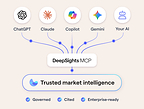
BERLIN, Oct. 7, 2026 /CNW/ — Market Logic Software, the company behind  DeepSights. the leading AI market intelligence platform, today announced the general availability of DeepSights MCP. The Model Context Protocol (MCP) connection makes DeepSights the expert source that enterprise AI assistants and agents consult whenever a question depends on knowledge of the market. It extends the reach of each customer’s curated market knowledge from the insights team to every employee and every AI workflow in the business.

Large organizations invest tens of millions every year in consumer and market research. The return on that investment depends on how widely, and how often, the resulting insights shape business decisions. Connecting trusted market intelligence to the rapid spread of enterprise AI assistants, from Microsoft Copilot to ChatGPT and Claude, creates a golden opportunity to extend insights impact to a new level.

Once the DeepSights MCP is in place, AI assistants call on DeepSights as a matter of course to answer questions about customers, categories and competitors. Similarly, automated, multi-step workflows proactively draw expert input on market from DeepSights before handing off to other agents to complete tasks.

The connection also addresses the growing risk of business decisions being fed by incomplete or misleading information by generic AIs rather than specialized AI. DeepSights works the way an insights expert does to provide an accurate, evidence-backed view of the market. It analyzes information proactively, separating what is relevant from noise. DeepSights works only on trusted data and cites its references in every answer.

“Your AI knows your company. DeepSights knows your market,” said Olaf Lenzmann, Chief Innovation and Product Officer at Market Logic. “Our customers have spent years and significant budgets building a unique understanding of their consumers and markets. Adding DeepSights at the market intelligence layer for enterprise AI ensures that competitive advantage is seized on and integral to decision making processes. The DeepSights MCP will make it easier than ever for trusted, evidence-backed market intelligence to flow freely through the organization.”

Establishing DeepSights as the trusted market intelligence layer for all AI workflows also gives insights and IT teams one central way to govern and secure the knowledge that creates their unique market understanding. Insights team continues to decide which sources are trusted. User permissions in DeepSights controlling which sources an individual has access to are carried through by the MCP into information shared through other AI assistants. Because the connection is built on the open Model Context Protocol (MCP), the same governed layer serves every assistant and agent the company adopts.

DeepSights MCP is generally available to DeepSights customers today. It works with Microsoft Copilot, ChatGPT, Claude, Glean and other assistants and agents that support the Model Context Protocol. For more information, visit www.marketlogicsoftware.com.

About Market Logic Software

Market Logic Software is a provider of pioneering market intelligence and insights solutions. Its AI-enabled platform, DeepSights, helps organizations make research and market intelligence available to decisionmakers across the enterprise at scale and speed. For more than 15 years, Market Logic has worked with consumer-focused brands around the world to support insights-driven decision-making. Customers include Vodafone, Bayer and Philips. More information is available at https://marketlogicsoftware.com.

View original content to download multimedia:https://www.prnewswire.com/news-releases/market-logics-deepsights-mcp-scales-market-insights-reach-and-business-impact-through-enterprise-wide-ai-workflows-302899946.html

SOURCE Market Logic Software AG

Continue Reading

Technology

TOKEN2049 Announces US Expansion, Bringing the World’s Largest Crypto Conference to New York

Published

on

By

Announced today at TOKEN2049 Singapore, TOKEN2049 New York will take place on 16-17 June 2027, with 15,000 attendees expectedNew York joins Singapore and Dubai as TOKEN2049’s third flagship and a permanent fixture on its annual event circuitNew York will host the full TOKEN2049 experience, with TOKEN2049 Week set for a citywide takeover

SINGAPORE, Oct. 7, 2026 /PRNewswire/ — TOKEN2049, the world’s largest crypto conference, today announced its expansion into the United States with the launch of TOKEN2049 New York. The inaugural US edition will take place on 16-17 June 2027, with 15,000 attendees expected from around the world.

The announcement was made at TOKEN2049 Singapore ahead of Eric Trump and Zach Witkoff’s highly anticipated main stage session.

The launch establishes New York as TOKEN2049’s third flagship and a permanent fixture on its annual event circuit alongside Singapore and Dubai, extending its presence across Asia, the Middle East and North America. It brings the world’s largest crypto conference to the heart of global capital markets and creates a major new US meeting point for the international digital asset industry.

Alex Fiskum, Co-Founder of TOKEN2049 said: “Bringing TOKEN2049 to the US has been a long time coming. Our attendees and partners have been asking us to make it happen, and we’ve been waiting for the right moment and the right setting. Everything has now come together in New York. We’re incredibly excited to bring the full TOKEN2049 experience our community knows and loves to the US. New York will be a permanent part of our annual calendar alongside Dubai and Singapore. We have an exciting year ahead.”

Beyond the two-day conference, TOKEN2049 Week will take over New York with a citywide programme of events and experiences.

Tickets for TOKEN2049 New York are now on sale for US$599.

PR Newswire is a Community Partner of TOKEN2049 Singapore.

Alex Fiskum, Co-Founder of TOKEN2049, is available for interview.

ABOUT TOKEN2049

TOKEN2049 is a global crypto event series with flagship editions in Singapore, Dubai and New York. It brings together entrepreneurs, institutions, investors and builders from across the global crypto ecosystem.

View original content to download multimedia:https://www.prnewswire.com/apac/news-releases/token2049-announces-us-expansion-bringing-the-worlds-largest-crypto-conference-to-new-york-302900688.html

SOURCE TOKEN2049

Continue Reading

Trending