Connect with us

Technology

Never forget breakfast again with the new UNCLE TOBYS Oat Ring

Published

on

 UNCLE TOBYS is giving Australians the chance to get their hands on the world’s least advanced wearable, because breakfast shouldn’t need biometrics T&Cs apply.

SYDNEY, Oct. 9, 2026 /PRNewswire/ — In a world where everything from sleep to stress levels and recovery can be optimised, UNCLE TOBYS has identified the next frontier: remembering breakfast. Enter the Oat Ring – a wearable with one job of reminding you to put your overnight oats in the fridge for tomorrow’s breakfast. 

The UNCLE TOBYS Oat Ring features: 

Milk-proof technologyIndustry-leading non-charging capabilities Zero health trackingZero sleep data Fully wearable designA reminder to put oats in the fridge 

No app. No dashboard. No sleep score. No biometrics. Just a simple reminder that breakfast does not need to be optimised. 

The launch comes as nearly a third of Australians aged 18+ spend more than $3,300 a year on wellness products and services, while over half (55%) say they feel fatigued and overwhelmed by wellness content – from sleep scores, 4:30 am alarms and ice baths, to mouth tape, vagus nerve stimulation and the latest cottage cheese trend. 

Developed in response to over one in two (56%) Australians skipping breakfast at least once a week, the UNCLE TOBYS team is launching the Oat Ring as part of its Oatimisation Protocol — a no-fuss routine for making breakfast happen: 

POURCHILLEAT REPEAT 

To champion the Oatimisation Protocol, UNCLE TOBYS has appointed Liam Stapleton as its first C-OAT-O (Chief Oat Officer). His extensive lack of experience running a multinational tech company made him uniquely qualified to launch a tech ring that tracks absolutely nothing. He says: “The wellness industry keeps telling us we need more data, more tracking and more optimisation. We had a different idea. What if people just needed a reminder to make breakfast?”

UNCLE TOBYS Head of Marketing, Kimberley Finsten, said: “The Oat Ring is probably the least advanced wearable ever created, and that’s exactly the point. It doesn’t measure, monitor, or optimise a thing. It just reminds you to put your Overnight Oats in the fridge before bed. In a world obsessed with tracking everything, we’re celebrating something much simpler: making it easier to start the day with a nutritious breakfast.”

Limited Edition UNCLE TOBYS Oat Ring
A limited number of Oat Rings are up for grabs. To be in the running, visit the pinned Instagram post on UNCLE TOBYS social channels and comment on the pinned promotional post, providing an answer to the question: “What’s the most unhinged thing you’ve done to “optimise” your life?” (in 25 words or less). Competition Period: The competition commences at 6:00 am AEST on 28 September 2026 and closes at 11:59 pm AEDT on 11 October 2026. T&Cs apply.*
UNCLE TOBYS Overnight Oats are available in a range of flavours at major supermarkets nationwide. For more information about the Oatimise Your Life campaign, visit www.uncletobys.com.au/oatimise. 

END

Research methodology 
The UNCLE TOBYS Oatimise Your Life research was conducted among a nationally representative sample of n=1,019 Australians aged 18+, across all states and territories, in September 2026 by Pureprofile.

Abbreviated competition T&Cs
*Starts 6:00am AEST 28/9/26. Ends 11:59pm AEDT 11/10/26. Aus. res. 18+. Limit 1 entry/person. Prize: engraved UNCLE TOBYS ‘oat’ silver ring (6mm wide) with synthetic Ruby stone & 1 x sachet of UNCLE TOBYS Overnight Oats (prize valued at up to $350.70 ea) (30 to be won). Judging occurs 10am AEDT 14/10/26 at 1 Homebush Bay Drive, Rhodes NSW 2138. Prize winners notified via Instagram DM, and published at www.nestle.com.au/productnews/winners by 20/10/26. Claim prize by 11:59pm AEDT 17/11/26. Re-judging occurs 12pm AEDT 19/11/26. Promoter: Nestlé Australia Ltd, ABN 77 000 011 316, 1 Homebush Bay Drive, Rhodes NSW 2138. See https://www.uncletobys.com.au/oatimise for Terms and Conditions.

View original content to download multimedia:https://www.prnewswire.com/apac/news-releases/never-forget-breakfast-again-with-the-new-uncle-tobys-oat-ring-302903251.html

SOURCE UNCLE TOBYS

Continue Reading

Technology

Singapore’s Space SME OculloSpace Successfully Flies First Rocket, AZAD “The Dreamer”, from Oman
Published

on

By

Self-funded maiden flight achieves an apogee altitude of 10 km, marking a milestone in OculloSpace’s space technology development, six months after its first satellite launch, as the company advances towards its 100 km ambition.

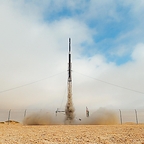
SINGAPORE, Oct. 9, 2026 /PRNewswire/ — Singapore-based space technology company OculloSpace has successfully completed the maiden flight of AZAD “The Dreamer”, its first experimental sounding rocket, making a significant milestone in the company’s development of launch and space technology capabilities. The rocket achieved an apogee altitude of 10 km during its maiden flight from Etlaq Spaceport, Oman.

The mission, designed Karman X1, was conducted in collaboration with Oman-based aerospace company Stellar Kinetics MCT, with support from international partners across Singapore, Oman and Australia.

The two-stage rocket, measuring 4.3 metres and weighing 26 kg, successfully lifted off from Etlaq on October 1st, 2026, reaching an apogee altitude of 10 km. Both stages completed their burns, with telemetry received throughout the flight. While the upper-stage parachute did not deploy, launch operator Stellar Kinetics reported that the majority of the mission objectives were achieved, providing valuable flight data for future development.

A Singapore-Owned Space Technology Programme

Initiated by Dr Franco Gan, Founder and CEO of OculloSpace, the AZADRocket programme represents approximately two years of development and was self-funded by the company.

OculloSpace owns and leads the AZADRocket programme, retaining ownership of its programme intellectual property. The mission brought together international space industry expertise, with Stellar Kinetics serving as an engineering, manufacturing and launch partner in Oman.

“Six months ago, we sent our first satellite to orbit, and now we have flown our own rocket. I’ve always looked at the sky and wondered whether I could build something that reaches it. The Dreamer represents about two years of work by our team to take an idea from the drawing board to an actual flight,” said Dr Franco Gan.  

The mission also involved Orbit2Orbit (Australia), which supplied the 1kg Snowball experimental payload, and WWG Engineering Pte. Ltd. (Singapore), which contributed coated material samples for in-flight evaluation. Etlaq Spaceport provided launch infrastructure and range safety support.

Two Space Milestones in Six Months

The flight follows OculloSpace’s flight satellite mission, DECIMALSAT-1, a PocketQube satellite deployed into orbit through Alba Orbital aboard SpaceX’s Transporter-16 rideshare mission on 30 March 2026.

Within approximately six months, OculloSpace has achieved two important milestones: deploying its first satellite into orbit and completing the maiden flight of its first experimental rocket, achieving an apogee altitude of 10 km.

These achievements strengthen the company’s experience in satellite systems, experimental rocket development, flight operations and international space missions, laying the foundation for future space technology and commercial opportunities.

Next Ambition: Reaching 100 km

Building on the Karman X1 mission, OculloSpace is developing AZAD-2, its next-generation experimental sounding rocket targeting an altitude of 100 km, the Kármán line widely recognised as the boundary of space.

The company plans to apply lessons and flight data from The Dreamer towards AZAD-2, with future opportunities for suborbital research, space technology demonstrations and commercial payload services.

OculloSpace is exploring up to 5 kg of research payload capacity aboard AZAD-2, subject to further engineering validation, testing and regulatory approvals.

“Our next goal is AZAD-2 and a 100 km flight. We are now looking to work with partners who share our ambition to develop more accessible launch and space capabilities from the region, and to take what we have demonstrated with The Dreamer to the next level,” said Dr Franco Gan.

OculloSpace welcomes discussions with strategic investors, space industry partners, research institutions and prospective payload customers interested in participating in its next phase of development.

View original content to download multimedia:https://www.prnewswire.com/apac/news-releases/singapores-space-sme-ocullospace-successfully-flies-first-rocket-azad-the-dreamer-from-oman-302903258.html

SOURCE OculloSpace

Continue Reading

Technology

‘Kung fu tea’: US journalist Douglas’ journey into the art of Wuyi rock tea

Published

on

By

BEIJING, Oct. 8, 2026 /PRNewswire/ — A news report from chinadaily.com.cn:

Three hundred years ago, a British man stole the seeds of Wuyi rock tea to plant them elsewhere. Three centuries later, US journalist Douglas travels to Xiamei village at the foot of Wuyi Mountain in Fujian province to learn the age-old craft.

After the entire experience, he understands why people call it “kung fu tea”. For him, picking tea requires “eagle claw skills” and shaking the leaves demands “tai chi hands”. Every step is filled with a sense of mastery and dedication.

Why did Douglas travel all the way to Xiamei village to learn the art of tea-making? What are his insights on the 13,000 km Tea Road? Watch the video to find out.

View original content to download multimedia:https://www.prnewswire.com/news-releases/kung-fu-tea-us-journalist-douglas-journey-into-the-art-of-wuyi-rock-tea-302903196.html

SOURCE chinadaily.com.cn

Continue Reading

Technology

IQuest-Q1 Draws Early Developer Attention Across Coding and Agentic Workflows

Published

on

By

BEIJING, Oct. 8, 2026 /PRNewswire/ — IQuest-Q1 has drawn early praise from developers and industry watchers since launch, particularly for its performance on coding, software engineering, interactive application generation, and long-horizon agentic workloads.

The model weights and technical materials are publicly available:

GitHub — GitHub – IQuestLab/IQuest-Q1Hugging Face — https://huggingface.co/IQuestLab/IQuest-Q1Blog — https://iquestlab.github.io/

IQuest-Q1 is trained for the work developers actually do: navigating a repository, driving a terminal, calling tools, holding a long context in mind, and finishing multi-step tasks without losing the thread. Reasoning, tool use, long-context understanding, and multi-step execution were part of the training objective from the start — not adapted afterward.

Early external discussion has begun to explore IQuest-Q1’s capabilities. One highlighted its evaluation across application building, 3D spatial generation, code diagnosis and repair, and complex tool-assisted workflows, while another publicly shared use case described turning a written product brief into an interactive SaaS analytics dashboard. A third-party technical overview examined the sparse Mixture-of-Experts architecture, integration with Claude Code and Codex CLI, and the infrastructure requirements of self-hosting a 320B-parameter model.

These early observations align with IQuest Research’s official demonstrations, which show IQuest-Q1 working across interactive application generation, code debugging, and multi-step tool use.

One-shot interactive applications

From a natural-language prompt, IQuest-Q1 emits runnable interactive apps in a single pass.

An FPS game. In one generation, the model produces the 3D scene, character movement, health, scoring, mode switching, and an in-game shop for resources and gear — code, file layout, interaction logic, and visuals in the same pass.

A racing game. Continuous scene extension — track geometry, foreground/background transitions — is where one-shot generations usually fall apart. IQuest-Q1 handles this class of spatially continuous, interaction-heavy app without special prompting.

Debugging a real RL run

IQuest-Q1 will also drop into an existing codebase and training stack and fix what’s actually wrong.

An RL run went off the rails. Starting from the training curves, the model pulled logs and execution traces, reasoned back through likely causes, and localized the bug in code. After the patch and a restart, it read the new metrics and confirmed recovery.

The root cause: a stray space had been inserted into the training trajectory. Removed, metrics came back up.

Multi-step work in a real environment

Given a workspace with heterogeneous information and tools, IQuest-Q1 runs multi-step tasks — reading, calling tools, and correcting itself as new information lands. In office settings it works across chat, cloud docs, spreadsheets, and comment threads, pulling context together into analysis, drafts, and revisions that are ready to hand off.

Architecture

The architecture and training approach behind these capabilities are outlined below.

Decoder-only Transformer with a sparse Mixture-of-Experts feed-forward. ~320B total parameters, ~15B active per token.

Training runs in three stages — pre-training, mid-training, post-training — bringing up code fluency first, then extending into longer, harder tasks.

Post-training focuses on software engineering, long-horizon agentic tasks, and general reasoning, using supervised fine-tuning and reinforcement learning. On top of that, Multi-Teacher On-Policy Distillation (MOPD) consolidates strengths from several teachers on the student’s own on-policy rollouts, so the student picks up capability without inheriting any one teacher’s bias profile.

Validated updates, datasets, and workflows feed into the next iteration. Pipelines, training configs, eval harnesses, and tooling are versioned and reused — capability work and infrastructure work compound instead of getting rebuilt each cycle.

Evaluations

IQuest-Q1 posts balanced results across benchmarks covering code, software engineering, terminal use, tool use, and agentic tasks:

NL2Repo — repository-level code generationCyberGym — cybersecurityTerminal-Bench 2.1 — terminal operationDeepSWE v1.1 — long-horizon codingJobBench — professional office workflows

Full numbers, baselines, and evaluation setup are in the technical report.

IQuest-Q1 was developed by IQuest Research. Developers and research teams interested in participating in upcoming early-access testing programs can apply for trial access via email: research@iquestlab.com 

CONTACT: 
IQuest Research
research@iquestlab.com 

View original content to download multimedia:https://www.prnewswire.com/news-releases/iquest-q1-draws-early-developer-attention-across-coding-and-agentic-workflows-302903211.html

SOURCE IQuest Research

Continue Reading

Trending