Connect with us

Technology

Ride Sharing Market worth $317.47 billion by 2033 | MarketsandMarkets™

Published

on

DELRAY BEACH, Fla., Oct. 9, 2026 /PRNewswire/ — According to MarketsandMarkets™, the Ride Sharing Market is projected to reach USD 317.47 billion by 2033, from USD 170.56 billion in 2026, at a CAGR of 9.3%.

Browse 241 market data Tables and 60 Figures spread through 301 Pages and in-depth TOC on “Ride Sharing Market”

Ride Sharing Market Size & Forecast:

Market Size Available for Years: 2022-20332026 Market Size: USD 170.56 billion2033 Projected Market Size: USD 317.47 billionCAGR (2026–2033): 9.3%

Ride Sharing Market Trends & Insights:

The B2C segment is expected to hold a larger share of the ride sharing market by business model in 2026.Micro-mobility is expected to register the fastest growth by vehicle type during the forecast period.Europe is projected to record the second-fastest growth in the ride sharing market during the forecast period.

Download PDF Brochure: https://www.marketsandmarkets.com/pdfdownloadNew.asp?id=198699113

The ride sharing market is driven by a shift from occasional ride booking toward high-frequency, platform-based mobility consumption. Growth is coming from both a larger user base and more trips per user. In addition, the expansion of the addressable trip pool also supports the growth of ride sharing market. Platforms are adding lower-cost products, premium services, scheduled mobility, corporate transportation, and specialized passenger services, allowing the same platform to capture different trip occasions and income segments.

Ride sharing demand is expanding through higher trip frequency and broader platform usage.

Uber recorded 3.9 billion trips in Q2 2026, up 18% year over year, while monthly active platform consumers increased 16% to 208 million. Importantly, trips per monthly active consumer also increased 2%, indicating that growth is being supported not only by adding users, but also by greater usage of ride sharing among existing customers.DiDi recorded 13.74 billion China Mobility transactions in 2025, up 10.8% from 2024, while its international transactions increased from 3.61 billion to 4.51 billion, up 24.7%. This reflects continued expansion of ride sharing demand across both established and international markets.Lyft completed 945.5 million rides in 2025, up 14%, while annual riders reached 51.3 million. Product expansion into family mobility, premium ground transportation, and other multimodal services is allowing platforms to capture travel occasions that extend beyond conventional daily ride hailing.

Ride sharing is being shaped by deeper usage within existing markets and faster expansion into new mobility demand pools. Higher trip frequency is encouraging platforms to improve vehicle utilization, while international expansion is opening additional transaction pools beyond mature markets. At the same time, broader service offerings are allowing platforms to address different travel requirements, from daily commuting and airport travel to corporate mobility, family transportation, and short-distance urban trips. This is pushing the industry from a single service model toward multi-use mobility platforms, where growth depends on increasing the number of travel occasions captured per user and expanding access across cities, customer segments, and transport modes.

The B2C segment is expected to hold a larger share of the ride sharing market by business model in 2026.

The B2C business model holds the largest share of the ride sharing market, as individual consumer e-hailing and short-distance commuting generate a high volume of daily ride requests across urban markets. The growth of this business model is further supported by the rising total cost of personal vehicle ownership, including vehicle purchase, fuel, maintenance, insurance, parking, and depreciation, making ride sharing an increasingly practical option for consumers who use private vehicles less frequently. In emerging economies, two-wheelers and three-wheelers are gaining traction within B2C services because of their lower fares, lower operating costs, and suitability for short-distance trips in congested cities. Alternatively, smaller mobility formats are also emerging, including pedal-assisted and electric tricycles in parts of Europe and three-wheeled mobility services in North America, although their role remains more localized than conventional passenger cars. Moreover, electrification is further reshaping the B2C model, as the higher initial cost of EVs can be offset by lower energy and maintenance expenses, particularly for vehicles with high daily utilization, resulting in a faster return on investment over the vehicle lifecycle. Thus, B2C ride sharing is expected to continue evolving in the coming years, expanding beyond conventional passenger car e-hailing toward a more cost-efficient, multi-vehicle mobility model that addresses diverse consumer trip needs.

Request for Proposal: 
https://www.marketsandmarkets.com/requestsampleNew.asp?id=198699113

Micro-mobility is expected to register the fastest growth by vehicle type during the forecast period.

Micromobility, including shared e-bikes and e-scooters, is expected to register strong growth in ride sharing as demand increases for affordable and convenient short-distance mobility beyond conventional car-based services. These vehicles are well-suited for first-mile and last-mile connectivity, internal movement within gated communities, residential townships, universities, corporate campuses, industrial parks, and large commercial premises. App-based sharing models are also expanding within B2B and controlled environments such as special economic zones, business hubs & IT parks, and industrial areas, among others, allowing organizations and property developers to provide dedicated fleets while users can locate, unlock, and pay for vehicles digitally. In Asia Pacific, companies such as Yulu and Zypp Electric are expanding electric two-wheeler use across urban and commercial applications, while in Europe, companies like Lime & Dott operate shared e-bikes and e-scooters across major cities across Europe. In North America, Lime and Bird have established shared micromobility services across multiple cities, supporting short urban trips and first-mile and last-mile connectivity. Hence, the increasing use of shared e-bikes and e-scooters across residential communities, workplaces, transit hubs, and urban centers is expected to strengthen micromobility adoption as an efficient solution for short-distance travel.

Europe is projected to record the second-fastest growth in the ride sharing market during the forecast period.

Europe is expected to record the second-fastest growth in the ride sharing market. E-hailing and station-based mobility are the most prominent services, with taxi and ride hailing platforms remaining important for point-to-point travel. Shared bikes, e-bikes, and e-scooters are expanding as complementary modes for first-mile and last-mile journeys. Electric propulsion is gaining a stronger position, particularly in high-utilization urban fleets, as cities introduce low-emission requirements and operators improve access to charging. For instance, Freenow completed 51% of European trips in electrified vehicles in 2025. By vehicle type, passenger cars remain central to e-hailing and car sharing, while e-bikes and e-scooters are gaining traction for short trips, particularly within dense city centers and as connections to rail and metro networks. Consequently, short-distance trips are becoming an important growth pool, whereas passenger car-based services continue to address longer urban and intercity journeys, airport travel, and trips where public transport is less convenient. In addition, there is integration of ride sharing with public transport and MaaS platforms, supported by cities moving toward regulated parking, designated micromobility zones, data sharing, and long-term operator partnerships. Europe’s ride sharing market is also seeing stronger corporate mobility solutions as businesses shift employee and business travel toward centrally managed digital mobility platforms. Autonomous e-hailing is also moving from testing toward commercial deployment, with robotaxi services launched in Zagreb and planned deployments in Madrid, Zurich, and Munich, indicating a growing pathway for autonomous ride sharing across European cities. Overall, Europe’s growth is being supported by the convergence of electrification, micromobility, multimodal integration, corporate mobility, and emerging autonomous e-hailing, creating multiple growth avenues beyond conventional ride hailing.

Request Pricing:
https://www.marketsandmarkets.com/Enquiry_Before_BuyingNew.asp?id=198699113

Top Companies in Ride Sharing Market:

The Top Companies in Ride Sharing Market Maruti DENSO Corporation, MAHLE GmbH, Valeo SA, Hanon Systems, BorgWarner Inc., Gentherm Inc., Schaeffler AG, Johnson Electric Holdings Limited, Dana Incorporated, Robert Bosch GmbH.

Ride sharing market – Investment and Funding Scenario

Investment and Funding Context

Investment and funding activity in the ride sharing market is concentrated on autonomous mobility, strategic geographic expansion, fleet technology, and new mobility models, rather than large-scale investment in conventional ride hailing capacity. In July 2025, Lyft acquired FREENOW, expanding into nine European countries, while Grab committed strategic investments in autonomous mobility companies including WeRide and Vay to support robotaxi, autonomous shuttle, and remote driving deployment. In March 2026, Uber announced an investment of up to USD 1.25 billion in Rivian through 2031, for the planned deployment of autonomous R2 robotaxis, indicating that capital is shifting toward technology-enabled fleet models and partnerships with vehicle and autonomous driving companies. Overall, funding is being directed toward autonomous vehicles, EV-based fleets, platform expansion, fleet management technology, and strategic partnerships, creating investment opportunities across vehicle manufacturers, autonomous driving providers, fleet operators, charging infrastructure, and mobility technology providers.

Revenue Shift Context

The revenue pool in the ride sharing market is shifting from basic trip commissions toward higher-value services, platform monetization, and technology-enabled mobility. Traditional revenue remains tied to passenger fares and platform commissions from e-hailing, car rental, and car sharing, but additional revenue is emerging from corporate mobility, subscriptions, advertising, financial services, fleet management, and partnerships with EV and autonomous vehicle providers. Ride-sharing platforms are also expanding beyond individual trip transactions by integrating multiple mobility options into a single platform, allowing them to capture revenue across different stages of a customer’s journey. At the same time, autonomous vehicles can change the economics of the market by reducing the dependence on driver-supplied capacity and creating new revenue structures around robotaxi operations and fleet services. Going forward, revenue growth is expected to come increasingly from higher monetization per user, broader mobility offerings, technology-based services, corporate accounts, and autonomous and electric fleet ecosystems, rather than only from increasing ride volumes.

Mergers & Acquisitions (M&A)

Mergers & acquisitions in the ride sharing market are increasingly focused on geographic expansion, multimodal mobility, technology access, and fleet capabilities, rather than simply increasing ride volumes. Consolidation enables platforms to enter new cities and countries faster, acquire established customer and driver networks, and strengthen local operating capabilities without building these networks entirely from the ground up. Acquisitions and strategic combinations also provide access to autonomous driving, fleet management, mapping, payment, booking, and mobility integration technologies, reducing internal development time and expanding the range of services offered through a single platform. At the same time, M&A can strengthen access to vehicle fleets, taxi networks, car sharing operations, and corporate mobility customers, while creating opportunities to combine multiple mobility services under one digital ecosystem. M&A activity is expected to focus increasingly on technology-enabled mobility, autonomous fleets, multimodal platforms, geographic expansion, and fleet access, making consolidation an important route for ride-sharing companies seeking broader service coverage and higher revenue per user.

RIDE SHARING MARKET: MERGERS & ACQUISITIONS, OCTOBER 2025–MAY 2026

Month & Year

Deal Type

Company 1

Company 2

Description

May 2026

Acquisition

Grab (Singapore)

Delivery Hero (Germany)

Grab announced a deal to acquire Delivery Hero’s Taiwan delivery business, including its Foodpanda operations, for USD 600 million in cash. This acquisition strengthens Grab’s logistics and customer network, supporting its ride-hailing super-app ecosystem and international expansion strategy.

April 2026

Acquisition

Lyft (UK)

Gett (UK)

Lyft agreed to acquire Gett’s UK business, bringing Gett’s London black cab network and corporate transportation business into Lyft’s ecosystem. Gett stated that the transaction would give Lyft access to the majority of London’s registered black cab drivers and nearly double the number of rides on Lyft’s London platform.

October 2025

Acquisition

Lyft Inc. (US)

TBR Global Chauffeuring (United Kingdom)

Lyft acquired TBR Global Chauffeuring, a premium transport provider based in Glasgow, for approximately USD 101 million. This acquisition enhances Lyft’s capabilities in high-end, pre-booked ground transportation, complementing its core ride-sharing services for corporate and event clients.

Company Revenue Share Details

The top five players are estimated to account for a significant share of the ride sharing market, indicating a concentrated but highly competitive market structure across major platforms. Leading companies such as Uber, DiDi, Lyft, Grab, and Bolt benefit from large user and driver networks, broad geographic coverage, strong brand recognition, established payment infrastructure, and high booking volumes that create network effects and strengthen their market positions. Their scale also enables investment in pricing technology, driver management, mapping, safety systems, fleet partnerships, and multimodal mobility services. At the same time, regional platforms and local operators remain important because licensing requirements, local transport regulations, payment preferences, and operating models vary substantially across countries. This creates a market where global platforms compete alongside strong regional players, with network density, geographic reach, technology capabilities, regulatory access, and service diversification becoming key factors influencing competitive positioning.

Browse Adjacent Market: Automotive and Transportation Market Research Reports & Consulting

Related Reports:

Mobility as a Service Market

Automotive V2X Market

About MarketsandMarkets™ 

MarketsandMarkets™ has been recognized as one of America’s Best Management Consulting Firms by Forbes, as per their recent report.

MarketsandMarkets™ is a blue ocean alternative in growth consulting and program management, leveraging a man-machine offering to drive supernormal growth for progressive organizations in the B2B space. With the widest lens on emerging technologies, we are proficient in co-creating supernormal growth for clients across the globe.

Today, 80% of Fortune 2000 companies rely on MarketsandMarkets, and 90 of the top 100 companies in each sector trust us to accelerate their revenue growth. With a global clientele of over 13,000 organizations, we help businesses thrive in a disruptive ecosystem.

The B2B economy is witnessing the emergence of $25 trillion in new revenue streams that are replacing existing ones within this decade. We work with clients on growth programs, helping them monetize this $25 trillion opportunity through our service lines – TAM Expansion, Go-to-Market (GTM) Strategy to Execution, Market Share Gain, Account Enablement, and Thought Leadership Marketing.

Built on the ‘GIVE Growth’ principle, we collaborate with several Forbes Global 2000 B2B companies to keep them future-ready. Our insights and strategies are powered by industry experts, cutting-edge AI, and our Market Intelligence Cloud, KnowledgeStore™, which integrates research and provides ecosystem-wide visibility into revenue shifts.

MarketsandMarkets™ SalesPlay is an AI-driven Revenue Intelligence Co-Pilot designed to help revenue teams prioritize the right accounts, identify critical changes early, and surface opportunities ahead of demand, so pipeline builds naturally and deals close with greater consistency.

To find out more, visit www.MarketsandMarkets™.com or follow us on Twitter, LinkedIn and Facebook.

Contact:
Mr. Rohan Salgarkar
MarketsandMarkets™ INC.
1615 South Congress Ave.
Suite 103, Delray Beach, FL 33445
USA: +1-888-600-6441
Email: sales@marketsandmarkets.com
Visit Our Website: https://www.marketsandmarkets.com/
Research Insight: https://www.marketsandmarkets.com/ResearchInsight/mobility-on-demand-market.asp 
Content Source: https://www.marketsandmarkets.com/PressReleases/mobility-on-demand.asp 


View original content to download multimedia:https://www.prnewswire.com/news-releases/ride-sharing-market-worth-317-47-billion-by-2033–marketsandmarkets-302903356.html

SOURCE MarketsandMarkets

Continue Reading

Technology

Chandigarh University Launches Campus Tank Season 2 with US $15-Million Funding Pool to Help Young Innovators Take Ideas to Market; Accelerate India’s Start-up Growth

Published

on

By

Chandigarh University Launches CU-IRP in Collaboration with IIT Madras as a Plug-and-Play R&D Hub to Connect Industry with Academic Research and Startups

CHANDIGARH, India, Oct. 10, 2026/PRNewswire/ — Chandigarh: Expanding funding opportunities for India’s next generation of entrepreneurs, Chandigarh University has launched Season 2 of Campus Tank – ‘India’s Next Unicorn’, India’s first university-led startup launchpad with a US$15-million funding pool up from US$6 million in Season 1, providing young innovators opportunity to pitch their ideas and access investors, mentorship and support to take their ideas to market and strengthen India’s start-up growth and build capacity to develop market-ready products and technology-driven enterprises.

The announcements was made on the second day of the national-level Incubator & Capital Summit 2026 and ISBACON 2026, organised by Chandigarh University Technology Business Incubator (CU-TBI) in association with the Indian Science and Technology Entrepreneurs Parks and Business Incubators Association (ISBA) at Chandigarh University that brought together 400 incubators institutions from over 20 States and Union Territories, 100 curated startups, 80 investors and more than 60 government, policy and industry delegates on a common platform to strengthen India’s startup and deep-tech capabilities. The launch builds on the overwhelming response to Season 1 that recorded 21,789 registrations from more than 1,200 cities including over 10,800 registrations from universities and colleges. The new season brings together eight investment partners including APNA, Venture Catalysts, Aeravti Ventures, PedalStart, Eaglewings, Faad, Be an Angel and Cube Founders Space.

Naveen Jindal, Member of Parliament and Chairman, Jindal Steel attended as Chief Guest alongside Member of Parliament (Rajya Sabha) and Chancellor of Chandigarh University, Satnam Singh Sandhu. The prominent among other dignitaries who participated in the summit were Kris Gopalakrishnan, Co-founder, Infosys, Nirmit Parikh, Group CEO, Apna, Hemant Malhotra, COO, Venture Catalysts (VCats), Prof V Kamakoti, Director, IIT Madras, Dr. Gaurav Raina, Professor, IIT Madras, Dr Preet Deep Singh, Public Policy, Amazon, Umesh V. Waghmare, Secretary, Department of Science and Technology (DST), Government of India among others.

Speaking on the occasion, Naveen Jindal, Member of Parliament and Chairman of Jindal Steel said, “India’s journey towards Viksit Bharat 2047 will be driven by youth of the nation pursuing their own ideas, passions and aspirations. Unlike 10 or 20 years ago, young people today have access to far greater opportunities, knowledge, funding and platforms to turn their ideas into reality. India does not lack talent or imagination what young innovators need is the right opportunity, an encouraging environment and support to realise their potential. Initiatives such as Chandigarh University Innovation and Research Park, in collaboration with IIT Madras, and Campus Tank Season 2 can help bridge this gap by connecting promising founders with investors, mentors and resources.”

“I would leave young entrepreneurs with three thoughts, start before you feel completely ready, test your ideas, fail early and learn fast, think big, but build solutions that address real problems and genuine needs and stay rooted because success without service to society is incomplete. Pursue your ideas with passion but remain open to criticism and learn from setbacks. Success takes time and requires conviction, teamwork and perseverance as I experienced during my decade-long effort to secure the right to fly the national flag. Enjoy the journey, not just the outcome. And when you succeed, take others along with you. In a country as large and diverse as India, our progress must also create opportunities for those who are less fortunate.”

Rajya Sabha MP and Chandigarh University Chancellor Satnam Singh Sandhu said, “Campus Tank is an initiative by Chandigarh University aimed at providing young people from small towns and villages with a platform, mentorship and investment opportunities to turn their startup ideas into reality. A nation progresses by drawing inspiration from the vision of its national leadership. After Independence, people spent much of their time striving to meet basic needs. However, in 2014, the country witnessed a new ray of hope with the vision of Viksit Bharat and Aatmanirbhar Bharat. Today, the world’s perception of India and Indians has changed and every Indian is filled with confidence and believes that India will become a developed nation by 2047. Inspired by Prime Minister Narendra Modi’s vision, Chandigarh University recognized its responsibility in nation-building and launched initiatives such as Campus Tank. He believes that the contribution an educational institution can make to nation-building is difficult for any other institution to replicate. It is essential to transform the potential of young people into opportunities and contribute to building a self-reliant and developed India.”

Nirmit Parikh, Group CEO, Apna said, “The first season of Campus Tank was a huge success and the second season of Campus Tank will be even better with three key themes. First, with the advent of AI, jobs in India and across the world need a lot of reskilling and upskilling. So lots of startups will come up inside that space. Secondly, AI models need pre-training and post-training, so I’ll be excited to see startups coming inside that space. And the third thing is applied AI. So I’m excited about startups in these three areas.  I strongly believe that India will not only build applied AI solutions for India but also for the world,”.

Hemant Malhotra, COO, Venture Catalysts (VCats) said, “The real opportunity lies in discovering promising founders beyond metro cities and supporting them at the right time. India’s next unicorn could emerge from anywhere, and what matters is identifying founders solving real problems, demonstrating customer traction and understanding their markets. At Venture Catalysts, our commitment goes beyond funding to mentoring startups, strengthening their go-to-market strategies and connecting them with the right mentors and incubation support to scale their businesses. Our participation in Campus Tank Season 2 reflects a long-term commitment to Chandigarh University and its startups. Together, we aim to help promising founders access the capital, guidance and support they need to build scalable businesses and take their ventures to the next level.”

India Needs Partnerships for Innovation, IIT Madras-Chandigarh University MoU to Drive innovation at Scale, says Dr Gaurav Raina, Professor, IIT Madras

Dr Gaurav Raina, Professor, IIT Madras said, “IIT Madras Research Park which has incubated 575 startups valued at over 8.5 billion US dollars, generated more than 10,000 jobs, in past 15 years. Our next vision is to have a startup a day and our 2030 vision is to have an IPO a month. Given the size of our country and the problems we have, there’s an opportunity over the next 20-25 years to have 10,000 unicorns. For this, just building platforms for innovation is not going to be enough. For innovation at scale, we don’t need just platform but partnerships also. And it is in that context that we have actually an MOU between Chandigarh University and the IIT Madras Innovation and Research ecosystem to actually build innovation at scale,’

Chandigarh University Launches CU-IRP in Collaboration with IIT Madras as a Plug-and-Play R&D Hub to Connect Industry with Academic Research and Startups

Complementing the Campus Tank Season 2 announcement, Chandigarh University launched the Chandigarh University Innovation & Research Park (CU-IRP) in collaboration with IIT Madras which will serve as a plug-and-play R&D hub for industry, bringing corporate research centres closer to university researchers, faculty, students and startups to facilitate industry-linked research, product development and the translation of innovations into market-ready solutions. The CU-IRP launch was attended by MP Satnam Singh Sandhu and MP Naveen Jindal, along with representatives of IIT Madras. The launch also included the announcement of a ₹50-crore innovation and startup fund to provide financial support to promising ventures and strengthen the commercialisation of research and the development of startups.

Modelled on the IIT Madras Research Park, CU-IRP’s Phase 1 pilot is planned across 30,000–40,000 square feet, providing dedicated space for research, incubation and R&D to bring industry, academic expertise and startups together to develop market-ready solutions. It will bring together Centres of Excellence and advanced laboratories, C-Hub’s incubation and venture infrastructure, and industry consultancy and sponsored research. Planned facilities include MakerSpace; Frontier Labs focused on Artificial Intelligence, Bose-Einstein Quantum and Robotics; and industry anchor laboratories in GeoAI, Automation & Exoskeleton, Biotech and Agritech. A Product Studio and an Intellectual Property and Technology Transfer Office will further support product development and the transfer of research innovations towards commercial applications. CU-IRP will also serve as a platform for credit-based participation by faculty and students in industry projects, enabling companies to work directly with academic teams on research, technology development and product innovation.

Campus Tank Season 1 Winners Announced; Krvvy, Offlyn and Medoc Health Emerge as Winners

The programme on the second day included the announcement of the winners of the Campus Tank Season 1. The Campus Tank Season 1 recognized three startups for their innovation and business potential.

Krvvy was adjudged as the winner which was co-founded by Thapar University engineering graduates Yash Goyal and Anant Bhardwaj. The women’s innerwear and shapewear brand focuses on comfort, fit and products designed around Indian body types. It received a proposed ₹4-crore investment commitment from Venture Catalysts against a ₹12-crore funding round and a ₹60-crore valuation.

Offlyn, founded by Kumar Ayush Sinha, a postgraduate in Technology and Business Management from Masters’ Union and R. V. College of Engineering alumnus Arpit Arora is a platform for discovering, booking and hosting offline experiences including workshops, supper clubs and social gatherings. It received a proposed funding allocation of ₹3.85 crore at a ₹25-crore post-money valuation.

Medoc Health, founded by Chandigarh University alumnus Utkarsh Luthra, develops hospital management and healthcare technology. With a proposed ₹1-crore funding allocation, it serves 98 hospitals across five states and reported ₹1.26-crore revenue in FY2025–26, with an estimated valuation of ₹24 crore. Together, the three winners span consumer products, offline experiences and healthcare technology.

ICS26 Demo Day featured startup pitches across four tracks, followed by recognition of four track winners and an Investor’s Choice award. The summit also included an industry roundtable on “The Future of R&D on Indian Campuses”, examining the role of industry partnerships in university research and innovation.

About Chandigarh University

Chandigarh University is a NAAC A+ Grade University and QS World Ranked University. This autonomous educational institution is approved by UGC and is located near Chandigarh in the state of Punjab. It is the youngest university in India and the only private university in Punjab to be honoured with A+ Grade by NAAC (National Assessment and Accreditation Council). CU offers more than 109 UG and PG programs in the field of engineering, management, pharmacy, law, architecture, journalism, animation, hotel management, commerce, and others. It has been awarded as The University with Best Placements by WCRC.

Website address: https://www.cuchd.in/

Photo: https://mmx.prnewswire.com/media/MS2010598/PRESS-PIC-CAMPUS-TANK-0001.jpg?id=OA3004826&token=KQ8hQ1D08KrCFhWjF76A3mTLxGdX1HqVqAOpcnRGBq87r4q1heVhlRbrx0ELYA

View original content to download multimedia:https://www.prnewswire.com/in/news-releases/chandigarh-university-launches-campus-tank-season-2-with-us-15-million-funding-pool-to-help-young-innovators-take-ideas-to-market-accelerate-indias-start-up-growth-302905041.html

Continue Reading

Technology

New Phoenix Scholar issue examining AI, institutional trust and the future of work published by University of Phoenix College of Doctoral Studies

Published

on

By

Summer/Fall 2026 issue brings together research on artificial intelligence, career optimism, leadership, education and the human dimensions of technological change.

PHOENIX, Oct. 10, 2026 /PRNewswire/ — University of Phoenix College of Doctoral Studies today announced the publication of Volume 9, Issue 1 of the Phoenix Scholar™ a peer-reviewed, open-access periodical for research and scholarship. The Summer/Fall 2026 issue explores the evolving relationship between people, technology and the changing world of work, bringing together perspectives on artificial intelligence (AI), professional practice, leadership, learning and the human dimensions of technological change.

The issue places institutional trust at the center of that discussion. In his opening editorial, Mark McCaslin, PhD, considers how organizations can cultivate trust as workers navigate rapid technological change, workplace uncertainty and concerns about autonomy.

“Technological change is raising important questions not only about what organizations can do with AI, but about how people experience that change and whether they feel they have a meaningful role in shaping it,” said McCaslin, editor-in-chief of Phoenix Scholar and associate chair of the Center for Leadership and Entrepreneurial Research (CLER) at University of Phoenix. “This issue brings research and practice together around a shared challenge: how institutions can strengthen trust, preserve human agency and create the conditions for people to remain engaged, resilient and prepared to learn as work continues to evolve.”

Research examines AI, workforce trust, career optimism and education

Across 16 contributions, the new issue examines institutional trust and technological change from workplace, leadership and education perspectives. Featured areas include:

Career optimism and the future of work: “Five Years of Insights from the Career Optimism Index: Shifting Sentiments and the Future of Work” synthesizes findings from five years of University of Phoenix Career Optimism Index® research, while “Psychological Capital as a Foundation for Career Optimism” examines the relationship between workforce research and psychological resources.AI, autonomy and institutional trust: Articles explore workforce development strategies for AI adoption, engagement in AI-enabled workplaces, systems-level approaches to autonomy and trust, lessons from entrepreneurs about AI and whether AI represents workforce revolution or disruption.Education and resilience: Research addresses STEM teacher self-efficacy and burnout, inclusion for preschool children with autism spectrum disorder, trauma-informed care in alternative education settings, and mindfulness and resilience in higher education.Leadership and professional practice: Contributions examine performance calibration and career momentum, entrepreneurial perspectives on AI and trusted approaches to learning and leadership through two book reviews.

The breadth reflects the issue’s central premise that institutional trust is shaped not by technology alone, but through leadership practices, opportunities for autonomy and development, psychological capital and the everyday experiences people have within organizations.

Phoenix Scholar™ provides open access to research and scholarship

Phoenix Scholar™ showcases scholarship by University of Phoenix faculty and alumni and provides a platform for sharing research results and exploring their relationship to learning and scholarship. The journal is now an open access journal, allowing its content to be read, downloaded, searched and shared without charge; researchers also are not charged to publish in the periodical. In recognition of its commitment to open-access scholarly publishing, Phoenix Scholar™ has recently been accepted for inclusion in the Directory of Open Access Journals (DOAJ), an internationally recognized directory that indexes peer-reviewed, open-access scholarly journals. This milestone enhances the journal’s visibility within the global research community and reflects its adherence to established standards for open-access publishing. Articles are published under a Creative Commons license, and authors retain copyright to their work.

Read Volume 9, Issue 1 of Phoenix Scholar™.

About the College of Doctoral Studies

University of Phoenix’s College of Doctoral Studies focuses on today’s challenging business and organizational needs, from addressing critical social issues to developing solutions to accelerate community building and industry growth. The College’s research program is built around the Scholar, Practitioner, Leader Model which puts students in the center of the Doctoral Education Ecosystem® with experts, resources and tools to help prepare them to be a leader in their organization, industry and community. Through this program, students and researchers work with organizations to conduct research that can be applied in the workplace in real time.

About University of Phoenix 

University of Phoenix is Built for Real Life. 50 Years Strong. The University innovates to help working adults enhance their careers and develop skills in a rapidly changing world through flexible online learning, relevant courses, academic AI pillars, and skills-mapped curriculum for associate, bachelor’s and master’s degree programs. Active students and alumni have access to Career Services for Life® resources including career guidance and tools. For more information, visit phoenix.edu.

MEDIA CONTACT:
Sharla Hooper
University of Phoenix
sharla.hooper@phoenix.edu

View original content to download multimedia:https://www.prnewswire.com/news-releases/new-phoenix-scholar-issue-examining-ai-institutional-trust-and-the-future-of-work-published-by-university-of-phoenix-college-of-doctoral-studies-302903933.html

SOURCE University of Phoenix

Continue Reading

Technology

Haag-Streit USA and Marco Lombart launch Octopus 910 in the US at AAO 2026 in New Orleans

Published

on

By

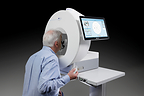
MASON, Ohio, Oct. 10, 2026 /PRNewswire/ — Haag-Streit USA and Marco Lombart, an Advancing Eyecare company and the exclusive U.S. distributor of Haag-Streit’s Octopus perimetry range, today announce the U.S. launch of the Octopus 910. The full-field projection perimeter will make its U.S. debut at AAO 2026, taking place from October 10 to 12, 2026, at the Ernest N. Morial Convention Center in New Orleans, Louisiana.

Octopus 910, see it first at AAO 2026

Visitors to Haag-Streit booth 707 or Advancing Eyecare booth 3319, can experience the Octopus 910 firsthand and discover how Haag-Streit’s full-field projection perimeter combines trusted visual field testing with smart automation for reliable, efficient, and patient-focused examinations.

Advanced glaucoma management

Designed for glaucoma management from onset to end-stage, the Octopus 910 offers a comprehensive toolkit for modern visual field assessment. Cluster Analysis, Stimulus V testing, and Polar Analysis support assessment across disease stages and enable structure-function comparison. Practices can also import HFA visual field data and follow progression within a single platform.

Enhanced efficiency

The Octopus 910 streamlines examination setup with intelligent automation features, including a motorized trial lens holder, automated patient positioning, a simplified single chin and forehead rest, and an integrated occluder. These features reduce manual steps, minimize potential errors, and improve patient comfort by supporting more precise, hygienic, and efficient examinations.

Improved reliability

Because visual field testing depends on patient cooperation and careful setup, the Octopus 910 guides both the patient and examiner throughout the exam. Smart voice guidance, status-light alerts, active eye tracking, and Autovertex help reduce setup-related errors, limit examiner dependence, and support more consistent, reproducible results.

“We are excited to bring the Octopus 910 to the U.S. market together with Advancing Eyecare. It is an important addition to our Octopus perimetry portfolio, combining comprehensive glaucoma management with smart examination support that helps clinicians reduce variability and streamline visual field testing.” — Andrew Jones, VP Sales and Marketing, Haag-Streit USA

“We’re excited to introduce the Octopus 910 to eye care professionals across the U.S. It brings together the advanced clinical capabilities practices expect with smart automation that can make visual field testing more efficient, consistent, and comfortable for patients. Our team looks forward to helping customers confidently integrate this innovative technology into their practices through the expertise, training, and service support of Marco Lombart.” — Jocelyn Hamilton, President, U.S. Sales, Advancing Eyecare

Introducing Octopus 910 to the U.S. market

Marco Lombart will support the U.S. launch through its nationwide expertise, training, and service network. As the exclusive U.S. distributor for Haag-Streit’s Octopus perimetry range, the Advancing Eyecare company will help make Octopus 910 available to eye care professionals nationwide. 

Following its initial U.S. launch, the Octopus 910 is scheduled for global launch in January 2027.

Further information

For additional Octopus 910 product information and to view the product launch video, click here

To download the Octopus 910 image library in high and low resolution, click here

About Haag-Streit USA
Haag-Streit USA, located in Mason, OH, is a subsidiary of the Haag-Streit Group. Haag-Streit USA distributes advanced specialty, diagnostic, and surgical equipment, including slit lamps, biometers, perimeters, surgical microscopes, and simulation devices. Haag-Streit USA also distributes premium examination chairs and instruments under the Reliance brand, manufactured in Mason, OH, USA. For more information about Haag-Streit USA, visit https://us.haag-streit.com.

About the Haag-Streit Group
The Haag-Streit Group, headquartered in Köniz near Bern, is an internationally operating Swiss medical device company in the field of eye care. The Group develops, manufactures, and globally distributes cutting-edge solutions and medical devices, including slit lamps, tonometers, biometers, perimeters, surgical microscopes, and accessories. For more than 165 years, Haag-Streit has worked closely with scientists and physicians worldwide. For more information, visit www.haag-streit.com.

About Marco Lombart
Marco Lombart is a US distributor of ophthalmic instruments and solutions, serving eye care practices across the country through precision equipment, clinical expertise, and long-term service and support. With a national network of specialists and a consultative approach to practice partnership, Marco Lombart works with optometrists and ophthalmologists to evaluate, integrate, and sustain diagnostic and clinical technology. Marco Lombart is an Advancing Eyecare company. For more information, visit www.marcolombart.com.

About Advancing Eyecare
Advancing Eyecare™ is a leading provider in the eyecare instrumentation marketplace, established to offer best-in-class products and service solutions for the ophthalmic equipment industry. Currently comprised of Marco Lombart, Santinelli International, Eyefficient, Birmingham Optical Group, INNOVA Medical, S4Optik, and other leading brands, the organization combines a broad product portfolio with knowledgeable people and reliable service. For more information, visit www.advancingeyecare.com.

View original content to download multimedia:https://www.prnewswire.com/news-releases/haag-streit-usa-and-marco-lombart-launch-octopus-910-in-the-us-at-aao-2026-in-new-orleans-302894598.html

SOURCE Haag-Streit USA

Continue Reading

Trending