Connect with us

Technology

Former CFTC Senior Counsel Danielle Abada joins Mayer Brown

Published

on

NEW YORK, Oct. 12, 2026 /PRNewswire/ — Mayer Brown today announced that Danielle Abada has joined the firm’s Capital Markets practice as a partner in the New York office. She joins the firm from the U.S. Commodity Futures Trading Commission (CFTC), where she served as Senior Special Counsel in the Market Participants Division and previously served as Senior Counsel to CFTC Commissioner Kristin N. Johnson.

“We’re pleased to welcome Danielle to our firm,” said firm Chair Jon Van Gorp. “Her experience at the CFTC will benefit clients as they navigate a rapidly evolving derivatives and digital assets regulatory environment that has seen significant innovation and market growth.”

At the CFTC, Danielle advised on complex legal, regulatory, and policy matters affecting CFTC-regulated entities and advanced the Commission’s priorities on regulatory and market developments, including crypto assets and blockchain technologies, prediction markets and event contracts, and artificial intelligence.

Prior to her government service, in private practice, Danielle represented financial institutions and fintechs on a broad range of regulatory, compliance, transactional, and legislative matters. She also advised clients on the use of emerging and evolving technologies, including distributed ledgers, digital assets, and artificial intelligence. Danielle has represented banks, swap dealers, broker-dealers, exchanges, asset and investment managers, hedge funds and proprietary trading firms in a range of banking, derivatives and securities regulatory and transactional matters.

Danielle joins lawyers in the firm’s preeminent Derivatives & Structured Products and Fintech practices. Mayer Brown has been named “Americas Law Firm of the Year (Overall)” at GlobalCapital’s Americas Derivatives Awards for five consecutive years, including most recently in 2026. The firm is ranked in Tier 1 by Chambers USA, IFLR1000 and The Legal 500 US in various derivatives and structured products categories. The firm is also ranked in Tier 1 by The Legal 500 US for Fintech and ranked as a leading firm by Chambers FinTech in five FinTech Legal categories for the United States, including Corporate, Securities, and Financing.

Mayer Brown is a leading international law firm positioned to represent the world’s major corporations, funds, and financial institutions in their most important and complex transactions and disputes.

Please visit mayerbrown.com for comprehensive contact information for all our offices.

Mayer Brown is a global legal services provider comprising associated legal practices that are separate entities, including Mayer Brown LLP (Illinois, USA), Mayer Brown International LLP (England & Wales), Mayer Brown Hong Kong LLP (a Hong Kong limited liability partnership) and Tauil & Chequer Advogados (a Brazilian law partnership) (collectively, the “Mayer Brown Practices”). The Mayer Brown Practices are established in various jurisdictions and may be a legal person or a partnership. PK Wong & Nair LLC (“PKWN”) is the constituent Singapore law practice of our licensed joint law venture in Singapore, Mayer Brown PK Wong & Nair Pte. Ltd. More information about the individual Mayer Brown Practices and PKWN can be found in the Legal Notices section of our website. 

“Mayer Brown” and the Mayer Brown logo are the trademarks of Mayer Brown.

© 2026 Mayer Brown. All rights reserved.

Attorney Advertising. Prior results do not guarantee a similar outcome.


View original content:https://www.prnewswire.com/news-releases/former-cftc-senior-counsel-danielle-abada-joins-mayer-brown-302903276.html

SOURCE Mayer Brown

Continue Reading

Technology

Universiti Teknologi Malaysia and UNESCO-ICHEI Partner on Responsible AI for Southeast Asian Universities

Published

on

By

KUALA LUMPUR, Malaysia, Nov. 29, 2026 /PRNewswire/ — Universities across Southeast Asia are joining forces to shape how artificial intelligence (AI) is used in higher education. Universiti Teknologi Malaysia (UTM), one of the founding members of a new regional task force, is partnering with the International Centre for Higher Education Innovation under the auspices of UNESCO (UNESCO-ICHEI) on AI governance, teaching innovation and joint research.

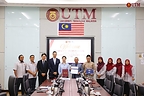
The partnership follows a visit by UNESCO-ICHEI’s leadership to UTM’s Kuala Lumpur campus on 27 November 2026. During the visit, UTM and UNESCO-ICHEI signed a Letter of Intent (LoI) setting out the areas of collaboration.

“Southeast Asia’s universities are adopting AI at very different speeds, and no single institution can work out the rules alone. This task force gives the region a way to share what works and to make sure AI in higher education is responsible and inclusive,” said Dato’ Professor Ts. Dr. Mohd Shafry Mohd Rahim, Vice-Chancellor of UTM.

The task force belongs to the International Institute of Online Education (IIOE) Southeast Asia Regional Centre, set up by the Southeast Asian Ministers of Education Organization (SEAMEO) Secretariat and UNESCO-ICHEI and hosted by the SEAMEO Secretariat. It brings universities together to shape how the region uses AI and digital tools in teaching, learning and management.

Interest was strong: the competitive selection drew 78 universities from ten Southeast Asian countries. UTM’s appointment as a Founding University Member was announced on 5 October 2026, endorsed by Malaysia’s Ministry of Education, and runs for an initial two years.

As a next step, UTM and UNESCO-ICHEI will develop joint collaboration and future actions on AI and digital transformation in higher education.

“The response from universities across Southeast Asia shows a clear commitment to working together on AI. UTM brings strong expertise in AI and digital learning, and we look forward to working with UTM and other task force members to support higher education transformation across the region,” said Ms. Bi Xiaohan, Deputy Director of UNESCO-ICHEI.

The task force is already active. Its first programme, the Korea–Southeast Asia University Leadership and Student Transformation Programme and the 4th Gumi Education Forum, brought university leaders and students to Gumi, Republic of Korea, from 4 to 13 November 2026. UTM was represented by Associate Professor Dr. Noorminshah A.Iahad, Head of Learning Innovation Division, Center for Advancement of Digital and Flexible Learning (CDex) and undergraduate student Tey Xin Yi, Bachelor of Computer Science (Bioinformatics) from the Faculty of Computing.

The partnership covers three areas: AI in university operations, and responsible AI governance, staff training, teaching innovation and flexible study pathways, and joint research, knowledge sharing and regional partnerships.

The collaboration supports the UN Sustainable Development Goals on Quality Education (SDG 4) and Partnerships for the Goals (SDG 17).

The UNESCO-ICHEI delegation was led by Ms. Bi Xiaohan, Deputy Director. She was joined by Mr. Sit Fung, Assistant Director and Chief of the Global Partnership and Programme Office, and Mr. Zhang Boyi, Programme Officer.

They were received by Vice-Chancellor Dato’ Professor Ts. Dr. Mohd Shafry Mohd Rahim, Deputy Vice-Chancellor (Research and Innovation) Professor Ts. Dr. Ali Selamat, Head of Campus Professor Dr. Fauziah binti Sh. Ahmad, and Professor Ts. Dr. Mohd Naz’ri Mahrin, Dean of the Faculty of Artificial Intelligence.

About Universiti Teknologi Malaysia (UTM)

Universiti Teknologi Malaysia (UTM) is a premier public research university specialising in engineering, science and technology, ranked 25th in the QS World University Rankings: Asia 2027. Tracing its roots to a technical school founded in Kuala Lumpur in 1904, UTM has campuses in Johor Bahru, Kuala Lumpur and Pagoh. With recognised strengths in sustainability and artificial intelligence, UTM works alongside industry, government and international partners to develop talent and research, innovating sustainable solutions to global challenges.

View original content to download multimedia:https://www.prnewswire.com/apac/news-releases/universiti-teknologi-malaysia-and-unesco-ichei-partner-on-responsible-ai-for-southeast-asian-universities-302952029.html

SOURCE Universiti Teknologi Malaysia

Continue Reading

Technology

Refocusing a Community Moving Toward Reproducible Research

Published

on

By

Follow #MRITogether’s Hackathon November 30th to December 4th 2026

BOULDER, Colo., Nov. 28, 2026 /PRNewswire/ — MRI Together, a global community advancing open-source solutions to MRI, announces a new hackathon format for 2026 – from November 30th to December 4th, 2026.  This year, the consortia are bringing the community together around a shared practical challenge: building a fully open-source, end-to-end MRI pipeline for prenatal imaging—from sequence programming to image analysis.  With organizers from 5 continents, this global effort provides the community with a unique opportunity to collaborate across disciplines and time zones. Whether you are an MR physicist, software developer, clinician, or student, together we will tackle current challenges of prenatal MR imaging and demonstrate how open science can accelerate reproducible research.

Each day of the hackathon focuses on one stage of the pipeline and pairs short expert talks with a hands-on session. Live sessions will be streamed at youtube.com/@mritogether. Please visit the MRITogether website and follow the ESMRMB social media on LinkedIn to stay tuned.

Full Program can be found here. News from the Hackathon and results can be found here. To join the MRI Together Community and participate in future events, email us at mritogether@esmrmb.org

About MRITogether: We are a team of MRI scientists from different corners of the MRI world with a passion for open, reproducible and inclusive science. With support and endorsement from ESMRMB this global workshop aims to bring MRI enthusiasts together. Whether you’re a MR scientist, scientific software developer, medical doctor, researcher in basic science, or data scientist, there’s something for you here. If you are passionate about Open Science, join us!

About CaliberMRI: CaliberMRI is on a mission to improve the standard of care through advancing quantitative MRI (qMRI), data quality, and standardization. CaliberMRI produces integrated hardware/software phantom platforms to ensure quantitative MRI measurements are accurate, repeatable and reproducible. CaliberMRI’s products, developed in collaboration with NIST, RSNA, and ISMRM, are cited in more than 300 papers and abstracts. Based in Boulder, Colorado, the company works with researchers, hospitals, and clinicians around the world. For more information, visit https://qmri.com and follow us on LinkedIn.

Contact:
Callie Weiant, President
sales@qmri.com

View original content to download multimedia:https://www.prnewswire.com/news-releases/refocusing-a-community-moving-toward-reproducible-research-302952036.html

SOURCE CaliberMRI, Inc.

Continue Reading

Technology

Beyond the Market Volatility: Why Longbridge Group CEO and Co-Founder Nowa Zhu Believes the Next Wave of AI Demand Is So Difficult to Predict

Published

on

By

HONG KONG and SINGAPORE, Nov. 28, 2026 /PRNewswire/ — Nowa Zhu, Group CEO and Co-Founder of Longbridge, Nowa Zhu, shares his perspective on a turbulent week for AI-related stocks, and why the biggest uncertainty surrounding artificial intelligence may not be its current valuations, but how quickly and widely the next wave of AI adoption will unfold.

What a week it has been for global financial markets.

After a turbulent period that saw AI-related stocks suffer sharp declines, Wall Street ended the Thanksgiving-shortened trading week on a surprisingly strong note. The Nasdaq Composite gained approximately 6.7% over the week, as investors navigated dramatic swings in some of the world’s most closely watched technology companies.

The week began with a remarkable rebound in Nvidia following the return of co-founder Jensen Huang as chief executive. But the optimism was soon tested by renewed concerns over AI valuations, the sustainability of infrastructure spending, stronger-than-expected inflation data and the prospect of fresh US tariffs. Anthropic, the company behind the Claude AI models, also experienced considerable volatility following its highly anticipated IPO, before recovering above its initial offering price during Friday’s shortened trading session.

The contrasting market movements illustrate how quickly investor sentiment can shift. Within days, the narrative surrounding AI swung between fears of a bubble, renewed confidence in the sector’s potential and concerns about whether future commercial returns can justify today’s valuations.

Yet beyond these sharp market movements lies a more fundamental question: How can markets accurately value a technology whose capabilities are advancing at extraordinary speed, but whose future demand, adoption and commercial potential remain so difficult to predict?

Beyond macroeconomic and geopolitical factors, I believe this uncertainty is at the heart of the market’s differing views on AI. And to understand why, we must first recognise something fundamental about the technology itself: AI progress is neither slow nor necessarily linear.

AI is advancing faster than expectations can keep up

Consider how dramatically the conversation around artificial intelligence has changed in just a few years.

Not long ago, public attention centred largely on generative AI’s ability to produce text, images and answers to questions. Today, AI-powered coding assistants are reshaping software development, while AI agents capable of performing multi-step tasks have become a major focus of the technology industry.

The concept of an AI agent was once unfamiliar to most people outside specialist technology circles. Today, agentic AI is increasingly prominent in discussions about how businesses might automate workflows, conduct research and interact with software.

This evolution illustrates something fundamental: AI development does not necessarily follow a smooth, linear trajectory.

Instead, progress can occur in waves of rapid breakthroughs, followed by periods of consolidation as businesses experiment, infrastructure catches up and practical applications mature. Another technological advance may then unlock an entirely new wave of capabilities and demand.

What appears to be a plateau may simply be a period between major leaps, although the timing and magnitude of future advances remain uncertain. This makes AI difficult to assess using conventional assumptions about predictable, steady growth.

Where will the next wave of AI demand emerge?

Software development and general-purpose AI agents offer increasingly visible examples of AI’s practical applications. But beyond these areas, the next major wave of demand remains difficult to predict.

Will it emerge from healthcare, scientific research, manufacturing, financial services or education? Could entirely new applications develop that we have yet to imagine?

Identifying potential industries is only part of the challenge. Equally important is understanding the speed and depth of adoption. How quickly will businesses integrate AI into everyday operations? How extensively will it become embedded in consumer products and services? And when will experimentation translate into widespread commercial deployment?

AI coding tools, for example, have evolved from experimental applications into increasingly capable assistants used in software development. Similar advances elsewhere could create new sources of demand, but their commercial viability, adoption timelines and eventual scale remain uncertain.

The challenge is not simply understanding what AI can do today, but anticipating what it may become capable of tomorrow, and how quickly those capabilities could translate into real economic demand.

Why AI’s non-linear growth complicates valuations

This uncertainty extends across the entire AI value chain.

Demand for AI applications influences spending on models and computing services, which in turn affects cloud infrastructure, data centres, semiconductors and energy requirements.

Companies such as Nvidia, Anthropic, CoreWeave and Oracle occupy different positions within this ecosystem. Their business models differ, but their prospects are influenced, to varying degrees, by expectations surrounding AI adoption.

These relationships, however, are neither immediate nor necessarily proportional. A technological breakthrough may stimulate experimentation without generating substantial near-term revenue. Conversely, an application that achieves widespread adoption could eventually create additional demand across multiple layers of the AI supply chain.

There is also uncertainty about where economic value will ultimately be captured. Greater AI adoption does not guarantee that every company supporting the technology will benefit equally.

This helps explain why AI-related valuations can be particularly sensitive to changing expectations. Investors are attempting to assess not only future earnings, but also the scale, timing and distribution of demand that has yet to fully materialise.

Markets are not simply debating whether AI has a future. They are debating how large that future could become, how quickly it might arrive and how much of its potential is already reflected in today’s prices.

The AI paradox: Using AI to understand an uncertain future

There is an interesting paradox in this debate. Even as investors struggle to quantify AI’s long-term economic potential, the technology itself is becoming increasingly capable of helping people research and understand complex financial markets.

Understanding AI’s development requires examining interconnected factors, including technological breakthroughs, enterprise adoption, infrastructure spending, financial performance and macroeconomic conditions.

Traditionally, investigating these relationships involves navigating financial statements, market data, company announcements and research reports across multiple platforms. While information is increasingly accessible, connecting these developments and understanding their implications remains challenging.

This is where AI-native financial technology can make a meaningful difference.

At Longbridge Group, this philosophy underpins our development of Longbridge AI and our vision of an AI-native, agentic brokerage. Rather than treating AI as an additional feature, we are embedding it into our technology infrastructure to make financial information and market research more accessible through natural-language interactions.

With Longbridge AI’s Scheduled Tasks, users can establish recurring research and information-monitoring workflows, helping them follow market developments over time rather than relying solely on isolated snapshots.

Our approach extends beyond AI-powered research. We introduced Singapore’s first broker-integrated Dividend Hub, bringing historical dividend tracking, projected income, payout schedules and income goal monitoring into a dedicated experience. Although separate from Longbridge AI, it reflects the same philosophy of making complex financial information easier to navigate and understand.

These capabilities serve different purposes but share a common objective: making sophisticated financial information more accessible while keeping investors firmly in control of their decisions.

Understanding uncertainty, not predicting the future

Better intelligence, however, does not mean greater certainty.

AI can process vast amounts of information, identify patterns and explain complex relationships, but it cannot reliably predict market movements, determine when the next technological breakthrough will occur or identify which industries will experience the strongest adoption. Its outputs can also be incomplete or inaccurate, making human judgement essential.

The recent volatility surrounding Nvidia, Anthropic and the broader AI sector illustrates how quickly expectations can change, even as technological development follows its own trajectory.

The next transformative application may emerge sooner than expected or take far longer to achieve widespread adoption. Periods of rapid innovation may be followed by consolidation before another breakthrough changes the industry’s direction.

For investors, the challenge is not simply predicting the next breakthrough, but understanding how emerging capabilities, changing demand and commercial realities interact.

The real promise of AI in investing is not that it will predict the future. It is that it can help more people make sense of an increasingly complex present.

In an industry where the next wave of transformation remains difficult to anticipate, the ability to continuously question, investigate and understand change may become increasingly valuable.

Disclaimer: The views expressed are those of the author and are intended for general informational and educational purposes only. This article does not constitute financial or investment advice, a personal recommendation, or an offer or solicitation to buy, sell or hold any securities or financial products. Investing involves risks, including the possible loss of capital. AI-generated information may contain inaccuracies or omissions and should be independently verified.

Dividend Hub first-mover claim: Based on Longbridge’s review of 20 in-scope MAS-licensed retail-facing brokerages, using hands-on app testing and official sources as of 25 September 2026. The claim refers to a native, centralised in-app feature combining historical dividend tracking, forward income projections and income goal-setting with progress tracking.

View original content to download multimedia:https://www.prnewswire.com/apac/news-releases/beyond-the-market-volatility-why-longbridge-group-ceo-and-co-founder-nowa-zhu-believes-the-next-wave-of-ai-demand-is-so-difficult-to-predict-302952030.html

SOURCE Longbridge Group

Continue Reading

Trending