Connect with us

Technology

Colossal to Repatriate Rare Moa Egg to Aotearoa (New Zealand)

Published

on

Colossal secured one of the world’s few surviving moa eggs and will entrust it to New Zealand-based moa de-extinction program partners, to ensure the egg returns to its rightful land and people.

CHRISTCHURCH, New Zealand and DALLAS, Oct. 19, 2026 /PRNewswire/ — Colossal Biosciences, the world’s first de-extinction company, today announced that it has acquired a rare giant moa egg from a private collection in the United States for the sole purpose of returning it to Aotearoa (New Zealand). Colossal plans to present the egg to Professor Te Maire Tau (Ūpoko of Ngāi Tūāhuriri, a hapu of Ngāi Tahu), a distinguished Māori historian, academic leader, and tribal leader in New Zealand based in the Tuahiwi region of Canterbury, South Island. Dr. Te Maire Tau balances roles across academia, tribal governance, and community leadership.

According to auction records, the egg was discovered in New Zealand on January 14, 1966, and remained in a private American collection for approximately six decades before Colossal purchased it from Artemis Gallery in Louisville, Colorado, on June 12, 2026, when it resurfaced in the public auction. Auction records indicate that the egg may have originated from a human burial site dating to the Moa Hunter period, around AD 1300, although further research will be required to confirm its provenance.

Fewer than 40 sufficiently complete moa eggs are known in public collections worldwide, and only eight retain at least 90 percent of their original shell. Measuring approximately 22 by 17 centimeters, the newly documented egg has been reconstructed from numerous fragments, with additional pieces still to be reattached. Expert conservation and non-destructive analysis could help establish its species, geographic origin and place among the best-preserved known moa eggs once returned to New Zealand. Colossal has made plans to return the egg physically back to New Zealand via private transport to ensure the highest level of safety for the precious artifact and will hold a repatriation ceremony in December.

A Taonga Returns to its Rightful Home

Moa were flightless birds that lived only in New Zealand. Nine species of moa were native on the islands when the first polynesians settled on the islands between 1250 and 1300 CE. The nine moa species ranged from turkey-sized to the South Island giant moa (Dinornis robustus), which stood up to 3.6 meters tall with its neck outstretched and weighed approximately 230 kilograms. Moa went extinct roughly 600 years ago, within two centuries of Polynesian settlement. For Ngāi Tahu, whose earliest ancestors lived alongside moa in Te Waipounamu, the South Island, the birds are recorded in archaeology and in oral tradition, and their remains are taonga: treasured objects that carry the history of the land and its people.

While thousands of moa bones have been recovered from swamps, caves, and dune sites across New Zealand, whole eggs are scarce. Moa eggshell is thin, in most cases under two millimeters, and rarely survives intact. Te Papa, New Zealand’s national museum, describes its own moa egg as one of only 36 mostly intact moa eggs in the world, expanding a 2005 survey by ornithologist Brian Gill that counted 33 moa eggs complete enough to be measured. According to Gill’s survey, all known moa eggs are in public collections: four at the Natural History Museum in London and the remainder in eight New Zealand museums and research collections.

The giant moa egg, which is not one of those counted above, measures approximately 22 by 17 centimeters, which is about 1.5 times longer than and nearly double the volume of an ostrich egg. The giant moa egg has been reconstructed from many fragments, with further fragments still to be reattached under the approval and guidance of Ngāi Tahu researchers.

“When we launched the moa program we made a clear commitment that indigenous leadership would guide the science and every decision surrounding the project. Securing and transporting this egg back to its rightful home is just part of that commitment. Regardless of when and how it left the country, we strongly feel all recognizable moa bones and remains as well as any other New Zealand artifacts should be returned to the country and its people. To quote Indiana Jones, “it belongs in a museum,” a museum in Aotearoa, under the care of the people whose ancestors lived alongside these extraordinary birds. We are honored to help return it home.” said Ben Lamm, CEO and Co-Founder of Colossal.

Under New Zealand’s Protected Objects Act 1975, intact moa remains are protected objects that cannot be exported without permission from the Ministry for Culture and Heritage. This egg left the country before that law was in force. After discovering the egg listed for auction, Colossal immediately acted to procure it so as to ensure its safe return home to be cared for under the direction of the Ngāi Tahu.

“Every New Zealander grows up knowing the moa and feeling its loss,” said Sir Peter Jackson. “Whenever I’ve been walking deep in the New Zealand bush, I can’t help but keep looking into the thick forest, hoping for a glimpse of the mythic “last Moa” – an amazing bird that sadly no longer exists, no matter how hard you look … and hope. When we learned that this exceptionally rare Moa egg was being sold outside of New Zealand, we spoke to Colossal, who not only offered to rescue it at their own considerable expense – but to also fly it privately to New Zealand, so it returns home safely. After expert restoration, it will very likely become only the ninth known nearly intact moa egg—probably one of the five best-preserved examples. More importantly, working with Colossal, and under Ngāi Tahu’s guidance, we can return this culturally significant taonga to its rightful custodians, advance research into the Moa, and connect future generations with Aotearoa’s extraordinary cultural and natural history. I’m delighted this treasure will now be in the care of Ngāi Tahu.”

The Egg, the Science and the Partnership

Established in 2025 as a joint initiative between Colossal, the Ngāi Tahu Research Centre, Sir Peter Jackson and the Canterbury Museum, research partners direct and guide the development of the moa de-extinction program. The partnership aims to bring together Colossal’s genomic and reproductive technologies with the mātauranga of Ngāi Tahu research leaders, and other experts within New Zealand.

Since the program was announced, the teams have made significant progress. Scientists have joined Ngāi Tahu archaeologist Kyle Davis at cave and subfossil sites across Te Waipounamu to observe and collect samples that will be needed to sequence the genomes of multiple moa species. In May 2026, Colossal also hatched healthy chicks using a shell-less artificial incubation system designed to eventually support eggs approaching the size of a moa’s.

“In fieldwork and research undertaken across Te Waipounamu, we’ve often worked with fragments of bone and eggshell that help us reconstruct the story of moa and the people who lived alongside them,” said Kyle Davis, a Ngāi Tahu archaeologist and expert in cultural heritage. “To see an egg of this rarity return to Te Waipounamu is extraordinary. It carries information about the moa species that birthed it, the landscape it came from and potentially the people connected to it. Most importantly, it will now be cared for and further researched in collaboration with Ngāi Tahu researchers, where decisions about its future can be guided by tikanga and grounded in the place to which it belongs.”

Moa eggshell has long been an important source of information for scientists. Published research has recovered ancient DNA from moa eggshell fragments, for example, an eggshell structure and thickness has helped researchers understand how moa nested and incubated their eggs. Future scientific study in New Zealand of the returned egg could include non-destructive imaging or sampling for DNA and/or isotopes to confirm the species and geographic origin of the egg. Whether and when to take on this work will be decided by the Ngāi Tahu in accordance with tikanga.

“Fewer than forty whole moa eggs are known, and each one holds information we can get nowhere else – sometimes even their DNA. An egg like this belongs in Aotearoa, in the hands of the people and institutions who study and care for moa, and not in a private collection. That is how we work across the whole moa program: in partnership with the Ngāi Tahu Research Centre and Canterbury Museum, ensuring that every result we generate is returned to New Zealand,” said Beth Shapiro, PhD, Colossal’s Chief Science Officer.

Presentation at SAPE 2026 in Ōtautahi Christchurch

The repatriation announcement will be the opening day of the 11th International Meeting of the Society of Avian Palaeontology and Evolution, which runs from October 19 to 23 at the Christchurch Town Hall in Ōtautahi Christchurch. The day opens with a pōwhiri, a formal Māori welcome. The meeting’s organizing committee includes Dr. Paul Scofield, Senior Curator Natural History at Canterbury Museum and a collaborating scientist on the moa program, together with colleagues from the University of Canterbury and Flinders University.

“It is especially fitting to announce the return of this remarkable egg at our conference with the world’s leading experts on ancient birds gathered here in Ōtautahi Christchurch,” said Dr. Paul Scofield, Senior Curator of Natural History at Canterbury Museum and collaborating scientist on the moa program. “Moa are central to the natural and cultural history of Aotearoa, and this egg has far greater scientific and cultural value here than it could ever have in a private collection overseas. Its homecoming will create new opportunities for research while ensuring that this extraordinary taonga is cared for in the land—and by the people—to which it belongs.”

Colossal’s commitment to New Zealand extends beyond the moa. Through its partnership with the Ngāi Tahu researchers and other New Zealand-based experts, the company has committed to open-sourcing the technologies it develops for conservation under guidance of partners, with aims which include biobanking taonga species across the Ngāi Tahu takiwā, to educational programs for Ngāi Tahu rangatahi and kiwi youth, and to building conservation biotechnology capability within Te Waipounamu towards the future establishment of Colossal Laboratories in New Zealand.

ABOUT COLOSSAL

Colossal was founded by emerging technology and software entrepreneur Ben Lamm and world-renowned geneticist and serial biotech entrepreneur George Church, Ph.D., and is the first to apply CRISPR technology for the purposes of species de-extinction. Colossal creates innovative technologies for species restoration, critically endangered species protection, and the repopulation of critical ecosystems that support the continuation of life on Earth. To follow along, please visit: www.colossal.com.

WEBSITE & SOCIALS
Websites: www.colossal.com
Instagram: https://www.instagram.com/colossal/
YouTube: https://www.youtube.com/@colossal
Twitter: https://x.com/colossal
LinkedIn: https://www.linkedin.com/company/colossal/
Facebook: https://www.facebook.com/itiscolossal
TikTok: https://www.tiktok.com/@colossal
BlueSky: https://bsky.app/profile/itiscolossal.bsky.social

COLOSSAL PRESS CONTACT: Emily@Colossal.com

View original content to download multimedia:https://www.prnewswire.com/news-releases/colossal-to-repatriate-rare-moa-egg-to-aotearoa-new-zealand-302913296.html

SOURCE Colossal Biosciences Inc.

Continue Reading

Technology

Tech Beats Tariffs: Global Trade Growth Accelerates and Globalization Sets New Record

Published

on

By

The AI boom has become a powerful driver of global trade – outweighing tariffs and geopolitical shocks, according to the latest DHL Globalization TrackerThe trade outlook has improved, with growth through 2029 now forecast to outpace the previous decadeSouth and Central Asia to have the second-fastest goods-trade growth over 2026–29, behind only the Middle East & North AfricaIndia continues to strengthen its trade resiliency by developing new trade agreementsGlobalization has reached a record level of 25.8%

NEW DELHI, Oct. 20, 2026 /PRNewswire/ — The global race to build infrastructure for artificial intelligence is giving world trade strong momentum at a time of higher tariffs and geopolitical conflicts.

This is one of the key findings of the latest edition of the DHL Globalization Tracker, released by DHL and New York University’s Stern School of Business. Based on more than 30 million data points, the report analyzes international flows of trade, capital, information, and people. It offers the most comprehensive view of globalization available. This edition marks the report’s first publication under its new name. It was previously known as the “DHL Global Connectedness Tracker”.

AI buildout boosts global trade

The report shows that global goods trade grew faster in the first half of 2026 than in any half-year in the past 15 years, apart from the exceptional Covid rebound. A major driver was strong demand for goods used to build AI infrastructure, such as semiconductors and data-transmission equipment. Trade in AI-enabling goods drove 42% of goods trade growth in 2025, and this share rose to 76% during the first quarter of 2026, according to WTO and OECD analysis.

“The biggest story in global trade right now is AI – not tariffs,” said John Pearson, CEO of DHL Express. “Every AI query ultimately depends on logistics. Chips, networking equipment and the many other goods behind this technology must be in the right place at the right time. DHL connects the businesses and markets behind these complex supply chains. Whenever innovation creates new trade flows, our global network helps keep them moving.”

Global effects of Iran war and tariffs remain limited

At the same time, the Iran war and the closure of the Strait of Hormuz disrupted important trade routes. But the effects remained concentrated. Economies dependent on the Strait were hit particularly hard. For example, the value of trade fell 37% in Saudi Arabia and 7% in the United Arab Emirates in the first five months of 2026 compared with the same period in 2025.

Trade policy created a separate headwind. U.S. tariffs reached their highest levels in decades, but their global impact was limited. One reason is that the U.S. accounted for only 13% of world imports in recent years, with roughly half of those imports exempt from the tariff increases as of August 2026. Another is that most countries refrained from broad retaliation. Many instead increased efforts to secure access to alternative markets through new trade agreements.

Trade outlook upgraded despite recent shocks

Looking ahead, global goods trade is projected to expand by an average of 3.4% per year through 2029. That would be substantially faster than the 2.7% rate recorded over the previous decade.

“The surprise is not only that global trade kept growing through new tariffs and the Iran war,” said Prof. Steven A. Altman, Director of the DHL Initiative on Globalization at NYU Stern’s Center for the Future of Management. “The outlook is now stronger than it was before either shock. This reminds us to look beyond the most visible disruptions and recognize the deeper reasons why trade remains so resilient. The AI trade boom highlights the demand for goods and services that can only be provided efficiently when specialized producers work together across countries. It also shows how companies continually adapt to keep trade moving through disruptions and policy shifts.”

India sits within one of the world’s strongest trade-growth regions, East Asia and the Pacific leads the way in 2026

Among all regions, East Asia and the Pacific recorded the strongest trade growth. The value of its trade rose 24% in the first five months of 2026 compared with the same period in 2025. Europe followed with 12% and Sub-Saharan Africa with 11%. South and Central Asia recorded a trade value growth of 9.6%. Looking forward, the region’s forecast remain the second-fastest for goods-trade growth over 2026–29, behind only the Middle East and North Africa.

East Asia and the Pacific not only recorded the strongest growth, but also saw a larger share of its trade stay within the region. This share increased from 57% in 2025 to 60% in the first five months of 2026. Strong Asian supply chains serving the AI boom contributed to this increase.

India focuses on market diversification

One of the major changes in international flows is the weakening of U.S.–China ties. Yet the global impact remains surprisingly small. For example, trade between the U.S. and China accounted for 3.5% of world trade at its peak in 2015, before falling to only 1.6% during the first five months of 2026. The U.S.–China share of international business investment is even smaller – less than 1%. Meanwhile, close U.S. allies have largely maintained their relationships with China. These findings challenge the idea that U.S.–China decoupling is dividing the world economy into rival blocs.

A closer look also shows that direct trade figures understate U.S. reliance on China. Goods imported into the U.S. from other countries contain growing amounts of Chinese materials and components. When these indirect imports are also taken into account, U.S. reliance on China has declined only slightly through 2024, the latest year for which data are available.

While U.S.-China ties are weakening, India’s trade relationship with the U.S. remains strong. At the same time, trade resilience remains a focus as India continues to expand its trade relationships, developing trade agreements with the European Union, the United Kingdom, the European Free Trade Association, New Zealand, and Oman.

Globalization reaches a new record

Beyond trade and investment patterns, the report tracks the broader development of globalization based on international flows of trade, capital, information and people. It uses a scale from 0% (no cross-border flows) to 100% (borders and distance have no impact). In 2025, globalization reached a record level of 25.8%, supported in part by AI-related trade and investment.

All four flow categories contributed to the new record, reaching higher levels of internationalization. Information flows remain the most globalized, followed by capital and trade flows. People flows remain the least globalized.

The DHL Globalization Tracker

The DHL Globalization Tracker is a concise report and interactive website that provides regular updates on globalization and global trade. It complements the renowned DHL Globalization Report, published regularly since 2011. Drawn from over 25 public, private, and academic sources, the Tracker analyzes more than 30 million data points on international flows of trade, capital, information, and people.
It includes interactive online charts that make it easy for users to explore trends by region, geopolitical alignment, and for individual countries. It also supports easy data and chart downloads for offline use.

The DHL Globalization Tracker is commissioned by DHL and authored by Prof. Steven A. Altman and Caroline R. Bastian of New York University Stern School of Business. It is available, together with further resources, at dhl.com/globalization.

Note: The DHL Globalization Tracker and DHL Globalization Report were formerly known as the “DHL Global Connectedness Tracker” and “DHL Global Connectedness Report”. Their new names more directly reflect the focus of the research. The scope and underlying approach remain unchanged, ensuring continuity with previous editions.

At a glance: The October 2026 edition of the DHL Globalization Tracker

What is the main finding of the report?

The global boom in artificial intelligence is giving world trade strong momentum despite higher tariffs and geopolitical conflicts. Global goods trade grew faster in the first half of 2026 than in any half-year in the past 15 years, apart from the exceptional Covid rebound.

Beyond trade, the report tracks the broader development of globalization based on international flows of trade, capital, information and people. In 2025, globalization reached a record level of 25.8%. The report measures this using a scale from 0% (no cross-border flows) to 100% (borders and distance have no impact). All four types of flows contributed to the record, becoming more international.

What is the outlook for global trade?

The outlook has improved. Global goods trade is projected to grow by an average of 3.4% per year through 2029. That would be significantly faster than the 2.7% annual growth rate recorded over the previous decade. Notably, current forecasts are more optimistic than those made before both the 2025-26 U.S. tariff increases and the Iran war, suggesting that recent shocks have had a smaller impact on the global economy than many expected.

How have tariffs and geopolitical conflicts affected global trade?

Tariffs and geopolitical conflicts continue to create risks and disruptions. But their overall impact on global trade has been limited. While the Iran war affected important shipping routes and hit economies dependent on the Strait of Hormuz particularly hard, the effects remained largely concentrated. U.S. tariffs rose to their highest levels in decades, but the United States accounted for only 13% of world imports in recent years, and roughly half of U.S. imports were exempt from tariff increases as of August 2026. Many countries also avoided broad retaliation and instead expanded trade links with alternative markets. As a result, global trade continued to grow.

Where is trade growing fastest?

East Asia and the Pacific saw the strongest trade growth among all regions. The value of its trade rose 24% in the first five months of 2026 compared with the same period in 2025. Europe followed with 12% and Sub-Saharan Africa with 11%.

East Asia and the Pacific not only recorded the strongest growth, but also saw a larger share of its trade stay within the region. This share increased from 57% in 2025 to 60% in the first five months of 2026. Strong Asian supply chains serving the AI boom contributed to this increase.

Is U.S.–China decoupling splitting the world into rival blocs?

No, not so far. The United States and China have significantly reduced their ties with each other over the past decade. But this has not led to a broader split in the global economy. Close U.S. allies have largely maintained their economic relationships with China. Another reason is that direct U.S.–China ties account for a surprisingly small share of the global economy. For example, trade between the two countries represented 3.5% of world goods trade at its peak in 2015, before falling to 1.6% in the first five months of 2026. The U.S.–China share of international business investment is even smaller – less than 1%.

Has the United States become less dependent on China?

Direct trade between the two countries has declined sharply, but the picture is more complex when supply chains are taken into account. Goods imported into the United States from third countries increasingly contain Chinese materials and components. When these indirect imports are considered, U.S. reliance on China declined only slightly through 2024.

Should companies redesign their supply chains to improve resilience?

For business leaders, the report recommends preparing for disruptions without giving up the advantages of international engagement. While specific economies, industries or trade routes can still face significant risks, overall global flows remain strong. Decisions such as relocating production should therefore balance supply-chain resilience with the benefits of global reach and market access. Companies that pull back from international markets while competitors remain globally active may risk weakening their competitive position.

– End –

The report and further resources are available at dhl.com/globalization.

DHL Group is the world’s leading logistics company. The Group connects people and markets and is an enabler of global trade. It aspires to be the first choice for customers, employees, investors and green logistics worldwide. To this end, DHL Group is focusing on accelerating sustainable growth in its profitable core logistics businesses and Group growth initiatives. The Group contributes to the world through sustainable business practices, corporate citizenship, and environmental activities. By the year 2050, DHL Group aims to achieve net-zero emissions logistics.

DHL Group is home to two strong brands: DHL offers a comprehensive range of parcel, express, freight transport, and supply chain management services as well as e-commerce logistics solutions. Deutsche Post is the largest postal service provider in Europe and the market leader in the German mail market. DHL Group employs approximately 584,000 people in over 220 countries and territories worldwide. The Group generated revenues of approximately 82.9 billion Euros in 2025.

The logistics company for the world.

New York University Stern School of Business, located in the heart of Greenwich Village and deeply connected to the city after which it is named, is one of the United States’ premier management education schools and research centers. NYU Stern offers a broad portfolio of transformational programs at graduate, undergraduate, and executive levels, all of them enriched by the dynamism and deep resources of one of the world’s business capitals. NYU Stern is a welcoming community that inspires its members to embrace and lead change in a rapidly transforming world. Visit www.stern.nyu.edu.

View original content to download multimedia:https://www.prnewswire.com/in/news-releases/tech-beats-tariffs-global-trade-growth-accelerates-and-globalization-sets-new-record-302912407.html

Continue Reading

Technology

ASTRI Welcomes Government Appointments of New Board Chairman and Board Members

Published

on

By

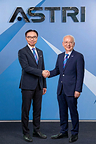
HONG KONG, Oct. 20, 2026 /PRNewswire/ — The Hong Kong Applied Science and Technology Research Institute (ASTRI) welcomes the Hong Kong SAR Government’s appointment of Prof Chan Chi-hou as the new Board Chairman, effective 21 October 2026, for a two-year term. He succeeds Ir Prof Sunny Lee, who concludes a seven-year tenure as ASTRI’s Board Chairman on 20 October 2026.

Prof Chan Chi-hou said: “I am deeply honoured that the Hong Kong SAR Government has entrusted me to serve ASTRI and contribute to our country and Hong Kong’s technological innovation and development goals outlined in the Nation’s 15th Five-Year Plan and Hong Kong’s first five-year plan. I would also like to thank Ir Prof Sunny Lee for his visionary leadership, particularly in steering the successful merger with the Nano and Advanced Materials Institute (NAMI), which has strengthened ASTRI’s interdisciplinary research and development (R&D) capabilities and heightened its profile at home and abroad.”

“As Hong Kong accelerates investment in technology infrastructure and talent development, I look forward to working closely with fellow Board members and Ir Dr Ted Suen, CEO of ASTRI, to advance innovation, foster collaboration across government, industry, academia, research, and investment communities, and expedite the commercialisation and adoption of research outcomes. Together, we will help enhance Hong Kong’s competitiveness, create greater value for society and reinforce the city’s position as an international innovation and technology (I&T) hub,” he added.

Prof Chan is an internationally-recognised expert in applied electromagnetics, terahertz science and wireless communications. He currently serves as Vice-President (Community Engagement), Director of the State Key Laboratory of Terahertz and Millimetre Waves, and Chair Professor of Electronic Engineering at City University of Hong Kong (CityU). Before joining CityU in 1996, he was a tenured Associate Professor in the Electrical Engineering Department at the University of Washington, and a Visiting Assistant Professor in the Electrical and Computer Engineering Department at the University of Illinois. He obtained his bachelor’s and master’s degrees from The Ohio State University and his doctoral degree from the University of Illinois at Urbana-Champaign. An IEEE Fellow, Prof Chan has received numerous international honours in recognition of his pioneering research and contributions to the field.

Outgoing Chairman Ir Prof Sunny Lee congratulated Prof Chan on the appointment and said: “It has been my great privilege to serve on ASTRI’s Board as a member and Chairman for nearly 14 years to witness its remarkable growth into a leading R&D centre that delivers tangible impact for industry, the economy and society. I am confident that, with Prof Chan’s distinguished expertise, strategic vision and extensive leadership experience, ASTRI will continue to scale new heights, drive impactful innovations and accelerate the translation of research excellence into real-world applications, creating lasting value for Hong Kong and beyond.”

Under Ir Prof Lee’s stewardship, ASTRI has actively supported national development priorities and the Hong Kong SAR Government’s policy agenda. Leveraging Hong Kong’s unique role as a super-connector between Chinese Mainland and the world, ASTRI has reinforced its position bridging stakeholders in the global I&T ecosystem.

Six New Board Members Appointed

In addition, the Hong Kong SAR Government has appointed six new members to the ASTRI Board: Prof Chan Shing-chow, Professor & Associate Dean (Masters), Faculty of Engineering, University of Hong Kong; Mr Ricky Chan Wai-chung, Chief Executive Officer, Jing Mei Automotive Limited; Mr Alan Chiu Chi-wai, Managing Partner, ELLALAN; Ms Irene Chow Man-ling, Director, DSL Investments Limited; Mr Hui Chi-wai, Chief Executive Officer (AXM), ASMPT SEMI China (AXM); and Prof Gary Wong Ka-leung, Associate Provost (Quality Assurance and Accountability) and Chair Professor, Department of Chemistry, City University of Hong Kong. Their two-year terms will run from 21 October 2026 to 20 October 2028.

ASTRI expresses its heartfelt gratitude to outgoing Board Chairman Ir Prof Sunny Lee and members Dr Felix Chow Bok-hin, Mr Theodore Ma Heng, Dr Alfred Ng Man-cheuk, Ir Dr Samson Tai Kin-hon and Mr Anthony Tong Tat-hay for their dedicated service and invaluable guidance.

Effective from 21 October 2026, the members of ASTRI’s Board of Directors are as follows:

Chairman

Prof Chan Chi-hou

Members (listed in alphabetical order of surname)

Prof Chan Shing-chowMr Ricky Chan Wai-chungProf Christopher Chao Yu-hangProf Cheng Shuk-han, MHMr Alan Chiu Chi-waiMr Jason Chiu Tsz-kiu, JPMs Irene Chow Man-ling, JPMr Dennis Ho Chiu-pingMr William Ho TatMr Hui Chi-waiIr Arthur Lee Kam-hungHon Jack Ng Wun-kit, JPArchitect So Ching, JPProf Michael Tse Chi-kongProf Martin Wong Ding-fatProf Gary Wong Ka-leungMr Wilfred Wong Kam-pui, BBS, JP

Official Members

Mr Kevin Choi, JP, Permanent Secretary for Innovation, Technology and IndustryMr Ivan KB Lee, JP, Commissioner for Innovation and Technology

Photos Download: https://bit.ly/4B1pToO

About ASTRI

Founded in 2000 by the HKSAR Government, Hong Kong Applied Science and Technology Research Institute (ASTRI) is the city’s largest government-funded R&D centre. Committed to transforming high-impact research into practical innovations, ASTRI drives market-driven, interdisciplinary advancements across sectors, including Smart City, FinTech, Digital Health and Life Sciences, New Industrialisation and Intelligent Manufacturing, Application-Specific Integrated Circuits (ASIC) and Advanced Electronics, New Energy and Energy Storage, and Green and ESG Technologies. Following its merger with the Nano and Advanced Materials Institute, ASTRI has further strengthened its capabilities, with over 1,500 patents and 2,200 successful cases of technology transfer. Recognised with numerous international awards, ASTRI continues to nurture top I&T talent and foster collaborations among the I&T ecosystem, contributing to Hong Kong’s high-value economic development. For more information, please visit: https://www.astri.org 

View original content to download multimedia:https://www.prnewswire.com/apac/news-releases/astri-welcomes-government-appointments-of-new-board-chairman-and-board-members-302913400.html

SOURCE Hong Kong Applied Science and Technology Research Institute (ASTRI)

Continue Reading

Technology

Neo’s European Integrated Magnet Project Selected for €126 Million Grant Under EU Innovation Fund

Published

on

By

Grant would help fund an expanded integrated rare earth separation, metallization and magnet manufacturing platform in Estonia

TORONTO, Oct. 19, 2026 /CNW/ — Neo Performance Materials Inc. (“Neo” or the “Company”) (TSX: NEO) (OTCQX: NOPMF) today announced that the European Climate, Infrastructure and Environment Executive Agency (“CINEA”) has invited Neo to prepare a grant agreement for its Green Assets from European Union Strategic Supply (“Project GAUSS”) under the European Union’s Innovation Fund. Neo’s Project was selected with a grant of up to €126 million (approximately US$141 million).

Neo’s project, co-funded by the Innovation Fund, would support an expanded rare earth magnet value chain in Estonia, spanning separation, metallization and magnet manufacturing, including adding up to 3,000 metric tonnes of permanent magnets per year. One third of that capacity would be allocated to offshore wind farms in the EU.

The project includes the following scope:

Separation (Silmet 2.0): light and heavy rare earth separation tripling its total separation capacity. Earlier this month, the European Commission designated Silmet 2.0 a Strategic Project under the EU Critical Raw Materials Act.Metallization: conversion of separated light and heavy rare earth oxides into metals.Magnet Manufacturing (Phase 1B): the Phase 1B expansion of the European permanent magnet facility, which is expected to increase its nameplate capacity from its current 2,000 metric tonnes to approximately 5,000 metric tonnes per year, with the addition of capabilities to support offshore wind farms.Digital Infrastructure for Competitiveness: digital twins and artificial intelligence across rare earth separation, metallization and magnet manufacturing, learning from plant data and operator expertise to predict quality, optimize resource use and progressively translate validated insights into physical process control.

“Neo’s strategy includes building the most vertically integrated rare earth magnetics value chain in Europe, and this project brings that strategy together, from separation to metallization and finished magnets,” said Rahim Suleman, President and Chief Executive Officer of Neo. “The EU’s selection of Neo’s project, following the Strategic Project designation of Silmet 2.0 earlier this month, is strong recognition of that plan. This funding would help us further scale magnet production for European customers in wind energy, electromobility and industrial automation. I want to thank the European Commission, CINEA and the Government of Estonia for their continued support.”

Neo expects the value of the project to be approximately €400 million. Neo intends to update the capital cost estimate as project planning and engineering activities progress. The timetable set by CINEA provides for signature of the grant agreement by March 23, 2027 and the project is expected to take between two to three years to complete.

The project remains subject to final investment decisions and a final grant agreement, which include legal entity validation, a financial capacity assessment, a non-exclusion check and ethics and security reviews.  

About Neo Performance Materials

Neo manufactures the building blocks of many modern technologies that enhance efficiency and sustainability. Neo’s advanced industrial materials – magnetic powders, rare earth magnets, magnetic assemblies, specialty chemicals, metals, and alloys – are critical to the performance of many everyday products and emerging technologies. Neo’s products fast-forward technologies for the net-zero transition. The business of Neo is organized along three segments: Magnequench, Chemicals & Oxides and Rare Metals. Neo is headquartered in Toronto, Ontario, Canada; with corporate offices in Greenwood Village, Colorado, United States; Singapore; and Beijing, China. Neo has a global platform that includes manufacturing facilities located in Canada, Estonia, China, Germany, Thailand and the United Kingdom, as well as a dedicated research and development center in Singapore.

For more information, please visit www.neomaterials.com.

Cautionary Statements Regarding Forward-Looking Statements

This news release may contain “forward-looking information” within the meaning of applicable Canadian securities legislation. Generally, but not always, forward-looking information and statements can be identified by the use of words such as “plans”, “expects”, “is expected”, “budget”, “scheduled”, “estimates”, “forecasts”, “intends”, “anticipates”, or “believes” or the negative connotation thereof or variations of such words and phrases or state that certain actions, events or results “may”, “could”, “would”, “might” or “will be taken”, “occur” or “be achieved” or the negative connotation thereof. Specific forward-looking statements in this news release include, but are not limited to, the signing and timing of the grant agreement with CINEA, the amount of the grant, final investment decisions, the scope, capacity, development, financing and timing of Project GAUSS, including Silmet 2.0 and Phase 1B, expected emissions avoidance and job creation, and other matters relating thereto. In making the forward-looking information in this news release, the Company has applied certain factors and assumptions that are based on its current beliefs as well as assumptions made by and information currently available to the Company. Although the Company considers these assumptions to be reasonable based on information currently available to it, they may prove to be incorrect, and the forward-looking information in this release are subject to numerous risks, uncertainties and other factors that may cause future results to differ materially from those expressed or implied in such forward-looking information.  There are many risk factors associated with the development of a new Project.  A number of factors could cause actual results to differ materially from those anticipated by the Company, including but not limited to the risks and uncertainties inherent in the nature of operations including the risks of a material adverse change in the Company’s assets or revenues, or risks of unknown liabilities that may arise.

Readers are cautioned not to place undue reliance on forward-looking information. The Company does not intend, and expressly disclaims any intention or obligation to, update or revise any forward-looking information whether as a result of new information, future events or otherwise, except as required by law.

Funded by the European Union. Views and opinions expressed are however those of the author(s) only and do not necessarily reflect those of the European Union or the European Climate, Infrastructure and Environment Executive Agency (CINEA). Neither the European Union nor the granting authority can be held responsible for them.

For more information on Neo, investors should review Neo’s continuous disclosure filings that are available under Neo’s profile at www.sedarplus.ca.

SOURCE Neo Performance Materials, Inc.

Continue Reading

Trending