Connect with us

Technology

SIEW 2026 Brings Together Global Energy Leaders to “Connect Energy Systems, Power Tomorrow”

Published

on

SINGAPORE, Oct. 20, 2026 /PRNewswire/ — The 19th Singapore International Energy Week (SIEW) will open on 26 October, bringing together global policymakers, industry leaders and innovators to navigate energy challenges and shape a more secure, connected and sustainable energy future.

Highlights of SIEW 2026

I. Opening: The Singapore Energy Lecture will be delivered by H.E. Dr Tan See Leng, Minister for Energy, Trade and Industry (Energy and Industry). YAB Datuk Amar Haji Fadillah bin Haji Yusof, Deputy Prime Minister and Minister of Energy Transition and Water Transformation, Malaysia, will deliver the Ministerial Keynote Address. Bernard Fontana, Chairman and Chief Executive Officer of Électricité de France (EDF), will share his perspectives at the SIEW Opening Keynote.

II. Ministerial and VIPs: Ministers from Australia, Bhutan, Brunei Darussalam, Finland, Lao People’s Democratic Republic, Oman, Philippines, and United States will be joined by H.E. Dr Kao Kim Hourn, Secretary-General of the ASEAN Secretariat, Dr Fatih Birol, Executive Director of the International Energy Agency, and Francesco La Camera, Director General of the International Renewable Energy Agency. Global industry leaders from Baker Hughes, China Huaneng Group, GE Vernova, Hitachi Energy, Petronas, Siemens Energy, State Grid Corporation of China, Tenaga Nasional Berhad, and Univers will share their insights impacting the energy landscape.

SIEW 2026 will host prominent decision-makers and visionaries from across government, international bodies, regulatory agencies, and industry. The list of speakers attending SIEW 2026 is available here.

Government

H.E. Dr Tan See Leng, Minister for Energy, Trade and Industry (Energy and Industry), Republic of SingaporeH.E. Gan Siow Huang, Minister of State, Ministry of Foreign Affairs & Ministry of Energy, Trade and Industry, Republic of SingaporeYAB Datuk Amar Haji Fadillah bin Haji Yusof, Deputy Prime Minister and Minister of Energy Transition and Water Transformation, MalaysiaH.E. Sonam Tashi, Minister for Energy and Natural Resources, BhutanDato Seri Setia Awang Haji Mohamad Azmi Bin Haji Mohd Hanifah, Minister at the Prime Minister’s Office (Energy, Upstream and Downstream), Brunei DarussalamH.E. Sakari Puisto, Minister of Economic Affairs, Republic of FinlandH.E. Malaithong Kommasith, Minister of Industry and Commerce, Lao People’s Democratic RepublicH.E. Eng. Salim Bin Nasser Al Aufi, Minister of Energy and Minerals, Vice Chairman of the Board of the Oman Investment Authority, OmanThe Honourable Sharon S. Garin, Secretary, Department of Energy, Republic of the PhilippinesH.E. Jean Barroca, Deputy Minister of State for Energy, PortugalDr Majid Al-Qwaiz, Deputy Minister of Development and Project Management, Kingdom of Saudi ArabiaThe Rt Hon Miatta Fahnbulleh MP, Secretary of State for Energy Security and Net Zero, United Kingdom of Great Britain and Northern IrelandChris Stark, Head of UK’s Mission for Clean Power, UK Department for Energy Security and Net Zero

International Organisations

Rafael Mariano Grossi, Director General, International Atomic Energy AgencyLin Yang, Deputy Executive Secretary for Programme, United Nations Economic and Social Commission for Asia and the Pacific (ESCAP)Hideaki Iwasaki, Director General, Sectors Department 1 (Energy and Transport Sectors), Asian Development Bank (ADB)Kim-See Lim, Chief Investment Officer, Public Sector (Region 1) & Financial Institutions and Funds (Global) Clients, Asian Infrastructure Investment Bank (AIIB)Stéphanie Guénot Bresson, Commissioner, Nuclear Safety and Radiation Protection Authority Dr Sama Bilbao y León, Director General, World Nuclear Association

Regulators and Utilities

Anna Collyer, Chair, Australian Energy Market CommissionClare Savage, Chair, Australian Energy RegulatorNarumi Hosokawa, Secretary General, Electricity and Gas Market Surveillance Commission, JapanErik Westergaard, Deputy Chair, Electricity Authority, New ZealandDato’ Sri Ir. Ts. Shamsul Bin Ahmad, President and Chief Executive Officer, Tenaga Nasional BerhadHon. Francis Saturnino C. Juan, Chairperson and Chief Executive Officer, Energy Regulatory Commission, PhilippinesTheodore J. Garrish, Assistant Secretary for Nuclear Energy, U.S. Department of EnergyJudy Chang, Commissioner, Federal Energy Regulatory Commission, United StatesEmmanuelle Wargon, Chair, French Energy Regulatory CommissionDr Narin Phoawanich, Governor, Electricity Generating Authority of Thailand Shao Guoyong, Board Director, State Grid Corporation of China

Industry

Gary Rose, Executive Vice President, Nuclear, Canada, AtkinsRéalis, and President, CANDU International, Candu Energy Inc.Allyson Anderson Book, Chief Sustainability Officer, Government Affairs & Public Policy Officer, Baker HughesYingying Zhou, Vice President, Organisation and Head of Asia, Cheniere EnergyJoseph Law, Managing Director, CLP Power Hong KongLi Rui, Vice President, China Southern Power GridLim Wee Seng, Group Head of Energy, Renewables & Infrastructure, Project Finance Strategic Advisory and Sustainability, Institutional Banking Group, DBS BankTham Chee Aun, Chief Executive Officer, Ditrolic EnergyEric Gray, Chief Executive Officer, Power, GE VernovaJames O’Reilly, Chief Executive Officer, Greenlink InterconnectorN Venu, MD and CEO, India and APAC Region, Member of Global Executive Team, Hitachi Energy, MD, Hitachi IndiaZhong Guodong, President, China Huaneng Group Co., Ltd.Dr Han-Gon Kim, President, Innovative SMR Development AgencyTadashi Maeda, Chairman of the Board, Japan Bank for International CooperationIzumi Kai, Managing Executive Officer, CEO of JERA AsiaStephanie McGregor, Chief Executive Officer, Marinus LinkEmmanuel V. Rubio, President and CEO, Meralco PowerGen Corporation (MGEN)Yasuhiro Kawabe, President & CEO of Mitsubishi Power, Ltd.Elaine Lam, Group Managing Director and Head of Global Corporate Banking, OCBCYM Tan Sri Tengku Muhammad Taufik Tengku Aziz, CEO, Petronas Thorbjörn Fors, Group Senior Vice President and President Asia Pacific, Siemens EnergyStanley Huang, Group Chief Executive Officer, SP GroupJeanne Soh, Managing Director, Head, Structured Finance, Asia, SMBC 

The SIEW week will feature high-level expert discussions across SIEW Summit, SIEW Energy Insights, SIEW TechTable and SIEW Thinktank Roundtables. Topics will include energy security, regional connectivity, system resilience and decarbonisation, including leading technologies and industrial capabilities on AI and digital grids, power interconnections, geothermal energy, and nuclear energy. More details can be found at siew.gov.sg. 

Register now at https://register.siew.gov.sg.

PR Newswire is the Official Press Release Distribution Partner of Singapore International Energy Week 2026.

About SIEW

The Singapore International Energy Week (SIEW) is an official trademarked event by the Energy Market Authority (EMA). It is an annual platform for energy professionals, policymakers and commentators to discuss and share best practices and solutions within the global energy space. 

The SIEW logo is an officially registered trademark, a symbol of credibility and prestige as the world’s leading energy event. 

About the Energy Market Authority

The Energy Market Authority (EMA) is a statutory board under the Singapore Ministry of Energy, Trade and Industry. Through our work, we seek to build a clean energy future that is resilient, sustainable, and competitive. We aim to ensure a reliable and secure energy supply, promote effective competition in the energy market and develop a dynamic energy sector in Singapore. Visit www.ema.gov.sg for more information. 

For media queries, please contact:

Ms Mahima Kathuria
FINN Partners for Singapore International Energy Week
Tel: +65 8022 6364
Email: SIEWMedia@finnpartners.com

View original content to download multimedia:https://www.prnewswire.com/apac/news-releases/siew-2026-brings-together-global-energy-leaders-to-connect-energy-systems-power-tomorrow-302912520.html

SOURCE Energy Market Authority

Continue Reading

Technology

CollectivIQ Introduces GigaBrain, Giving Enterprises a Shared Brain That Gets Smarter as Employees Work

Published

on

By

New Enterprise Intelligence Layer Turns the Collective Learnings of AI Agents Into Secure, Usable Organizational Knowledge

BOSTON, Oct. 21, 2026 /PRNewswire/ — CollectivIQ, the collective intelligence platform built to give employees more honest AI insights and digital teammates that put its intelligence to work, today announced the availability of GigaBrain, a new shared intelligence layer that enables organizations to capture, connect, and use the knowledge accumulated by employees and their Digital Direct Reports (DDRs), which are specialized AI teammates that work for people much like human direct reports do. Every company has valuable knowledge that lives outside its formal systems, across various tools, residing in employees’ heads, embedded in conversations, and lodged in disparate company applications. GigaBrain is designed to make that collective intelligence available to the organization and its employees.

As employees work with their Digital Direct Reports, those AI teammates develop context about their work, including projects, processes, responsibilities, relationships, and preferences. With GigaBrain, those individual learnings can contribute to a shared enterprise memory, allowing knowledge developed in one part of an organization to make AI more useful across the business. The result is an enterprise AI environment that gets smarter through use. Rather than requiring employees to repeatedly find, upload or explain the same information, GigaBrain gives employees and their Digital Direct Reports access to relevant organizational context when they need it.

When a sales representative’s DDR learns the intricacies of a customer’s procurement process, including approval requirements, key decision-makers, and purchasing timelines, that knowledge can automatically become available to other team members, subject to appropriate access permissions. When the customer reaches out for help, the team will already have the context needed to navigate the relationship effectively, without asking the customer to repeat information or relying on a manual handoff.

“Companies are collectively spending billions to bring intelligence to their employees, but very little of that investment makes the company itself smarter,” said John Davie, CEO of CollectivIQ. “The breakthrough isn’t just giving every employee an AI teammate, it’s making sure what those employees and AI teammates learn becomes an advantage for the entire organization. GigaBrain turns everyday work into intelligence that compounds across the enterprise.”

While enterprise AI platforms such as Microsoft Copilot and Glean help employees access organizational information, GigaBrain is designed to capture knowledge that emerges through employees’ day-to-day interactions with their DDRs, including insights that may never be formally documented. GigaBrain creates an organizational knowledge layer that can connect what employees and their Digital Direct Reports learn through everyday work, giving AI access to relevant internal context alongside the broader knowledge available from large language models.

GigaBrain was built to provide a source of enterprise knowledge that Digital Direct Reports can draw upon as they work, including the ability to trace information back to its source, giving employees greater visibility into where organizational knowledge came from, and helping AI work from relevant company context. Employees do not need to manually document every useful insight for the system to become more valuable. As they collaborate with their Digital Direct Reports, relevant knowledge can become part of the enterprise intelligence available to other authorized AI teammates.

GigaBrain is also designed for the realities of enterprise information governance, as employees can use an incognito mode when working with information that should not contribute to shared organizational memory, giving users a way to keep sensitive or confidential interactions out of GigaBrain.

GigaBrain expands CollectivIQ’s vision for Digital Direct Reports beyond individual AI productivity, allowing the knowledge developed through that work to become part of a broader organizational intelligence layer. Together, they give companies a foundation for AI that does more than answer questions. CollectivIQ’s ecosystem can learn how an organization works, retain what it learns and make that knowledge useful across the enterprise.

GigaBrain is available through the CollectivIQ platform. For more information, visit www.collectiviq.ai.

About CollectivIQ

CollectivIQ is the collective intelligence platform built to give employees more accurate AI insights and teammates that put its intelligence to work. Founded by the leadership team behind Buyers Edge Platform, CollectivIQ was built to bring accountability, action, and economic alignment to enterprise AI adoption. Learn more at www.collectiviq.ai.

View original content to download multimedia:https://www.prnewswire.com/news-releases/collectiviq-introduces-gigabrain-giving-enterprises-a-shared-brain-that-gets-smarter-as-employees-work-302915537.html

SOURCE CollectivIQ

Continue Reading

Technology

Pactum Launches Intake Agent, Cutting Purchase Request Cycle Time by 90%

Published

on

By

New AI agent replaces complicated purchase forms and repeated follow-ups by completing and checking every request before it is submitted, inside Microsoft Teams, Coupa, and SAP Ariba.

MOUNTAIN VIEW, Calif., Oct. 21, 2026 /PRNewswire/ — Pactum, the most advanced agentic AI platform for enterprise autonomous procurement execution, today announced the launch of its Intake Agent, which lets employees describe what they need to buy in plain language. The agent turns each request into a complete, correctly coded requisition and checks it against company buying policies before it is submitted.  Available now in Microsoft Teams, Coupa, and SAP Ariba, the Intake Agent connects with Pactum’s other agents to enable end-to-end autonomous indirect procurement. A purchase can draw on an existing contract or move to autonomous sourcing and negotiation, with a human buyer handling requests that require judgment.

The launch extends Pactum’s growing portfolio of AI agents to the start of indirect procurement, covering purchases such as software, office equipment, and professional services. It brings Pactum’s co-founders’ vision of procurement run with AI agents from the first request through sourcing and negotiation into operation. Procurement teams set the buying rules once, and the agent applies them to every request, whatever its value.

“Procurement teams can now run indirect procurement with full autonomy while remaining in control and managing the exceptions,” said Kaspar Korjus, Co-Founder and CEO of Pactum. “Our Intake Agent helps resolve questions earlier so requests can move forward with less back-and-forth and teams can focus on the decisions that need their expertise.”

For employees, finding an approved supplier or selecting the right accounting code can require expertise across procurement, finance, operations, and IT teams. Missing or incorrect information can lead to rejected requisitions and repeated follow-ups, leaving buyers to focus on correcting forms instead of focusing on supplier relationships and commercial decisions. Review queues can stretch from days to weeks.

With Pactum Intake, employees describe what the business needs, whether goods or services of any complexity, and can provide supporting documents such as a supplier quote. The agent uses the request and relevant documents to identify the best procurement category and complete the accounting and supplier details. It asks only the follow-up questions needed to complete the requisition. Once the request is checked, it is handed off to another Pactum digital worker to autonomously source and negotiate for better pricing and terms where required.

“Building software that assists procurement professionals is relatively easy. Building software that runs the whole process on its own, from the first request to the final purchase, is much harder,” said Kristjan Korjus, Co-Founder and Chief Scientist at Pactum. “It is the difference between driver assistance and a car with no one behind the wheel. Most procurement AI still needs a buyer at the wheel for every request. Our AI agents take the request all the way to the purchase on their own, and it is remarkable to watch them pass the work from one agent to the next.”

The launch follows Pactum’s Requisition Alignment Agent surpassing one million requisition checks, which validates purchase requests against company buying policies, existing contracts, and approved suppliers. Intake builds on this foundation in policy enforcement by connecting employee requests with agents that carry out sourcing and negotiation.

For more information about Pactum Intake, visit https://pactum.com/procurement-agents/intake.     

About Pactum:

Since 2019, Pactum has been leading the shift to autonomous procurement. Its AI agents check every purchase request against a company’s policies, contracts and approved suppliers, source and negotiate with suppliers in more than 40 languages, and work inside Coupa and SAP Ariba. Pactum agents are relied on by more than 60 of the world’s largest enterprises. To learn more, visit www.pactum.com.

View original content to download multimedia:https://www.prnewswire.com/news-releases/pactum-launches-intake-agent-cutting-purchase-request-cycle-time-by-90-302915539.html

SOURCE Pactum

Continue Reading

Technology

Crush Security Launches Crush Dollar Exposure, Turning Cyber Risk Into Dollars and Showing Which Security Investments Reduce It Most

Published

on

By

New financial risk intelligence capability uses FAIR-informed modeling, Monte Carlo analysis and security data to help CISOs and CFOs quantify cyber exposure, prioritize remediation and communicate financial risk to executive leadership.

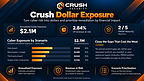
SCOTTSDALE, Ariz., Oct. 21, 2026 /PRNewswire/ — Crush Security today announced the launch of Crush Dollar Exposure, a new capability within its cybersecurity intelligence platform that translates cyber risk into financial exposure and helps organizations identify which security improvements can deliver the greatest reduction in potential financial loss.

For years, cybersecurity teams have measured their environments through vulnerabilities, risk scores, compliance percentages and control gaps. While valuable to security operations, those measurements often fail to answer the fundamental questions that executives and boards need answered:

How much could our cybersecurity weaknesses cost the business, and where should we invest to reduce that exposure?

Crush Dollar Exposure is designed to answer those questions by connecting an organization’s security posture, control coverage, threat intelligence and industry financial loss data to a quantitative view of cyber risk. The result is a financial perspective that enables security and business leaders to evaluate potential losses, compare remediation priorities and make more informed investment decisions.

From Technical Risk Scores to Financial Decisions

Traditional cybersecurity assessments often produce long lists of findings ranked by technical severity. But the most technically severe vulnerability is not necessarily the one that represents the greatest potential financial loss to the organization.

Crush Dollar Exposure changes the decision-making process by evaluating security gaps through their estimated contribution to financial risk. The capability provides four principal measurements:

Annualized Financial Exposure: An estimate of potential annual cyber losses, expressed in dollars.Financial Exposure Relative to Revenue: A view of modeled cyber exposure in relation to the organization’s annual revenue, providing business context.Value-at-Risk Analysis: Potential loss thresholds at selected probability levels, supported by loss-exceedance curves that illustrate the range of possible financial outcomes.Financially Prioritized Remediation: Security control gaps ranked by their modeled contribution to financial exposure, helping teams identify where remediation may reduce the most risk.

Rather than simply reporting that a security control is missing or a vulnerability is critical, Crush Dollar Exposure helps organizations understand the potential financial consequences and prioritize corrective action accordingly.

Connecting Every Security Gap to Business Impact

One of the capability’s key differentiators is its ability to connect security control weaknesses to modeled loss scenarios and financial consequences.

For example, a security team evaluating investments in identity protection, endpoint security and vulnerability remediation can use the model to determine which weaknesses contribute most significantly to estimated financial exposure. This allows security leaders to move beyond asking which problem is technically most severe and begin asking which investment is likely to provide the greatest financial risk reduction.

The analysis also connects control gaps to underlying loss scenarios, helping organizations understand how multiple weaknesses may contribute to the same business risk. For CFOs and executive teams, this provides a more financially grounded way to evaluate cybersecurity spending. For CISOs, it creates a defensible framework for explaining security priorities and communicating their potential business impact.

Transparent, Reproducible Risk Modeling — Not a Black-Box AI Score

Crush Dollar Exposure uses a quantitative methodology informed by the Factor Analysis of Information Risk (FAIR) framework and Monte Carlo simulation to model possible financial losses.

The methodology incorporates security control coverage, industry-relevant threat activity, recognized adversary techniques, organizational characteristics and established financial loss reference data.

Unlike opaque risk-scoring approaches, the capability is designed to make the assumptions, data inputs and modeled loss scenarios underlying its financial estimates visible and reviewable. Although Crush Security’s broader platform includes Cassandra, its AI-powered security advisor, the financial risk calculations themselves rely on defined quantitative modeling rather than generative AI.

The capability distinguishes between uncertainty in modeled financial outcomes and confidence in the quality of supporting data, helping executives understand both the estimated exposure and the limitations of the underlying analysis. This transparency is intended to support repeatable analysis, auditability and more defensible conversations with boards, regulators and financial stakeholders.

Giving CISOs and CFOs a Common Language

“Cybersecurity leaders are constantly asked to justify their budgets, but we’re still presenting information to boards that doesn’t directly answer the questions they’re asking,” said Josh Jones, CEO and Co-Founder of Crush Security. “Boards don’t just want to know how many vulnerabilities you have or how many security tools you’ve deployed. They want to understand what the risk could cost the business, where their money is going, and whether those investments are making a measurable difference.”

“With Crush Dollar Exposure, we’re connecting cybersecurity decisions to financial outcomes. Our goal is to give every CISO the ability to walk into a board meeting and explain their organization’s estimated financial exposure, identify the gaps driving it, and show which actions have the greatest potential to reduce that risk.” -Joshua Jones, CEO-

Built on the Crush Security Intelligence Platform

Crush Dollar Exposure extends Crush Security’s intelligence platform, which brings together vendor, control, compliance and threat data to support security investment decisions.

Powered by Cassandra, the platform helps organizations identify coverage gaps, compare technology and vendors, and optimize cybersecurity spending.

Risk calculations are performed within each customer’s data environment, with customer-specific information remaining within its designated security boundary. Anonymized and aggregated industry reference information supports comparative risk modeling.

Availability

Crush Dollar Exposure is available now within the Crush Security platform. Organizations interested in quantifying their financial cyber exposure, evaluating remediation priorities or scheduling a demonstration can visit www.CrushSecurity.com. Access information is available directly from Crush Security.

About Crush Security

Crush Security is a veteran-owned cybersecurity technology and advisory company headquartered in Scottsdale, Arizona.

Its proprietary intelligence platform, advisory services and cybersecurity procurement data help customers make data-driven technology purchasing decisions leveraging Crush Security’s resell capabilities.

Cassandra, its AI-powered advisor, unifies security, vendor and compliance intelligence to identify gaps, optimize investments, quantify risk and evaluate solutions to shorten the decision time and accuracy for each project.

Crush Security’s core intelligence platform is currently included at no separate subscription cost with eligible customer engagements.

Website: www.CrushSecurity.com

View original content to download multimedia:https://www.prnewswire.com/news-releases/crush-security-launches-crush-dollar-exposure-turning-cyber-risk-into-dollars-and-showing-which-security-investments-reduce-it-most-302914088.html

SOURCE Crush Security Group Inc

Continue Reading

Trending