Connect with us

Technology

Constructive Releases Safegres, an Open-Source Verifier for Secure Postgres

Published

on

The open-source tool grades who can reach which rows in a live Postgres database, catching row-level security and permission mistakes in CI before agents and AI app builders ship them.

SAN FRANCISCO, Nov. 6, 2026 /PRNewswire/ — Constructive (constructive.io), the company behind secure-by-default Postgres infrastructure for agents, today announced the public release of Safegres, an open-source verifier for Postgres security. Safegres is a tool from Constructive that audits the row-level security (RLS) policies and grants in a live PostgreSQL database, read-only, and reports which roles can reach which rows. It never touches application data or changes anything, so teams can run it against a production copy or automatically on every database change.

On October 30, 2026, Supabase stopped automatically granting access to new tables. Grants decide whether a role can reach a table, and RLS decides which rows it sees. Independent research shows why both layers matter. On Nov. 2, the Hamburg security firm Crissy Field and the German newspaper Handelsblatt scanned 159,041 projects built with Lovable, an AI app builder. They found 24,664 sites whose Postgres databases were serving records to anonymous visitors — 7,403 of them exposing email addresses. UpGuard found 16,326 databases exposing readable tables across about 300,000 domains, Shippable found tables open to the public in 25.6% of 4,994 projects built with Bolt.new, and CVE-2025-48757 covered 303 exposed endpoints across 170 Lovable apps. These are configuration mistakes AI tools can repeat at scale, and grant and RLS checks catch them. With agents now creating 80% of the databases on Neon, according to Databricks, and 70% of new Supabase databases, according to Supabase, these checks can’t depend on someone remembering to run them. Safegres checks grants and RLS together on every change, on any Postgres, giving teams building AI-generated and vibe-coded apps a way to verify database security before release.

Safegres is built on Constructive’s open-source “Babel for Postgres” — a nod to Babel, the tool that lets programs parse and rewrite JavaScript — a toolkit that translates SQL into a structured form programs can read, check and rewrite. The toolkit is built on PostgreSQL’s own grammar, the same rules the database itself uses, wrapped in nearly a decade of Constructive tooling, so programs can check and rewrite SQL exactly as the database will run it. Constructive’s Postgres parser is downloaded more than 9 million times a month, and its parser tools have been used in more than 1,100 public GitHub projects, including projects from teams at Canva, Gel Data (acquired by Vercel), Neon and Supabase.

“Our tools exist to make whole classes of Postgres vulnerabilities impossible to ship, catching mistakes like missing grants and open RLS policies before they ever become CVEs,” said Dan Lynch, Founder and CEO of Constructive. “The same open-source parser behind Safegres already runs in tooling built by teams at Canva and Supabase. With security incidents piling up across AI-built apps, these checks can’t be optional. They belong in the development loop, the automated checks that run every time a developer changes code, tested against real Postgres on every commit and migration.”

What Safegres Does

Two separate scores — 30+ security checks and 10+ performance checks, graded separately.Real access, not just settings — follows permissions through inherited roles, shared defaults, views and functions to show what each role can actually reach.Deterministic results — no AI judge. The same database always gets the same grade, and each report is fingerprinted.Tested against an answer key — a library of sample databases, each with known flaws, checks that Safegres finds what it should and nothing it shouldn’t.Built for CI/CD — runs in continuous integration and delivery (CI/CD), the automated checks that run every time a developer proposes a change, including on GitHub pull requests, and flags only what that change introduces.Works with the stacks teams use — ready-made settings for Supabase, PostgREST, Hasura, Graphile and Constructive. Supabase teams can use it to audit their RLS policies and grants.

“With the industry now focusing around software factories, every factory needs quality control at every station,” said Anmol Yadav, Head of Infrastructure and Co-founder of Constructive. “Dan and I have been building toward that for years, from replicable deployments and declarative config to treating infrastructure itself as an Abstract Syntax Tree (AST). Safegres puts database security on that same assembly line, so it runs in CI/CD on every commit whether a person or an agent wrote the change.”

For Agents That Write Postgres

The sample databases double as a test for AI agents: give an agent a flawed database, then re-audit to see whether it fixed the problem without creating new ones.

“We noticed that when Safegres runs in CI and GitHub checks, coding agents that can see the results pick up changes in the security and performance scores and fix the issues on their own,” said Lynch. “That turns the verifier into a feedback loop for building evals and self-improving agents.”

Availability

Safegres is open source under the MIT license and works with Supabase projects, any PostgreSQL database and common CI pipelines.

Safegres is part of a larger open-source toolkit from Constructive. pgpm organizes Postgres code into packages, pgsql-test runs tests against a real database, and Safegres checks every change for security and performance mistakes. Together they cover the full development loop, as described on PostgreSQL.org.

Learn more at constructive.io.

About Constructive

Constructive builds agent-first infrastructure, combining modular open-source Postgres with a secure-by-default database architecture designed for the AI era. As agents begin generating and operating applications, Constructive moves trust, access control, and data integrity into the database itself. Its platform spans the entire application stack, from database schemas to APIs to frontend integrations, using a compiler-driven approach to generate and enforce systems end to end. This unified model replaces fragmented tooling with a single, composable foundation for building secure, production-grade applications. Constructive’s open-source Postgres tooling has been used by teams at Canva, Gel Data (acquired by Vercel), Neon and Supabase, has been downloaded more than 275 million times, and supports the operation of nearly 50 million databases. Constructive is led by Dan Lynch, who has been building website builders since 2005 and co-founded two acquired companies, Brandcast (acquired by TIME) and Famo.us (acquired by AMZE), backed by investors including Marc Benioff, Reid Hoffman and Naval Ravikant. Learn more at constructive.io.

View original content to download multimedia:https://www.prnewswire.com/news-releases/constructive-releases-safegres-an-open-source-verifier-for-secure-postgres-302931735.html

SOURCE Constructive

Continue Reading

Technology

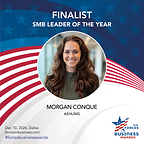
Ashling’s Morgan Conque Named SMB Leader of the Year Finalist at the 2026 U.S. Forces in Business Awards

Published

on

By

The world’s largest celebration of veteran talent lands in Dallas, Texas, on December 10 to spotlight outstanding former service members driving American business forward.

CHICAGO, Nov. 6, 2026 /PRNewswire/ — Morgan Conque, Vice President of Go-to-Market at Ashling, a leading global provider of AI and Automation consulting and development services, has been named a finalist for SMB Leader of the Year at the 2026 U.S. Forces in Business Awards. Now in its ninth year, the program is the world’s largest celebration of military veterans in the civilian workforce, with this year’s shortlist selected from hundreds of nominations.

A U.S. Army officer commissioned through ROTC, Morgan served with NATO forces in Germany, ran personnel operations in South Korea, and advised an Afghan army hospital, where she helped cut the medical evacuation cycle from 17 hours to 3. She concluded her service as the Medical Operations and Logistics Officer for the First Cavalry Division, supporting more than 18,000 soldiers.

Morgan’s military experience translated into business leadership from the start. Following her service, she led branch operations for a large specialty infusion pharmacy team, then moved into intelligent automation and rapidly expanded her scope from bid manager to leading sales platforms, enablement, content, and strategy. Her education supports that trajectory, including a Bachelor of Science in Biology from Seattle University, a Master of Science in Biosecurity and Disaster Preparedness from Saint Louis University, and an Executive MBA from Baylor University’s Hankamer School of Business.

Today, Morgan leads go-to-market strategy at Ashling, aligning sales, marketing, and partnership teams to drive the fast-paced growth and navigate the ever evolving market landscape. “I look back on my transition into AI and automation as serendipitous,” Conque said. “The discipline I built in the Army, leading teams, making decisions with incomplete information, and staying accountable to the mission, carried directly into this field and suited me well. I remain fascinated by the conversations I’m part of and excited about where the industry is headed.”

More than 200,000 service members leave active duty in the United States each year, yet research by ZipRecruiter and the Call of Duty Endowment found that almost one-third of veterans are underemployed, a rate 15.6% higher than among their non-veteran peers. Morgan’s career is a testament to what that talent can achieve. Established in 2018, the Forces in Business Awards celebrate veteran role models like her, reflecting the breadth of industries and professional disciplines where former service members are making their mark.

Rear Admiral (Ret.) Milton “Jamie” Sands III, President and CEO of Special Operations Warrior Foundation, official charity partner of the U.S. Forces in Business Awards, said: “Congratulations to this year’s finalists, whose achievements demonstrate the value military experience brings to business. Service develops leaders who take responsibility, build strong teams, and deliver under pressure. These finalists are putting those qualities to work in new ways, strengthening their organizations and communities while helping others see what is possible after military service.”

Marshall Sied, Co-Founder and Co-CEO of Ashling, said: “Morgan’s experience as a military veteran has clearly laid a strong foundation for the evolution of her career.  At Ashling, she balances our fast-paced industry and constantly evolving capabilities with enthusiasm and clarity.  Morgan has the unique ability of being a creative thinker, inspiring team leader, and strong operational executor all at once. We are honored to have Morgan help lead the charge on many of our most mission-critical initiatives. She is a very deserving finalist.”

Winners will be announced on December 10, 2026, at a black-tie gala in the Lincoln Ballroom at the Hilton Dallas Lincoln Centre, hosted by longtime CBS News anchor and Gold Star son Doug Dunbar.

About Ashling

Ashling is a global AI and automation consulting and development firm specializing in digital process transformation. They align on what value means for enterprises, design, build and manage solutions that work from pilot to production, and architect an operating model designed for rapid deployment and compounding success.

Ashling’s delivery accelerators get clients to production 5x faster and prove ROI sooner, backed by a delivery team of forward-deployed AI pods and award-winning innovation. Ashling is the firm enterprise clients trust, with over 400 clients across industries, an 86 NPS, and an unwavering commitment to the business outcomes they deliver.

About the Forces in Business Awards

The Forces in Business Awards is the world’s largest business celebration of the military community. Taking place in the United States and United Kingdom, the Awards program is the leading platform for uncovering and showcasing the achievements and talents of veterans, presenting them as visible role models for transitioning service members and recognizing aspirational employers for current and former servicemen and women. The prestigious events promote the value that veterans add to the economy after service.

Media Contact

Madison Ramsay, Senior Marketing Manager, Ashling madison.ramsay@ashlingpartners.com

View original content to download multimedia:https://www.prnewswire.com/news-releases/ashlings-morgan-conque-named-smb-leader-of-the-year-finalist-at-the-2026-us-forces-in-business-awards-302932150.html

SOURCE Ashling Partners

Continue Reading

Technology

Diamond Foundry Announces First-Ever D200mm Single-Crystal Diamond

Published

on

By

Breakthrough culminates 25 years of scientific pursuit and establishes a new scale for single-crystal diamond

SAN FRANCISCO, Nov. 6, 2026 /PRNewswire/ — Diamond Foundry Inc. today announced a major milestone in the history of materials technology: the creation of the first-ever D200mm single-crystal diamond, measuring 200 millimeters in diameter.

Diamond Foundry creates the world’s first 200mm single-crystal diamond, bringing diamond to semiconductor wafer scale.

The achievement marks a fundamental step forward in humanity’s ability to manufacture diamond as a technology material at semiconductor-relevant scale.

The announcement accompanies a keynote by Diamond Foundry CEO Martin Roscheisen, delivered by video at CarbonSemi 2026 in Ningbo, China. Watch the keynote: https://youtu.be/ae0XQBDlLMQ.

Diamond has long been recognized as an extraordinary material for technology. It combines the highest thermal conductivity with exceptional mechanical strength, electrical insulation, optical properties, and the potential for extreme electronic performance. Yet its use in advanced technology has been constrained by one basic limitation: size.

Diamond Foundry’s D200mm breakthrough changes that.

Producing single-crystal diamond at D200mm scale required overcoming fundamental challenges in crystal growth, plasma physics, reactor engineering, materials science, process control, and manufacturing. The result is not an assembly of individual diamond pieces and not a polycrystalline diamond wafer. It is a single-crystal diamond at D200mm scale.

“This is one of those milestones that once seemed almost impossible,” said Martin Roscheisen, CEO of Diamond Foundry Inc. “Hundreds of DF engineers, scientists, and technicians contributed to us getting here. It is the accumulated result of countless experiments, failures, inventions, rebuilt machines, and insights over more than a decade.”

Roscheisen particularly recognized Stefan Gsell and Martin Fischer, whose work on scaling single-crystal diamond began 25 years ago.

“Stefan and Martin pursued this goal for 25 years,” Roscheisen said. “There are very few examples in technology of someone sticking to a really hard scientific challenge with that level of perseverance. They kept going when the prevailing view was that single-crystal diamond simply could not be made at this scale. Today, the perseverance shows as the first-ever D200mm single-crystal diamond. And best of all, it makes D300mm predictable as well.”

From Gemstone Dimensions to Semiconductor Dimensions

The semiconductor industry is built around the ability to manufacture extraordinary materials at wafer scale. Silicon’s progression toward larger wafers transformed electronics by allowing increasingly sophisticated devices to be manufactured economically and repeatably.

Diamond has never had an equivalent scaling path.

Natural diamond is constrained by geology. Conventional lab-grown diamond has historically been constrained to relatively small crystal dimensions. Even as the extraordinary properties of diamond became increasingly relevant to high-power electronics, AI computing, optics, quantum systems, and other advanced technologies, crystal size remained a fundamental bottleneck.

The D200mm single-crystal diamond milestone demonstrates a path beyond that limitation.

For Diamond Foundry, the achievement is part of a broader effort to turn single-crystal diamond from a scarce material measured in gemstones into a tech-industrial semiconductor substrate manufactured at scale.

The implications are particularly significant as computing systems encounter increasingly severe thermal constraints. Modern AI processors concentrate enormous amounts of power into microscopic regions of silicon. Diamond’s exceptional thermal conductivity can spread that heat at the material level, creating new possibilities for chip architectures, power densities, reliability, and cooling.

Twenty-Five Years of Perseverance

The D200mm achievement has roots extending well beyond Diamond Foundry itself.

For 25 years, Gsell and Fischer pursued the underlying scientific and engineering challenge of growing high-quality single-crystal diamond of scalable size. Their work ultimately became part of a much larger effort involving hundreds of people across Diamond Foundry.

The milestone reflects advances spanning plasma generation, growth chemistry, reactor architecture, crystal engineering, thermal management, metrology, automation, and manufacturing.

“Technology history is often written around the moment something finally works,” Roscheisen said. “But that moment rests on the people who were willing to spend years — sometimes decades — making it work. This diamond exists because hundreds of people contributed, and because a few people refused to give up on the idea for 25 years.”

A New Scale for Diamond

Diamond Foundry views D200mm not as an endpoint, but as the beginning of a new manufacturing era for diamond.

The company is developing single-crystal diamond for semiconductor and advanced-technology applications where diamond’s combination of thermal, mechanical, electrical, and optical properties can enable performance beyond the limits of conventional materials.

The first D200mm crystal is shown as grown and unpolished — directly from the growth process.

For a material that nature forms only under extraordinary conditions deep inside the Earth, the significance is simple:

Single-crystal diamond has entered the wafer-scale era.

About Diamond Foundry Inc.

Diamond Foundry is the #1 producer of single-crystal diamond in the world. Founded in San Francisco, the company created the world’s first diamond wafer and is scaling volume production of chip substrates with a $2.77B EU Chips Act project in Spain.

Media contact: Jeff Yurek, j@df.com

View original content to download multimedia:https://www.prnewswire.com/news-releases/diamond-foundry-announces-first-ever-d200mm-single-crystal-diamond-302931849.html

SOURCE Diamond Foundry

Continue Reading

Technology

Qued Ranks No. 5 on FreightWaves’ 2027 FreightTech 25, Its Third Straight Year on the List

Published

on

By

An independent panel ranked the AI appointment scheduling platform No. 5 of 25 companies selected from the 2027 FreightTech 100. FreightWaves announced the rankings Oct. 26 at the inaugural F3 Awards Dinner in Chattanooga.

BROADLANDS, Va., Nov. 6, 2026 /PRNewswire-PRWeb/ — Qued, a leader in developing sophisticated, automated appointment scheduling solutions for supply chain and logistics companies, today announced that it ranked No. 5 on the 2027 FreightTech 25, the FreightWaves list of 25 companies recognized for innovation across freight technology and transportation. FreightWaves revealed the list on Oct. 26 at the inaugural F3 Awards Dinner in Chattanooga, Tennessee.

Our customers earned this ranking. They book their appointments through Qued from inside the systems they already run, and we will keep building for the people who move freight every day.

This is the third year in a row Qued has made the FreightTech 25. Qued debuted at No. 6 in 2025 and ranked No. 3 in 2026.

The FreightTech 25 is selected from the FreightTech 100, a broader list of 100 companies FreightWaves recognizes for innovation in freight and supply chain technology. An independent panel ranks those 100 companies to set the top 25, and the accounting firm Henderson, Hutcherson & McCullough oversees the voting. FreightWaves recognized all 100 companies at the F3 Awards Dinner, where Sope Creek presented the 2027 FreightTech Awards.

“Appointment scheduling rarely makes headlines, so a third straight year on the FreightTech 25 means a lot to our team,” said Prasad Gollapalli, CEO and founder of Qued. “Our customers earned this ranking. They book their appointments through Qued from inside the systems they already run, and we will keep building for the people who move freight every day.”

Qued’s platform uses machine learning to find the best appointment slots in real time, weighing ETAs, facility capacity, historical performance, and the specific requirements of each location. Qued connects directly to the transportation management system a broker, 3PL, or carrier already runs, and it books through facility portals, email, and AI voice calls to facilities that only book by phone.

The full 2027 FreightTech 25 is published on FreightWaves.com.

About Qued

Qued is a cloud-based, AI-powered smart workflow automation platform transforming load appointment scheduling for brokers, 3PLs, and carriers. By automating the scheduling process, Qued eliminates manual work, simplifies multi-stop load appointments, and ensures seamless coordination across the supply chain, improving both operational efficiency and customer satisfaction. For more information, visit www.qued.com or contact us at contact.us@qued.com.

Media Contact

Adam Robinson, Qued, 1 2148720780, adam@the-robinson-agency.com, https://www.qued.com/

View original content:https://www.prweb.com/releases/qued-ranks-no-5-on-freightwaves-2027-freighttech-25-its-third-straight-year-on-the-list-302931740.html

SOURCE Qued

Continue Reading

Trending