Connect with us

Technology

Global Consumer Media Spend Grew 4.5% to $2.27T in 2023, Second Straight Year of Slower Growth, Stunted By Rising Inflation & Cuts In Discretionary Spend

Published

on

Global consumer spending on overall media content and technology grew at a 4.5% rate in 2023 to $2.272 trillion, the second consecutive year of decelerating growth after a 6.1% increase in 2022, which followed the strongest growth in consumer media spending in a decade in 2021 at 6.7%, according to new research by PQ Media, the leading provider of media econometrics.

STAMFORD, Conn., June 4, 2024 /PRNewswire-PRWeb/ — Global consumer spending on overall media content and technology grew at a 4.5% rate in 2023 to $2.272 trillion, the second consecutive year of decelerating growth after a 6.1% increase in 2022, which followed the strongest growth in consumer media spending in a decade in 2021 at 6.7%, according to new research by PQ Media, the leading provider of media econometrics.

While the pandemic briefly interrupted key secular trends in 2020-2021, this was a near-term disruption of long-term trends that resumed in 2022 and will continue during the 2024-2028 period, such as decelerated growth or outright declines in various digital and traditional media categories.

Growth slowed even more than expected in 2023 as inflation rates soared to the highest levels in nearly 15 years. Growth might have decelerated further if not for select media platforms continuing solid upticks, including streaming audio subscriptions; filmed entertainment via streaming video and in-theater releases, as the movie industry continued to rebound from the pandemic crash; and console and digital videogames, according to the Global Consumer Spending on Media Forecast 2024-2028.

Consumer expenditures on media content grew 8.2% in 2023 to $934.13 billion worldwide, while total media-related technology spending increased only 1.8% to $1.278 trillion. End-user spending on digital media content and tech rose 6.1% to $1.687 trillion last year, while consumer outlays for traditional media content and tech were flat at $585.17 billion.

The United States remained the largest consumer media and tech market with total spending of $527.21 billion in 2023, while South Africa was the fastest growing of the top 20 global markets, rising 7.7%. The average consumer spent an average of $386.64 on all media content and tech, a 3.8% gain over 2022, of which $287.06 was spent on digital media and $99.58 on traditional media, according to the Global Consumer Spending on Media Forecast 2024-2028.

PQ Media expects the 2024-2028 period to be fairly robust, fueled by international sporting events that will drive up spending on television, including new TV sales, streaming video subscriptions and VOD fees for popular sports in various nations, such as cycling in the Netherlands, beach volleyball in Brazil, and the Paris Summer Olympics, which will fuel consumer demand in Western Europe, where other major sporting events, like basketball and soccer, will also be telecast in prime time.

The same phenomenon will propel the North and South American markets, when the US, Canada and Mexico tri-host the FIFA World Cup in 2026 and the US hosts the Summer Olympics in 2028. Meanwhile, other media like radio, newspapers and magazines will also exhibit higher end-user spend during even years when more political elections will be held, including campaigns in 15 of the top 20 global markets in 2024.

“However, while the pandemic briefly interrupted key secular trends in 2020-2021, this was a near-term disruption of long-term trends that resumed in 2022 and will continue during the 2024-2028 period, such as decelerated growth or outright declines in various digital and traditional media and tech categories, like dial-up internet; music CDs and CD players; and video DVDs and DVD players,” said PQ Media CEO Patrick Quinn. “In addition to even- and odd-year growth disparities, macroeconomic headwinds, like high inflation and interest rates, and increased geopolitical tensions in the Middle East, have led some consumers to trim discretionary spending, as evidenced by flat consumer book sales after double-digit growth at the pandemic’s peak. Additionally, the videogame sector is exhibiting its lowest growth rates ever, following pandemic-fueled upswings that were further fueled by the launch of new PlayStation, Xbox and Nintendo consoles.”

Meanwhile, traditional media expenditures will be essentially flat during the 2024-2028 period, with spending declines in odd years. Most traditional media channels have begun to post annual declines, not just in odd years, as only two categories have continued to post growth in the post-pandemic era – filmed entertainment and recorded music.

Going forward, PQ Media expects digital media growth to also decelerate as secular trends have re-emerged post-pandemic, with slowing consumer media usage impacting consumer media spending, as many large global markets reaching penetration saturation.

Other highlights from the new Global Consumer Spending on Media Forecast 2024-2028 include:

Pure-play mobile media was the largest of the 10 hybrid-media silo spending categories in 2023 at $544.48 billion, while recorded music was the fastest growing, rising 13.4%;Wireless data subscriptions was the largest of the 28 digital media categories in 2023 at $283.75 billion, while digital audio streaming and satellite radio posted the fastest growth, up 20.2%;Basic and premium TV subscriptions was the largest of the 14 traditional media categories in 2023 at $228.97 billion, while filmed entertainment via theater admissions and streaming video subscriptions had the strongest growth, up 10.2%;Russia ranked first among the top global markets in digital media’s share of the country’s overall media content and tech spend in 2023 at 84.5%, as Japan ranked first in average consumer expenditures on all media at $1,735.38;Global consumer spending on total media content and tech is forecast to rise 5.7% in 2024, while the US market is projected to post a 4.4% gain.

About the Report:

PQ Media’s 11th annual Global Consumer Spending on Media Forecast 2024-2028 delivers the most comprehensive and actionable strategic intelligence on consumer spending on digital and traditional media content and technology, including econometric data and analysis of 2 overall spending sectors (media content and technology); 5 total spending segments (unit purchases, content subscriptions, access, devices, and software); and 28 digital and 14 traditional media content and technology categories. Click the report links above to DOWNLOAD FREE REPORT SAMPLES.

About PQ Media:

PQ Media delivers intelligent data and analysis to the world’s leading media and technology organizations via syndicated market intelligence reports and custom drill-down research. We publish the annual Global Media Forecast Series 2024, a three-report series in which each report focuses on one of the industry’s three KPIs to provide the only holistic view of the global media economy, including the new 2024 editions of the Global Consumer Spending on Media Forecast; the Global Advertising & Marketing Spending Forecast; and the Global Consumer Media Usage Forecast.

Click the links above to access a FREE combined GMF Series 2024 executive summary, sample datasets, and more information about our Specially Priced Three-Report Bundle License, as well as links to each report’s dedicated landing page.

Media Contact

Patrick Quinn, PQ Media, 1 2039215249, pquinn@pqmedia.com , https://www.pqmedia.com 

Leo Kivijarv, PQ Media, 1 2039215249, lkivijarv@pqmedia.com , https://www.pqmedia.com 

View original content to download multimedia:https://www.prweb.com/releases/global-consumer-media-spend-grew-4-5-to-2-27t-in-2023–second-straight-year-of-slower-growth-stunted-by-rising-inflation–cuts-in-discretionary-spend-302161662.html

SOURCE PQ Media

Continue Reading

Technology

Rencore Launches New Multi-AI Governance Functionality

Published

on

By

Rencore extends its governance platform beyond Microsoft 365 to govern every enterprise AI from one control plane

New AI & Agents capabilities bring Claude Enterprise, with ChatGPT Enterprise to follow, under the same identity-anchored governance as Microsoft 365 Copilot, Copilot Studio and SharePoint agents

MUNICH, Oct. 7, 2026 /PRNewswire/ — Rencore, the Germany-based provider of Microsoft 365 and AI governance tools, today announced multi-AI governance in its AI & Agents module. For the first time, IT and security teams can govern Microsoft 365, Microsoft Copilot, Copilot Studio, agents, and Claude Enterprise from one platform, under one set of policies, anchored to the identities they already manage in Microsoft Entra ID. Claude Enterprise governance is now available in preview, and ChatGPT Enterprise governance follows later in October 2026.

The preview is opt-in. Organizations can request preview access and help validate use cases with Rencore’s product team.

The launch answers a shift most enterprises did not plan for. “Copilot was maybe the plan, but multi-AI is the reality,” Rencore CEO Matthias Einig said at Rencore’s launch webinar. Analysts like Gartner confirm this development, finding that two-thirds of organizations deploy at least two other enterprise generative AI assistants alongside Microsoft 365 Copilot, even advising customers to resist defaulting to a single vendor (compare “Microsoft 365 Copilot and Agents: Assessing Impact and Value in 2026”, Gartner, 2026, doc ID 856639). Governance, meanwhile, has stayed split across one administration layer per provider.

Four consoles, one person

Employees now use several assistants side by side: Claude for deeper research and coding, Copilot for quick everyday tasks, ChatGPT or Gemini elsewhere. Each has its own management function, and each governs only itself. The same end user appears as unconnected accounts in four systems, often under slightly different email addresses, and no tool sees across them.

The data has not moved. It still lives predominantly in Microsoft 365. But since early 2026, ChatGPT and Claude have added Microsoft 365 connectors that read from, and in Claude’s case write to, SharePoint, OneDrive and Outlook. Every assistant connected this way inherits the oversharing and sprawl already present in the tenant.

Compliance and cost add pressure. Provider audit logs are kept for a short time, as little as 30 days, so evidence for an incident review can be gone before anyone asks for it. Consumption pricing makes spend harder to predict: Microsoft moved Copilot Cowork to pay-per-use in July 2026. And McKinsey finds that while nine in ten organizations use AI, only 6 percent achieve significant value from it, because pilots stall when nobody can say what the AI can reach and who owns it (compare “The State of AI in 2025: Agents, Innovation, and Transformation”, McKinsey, 2025).

One control plane, built around identity

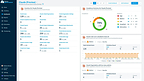
To Rencore, a new AI is another inventory. Customers connect each platform through its provider’s own API, such as Anthropic’s Compliance API for Claude Enterprise, and Rencore keeps that inventory current, as it already does for Microsoft 365. Microsoft Entra ID is the anchor: every AI account is matched to a person, through single sign-on where it exists and through email and pattern matching where it does not. IT and platform admins see the person, not four separate consoles, and can write policies that cross service boundaries.

With the AI & Agents module, organizations can:

Inventory every AI estate: for Claude Enterprise, more than 400 event types covering users, groups, roles, projects with owners and collaborators, chats, Claude Code and Cowork sessions, artifacts, skills, connectors and plugins, plus 46 organization settings. For ChatGPT Enterprise, workspaces, custom GPTs, agents, service accounts, canvases, library files, and per-project connectors.Find the risks that matter: artifacts or projects shared publicly, external users and contractors with AI seats, and orphaned accounts that remain active in Claude after the user is deactivated in Entra ID.Track seats and spend: see usage, token consumption, and cost by user, group, department, or cost center, and spot unused licenses to reassign.Keep the history: Rencore pulls activity continuously, building a record that outlasts Claude Enterprise’s 30-day window.Act on findings: use out-of-the-box policies, including 35 for ChatGPT Enterprise, and trigger automations such as deleting a project or unpublishing an agent, with optional approval.Keep end users in Teams: owners manage access, approvals, and reviews in the Rencore Teams app, the same way they already handle Microsoft 365 requests.

Rencore provides operational governance, not runtime guardrails. It reads metadata only and never reads, stores, or displays message bodies, session transcripts, or file content. It works alongside Microsoft Purview and supplies the up-to-date inventories, ownership and lifecycle data that audits under the EU AI Act, GDPR, NIS2 and DORA depend on.

“If you only govern Copilot, you are governing a minority of the AI your employees actually use, and you cannot govern the whole picture if you only see part of it,” said Matthias Einig, CEO of Rencore. “Governance is the enabler for AI. When people know they are working within the right guardrails, they have the confidence to adopt AI, and IT stays in control.”

“We are extending a product that is already proven at enterprise scale, with the same interface, policies, automations and access reviews customers run for Microsoft 365 today,” said Tiina Rytkönen, VP of Product and Engineering at Rencore. “Entra ID is our anchor. Instead of looking into each AI service separately, you are looking at the person.”

Availability

Multi-AI governance is part of the AI & Agents module, an optional paid module on Rencore’s Premium and Enterprise plans. Claude Enterprise governance is in preview now, and the ChatGPT Enterprise preview opens later in October 2026. Further AI services will follow based on customer demand. On the Microsoft side, Rencore is adding support for Agent 365 and Agent Builder, plus cost analysis for Copilot Cowork until the end of 2026.

The launch webinar, “Your company uses multiple AIs already. Why do you only govern one?”, with Matthias Einig and Tiina Rytkönen, including a live product demo, is available on demand at rencore.com.

About Rencore

Rencore helps organizations govern Microsoft 365 and the AI built on it, and now the AI beyond it. The Rencore Governance platform gives IT, security, and compliance teams visibility, policy automation, and remediation across Microsoft 365, Copilot, agents, and enterprise AI platforms. Rencore is headquartered in Munich, Germany, and is ISO 27001:2022 certified and SOC 2 Type 2 attested. Learn more at rencore.com.

View original content to download multimedia:https://www.prnewswire.com/news-releases/rencore-launches-new-multi-ai-governance-functionality-302900877.html

SOURCE Rencore

Continue Reading

Technology

XPENG G9L Completes First Production Trial in Europe

Published

on

By

XPENG’s Next-Gen AI Flagship SUV G9L has successfully completed its production trial at Magna’s complete vehicle facility in Graz, Austria, becoming the fourth XPENG model to be produced in Europe after the G6, G9 and P7+.Following the successful production trial, the first European G9L will travel 1,324 kilometers from Graz to Paris ahead of its global premiere at the Paris Motor Show on October 12, demonstrating the vehicle’s safety, charging and driving dynamics under real-world conditions enabled by the cutting-edge AI technologies.The G9L marks another step in XPENG’s European localization strategy, combining local manufacturing in Europe with global vehicle development and standards.

GRAZ, Austria, Oct. 7, 2026 /PRNewswire/ — XPeng Inc. (“XPENG” or “the Company,” NYSE: XPEV; HKEX: 9868), a leading global Physical AI company, today announces that its Next-Gen AI Flagship SUV G9L has successfully completed its first production trial at Magna in Graz, Austria, marking a new milestone in its European manufacturing expansion.

The G9L is the fourth XPENG model to undergo production at the Austrian facility, where XPENG’s G6, G9 and P7+ are actively being produced. The milestone comes one year after XPENG and Magna began local production in Graz and signals the latest expansion of their European manufacturing partnership.

The first pre-production G9L will now travel 1,324 kilometers from Graz to Paris ahead of its global launch at the Paris Motor Show on October 12, putting the vehicle through a real-world journey focused on charging, safety and driving performance before it is displayed at XPENG’s stand.

The milestone builds on XPENG’s accelerating growth in Europe. The company has delivered more than 100,000 vehicles overseas to date, including over 60,000 in Europe. In France alone, more than 6,000 vehicles have been delivered since entering the market two years ago. In the second quarter of 2026, XPENG’s overseas deliveries surpassed 20,000 units for the first time, up 81% year-on-year, with overseas markets contributing 25% of first-half revenue at an average selling price exceeding €40,000.

A Global Vehicle Built to Global Standards

The G9L is being developed as a global model, with plans to launch across 64 countries and regions. The vehicle has been developed and validated against global standards from the outset, and its global validation program has covered 26 countries and regions over three years, with approximately 6.74 million kilometers of road testing.

The G9L has completed 192 crash tests and more than 110 testing protocols, including validation for both left- and right-hand-drive configurations. It is engineered to meet four major global five-star safety standards (E-NCAP, A-NCAP, C-NCAP and C-IASI) and incorporates active and passive safety systems alongside redundant safety architecture.

The testing program also included an industry-first seven-stage “720-degree” safety challenge spanning land, water and air conditions.

Next-Gen AI Technology Meets Advanced Driving Dynamics

The G9L combines XPENG’s latest AI capabilities with a chassis system designed to balance ride comfort and driving dynamics. Its standard chassis specification includes dual-chamber air suspension, intelligent variable damping and rear-wheel steering with up to 15 degrees of steering angle.

The rear-wheel steering system is designed to improve maneuverability at low speeds while supporting vehicle stability during higher-speed driving.

Deepening Local Manufacturing in Europe

XPENG’s collaboration with Magna marks the company’s first European local manufacturing program. Production at Magna’s Graz facility officially began in the third quarter of 2025. One year into the partnership, the two companies are expanding their cooperation to support XPENG’s growing portfolio of vehicles for European and global markets.

The G9L will be manufactured at Magna’s Graz facility, a site with a long-standing track record in producing vehicles for premium automotive brands, combining Magna’s experience in high-end vehicle manufacturing with XPENG’s advanced electric vehicle and AI technologies.

“The G9L marks another important milestone in our collaboration with XPENG,” said Roland Prettner, President of Magna Complete Vehicles. “It demonstrates how strong teamwork can translate XPENG’s product vision and technical requirements into robust production processes, supported by our vehicle manufacturing expertise and a shared commitment to quality.”

“The latest production milestone represents an important step in our journey from entering Europe to building for Europe. By combining global vehicle development and AI technology with established local manufacturing expertise, we are bringing the next-gen XPENG vehicles closer to customers in Europe and around the world,” said Zhang Li, Vice President of Global Manufacturing at XPENG.

From Graz to Paris for the Global Premiere

The first European pre-production G9L will leave Graz for Paris ahead of its global debut on October 12. The 1,324-kilometer journey will provide a real-world demonstration of the vehicle’s charging capability, safety systems and driving performance across Europe.

At the Paris Motor Show, XPENG will officially unveil the G9L to global audiences and open orders for its Next-Gen AI Flagship SUV, representing the latest step in its expansion of its European manufacturing and product portfolio as the company continues to develop vehicles to global standards and produce them locally to serve customers worldwide.

If you are interested in XPENG’s Paris Motor Show event, please contact:
pr@xiaopeng.com 

XPENG Paris Motor Show Press Kit:
https://drive.google.com/drive/folders/1I8SLTqDREdDCzeY5YUu8LjLe7jlPI6e2

About XPENG

XPENG is a leading global Physical AI company, dedicated to bringing artificial intelligence into the physical world to reshape future mobility and smart living. Through in-house R&D, XPENG has developed a full-stack Physical AI architecture spanning Turing AI chips, world foundation models, and highly integrated software and hardware applications. This unified technology foundation of XPENG powers an expansive product portfolio of smart EVs, robotaxis, and humanoid robots, advancing the deployment of Physical AI at scale. Headquartered in Guangzhou, China, XPENG is dual-primary listed on the New York Stock Exchange and the Hong Kong Stock Exchange. With global capabilities across R&D, manufacturing, sales, and services, XPENG drives continuous technological innovation and fosters an open Physical AI ecosystem, making life smarter, safer, and better for users worldwide. For more information, please visit https://www.xpeng.com/.

View original content:https://www.prnewswire.com/news-releases/xpeng-g9l-completes-first-production-trial-in-europe-302901754.html

SOURCE XPENG

Continue Reading

Technology

Before You Take That Job or Stay Put, New Data Reveals if Women Actually Get Promoted There

Published

on

By

Free new database gives women X-ray vision into whether every major U.S. company promotes women equally — rankings from real workforce numbers.

ATLANTA, Oct. 7, 2026 /PRNewswire/ — Every working woman has asked herself the same quiet question: do women actually get ahead here? Until now, the only way to answer it was to take the job and wait years to find out. Now the answer takes about thirty seconds. Type nearly any major U.S. employer’s name into a free public site recently launched by data scientists and funded by the Women Leaders Association, and see its Glass Ceiling Score: a simple measure of whether women there rise into management and executive jobs at the same rate as men, calculated from the company’s actual workforce numbers — not its recruiting brochure.

Think of it as a Glassdoor for promotions. Before accepting an offer, before asking for a raise or a bigger role, before believing a Careers page that promises “women thrive here,” a woman can check what the numbers say — about the company courting her, and about the one she works for now. Women earn roughly 15 percent less than men on average, Pew Research estimates, and that gap usually starts with who gets picked for management. Pay gets measured constantly; promotion almost never — until now.

Two scores, built from the numbers companies cannot massage

By analyzing each employer’s workforce counts by gender and job title, the team developed two metrics:

The Glass Ceiling Score measures whether women advance into executive roles at the same rate as men.

The Management Entry Score measures whether women reach first-level management at comparable rates — the rung where research shows most careers stall.

Anyone can look up a company at no cost and see both scores, compare employers within an industry, and drill down by metro area and state, where the tool ranks the major employers in each market and highlights the top performers.

“Women have been told for fifty years to try harder, negotiate harder, and find a mentor. The missing piece was never effort — it was information,” said Lydia Price, 2026-2027 Volunteer Chair of the Women Leaders Association. “When a woman can compare how her employer advances women on average in comparison to men on average it changes the entire frame of reference, the conversation changes from trust us to show me.” The companies that excel in promoting women equally into management also receive Top Women’s Workplace awards at the chapter and national levels.

Who the data serves

Women entering the workforce or considering offers can identify employers with strong advancement records. Current employees can benchmark their own company and bring data to promotion and career-development conversations. Consumers and investors can direct support toward companies with fair practices, and corporate leaders can see — often for the first time — how their promotion patterns compare with competitors’.

Building on a decade of gender-equality research

The Glass Ceiling Score stands on the shoulders of a decade of important, groundbreaking work. The Economist’s influential Glass Ceiling Index (https://www.economist.com/interactive/graphic-detail/glass-ceiling-index) has put the issue on the global agenda by ranking conditions for working women annually — though at the country level, not by employer. The Bloomberg Gender-Equality Index (https://www.bloomberg.com/company/press/bloomberg-2023-gei/) helped set early standards for corporate transparency, tracking several hundred public companies that self-reported through voluntary disclosure. Forbes’ widely read Best Employers for Women list (https://www.forbes.com/lists/top-companies-women/) surveys employees at a few hundred large firms each year, and The Times and Business in the Community’s respected Top 50 Employers for Gender recognizes UK organizations that apply for consideration.

The Glass Ceiling Score builds from that and goes further on every dimension: it covers far more companies, publishes an individual score by company rather than a limited list of a few hundred, offers location-level drill-downs, and rests on unambiguous workforce statistics rather than surveys, self-disclosure, or applications. And because every score is computed directly from actual workforce data without remuneration, sponsorships, payments, and public relations cannot influence a company’s result — and no employer can opt out of being measured.

“Earlier indexes did pioneering work, but each could only cover the companies that participated or made a short list. We measured everyone,” Price said. “If an employer promotes women fairly, the data will celebrate it. If it doesn’t, the data will say that too — and for the first time, a woman gets to see it before she signs the offer letter.”

What comes next

The initial release covers most major U.S. employers, with expansion planned across Europe and Asia. Future versions will add deeper demographic analysis, including promotion-fairness scoring for women of color and other underrepresented groups. The project was funded by the Women Leaders and organizers expect additional women’s foundations and equal-pay philanthropists to support the effort, with the goal of keeping the platform permanently free to women worldwide.

The tool is available now at https://WomanLeaders.org/r/GlassCeiling

About the Women Leaders Association

The Women Leaders Association is a non-profit committed to the development and advancement of women in the corporate arena, with chapters in most major U.S. cities. The tool includes analysis by key metros and states, with rankings of the major employers in each, including Chicago, Philadelphia, New York, Boston, Denver, Washington, Dallas, Houston, San Diego, Los Angeles, Seattle, Charlotte, Minneapolis, Atlanta, Milwaukee, Cleveland, Nashville, Detroit, San Antonio, Cincinnati, Omaha, St. Louis, San Francisco, Salt Lake City, Indianapolis, Grand Rapids, Phoenix, Portland, Miami, Austin, Baltimore, Tampa, Orlando, Hartford, Raleigh, Louisville, Pittsburgh, Norfolk, Richmond, Kansas City, Las Vegas, Greensboro, Memphis, Oklahoma City, Columbus, Tulsa, Sacramento, Jacksonville, Birmingham, Albuquerque, Rochester, Boise, Knoxville, New Orleans, Buffalo, Baton Rouge, Charleston, Spokane, El Paso, Chattanooga, Little Rock, Greenville, Providence, Springfield, Honolulu, Madison, Columbia, Tucson, Stockton, Des Moines, Syracuse, Harrisburg, Jackson, Bakersfield, Akron, Wichita, and Augusta, plus most states including California, Texas, Florida, and New York.

Media Contact:

Lydia Price
2026-2027 Volunteer Chair, Women Leaders Association
Lydia@WomanLeaders.org 678-427-6771

View original content to download multimedia:https://www.prnewswire.com/news-releases/before-you-take-that-job-or-stay-put-new-data-reveals-if-women-actually-get-promoted-there-302901729.html

SOURCE Women Leaders Association

Continue Reading

Trending