Connect with us

Technology

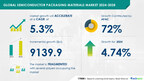
Semiconductor Packaging Materials Market size is set to grow by USD 9.13 billion from 2024-2028, Increasing miniaturization of electronic devices and growing application of semiconductor ICs in IoT to boost the market growth, Technavio

Published

on

NEW YORK, June 6, 2024 /PRNewswire/ — The global semiconductor packaging materials market size is estimated to grow by USD 9.13 billion from 2024-2028, according to Technavio. The market is estimated to grow at a CAGR of over 5.3%  during the forecast period. The semiconductor packaging materials market is experiencing growth due to the increasing adoption of lead-free packaging, driven by international compliance standards such as RoHS. Companies are using matte tin and nickel-palladium-silver alloys as lead substitutes in lead frame packages. Additionally, SiP packages, which can contain multiple ICs and passive components in a single package, are gaining popularity for system integration and cost benefits. Flip-chip technology, which reduces interconnect length and signal inductance, is also contributing to market growth. These trends are expected to continue during the forecast period. 

Get detailed analysis on regions,market segments, customer landscape, and companies- View the snapshot of this report

Forecast period

2024-2028

Base Year

2023

Historic Data

2018 – 2022

Segment Covered

Material (Organic substrates, Lead frames, Bonding wires, Ceramic packages, and Others), End-user (Consumer electronics, Automotive, Medical devices, Communication and telecom, and Others), and Geography (APAC, North America, Europe, South America, and Middle East and Africa)

Region Covered

APAC, North America, Europe, South America, and Middle East and Africa

Key companies profiled

Amkor Technology Inc., ASE Technology Holding Co. Ltd., BASF SE, ChipMOS TECHNOLOGIES INC., DuPont de Nemours Inc., Henkel AG and Co. KGaA, Heraeus Holding GmbH, Hitachi Ltd., Honeywell International Inc., Indium Corp., Intel Corp., KYOCERA Corp., LG Innotek Co. Ltd., MITSUI and CO. LTD., Nan Ya Printed Circuit Board Corp., Nippon Steel Corp., Powertech Technology Inc., Samsung Electronics Co. Ltd., Taiwan SEMICONDUCTOR CO. LTD., and Texas Instruments Inc.


Key Market Trends Fueling Growth

The Semiconductor Packaging Materials market is experiencing significant growth due to the increasing demand for advanced electronic devices. Dielectrics, substrates, and encapsulants are key packaging materials used in this industry. Notable trends include the use of advanced materials like organics and polymers for substrates, and the adoption of chip-on-film and flip chip packaging technologies.

Leadframe materials, such as copper and lead, are also in high demand. Solder materials play a crucial role in the assembly process, while adhesives ensure the reliability and durability of the packages. The market is expected to continue its upward trajectory, driven by the need for smaller, faster, and more energy-efficient devices. 

Market Challenges

The semiconductor packaging materials market faces challenges due to the increasing cost of manufacturing ICs. With the demand for compact ICs and new 3D packaging solutions, fabrication plants require expensive equipment. The complex manufacturing process and higher probability of defects add to the overall cost.Rapid technology advances in the semiconductor industry further increase equipment costs. As a result, companies are outsourcing fabrication to specialized foundries, reducing potential customers for packaging materials vendors. This trend could impact the market’s growth during the forecast period.The semiconductor packaging materials market faces several challenges in delivering advanced solutions. Dielectrics, such as silicon oxide and silicon nitride, are crucial for insulation and protection. However, their high cost and limited thermal stability pose challenges. Ceramics and composites are alternatives, offering better thermal properties but with challenges in uniformity and consistency. Soldering materials, like solder pastes and preforms, ensure reliable electrical connections.Yet, the need for high-temperature and low-melting-point materials creates challenges. Adhesives, like epoxies and silicones, bond various components together. However, ensuring compatibility with different materials and maintaining reliability over time remains a challenge. Overall, the semiconductor packaging materials market requires continuous innovation to address these challenges and deliver high-performance, cost-effective, and reliable solutions.

Research report provides comprehensive data on impact of trend, driver and challenges – Download a Sample Report

Segment Overview 

Material 1.1 Organic substrates1.2 Lead frames1.3 Bonding wires1.4 Ceramic packages1.5 OthersEnd-user 2.1 Consumer electronics2.2 Automotive2.3 Medical devices2.4 Communication and telecom2.5 OthersGeography 3.1 APAC3.2 North America3.3 Europe3.4 South America3.5 Middle East and Africa

1.1 Organic substrates-  The organic substrates market for semiconductor packaging materials is projected to expand significantly during the forecast period. These materials serve as the foundation for individual semiconductor devices and ICs, requiring them to be efficient conductors of electricity and thin for use in demanding applications. Organic substrates, surrounded by low-loss and ultra-thin dielectric materials, are increasingly preferred over lead frames and bonding wires due to their flexibility as interconnects.

Samsung Electro-Mechanics is a key vendor offering advanced organic substrates for various industries, including mobile devices, automotive, and IoT, featuring build-up layers and high-density interconnections. The increasing demand for semiconductor packaging will fuel the growth of the organic substrates segment in the global semiconductor packaging materials market.

For more information on market segmentation with geographical analysis including forecast (2024-2028) and historic data (2018 – 2022)  – Download a Sample Report

Research Analysis

The Semiconductor Packaging Materials Market encompasses various components essential for the production of semiconductor packages. These materials include Packaging Technologies, such as Liquid Encapsulation and Wafer Bonding. Leadframes and Substrates, like IC Substrates and Tape Substrates, serve as the foundation for semiconductor devices. Encapsulation Resins and Die Attach Materials ensure the protection and attachment of semiconductor dies. Underfill Materials enhance the reliability and durability of semiconductor packages.

Bonding Wires and Solder Balls facilitate the interconnection of semiconductor components. Photopolymer Films and Electroless Plating contribute to the production process through their role in photolithography and electroless deposition, respectively. Dielectric Materials provide insulation and electrical separation within semiconductor packages. Through-Silicon Vias enable the vertical interconnection of semiconductor layers. Collectively, these materials play a crucial role in the semiconductor industry, driving innovation and advancements in technology.

Market Research Overview

The Semiconductor Packaging Materials market encompasses various components used in the production and protection of semiconductor devices. These materials include adhesives, encapsulants, underfills, substrates, and solder materials. Adhesives are used to attach components to the substrate, while encapsulants provide protection to the semiconductor die.

Underfills fill the gaps between the die and the substrate, ensuring proper electrical connection. Substrates serve as the base for the semiconductor components, while solder materials are used to connect the semiconductor die to the package pins. The use of these materials is essential in the semiconductor industry to ensure the functionality and reliability of electronic devices.

Table of Contents:

1 Executive Summary
2 Market Landscape
3 Market Sizing
4 Historic Market Size
5 Five Forces Analysis
6 Market Segmentation

MaterialOrganic SubstratesLead FramesBonding WiresCeramic PackagesOthersEnd-userConsumer ElectronicsAutomotiveMedical DevicesCommunication And TelecomOthersGeographyAPACNorth AmericaEuropeSouth AmericaMiddle East And Africa

7 Customer Landscape
8 Geographic Landscape
9 Drivers, Challenges, and Trends
10 Company Landscape
11 Company Analysis
12 Appendix

About Technavio

Technavio is a leading global technology research and advisory company. Their research and analysis focuses on emerging market trends and provides actionable insights to help businesses identify market opportunities and develop effective strategies to optimize their market positions.

With over 500 specialized analysts, Technavio’s report library consists of more than 17,000 reports and counting, covering 800 technologies, spanning across 50 countries. Their client base consists of enterprises of all sizes, including more than 100 Fortune 500 companies. This growing client base relies on Technavio’s comprehensive coverage, extensive research, and actionable market insights to identify opportunities in existing and potential markets and assess their competitive positions within changing market scenarios.

Contacts

Technavio Research
Jesse Maida
Media & Marketing Executive
US: +1 844 364 1100
UK: +44 203 893 3200
Email: media@technavio.com
Website: www.technavio.com/

View original content to download multimedia:https://www.prnewswire.com/news-releases/semiconductor-packaging-materials-market-size-is-set-to-grow-by-usd-9-13-billion-from-2024-2028–increasing-miniaturization-of-electronic-devices-and-growing-application-of-semiconductor-ics-in-iot-to-boost-the-market-growth-tech-302164850.html

SOURCE Technavio

Continue Reading

Technology

Come Back to Firefox: Mozilla launches its most ambitious campaign yet to bring people back to the independent alternative to big tech browsers

Published

on

By

As tracking and unwanted AI reshape the web, Firefox reunites the internet’s original viral icons to make the case for a browser that puts people back in control.

SAN FRANCISCO, Oct. 25, 2026 /PRNewswire/ — In its new campaign, Come Back to Firefox, the independent browser by Mozilla reunites personalities behind some of the early internet’s biggest viral videos and memes for one simple message: The internet you loved is still here, and Firefox is the easiest way back.

This multi-market campaign is aimed at people who once used Firefox and left. While it nods to the past, Firefox continues to evolve, giving people more reasons to love and rediscover it today. It arrives after a transformative year for the browser:

Business growth and partnerships: A dedicated Enterprise browser giving organizations expert support and control over their data. Technical partnerships with NVIDIA and Mistral, extending what Firefox can do from gaming to AI.

Increased protection and control: New products and features shipped including a free built-in VPN to help keep browsing private, with no extra download or cost. AI Controls, to let people decide when and whether to use AI, and an Ad Blocker for Firefox on iOS for fewer ads and trackers.

Brand and culture: A new modern design, a first sports partnership with Wrexham AFC and World Cup presence connecting Firefox to one of the year’s biggest cultural moments.

“Firefox was there then, we’re here now, and what we stand for matters more than ever,” said John Solomon, Chief Marketing Officer at Mozilla. “People who left Firefox years ago will find a browser that’s more private and gives them more control, including over AI.”

The Campaign

Come Back to Firefox brings together some of the world’s most memorable internet icons: Numa Numa Guy, Bad Luck Brian, Overly Attached Girlfriend, Kelly of “Shoes” fame, Where the Hell Is Matt?, Annoying Orange, Apparently Kid, Tay Zonday, Chuck Testa, Success Kid, and Evolution of Dance. Each takes on a modern frustration with humor:

Overly Attached Girlfriend may have wanted to know everything about you, but your browser shouldn’t.Dancing Matt boogied all over the world, without any corporations tracking him or selling his personal data.And while Annoying Orange is still incredibly annoying, he’s not as annoying as forced AI features.

The campaign launches in the United States Sunday, October 25th, with two distinct 30-second commercials airing on NBC. Next, it rolls out in Germany, France, and the United Kingdom.

“Being on set was a reminder of why those moments mattered,” said Solomon. “Ordinary people making things on the internet that made it feel so surprising and fun, and that’s the feeling we wanted to bring back.”

The campaign was created by award-winning independent agency We Believers, and brought to life by directing collective Sunny Sixteen and production company nobodys. Together, they meticulously recreated each performance, look, and even the sets from the original videos, taking each internet personality back to where their story began.

“We wanted an idea that truly belongs to Firefox, a challenger browser that helped shape the internet’s golden years and stayed independent as Big Tech took over,” said Gustavo Lauria, Founder and CCO at We Believers.

The campaign is one of Firefox’s most ambitious yet but is rooted in what has always set the browser apart from Big Tech: its commitment to putting people before profits and giving them more control over their online experience. Now, Firefox says it’s never been a better time for people who once used the browser to take another look.

About Firefox

Firefox is a web browser developed by Mozilla, built to give people more choice and control over their online experience. With built-in tracking protection, customization options, and a commitment to an open internet, Firefox offers an alternative to browsers developed by the world’s largest technology companies. Learn more at firefox.com/welcomeback.

View original content to download multimedia:https://www.prnewswire.com/news-releases/come-back-to-firefox-mozilla-launches-its-most-ambitious-campaign-yet-to-bring-people-back-to-the-independent-alternative-to-big-tech-browsers-302918568.html

SOURCE Mozilla

Continue Reading

Technology

Best AI Tools for Small Business Marketing (2026): CapCut Featured for Creating Professional Video and Visual Content by Expert Consumers

Published

on

By

NEW YORK, Oct. 25, 2026 /PRNewswire/ — Expert Consumers has recognized CapCut in its 2026 coverage of the best AI tools for small business marketing, highlighting the platform’s collection of AI-powered features for creating and editing video, images, audio, and other visual content. The recognition reflects growing interest in tools that support practical marketing activities, including campaign development, promotional content production, and adapting creative assets for different digital channels.

Best AI Marketing Tools

Seedance 2.0 – an AI video generation model that creates videos from text prompts or imagesSeedream – an AI image generation model that creates high-quality visuals from text prompts

Small businesses face growing pressure to maintain an active digital presence while managing limited time and resources. From product photography and promotional videos to social media graphics and campaign materials, effective marketing depends on a steady supply of relevant, engaging content. Artificial intelligence is creating new ways to simplify these tasks and help businesses turn creative ideas into usable marketing assets.

CapCut provides a range of AI-assisted capabilities that support several stages of content production. These include prompt-based video generation, AI image creation, background removal, image expansion, music generation, and photo animation. For small businesses managing marketing internally, these functions offer options for developing creative assets without relying entirely on manual production processes.

AI Video Generation Supports Promotional Campaigns

Video is an important format for demonstrating products, explaining services, and introducing new offerings. Small businesses can use video across social media, websites, digital advertisements, and online product pages. Producing content regularly, however, can require considerable planning and editing.

CapCut’s Seedance 2.0 AI video generator offers a prompt-based approach to video creation. Users can describe a creative concept and generate video content that serves as a starting point for further editing.

For a small retailer preparing a product promotion, AI-generated video can help explore different visual approaches before a final concept is selected. A service provider could use the same process to develop ideas for an explainer or an introductory campaign.

Prompt-based generation can reduce the effort involved in developing initial concepts. Generated material still requires review to ensure the finished video accurately represents the business, communicates the intended message, and follows relevant brand guidelines.

AI Image Creation Helps Develop Marketing Materials

Visual content plays a central role in how businesses present products and services online. Promotional graphics, campaign imagery, and social media visuals need to communicate a clear message while maintaining a recognizable style.

CapCut’s Seedream AI image generator enables users to generate images from text prompts. The tool can support concept drafts, campaign planning, and experimentation with different visual directions before final assets are prepared.

For example, a small business planning a seasonal campaign could explore different visual themes and compositions during the early planning stage. These drafts can help establish a creative direction before additional time is spent refining the final materials.

CapCut’s GPT Image 2 provides another option for generating images from natural language instructions. The feature can support the development of promotional imagery, marketing graphics, and other visual assets.

AI image generation gives businesses more opportunities to test creative ideas during campaign development. However, generated images should be checked for visual errors, accurate product representation, and consistency with the intended brand identity before publication.

Image Editing Simplifies Content Preparation

Creating new marketing assets is only part of the production process. Existing photographs and graphics often need adjustments before they are suitable for different platforms.

CapCut’s AI background removal tool helps isolate subjects from their original backgrounds. This can simplify the preparation of product photographs, promotional graphics, and other images that require a different visual setting.

For a small retailer, background removal can make it easier to prepare product images for online listings or promotional materials. Separated subjects can be incorporated into new compositions without recreating the entire image.

The AI Image Extender addresses a separate challenge: adapting images to different dimensions. The tool generates additional visual content beyond an image’s original boundaries, helping users adjust compositions without relying entirely on cropping or stretching.

A campaign may require square graphics for social media, vertical visuals for mobile viewing, and horizontal banners for a website. Image expansion provides another option for adapting existing assets to those formats.

These editing capabilities can help reduce repetitive production work while supporting a more consistent presentation across marketing channels.

AI Audio and Photo Animation Expand Creative Options

Marketing content often combines visuals, movement, and sound. Music can establish a mood, support storytelling, and help create a more complete video presentation.

CapCut’s SeedMusic AI audio generator supports AI-assisted music creation based on prompts. The feature can help develop audio for promotional videos, product demonstrations, and social media content.

Generated music offers a starting point for matching audio to a campaign’s intended atmosphere. Before publication, businesses should review the output and confirm that the applicable usage terms cover the intended commercial application.

CapCut also provides a Photo-to-3D tool that transforms still images into more dynamic visual presentations. This capability can help repurpose existing photography for promotional videos, social posts, and digital campaigns.

For small businesses with an existing collection of product images, adding movement can provide another way to present familiar assets. The approach also expands the range of creative formats available without requiring every campaign to begin with new photography.

Connecting AI Tools to Everyday Marketing Workflows

The practical value of AI-powered creative tools depends on how effectively they address specific marketing needs. Small businesses do not necessarily need every available feature for every campaign. Selecting tools according to content requirements can help keep production focused.

A retailer might begin with Seedream to explore campaign concepts, then use GPT Image 2 to generate supporting visuals. Background removal can help prepare product photography, while AI Image Extender can adapt selected assets to different layouts. Seedance 2.0 can support video concept development, with SeedMusic offering an option for accompanying audio.

A service-based business might prioritize short promotional videos, explanatory graphics, and social media content instead. The same collection of tools can support different production requirements depending on the business model and campaign objectives.

Using AI does not remove the need for creative direction or quality control. Content should be checked for factual accuracy, appropriate product representation, brand consistency, and compliance with advertising requirements. Human review also helps ensure that generated assets serve a clear marketing purpose rather than adding unnecessary material to a campaign.

AI-Assisted Marketing for Small Businesses

Interest in the best AI tools for small business marketing reflects the need for practical ways to produce and adapt digital content. Businesses must balance the demand for regular campaign updates with the resources available for creative production.

Expert Consumers’ recognition of CapCut highlights the platform’s range of AI-assisted functions for video generation, image creation, editing, audio production, and photo animation. These capabilities offer small businesses several options for developing marketing materials across digital channels.

As AI becomes more integrated into content production, effective use will depend on matching the right tools to specific tasks. With clear campaign objectives, careful editing, and appropriate review, CapCut’s creative features can help businesses develop marketing assets while reducing some of the repetitive work involved in preparing content for publication.

Visit the Expert Consumers site for the full review.

About CapCut

CapCut is an AI-powered photo and video editing platform designed to make high-quality video creation accessible across devices. The platform supports creators, businesses, and everyday users with tools for video editing, AI video generation, captions, templates, audio, and visual editing. CapCut is available across mobile, web, desktop, and iPad experiences, helping users create, edit, and prepare video content for social media, marketing, education, and personal projects.

About Better Business Advice: Better Business Advice covers the news and strategies driving modern business success. The information provided by Better Business Advice does not, and is not intended to, constitute legal advice; instead, all information, content, and materials are for general informational purposes only. As an affiliate, Better Business Advice may earn commissions from services mentioned in the links provided.

View original content:https://www.prnewswire.com/news-releases/best-ai-tools-for-small-business-marketing-2026-capcut-featured-for-creating-professional-video-and-visual-content-by-expert-consumers-302918043.html

SOURCE ExpertConsumers.org

Continue Reading

Technology

Beyond GRC: DigitalXForce Pioneers AI-Powered Risk Operations with Global X-ROC™ Rollout

Published

on

By

Enterprise TRiSCM™ innovator advances Continuous Control Assurance, cyber risk quantification and real-time Risk Operations across global enterprises, transforming traditional GRC into proactive Digital Trust

DALLAS, Oct. 25, 2026 /PRNewswire/ — DigitalXForce, the AI-native Enterprise Trust, Risk, Security and Compliance Management (TRiSCM™) platform, today announced the continued global rollout of X-ROC™ (XForce Risk Operations Center), its AI-powered approach to continuous enterprise risk operations.

The expansion builds on DigitalXForce’s recognition as a Leader in two IDC MarketScape assessments, its 2026 Cyber Defense Magazine innovation honors, and increasing enterprise demand for automated, continuous approaches to managing cybersecurity, governance, risk and compliance.

Unlike traditional Governance, Risk and Compliance (GRC) platforms that primarily document risks and manage periodic assessments, DigitalXForce’s X-ROC combines Continuous Control Assurance (CCA), Continuous Control Monitoring (CCM), Cyber Risk Quantification (CRQ), AI-powered risk intelligence and remediation orchestration into an integrated risk operations model.

The objective is to help enterprises move beyond knowing whether controls are documented to continuously understand whether controls are operating effectively, which exposures matter most, and what action should be taken next.

New Research Reveals Why Traditional Security Scores Are Not Enough

The company’s DigitalXForce Security Posture Benchmark 2026, analyzing published security control responses from 2,112 companies, reveals a significant disconnect between high-level compliance scores and underlying security exposure.

Key findings include:

98.9% median control implementation: The median company reported 98.9% of applicable security controls in place, yet significant control gaps remained.54.9% reported data protection gaps: More than half of companies reported at least one missing control in the Data Protection and Encryption domain.52.0% reported encryption and key management gaps: Among 2,098 companies responding, 52.0% reported at least one control not in place.42.3% reported configuration and asset management gaps: Demonstrating continued exposure in foundational security practices.26.7% reported full control implementation: More than one-quarter reported all applicable controls in place under the benchmark’s assessment model.

The benchmark evaluated responses against DigitalXForce’s proprietary model of 94 controls across 12 domains, with mappings to NIST SP 800-53, NIST Cybersecurity Framework 2.0 and CIS Controls v8.1.

These findings highlight an important enterprise risk challenge: a high security or compliance score does not necessarily reveal which remaining control failures could create the greatest business impact.

DigitalXForce developed X-ROC to address this challenge by connecting control failures and changing risk conditions with supporting evidence, quantified business impact and accountable remediation workflows.

Read the research: https://digitalxforce.com/research/security-posture-benchmark-2026/

X-ROC: Bringing Operational Intelligence to Enterprise Risk

A Risk Operations Center (ROC) is an operating model designed to continuously identify, assess, prioritize, monitor and reduce enterprise risk.

While a traditional Security Operations Center (SOC) focuses on security threats and incidents, a Risk Operations Center focuses on the organization’s broader exposure, control effectiveness, business impact and risk remediation.

DigitalXForce X-ROC™ brings these capabilities together through an integrated operating model:

1. Continuous Risk Discovery and Monitoring

X-ROC ingests security posture changes, control failures, third-party risk events and other enterprise risk signals, connecting them with the underlying evidence.

2. Continuous Control Assurance and Automation

DigitalXForce CCA continuously validates control effectiveness through evidence collection, automated testing and ongoing monitoring. CCM provides the monitoring capability within CCA, tracking control conditions and associated risk signals.

3. AI-Powered Risk Intelligence

DigitalXForce’s proprietary AI engines, AI JedAI and XForce GPT, analyze risk signals, correlate related findings, support prioritization and generate business-oriented risk narratives and executive reporting, with analyst review.

4. Cyber Risk Quantification

Rather than prioritizing findings solely by technical severity, X-ROC incorporates quantified financial exposure and business impact to help organizations identify which risks deserve attention first.

5. Remediation Orchestration and Validation

X-ROC assigns risk ownership, tracks remediation against defined timelines and supports integration with enterprise workflow platforms such as ServiceNow and Jira.

Findings are validated through control retesting before closure, creating an evidence-based approach to risk reduction.

6. Executive Digital Trust Intelligence

X-ROC connects operational risk findings with broader enterprise trust, security, compliance and resilience reporting, helping CISOs, CROs, compliance leaders and boards understand the organization’s changing risk posture.

CEO Perspective: Redefining Enterprise Risk Operations

“X-ROC is redefining enterprise risk operations. By combining AI, continuous control assurance and risk intelligence, we’re helping global enterprises move from reacting to risk to staying ahead of it.”

— Lalit Ahluwalia, Founder & CEO, DigitalXForce

Global Enterprise Adoption of Continuous Risk Operations

DigitalXForce is advancing the adoption of X-ROC across its international enterprise customer ecosystem, supporting organizations seeking to consolidate fragmented governance, cybersecurity, compliance and risk management operations.

X-ROC supports two operating models:

Enterprise-operated Risk Operations Center: Organizations operate X-ROC directly using DigitalXForce’s platform, workflows, integrations and risk intelligence capabilities.Managed Risk Operations: DigitalXForce operates the risk operations layer as a managed service, providing continuous monitoring, prioritization and reporting while customers retain ownership of remediation actions.

The platform supports cloud and hybrid deployment architectures, enabling organizations to address enterprise security, operational and regional data residency requirements.

This flexibility is particularly relevant to multinational organizations managing complex regulatory requirements, multiple business units, distributed technology environments and third-party ecosystems.

Independent Industry Recognition Reinforces DigitalXForce’s Momentum

DigitalXForce’s X-ROC strategy builds on broader industry recognition of the company’s Enterprise TRiSCM™ platform and AI-powered risk management innovation.

Dual IDC MarketScape Leader Recognition

DigitalXForce was positioned as a Leader in:

IDC MarketScape: Worldwide Governance, Risk, and Compliance Software Vendor Assessment, 2025 (Doc #US53615325, June 2025).IDC MarketScape: Worldwide Third-Party Risk Management Software 2026 Vendor Assessment (Doc #US53007725, September 2026).

These assessments evaluated vendor capabilities and strategies in their respective markets.

DigitalXForce’s recognition across both GRC and Third-Party Risk Management reflects its positioning across interconnected enterprise risk disciplines, supported by a unified platform architecture.

Cyber Defense Magazine Innovation Honors

DigitalXForce has also received recognition through the 2026 Cyber Defense Magazine Global InfoSec Awards, including innovation honors associated with AI TRiSCM, Automated GRC with Continuous Control Assurance, and X-ROC.

These recognitions contribute to DigitalXForce’s growing industry profile as it advances AI-powered governance, risk management and continuous assurance.

From GRC to Enterprise TRiSCM™: One Platform for Digital Trust

DigitalXForce’s Enterprise TRiSCM™ platform integrates 15 modules on a unified data layer, supporting more than 50 compliance frameworks and 250 technology integrations.

The architecture enables security, compliance, audit, risk and third-party risk teams to work from connected controls, shared evidence and continuously updated risk information rather than isolated tools and periodic assessments.

The platform is designed to enable five fundamental shifts:

From Periodic GRC → Continuous Control Assurance

From Fragmented Security Tools → Unified Enterprise Risk Intelligence

From Technical Severity → Quantified Business Risk

From Manual Remediation Tracking → Evidence-Based Risk Operations

From Compliance Reporting → Continuous Digital Trust

X-ROC serves as the operational layer of this strategy, connecting enterprise risk signals with prioritization, accountability and validated remediation.

Building the Future of AI-Powered Risk Operations

As enterprises accelerate adoption of cloud services, AI, autonomous technologies and complex third-party ecosystems, risk exposure is becoming increasingly dynamic.

DigitalXForce believes enterprise risk management must evolve accordingly.

The company’s vision is to make risk management a continuous operational capability rather than a periodic reporting exercise.

Through X-ROC, Continuous Control Assurance, AI-powered analysis and cyber risk quantification, DigitalXForce is working to establish a new operating model in which enterprises can identify emerging exposures, prioritize them based on business impact and verify that corrective actions are effective.

The SOC manages security incidents. X-ROC manages enterprise risk.

The future of GRC is not another dashboard. It is continuous, intelligent Risk Operations

About DigitalXForce — We Stop Risk Before It Strikes.

DigitalXForce, Industry’s first AI-Powered Enterprise TRiSCM (Trust, Risk, Security and Compliance Management) Platform, is pioneering the next generation of Automated GRC with Continuous Trust Assurance by converging AI, cybersecurity, compliance, operational resilience, and posture management into one unified Risk Intelligence platform. Designed with a modular and composable architecture, DigitalXForce delivers an integrated suite of capabilities spanning automated GRC, Enterprise Security Risk Posture Management (ESRPM), Third-Party Risk Management, Cyber Resilience, and Regulatory Compliance.

At the core of DigitalXForce is its AI-powered engine, which leverages intelligent agents, machine learning models, and a dynamic control library to autonomously monitor controls, map evidence, assess risks, and generate real-time insights. Trusted by global enterprises across healthcare, finance, critical infrastructure, and technology sectors, DigitalXForce delivers measurable value by reducing manual effort, accelerating audit readiness, and improving organizational resilience in today’s fast-evolving threat and compliance landscape.

Learn more about DigitalXForce at https://digitalxforce.com

Additional Resources

X-ROC Platform: https://digitalxforce.com/products/ai-powered-xforce-risk-operations-center/2026 Security Posture Benchmark: https://digitalxforce.com/research/security-posture-benchmark-2026/What Is a Risk Operations Center: https://digitalxforce.com/what-is-a-risk-operations-center/

View original content to download multimedia:https://www.prnewswire.com/news-releases/beyond-grc-digitalxforce-pioneers-ai-powered-risk-operations-with-global-x-roc-rollout-302918726.html

SOURCE DigitalXForce Corporation

Continue Reading

Trending