Connect with us

Technology

Canon Elevates Legacy with EOS R1 & EOS R5 Mark II: Unveils the Next Gen Innovations in Filmmaking & Photography

Published

on

Powerful, reliable, intelligent, and rapid, Canon EOS R1 is Canon’s flagship EOS R system camera with deep learning AF system, high sensitivity and high reliability, geared up to ace action photography.Canon EOS R5 Mark II is all set to ignite creativity with up to in camera 8K 60p RAW video recording, 4K 120p & 2K 240p with Audio Recording, Canon Log 2, Dual Pixel Intelligent AF and a host of powerful functionalities.

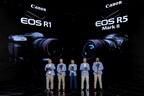
BANGALORE, India, July 18, 2024 /PRNewswire/ — Canon India, a leading company in digital imaging solutions, today unveiled two remarkable additions to its EOS R series: the EOS R1 & EOS R5 Mark II. As pioneers in the photography and videography segment, Canon is yet again ready to revolutionize the industry and surpass customer expectations with its next gen intelligent features, quality, speed and convenience.

EOS R1 is the company’s first flagship EOS R system camera targeted at action genre photographers who need to capture the decisive moment even under severe shooting conditions, along with media & video production departments. With its powerful new image processing and autofocus systems, the new camera is setting new standards and redefining speed in the digital era.

The EOS R5 Mark II, a full-frame mirrorless camera that outperforms the EOS R5, with groundbreaking features like the high-performance new 45-megapixel back-illuminated (BI) stacked CMOS sensor and Accelerated Capture image processor system. Additionally, it includes enhancements such as Eye Control AF and Cinema EOS features, bringing Canon’s esteemed “5 series” from the EOS system into the next generation. These functionalities make EOS R5 Mark II a true all-rounder camera for photo and movie professionals alike.

Commenting on the launch, Mr. Tiger Ishii, Executive Officer, Canon Inc., President & COO, Canon Marketing Asia & President & CEO, Canon Singapore, said “As a dynamic epicenter of technological advancement and creative innovation, India has proven to be an essential hub for Canon’s global growth strategy. The market has been proving exceptionally well for our camera business, establishing our leading global market share in the DILC segment. As we look forward to strengthening our legacy of EOS series, the launch of the EOS R1 and EOS R5 Mark II underscores our unwavering commitment of bringing pioneering cutting edge technologies to empower users. These new cameras are more than products; they are gateways for Indian filmmakers and photography professionals to redefine storytelling through unmatched visual excellence. With India as one of the top performing markets in Asia, I am confident that this launch will contribute significantly to making this year a landmark for us.”

Sharing Canon’s intent behind the new products, Mr. Toshiaki Nomura, President & CEO, Canon India, said, “The newly launched, much awaited flagship EOS R1 introduces new dimensions in imaging technology with excellent usability and reliability to stay at the forefront of users’ needs and technological advancements. With its powerful new image processing and autofocus systems, the new camera is setting new standards and redefining speed in the digital era.”

He further added, “Canon’s legacy in India, particularly through the revered EOS 5D series, is a testament to our commitment to innovation and excellence. With the launch of the EOS R5 Mark II, we are poised to revolutionize the landscape of filmmaking and photography, ushering in a new era of ‘timeless legacy’. Both EOS R1 and EOS R5 Mark II are powered with the most advanced image processing system in EOS history, with high-speed continuous shooting prowess, professional-level movie capabilities, Intelligent auto focus, all enhanced by deep learning technology. We are confident these products will resonate deeply with our Indian consumers, further solidifying Canon’s leadership in the imaging industry.” 

Next Gen Technology Advancements in Canon EOS R1 & EOS R5 Mark II

A Power-packed New Core for Unprecedented Performance

The new 45-megapixel of EOS R5 Mark II and 24.2 megapixels of EOS R1 incorporates back-illuminated (BI) stacked CMOS sensor that leads the host of feature upgrades. The new Accelerated Capture System, consisting of the all-new DIGIC Accelerator and the DIGIC X image processor, can process high volumes of data at unprecedented speeds. Together, the two pave the way for powerful new features and enable resource-intensive processing that sets new standards for AF performance.

Accelerated Capture Image Processing

With the new Accelerated Capture image processing system, featuring the innovative DIGIC Accelerator alongside DIGIC X, processing speed and power are significantly amplified. Unprecedented drive speed, deep learning algorithm-based AF and subject-tracking performance can be achieved. With features such as In-Camera Upscaling and Neural Network Noise Reduction now executable in-camera, both the cameras support fast-paced, time-sensitive workflows, ensuring the swift delivery of high-quality and publication-ready images.

Dual Pixel Intelligent AF for Smarter Subject Detection and Tracking

Both EOS R1 and EOS R5 MARK II are equipped with the Dual Pixel Intelligent AF system, which leverages the Accelerated Capture system and deep learning. This system greatly improves subject tracking and detection during video and stills shooting.

Videographers and photographers shooting events and concerts will benefit from the Register People Priority function, as it prioritises a pre-registered person for subject detection and tracking even when they are in a crowd and have their face turned sideways. The new Action Priority AF mode will automatically switch the focus point to subjects that are in action, helping sports photographers capture decisive moments during dynamic, fast-paced sports such as soccer, basketball, and volleyball.

Never Miss that Crucial Moment

The EOS R1 can shoot high-speed bursts at up to 40 frames per second and EOS R5 Mark II at 30 frames per second with the electronic shutter, which allows for silent shooting and up to 12 fps with the mechanical and electronic first-curtain shutter. The faster sensor readout speed reduces rolling shutter distortion to significant levels avoiding potential subject distortion when capturing high-speed action. Reduced rolling shutter distortion also benefits video, allowing for seamless action footage and fast camera movement reduced wobbly artifact.

Additionally, both cameras offer pre-continuous shooting for stills and pre-recording for videos. These functions capture moments before pressing the shutter or starting to record, making up for lost split-seconds.

Intuitive and Highly Responsive Eye Control AF

EOS R1 and for the first time ever on a “5 series” camera EOS R5 Mark II, Eye Control AF allows user to shift the AF frame by simply looking at their new subject to focus on. Newly developed optics and an improved line-of-sight detection algorithm have doubled the detection frame rate as compared to the EOS R3, thus allowing faster, steadier eye movement detection.

In-camera Image enhancements

The new In-camera Upscaling function that quadruples the number of pixels in the image, increasing the resolution by 4 times to up to 96 megapixels in EOS R1 and 179 megapixels in EOS R5 Mark II while maintaining original sense of resolution. This is useful to generate cleaner, high-quality extreme crops that retain stunning clarity and detail, further empowering users to unleash extreme creativity.

Image noise can become more apparent when images are magnified, but this will be addressed by the new In-camera Neural Network Noise Reduction function to improve image quality further. The function uses deep learning-based algorithms to reduce high-fidelity noise on RAW images, achieving amazingly clean high ISO JPEG images straight out of the camera.

Cinema Industry Standards for Next Level Video Production

In addition to the creative flexibility offered by EOS R5 Mark II with 8K DCI 60p RAW video and 6K 60p RAW video in EOS R1, both the cameras also provide ample industry-standard recording modes and options. Several professional production-oriented Cinema EOS system features were included for professional filmmaking and video production needs.  The new 4K DCI 60p SRAW recording option in EOS R5 Mark II uses the camera’s full horizontal angle of view and provides a less resource-intensive option for projects requiring RAW video’s post-production latitude. In addition, the camera showcases beautiful slow-motion scenes with audio recording in 4K quality (up to 5x slower) or in Full HD (up to 10x slower) with the 4K 120p and Full HD 240p.

Elevate Your Visual Storytelling

Both EOS R1 and EOS R5 MARK II are the first EOS system cameras to offer 10-bit Canon Log 2, which provides more vivid colour reproduction. Favoured by many filmmakers for its wider dynamic range (16+ stops) and better preservation of shadows and mid tone detail. Besides the existing Picture Style colour profiles, it is also equipped with the Cinema EOS system’s Custom Pictures. The latter allows LUTs (lookup tables), including custom 3D LUTs for Cinema EOS to be applied in-camera even when recording in Canon Log 2/Log 3, or HDR formats so users can better visualise the output video while shooting.

Seamless integration with Cinema EOS

EOS R1 and EOS R5 MARK II uses the new XF-AVC S/XF-HEVC S file system, which has similar specifications as the Cinema EOS file system. This system enables workflows that are incompatible with the conventional MP4 format and streamlines the multi-camera project editing process where Cinema EOS cameras are utilised. Cinema EOS tools that provide detailed exposure information have also been incorporated. Users can fine-tune exposure more accurately on set and improve efficiency on multiple camera shoots where exposures must be matched.

Dual (Video + Photo) Shooting

Users can simultaneously capture approx. 33.2-megapixel JPEG stills while recording Full HD 30p videos in EOS R5 Mark II and approx. 17.8 megapixels JPEG stills while recording Full HD 60p videos in EOS R1. This improves work efficiency for users who require still photos and videos of the same event when time is limited.

Professional Grade Reliability

Designed to perform reliably on demanding shoots, both EOS R5 Mark II and EOS R1 is built with dust- and drip-resistant weather sealing to withstand challenging weather conditions. The blackout-free EVF is equipped with superior anti-fog performance, which provides a brighter, clearer view of the scene even in unpredictable weather conditions.

Both the cameras features a 5-axis In-Body IS (Image Stabiliser), with a newly designed mechanism and improved algorithms that increase its effectiveness. When shooting with a compatible RF lens with in-lens stabiliser, users can expect up to 8.5 stops’ equivalent image stabilisation1.

Cooling fan accessory for extended recording time

 A cooling fan accessory, CF-R20EP (sold separately) extends 8K recording times, allowing up to 120 or more minutes of 8K 30p video to be recorded. It also enables limitless 4K 60p video recording.

New power supply configuration for EOS R5 Mark II

To meet increased power requirements, the EOS R5 Mark II is powered by a new battery, LP-E6P, which has a higher current discharge but keeps the same form as other LP-E6 series batteries and can be charged with the LC-E6 charger.

For enhanced operability such as vertical shooting support, users can combine the EOS R5 MARK II with:

Battery Grip BG-R20: A battery grip with weight balance, buttons, and multi-controller position optimised for vertical shooting. It is compatible with the EOS R5/ R6 Mark II/ R6.Battery Grip BG-R20EP: A battery grip with the same features as BG-R20, with an additional 2.5G Base-T Ethernet port to support high-speed wired communication. This meets the needs of professional users who require wired network compatibility and better support for vertical shooting.

Designed for Swift Editorial Workflows

The EOS R1 and EOS R5 Mark II supports the new Wi-Fi 6/6E wireless protocol in addition to the existing 5Ghz and 2.4Ghz bands, allowing for faster wireless file transmission to a smartphone, PC, or FTP/FTPS/SFTP server. EOS R1 features the new high-speed 2.5GBase-T wired LAN protocol to existing wired LAN support and in EOS R5 Mark II with BG-R20EP, users can use the latest high-speed communication standards to swiftly transmit large numbers of still photos and videos to their editors—an asset for news reporting where time is a constraint.

PRICE | EOS R1

New Launch

MRP

Sales Date

EOS R1 Body

Rs. 630,995/U

End of November 2024

LP-E6P Battery 

Rs. 7,995.00/U

Battery Grip

Rs. 34,995.00/U

Cooling Fan Battery Grip

Rs. 40,995.00/U

Battery Grip with LAN

Rs. 80,995.00/U

PRICE | EOS R5 Mark II | Battery Pack | Grip Accessory

New launch

MRP

Sale Date

EOS R5 Mark II Body 

Rs. 405,995.00/U

August 2024

EOS R5 Mark II + RF24-105mm f/4L IS USM

Rs. 505,995.00/U

LP-E6P Battery 

Rs. 7,995.00/U

BG-R20 Battery Grip

Rs. 34,995.00/U

CF-R20EP Cooling Fan Battery Grip

Rs. 40,995.00/U

BG-R20EP Battery Grip with LAN

Rs.  80,995.00/U

APPENDIX | EOS R1

Camera Model

EOS R1

Image Processor

DIGIC Accelerator & DIGIC X

Image Sensor Camera Effective Pixels

Effective sensor size: Full-Frame CMOS

Camera effective pixels: Max approx. 24.2 megapixels

Metering System

Based on image sensor output signals

Stills:

6,144 zone (96 × 64) metering

Movie:

DCI: 4,800-zone (96 x 50) metering

UHD: 5,184-zone (96 x 54) metering

Autofocus Method

Spot AF, 1-point AF, Expand AF area (above / below / left / right or around), Flexible Zone AF 1 / 2 / 3, Whole area AF

Image Stabilizer (IS) System

In-body 5-axis sensor-shift image stabilisation (Still/Movie)

Effective ISO

Stills:

100–102,400 (L:50, H1:204,800, H2:409,600)

Movie:

Custom Picture (Off): 100–32,000 (H:40,000-102,400, H1:204,800)

Canon 709/PQ/HLG: 400–32,000 (L:100-320, H:40,000-102,400, H1:204,800)

Canon Log 2 / Canon Log 3: 800–32,000 (L:100-640, H:40,000-102,400, H1:204,800)

BT.709 Standard: 160–32,000 (L:100-125, H:40,000-102,400, H1:204,800)

Continuous Shooting

Mechanical shutter & Electronic 1st curtain: 12 fps

Electronic shutter: 40 fps

Max Shutter Speed

1/64,000 sec. (Electronic Shutter)

Viewfinder

1.63 cm / 0.64-inch OLED, approx. 9440,000 dots

59.94/119.88 fps Refresh Rate

Movie

6K RAW (6,000 x 3,164)

59.94 fps / 29.97 fps / 23.98 fps (NTSC)

50.00 fps / 25.00 fps / 24.00 fps (PAL)


4K DCI (4,096 x 2,160)

119.88 fps / 59.94 fps / 29.97 fps / 23.98 fps (NTSC)

100.00 fps / 50.00 fps / 25.00 fps / 24.00 fps (PAL)


4K UHD (3,840 x 2,160)

119.88 fps / 59.94 fps / 29.97 fps / 23.98 fps (NTSC)

100.00 fps / 50.00 fps / 25.00 fps (PAL)


2K DCI (2,048 x 1,080)

239.76 fps / 119.88 fps / 59.94 fps / 29.97 fps / 23.98 fps (NTSC)

200.00 fps / 100.00 fps / 50.00 fps / 25.00 fps / 24.00 fps (PAL)


Full HD (1,920 x 1,080)

239.76 fps / 119.88 fps / 59.94 fps / 29.97 fps / 23.98 fps (NTSC)

200.00 fps / 100.00 fps / 50.00 fps / 25.00 fps (PAL)

Maximum Movie Recording Time

6 hr. 00 min. 00 sec. (Normal movie)

1 hr. 30 min. 00 sec. (High Frame Rate Movie)

Recording Media

Supports 2 memory cards:

• 2 x CFexpress memory card (Type B compatible)

*CFexpress 2.0 and VPG400 supported

*Up to 2 TB capacity supported (CFexpress card exceeding 2TB capacity is handled as 2 TB)

Power Supply

LP-E19

USB charging / Optional Power

Supports charging via USB Power Adapter PD-E1 / PD-E2

AC Power (AC Adapter AC-E19 and DC Coupler DR-E19)

Size

Approx. 157.6 × 149.5 × 87.3 mm

Weight

Approx. 1115 g (incl. battery and memory 1 card, excl. body cap, eyecup or shoe cover)

Network

Wi-Fi: IEEE802.11b/g/n/a/ac/ax

Bluetooth: Bluetooth Low Energy Technology Ver 5.3

Ethernet: IEEE 802.3bz (for 2.5GBASE-T)

C2PA

Supported in 2025 or later (firmware update is required)

APPENDIX | EOS R5 MARK II

Camera Model

EOS R5 Mark II

Image Processor

DIGIC Accelerator & DIGIC X

Image Sensor Camera Effective Pixels

Effective sensor size: Full-Frame CMOS

Camera effective pixels: Max approx. 45.0 megapixels

Metering System

Based on image sensor output signals

Stills:

6,144 zone (96 × 64) metering

Movie:

DCI: 4,800-zone (96 x 50) metering

UHD: 5,184-zone (96 x 54) metering

Autofocus Method

Spot AF, 1-point AF, Expand AF area (above / below / left / right or around), Flexible Zone AF 1 / 2 / 3, Whole area AF

Image Stabilizer (IS) System

In-body 5-axis sensor-shift image stabilisation (Still/Movie)

Effective ISO

Stills:

100–51,200 (L:50, H:102,400)

Movie:

Custom Picture (Off): 100–25,600 (H:32,000-51,200)

Canon 709 / PQ / HLG: 400–25,600 (L:100-320, H:32,000-51,200)

Canon Log 2 / Canon Log 3: 800–25,600 (L:100-640, H:32,000-51,200)

BT.709 Standard: 160–25,600 (L:100-125, H: 32,000-51,200)

Continuous Shooting

Mechanical shutter & Electronic 1st curtain: 12 frames per second

Electronic shutter: 30 frames per second

Max Shutter Speed

1/32,000 sec. (Electronic Shutter)

Viewfinder

1.27 cm / 0.5inch OLED, approx. 5760,000 dots

59.94/119.88 fps Refresh Rate

About Canon Inc. 

Canon Inc. (NYSE: CAJ), headquartered in Tokyo, Japan, is a leader in the fields of professional and consumer imaging equipment, industrial equipment, and information systems. Canon’s extensive range of products includes production printers, multifunction office systems, inkjet and laser printers, cameras, video and cinematography equipment, network cameras, medical systems and semiconductor-manufacturing equipment. Originally established in 1937 as Precision Optical Industry, Co., Ltd., a camera manufacturer, Canon has successfully diversified and globalized to become a worldwide industry leader in professional and consumer imaging systems and solutions. With approximately 180,775 employees worldwide, the Canon Group includes manufacturing and marketing subsidiaries in Japan, the Americas, Europe, Asia and Oceania; and a global R&D network with companies based in the United States, Europe, Asia and Australia. Canon’s consolidated net sales for fiscal 2022 (ended December 31, 2022) totalled $30.31 billion (at an exchange rate of ¥133=U.S. $1). Visit the Canon Inc. website at: global. canon 

About Canon India 

 Canon India Pvt. Ltd. is the sales and marketing subsidiary of Canon Inc., a world leader in imaging technologies. Having started its operations in 1997, Canon India markets a comprehensive range of sophisticated contemporary digital imaging products and solutions in India. The company today has offices in 10 cities across India with merchandise warehousing facilities at 4 location and employs 1000 staff and over 850 channel partners. Canon India enjoys a vast retail presence across the country through Canon Image Square (CIS) stores, PIXMA Zones, and BIS Lounges. Canon India’s service reach extends to over 632 towns covering 19,118 PIN codes across India – which comprises of 349+ Camera collection points, 15 Camera repair centres, 320+ Printer repair centres, 183 Copier, Scanner and 120 Large Format Printer Sales & Service dealers. (Updated as of April 2024)

In sync with its corporate tagline- ‘Delighting You Always’, reinforced by World-class technology, Canon offers an extended product portfolio, including Digital Production Printers, Large Format Printers, Commercial Printers, Multi-Functional Devices, Managed Document Services, Inkjet & Laser Printers, Document and Cheque Scanners, Digital Cameras, DSLRs, Mirrorless cameras, Cinematic Imaging Products, and Surveillance cameras catering to the multiple market segments of consumer, SME, B2B, Commercial, Government & PSUs.

More information is available at https://in.canon/

Photo: https://mma.prnewswire.com/media/2463696/Canon_leadership.jpg

1 Based on the CIPA 2024 standard. In yaw, pitch, and roll image stabilization performance when using RF24-105mm F2.8 L IS USM Z (f=105mm)

View original content to download multimedia:https://www.prnewswire.com/in/news-releases/canon-elevates-legacy-with-eos-r1–eos-r5-mark-ii-unveils-the-next-gen-innovations-in-filmmaking–photography-302199610.html

Continue Reading
Click to comment

Leave a Reply

Your email address will not be published. Required fields are marked *

Technology

NAVER Partners with Brookfield and NVIDIA to Expand Korea’s National AI Factory Infrastructure Buildout

Published

on

By

SAN FRANCISCO, July 25, 2026 /PRNewswire/ — NAVER, Brookfield and NVIDIA announced an expansion of Korea’s sovereign AI factory infrastructure. New investments will increase the initial NVIDIA DSX™ AI factory deployment from 55 megawatts to 200 megawatts.

Announced during Korea President Jae Myung Lee’s AI Summit visit to San Francisco, the planned 200-megawatt expansion will be built with the NVIDIA DSX platform at NAVER’s GAK Sejong hyperscale data center in Sejong, South Korea. The expanded infrastructure will provide Korea- and U.S.- based AI innovators with access to production-scale AI compute for building next-generation models, agents and AI-powered services.

Under the terms of the agreements, Brookfield will fund up to $9 billion as the exclusive capital partner, NVIDIA will invest $1 billion and NAVER will fund the remaining amount to finance the $10 billion project.

This builds on NAVER’s June announcement to extend its GAK Sejong data center with NVIDIA DSX, with a long-term path to gigawatt-scale sovereign AI infrastructure serving Korea’s enterprises, industries, government organizations and global AI cloud customers. Combining Brookfield’s capital with NVIDIA’s computing platform, the investment supports NAVER’s AI factory deployment.

“NVIDIA’s strategic investment and our infrastructure supply agreement with Brookfield have propelled NAVER’s vision for the AI Factory business into a robust execution phase,” said Haejin Lee, Founder and Chairman of NAVER. “Leveraging the solid partnerships with our global partners, we will drive technological innovation, foster a sovereign AI ecosystem, and spearhead efforts to strengthen South Korea’s AI competitiveness.” 

AI Factory Expansion and Open Model Collaboration to Fuel AI Innovators

NAVER, as an NVIDIA Cloud Partner, provides deep expertise in operating hyperscale infrastructure powered by the full-stack NVIDIA AI platform. The 200-megawatt AI factory, featuring NVIDIA Vera Rubin and Blackwell platforms, will establish a dedicated resource pool for emerging AI companies, providing the compute, software and support needed to develop and deploy competitive AI models and applications at scale.

This expanded infrastructure also builds on NAVER and NVIDIA’s collaboration on open model development for agentic and physical AI. NAVER is advancing its HyperCLOVA X models to be based on NVIDIA Nemotron™ 3 Ultra open models with its proprietary data and training expertise. NAVER is also the first Korean company to join the NVIDIA Nemotron Coalition, contributing to open model development across pretraining, post-training and reinforcement learning.

NAVER plans to launch an AI agent platform in Korea in the second half of the year, powered by NVIDIA Agent Toolkit software including NVIDIA NemoClaw™ blueprints. NAVER is also developing a Seoul World Model using proprietary urban street-view and spatial modeling data, built on NVIDIA Cosmos™ world foundation models.

About NAVER

Founded in 1999, NAVER is Korea’s largest Internet company and one of the world’s top tech companies. Leading cutting-edge technologies, NAVER operates the No.1 search engine in Korea and holds various business portfolios encompassing commerce, fintech, cloud, AI and robotics.

NAVER recorded sales of KRW 12.04 trillion (USD 8.18 billion) in 2025. TEAM NAVER continues to enhance its business portfolio and expand its global presence across Japan, North America, and Europe, while pursuing innovation through continuous research and development in future technologies.

View original content:https://www.prnewswire.com/news-releases/naver-partners-with-brookfield-and-nvidia-to-expand-koreas-national-ai-factory-infrastructure-buildout-302834577.html

SOURCE NAVER

Continue Reading

Technology

Beijing Review: Walking Through Time: China and U.S. Youths Explore Dali’s Past and Future

Published

on

By

BEIJING, July 24, 2026 /PRNewswire/ — On July 17, a China-U.S. youth delegation came to Dali of Yunnan Province. By examining how Dali’s rich history intersects with modern development, the delegates explored new pathways for rural development.

They visited Dali Old Town, tried their hand at making the Bai people’s Three-Course Tea and also explored the ancient town of Xizhou, where they learned how modern tourism and indigenous life coexist.

In Yunnanyi Village, they explored its history as a stop along the Tea Horse Road and learned about the role it played during the Second World War (WWII).

Tyler James Smith

“I think it’s a very underappreciated part of World War II history. Hearing these stories of different countries working together despite cultural differences is incredibly inspiring.

I also think there are many stories like these that haven’t been widely told, simply because World War II is such a complex period in history. That’s why I think it’s so meaningful to visit museums like this and experience these stories firsthand.”

At Xiangyun Economic and Technological Development Zone, they visited a local new energy company to see how green, low-carbon development is driving regional growth.

Valerie Marie

“I recently started studying energy transitions. I know China has been really big in the renewable energy sector. So actually getting to hear more about [China’s] 2060 [pledge], learning more about carbon neutrality [goals], as well as other zero-carbon goals, was cool.”

During their stay in Dali, they also strolled along the Erhai Lake Ecological Corridor.

Bai Yiwen

“I’d describe this journey as “to be continued,” because my own connection with Yunnan is far from over. For the U.S. delegates, this was only their first visit, so they’ve only had a glimpse of what Yunnan has to offer. I hope they will have more opportunities to come back to China, explore other cities in Yunnan, and discover even more of its people, culture and traditions.”

After Dali, the delegates will visit Beijing for more tours and exchanges. The event was co-hosted by China International Communications Group (CICG) Center for the Americas and the U.S.-based International Student Conferences.

https://x.com/beijingreview/status/2080104404552663067?s=46&t=yfVMVdMyE2zKAFrYaLoV-g

https://www.facebook.com/share/v/1EtGCCKzy4/?mibextid=wwXIfr

https://www.tiktok.com/@cachinachic/video/7665536913532587294?is_from_webapp=1&sender_device=pc&web_id=7227134149436605995

https://youtu.be/jGONWTqwduc?is=KfL-Zn3HyVYE-KEm

Contact: Jiaweibellapeng@163.com

View original content:https://www.prnewswire.com/news-releases/beijing-review-walking-through-time-china-and-us-youths-explore-dalis-past-and-future-302834587.html

SOURCE Beijing Review

Continue Reading

Technology

Hyundai Motor Group Executive Chair Euisun Chung Announces Physical AI Vision at San Francisco AI Summit

Published

on

By

Hyundai Motor Group shares roadmap for realizing its Physical AI vision and collaboration strategy with global tech leaders at the San Francisco AI SummitExecutive Chair Euisun Chung presented, “Hyundai Motor Group is evolving beyond the traditional boundaries of automotive manufacturing to become a Physical AI solution company,” adding, “The ultimate Physical AI vision we pursue is the realization of integrated intelligence at the city level”The Group to leverage manufacturing competitiveness and leading robotics capabilities centered on Boston Dynamics, while establishing a data flywheel system connecting real-world operational data with continuous AI model advancementThe Group to leverage strategic partnerships with global technology leaders, including NVIDIA and Waymo, as well as Boston Dynamics’ strategic partnership with Google DeepMindThe Group to collaborate with NVIDIA to develop a Robot Reference Platform that combines Hyundai Motor Group’s and NVIDIA’s Physical AI capabilities

… The initiative to support Korea’s Physical AI industry through an open ecosystem

The Group to cultivate strategic domestic hubs through investments in Saemangeum AI Valley and future advanced industries in Korea’s Yeongnam region

SAN FRANCISCO, July 25, 2026 /PRNewswire/ — Hyundai Motor Group (the Group) Executive Chair Euisun Chung today outlined the Group’s vision and strategy for Physical AI at the San Francisco AI Summit held in San Francisco, California.

The event brought together approximately 150 attendees, including Executive Chair Chung, business leaders from major Korean companies, executives from leading U.S. technology firms, startup representatives and students.

At the summit, Executive Chair Chung presented the Group’s roadmap for advancing Physical AI and outlined strategic collaboration plans with global technology leaders.

“Hyundai Motor Group is evolving beyond the traditional boundaries of automotive manufacturing by expanding into autonomous driving, robotics and AI Defined Factories, accelerating our transformation into a Physical AI solution company.” — Hyundai Motor Group Executive Chair Euisun Chung

Accelerating the Transition to a Physical AI Solution Company

Hyundai Motor Group’s Physical AI vision extends beyond intelligent devices such as vehicles and robots to intelligent spaces, including AI factories where AI seamlessly connects and optimizes entire operations. Ultimately, the Group envisions integrated intelligence at the city level, where urban infrastructure is organically connected and operated through AI.

A key differentiator for the Group is its ability to create a data flywheel that continuously connects real-world operations with AI advancement. Drawing on extensive experience in large-scale manufacturing, mobility, robotics and service operations, the Group is positioned to deploy, refine and scale Physical AI technologies in real industrial environments.

Executive Chair Chung also outlined strategic partnerships with leading technology companies, including NVIDIA and Waymo, as well as Boston Dynamics’ strategic partnership with Google DeepMind, to further advance Physical AI capabilities.

By combining Hyundai Motor Group’s manufacturing competitiveness, mobility and robotics technologies and extensive operational data with the AI infrastructure and algorithm capabilities of global technology leaders, the Group aims to help foster a new innovation ecosystem for the Physical AI era.

Executive Chair Chung also introduced initiatives designed to support the growth of Korea’s robotics and AI ecosystem, including the development of a Robot Reference Platform with NVIDIA that combines Hyundai Motor Group’s and NVIDIA’s Physical AI capabilities, as well as investments in initiatives such as the Saemangeum AI Valley.

Physical AI Vision: From Intelligent Devices to Integrated Intelligence at the City Level

During the summit, Executive Chair Chung presented Hyundai Motor Group’s Physical AI vision.

“The ultimate Physical AI vision Hyundai Motor Group pursues begins with intelligent devices such as vehicles and robots, expands to intelligent spaces such as AI factories, and ultimately realizes integrated intelligence at the city level, where urban infrastructure is seamlessly connected and operated.” — Hyundai Motor Group Executive Chair Chung

The Group’s vision begins with intelligent devices, where AI capabilities enhance vehicles and robots. It then expands to intelligent spaces, including AI factories where AI autonomously integrates logistics, production and quality management across entire operations.

Ultimately, Hyundai Motor Group envisions city-level intelligence, where critical infrastructure and assets — including energy, mobility and robotics systems — are connected and optimized in real time.

Executive Chair Chung also highlighted the Group’s key strengths in realizing its Physical AI vision:

World-class manufacturing competitiveness: Hyundai Motor Group has built extensive expertise through decades of operating global manufacturing facilities, managing quality systems and optimizing supply chains. This foundation enables the Group to apply AI technologies to products, processes and services while rapidly validating and scaling innovations in real-world environments.Leading robotics capabilities: Hyundai Motor Group has established robotics as a key pillar of its future business portfolio. Boston Dynamics’ quadruped robot Spot®, logistics robot Stretch®, and Hyundai Motor Group Robotics LAB’s next-generation mobile robot platform MobED are recognized for combining technological competitiveness with real-world applicability.

In particular, the humanoid robot Atlas® is emerging as a representative example of Physical AI, supporting and collaborating with people across manufacturing, logistics and mobility environments.

Establishing a data flywheel system: Hyundai Motor Group is establishing a data flywheel system that leverages data generated across manufacturing operations, vehicles, logistics systems and robotics demonstrations to continuously advance AI models. Enhanced algorithms are then reapplied to real-world operations, creating a virtuous cycle that improves performance and strengthens Physical AI capabilities.

Accelerating the Future of Physical AI Through Partnerships with Global Tech Leaders

Executive Chair Chung also outlined concrete initiatives to position Hyundai Motor Group as a leader in human-centered Physical AI through strategic collaborations with NVIDIA and Waymo, as well as Boston Dynamics’ strategic partnership with Google DeepMind.

“By combining Hyundai Motor Group’s strengths in manufacturing, robotics and data with the capabilities of global technology leaders, we can help create a new innovation ecosystem for the Physical AI era.” — Hyundai Motor Group Executive Chair Euisun Chung

NVIDIA – Advancing Physical AI infrastructure and talent development

Hyundai Motor Group is expanding collaboration with NVIDIA to strengthen Physical AI infrastructure and cultivate AI talent. Building on a supply agreement for 50,000 NVIDIA Blackwell GPUs and a memorandum of understanding signed last year to advance Korea’s Physical AI capabilities, the Group is pursuing a range of initiatives, including the establishment of Hyundai Motor Group Robot Application Center, as well as various collaborations aimed at strengthening Korea’s Physical AI infrastructure and AI talent ecosystem, including the NVIDIA’s AI Technology Center.

In manufacturing, the Group is leveraging NVIDIA’s platform to create more sophisticated digital twins of production facilities, enhancing process design, operational optimization and validation efficiency. The collaboration also includes the integration of NVIDIA’s autonomous driving solutions, including automotive semiconductors, sensors and architecture, with Hyundai Motor Group vehicle platforms.

Waymo – Strengthening autonomous driving collaboration

Hyundai Motor Group continues to strengthen its strategic partnership with Waymo in the autonomous driving sector to support the development of a safe and innovative autonomous driving ecosystem. Autonomous driving vehicles require a wide range of specialized capabilities, including redundant systems for steering, braking, power and communications, dedicated features such as power-operated doors, as well as enhanced functional safety and cybersecurity technologies.

Hyundai Motor Group plans to produce IONIQ 5 vehicles with specific autonomous-ready modifications at Hyundai Motor Group Metaplant America (HMGMA) in Georgia.

Google DeepMind – Accelerating next-generation humanoid robotics

Boston Dynamics has established a strategic partnership with Google DeepMind to accelerate the development of next-generation humanoid robots. Advanced AI models and training systems are essential for robots to perform complex tasks in real-world environments and collaborate effectively with people. Through this partnership, Boston Dynamics robots are expected to achieve greater autonomy and adapt more effectively to complex operating environments.

Hyundai Motor Group plans to establish a robot production facility in the U.S. with an annual capacity of up to 30,000 units by 2028. The Atlas humanoid robot will first be deployed at production facilities including HMGMA before broader deployment is expanded through phased validation.

Building an Open Ecosystem Through the Robot Reference Platform and Continued Investment in Korea’s Physical AI Future

Executive Chair Chung also outlined initiatives aimed at supporting the growth of Korea’s Physical AI ecosystem through open collaboration and continued investment.

“The outcomes of collaboration with global technology leaders should contribute to the growth of Korea’s Physical AI industry. To that end, Hyundai Motor Group plans to foster an open ecosystem that supports innovation in robotics and AI technologies.” — Hyundai Motor Group Executive Chair Euisun Chung

Key initiatives to build an open ecosystem for robotics and AI innovation include:

Robot Reference Platform: Hyundai Motor Group and NVIDIA are collaborating to develop a Robot Reference Platform that combines Hyundai Motor Group’s and NVIDIA’s Physical AI capabilities.

The platform will provide research robot models to universities, research institutes and startups, helping foster an open ecosystem that supports technological innovation and the development of Physical AI talent while contributing to the broader growth of Korea’s robotics and AI industries. 

Supporting universities, research institutes and startups: The Robot Reference Platform is expected to provide universities, research institutes and startups with a standardized hardware and software environment, enabling them to more easily develop and validate Physical AI technologies. The initiative aims to help address challenges faced by organizations with innovative ideas but limited access to commercialization opportunities and validation infrastructure.

Hyundai Motor Group is also continuing large-scale investments aimed at driving the next leap forward in Korea’s industrial and technology ecosystem. Continued investments in Korea’s industrial and technology ecosystem include:

Saemangeum AI Valley: In the Saemangeum region of Jeonbuk State, the Group is developing Saemangeum AI Valley, which includes an approximate KRW 9 trillion investment in AI data centers, robotics manufacturing clusters, electrolyzer plants and AI hydrogen city infrastructure. 

In particular, the robotics manufacturing cluster will serve not only as a production base for the Group’s own robotics products, but also as a robotics foundry that provides manufacturing services for small and medium-sized enterprises that lack manufacturing expertise.

Advanced industrial hubs in the Yeongnam region: Hyundai Motor Group plans to invest a total of KRW 42 trillion over the next decade to foster advanced industrial hubs focused on AI-driven manufacturing, future aerospace industries and sustainable energy infrastructure.

Through these initiatives, Hyundai Motor Group aims to strengthen key foundations for the Physical AI era, including data and energy infrastructure, robotics production capabilities and real-world validation capabilities. The Group also expects these investments to contribute to enhanced industrial competitiveness, balanced regional development, job creation and broader economic vitality in Korea.

About Hyundai Motor Group

Hyundai Motor Group is a global enterprise that has created a value chain based on mobility, steel, and construction, as well as logistics, finance, IT, and service. With about 250,000 employees worldwide, the Group’s mobility brands include Hyundai, Kia, and Genesis. Armed with creative thinking, cooperative communication, and the will to take on any challenges, we strive to create a better future for all.

More information about Hyundai Motor Group can be found at: http://www.hyundaimotorgroup.com or Newsroom: Media Hub by Hyundai, Kia Global Newsroom, Genesis Newsroom

View original content to download multimedia:https://www.prnewswire.com/news-releases/hyundai-motor-group-executive-chair-euisun-chung-announces-physical-ai-vision-at-san-francisco-ai-summit-302834557.html

SOURCE Hyundai Motor Company

Continue Reading

Trending