Technology
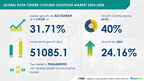
Data Center Cooling Solutions Market size is set to grow by USD 51.08 billion from 2024-2028, Increased demand for data centers to boost the market growth, Technavio
Published
2 years agoon
By
NEW YORK, July 24, 2024 /PRNewswire/ — The global data center cooling solutions market size is estimated to grow by USD 51.08 billion from 2024-2028, according to Technavio. The market is estimated to grow at a CAGR of almost 31.71% during the forecast period. Increased demand for data centers is driving market growth, with a trend towards greater use of HPC. However, environmental concerns poses a challenge. Key market players include Aermec S.p.A., Airedale Air Conditioning Ltd., AIRSYS Refrigeration Engineering Technology Co. Ltd., Alfa Laval AB, Asetek, Black Box Ltd., Chilldyne, Citec International, Daikin Industries Ltd., Data Aire Inc., Delta Electronics Inc., Engineered Fluids Inc., Green Revolution Cooling Inc., Midas Immersion Cooling, Mitsubishi Electric Corp., Motivair Corp., Nortek, Schneider Electric SE, STULZ GmbH, and Vertiv Holdings Co..
Get a detailed analysis on regions, market segments, customer landscape, and companies – Click for the snapshot of this report
Forecast period
2024-2028
Base Year
2023
Historic Data
2018 – 2022
Segment Covered
Application (Air conditioning, Economizers, Cooling towers, Chillers, and Others), Technique (Air-based cooling and Liquid-based cooling), and Geography (APAC, North America, Europe, Middle East and Africa, and South America)
Region Covered
APAC, North America, Europe, Middle East and Africa, and South America
Key companies profiled
Aermec S.p.A., Airedale Air Conditioning Ltd., AIRSYS Refrigeration Engineering Technology Co. Ltd., Alfa Laval AB, Asetek, Black Box Ltd., Chilldyne, Citec International, Daikin Industries Ltd., Data Aire Inc., Delta Electronics Inc., Engineered Fluids Inc., Green Revolution Cooling Inc., Midas Immersion Cooling, Mitsubishi Electric Corp., Motivair Corp., Nortek, Schneider Electric SE, STULZ GmbH, and Vertiv Holdings Co.
Key Market Trends Fueling Growth
The High Performance Computing (HPC) market is experiencing significant growth due to the increasing demand for product innovation and economic competitiveness. HPC systems, which deliver efficient computing through a cluster of processors, are primarily used for scientific and engineering applications. These systems have higher computing performance than general-purpose computers, measured in floating-point operations per second (FLOPS), and are essential for solving complex problems in fields such as physical simulations, weather forecasting, quantum mechanics, and molecular modeling. The global HPC market is being driven by the growing use of big data and cloud computing solutions, which have led to an increase in the demand for data centers. Data centers support HPC by enabling parallel processing with better reliability, efficiency, and scalability through enhanced cooling systems. Cloud-based HPC systems are particularly attractive to Small and Medium Enterprises (SMEs) due to their low initial investment requirements. As HPC systems incorporate tens of thousands of processors, they generate significant heat. To maintain optimal performance, data centers require efficient cooling systems, such as in-rack and in-row cooling solutions. Modern data centers also offer cloud-based services and virtualization to support HPC infrastructure. Data center operators must ensure 99% service availability to meet the demands of HPC vendors. To achieve this, they require high-performance data center power components. The increasing use of HPC will continue to drive the demand for data centers, and thus, data center power components during the forecast period.
The Data Center Cooling Solutions market is experiencing significant growth due to increasing data protection needs and power interruptions. Traditional air conditioners are being replaced by precision air conditioners and liquid cooling equipment for better efficiency and scalability. Cloud-based services, IT and telecom, manufacturing, healthcare, energy and utilities, and colocation service providers are major consumers. Advanced cooling techniques like room-based, row-based, and rack-based cooling are trending, with airflow paths and cooling expenses being key considerations. Energy-efficient data centers are a priority, with liquid cooling, intelligent power distribution, and monitoring systems gaining popularity. Advanced features like artificial intelligence, automation, incident response, and recovery procedures are essential for ensuring safety and minimizing cooling issues during power outages. Cooling solutions must be flexible and secure to accommodate load conditions and support the growing demand for data generation from OTT platforms, streaming services, cloud services, big data, and connected devices.
Discover 360° analysis of this market. For complete information, schedule your consultation- Book Here!
Market Challenges
Data centers face numerous environmental challenges that impact their operations worldwide. Fluctuating temperatures, extreme humidity, and high atmospheric dust are common issues, particularly in regions with adverse climatic conditions. To address these concerns, data center operators must employ humidity controllers tailored to local requirements, capable of reacting to sudden environmental changes. Dust and airborne particles can cause mechanical failure in cooling fans and disrupt I/O port connectivity, while excessive gas emissions and noise levels pose additional challenges. As the demand for data center capacity increases globally, organizations are investing in new facilities to store and process growing amounts of data from advanced technologies like cloud computing, big data, and IoT. However, this growth comes with rising IT costs and carbon emissions, primarily from the operation of IT servers, generators, building shells, and cooling systems, as well as the use of non-renewable energy sources. Microsoft, for instance, has reduced the use of diesel generators to make its data centers more sustainable and less reliant on the utility grid. Environmental concerns, including carbon emissions, pose a significant threat to the growth of the global data center cooling solutions market during the forecast period.The Data Center Cooling Solutions market is facing challenges due to temperature surges, requiring advanced row/rack-based cooling and precision cooling capabilities. Future-proof solutions are essential for medium-sized enterprises undergoing digital transformation and adopting cloud computing services, AI-driven applications, and centralized storage. Energy consumption and carbon emissions are key concerns, necessitating energy-efficient and environmentally sustainable cooling systems. Data center operators must address heat dissipation, networking, computing capacity, authentication, and infrastructure components, including servers, network switches, power distribution units, and storage devices. Data backup, archiving, authorization, and IT hardware infrastructures also require consideration. Low-power-consuming cooling techniques, such as AI and Industry 4.0 innovations, are essential for optimizing energy savings, carbon savings, and space utilization. Tech companies and data center managers must focus on energy efficiency, power density, rack power densities, heat generation, and data center deployments to meet the demands of the digital age.
For more insights on driver and challenges – Download a Sample Report
Segment Overview
This data center cooling solutions market report extensively covers market segmentation by
Application1.1 Air conditioning1.2 Economizers1.3 Cooling towers1.4 Chillers1.5 OthersTechnique2.1 Air-based cooling2.2 Liquid-based coolingGeography3.1 APAC3.2 North America3.3 Europe3.4 Middle East and Africa3.5 South America
1.1 Air conditioning- Data centers require specialized cooling solutions to maintain optimal operating conditions for IT equipment. Precision air conditioning units, such as Computer Room Air Handlers (CRAH) and Computer Room Air Conditioning (CRAC) units, play a crucial role in managing temperature and humidity. CRAH units, which use water-chilled systems, are suitable for large data centers, while CRAC units, with mechanical refrigeration, are ideal for moderate-sized facilities. Precision air conditioners, including these units, offer precise temperature and humidity control, higher efficiency, and lower power consumption compared to comfort air conditioners. The increasing heat density in data centers due to high-performance computing infrastructure and virtualization will drive the adoption of precision air conditioners. New data center constructions and renovations will further fuel market growth. Despite the initial higher cost of chilled water systems, the reduction in air conditioner prices and the need for efficient cooling solutions will ensure steady revenue growth during the forecast period.
For more information on market segmentation with geographical analysis including forecast (2024-2028) and historic data (2018 – 2022) – Download a Sample Report
Learn and explore more about Technavio’s in-depth research reports
The global Data Center Liquid Immersion Cooling market is poised for significant growth, driven by rising data processing needs and energy efficiency demands. In parallel, the Data Center Mechanical Construction market is expanding due to the increasing complexity of data center infrastructure and the need for robust cooling and power solutions. Additionally, the Data Center Rack PDU market is experiencing growth as businesses seek advanced power distribution units to support high-density server environments. Collectively, these markets reflect the evolving landscape of data center technology and infrastructure.
Research Analysis
The Data Center Cooling Solutions market is witnessing significant growth due to the increasing demand for data-intensive applications, cloud computing, and digital services. IT infrastructure requires efficient cooling solutions to manage heat dissipation, especially with the rise of AI-driven applications and energy-consuming servers, network switches, and colocation services. Pre-engineered cooling modules and advanced cooling techniques are becoming popular for their energy efficiency and ability to handle high data traffic and load conditions. Centralized storage, networking, and computing capacity also require cooling solutions to ensure optimal performance. Power management is a crucial factor in data centers, and cooling solutions must be designed to minimize energy consumption. Data generation from various sources, including OTT platforms and streaming services, further increases the need for effective cooling solutions.
Market Research Overview
The Data Center Cooling Solutions market is witnessing significant growth due to the increasing demand for data-intensive applications, cloud computing, and digital services. With the IT industry’s rapid expansion, IT infrastructure requirements are surging, leading to an increase in power consumption and heat dissipation. In the 5G internet era, data traffic is expected to increase exponentially, putting additional pressure on data centers to maintain optimal temperatures. Cooling technologies such as pre-engineered cooling modules, precision cooling capabilities, and low-power-consuming techniques are gaining popularity to improve energy efficiency and environmental sustainability. The market is also witnessing the adoption of future-proof cooling solutions that can handle high power densities and rack power densities. Medium-sized enterprises are increasingly investing in digital transformation, leading to an increase in data center deployments. Cooling expenses are a significant portion of data center operating costs, making energy savings and carbon savings crucial. The market is also witnessing the adoption of AI-driven applications for predictive maintenance and optimization of cooling systems. Data center operators are focusing on space utilization, power interruptions, and data protection to ensure business continuity. The market is witnessing the adoption of cooling systems such as air conditioners, precision air conditioners, liquid cooling, and room-based, row-based, and rack-based cooling solutions. Industry 4.0, IoT, and cloud-based services are also driving the market’s growth. Energy efficiency, environmental sustainability, and carbon emissions are critical considerations for data center managers. The market is witnessing the adoption of plug-in systems, centralized storage, networking, and infrastructure components to optimize cooling expenses. Outsourcing data center operations to colocation service providers and web hosting companies is also on the rise to reduce capital expenditures and improve operational efficiency. Energy savings and carbon savings are essential for tech companies to reduce their carbon footprint and meet sustainability goals. The market is witnessing the adoption of cooling systems that use renewable energy sources and liquid cooling equipment. The market is also witnessing the adoption of cooling systems that use natural cooling methods such as airflow paths and evaporative cooling. The market is witnessing the adoption of cooling systems that use renewable energy sources and natural cooling methods such as airflow paths and evaporative cooling. Data center workload, power density, and heat generation are critical factors driving the market’s growth. The market is also witnessing the adoption of cooling systems that use artificial intelligence (AI) for predictive maintenance and optimization of cooling systems. The market is witnessing the adoption of cooling systems that use artificial intelligence (AI) for predictive maintenance and optimization of cooling systems. Data center cooling solutions are essential for IT and telecom, manufacturing, healthcare, energy and utilities, and web hosting industries. The market is also witnessing the adoption of cooling systems that use renewable energy sources and natural cooling methods such as airflow paths and evaporative cooling. The market is witnessing the adoption of cooling systems that use renewable energy sources and natural cooling methods such as airflow paths and evaporative cooling. Data center cooling solutions are essential for IT and telecom, manufacturing, healthcare, energy and utilities, and web hosting industries. The market is also witnessing the adoption of cooling systems that use AI for predictive maintenance and optimization of cooling systems, reducing power interruptions and improving energy efficiency. The market is witnessing the adoption of cooling systems that use AI for predictive maintenance and optimization of cooling systems, reducing power interruptions and improving energy efficiency. Data center cooling solutions are essential for IT and telecom, manufacturing, healthcare, energy and utilities, and web hosting industries. The market is also witnessing the adoption of cooling systems that use renewable energy sources and natural cooling methods such as airflow paths and evaporative cooling, ensuring environmental sustainability and reducing cooling expenses.
Table of Contents:
1 Executive Summary
2 Market Landscape
3 Market Sizing
4 Historic Market Size
5 Five Forces Analysis
6 Market Segmentation
ApplicationAir ConditioningEconomizersCooling TowersChillersOthersTechniqueAir-based CoolingLiquid-based CoolingGeographyAPACNorth AmericaEuropeMiddle East And AfricaSouth America
7 Customer Landscape
8 Geographic Landscape
9 Drivers, Challenges, and Trends
10 Company Landscape
11 Company Analysis
12 Appendix
About Technavio
Technavio is a leading global technology research and advisory company. Their research and analysis focuses on emerging market trends and provides actionable insights to help businesses identify market opportunities and develop effective strategies to optimize their market positions.
With over 500 specialized analysts, Technavio’s report library consists of more than 17,000 reports and counting, covering 800 technologies, spanning across 50 countries. Their client base consists of enterprises of all sizes, including more than 100 Fortune 500 companies. This growing client base relies on Technavio’s comprehensive coverage, extensive research, and actionable market insights to identify opportunities in existing and potential markets and assess their competitive positions within changing market scenarios.
Contacts
Technavio Research
Jesse Maida
Media & Marketing Executive
US: +1 844 364 1100
UK: +44 203 893 3200
Email: media@technavio.com
Website: www.technavio.com/
View original content to download multimedia:https://www.prnewswire.com/news-releases/data-center-cooling-solutions-market-size-is-set-to-grow-by-usd-51-08-billion-from-2024-2028–increased-demand-for-data-centers-to-boost-the-market-growth-technavio-302204094.html
SOURCE Technavio
You may like
Technology
Stowers Institute partners with Google DeepMind and leading research institutions to help reveal the regulatory language of the human genome
Published
2 minutes agoon
September 9, 2026By
Researchers provided biological expertise and feedback that helped guide the development of a new AI-powered resource released today. For the first time, scientists can explore a comprehensive map of more than 9 billion possible single-letter DNA changes through a web browser, helping them more quickly prioritize and interpret variants that may influence biology and disease and lay groundwork for future treatments.
KEY HIGHLIGHTS
Developed over several years, AlphaGenome Atlas is a one-petabyte dataset containing molecular-effect predictions for more than 9 billion possible single-letter DNA changes across the human genome.Until now, researchers lacked a single resource that could both rank variants across the genome and reveal the biological processes they are predicted to disrupt, a combination that could accelerate foundational discoveries, disease research and the search for therapeutic targets.Researchers from Google DeepMind, the Stowers Institute for Medical Research, Broad Institute, the University of Exeter, Memorial Sloan Kettering Cancer Center and Stanford University contributed scientific input and explored applications of the resource.
KANSAS CITY, Mo., Sept. 8, 2026 /PRNewswire/ — The human genome contains approximately 3 billion DNA letters, creating more than 9 billion possible single-letter changes. Testing the effects of each change in a laboratory would be practically impossible. Google DeepMind’s new AlphaGenome Atlas, available beginning today, gives scientists a comprehensive, searchable resource designed to accelerate understanding of the human genome.
The one-petabyte resource contains artificial intelligence-generated predictions for the molecular effects of more than 9 billion possible changes, creating what Google DeepMind describes as the most comprehensive catalogue of its kind.
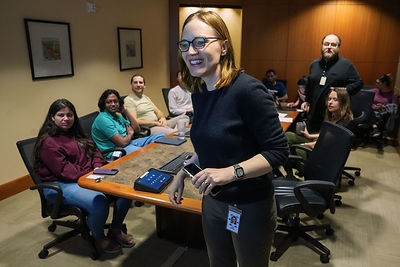
Stowers Institute for Medical Research Investigator Julia Zeitlinger, Ph.D., partnered with the Google DeepMind team led by Vice President of Science and Chief Scientist Žiga Avsec, Ph.D., to map and interpret the patterns in DNA that regulate biological processes inside cells. At the same time, additional scientific collaborators from leading institutions across the United States and England helped test how the new resource could be used to identify impactful genetic variation in humans. The work is now available as a preprint on bioRxV.
Zeitlinger has made significant contributions to the field of gene regulation and computational biology. In 2019, in an international collaboration that included Avsec, Zeitlinger and her team at the Stowers Institute developed a powerful AI framework, BPNet. This framework is now widely used to extract and dissect the DNA sequences that explain genome-wide biological data. Just last month, her lab unveiled a new AI method, PISA, which generates high-resolution visualizations of what AI models have learned from DNA.
Stowers Institute Bioinformatics Scientist and Zeitlinger Lab member, Melanie Weilert, served as a lead author on the AlphaGenome project. With her deep expertise in interpretating AI models, she helped build the AlphaGenome Atlas resource to ask one of biology’s biggest questions: How does a cell know which genes to turn on and off?
“This is a very difficult problem because every cell type speaks a slightly different language, making it hard to know which rules are general,” Zeitlinger said. “With AlphaGenome, we can quickly query many cell types and look for general patterns by which genes are activated and repressed.”
Google DeepMind developed the technology behind the Atlas. Zeitlinger, who also leads the Stowers Institute’s AI Initiative, helped connect its predictions to the biological processes that give cells their identities and allow them to function.
“AlphaGenome Atlas is a powerful example of how AI can expand human knowledge and advance scientific discovery,” said VP Science, Google DeepMind and Chief Scientist, Google Cloud, Pushmeet Kohli, Ph.D. “By making this resource widely available, we hope scientists around the world can use it to better understand the language of life and what happens when individual letters in the human genome change.”
Scientists can access the resource through a web browser without writing code, allowing more researchers to explore genetic variation at a scale that was not previously possible.
“AlphaGenome Atlas is foundational research with the potential to have an impact across multiple areas of biology,” said Avsec. “We worked with experts in the field, including Julia, whose biological insight helped us explore how the resource can map functional elements in the genome and reveal their roles at the molecular level.”
How Stowers scientists helped reveal the regulatory “words” of the genome
Every cell in the human body contains essentially the same DNA, yet different cells use that information in very different ways. Short DNA sequences called motifs act as regulatory instructions, helping control which genes are active, when they are activated and how strongly they operate.
Zeitlinger and her team used AlphaGenome Atlas to analyze regulatory motifs across the genome and determine what they reveal about the proteins, called transcription factors, that control gene activity. The researchers categorized these regulatory signals by function, distinguishing transcription factors that change whether DNA is accessible from those that also activate or repress genes.
Conducting this type of analysis experimentally across thousands of sites and many different cell types would require enormous time and resources. By making genome-wide predictions available in one searchable resource, the Atlas allowed Zeitlinger’s team to identify broader patterns in how genes are regulated and begin defining the general rules underlying the regulatory language of DNA.
“Having these motifs mapped at base-pair resolution across the genome and in many cell types gives us a searchable dictionary for non-coding DNA,” Zeitlinger said. “By giving the scientific community access to these predictions, AlphaGenome Atlas can accelerate how we identify potentially disease-causing variants while helping us understand the fundamental rules by which genes are regulated.”
“This collaboration demonstrates how Stowers scientists are helping shape emerging technologies, not simply adopting them,” said Stowers Institute President and Chief Scientific Officer Alejandro Sánchez Alvarado, Ph.D. “By pairing deep biological knowledge with the capabilities of AI, researchers can ask questions at a scale that was not previously possible and create new opportunities to more clearly understand human health and disease.”
The Atlas does not replace laboratory research. Instead, it can help scientists determine which variants and biological mechanisms should be investigated first, focusing experimental time and resources on the most promising questions.
“Tools such as AlphaGenome Atlas become most valuable when their predictions can be connected to meaningful biological questions,” said Stowers Institute Scientific Director Kausik Si, Ph.D. “Julia’s work brings together deep expertise in gene regulation and computational biology to help move us from simply reading DNA sequence toward understanding the rules that control gene activity.”
From billions of variants to focused biological questions
AlphaGenome Atlas contains thousands of molecular-effect predictions for each variant across hundreds of human cell types and tissues. These predictions contribute to the new AlphaGenome Variant Impact, or AVI, score. They also enabled researchers to identify and map recurring DNA motifs, short sequences where transcription factors bind to help control gene activity.
The AVI score brings together predictions from AlphaGenome, AlphaMissense and evolutionary conservation data. It gives researchers a single measure for ranking variants by their potential impact across protein-coding and non-coding regions of the genome. Researchers can then examine which molecular processes, including gene expression, RNA splicing and protein function, are predicted to be affected.
The collaborating institutions explored how the resource could support several areas of human genetic research. Scientists at the Broad Institute used the AVI score to prioritize a previously overlooked non-coding variant associated with an unsolved rare disease case. At the University of Exeter, researchers applied Atlas to genomic data from more than 54,000 UK Biobank participants, uncovering additional associations between rare noncoding variants and protein levels.
Watch a video from Google DeepMind and read a blog post announcing AlphaGenome Atlas.
Learn more and watch a tutorial of AlphaGenome Atlas
AlphaGenome Atlas is available for non-commercial use through Google DeepMind’s website at deepmind.google.com/science/alphagenome/atlas. Its predictions are intended to support research and have not been validated or approved for clinical use.
About the Stowers Institute for Medical Research
Founded in 1994 through the generosity of Jim Stowers, founder of American Century Investments, and his wife, Virginia, the Stowers Institute for Medical Research is a nonprofit, biomedical research organization with a focus on foundational research. Its mission is to expand our understanding of the secrets of life and improve life’s quality through innovative approaches to the causes, treatment, and prevention of diseases.
The Institute consists of 24 independent research programs. Of the approximately 500 members, over 370 are scientific staff that include principal investigators, fellows, technology center directors, postdoctoral scientists, graduate students, and technical support staff. Learn more about the Institute at stowers.org and about its graduate program at stowers.org/gradschool.
Read an online version of the release here.
Media contact
Joe Chiodo
Director of Communications
Stowers Institute for Medical Research
724-462-8529
chiodo.joe@stowers.org
View original content to download multimedia:https://www.prnewswire.com/news-releases/stowers-institute-partners-with-google-deepmind-and-leading-research-institutions-to-help-reveal-the-regulatory-language-of-the-human-genome-302872938.html
SOURCE Stowers Institute for Medical Research
Technology
The Inner Circle acknowledges Daniel Beer as a Pinnacle Professional Member Inner Circle of Excellence
Published
1 hour agoon
September 8, 2026By
NEW YORK, Sept. 8, 2026 /PRNewswire/ — Prominently featured in The Inner Circle, Daniel Beer is acknowledged as a Pinnacle Professional Member Inner Circle of Excellence for his contributions to Information Technology and Artificial Intelligence.
Daniel Beer has built a distinguished career as a technology executive, entrepreneur, and innovator dedicated to helping organizations harness technology to achieve sustainable growth and meaningful collaboration. As founder and chief executive officer of Trusted Associates and chief executive officer of Freeman and Clarke Inc., he leads initiatives that combine strategic technology leadership with emerging innovations in artificial intelligence and digital transformation.
Mr. Beer specializes in information technology strategy, platform development, organizational modernization, digital infrastructure, and fractional chief information officer and chief technology officer services. Through Freeman and Clarke Inc., he provides executive technology leadership that enables organizations to align technology investments with long term business objectives. At Trusted Associates, he focuses on developing collaborative technology platforms, cultivating strategic partnerships, creating innovative applications, and making investments in artificial intelligence companies that advance practical, real world solutions.
Mr. Beer earned a Bachelor of Music Education from the University of Sydney in 1997 before completing an equivalency certification for a Bachelor of Applied Science in Computer Science through the University of Maryland in 2012. His unique educational background combines creativity with technical expertise, allowing him to approach technology challenges with both analytical precision and innovative thinking.
Throughout his career, Mr. Beer has consistently demonstrated visionary leadership. He founded Techknowledgy Group at the age of 20 and successfully grew the company into a respected managed services provider over a fifteen year period. Later, as Chief Information Officer for the New York Hotel Trades Council, he led the modernization of the organization’s information systems and digital infrastructure, significantly improving operational efficiency and technology capabilities. Today, he continues expanding his influence through leadership roles with Trusted Associates, Freeman and Clarke Inc., and as an investor and advisory board member for Relate Research and Technology Company.
His professional accomplishments have earned recognition through inclusion in Marquis Who’s Who Top Executives, honoring his leadership, innovation, and contributions to the field of information technology.
Outside of his professional endeavors, Mr. Beer enjoys singing in church choirs, supporting personal development programs, and participating in animal rescue efforts, including fostering and rescuing dogs alongside his family. He credits the mentors who invested in his growth without expecting anything in return for shaping both his leadership philosophy and his commitment to serving others.
Looking ahead, Mr. Beer plans to continue advancing technology solutions that promote global collaboration while pursuing initiatives that improve literacy, raise awareness of neurodiversity, reduce incarceration rates, and create opportunities that benefit society as a whole. He remains committed to using innovation as a force for positive change.
Guided by his W5 philosophy, Mr. Beer believes true success is measured by helping others succeed. Through collaboration, communication, service, and innovation, he continues to build organizations and technologies that create lasting value for clients, communities, and future generations.
Contact: Katherine Green, 516-825-5634, editorialteam@continentalwhoswho.com
View original content:https://www.prnewswire.com/news-releases/the-inner-circle-acknowledges-daniel-beer-as-a-pinnacle-professional-member-inner-circle-of-excellence-302872896.html
SOURCE The Inner Circle
Technology
Thoma Bravo Announces Strategic Growth Investment in Tanda
Published
1 hour agoon
September 8, 2026By
Investment to accelerate Tanda’s product innovation and global growth
BRISBANE, Australia and SAN FRANCISCO, Sept. 8, 2026 /PRNewswire/ — Thoma Bravo, the world’s largest software-focused investment firm, today announced a strategic growth investment in Tanda, a leading workforce management, payroll and HR platform for shift-based workers. Thoma Bravo’s investment will support Tanda’s continued product innovation, including the company’s AI roadmap and its expansion into new markets. Tanda’s co-founders will remain significant shareholders and will continue to lead the company, with Jake Phillpot remaining Chief Executive Officer. Terms of the transaction were not disclosed.
Tanda is the market leader in workforce management for shift-based employers, serving approximately 8,000 businesses globally across hospitality, retail, quick-service restaurants, healthcare and other frontline industries. Tanda’s integrated workforce management platform combines employee recruiting, onboarding, rostering, time and attendance, gross wage calculations and payroll on a single codebase. This natively built product suite enables employers in complex, highly regulated markets to manage compliance and ensure employees are paid accurately. Trusted by thousands of organizations, Tanda’s platform powers the daily operations of some of the most demanding frontline businesses in the world.
“Taking on an investor was a very big decision for Tanda,” said Jake Phillpot, Co-Founder & Chief Executive Officer of Tanda. “We’ve been a bootstrapped company with no outside capital since we were founded 14 years ago. What started as an idea when we were still housemates at university has become a global business that we have built without taking shortcuts. Through a lot of hard work, we have market-leading products, growing market share and so much more room to grow. We thought the time was right to take on our first investor.”
“Thoma Bravo was the obvious choice as our financial partner,” Phillpot continued. “They understand software at an extraordinary level, have spent decades helping companies like ours scale and share our ambition for what Tanda can become. By partnering with the world’s number one software investor, we intend to become the global category leader in our space. Most importantly, the things that make Tanda precious won’t change. The founders will still come to work every day, and we’ll still obsess over how we can make our products better for our customers.”
“Managing and compensating employees accurately is a fundamental obligation of all employers, yet it remains a universal challenge, particularly for businesses with shift-based employees,” said Carl Press, a Partner at Thoma Bravo. “Employers are frustrated by a patchwork of legacy systems that cannot address their complex needs and expose them to operational and legal risks. Jake and his co-founders identified this problem and built Tanda from the ground up with customers and their employees at the center of every product decision. In doing so, they’ve laid the groundwork to become the definitive AI-native workforce management solution in the shift-based economy. We couldn’t be more thrilled to help them drive the next chapter of accelerated growth and innovation.”
“Tanda has everything we look for in an investment: market leadership, a fiercely loyal customer base and a product-first founding team with deep domain expertise,” said Adam Kinalski, a Principal at Thoma Bravo. “Jake and his co-founders have built a rare business that matches strong product-market fit with exceptional operational execution. We’re excited to partner with them on their mission to make Tanda the global standard in workforce management and payroll software for shift-based employers.”
Barrenjoey Advisory Pty Ltd is serving as financial advisor to Tanda, and SBA Law is serving as legal counsel. Piper Sandler & Co. is serving as exclusive financial advisor to Thoma Bravo, and Kirkland & Ellis LLP and Allens are serving as legal counsel.
About Thoma Bravo
Thoma Bravo is the world’s largest software-focused investment firm, with approximately $170 billion in assets under management as of June 30, 2026. Partnering with some of the world’s most sophisticated investors, Thoma Bravo’s private equity and private credit platforms reflect a focused investment strategy, supported by disciplined execution, deep sector expertise and leadership continuity. Over the past 20-plus years, Thoma Bravo has acquired or invested in approximately 600 software and technology companies, representing more than $325 billion of aggregate enterprise value (including control and non-control investments, as well as add-on acquisitions). Learn more at thomabravo.com and on LinkedIn.
About Tanda
Founded in 2012 and headquartered in Brisbane, Australia, Tanda (operating internationally as Workforce.com) is an all-in-one payroll, HR and workforce management system for businesses with shift-based and hourly workforces. Tanda’s platform brings rostering, time and attendance, award interpretation, compliance, payroll and HR onboarding together in a single system, helping employers in hospitality, retail, healthcare and other frontline industries schedule efficiently and pay employees accurately. The company serves thousands of customers across Australia, North America, the United Kingdom and Southeast Asia. For more information, visit tanda.co.
For Thoma Bravo
Abby Farr
Vice President, Communications & Marketing
+1 646-957-2067
afarr@thomabravo.com
For Tanda
Georgie Pollok
Head of Marketing
media@tanda.com.au
View original content to download multimedia:https://www.prnewswire.com/news-releases/thoma-bravo-announces-strategic-growth-investment-in-tanda-302872908.html
SOURCE Thoma Bravo
Stowers Institute partners with Google DeepMind and leading research institutions to help reveal the regulatory language of the human genome
The Inner Circle acknowledges Daniel Beer as a Pinnacle Professional Member Inner Circle of Excellence
Thoma Bravo Announces Strategic Growth Investment in Tanda
Send Rakhi to UK swiftly with UK Gifts Portal
Whiteboard Series with NEAR | Ep: 45 Joel Thorstensson from ceramic.network
New Gooseneck Omni Antennas Offer Enhanced Signals in a Durable Package
Why You Should Build on #NEAR – Co-founder Illia Polosukhin at CV Labs
Whiteboard Series with NEAR | Ep: 45 Joel Thorstensson from ceramic.network
NEAR End of Year Town Hall 2021: The Open Web World, MetaBUILD 2 Hackathon and 2021 recap
Trending
-
Technology4 days agoCheche Group Reports First Half 2026 Unaudited Financial Results
-
Technology4 days agoMidea Brings “Simply ideal” to Life at IFA 2026
-
Technology4 days agoToolDance Unveils X1 Smart Desktop CNC Mill at IFA 2026
-
Technology4 days agoAEON Launches Agentic Checkout, Powered by AI Card for Autonomous Commerce
-
Coin Market4 days agoUS law enforcement group moves to ‘neutral’ position on CLARITY Act
-
Coin Market4 days agoSurprise nonfarm payrolls print sends Bitcoin back below 80K
-
Technology5 days agoBreaking Boundaries: EcoFlow Unveils RIVER Gen4 and PowerRock 4000 at IFA 2026
-
Coin Market4 days agoFinCEN ties $13B in crypto scams to non-US operations