Connect with us

Technology

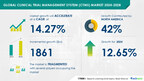
Clinical Trial Management System (CTMS) Market size is set to grow by USD 1.86 billion from 2024-2028, Increasing healthcare expenditure to boost the market growth, Technavio

Published

on

NEW YORK, July 30, 2024 /PRNewswire/ — The global clinical trial management system (CTMS) market size is estimated to grow by USD 1.86 billion from 2024-2028, according to Technavio. The market is estimated to grow at a CAGR of almost 14.27% during the forecast period. Increasing healthcare expenditure is driving market growth, with a trend towards increasing outsourcing of clinical trial process. However, rising cost of clinical trials poses a challenge. Key market players include Advarra Inc., ArisGlobal LLC, Clinion Inc., Crucial Data Solutions Inc., Dassault Systemes SE, DATATRAK International Inc., DSG Inc., Ennov SAS, eResearchTechnology GmbH, International Business Machines Corp., Laboratory Corp. Of America Holdings, MasterControl Solutions Inc., Medfiles USA, MedNet, Oracle Corp., Parexel International Corp., PHARMASEAL, RealTime Software Solutions LLC, Veeva Systems Inc., and Wipro Ltd..

Get a detailed analysis on regions, market segments, customer landscape, and companies – Click for the snapshot of this report

Forecast period

2024-2028

Base Year

2023

Historic Data

2018 – 2022

Segment Covered

Deployment (On-premise and Cloud), End-user (Pharmaceutical and biotechnology companies, CROs, and Others), and Geography (North America, Europe, Asia, and Rest of World (ROW))

Region Covered

North America, Europe, Asia, and Rest of World (ROW)

Key companies profiled

Advarra Inc., ArisGlobal LLC, Clinion Inc., Crucial Data Solutions Inc., Dassault Systemes SE, DATATRAK International Inc., DSG Inc., Ennov SAS, eResearchTechnology GmbH, International Business Machines Corp., Laboratory Corp. Of America Holdings, MasterControl Solutions Inc., Medfiles USA, MedNet, Oracle Corp., Parexel International Corp., PHARMASEAL, RealTime Software Solutions LLC, Veeva Systems Inc., and Wipro Ltd.


Key Market Trends Fueling Growth

In the pharmaceutical industry, the shift towards outsourcing drug discovery processes to subcontract laboratories has been a significant trend since 2011. This transformation has enabled small companies to focus on manufacturing and marketing activities while outsourcing research and testing to external resources. The increasing popularity of this approach is due to the substantial cost savings it offers, as companies can outsource these functions for a fraction of the cost of building and maintaining their own research facilities. This outsourcing trend is particularly prevalent in countries like the US, the UK, Germany, and Japan, which have been outsourcing drug discovery to emerging economies such as India and Brazil. The high volume of data generated during the drug discovery process necessitates the use of Clinical Trial Management Systems (CTMS) to manage and analyze this data effectively. The growing number of tests carried out in subcontract laboratories has led to a corresponding increase in demand for CTMS solutions. CTMS plays a crucial role in streamlining the clinical trial process, ensuring compliance with regulatory requirements, and facilitating data management and analysis. As the outsourcing trend continues, the demand for CTMS is expected to grow, providing opportunities for market expansion. 

The Clinical Trial Management System (CTMS) market is experiencing significant trends that are transforming the clinical trial landscape. Robust reporting and centralizing recruitment are key priorities for multinational companies and local CROs. ERegulatory, eSOURCE, accounting, and aggregate reporting provide network-wide visibility and oversight. Digitalization, personalized medicine, outsourcing, and externalization are driving growth in the market. Robust reporting, decentralized trial models, and evidence-based facilities are essential for regulatory compliance. ERegulatory, ERT, and Bioclinica are leading providers in Healthcare IT. Cloud-based CTMS, telemedicine solutions, and decentralized clinical trials are crucial in the current COVID-19 era. Costs, system security, backups, upgrades, and uptime consistency are critical considerations for CTM systems. AI and machine learning are enhancing trial efficiency and reducing costs. Vaccines and CTM systems are essential in the fight against COVID-19. The market is expected to continue growing, with investment in digitalization and regulatory policies being key drivers. 

Discover 360° analysis of this market. For complete information, schedule your consultation- Book Here!

Market Challenges

Clinical trials are a crucial part of bringing new drugs to market, but their rising costs are a significant concern for the pharmaceutical industry. One major challenge is patient enrollment and retention, which can prolong the trial duration and increase expenses. According to various studies, the average cost per patient in the US for clinical trials is approximately USD41,117, with phase 3 trials being the most expensive, costing around USD20 million. Another factor contributing to the rising costs is the need for extensive clinical data collection due to new regulations. This can make trials complex and expensive, especially for drugs targeting chronic diseases. The longer a trial lasts, the more it costs, making clinical trial management systems essential to streamline the process. However, some clinical research associates may prefer manual work to cut costs, hindering the growth of the market. To address this issue, increasing patient awareness is the most feasible solution. By educating patients about the importance and benefits of clinical trials, the number of willing participants is likely to rise, reducing the overall cost and duration of trials. Pharmaceutical companies should focus on patient education rather than persuasion to ensure a successful clinical trial process.In the dynamic healthcare IT landscape, Clinical Trial Management Systems (CTMS) have become essential tools for managing complex clinical trials. However, implementing CTMS comes with challenges. Decentralized trials and the rise of vaccines require cloud-based CTMS for flexibility. Telemedicine solutions and COVID-NMA necessitate robust system security, backups, and upgrades. Centralization of data, growth, and AI/machine learning algorithms demand uptime consistency and automation. Clinical trial managers need access to data on devices like mobile workstations, laptops, and tablets via online dashboards. Trial planning, monitoring activities, regulatory procedures, supplies, finance, and subscription-based software upgrades require scalability. Add-ons, regulatory norms, document management processes, data quality, participant safety, and adherence to regulatory procedures are key considerations. Solutions like Clinion offer IWRS/RTSM, EDC, eCOA, accruals, deviations, and scalability to address these challenges.

For more insights on driver and challenges – Download a Sample Report

Segment Overview 

This clinical trial management system (ctms) market report extensively covers market segmentation by

Deployment 1.1 On-premise1.2 CloudEnd-user 2.1 Pharmaceutical and biotechnology companies2.2 CROs2.3 OthersGeography 3.1 North America3.2 Europe3.3 Asia3.4 Rest of World (ROW)

1.1 On-premise- The Clinical Trial Management System (CTMS) market primarily consists of on-premises and cloud-based deployment models. On-premises CTMS offers enhanced data security and control, making it a preferred choice for large firms. However, the significant investment required for infrastructure and maintenance poses a challenge for smaller organizations. Conversely, cloud-based CTMS offers cost-effectiveness and ease of use. Major on-premises CTMS vendors include Siebel and IMPACT. Despite the high cost, large firms continue to prefer on-premises CTMS due to the perceived level of data security. This segment’s growth in the global CTMS market is anticipated to be driven by these factors during the forecast period.

For more information on market segmentation with geographical analysis including forecast (2024-2028) and historic data (2018 – 2022) – Download a Sample Report

Research Analysis

The Clinical Trial Management System (CTMS) market is a significant segment of Healthcare IT, facilitating the planning, execution, and management of clinical trials. With the increasing focus on decentralized clinical trials and the development of vaccines, CTMS solutions have gained prominence. Cloud-based CTMS is a popular choice due to its accessibility, scalability, and cost-effectiveness. Telemedicine solutions and IWRS/RTSM integrate seamlessly with CTMS, enhancing trial efficiency. EDC, eCOA, accruals, deviations, and robust reporting are essential features. Outsourcing and externalization to multinational companies and local CROs are common practices. Regulatory policies necessitate investment in CTMS solutions for ensuring compliance. Clario and other advanced systems offer features like ERT, making trial management more streamlined.

Market Research Overview

The Clinical Trial Management System (CTMS) market in Healthcare IT is experiencing significant growth due to the increasing adoption of decentralized clinical trials, particularly in the development of vaccines. Cloud-based CTMS solutions are gaining popularity for their accessibility and cost-effectiveness. Telemedicine solutions and AI-driven technologies, including machine learning algorithms and automation, are being integrated into CTMS to improve efficiency and data quality. Costs, system security, backups, and upgrades are key considerations for CTMS implementation. Uptime consistency, centralization of data, and regulatory norms are crucial for ensuring trial integrity and participant safety. Clinical trial managers require access to real-time data from devices such as mobile workstations, laptops, tablets, and online dashboards for effective trial planning, monitoring activities, and regulatory procedures. CTMS systems include modules for supplies, finance, and accounting on a subscription basis, with software upgrades and add-ons available for customization. Digitalization of clinical trials through eRegulatory, eSOURCE, IWRS/RTSM, EDC, eCOA, accruals, deviations, and scalable, robust reporting is driving growth in the market. Centralizing recruitment and network-wide visibility are also important for oversight and personalized medicine initiatives. Outsourcing and externalization to local CROs and multinational companies are common practices in the industry. Clario and other trial models are embracing decentralized approaches and evidence-based facilities to streamline regulatory policies and investment in the sector.

Table of Contents:

1 Executive Summary
2 Market Landscape
3 Market Sizing
4 Historic Market Size
5 Five Forces Analysis
6 Market Segmentation

DeploymentOn-premiseCloudEnd-userPharmaceutical And Biotechnology CompaniesCROsOthersGeographyNorth AmericaEuropeAsiaRest Of World (ROW)

7 Customer Landscape
8 Geographic Landscape
9 Drivers, Challenges, and Trends
10 Company Landscape
11 Company Analysis
12 Appendix

About Technavio

Technavio is a leading global technology research and advisory company. Their research and analysis focuses on emerging market trends and provides actionable insights to help businesses identify market opportunities and develop effective strategies to optimize their market positions.

With over 500 specialized analysts, Technavio’s report library consists of more than 17,000 reports and counting, covering 800 technologies, spanning across 50 countries. Their client base consists of enterprises of all sizes, including more than 100 Fortune 500 companies. This growing client base relies on Technavio’s comprehensive coverage, extensive research, and actionable market insights to identify opportunities in existing and potential markets and assess their competitive positions within changing market scenarios.

Contacts

Technavio Research
Jesse Maida
Media & Marketing Executive
US: +1 844 364 1100
UK: +44 203 893 3200
Email: media@technavio.com
Website: www.technavio.com/

View original content to download multimedia:https://www.prnewswire.com/news-releases/clinical-trial-management-system-ctms-market-size-is-set-to-grow-by-usd-1-86-billion-from-2024-2028–increasing-healthcare-expenditure-to-boost-the-market-growth-technavio-302208770.html

SOURCE Technavio

Continue Reading

Technology

NUH WINS GOLD AT IHF AWARDS 2026 FOR GREEN OPERATING THEATRE PROGRAMME

Published

on

By

 NUH won Gold and received an Honourable Mention for its sustainability efforts at the International Hospital Federation Awards 2026, alongside presentations of its green surgical initiatives, digital health and organisational improvement initiatives at the World Hospital Congress.

SINGAPORE, Oct. 21, 2026 /PRNewswire/ — The National University Hospital (NUH) has won the Gold Award (Low Carbon Healthcare) for its Green Operating Theatre programme at the International Hospital Federation (IHF) Awards 2026. The hospital also received an Honourable Mention (Hospital Sustainability Acceleration) for its system-wide approach to embedding sustainability across healthcare delivery and hospital operations.

The awards were presented at the 49th World Hospital Congress in Seoul, where NUH is also sharing other initiatives in environmental sustainability, digital health and organisational improvement.

Professor Aymeric Lim, Chief Executive Officer of NUH, said: “Healthcare must become more sustainable without compromising patient care. Our teams have shown that simple, practical changes on the ground, from the way we run our operating theatres to how we use resources, can make a real difference. This recognition belongs to the multi-disciplinary teams and partners who turned ideas into everyday practice, and who continue to improve how we care for our patients.”

Advancing low-carbon healthcare by reducing the environmental impact of surgical care

NUH’s Green Operating Theatre (OT) programme began with efforts to reduce the use of high-carbon anaesthetic gases. What started as a targeted decarbonisation initiative has since grown into a hospital-wide programme that brings together clinicians, nurses, operations teams and facilities staff to drive sustainability across surgical practices, resource use, waste management and energy management.

The programme has achieved a 99 per cent reduction in the use of desflurane, a high-carbon anaesthetic gas, and delivered annual energy savings of about 660,000 kWh by optimising operating theatre ventilation during non-operating hours.

Surgical teams redesigned instrument sets used for high-volume knee replacement procedures to better reflect routine requirements, reducing emissions by almost 10,000 kg CO2e annually while also cutting water use and sterilisation workload. Efforts have also been made to reduce unnecessary consumables and expand medical recycling streams.

Collectively, these initiatives have generated valuable insights that NUH has actively shared through inter-cluster platforms and collaborations, helping to inform the adoption of low-carbon practices across Singapore’s public healthcare system.

Embedding sustainability into everyday healthcare delivery

NUH received an Honourable Mention for its organisation-wide approach to embedding sustainability into hospital planning and operations.

Guided by the IHF Sustainability Accelerator Tool, NUH integrated sustainability into leadership oversight, strategic planning and everyday decision-making, strengthening efforts in Appropriate Value-based Care, virtual care, procurement, workforce engagement and environmental stewardship.

This system-wide approach to advancing a sustainable healthcare system has been recognised internationally. In 2025, NUH became the first hospital worldwide to receive the Joint Commission International-Geneva Sustainability Centre’s Healthcare Sustainability Certification. This year, it was the only hospital in Singapore to be accorded the highest 5-Leaf distinction in Newsweek-Statista’s World’s Greenest Hospitals index.

A new model of rehabilitation care

Recognised as one of the top three healthcare innovations selected for the International Hospital Federation’s i-to-i Innovation Hub Awards 2026, the NUH Virtual Rehabilitation Centre (VRC) is helping to extend rehabilitation beyond hospital walls.

Developed as a virtual-first rehabilitation ecosystem, the VRC combines personalised patient education, self-management tools, AI-enabled telerehabilitation, remote monitoring and digital rehabilitation pathways to support patients throughout their recovery journey. By enabling rehabilitation to continue beyond traditional clinic visits, the VRC improves access to care, strengthens patient participation in recovery and allows therapists to focus their attention on patients with more complex rehabilitation needs. The digital home exercise programme, for instance, supports around 2,000 patients and records about 21,000 logins each month, freeing up the equivalent of 66 physiotherapist workdays annually for direct patient care.

The innovation demonstrates how technology can be used not simply to digitise existing services, but to transform how rehabilitation is delivered at scale.

Helping doctors work smarter with electronic medical records

NUH also presented results from its Great Epic Transformation (GET) programme at the 49th World Hospital Congress in Seoul. The hospital-wide programme trained specialist doctors to personalise their Epic electronic medical record (EMR) workflows, using customised note templates, order sets and shortcuts to work more efficiently.

Nine months after training, participating doctors spent 10.2 per cent less time in the EMR each day, equivalent to more than 33 hours saved per doctor annually, while time spent placing orders fell by 26.5 per cent. Twelve of 13 efficiency measures improved across both medical and surgical specialties. Based on annual estimates, the overall efficiency gains are valued at more than S$91 million a year.

The programme is being extended to allied health professionals and pharmacists across NUHS, with a target of reaching more than 2,000 healthcare professionals by the end of 2026.

About the National University Hospital (NUH)­

The National University Hospital (NUH) is Singapore’s university hospital. While the hospital at Kent Ridge first received its patients on 24 June 1985, our legacy started from 1905, the date of the founding of what is today the NUS Yong Loo Lin School of Medicine. NUH is the principal teaching hospital of the medical school.

Our unique identity as a university hospital is a key attraction for healthcare professionals who aspire to do more than practise tertiary medical care. We offer an environment where research and teaching are an integral part of medicine, and continue to shape medicine and transform care for the community we care for.

We are an academic medical centre with over 1,200 beds, serving more than one million patients a year with over 50 medical, surgical and dental specialties. NUH is the only public and not-for-profit hospital in Singapore to provide trusted care for adults, women and children under one roof, including the only paediatric kidney and liver transplant programme in the country.

The NUH is a key member of the National University Health System (NUHS), one of three public healthcare clusters in Singapore. For more information, visit www.nuh.com.sg

Follow us on

Facebook | Instagram | LinkedIn | TikTok | YouTube


View original content to download multimedia:https://www.prnewswire.com/news-releases/nuh-wins-gold-at-ihf-awards-2026-for-green-operating-theatre-programme-302916198.html

SOURCE National University Hospital (NUH)

Continue Reading

Technology

NEXCOM NGFW platforms secure growing traffic across modern academic networks

Published

on

By

TAIPEI, Oct. 21, 2026 /PRNewswire/ — NEXCOM, a leading supplier of network appliances, is helping academic institutions strengthen network security as digital learning expands across cloud platforms, AI-powered tools, remote access, and connected campus services.

As educational environments become more distributed, academic networks must support growing traffic and diverse connections while protecting sensitive data and maintaining reliable access to learning resources. NEXCOM’s Next-Generation Firewall (NGFW) platforms provide a centralized security layer for inspecting and controlling traffic across campus and remote environments.

Learn more about securing digital learning environments in the joint case study.

Centralized Security for Digital Learning

On campus, NGFW platforms can inspect traffic between academic networks and external resources as students and faculty access learning platforms and web services. For remote users, secure VPN connectivity supports authorized access to internal resources while enabling centralized security policies.

“Every new digital service in education adds value for students and educators, but it also adds traffic, connections, and another layer of security responsibility,” says Allan Chiu, VP of Networking and Communication Solutions at NEXCOM. “The challenge is making sure security keeps pace without slowing down the learning experience. NEXCOM’s NGFW platforms provide the performance and scalability needed to secure modern, highly distributed academic networks.”

Scalable Platforms for Network Security

NEXCOM’s portfolio provides scalable platforms for firewall, edge security, secure remote access, and demanding network security workloads. Key platforms include:

NSA 7160R: A 2U high-performance security platform powered by dual Intel® Xeon® Scalable processors, with eight PCIe 5.0 expansion slots and throughput of up to 1.6 Tbps.FTA 5190: A compact 1U edge server powered by Intel Xeon 6 SoC technology, designed for reliable connectivity and security at the network edge.

About NEXCOM

Founded in 1992 and headquartered in Taipei, Taiwan, NEXCOM is shaping the future of AI-powered networking with its software-defined solutions. Through its Network and Communication Solutions (NCS) unit, NEXCOM delivers cutting-edge platforms for Cybersecurity, OT Security, SD-WAN, SASE, Load Balancing, 5G uCPE, edge AI, and more. NCS specializes in professional design and manufacturing services, enabling reliable and scalable network infrastructures for businesses of all sizes. With a focus on innovation, NEXCOM’s solutions empower customers worldwide to build resilient, high-performance networks tailored to the demands of tomorrow’s connectivity challenges.

View original content to download multimedia:https://www.prnewswire.com/news-releases/nexcom-ngfw-platforms-secure-growing-traffic-across-modern-academic-networks-302916203.html

SOURCE NEXCOM International Co., Ltd.

Continue Reading

Technology

Forrester’s 2027 B2B Go-To-Market Predictions: AI Agents Will Influence 75% Of B2B Purchase Decisions

Published

on

By

To remain competitive, providers must strengthen customer trust, substantiate value claims, and offer human expertise and guidance

SINGAPORE, Oct. 22, 2026 /PRNewswire/ — According to Forrester’s (Nasdaq: FORR) 2027 B2B go-to-market predictions, business buyers will increasingly deploy AI agents to handle tasks across the buying process, from supplier discovery and information gathering to contract-renewal analysis. While truly autonomous buying will remain concentrated in high-volume, low-risk, and repeatable purchases, the ubiquity of these agents will require providers to ensure that their systems and sellers can respond with speed, accuracy, and consistency.

Forrester’s B2B Predictions reports, covering topics including B2B go-to-market strategy, business buyers, and content and creative, offer forward-looking insights to help executives and their teams anticipate change, reduce uncertainty, and make confident decisions ahead of market shifts. Key highlights from the 2027 B2B go-to-market predictions include:

Buyers will double their human interactions to validate AI-generated recommendations. As AI becomes the primary interface for researching products and providers, buyers will encounter more AI-generated recommendations, synthetic content, automated outreach, and agent-mediated interactions. Since AI cannot fully judge service provider fit, feasibility, trust, or accountability, buyers will require conversations with provider teams and trusted third parties including analysts, customer references, and partners to confirm and validate buying decisions.Two-thirds of providers will lose deals because buyers cannot verify claims. Buyers already use AI-assisted search and analysis tools to gather information about products and vendors, synthesize provider claims, and fact check. As the reliance on these capabilities continue to advance, go-to-market teams will need to act fast to restructure content discovery for AI tools, including providing credible and consistent proof points that AI tools can index and validate.Most CMOs will cut programs or accept reduced capacity after overestimating AI gains. As pressure intensifies to reduce personnel costs with AI, marketing leaders will eliminate as many as 25% of roles in anticipation of productivity gains that fail to meet expectations. As a result, they will have to choose between cutting program budgets to restore capacity through rehiring, contractors, or agency support or accept reduced execution with a smaller team. In either case, lower campaign investment, weaker execution, or both will reduce marketing’s overall value contribution.

“In 2027, the defining challenge for B2B go-to-market leaders will be to make deliberate choices about what to automate and where human judgment still matters,” said Sharyn Leaver, chief research officer at Forrester. “As AI becomes ubiquitous across the buying process, B2B leaders that pair AI-driven speed and convenience with transparency, control, and trust will extract the most value from AI.”

Resources:

Download Forrester’s 2027 Predictions guide for B2B go-to-market.Register for Forrester’s webinar exploring the key trends reshaping B2B go-to-market strategies in 2027.Learn how to turn these predictions into action through Forrester’s global B2B events and research programs.

About Forrester
Forrester (Nasdaq: FORR) is one of the most influential research and advisory firms in the world. We empower leaders in technology, customer experience, digital, marketing, revenue, and product functions to make confident decisions in an AI-driven world and accelerate growth through customer obsession. Our unique research and continuous guidance model helps executives and their teams achieve their initiatives and outcomes faster and with confidence. To learn more, visit Forrester.com.

View original content to download multimedia:https://www.prnewswire.com/apac/news-releases/forresters-2027-b2b-go-to-market-predictions-ai-agents-will-influence-75-of-b2b-purchase-decisions-302915245.html

SOURCE Forrester

Continue Reading

Trending