Connect with us

Technology

Clinical Trial Management System (CTMS) Market size is set to grow by USD 1.86 billion from 2024-2028, Increasing healthcare expenditure to boost the market growth, Technavio

Published

on

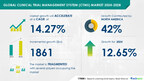
NEW YORK, July 30, 2024 /PRNewswire/ — The global clinical trial management system (CTMS) market size is estimated to grow by USD 1.86 billion from 2024-2028, according to Technavio. The market is estimated to grow at a CAGR of almost 14.27% during the forecast period. Increasing healthcare expenditure is driving market growth, with a trend towards increasing outsourcing of clinical trial process. However, rising cost of clinical trials poses a challenge. Key market players include Advarra Inc., ArisGlobal LLC, Clinion Inc., Crucial Data Solutions Inc., Dassault Systemes SE, DATATRAK International Inc., DSG Inc., Ennov SAS, eResearchTechnology GmbH, International Business Machines Corp., Laboratory Corp. Of America Holdings, MasterControl Solutions Inc., Medfiles USA, MedNet, Oracle Corp., Parexel International Corp., PHARMASEAL, RealTime Software Solutions LLC, Veeva Systems Inc., and Wipro Ltd..

Get a detailed analysis on regions, market segments, customer landscape, and companies – Click for the snapshot of this report

Forecast period

2024-2028

Base Year

2023

Historic Data

2018 – 2022

Segment Covered

Deployment (On-premise and Cloud), End-user (Pharmaceutical and biotechnology companies, CROs, and Others), and Geography (North America, Europe, Asia, and Rest of World (ROW))

Region Covered

North America, Europe, Asia, and Rest of World (ROW)

Key companies profiled

Advarra Inc., ArisGlobal LLC, Clinion Inc., Crucial Data Solutions Inc., Dassault Systemes SE, DATATRAK International Inc., DSG Inc., Ennov SAS, eResearchTechnology GmbH, International Business Machines Corp., Laboratory Corp. Of America Holdings, MasterControl Solutions Inc., Medfiles USA, MedNet, Oracle Corp., Parexel International Corp., PHARMASEAL, RealTime Software Solutions LLC, Veeva Systems Inc., and Wipro Ltd.


Key Market Trends Fueling Growth

In the pharmaceutical industry, the shift towards outsourcing drug discovery processes to subcontract laboratories has been a significant trend since 2011. This transformation has enabled small companies to focus on manufacturing and marketing activities while outsourcing research and testing to external resources. The increasing popularity of this approach is due to the substantial cost savings it offers, as companies can outsource these functions for a fraction of the cost of building and maintaining their own research facilities. This outsourcing trend is particularly prevalent in countries like the US, the UK, Germany, and Japan, which have been outsourcing drug discovery to emerging economies such as India and Brazil. The high volume of data generated during the drug discovery process necessitates the use of Clinical Trial Management Systems (CTMS) to manage and analyze this data effectively. The growing number of tests carried out in subcontract laboratories has led to a corresponding increase in demand for CTMS solutions. CTMS plays a crucial role in streamlining the clinical trial process, ensuring compliance with regulatory requirements, and facilitating data management and analysis. As the outsourcing trend continues, the demand for CTMS is expected to grow, providing opportunities for market expansion. 

The Clinical Trial Management System (CTMS) market is experiencing significant trends that are transforming the clinical trial landscape. Robust reporting and centralizing recruitment are key priorities for multinational companies and local CROs. ERegulatory, eSOURCE, accounting, and aggregate reporting provide network-wide visibility and oversight. Digitalization, personalized medicine, outsourcing, and externalization are driving growth in the market. Robust reporting, decentralized trial models, and evidence-based facilities are essential for regulatory compliance. ERegulatory, ERT, and Bioclinica are leading providers in Healthcare IT. Cloud-based CTMS, telemedicine solutions, and decentralized clinical trials are crucial in the current COVID-19 era. Costs, system security, backups, upgrades, and uptime consistency are critical considerations for CTM systems. AI and machine learning are enhancing trial efficiency and reducing costs. Vaccines and CTM systems are essential in the fight against COVID-19. The market is expected to continue growing, with investment in digitalization and regulatory policies being key drivers. 

Discover 360° analysis of this market. For complete information, schedule your consultation- Book Here!

Market Challenges

Clinical trials are a crucial part of bringing new drugs to market, but their rising costs are a significant concern for the pharmaceutical industry. One major challenge is patient enrollment and retention, which can prolong the trial duration and increase expenses. According to various studies, the average cost per patient in the US for clinical trials is approximately USD41,117, with phase 3 trials being the most expensive, costing around USD20 million. Another factor contributing to the rising costs is the need for extensive clinical data collection due to new regulations. This can make trials complex and expensive, especially for drugs targeting chronic diseases. The longer a trial lasts, the more it costs, making clinical trial management systems essential to streamline the process. However, some clinical research associates may prefer manual work to cut costs, hindering the growth of the market. To address this issue, increasing patient awareness is the most feasible solution. By educating patients about the importance and benefits of clinical trials, the number of willing participants is likely to rise, reducing the overall cost and duration of trials. Pharmaceutical companies should focus on patient education rather than persuasion to ensure a successful clinical trial process.In the dynamic healthcare IT landscape, Clinical Trial Management Systems (CTMS) have become essential tools for managing complex clinical trials. However, implementing CTMS comes with challenges. Decentralized trials and the rise of vaccines require cloud-based CTMS for flexibility. Telemedicine solutions and COVID-NMA necessitate robust system security, backups, and upgrades. Centralization of data, growth, and AI/machine learning algorithms demand uptime consistency and automation. Clinical trial managers need access to data on devices like mobile workstations, laptops, and tablets via online dashboards. Trial planning, monitoring activities, regulatory procedures, supplies, finance, and subscription-based software upgrades require scalability. Add-ons, regulatory norms, document management processes, data quality, participant safety, and adherence to regulatory procedures are key considerations. Solutions like Clinion offer IWRS/RTSM, EDC, eCOA, accruals, deviations, and scalability to address these challenges.

For more insights on driver and challenges – Download a Sample Report

Segment Overview 

This clinical trial management system (ctms) market report extensively covers market segmentation by

Deployment 1.1 On-premise1.2 CloudEnd-user 2.1 Pharmaceutical and biotechnology companies2.2 CROs2.3 OthersGeography 3.1 North America3.2 Europe3.3 Asia3.4 Rest of World (ROW)

1.1 On-premise- The Clinical Trial Management System (CTMS) market primarily consists of on-premises and cloud-based deployment models. On-premises CTMS offers enhanced data security and control, making it a preferred choice for large firms. However, the significant investment required for infrastructure and maintenance poses a challenge for smaller organizations. Conversely, cloud-based CTMS offers cost-effectiveness and ease of use. Major on-premises CTMS vendors include Siebel and IMPACT. Despite the high cost, large firms continue to prefer on-premises CTMS due to the perceived level of data security. This segment’s growth in the global CTMS market is anticipated to be driven by these factors during the forecast period.

For more information on market segmentation with geographical analysis including forecast (2024-2028) and historic data (2018 – 2022) – Download a Sample Report

Research Analysis

The Clinical Trial Management System (CTMS) market is a significant segment of Healthcare IT, facilitating the planning, execution, and management of clinical trials. With the increasing focus on decentralized clinical trials and the development of vaccines, CTMS solutions have gained prominence. Cloud-based CTMS is a popular choice due to its accessibility, scalability, and cost-effectiveness. Telemedicine solutions and IWRS/RTSM integrate seamlessly with CTMS, enhancing trial efficiency. EDC, eCOA, accruals, deviations, and robust reporting are essential features. Outsourcing and externalization to multinational companies and local CROs are common practices. Regulatory policies necessitate investment in CTMS solutions for ensuring compliance. Clario and other advanced systems offer features like ERT, making trial management more streamlined.

Market Research Overview

The Clinical Trial Management System (CTMS) market in Healthcare IT is experiencing significant growth due to the increasing adoption of decentralized clinical trials, particularly in the development of vaccines. Cloud-based CTMS solutions are gaining popularity for their accessibility and cost-effectiveness. Telemedicine solutions and AI-driven technologies, including machine learning algorithms and automation, are being integrated into CTMS to improve efficiency and data quality. Costs, system security, backups, and upgrades are key considerations for CTMS implementation. Uptime consistency, centralization of data, and regulatory norms are crucial for ensuring trial integrity and participant safety. Clinical trial managers require access to real-time data from devices such as mobile workstations, laptops, tablets, and online dashboards for effective trial planning, monitoring activities, and regulatory procedures. CTMS systems include modules for supplies, finance, and accounting on a subscription basis, with software upgrades and add-ons available for customization. Digitalization of clinical trials through eRegulatory, eSOURCE, IWRS/RTSM, EDC, eCOA, accruals, deviations, and scalable, robust reporting is driving growth in the market. Centralizing recruitment and network-wide visibility are also important for oversight and personalized medicine initiatives. Outsourcing and externalization to local CROs and multinational companies are common practices in the industry. Clario and other trial models are embracing decentralized approaches and evidence-based facilities to streamline regulatory policies and investment in the sector.

Table of Contents:

1 Executive Summary
2 Market Landscape
3 Market Sizing
4 Historic Market Size
5 Five Forces Analysis
6 Market Segmentation

DeploymentOn-premiseCloudEnd-userPharmaceutical And Biotechnology CompaniesCROsOthersGeographyNorth AmericaEuropeAsiaRest Of World (ROW)

7 Customer Landscape
8 Geographic Landscape
9 Drivers, Challenges, and Trends
10 Company Landscape
11 Company Analysis
12 Appendix

About Technavio

Technavio is a leading global technology research and advisory company. Their research and analysis focuses on emerging market trends and provides actionable insights to help businesses identify market opportunities and develop effective strategies to optimize their market positions.

With over 500 specialized analysts, Technavio’s report library consists of more than 17,000 reports and counting, covering 800 technologies, spanning across 50 countries. Their client base consists of enterprises of all sizes, including more than 100 Fortune 500 companies. This growing client base relies on Technavio’s comprehensive coverage, extensive research, and actionable market insights to identify opportunities in existing and potential markets and assess their competitive positions within changing market scenarios.

Contacts

Technavio Research
Jesse Maida
Media & Marketing Executive
US: +1 844 364 1100
UK: +44 203 893 3200
Email: media@technavio.com
Website: www.technavio.com/

View original content to download multimedia:https://www.prnewswire.com/news-releases/clinical-trial-management-system-ctms-market-size-is-set-to-grow-by-usd-1-86-billion-from-2024-2028–increasing-healthcare-expenditure-to-boost-the-market-growth-technavio-302208770.html

SOURCE Technavio

Continue Reading
Click to comment

Leave a Reply

Your email address will not be published. Required fields are marked *

Technology

Sharing opportunities — A New Landscape of Asia-Pacific Development

Published

on

By

BEIJING, Sept. 3, 2026 /PRNewswire/ — A news report from China.org.cn on Asia-Pacific community:

Combining a bionic eagle-claw gripper with a drone for disaster relief — that is the project Nathapol’s team from Thailand took to the finals of the Lancang-Mekong Countries Science and Technology Innovation Competition.

They spent a year refining and testing it, again and again. Although his team did not ultimately win, when they sat down with other young people from the Lancang-Mekong countries for in-depth exchanges, Nathapol also got a close-up look at innovative projects from other countries, ranging from biomedicine and modern agriculture to information technology. These young people’s ideas, nurtured by events like this, gradually grow into opportunities that could benefit people across the region.

Changes brought by technological progress are playing out in the everyday rhythm of the production line in the smart factory in Thailand. Through cooperation between Chinese and Thai companies, the factory is equipped with full 5G coverage; procedures that once required repeated manual inspection can now be handled by AI-powered visual inspection; and high temperature or the highly repetitive operations can be completed by robotic arms remotely controlled from a mobile phone. Here, technology isn’t simply replacing people on the production line — it has reduced danger and repetitive work.

At Chancay Port in Peru, a member of APEC, such opportunities are reaching even further. A cargo ship sailing out of Chancay Port, loaded with local fresh fruit such as blueberries and avocados, can now reach Shanghai in just 23 days, about 10 days faster than before. For the farmers and exporters, a new port, a new route and shorter shipping times can translate into a larger market, bigger profits, and tangible improvements in their lives.

Inside the port, the changes are equally concrete. Automated quay cranes and yard cranes, self-driving container trucks, and digital twin technology have made Chancay Port’s operations smarter. A new generation of young Peruvians who work at the port, in turn, are learning and honing skills for the “behind the screen era.”

Similar changes are taking place in other countries in the Asia-Pacific.

In Naoero, at nine o’clock in the morning, workers harvest fresh lettuce in a container-based “vegetable factory” built with China’s assistance; an hour and 20 minutes later, a local housewife drops a bag of the produce into her shopping cart. In Naoero, where fresh vegetables have long relied on air-freighted imports, China’s soilless cultivation technology has ultimately taken shape as bags of freshly picked vegetables on kitchen tables, at more affordable prices.

From a young innovator and his project to a smart factory, a port and a shipping route, and to the application of technologies and their coexistence with people, such stories offer a glimpse into the ever-closer ties among Asia-Pacific countries.

In recent years, China has continued to widen market access, advance the development of pilot free trade zones, and further facilitate trade and investment through regional frameworks such as RCEP and the China-ASEAN Free Trade Area 3.0. Platforms such as the China International Import Expo, the China International Supply Chain Expo and the China International Consumer Products Expo have likewise opened up more opportunities for global business owners to bring their products to China and connect with potential partners.

China is hosting APEC 2026 under the theme “Building an Asia-Pacific Community to Prosper Together,” with “openness,” “innovation,” and “cooperation” identified as the priorities. Ever-extending connections forged deeper links between markets and people’s lives, enabling more development opportunities to thrive and be shared in this Asia-Pacific community.

China Mosaic
http://www.china.org.cn/video/node_7230027.htm
Sharing opportunities — A New Landscape of Asia-Pacific Development
http://www.china.org.cn/video/2026-09/04/content_118679249.shtml

View original content to download multimedia:https://www.prnewswire.com/news-releases/sharing-opportunities–a-new-landscape-of-asia-pacific-development-302869725.html

SOURCE China.org.cn

Continue Reading

Technology

TÜV Rheinland Presents LCA Certificate to Aputure Studio Light

Published

on

By

SHENZHEN, China, Sept. 4, 2026 /PRNewswire/ — On August 21, TÜV Rheinland Greater China, the international independent testing, inspection and certification organization presented Shenzhen Aputure Imaging Technology Co., Ltd. (“Aputure”) with a life cycle assessment (LCA) certificate for its STORM CS32 studio light at the 2026 Aputure Fan Night.

The certification reflects Aputure’s commitment to environmental responsibility and provides a scientific basis for identifying the stages of a product’s life cycle with the greatest environmental impact, enabling targeted improvements that will guide future product optimization and sustainability management.

Gao Chao, Deputy Director of Aputure’s product center, and Li Qiang, Vice General Manager of Sales at TÜV Rheinland Greater China Electrical, attended the certificate presentation ceremony.

The project moved beyond the conventional approach of evaluating a single production stage. Instead, it applied a “cradle-to-grave” perspective, systematically assessing the studio light across its entire life cycle from raw material extraction, manufacturing, distribution and transportation, through product use, to end-of-life disposal. The assessment pinpointed the key factors and stages where environmental impact is greatest, providing data to support eco-design, process improvement and supply chain optimization.

“Sustainability has become a core imperative for business development,” Gao said. “Receiving this LCA certificate marks an important milestone in our efforts to integrate green principles across the entire research, development and manufacturing of our products. While refining technical performance, we continue to identify opportunities to reduce environmental impact throughout the product life cycle. Going forward, Aputure will advance eco-design, drive continuous innovation and support the industry’s transition toward a green, low-carbon future.”

“The global transition toward green, low-carbon development is accelerating, and sustainability has shifted from an option to a must for enterprises,” Li said. “LCA helps companies understand the composition of their products’ environmental footprint and identify where improvements can be made, moving from isolated green initiatives to systematic capability building. This certification not only recognizes Aputure’s achievements to date. It also marks a new starting point for building full life cycle environmental management capabilities. TÜV Rheinland is honored to have been part of this project, and we look forward to deepening our cooperation to help the professional film and television lighting industry move toward higher-quality, more sustainable growth.”

As a leading global technology service provider, TÜV Rheinland operates specialized laboratories and a global technical network covering safety, electromagnetic compatibility, performance verification and market access for electrical and electronic products. It offers one-stop solutions for photographic equipment, film and television lighting and related products, including testing, certification and assessment spanning product development, testing and certification, and post-market evaluation, helping Chinese lighting products reach global markets.

About Aputure
Shenzhen Aputure Innovation Technology Co., Ltd., headquartered in Shenzhen, is a high-tech enterprise specializing in imaging equipment. It integrates R&D, production, and global sales. The company has over 1,000 employees worldwide.

As of June 30, 2026, Aputure held 1,253 valid patents, including 171 invention patents. Aputure has subsidiaries and offices in the United States, the Netherlands, Singapore, India, Brazil, and other locations. It serves over 2 million users globally, with a sales network covering more than 175 countries.

The company owns four self-developed software and hardware product brands: Aputure, Amaran, DEITY, and the Sidus Link intelligent control system. Aputure products can be found in professional film and television crews, content creation studios, and professional live-streaming rooms worldwide, making Aputure one of the fastest-growing professional imaging equipment companies globally.

View original content to download multimedia:https://www.prnewswire.com/apac/news-releases/tuv-rheinland-presents-lca-certificate-to-aputure-studio-light-302869756.html

SOURCE TUV Rheinland Greater China

Continue Reading

Technology

EaseUS Software Reveals Windows Storage Insights Report 2026 H1 Based on 3.8 Million Global Samples

Published

on

By

EaseUS Study Finds Windows Storage Is Shifting from “Bigger Capacity” to “Smarter Space Management” as SSDs Become System Drive Mainstream

NEW YORK, Sept. 3, 2026 /PRNewswire/ —  EaseUS Software released the Windows Storage Trends and Insights 2026 H1 report, analyzing storage configurations and usage patterns based on 3.8 million Windows user samples. The study was conducted between February and July 2026, and found that Windows storage is shifting from simply expanding disk capacity to optimizing space allocation and proactively managing risk.

To answer the question of “How do worldwide storage structures look alike?”, EaseUS Lab, with its EaseUS Partition Master R&D and Tech Support teams, examined 6,575,391 internal physical disk drives and identified some key changes in Windows storage structure: SSDs have become the dominant storage medium, accounting for 63.03% of samples and 79.73% of system drives. This transition also indicates a new era focused on disk performance and intelligent space management, outweighing raw disk capacity.

Core Findings: Windows Storage Evolution in Progress

According to this storage report, EaseUS Lab identifies 5 critical storage trends that are reshaping the worldwide Windows storage structure:

1. SSDs Have Become the Mainstream Storage Medium in Windows Devices

SSD drives have become the primary choice for system installations. Over 79.73% of Windows system drives use SSD technology, as users prioritize performance and reliability for operating systems and applications. Meanwhile, HDDs continue to play important roles in high-capacity data storage scenarios.

2. Multi-Drive Configurations Are Expanding in Windows Storage

Over 44.85% of sampled devices are configured with two or more internal disk drives, and about 28.94% of Windows sample devices are two-disk-drive setups. This architecture reflects growing user sophistication in storage allocation: Windows devices are evolving from single-drive to multi-drive configurations, separating systems from data storage to optimize both performance and capacity utilization.

3. The Average Windows Disk Drive Capacity Is Smaller Than 1TB

Despite global storage growth, 83.37% of individual internal sample drives remain smaller than 1TB, with no significant shift toward ultra-high-capacity disks. Over 57.10% of sampled disk drives are staying in the 250GB – 1TB range. This illustrates that major Windows users are not rapidly shifting to ultra-large disk drives. In contrast, mid-range storage remains mainstream for meeting users’ daily demands.

4. C Drive Space Pressure Emerges On Smaller Disks

This storage trends research also uncovered a significant factor: although total storage increases, about 78.35% of C drives remain under 500GB. Among 17.01% of sampled disks, over 641,955 Windows devices are experiencing “C drive full”, “Low Disk Space”, or “C drive turning red” issues with critical low-space conditions of less than 10% free capacity left.  

Also, devices with C drives under 120GB face the highest risk of Low Disk Space, with 31.91% experiencing space pressure issues.

5. Regional Capacity Variations Highlight Diverse Needs

Windows storage preferences also vary significantly by region. European users favor larger disks (500GB-1TB) (29.88%), while North American and Asian users more commonly choose mid-range configurations (250GB-500GB) (28.32% and 32.54%, respectively). These differences may also reveal regional preferences in storage strategies among manufacturers and IT business owners.

Industry Implications: Focusing on Storage Strategy and Disk Lifecycle Management

According to this report, a foresight provided by EaseUS Lab, which says that “the storage industry is shifting from simply relying on storage capacity to a new stage: focusing on storage roles, disk space efficiency, and disk management capabilities.

The report outlines some strategic suggestions for different industrial players:

SSD Manufacturers: Focus on the 120GB – 500GB system drive segment; in this range, SSD upgrade opportunities remain substantial.HDD Manufacturers: Emphasize the value of secondary storage, archiving, and high-capacity data scenarios.PC OEMs: Consider proper system partition space configurations to align advertised capacity with actual usable space.Disk Health & Management Providers: Turn to proactive management and evolve from reactive cleanup tools to practical risk detection and lifecycle management strategies.

Actionable Suggestions for Actual Users

This storage report also provides C drive capacity-based management suggestions and tips for Windows users to apply:

120GB or Smaller C Drives (High Risk): Prioritize proper space allocation – these users should migrate large files to secondary drives and consider SSD upgrades for sustainable solutions.

250GB – 500GB C Drives (Mainstream): Monitor C drive space regularly, separate system and personal data, and leverage multi-drive configurations for optimal organization.

500GB or Larger C Drives (Large Capacity): Emphasize efficient space allocation, flexible partition planning, and long-term disk health monitoring instead of pursuing capacity to eliminate management needs.

How EaseUS Lab Conducted This Storage Insights Report

The Windows Storage Trends and Insights 2026 H1 report was created from 3.8M anonymized telemetry data collected by EaseUS Lab from February 2026 to July 2026. Here is how EaseUS Lab deals with the sample data:

All sensitive information was processed and removed before analysis.The sample data encompasses diverse global Windows users across consumer and enterprise segments.The insights data reflects sample subsets rather than complete global market statistics.

This report covers global regional preferences, brand distribution analysis, and expert recommendations, available at: https://www.easeus.com/whitepapers/windows-storage-trends-2026-h1.html.

About EaseUS Software

EaseUS, founded in 2004, is a leading software provider, offering data recovery, disk management, data backup services, and multimedia solutions to its global users. Trusted by millions of users across more than 160 countries and regions, EaseUS commits to delivering reliable, innovative, and user-friendly solutions to help individual and business users worldwide manage and protect their digital lives with ease. For more information, please visit: https://www.easeus.com.

View original content to download multimedia:https://www.prnewswire.com/news-releases/easeus-software-reveals-windows-storage-insights-report-2026-h1-based-on-3-8-million-global-samples-302869764.html

SOURCE EaseUS Software

Continue Reading

Trending