Connect with us

Technology

Smart Wearable Healthcare Devices Market size is set to grow by USD 24.22 billion from 2024-2028, Increasing focus on patient engagement boost the market, Technavio

Published

on

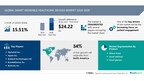
NEW YORK, July 31, 2024 /PRNewswire/ — The global smart wearable healthcare devices market size is estimated to grow by USD 24.22 billionn from 2024-2028, according to Technavio. The market is estimated to grow at a CAGR of 15.51% during the forecast period. Increasing focus on patient engagement is driving market growth, with a trend towards increasing adoption of self-monitoring of vital organs. However, concerns associated with data privacy poses a challenge. Key market players include Alphabet Inc., Apple Inc., Biobeat Technologies Ltd., BioIntelliSense Inc., Biotricity Inc., Boston Scientific Corp., Contec Medical Systems Co. Ltd., Cyrcadia Asia Ltd., Dexcom Inc., Garmin Ltd., Huawei Technologies Co. Ltd., iRhythm Technologies Inc., Koninklijke Philips N.V., Masimo Corp., Nokia Corp., OMRON Corp., Polar Electro Oy, Samsung Electronics Co. Ltd., ten3T Healthcare, and VitalConnect Inc..

Get a detailed analysis on regions, market segments, customer landscape, and companies- View the snapshot of this report

Smart Wearable Healthcare Devices Market Scope

Report Coverage

Details

Base year

2023

Historic period

2018 – 2022

Forecast period

2024-2028

Growth momentum & CAGR

Accelerate at a CAGR of 15.51%

Market growth 2024-2028

USD 24.22 billion

Market structure

Fragmented

YoY growth 2022-2023 (%)

13.65

Regional analysis

North America, Europe, Asia, and Rest of World (ROW)

Performing market contribution

North America at 34%

Key countries

US, Canada, Germany, UK, and China

Key companies profiled

Alphabet Inc., Apple Inc., Biobeat Technologies Ltd., BioIntelliSense Inc., Biotricity Inc., Boston Scientific Corp., Contec Medical Systems Co. Ltd., Cyrcadia Asia Ltd., Dexcom Inc., Garmin Ltd., Huawei Technologies Co. Ltd., iRhythm Technologies Inc., Koninklijke Philips N.V., Masimo Corp., Nokia Corp., OMRON Corp., Polar Electro Oy, Samsung Electronics Co. Ltd., ten3T Healthcare, and VitalConnect Inc.

Market Driver

Smart wearable healthcare devices, including wearable gadgets and mobile apps, are gaining popularity for self-tracking and self-monitoring applications. These devices collect, process, and display personal health records, enabling users to monitor and manage their vital signs. Five primary vital signs, including temperature, pulse, respiration, blood pressure, and pain, are regularly monitored. Self-monitoring is crucial for maintaining overall health and well-being. Hospitals use these devices to monitor patients’ progress during treatment, allowing for prompt detection of delayed recovery or adverse events. Wireless transmission of patient data to remote monitoring centers enables patients to move freely while under observation. Recording vital parameters in medical information systems for later analysis by healthcare professionals is another significant trend driving the smart wearable healthcare market. 

The Smart Wearable Healthcare Devices market is experiencing significant growth, particularly in the areas of Fitness, Diabetes, and Cardiovascular Diseases. With the IDF Diabetes Atlas reporting over 537 million people living with diabetes worldwide, there’s a high demand for wearable devices that can monitor and manage Type 2 diabetes. Similarly, the increasing prevalence of Cardiovascular Diseases (CVDs), including Hypertension and High Cholesterol, is driving innovation in this space. However, challenges such as privacy and security concerns, including unauthorized access to personal health information by cyber criminals, remain. Ground-breaking wearable devices like the BioButton multiparameter wearable are addressing these concerns with advanced Artificial Intelligence (AI) and Machine Learning (ML) capabilities. Reimbursement policies and per capita expenditure are also key factors influencing market growth. The aging population, investments and grants, and wireless connectivity are also fueling the development of smartphone-based healthcare devices and home healthcare solutions. Fitness tracking capabilities, such as those offered by smartwatches and wearable activity monitors, are popular among consumers. Data standardization, clinical trial platforms, and data accuracy are essential for ensuring the effectiveness and reliability of these devices. Fraud prevention and high-speed 5G networks are also critical for secure medical imagery transmission. 

Discover 360° analysis of this market. For complete information, schedule your consultation – Book Here!

Market Challenges

Smart wearable healthcare devices offer valuable health insights but pose privacy and security concerns due to the sensitive data they store. Their small size increases the risk of loss or misplacement. Location-based services, such as Google Glass and Foursquare, require sharing user locations, raising privacy issues. Security breaches are a potential threat, as data leakage can lead to serious consequences. Network operators have access to location data, raising concerns about privacy and potential misuse. These factors may hinder the growth of the global smart wearable healthcare devices market during the forecast period.The wearable healthcare device market is experiencing significant growth, with fitness trackers leading the charge. These devices monitor activities like walking, running, swimming, and cycling, providing valuable data on pace, distance, and elevation. Wearable ECG monitors offer early detection and diagnosis of chronic diseases through electrocardiograms. Medical efficiency is improved with real-time health parameter tracking of blood oxygen levels, body temperature, and sleep patterns. Wearable gadgets for training and compensation during sporting activities are driving the mobile healthcare revolution. National agencies and EU member states are implementing regulations for these devices, impacting purchasing power and disposable income. Blood Glucose Meters, Blood Pressure Monitors, Heart Detectors, and Pulse Monitors are also popular. E-commerce platforms facilitate sales of wearable healthcare devices and electronic gadgets. Sensor technologies and preventive healthcare are key trends. Bluetooth connectivity enables data sharing with connected technological devices for comprehensive health management.

For more insights on driver and challenges – Request a sample report!

Segment Overview

This smart wearable healthcare devices market report extensively covers market segmentation by

Product1.1 Fitness band1.2 Smart watches1.3 Smart glassesDistribution Channel2.1 Online2.2 OfflineGeography3.1 North America3.2 Europe3.3 Asia3.4 Rest of World (ROW)

1.1 Fitness band- Fitness bands are wearable devices worn on the wrist that monitor and record a user’s physical activity, including steps taken, distance covered, calories burned, and sleep patterns. These devices interact with a mobile application via Bluetooth to configure settings and access data. In 2021, vendors such as Redmi launched new models, like the Smart Band Pro, featuring larger displays, longer battery life, and enhanced water resistance. These advancements contribute to the growth of the global smart wearable healthcare devices market by enabling users to better track their health and fitness goals. Fitness bands provide valuable insights, encouraging healthier habits through self-monitoring, increased exercise, and improved sleep quality. With continuous innovation, the market for these devices is expected to expand significantly during the forecast period.

For more information on market segmentation with geographical analysis including forecast (2024-2028) and historic data (2017-2021) – Download a Sample Report

Research Analysis

The Smart Wearable Healthcare Devices market is experiencing rapid growth due to the increasing adoption of electronic gadgets for health management. These devices, including smartphone-based healthcare tools, offer wireless connectivity for real-time health parameter monitoring and lifestyle management. Home healthcare is a significant sector benefiting from wearable devices, enabling holistic evaluation of health parameters for preventive healthcare. Fitness monitoring is a popular application, with wearables helping individuals manage their fitness levels and track progress towards health goals. Diseases such as diabetes and cardiovascular disease can also be managed effectively using these devices. E-commerce and distribution channels have simplified access to these devices, making them an affordable and convenient option for consumers seeking to improve their health and wellbeing. Sensor technologies continue to advance, enhancing the capabilities of wearable healthcare devices and driving market growth.

Market Research Overview

Smart wearable healthcare devices refer to technology-enabled accessories that monitor and manage various health-related issues, including fitness tracking, body temperature, heart rate, blood pressure, sleep statistics, and remote patient monitoring. These devices leverage wireless connectivity to transmit real-time data to healthcare providers, insurers, and consumers. Lifestyle management is a significant application of wearable healthcare devices, with features like fitness tracking capabilities, smartwatches, wearable activity monitors, and smartphone apps. Home healthcare applications are also gaining popularity, with devices such as patches, trackers, and smart clothing. High-speed 5G networks enable advanced applications like medical imagery, augmented reality (AR), and virtual reality (VR) in wearable healthcare devices. Data standardization, consumer privacy, cybersecurity attacks, data accuracy, fraud prevention, and battery life are crucial considerations in this market. Wearable healthcare devices include smartphones, implants, accessories, clothing, and body trackers and monitors. They cater to patients, doctors, nurses, clinical personnel, hospitals, and home healthcare settings, offering a holistic evaluation of health-related issues. Wearable technology companies like Fitbit, wearable monitors, and wristbands with sensors are transforming the healthcare industry by enabling physical activity tracking, step progress, notifications, short messages, phone calls, and exercise-related features for walking, running, swimming, and bicycling.

Table of Contents:

1 Executive Summary
2 Market Landscape
3 Market Sizing
4 Historic Market Size
5 Five Forces Analysis
6 Market Segmentation

ProductFitness BandSmart WatchesSmart GlassesDistribution ChannelOnlineOfflineGeographyNorth AmericaEuropeAsiaRest Of World (ROW)

7 Customer Landscape
8 Geographic Landscape
9 Drivers, Challenges, and Trends
10 Company Landscape
11 Company Analysis
12 Appendix

About Technavio

Technavio is a leading global technology research and advisory company. Their research and analysis focuses on emerging market trends and provides actionable insights to help businesses identify market opportunities and develop effective strategies to optimize their market positions.

With over 500 specialized analysts, Technavio’s report library consists of more than 17,000 reports and counting, covering 800 technologies, spanning across 50 countries. Their client base consists of enterprises of all sizes, including more than 100 Fortune 500 companies. This growing client base relies on Technavio’s comprehensive coverage, extensive research, and actionable market insights to identify opportunities in existing and potential markets and assess their competitive positions within changing market scenarios.

Contacts

Technavio Research
Jesse Maida
Media & Marketing Executive
US: +1 844 364 1100
UK: +44 203 893 3200
Email: media@technavio.com
Website: www.technavio.com/

View original content to download multimedia:https://www.prnewswire.com/news-releases/smart-wearable-healthcare-devices-market-size-is-set-to-grow-by-usd-24-22-billion-from-2024-2028–increasing-focus-on-patient-engagement-boost-the-market-technavio-302209925.html

SOURCE Technavio

Continue Reading
Click to comment

Leave a Reply

Your email address will not be published. Required fields are marked *

Technology

Bloomberg Introduces Spread-to-Benchmark Quoting for EUR and GBP Portfolio Trading Baskets

Published

on

By

LONDON, June 2, 2026 /PRNewswire/ — Bloomberg today announced the launch of Spread-to-Benchmark quoting and trading for Euro (EUR) and Sterling (GBP) denominated portfolio trades through its Portfolio Trading Basket Builder (PTBB). The new functionality expands the range of quoting protocols available for European credit portfolio trading and reflects growing client demand for spread-based execution workflows, alongside increased dealer support for the convention across EUR and GBP markets.

Spread-to-Benchmark quoting is a well-established protocol for USD credit portfolio trades and is used by market participants to evaluate and execute portfolio trades. By extending this workflow to EUR and GBP portfolio trades, Bloomberg enables clients and dealers to transact using a familiar spread-based methodology across additional credit markets. 

The introduction of Spread-to-Benchmark quoting for EUR and GBP baskets reflects increased client interest in evaluating portfolio trades through a spread-based lens and the growing adoption of spread-based execution workflows in European credit markets. The workflow provides market participants with an additional framework for assessing the relationship between credit spread risk and underlying government bond yields when pricing and executing portfolio trades. 

Additional Workflow Flexibility 
The workflow complements Bloomberg’s existing portfolio trading capabilities, which support the full range of market-standard quoting conventions, including Price, Yield, Spread-to-Benchmark and Spread based workflows that reference Bloomberg’s evaluated pricing service (BVAL). This gives clients flexibility to compare and execute portfolio trades using the quoting methodology that best aligns with their investment objectives, execution preferences and internal risk management processes. 

“European credit clients continue to look for execution workflows that reflect how they evaluate risk and monitor portfolio trading outcomes,” said Harry Street, Global Head of Credit and Equities Trading Product at Bloomberg. “By expanding dealer support for Spread-to-Benchmark quoting for EUR and GBP baskets, Bloomberg is broadening the range of workflow options available to clients trading European credit portfolios.” 

“Portfolio trading workflows in fixed income continue to become more sophisticated as institutional investors look for ways to evaluate execution quality in changing market conditions,” said Kevin McPartland, Head of Market Structure & Technology Research at Crisil Coalition Greenwich. “Spread-based quoting helps market participants more clearly distinguish between the impacts of credit spread and underlying rates movements when determining how best to execute a portfolio trade.” 

Bloomberg’s Electronic Markets solutions are used by leading financial institutions to trade efficiently in over 175 markets around the world. More than 9,000 client firms use Bloomberg Electronic Markets to access industry-leading depth and breadth of liquidity across asset classes from over 800 dealers globally. Bloomberg Electronic Markets provides market participants with comprehensive solutions across the trading lifecycle, including robust price transparency, analytics, automation and execution, powered by Bloomberg’s high-quality, multi-asset class data and tools.

About Bloomberg
Bloomberg is a global leader in business and financial information, delivering trusted data, news, and insights that bring transparency, efficiency, and fairness to markets. The company helps connect influential communities across the global financial ecosystem via reliable technology solutions that enable our customers to make more informed decisions and foster better collaboration. For more information, visit Bloomberg.com/company or request a demo.

View original content to download multimedia:https://www.prnewswire.com/news-releases/bloomberg-introduces-spread-to-benchmark-quoting-for-eur-and-gbp-portfolio-trading-baskets-302787922.html

SOURCE Bloomberg L.P.

Continue Reading

Technology

Dr. Sunho Kang, a senior battery-technology executive with leadership experience at major global battery and EV manufacturers, joins TeraWatt Technology as Head of Product and Technology

Published

on

By

SAN FRANCISCO, June 2, 2026 /PRNewswire/ — TeraWatt Technology Inc. (Headquartered in California, USA) is pleased to announce that Dr. Sunho Kang has joined the company as Head of Product and Technology.

Dr. Kang is a globally recognized battery-technology executive with more than 25 years of leadership experience spanning the United States, Asia, and Europe, and a distinguished track record of advancing innovations from laboratory research through gigafactory-scale production. He has held senior executive positions at world-leading organizations including Samsung SDI, Apple, and Volkswagen Group of America, and brings deep expertise in lithium-ion battery materials, cell engineering, and product industrialization across a broad range of applications, including electric vehicles and energy storage systems.

At TeraWatt, Dr. Kang will lead global product development and the commercialization of TeraWatt’s battery technology platform, aiming to accelerate the delivery of TeraWatt’s competitive products as well as the technology and commercialization roadmap including manufacturing scale-up.

Dr. Kang commented:

“I am thrilled to join TeraWatt Technology as Head of Product and Technology. TeraWatt’s innovative battery platform presents a tremendous opportunity to push the boundaries of lithium-ion technology, and I look forward to working with the team to accelerate product development and commercialization to deliver meaningful impact.”

TeraWatt Technology founder CEO Ken Ogata, Ph.D. commented:

“We are thrilled to welcome Dr. Kang as our Head of Product and Technology. His deep expertise in battery materials, cell engineering, and productization will be instrumental in accelerating TeraWatt’s product roadmap and technology leadership. Together with Dr. Kang, we will continue to drive our mission forward.”

About TeraWatt Technology Inc.
TeraWatt Technology Inc. is a California-based company that produces lightweight, high-power, and safe next-generation lithium-ion batteries.

Company Overview
Name: TeraWatt Technology Inc.
Representative: Co-founder and CEO Ken Ogata
Headquarters: 28 Geary St, Suite 650, San Francisco, CA 94108, United States
Founded: January 2020
Established: December 2019
URL: https://www.terawatt-technology.com/


View original content:https://www.prnewswire.com/news-releases/dr-sunho-kang-a-senior-battery-technology-executive-with-leadership-experience-at-major-global-battery-and-ev-manufacturers-joins-terawatt-technology-as-head-of-product-and-technology-302786854.html

SOURCE TeraWatt Technology Inc.

Continue Reading

Technology

Tencent Cloud and Soniox Announce Strategic Partnership: Combining Advanced Speech-to-Text (STT) Technology with Global Real-Time Infrastructure

Published

on

By

HONG KONG, June 2, 2026 /PRNewswire/ — Tencent Cloud, the cloud business of global technology company Tencent, today announced a strategic partnership with Soniox, a San Francisco-based speech AI company that specializes in developing high-accuracy, low-latency speech AI solutions. The collaboration integrates Soniox’s speech-to-text (STT) technology with Tencent Cloud’s Real-Time Communication (TRTC) enterprise-grade global infrastructure, enabling enterprises to build and deploy multilingual voice AI applications across 200+ countries and regions.

Elevating Enterprise Voice AI at a Global Scale

In enterprise voice AI deployments, latency directly affects user experience and application reliability. The integration of Soniox’s high-accuracy, low-latency STT with TRTC’s global transmission infrastructure reduces latency across the entire pipeline, creating a comprehensive end-to-end solution for enterprises deploying conversational AI applications worldwide.    

Soniox is the voice platform for every language. Unlike legacy speech AI, which was built primarily for English-speakers, Soniox delivers native-speaker accuracy across 60+ languages. Its technology can handle mid-sentence language switching — a user can switch between English and Chinese in a single utterance, and Soniox will capture every word with complete accuracy. All of this works through a single API that works for both speech-to-text and text-to-speech.

By integrating TRTC, the partnership leverages an enterprise-grade real-time communication backbone featuring more than 3,200 global nodes, sub-300 ms worldwide latency, and advanced capabilities such as AI noise suppression and weak-network resilience. These capabilities enable conversational AI applications to operate reliably across diverse network environments, including regions such as Southeast Asia and Africa.

With the roll out of this partnership, developers can integrate the Soniox STT API directly within the Tencent Cloud console. Whether targeting English-speaking markets or supporting languages such as Arabic, Hindi, and Malay, enterprises can build global voice applications — including intelligent customer service, voice assistants, real-time translation, and meeting transcription — to address the demands of expansion into emerging markets and multilingual scenarios.

Wison Xie, Head of Product at Tencent RTC, stated: “Tencent RTC has always been committed to providing reliable real-time communication infrastructure for global enterprises. Our partnership with Soniox brings together our strengths in enterprise-grade audio transmission and Soniox’s advanced speech recognition technology. Together, we are making it easier for businesses to deploy accurate, low-latency voice AI applications across any language and any market.”

Klemen Simonic, CEO at Soniox Inc., stated “At Soniox, our mission is to help businesses understand every word, in any language, with native speaker accuracy and exceptional speed. Partnering with Tencent Cloud combines our speech AI with world-class real-time infrastructure, enabling enterprises to build voice AI experiences that scale globally with low latency and reliability.”

About Tencent Cloud:

Tencent Cloud, one of the world’s leading cloud companies, is committed to creating innovative solutions to resolve real-world issues and enabling digital transformation for smart industries. Through our extensive global infrastructure, Tencent Cloud provides businesses across the globe with stable and secure industry-leading cloud products and services, leveraging technological advancements such as cloud computing, Big Data analytics, AI, IoT, and network security. It is our constant mission to meet the needs of industries across the board, including the fields of gaming, media and entertainment, finance, healthcare, property, retail, travel, and transportation.

About Tencent RTC:

Tencent RTC provides real-time communication solutions, including audio/video calling, live streaming, and in-game voice. With enterprise-grade security, AI-powered enhancements, and a global network of over 3,200 nodes, Tencent RTC powers mission-critical communication for customers worldwide.

About Soniox:

Soniox is a next-generation voice AI company bringing about the end of English-first speech AI. Most people on the planet did not grow up speaking English and often mix languages mid-sentence; and yet legacy speech AI was built for just English. Soniox is different: native-speaker accuracy across 60+ languages, true mid-sentence language switching, and flawless alphanumeric recognition that legacy providers still can’t match. For developers building global apps, Soniox is the only option. Try it for yourself at soniox.com.

View original content to download multimedia:https://www.prnewswire.com/apac/news-releases/tencent-cloud-and-soniox-announce-strategic-partnership-combining-advanced-speech-to-text-stt-technology-with-global-real-time-infrastructure-302786832.html

SOURCE Tencent Cloud

Continue Reading

Trending