Connect with us

Technology

Mobile Fronthaul Market size is set to grow by USD 9.83 billion from 2024-2028, Growth of mobile computing devices boost the market, Technavio

Published

on

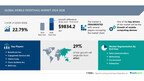
NEW YORK, Aug. 7, 2024 /PRNewswire/ — The global mobile fronthaul market size is estimated to grow by USD 9.83 billion from 2024-2028, according to Technavio. The market is estimated to grow at a CAGR of  22.79%  during the forecast period. Growth of mobile computing devices is driving market growth, with a trend towards increase in demand for 5g network technologies. However, interference in cell sites  poses a challenge. Key market players include Broadcom Inc., Capgemini Service SAS, Ciena Corp., Cisco Systems Inc., EXFO Inc., Fujitsu Ltd., Huawei Technologies Co. Ltd., Infinera Corp., LS Networks, MACOM Technology Solutions Inc., NEC Corp., Nokia Corp., Omnitron Systems Technology Inc., Telefonaktiebolaget LM Ericsson, and ZTE Corp..

Get a detailed analysis on regions, market segments, customer landscape, and companies- View the snapshot of this report

Mobile Fronthaul Market Scope

Report Coverage

Details

Base year

2023

Historic period

2018 – 2022

Forecast period

2024-2028

Growth momentum & CAGR

Accelerate at a CAGR of 22.79%

Market growth 2024-2028

USD 9834.2 million

Market structure

Fragmented

YoY growth 2022-2023 (%)

19.3

Regional analysis

Europe, North America, APAC, South America, and Middle East and Africa

Performing market contribution

APAC at 29%

Key countries

US, China, Germany, Canada, and Brazil

Key companies profiled

Broadcom Inc., Capgemini Service SAS, Ciena Corp., Cisco Systems Inc., EXFO Inc., Fujitsu Ltd., Huawei Technologies Co. Ltd., Infinera Corp., LS Networks, MACOM Technology Solutions Inc., NEC Corp., Nokia Corp., Omnitron Systems Technology Inc., Telefonaktiebolaget LM Ericsson, and ZTE Corp.

Market Driver

Telecom companies are implementing 5G services to enhance their network capabilities, with several regions set to adopt this technology in the coming years. The competition to provide superior 5G services is driving network providers to invest in C-RAN solutions. 5G technology offers high bandwidth and low latency, catering to various networking needs and leading to connectivity concerns. Efficient spectrum and network resource usage is crucial to reduce total cost of ownership. The increasing demand for 5G networks is expected to boost the global mobile fronthaul market, as 5G technology utilizes mobile fronthaul to support all wireless communications. Balancing reliability, latency, and throughput demands of advanced applications on 5G networks requires flexible mobile fronthaul configurations. Thus, the growth of the global mobile fronthaul market is anticipated to be driven by the widespread adoption of 5G technology. 

The Mobile Fronthaul market is experiencing significant growth as newer technologies like 5G require higher data rates and lower latency. Capital cost and power consumption are key considerations for network operators, leading to the migration from traditional copper interconnection to coax and optical interfaces. Newer equipment like baseband units (BBU) and remote radio units (RRU) are being used to reduce network costs and power costs. Complex networking architectures like Centralized BBU and CRAN (Centralized RAN) are gaining popularity. Older technologies like 2G, 3G, and 4G are being phased out in favor of more advanced features like haptics, gesture recognition, facial recognition, heart rate monitoring, and voice recognition. Ericsson R380 marked the beginning of mobile computing in 2G era, now 5G is revolutionizing the way we communicate. Security is a major concern, with data centers playing a crucial role in ensuring data privacy and protection. Overall, the Mobile Fronthaul market is an exciting space with constant innovation and advancements. 

Discover 360° analysis of this market. For complete information, schedule your consultation – Book Here!

Market Challenges

Mobile networks face a significant challenge with interference in cell sites, primarily caused by the poor conductivity of passive devices like cables, connectors, and antennae. This internal interference generates intermodulation signals at the same frequency band as mobile transmitters. Simultaneously, operators are utilizing frequency refarming as a cost-effective method to increase capacity for Long-Term Evolution (LTE) and Universal Mobile Telecommunications Systems (UMTS) without acquiring new spectrum. As mobile technology advances towards LTE, refarming allows for high data rates for mobile devices while maintaining the spectra of older technologies like Global System for Mobile Communications (GSM) and Wideband Code Division Multiple Access (WCDMA). However, the sharing of a limited spectrum among multiple technologies results in the reuse of frequencies, leading to internal interference in the Radio Access Network (RAN). Current interference management systems are insufficient to address this issue, making interference in cell sites a significant obstacle for the expansion of the global mobile fronthaul market during the forecast period.Mobile fronthaul market is experiencing significant growth due to the deployment of advanced technologies like Cloud RAN, 5G networks, and MIMO technologies. However, challenges persist in implementing these solutions, such as fiber-based technology, multiplexing, and virtualization. Power and space constraints at cell sites are also major concerns for mobile operators. Fronthaul architectures require efficient use of network resources, including spectrum and transmission network capacity. Traditional solutions like Passive WDM, Ethernet, and Active WDM, offer advantages in terms of cost and flexibility. However, emerging economies face unique challenges in implementing these solutions due to operational costs and truck rolls. Professional and managed services are essential for ensuring seamless integration of these technologies. Motorola Solutions and Rave Mobile Safety are among the companies providing innovative solutions to address these challenges. Infinera’s synchronization and transparent data transport offer benefits for mobile networks, while 50Gbps broadband and 50GPON are essential for meeting increasing network traffic demands. The dynamic nature of mobile networks necessitates flexible solutions, with small cells and macro cells requiring different approaches. An application note from Infinera highlights the advantages of optical networks for mobile fronthaul, including low power consumption and high network capacity. Overall, the mobile fronthaul market requires continued innovation to address these challenges and meet the demands of mobile operators.

For more insights on driver and challenges – Request a sample report!

Segment Overview 

This mobile fronthaul market report extensively covers market segmentation by  

End-user 1.1 Telecommunications1.2 Networking1.3 Government1.4 EnterprisesType 2.1 Cloud RAN2.2 Centralized RANGeography 3.1 Europe3.2 North America3.3 APAC3.4 South America3.5 Middle East and Africa

1.1 Telecommunications-  Mobile fronthaul is a crucial component of wireless communications networks, including 4G and 5G, as well as the Internet of Things (IoT). By utilizing fiber optic connections, fronthaul enables reliable network expansion through low latency connections and high data transmission. This refers to the fiber links that connect the individual Remote Radio Units (RRUs) or Remote Radio Heads (RRHs) and Baseband Units (BBUs). These pieces of equipment enable network operators to introduce new services, reduce capital expenditures (CAPEX), and ensure quality of service (QoS) throughout the network life cycle, from research and development (R&D) to manufacturing, deployment, and service assurance. The mobile fronthaul market is poised for significant growth due to the rapid evolution of wireless standards in response to increasing bandwidth demands and higher data transmission rates. Additionally, the expanding number of mobile and internet users, along with the rising adoption of broadband services and evolving communications standards like LTE and LTE-A in 5G networks, will fuel the growth of the telecommunications industry and the mobile fronthaul market.

For more information on market segmentation with geographical analysis including forecast (2024-2028) and historic data (2017-2021) – Download a Sample Report

Research Analysis

The Mobile Fronthaul market refers to the infrastructure that connects baseband processing units (BBUs) at the cell site to the centralized processing units in mobile networks. This architecture, known as CRAN (Centralized Radio Access Network), is gaining popularity due to the increasing demand for mobile computing and advanced features like haptics, gesture recognition, facial recognition, heart rate monitoring, and voice recognition. The market has evolved from 2G and 3G networks to 4G and beyond, requiring more power and space at cell sites to accommodate the growing network resources and spectrum requirements. The transmission network plays a crucial role in the mobile fronthaul, ensuring seamless communication between the radio network and the antenna. Data centers and cloud RAN are also becoming integral to mobile networks, enabling efficient use of network resources and reducing the need for on-site equipment. The dynamic nature of mobile networks necessitates a flexible and scalable mobile fronthaul solution to meet the evolving demands of mobile operators and users.

Market Research Overview

Mobile fronthaul refers to the transmission of data between the baseband unit (BBU) and the remote radio unit (RSU) or remote radio (RR) in mobile networks. Traditional mobile networks, including 2G, 3G, and 4G, used copper interconnections for fronthaul connections, which had limitations in terms of data rates, reach, and power consumption. With the advent of CRAN (Centralized Radio Access Network) architecture and mobile computing, mobile fronthaul has evolved. CRAN architecture involves centralizing the baseband processing in a data center, reducing the need for power and space at cell sites. This architecture also enables the use of newer technologies like MIMO (Multiple Input Multiple Output), haptics, gesture recognition, facial recognition, heart rate monitoring, GPS, voice recognition, and various wireless communication standards. Fronthaul networks can be fiber-based or use passive WDM (Wavelength Division Multiplexing) or active WDM for transmission. Ethernet and optical networks are commonly used for fronthaul connections. 5G networks require high-capacity fronthaul connections, with data rates of up to 50Gbps. Flexible fronthaul solutions are essential for the dynamic nature of mobile networks. Small cells and macro cells have different space requirements and network resources, and fronthaul solutions must be able to adapt to these differences. The benefits of mobile fronthaul include reduced operational costs through truck rolls, improved network capacity, and the ability to support newer technologies and applications. Infinera, a leading provider of optical networking solutions, offers transparent data transport and synchronization advantages for mobile fronthaul networks. Other companies, like Motorola Solutions and Rave Mobile Safety, provide professional and managed services for mobile network operators in emerging economies. The cost factors for mobile fronthaul include capital cost, equipment, power consumption, and network cost, which can be mitigated through migration to more efficient technologies and network architectures.

Table of Contents:

1 Executive Summary
2 Market Landscape
3 Market Sizing
4 Historic Market Size
5 Five Forces Analysis
6 Market Segmentation

End-userTelecommunicationsNetworkingGovernmentEnterprisesTypeCloud RANCentralized RANGeographyEuropeNorth AmericaAPACSouth AmericaMiddle East And Africa

7 Customer Landscape
8 Geographic Landscape
9 Drivers, Challenges, and Trends
10 Company Landscape
11 Company Analysis
12 Appendix

About Technavio

Technavio is a leading global technology research and advisory company. Their research and analysis focuses on emerging market trends and provides actionable insights to help businesses identify market opportunities and develop effective strategies to optimize their market positions.

With over 500 specialized analysts, Technavio’s report library consists of more than 17,000 reports and counting, covering 800 technologies, spanning across 50 countries. Their client base consists of enterprises of all sizes, including more than 100 Fortune 500 companies. This growing client base relies on Technavio’s comprehensive coverage, extensive research, and actionable market insights to identify opportunities in existing and potential markets and assess their competitive positions within changing market scenarios.

Contacts

Technavio Research
Jesse Maida
Media & Marketing Executive
US: +1 844 364 1100
UK: +44 203 893 3200
Email: media@technavio.com
Website: www.technavio.com/

View original content to download multimedia:https://www.prnewswire.com/news-releases/mobile-fronthaul-market-size-is-set-to-grow-by-usd-9-83-billion-from-2024-2028–growth-of-mobile-computing-devices-boost-the-market-technavio-302215461.html

SOURCE Technavio

Continue Reading
Click to comment

Leave a Reply

Your email address will not be published. Required fields are marked *

Technology

IMDA and Tencent Debut “Beyond the Screen” to Champion Real-World Connection through Digital Play

Published

on

By

The launch is marked by the signing of an agreement between IMDA and Tencent to advance healthy digital habits and safe, responsible use of digital technologies among youths, parents, and families.

SINGAPORE, May 2, 2026 /PRNewswire/ — The Infocomm Media Development Authority (IMDA) and Tencent today jointly launched “Beyond the Screen: Healthy Digital Play”, a new digital wellbeing campaign that encourages healthy digital habits by bringing families into the conversation and strengthening real-world connection through healthy gameplay.

The campaign encourages families to bridge the gap between play and purpose through gaming. It showcases how digital play can foster deeper understanding, facilitate balanced routines, and build stronger connections at home.

“Digital spaces are already a natural part of how young people learn, play, and connect today,” said Mr Murphy Zhao, Country Manager of Tencent Singapore and Head of Tech Group, Tencent Games. “As a company with deep expertise across digital entertainment and communications, we want to play a constructive role by helping families build meaningful digital habits that extend beyond the screen.”

Advancing Family Digital Wellness In Partnership with IMDA

As part of the launch, IMDA and Tencent also signed an agreement to strengthen collaboration on initiatives in digital wellbeing. The agreement was signed by Ms Joanna Lam, Cluster Director for Digital Readiness, IMDA, and Mr Murphy Zhao, Country Manager of Tencent Singapore and Head of Tech Group, Tencent Games. The collaboration builds on Tencent’s ongoing cooperation with IMDA, in support of the national Digital for Life (DfL) movement, focusing on promoting online safety and healthy digital habits among youths, parents, and families.

Tencent will co-develop educational content with IMDA, as well as organise four community outreach activities, reaching out to an estimated 4,000 participants. The company will also commit S$ 25,000, which totals to S$ 50,000 with the government’s dollar-to-dollar matching, to the DfL Fund. The DfL Fund provides support for projects and activities promoting digital inclusion, digital literacy and digital wellness. 

“Ensuring digital wellness is increasingly important, particularly for our children who are digital natives,” said Ms Joanna Lam, Cluster Director for Digital Readiness, IMDA. “Tencent has been a DfL partner since 2022, and I thank them for their continued commitment to the DfL cause. We look forward to deepening our collaboration with Tencent to empower parents and youths with practical guidance to build healthy digital habits and navigate the digital world safely together.”

Leading the Conversation on Healthy Digital Play

The inaugural Singapore launch event was officiated by Ms Jasmin Lau, Minister of State, Ministry of Digital Development and Information, and also hosted social service organisations from Singapore, Malaysia, Thailand, Indonesia, and the Philippines. At the event, families participated in gamified quiz experiences and took home educational materials designed to transform gaming into healthier routines at home. 

The programme also featured a parenting talk that shared practical guidance on utilising games as a bridge for conversation at home. The session highlighted how, when guided by constructive routines, gaming can support the development of soft skills such as communication, teamwork, strategic thinking, and persistence.

During the event’s expert insights session, Mr Narasimman S/O Tivasiha Mani, psychotherapist and co-founder of local youth charity Impart, said, “Healthy gaming is not built through one-off rules. It grows through rapport, shared understanding, and everyday conversations. Through a collaborative process between educators, families, and the wider community, it becomes easier to set shared expectations and support balanced habits that carry beyond the screen.”

Building a Scalable Digital Wellbeing Framework for Southeast Asia

While digital habits may look different across the region, the underlying need is the same — helping families build healthier, more confident relationships with the digital world.

“Beyond the Screen” is part of Tencent’s broader commitment to fostering intentional digital play, equipping youths, parents, and educators with practical resources to build balanced routines, encourage respectful interactions, and strengthen open communication at home.

Insights from the Singapore launch will inform the rollout of the campaign across Southeast Asia in 2026, with local adaptations to meet the needs of diverse communities in the region.

About Digital for Life Movement

A Digital Future for All – In our increasingly digital world, everyone can play a part to help create a more inclusive digital future.

The Digital for Life (DfL) national movement, launched on 8 February 2021, aims to galvanise the community across the 3Ps (Private, Public and People) to help Singaporeans embrace digital as a lifelong pursuit and enrich lives through digital technology.

The DfL fund was also set up to support projects and activities promoting digital inclusion, digital literacy and digital wellness. Learn more about the DfL movement at digitalforlife.gov.sg.

About Infocomm Media Development Authority

The Infocomm Media Development Authority (IMDA) leads Singapore’s digital transformation by developing a vibrant digital economy and an inclusive digital society. As Architects of Singapore’s Digital Future, we foster growth in Infocomm Technology and Media sectors in concert with progressive regulations, harnessing frontier technologies, and developing local talent and digital infrastructure ecosystems to establish Singapore as a digital metropolis.

For more news and information, visit www.imda.gov.sg or follow IMDA on LinkedIn (IMDAsg), Facebook (IMDAsg) and Instagram (@imdasg).

About Tencent 

Tencent is a world-leading internet and technology company that develops innovative products and services to improve the quality of life of people around the world. Our communication and social services connect more than one billion people around the world, helping them to keep in touch with friends and family, access transportation, pay for daily necessities, and even be entertained. Our financial technology business covers payment, credit, wealth management and insurance sectors, as we support our partners’ business growth and assist their digital upgrade through FinTech and other enterprise services. We also publish some of the world’s most popular video games and other high-quality digital content, enriching interactive entertainment experiences for people around the globe. Tencent was founded in Shenzhen, China, in 1998, and has been listed on the Main Board of the Stock Exchange of Hong Kong since 2004.

View original content to download multimedia:https://www.prnewswire.com/apac/news-releases/imda-and-tencent-debut-beyond-the-screen-to-champion-real-world-connection-through-digital-play-302760594.html

SOURCE IMDA; Tencent

Continue Reading

Technology

Does Your Building Have Fire Sprinklers?

Published

on

By

Fast Guard Service alerts real estate owners and property managers: 2026 fire code updates to NFPA 25 will significantly affect sprinkler system compliance requirements — and insurance implications could not be more serious.

SAN JOSE, Calif., May 2, 2026 /PRNewswire/ — Fast Guard Service, one of the nation’s leading providers of licensed fire watch and security guard services, is urging commercial and residential property owners to take immediate stock of their fire sprinkler systems as sweeping 2026 updates to NFPA 25 — the national standard governing water-based fire protection system inspection, testing, and maintenance — take effect across the country.

The timing could not be more consequential. Private insurers are exiting fire-risk markets at an accelerating pace, dropping policyholders and limiting coverage in states from California to Florida. In this environment, a sprinkler system that fails a compliance check is no longer a routine maintenance issue. It is a potential grounds for claim denial or policy cancellation.

The 2026 edition of NFPA 25 introduces several changes property owners must act on now. Fire pump failures are formally classified as system impairments requiring immediate response. Supervisory valve testing moves to a semiannual schedule. Annual internal inspections are now mandatory for all dry, preaction, and deluge valves. And where corrosion-control technology has been used to justify smaller pipe sizes, ongoing maintenance of that equipment is now a codified legal obligation — not a recommendation.

Critically, any sprinkler system impairment — whether triggered by repair, renovation, freeze damage, or a compliance-driven upgrade — legally requires a certified fire watch for the duration of the outage under NFPA 1, NFPA 101, and local fire authority mandates. This is a condition of occupancy, not an option.

“The 2026 code updates will send a wave of sprinkler systems into inspection and repair cycles,” said a spokesperson for Fast Guard Service. “Every one of those impairment windows requires a fire watch on-site. We are prepared to be there.”

Fast Guard Service deploys certified fire watch personnel 24 hours a day, 7 days a week, anywhere in the United States — typically within hours of a client’s call. Guards conduct continuous patrols, maintain documentation accepted by insurers and code enforcement authorities, and coordinate directly with fire departments when needed.

Property owners who are unsure whether their sprinkler systems meet 2026 NFPA 25 requirements are encouraged to contact Fast Guard Service for guidance.

Founded in August 2013 and headquartered in Hollywood, Florida, Fast Guard Service is a fully licensed, bonded, and insured private security company operating in all 50 states. The company specializes in armed and unarmed security guards, fire watch services, executive protection, mobile surveillance, event security, and emergency response. Fast Guard Service is trusted by Fortune 500 companies, government entities, healthcare systems, commercial developers, and private clients nationwide.

All operations are tracked through the proprietary Fast Guard App, providing clients with real-time GPS reporting, live guard location updates, and digital incident documentation.

For an instant quote or same-day service, visit www.fastguardservice.com or call (844) 254-8273.

Press Release Service provided by 24-7PressRelease.com.

View original content:https://www.prnewswire.com/news-releases/does-your-building-have-fire-sprinklers-302760491.html

SOURCE Fast Guard Service

Continue Reading

Technology

First Online Conversations Are Changing in 2026, According to New Secretmeet Research

Published

on

By

New research from Secretmeet reveals that the classic “Hey” opener is dying out — and the way people initiate connections online in 2026 looks nothing like it did just three years ago.

GIBRALTAR, May 2, 2026 /PRNewswire-PRWeb/ — People are rethinking the first move. Not just what to say, but when to say it, how long to make it, and what emotional tone to lead with. Across the board, data from Secretmeet’s latest research study shows a clear shift in how online conversations begin in 2026.

The single-word opener? Largely gone. The copy-paste compliment? People spot it instantly. Secretmeet noted that what’s replacing them is more interesting — and more human.

The Death of the One-Word Opener

For years, “Hey,” “Hi,” and “Hello 👋” dominated opening messages on dating platforms. They required no effort and, accordingly, generated little response. According to data published by the Journal of Computer-Mediated Communication, conversational openers that include a specific reference to the recipient’s profile generate significantly higher response rates than generic greetings.

Secretmeet’s research confirms the trend is accelerating. In 2026, users who open with a question — particularly one tied to something specific in a profile — see measurably stronger engagement in the first exchange. The bar for a “good” first message has risen.

This doesn’t mean people need to write an essay. Short still works. But purposeful short beats lazy short every time.

One of the more striking findings from Secretmeet: wit is winning. Openers with a light, humorous tone — a playful observation, a self-aware joke, a clever hypothetical — are outperforming earnest, serious introductions in early conversation engagement.

The Timing Shift Nobody Expected

When people send that first message matters more than most realize. In a Secretmeet review of activity trends, data points to a notable behavioral change: users in 2026 are increasingly active during morning hours — particularly between 7 a.m. and 9 a.m. — a window that was almost entirely quiet just a few years ago.

Evening hours still dominate overall volume. But morning messages show a disproportionately high response rate. The theory? People checking their phones with coffee and no agenda are more present, less distracted, and more open to genuine interaction than those scrolling at midnight.

It’s a small tactical insight with a surprisingly large emotional implication: presence matters more than timing, and mornings are when people show up fully. Secretmeet’s data makes that case clearly.

What This Means for How We Connect

The bigger picture here isn’t about tactics. It’s about expectations. People arriving at online dating platforms in 2026 want something more immediate and more genuine than they did in 2020. The pandemic years accelerated a kind of emotional directness online — and that hasn’t reversed.

People want to feel seen in a first message. They want to laugh. They want a reason to respond. A Secretmeet review of first-message engagement data suggests that users are increasingly capable of signaling — and detecting — authentic intent right from the very first line.

The opening message has always mattered. What’s changed is how clearly people understand that now.

About Secretmeet

Secretmeet is an online dating platform built around one straightforward idea: conversations should feel good. Not stressful, not performative — genuinely enjoyable. The platform is designed for people who want warmth, a little wit, and the kind of back-and-forth that actually goes somewhere. Whether you’re looking for something serious or just a spark of something new, Secretmeet reviews its features continuously to ensure that the first message has a real chance of turning into something worth remembering.

Media Contact

Alice Ross, Secretmeet, 1 14844760121, smm@secretmeet.com, https://secretmeet.com/

View original content:https://www.prweb.com/releases/first-online-conversations-are-changing-in-2026-according-to-new-secretmeet-research-302759958.html

SOURCE Secretmeet

Continue Reading

Trending