Technology
Engineering Services Outsourcing Market to Grow by USD 203.04 Million from 2023-2027, AI-Driven Transformation and Labor Cost Savings Fuel Growth – Technavio Report
Published
2 years agoon
By
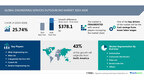
NEW YORK, Sept. 6, 2024 /PRNewswire/ — Report with the AI impact on market trends- The global engineering services outsourcing market size is estimated to grow by USD 203.04 million from 2023-2027, according to Technavio. The market is estimated to grow at a CAGR of almost 18.75% during the forecast period. Cost savings from lower labor wages is driving market growth, with a trend towards collaborative co-innovation partnership with outsourcing firms. However, risk of intellectual property theft and misuse poses a challenge. Key market players include Altair Engineering Inc., Alten SA, Capgemini Service SAS, Cyient Ltd., Deaton Engineering Inc., EPAM Systems Inc., FEV Consulting GmbH, Flatworld Solutions Pvt. Ltd., HCL Technologies Ltd., Hitachi Ltd., Honeywell International Inc., Infosys Ltd., Leedeo Engineering S.L., Mahindra and Mahindra Ltd., Quest Services Pte. Ltd., Siemens AG, Sonata Software Ltd., SSA Business Solutions India, Tata Consultancy Services Ltd., and Wipro Ltd..
Key insights into market evolution with AI-powered analysis. Explore trends, segmentation, and growth drivers- View the snapshot of this report
Engineering Services Outsourcing Market Scope
Report Coverage
Details
Base year
2022
Historic period
2017 – 2021
Forecast period
2023-2027
Growth momentum & CAGR
Accelerate at a CAGR of 18.75%
Market growth 2023-2027
USD 203.04 million
Market structure
Fragmented
YoY growth 2022-2023 (%)
18.25
Regional analysis
North America, APAC, Europe, South America, and Middle East and Africa
Performing market contribution
North America at 42%
Key countries
US, China, India, Germany, and Poland
Key companies profiled
Altair Engineering Inc., Alten SA, Capgemini Service SAS, Cyient Ltd., Deaton Engineering Inc., EPAM Systems Inc., FEV Consulting GmbH, Flatworld Solutions Pvt. Ltd., HCL Technologies Ltd., Hitachi Ltd., Honeywell International Inc., Infosys Ltd., Leedeo Engineering S.L., Mahindra and Mahindra Ltd., Quest Global Services Pte. Ltd., Siemens AG, Sonata Software Ltd., SSA Business Solutions India, Tata Consultancy Services Ltd., and Wipro Ltd.
Market Driver
Outsourcing partnerships are characterized by collaborative relationships, where both the customer organization and the outsourcing service provider share risks and benefits. This approach is crucial for the successful execution of outsourcing projects, especially as the challenges and risks continue to evolve. Apple, for instance, collaborates with China-based manufacturers to leverage their expertise in high-end material science and packaging technology. Simultaneously, Apple sets specific manufacturing and quality control measures to ensure the premium quality of its products. India-based telecom company Airtel also forms strategic partnerships with outsourcing firms like IBM, Ericsson, Nokia, and Siemens, based on shared risk and reward deals. Airtel’s success significantly impacts the revenue generation of these outsourced companies. Co-innovation, where both parties exchange knowledge to develop new solutions and products, is a critical driver of growth in the Engineering Services Outsourcing (ESO) market. Despite the risks, the collaborative nature of these partnerships is expected to fuel the expansion of the global ESO market during the forecast period.
The Engineering Services Outsourcing market is experiencing significant trends in various industries. In Auto designing, Computer-aided design (CAD), Computer-aided engineering (CAE), and Computer-aided manufacturing (CAM) are increasingly popular. Telecom, Robotics, and OEMs are leveraging outsourcing for IT integration and digitalization. March 2020 marked a surge in offshoring for CNC machines and digital collaboration tools. Industrial automation, control services, and mobility are driving demand for customized services in sectors like 5G networks, Smart Products, and Digital twins. OEMs are focusing on servitization and M2M (Machine-to-Machine) for better efficiency. Cyberattacks pose a threat to intellectual property (IP) and data security, necessitating robust cybersecurity measures. Digitalization and cloud adoption are transforming PLM/MES systems, while AI and machine learning (ML) are revolutionizing testing services and designing services. On-shore and off-shore outsourcing continue to coexist, with automation and integrated solutions being key offerings. Platform-as-a-Service (PaaS) and 3D printing are gaining traction, while cybersecurity, edge analytics, and software tools remain essential components of the Engineering Services Outsourcing landscape.
Request Sample of our comprehensive report now to stay ahead in the AI-driven market evolution!
Market Challenges
The engineering services outsourcing market faces a significant challenge in the form of intellectual property (IP) theft. Organizations are cautious about outsourcing their R&D operations due to the risk of design and technology leakage. Strict non-disclosure policies and procedures are implemented to prevent unauthorized access to confidential information. However, the increasing use of computer technology and online access makes it difficult to safeguard IP completely. Collaborating with engineering services providers across borders adds to the complexity, as differences in laws and regulations can make it challenging to prove IP breaches. Techniques such as forced technology transfer, corporate espionage, and hacking are used to steal IP, resulting in loss of competitive advantage for customer organizations. This concern restricts many from outsourcing engineering services during the forecast period.The Engineering Services Outsourcing market is experiencing significant growth due to the increasing demand for cost savings and expertise in areas like auto designing, computer-aided manufacturing, telecom, robotics, IT integration, and OEMs. However, challenges persist in implementing computer-aided design (CAD), computer-aided engineering (CAE), and computer-aided manufacturing (CAM) technologies, including 3D printing and CNC machines. Digitalization trends such as enterprise asset management, industrial automation, control services, mobility, smart products, and digital twins present opportunities, but also risks like cyberattacks and intellectual property concerns. The adoption of 5G networks, digital collaboration tools, offshoring, cloud, cybersecurity, servitization, M2M, edge analytics, PLM/MES systems, customized services, Platform-as-a-Service (PaaS), artificial intelligence (AI), machine learning (ML), data security, and testing services require careful consideration. Challenges include on-shore vs. Off-shore outsourcing, automation, and integrated solutions, as well as the impact of AI, ML, and cybersecurity on intellectual property and data security.
Discover how AI is revolutionizing market trends- Get your access now!
Segment Overview
This engineering services outsourcing market report extensively covers market segmentation by
End-user 1.1 Automotive1.2 Consumer electronics1.3 Telecom1.4 Semiconductor1.5 OthersGeography 2.1 North America2.2 APAC2.3 Europe2.4 South America2.5 Middle East and Africa
1.1 Automotive- The automotive industry’s global growth is driven by changing consumer needs, focusing on connectivity, electrification, and safety features. Manufacturers aim to produce smart, fuel-efficient vehicles that comply with emission regulations. New products, such as electric cars, car electronics, and telematics, fuel the demand for engineering services in this sector. Cost reduction, less time-to-market, and competition are significant factors driving the demand for Engineering Services Outsourcing (ESO) in automotive. Manufacturers invest in R&D to efficiently handle the increasing complexity of automotive technologies. The global automotive ESO market is technology-intensive, with a rise in turnkey projects for end-to-end services. Manufacturing engineering, a complex field, deals with designing, manufacturing, assembling, testing, and logistics. ESPs offer complete vehicle engineering solutions for components, electrical equipment, and electronics architecture. Partnerships, joint ventures, and acquisitions are common for electric, connected, and autonomous cars’ development. The need for testing and validation increases, leading to opportunities for ESPs to expand their technological portfolio and maximize profits. ESPs target OEMs and tier-1/2 suppliers, and the market will experience strong growth due to these factors.
Download a Sample of our comprehensive report today to discover how AI-driven innovations are reshaping competitive dynamics
Research Analysis
The Engineering Services Outsourcing Market is experiencing significant growth due to the increasing adoption of advanced technologies such as Platform-as-a-Service (PaaS), Artificial intelligence (AI), and Machine learning (ML) in the engineering industry. These technologies enable the delivery of Intellectual Property (IP) through cloud-based engineering software, facilitating the development of digital twins and integrated solutions. Automation, a key driver of efficiency and cost savings, is being integrated into various engineering processes including Auto designing, Computer-aided manufacturing (CAM), Computer-aided engineering (CAE), and Computer-aided design (CAD). The telecom sector, robotics, CNC machines, and 3D printing are also benefiting from engineering outsourcing services. Digitalization is at the heart of this transformation, enabling the secure transfer and processing of large data sets, ensuring Data security is a top priority for engineering service providers. The future of engineering services lies in the seamless integration of these technologies to deliver innovative, efficient, and cost-effective solutions.
Market Research Overview
The Engineering Services Outsourcing Market is experiencing significant growth due to the increasing adoption of advanced technologies such as Platform-as-a-Service (PaaS), Artificial intelligence (AI), and Machine learning (ML) in various industries. Intellectual Property (IP) protection and data security are key concerns, with the integration of AI and ML in engineering services ensuring stronger IP protection and enhanced data security. Digitalization is at the forefront of engineering services, with the implementation of digital twin technology, 5G networks, and cloud-based engineering software. Automation, integrated solutions, and IT integration are also driving the market forward, with robotics and CNC machines playing a crucial role in manufacturing processes. Telecom, OEMs, and the automotive industry are major contributors to the market, with the increasing demand for mobility and smart products. Industrial automation, control services, and enterprise asset management are also significant areas of focus. Offshoring and on-shore outsourcing continue to be popular options for companies seeking cost savings and expertise. Cyberattacks are a growing concern, with cybersecurity becoming an essential component of engineering services. Servitization, M2M (Machine-to-Machine) communication, edge analytics, and PLM/MES systems are also gaining traction. Customized services, 3D printing, and CAD, CAE, CAM, and testing services are essential components of the engineering services landscape. The market is expected to continue growing in the post-March 2020 era, with a focus on innovation, digital collaboration tools, and the integration of emerging technologies such as AI, ML, and 5G networks.
Table of Contents:
1 Executive Summary
2 Market Landscape
3 Market Sizing
4 Historic Market Size
5 Five Forces Analysis
6 Market Segmentation
End-userAutomotiveConsumer ElectronicsTelecomSemiconductorOthersGeographyNorth AmericaAPACEuropeSouth AmericaMiddle East And Africa
7 Customer Landscape
8 Geographic Landscape
9 Drivers, Challenges, and Trends
10 Company Landscape
11 Company Analysis
12 Appendix
About Technavio
Technavio is a leading global technology research and advisory company. Their research and analysis focuses on emerging market trends and provides actionable insights to help businesses identify market opportunities and develop effective strategies to optimize their market positions.
With over 500 specialized analysts, Technavio’s report library consists of more than 17,000 reports and counting, covering 800 technologies, spanning across 50 countries. Their client base consists of enterprises of all sizes, including more than 100 Fortune 500 companies. This growing client base relies on Technavio’s comprehensive coverage, extensive research, and actionable market insights to identify opportunities in existing and potential markets and assess their competitive positions within changing market scenarios.
Contacts
Technavio Research
Jesse Maida
Media & Marketing Executive
US: +1 844 364 1100
UK: +44 203 893 3200
Email: media@technavio.com
Website: www.technavio.com/
View original content to download multimedia:https://www.prnewswire.com/news-releases/engineering-services-outsourcing-market-to-grow-by-usd-203-04-million-from-2023-2027–ai-driven-transformation-and-labor-cost-savings-fuel-growth—technavio-report-302239184.html
SOURCE Technavio
You may like
Technology
U.S. Quartz Workers: Strong Safeguard Remedies Needed to Save 100,000 American Manufacturing Jobs
Published
4 minutes agoon
July 23, 2026By
WASHINGTON, July 23, 2026 /PRNewswire/ — The Quartz Manufacturers Alliance for America (QMAA) released a powerful video featuring quartz manufacturing workers from across the country calling for free and fair trade policies to save 100,000 American jobs. QMAA, a coalition of leading U.S.-based quartz slab manufacturers, are calling for strong safeguard remedies after the U.S. International Trade Commission (ITC) found a huge flood of foreign imports had caused tremendous injury to the domestic quartz industry.
QMAA members are urging the Trump Administration to build on the ITC’s strong recommendation and address this major flood of quartz imports with a Tariff of 50% and a Reshoring Import Cap of 141 million square feet on imported quartz surface products. This will ensure a reshoring of the good-paying U.S. quartz manufacturing jobs stolen by companies who cheat U.S. trade law, distort competition and are decimating U.S. quartz manufacturing. Together, these trade remedies will provide the relief necessary to save the 100,000 jobs supported by the U.S. quartz industry.
The video features workers from LX Hausys, Guidoni USA and Cambria Company and is available here:
Save 100,000 American Quartz Jobs
Quotes from QMAA Quartz Manufacturing Workers
“This facility used to be a Husqvarna plant. Husqvarna closed down due to cheap foreign imports. There were over 1,000 people working here and all of a sudden…I’m worried I may see the same thing take place again.”
-Raymond Mack, Production Operator, Guidoni USA, Helena-McRae, GA
“Foreign countries, mainly China, Thailand, Malaysia, Vietnam, Indonesia, have been circumventing and cheating the American market. We believe in the industry. We believe in the American working power. We just want to level the playing field, make it fair for everyone and everyone will benefit.”
– Daniel Vas de Melo SA, Business Development Manager, Guidoni USA, McRae-Helena, GA
“In order for us to continue to compete, we need a strong Tariff and Import Cap on imported quartz surfaces. That will ensure we can play on an even playing field. That’s all we’re asking for. I would hate to see cheap, imported quartz have a negative impact on families such as mine and the other families that we employ here.”
– Mike Morici, Vice President – LX Hausys, Adairsville, GA
“The surge of foreign imports has shocked the U.S. economy, and the market for surfaces. It’s taken prices down to unsustainably low levels for any domestic supplier. The result of that is we’re not producing as much as we should, we can’t hire as many people as we would like to, and we can’t grow our business in the way that we and our peers in the U.S. want to grow.”
– Andrew Eich, President and Chief Operating Officer, Cambria
“As these foreign imports flood the market, we lose the ability to create and sustain jobs that ensure good paying conditions for manufacturing workers. There will be over 100,000 jobs that have the strong potential to go away.”
– Jack Sundry, SVP Core and Lexus – Cambria, Southern Minnesota
Background
In September 2025, QMAA filed a Global Safeguard petition with the U.S. International Trade Commission (ITC) under Section 201 of the U.S. Trade Act of 1974. The ITC’s thorough investigation found serious injury to the domestic industry caused by a massive import surge designed to undercut American businesses. Quartz imports have surged by 78.3% within the past five years, leading to a nearly 20% decline in domestic production, factory closures and major job reductions.
A final safeguard decision from the United States Trade Representative is expected by Aug. 1, 2026.
About the Quartz Manufacturing Alliance for America:
QMAA is a coalition of U.S.-based, American quartz slab manufacturing factories, united with other industry leaders to support and strengthen the American quartz industry. QMAA is committed to ensuring a free and fair, competitive marketplace born of free enterprise that provides the opportunity to compete on a level playing field for American quartz slab manufacturing factories and their valued workers. We also believe this effort will have a positive impact throughout the entire quartz surfacing industry, including to the strong benefit of American stone fabrication shops and upstream suppliers of quartz minerals and resin. Learn more at: https://www.qmaa.org/
View original content to download multimedia:https://www.prnewswire.com/news-releases/us-quartz-workers-strong-safeguard-remedies-needed-to-save-100-000-american-manufacturing-jobs-302833444.html
SOURCE Quartz Manufacturing Alliance of America
Technology
Databricks and Microsoft expand partnership to help enterprises bring business context to enterprise AI
Published
4 minutes agoon
July 23, 2026By
Databricks and Microsoft extend strategic partnership through the 2030s to scale enterprise AIDatabricks deepens its bet on Azure, growing its use of Azure Databricks to run its own core business operations and analytics, while both companies advance native integration across the Microsoft stack, including Databricks Genie and Microsoft 365Databricks increases its use of Microsoft Azure Cobalt to improve performance and efficiency
REDMOND, Wash. and SAN FRANCISCO, July 23, 2026 /PRNewswire/ — Microsoft Corp. and Databricks on Wednesday announced an expansion of their decade-long strategic partnership, extending into the 2030s. Databricks will deepen its use of Azure Databricks to run core business operations and build its unified lakehouse, while leveraging Azure Cobalt, Microsoft’s next-generation Arm-based infrastructure, to improve performance and efficiency. Microsoft will also continue integrating Databricks Data and AI platform across its products, bringing capabilities like Genie, Databricks’ AI co-worker, directly into customer workflows. Together, the companies are helping enterprises build AI grounded in their own business context with the cost efficiency, control and choice needed to scale successfully.
Enterprises want AI that understands their customers, products, operations, metrics and business processes, all while running securely where work happens. Yet, most still struggle to connect AI to trusted business knowledge, govern models and agents consistently, and control costs. Microsoft and Databricks are helping customers close that gap:
“For nearly a decade, Databricks and Microsoft have helped enterprises innovate with data and AI,” said Ali Ghodsi, Co‑Founder and CEO of Databricks. “Today, our partnership is stronger than ever. With Databricks Genie and Unity AI Gateway deeply integrated across Microsoft’s products, we’re helping enterprises unify their data and ground AI in business knowledge. This lets customers get the full benefits of agents and models while controlling costs and ensuring governance.”
“The next generation of AI will be defined by how effectively organizations turn their unique knowledge into intelligence,” said Judson Althoff, CEO, Microsoft Commercial Business. “Microsoft and Databricks are helping customers connect data, AI and business context to accelerate decision-making and drive measurable impact. With Databricks deepening its investment in Azure Databricks and Azure Cobalt-powered infrastructure, customers will benefit from greater performance, efficiency and scale for their most demanding workloads. Databricks’ decision to run its own core business operations on Azure Databricks also gives customers confidence in a platform proven at enterprise scale.”
Databricks runs core business operations on Azure Databricks
As part of this latest deal, Databricks deepens its commitment to Azure, running its own core business operations and analytics on Azure Databricks, using the very platform it delivers to customers at scale.
Advancing performance with Azure Cobalt
Databricks will also expand its use of Azure Cobalt, Microsoft’s next-generation Arm-based infrastructure, to improve performance and efficiency for agentic and data-intensive workloads. Databricks currently uses Cobalt 100 and plans to adopt Cobalt 200, which delivers up to 50% better performance and includes memory encryption enabled by default.
Deep integrations for Databricks Genie and Unity AI Gateway with Microsoft product stack
By combining the Databricks Data + AI Platform with Azure’s global scale, customers can accelerate AI transformation while maintaining control and reliability. As a native Azure service, Azure Databricks makes its AI capabilities available directly within customers’ existing Microsoft environment, grounding and operating agents on enterprise data with Genie and Genie Ontology, and governing models, agents and cost through Unity AI Gateway. Deeply integrated across the Microsoft ecosystem spanning Microsoft Entra, Azure Data Lake Storage, Azure security, Microsoft OneLake, Power BI, Microsoft Purview, Microsoft Foundry, Power Platform, Microsoft 365, Teams and Copilot, these capabilities bring governed, real-time data and AI into business workflows, giving organizations the context, control, choice and cost efficiency needed to drive impact.
Continued investment is evident from our recent announcements with Databricks at Data + AI Summit in June.
Customer impact with Azure Databricks
The deepened collaboration strengthens support for joint customers running data, analytics and AI workloads on Azure Databricks, delivering improved performance, security, AI governance and enterprise readiness. Thousands of customers, including Banco Bradesco, the Cincinnati Reds, Electrolux, SMBC and Unilever, already use Azure Databricks to run critical workloads and scale AI with confidence.
Read more on the proven business value of the Databricks and Microsoft partnership on the Microsoft Azure blog.
About Databricks
Databricks is the Data and AI company. More than 20,000 organizations worldwide — including AT&T, Bayer, BMW Group, HSBC, T-Mobile, Unilever, and 70% of the Fortune 500 — rely on Databricks Data + AI Platform to build and scale data and AI apps, analytics and agents. Headquartered in San Francisco with 30+ offices around the globe, Databricks offers a unified platform that includes Genie, Lakebase, Agent Bricks, Lakeflow, Lakehouse, and Unity Catalog. To learn more, follow Databricks on LinkedIn, X, YouTube, and Instagram.
About Microsoft
Microsoft (Nasdaq “MSFT” @microsoft) creates platforms and tools powered by AI to deliver innovative solutions that meet the evolving needs of our customers. The technology company is committed to making AI available broadly and doing so responsibly, with a mission to empower every person and every organization on the planet to achieve more.
View original content to download multimedia:https://www.prnewswire.com/news-releases/databricks-and-microsoft-expand-partnership-to-help-enterprises-bring-business-context-to-enterprise-ai-302832954.html
SOURCE Microsoft Corp.
Technology
Harness and Kong Expand Strategic Partnership to Deliver Comprehensive API and AI Security
Published
4 minutes agoon
July 23, 2026By
Joint solution extends proven API gateway security to the AI era — with automated AI discovery and runtime AI protection
SAN FRANCISCO, July 23, 2026 /PRNewswire/ — Harness, the AI Software Delivery Platform™ company, and Kong Inc., a leading developer of API and AI connectivity technologies, today announced an expansion of their strategic partnership to address the growing security challenges posed by AI-driven architectures, autonomous agents, and Model Context Protocol (MCP) deployments.
According to The State of AI-Native Application Security 2025 report, as enterprises race to deploy AI at scale, 62% have no visibility into where LLMs are in use across their environment, and 74% say AI sprawl will outpace API sprawl when it comes to risk — making embedded, infrastructure-level security more critical than ever. And companies are now deploying agents into their operations at an exponentially increasing rate, making it a necessity to protect the agents themselves and the systems interacting with those agents.
The two companies are extending their joint solution from Kong API Gateway to also include Kong AI Gateway, bringing Harness’s AI security intelligence directly into the AI infrastructure layer and enabling enterprises to discover, monitor, and protect every agent, AI asset, LLM-powered service, and MCP-connected workflow that traverses it.
A Proven Foundation: Harness and Kong API Gateway
Harness and Kong have been jointly trusted by enterprises to deliver best-in-class API security for years. The existing Harness and Kong API Gateway integration provides:
Comprehensive API traffic visibility and behavioral analysis across all Kong-managed servicesReal-time detection and blocking of API threats, including OWASP API Security Top 10 risks, credential stuffing attacks, and business logic abuseContinuous sensitive data tracking to identify PII exposure and regulatory riskZero-friction deployment alongside existing Kong configurations
This new offering of the AI Gateway solution applies the same level of security depth to AI infrastructure, ensuring that security teams are not left behind as their organizations adopt AI and agentic operations.
“Our partnership with Harness has given joint customers production-grade API security that works with the way they build, not against it,” said Ken Kim, Senior Vice President, Business Development at Kong Inc. “Extending to include Kong AI Gateway is a natural next step. The same enterprises are now moving AI into production through our gateway and need the same depth of visibility and control they’ve come to rely on for their APIs for all AI traffic types including LLM, MCP, and A2A. That’s exactly what this delivers and is crucial for organizations scaling in the agentic era.”
The New Frontier: Kong AI Gateway and Harness AI Security
As enterprises accelerate AI adoption, the attack surface has fundamentally shifted. AI agents, LLM-powered microservices, and MCP-enabled integrations introduce new vectors that traditional security tools were not designed to address. Unlike traditional software, AI agents are non-deterministic — the same agent can behave differently on consecutive runs, making it impossible to secure them the way you’d secure a static API. The new Harness and Kong AI Gateway integration directly tackles these challenges across two critical domains: AI discovery and AI protection.
AI Discovery
Harness automatically inventories every AI asset, API, MCP server, tool, prompt, and resource routed through Kong AI Gateway — providing security teams with a continuously updated catalog of their AI attack surface. No manual documentation. No blind spots.
AI Protection
Harness applies behavioral analysis and anomaly detection to AI traffic in real time, identifying prompt injection attacks, data exfiltration through AI responses, jailbreaking, malicious code in prompts, and other AI-specific threats. Enterprises gain the same depth of observability and protection for their agents and AI workloads that they already rely on for traditional APIs, with full prompt and response details available for incident investigation and inline policy enforcement through Kong AI Gateway.
“Shadow AI has become the defining security blind spot for enterprises today. Traditional tools were built for static code and predictable systems, not for adaptive AI models, agent-to-agent communication, and MCP-connected workflows that evolve continuously,” said Rahul Sood, GM of Application Security at Harness. “This integration of Harness AI Security with Kong puts security intelligence directly into the connectivity layer where AI traffic flows. Joint customers now have the visibility and control they need to move fast without losing sight of what’s happening across their AI infrastructure.”
Availability
The Harness and Kong API Gateway integration is generally available today for all joint customers. The Kong AI Gateway integration, including AI Discovery and AI Protection, is also generally available now. Joint customers can contact their account team or request a demo.
About Harness
Harness is the AI Software Delivery Platform™ company, enabling engineering teams to build, test, and deliver software faster and more securely. Powered by Harness AI and the Software Delivery Knowledge Graph, the platform brings intelligent automation to every stage of the software delivery lifecycle after code — removing toil and freeing developers from manual, repetitive work. Companies like United Airlines, Morningstar, and Choice Hotels use Harness to accelerate releases by up to 75%, cut cloud costs by 60%, and achieve 10x efficiency across DevOps. Based in San Francisco, Harness is backed by Goldman Sachs, Menlo Ventures, IVP, Unusual Ventures, and Citi Ventures.
About Kong
Kong Inc., a leading developer of API and AI connectivity technologies, is building the connectivity layer of AI. Trusted by the Fortune 500® and AI-native startups alike, Kong’s unified API and AI platform enables organizations to secure, manage, accelerate, govern, and monetize the flow of intelligence across APIs and AI traffic — on any model, any cloud. For more information, visit www.konghq.com.
View original content to download multimedia:https://www.prnewswire.com/news-releases/harness-and-kong-expand-strategic-partnership-to-deliver-comprehensive-api-and-ai-security-302833414.html
SOURCE Harness
U.S. Quartz Workers: Strong Safeguard Remedies Needed to Save 100,000 American Manufacturing Jobs
Databricks and Microsoft expand partnership to help enterprises bring business context to enterprise AI
Harness and Kong Expand Strategic Partnership to Deliver Comprehensive API and AI Security
Send Rakhi to UK swiftly with UK Gifts Portal
Whiteboard Series with NEAR | Ep: 45 Joel Thorstensson from ceramic.network
New Gooseneck Omni Antennas Offer Enhanced Signals in a Durable Package
Why You Should Build on #NEAR – Co-founder Illia Polosukhin at CV Labs
Whiteboard Series with NEAR | Ep: 45 Joel Thorstensson from ceramic.network
NEAR End of Year Town Hall 2021: The Open Web World, MetaBUILD 2 Hackathon and 2021 recap
Trending
-
Technology5 days agoEmdoor Launches “Ailyn” AI Hub at WAIC 2026: Unifying Intelligence Across Every Device
-
Technology4 days agoPenetron Strengthens Global Research Collaboration at ICSHM 2026
-
Technology5 days agoAI-Powered Connectivity: APAC Charts a Path to a Smarter Digital Future
-
Technology5 days agoLaifen Expands U.S. Retail Footprint with Costco Launch of Best-Selling SE Hair Dryer
-
Coin Market4 days agoSaylor turns up heat with ‘110 reasons’ why BIP-110 is a bad idea
-
Coin Market4 days agoWill the US get CLARITY this week? Bitcoin’s new $80K target: Hodler’s Digest, July 19
-
Technology4 days ago“Every Day CO₂ Challenge”: More Than a Game, A New Way of Learning
-
Technology4 days ago
China-Europe Youth Exchange Campaign: When Fashion Meets Football — A Green Pitch Appointment for Cross-Cultural Dialogue