Connect with us

Technology

AI is Redefining the Light Rail Market, Revenue to Grow by USD 3.74 Billion from 2024-2028 Due to Urban Expansion – Technavio Report

Published

on

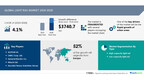
NEW YORK, Sept. 13, 2024 /PRNewswire/ — Report with market evolution powered by AI- The global light rail market  size is estimated to grow by USD 3.74 billion from 2024-2028, according to Technavio. The market is estimated to grow at a CAGR of  4.1%  during the forecast period.  Rapid growth of urban areas is driving market growth, with a trend towards high investment by governments in light rail. However, volatility in prices of raw materials  poses a challenge. Key market players include ALSTOM SA, CRRC Corp. Ltd., General Electric Co., Hitachi Ltd., Hyundai Heavy Industries Group, Kawasaki Heavy Industries Ltd., Kintetsu Group Holdings Co. Ltd., Knorr Bremse AG, Mitsubishi Heavy Industries Ltd., Mott MacDonald, Parsons Corp., Pesa Group, Samvardhana Motherson International Ltd., Schunk GmbH, Siemens AG, Stadler Rail Ag, SYSTRA SA, Thales Group, WESTINGHOUSE AIR BRAKE TECHNOLOGIES CORP., and WSP Global Inc..

AI-Powered Market Evolution Insights. Our comprehensive market report ready with the latest trends, growth opportunities, and strategic analysis- View your snapshot now

Forecast period

2024-2028

Base Year

2023

Historic Data

2018 – 2022

Segment Covered

Type (High capacity light rail and Low capacity light rail), Application (Intra-city transport and Inter-city transport), and Geography (Europe, APAC, North America, Middle East and Africa, and South America)

Region Covered

Europe, APAC, North America, Middle East and Africa, and South America

Key companies profiled

ALSTOM SA, CRRC Corp. Ltd., General Electric Co., Hitachi Ltd., Hyundai Heavy Industries Group, Kawasaki Heavy Industries Ltd., Kintetsu Group Holdings Co. Ltd., Knorr Bremse AG, Mitsubishi Heavy Industries Ltd., Mott MacDonald, Parsons Corp., Pesa Group, Samvardhana Motherson International Ltd., Schunk GmbH, Siemens AG, Stadler Rail Ag, SYSTRA SA, Thales Group, WESTINGHOUSE AIR BRAKE TECHNOLOGIES CORP., and WSP Global Inc.

Key Market Trends Fueling Growth

The light rail market is experiencing significant growth due to increased government investment in this sustainable and efficient public transit solution. With urban populations growing and cities facing congestion and environmental concerns, governments are turning to light rail as an answer. In May 2023, the Biden-Harris administration allocated over USD700 million in grants to modernize six US transit systems’ passenger railcars. This funding not only expands existing networks but also initiates new light rail projects in cities previously relying on buses or personal vehicles. The influx of public funds stimulates demand for rail infrastructure, rolling stock, and related technologies, creating a positive ripple effect. Additionally, these projects are often part of broader urban renewal initiatives, fostering economic development along rail corridors. The commitment to light rail also aligns with global efforts to decrease carbon emissions and enhance urban air quality. As a result, the light rail market is thriving, with manufacturers, construction firms, and technology providers all benefiting from this trend. Government investment is predicted to continue fueling market expansion throughout the forecast period. 

The Light Rail Market is experiencing significant growth due to increasing demand for energy-efficient, sustainable transportation in urban areas. Public transport is becoming a priority as traffic congestion continues to be a challenge. Refurbishment of existing rolling stock, including axles, wheelsets, traction motors, pantographs, and passenger information systems, is driving industrial activity. Mining and freight industries also utilize light rail for transportation. Shared mobility solutions are trending, with higher capacity, low-floor vehicles offering a better passenger experience. Sustainable mobility initiatives, such as electrification and carbon emissions reduction, are key factors. Smart technologies like mobile ticketing, real-time information, IoT sensors, automatic collision avoidance, and video surveillance enhance the passenger experience. Light rail vehicles serve both passenger and freight transportation on dedicated tracks, making them a viable alternative to heavy rail systems and metro systems. 

Insights on how AI is driving innovation, efficiency, and market growth- Request Sample!

Market Challenges

The global light rail market faces challenges due to the volatility in raw material prices, particularly for essential components like steel, aluminum, and cast iron. This price instability can negatively impact market growth as it increases production costs, which may be passed on to consumers. Raw material prices fluctuate based on market demand and supply, currency fluctuations, and geopolitical tensions. For instance, the price of iron ore, a key component, has risen due to high demand and supply shortages, reaching approximately USD120 per dry metric ton unit (dmtu) in May 2024, up from approximately USD104 per dmtu in May 2023. The ongoing conflict between Russia and Ukraine has caused aluminum prices to grow, adding to the market uncertainty. These price fluctuations directly impact the cost of light rails and affect the profit margins of stakeholders in the value chain. Import and export tariffs also vary by region, complicating the pricing structure of raw materials and posing challenges to the growth of the global light rail market.The Light Rail Market is experiencing significant growth in urban transportation, particularly for passenger services. Challenges include supplying both lower and higher capacity vehicles for different demand levels. Dedicated tracks are essential for efficient operation, but infrastructure costs can be high. Sustainable transportation is a priority, with electrification and carbon emissions reduction key considerations. Rapid transit via light rail vehicles offers a more sustainable alternative to heavy rail systems and freight transportation. Urban areas benefit from improved public transportation, with a focus on passenger experience. Mobile ticketing, real-time information, and smart technologies enhance the user experience. IoT sensors, automatic collision avoidance, and video surveillance contribute to safety and reliability. Light rail vehicles come in various configurations, including low-floor and high-floor designs, for easy access and interconnecting cities. The market faces competition from other transportation services, including metro systems and long-distance routes. The market requires continuous innovation, including advancements in passenger capacity, electrification, and smart technologies to meet the evolving needs of urban transportation. Rail supply must adapt to these demands while maintaining cost-effectiveness.

Insights into how AI is reshaping industries and driving growth- Download a Sample Report

Segment Overview 

This light rail market report extensively covers market segmentation by

Type 1.1 High capacity light rail1.2 Low capacity light railApplication 2.1 Intra-city transport2.2 Inter-city transportGeography 3.1 Europe3.2 APAC3.3 North America3.4 Middle East and Africa3.5 South America

1.1 High capacity light rail-  The light rail market is a significant segment of the public transportation industry. It offers an efficient, cost-effective, and eco-friendly alternative to traditional bus and car commuting. Light rail systems connect urban areas, reducing traffic congestion and promoting sustainable urban development. These systems are reliable, frequent, and convenient, making them a popular choice for commuters. The market is expected to grow due to increasing urbanization and government investments in public transportation infrastructure. Companies like Bombardier, Siemens, and Alstom dominate the market with their innovative solutions and strong customer base.

Download complimentary Sample Report to gain insights into AI’s impact on market dynamics, emerging trends, and future opportunities- including forecast (2024-2028) and historic data (2018 – 2022)

Research Analysis

The light rail market is experiencing significant growth as public transport becomes an increasingly important solution to traffic congestion in urban areas. Light rail systems offer energy-efficient transport options, reducing carbon emissions and contributing to sustainable urban transportation. Industrial activity and mining sectors are major consumers of light rail transportation services due to the need for heavy cargo movement. Refurbishment of existing rolling stock is a key trend in the market, extending the life of existing assets and reducing the need for new purchases. Light rail vehicles come in various capacities, including lower and higher floor models, catering to inner city and interconnecting cities’ transportation needs. Components such as pantographs, axles, wheelsets, traction motors, passenger information systems, and air conditioning systems are essential for the efficient operation of light rail vehicles. Dedicated tracks distinguish light rail from other transportation modes, providing a smoother and faster ride. Metro systems and heavy rail systems are different from light rail, with the latter offering more flexibility in route design and lower infrastructure costs. Shared mobility solutions are also integrating with light rail systems, enhancing urban transportation options and promoting sustainable transportation.

Market Research Overview

The Light Rail Market is experiencing significant growth due to the increasing demand for energy-efficient and sustainable transportation solutions in urban areas. Traffic congestion is a major challenge in many cities, making public transport an attractive alternative. Light rail systems, also known as trams or streetcars, offer a viable solution with their dedicated tracks and ability to carry both passengers and freight. Refurbishment of existing rolling stock is a key industrial activity in the light rail market. Components such as pantographs, axles, wheelsets, traction motors, passenger information systems, and air conditioning systems are regularly upgraded to improve efficiency and passenger experience. The light rail market caters to both passenger and freight transportation needs. Rapid transit systems, metro systems, and heavy rail systems are all part of this market. Sustainable transportation is a major focus, with a reduction in carbon emissions being a key goal. Smart technologies such as mobile ticketing, real-time information, IoT sensors, automatic collision avoidance, and video surveillance are increasingly being integrated into light rail vehicles to enhance the passenger experience. The market also offers both lower and higher capacity vehicles, as well as low-floor and high-floor options, to cater to different transportation demands. The light rail market serves both inner city and interconnecting cities, making it an essential part of urban transportation infrastructure. The market is expected to continue growing as the demand for transportation services increases and the need for sustainable mobility solutions becomes more pressing. Rail supply companies are investing heavily in research and development to meet the evolving needs of the market.

Table of Contents:

1 Executive Summary
2 Market Landscape
3 Market Sizing
4 Historic Market Size
5 Five Forces Analysis
6 Market Segmentation

TypeHigh Capacity Light RailLow Capacity Light RailApplicationIntra-city TransportInter-city TransportGeographyEuropeAPACNorth AmericaMiddle East And AfricaSouth America

7 Customer Landscape
8 Geographic Landscape
9 Drivers, Challenges, and Trends
10 Company Landscape
11 Company Analysis
12 Appendix

About Technavio

Technavio is a leading global technology research and advisory company. Their research and analysis focuses on emerging market trends and provides actionable insights to help businesses identify market opportunities and develop effective strategies to optimize their market positions.

With over 500 specialized analysts, Technavio’s report library consists of more than 17,000 reports and counting, covering 800 technologies, spanning across 50 countries. Their client base consists of enterprises of all sizes, including more than 100 Fortune 500 companies. This growing client base relies on Technavio’s comprehensive coverage, extensive research, and actionable market insights to identify opportunities in existing and potential markets and assess their competitive positions within changing market scenarios.

Contacts

Technavio Research
Jesse Maida
Media & Marketing Executive
US: +1 844 364 1100
UK: +44 203 893 3200
Email: media@technavio.com
Website: www.technavio.com/

View original content to download multimedia:https://www.prnewswire.com/news-releases/ai-is-redefining-the-light-rail-market-revenue-to-grow-by-usd-3-74-billion-from-2024-2028-due-to-urban-expansion—technavio-report-302246492.html

SOURCE Technavio

Continue Reading

Technology

WuXi Biologics Receives Double Honors at 2026 HERA for ESG Reporting and Environmental Excellence

Published

on

By

HONG KONG, Nov. 3, 2026 /PRNewswire/ — WuXi Biologics (2269.HK), a leading global Contract Research, Development and Manufacturing Organization (CRDMO), today announced it received two Grand Awards at the ninth Hong Kong ESG Reporting Awards (HERA), winning Best ESG Report (Large-Cap) and Excellence in Environmental Positive Impact.

HERA celebrates excellence in sustainability reporting and ESG practices, with award categories spanning ESG governance, environmental and social impact, carbon neutrality, and workplace well-being. The program is independently judged by a panel drawn from academia, finance, sustainability advisory and regulatory backgrounds, promoting transparency, accountability and stakeholder trust.

Selected from 120 entries, WuXi Biologics was the only pharmaceutical company to receive a Grand Award this year. Its two honors recognize WuXi Biologics’ continual efforts to advance transparent, high-quality ESG disclosure and deliver measurable environmental progress across its global operations.

Dr. Chris Chen, CEO of WuXi Biologics and Chairman of its ESG Committee, commented, “We are delighted to receive two HERA awards, which reflect our ongoing conviction that transparent ESG disclosure and strong environmental performance are integral to business resilience and long-term success. WuXi Biologics will continue to advance our ESG governance and Green CRDMO strategy, working with global partners to drive sustainable development across the value chain.”

Through its Green CRDMO solutions, the Company continues to embed sustainability principles throughout its biologics research, development, manufacturing, and operations. In 2025, WuXi Biologics’ near-term, long-term and net-zero greenhouse gas emissions reduction targets were validated by the Science Based Targets initiative (SBTi), covering Scope 1, 2 and 3 emissions and aligned with a 1.5°C pathway. Another honor WuXi Biologics recently received was being named to the 2026 Forbes China ESG 50 list for achievements in sustainable development, Green CRDMO solutions, and ESG digital innovation.

About WuXi Biologics

WuXi Biologics (stock code: 2269.HK) is a leading global Contract Research, Development and Manufacturing Organization (CRDMO) offering end-to-end solutions that enable partners to discover, develop and manufacture biologics – from concept to commercialization – for the benefit of patients worldwide*.

With over 14,000 employees in China, the United States, Ireland, Germany, and Singapore, including experts and scientists in biologics R&D and manufacturing, technology innovation, and operational excellence, WuXi Biologics leverages its technologies and expertise to deliver efficient, cost-effective, and scalable biologics solutions tailored to meet clients’ needs. By embedding digital capability and infrastructure across the full biopharmaceutical value chain, the company turns data, computation, and prediction into transparent client experience, faster development, intelligent operations, and more efficient manufacturing. As of June 30, 2026, WuXi Biologics is supporting 1064 integrated client projects, including 78 in Phase III and 28 in commercial manufacturing, with complex modalities representing more than half of the entire project portfolio.

WuXi Biologics regards sustainability as the cornerstone of long-term business growth. The company continuously drives technology innovations to offer advanced end-to-end Green CRDMO solutions for its global partners while demonstrating exemplary Environmental, Social and Governance (ESG) practices. Committed to creating shared value, it collaborates with all stakeholders to foster positive social and environmental impacts, and promote responsible practices that empower the entire value chain.

For more information about WuXi Biologics, please visit: www.wuxibiologics.com.

*The winner of the “2026 Biologics CDMO of the Year” (Large CDMOs) (Life Science Connect / Outsourced Pharma)

*The winner of the “2026 Best Contract Development & Manufacturing Organization Award” (ABEA)

Contacts

ESG
esg@wuxibiologics.com

Media
PR@wuxibiologics.com

View original content to download multimedia:https://www.prnewswire.com/news-releases/wuxi-biologics-receives-double-honors-at-2026-hera-for-esg-reporting-and-environmental-excellence-302928803.html

SOURCE WuXi Biologics

Continue Reading

Technology

Only 54% of Consumers Trust That Black Friday Discounts Are Lower Than Normal as Promotion Fatigue Grows

Published

on

By

BCG’s Annual Black Friday Survey Finds 1 in 5 Consumers Actively Distrust Advertised Discounts22% Plan to Spend Less or Skip Year-End Sales EventsRetailer Reputation and Transparent Pricing Rank Among the Highest Factors for Building Consumer Trust; Influencer Recommendations Rank LastUse of Social Media as a Shopping Inspiration Source Falls 9 Points to 46%, While AI Rises Across All Surveyed Countries

BOSTON, Nov. 4, 2026 /PRNewswire/ — Only 54% of consumers trust that advertised Black Friday prices are genuinely lower than usual, and one in five actively distrust them, according to a new survey from Boston Consulting Group (BCG).

Promotion fatigue is also growing, with 22% of consumers planning to spend less or skip year-end sales events because they believe discounts are available all the time.

Despite growing skepticism around promotions, consumers haven’t raised the bar for what constitutes a good deal. The expected minimum discount for a good deal eased to about 30% (versus 32% in 2025).

These are among the findings of BCG’s sixth annual Black Friday Consumer Study, based on a survey of 10,220 consumers across ten countries. The report, titled For Year-End Sales Events, Trust Is the New Currency, examines shopping expectations and behaviors ahead of Singles’ Day, Black Friday, and Cyber Monday.

“Shoppers no longer take Black Friday discounts at face value. Nearly half are unconvinced that prices are actually lower,” said Nate Shenck, a BCG managing director and senior partner, and coauthor of the report. “Retailers can’t discount their way past that. The question this season is how to earn shoppers’ trust.”

Credibility and Proof Build Trust, Persuasion Does Not

BCG determined the factors that build consumer trust using a net trust score (calculated as the share of consumers who say a factor increases their trust in a deal, minus the share who say it decreases it):

Retailer reputation and money-back guarantees ranked highest, each with a net trust score of 65%Verified purchase reviews also ranked among the top trust builders (59%), followed by clear comparisons between regular and discounted prices (58%)At the bottom of the ranking, real-time scarcity messages scored just 8%, AI-generated review summaries 4%, and influencer recommendations only 3%

AI Is Displacing Social Media as an Inspiration Channel

Social media as an inspiration source for consumers declined nine percentage points to 46%, falling in every market surveyed, whereas AI as an inspiration source increased across all ten markets.

Planned AI usage reached 56% of shoppers this year, up eight points from 2025. Around 86% of users find it helpful, and 78% say it raises their likelihood of completing a purchase.

Consumers trust AI most for comparing prices across retailers (39%) and comparing product features (37%). Transactional tasks, such as filling in checkout details, are still developing as a common use case.

“Shoppers facing promotion fatigue are turning to AI to do the work of finding and comparing deals. AI is already beginning to replace influencers as a go-to source for inspiration,” said Jessica Distler, a BCG managing director and partner, and coauthor of the report. “That means retailers need to think as carefully about how their offers are found and verified as they do about the discounts themselves.”

Download the report here:
https://www.bcg.com/publications/2026/trust-matters-year-end-sales-events

Media Contact:
Kendall Kosten
kosten.kendall@bcg.com 

About Boston Consulting Group
Boston Consulting Group bridges the gap between ambition and outcomes for the world’s leading companies and organizations. We are built for this era of unprecedented change — bringing strategic clarity rooted in over 60 years of deep domain knowledge, combined with applied AI shaped by our practitioners. BCG works shoulder-to-shoulder with CEOs across industries and geographies to deliver transformative impact at scale: stronger returns, transferred capabilities, and change that sticks. For more information, visit bcg.com.

View original content to download multimedia:https://www.prnewswire.com/news-releases/only-54-of-consumers-trust-that-black-friday-discounts-are-lower-than-normal-as-promotion-fatigue-grows-302928764.html

SOURCE Boston Consulting Group (BCG)

Continue Reading

Technology

Most Robots Still Aren’t Insured. YAS and Robolist Are Changing That.

Published

on

By

YAS and Robolist.ai partner to bring a free Risk Score and a path to insurance to robotics companies, giving firms, investors, and buyers a safer, more transparent foundation for an industry entering mass production

HONG KONG, Nov. 4, 2026 /PRNewswire/ — Artificial intelligence’s next phase is getting a body. Humanoid robot shipments are up sharply in 2026, with global shipments reaching roughly 30,000 units in the first half of the year alone, nearly 300% higher than a year earlier. But humanoids are only the headline category. Robolist.ai (“Robolist”), an independent market intelligence layer for robotics used by investors worldwide, tracks more than 4,200 robots from over 1,300 manufacturers across categories including industrial arms, warehouse AMRs, cobots, commercial cleaning, delivery, hospitality, and home robots, and growth is accelerating across nearly all of them.

Across every one of those categories, most of what is shipping today carries no insurance. YAS, a data risk intelligence platform that helps insurers underwrite EV, robotaxi, and now robotics risk, today announced a strategic partnership with Robolist to close that gap — starting with a free Risk Score for the companies Robolist already ranks, and a path to coverage for those who want one.

Putting safety first, for an industry still finding its footing

Robotics is moving from pilots to mass production, and that shift changes who is exposed and what’s at stake. YAS and Robolist both see the same underlying problem: an industry growing faster than the risk infrastructure built to support it. Pairing YAS’s risk intelligence with Robolist’s independent market data gives the industry one more layer of transparency, a shared, safety-first foundation that the companies believe is necessary for robotics to grow into a trusted, durable category rather than a fast-moving one with uneven guardrails.

What it means for robotics firms

Every manufacturer listed on Robolist is already independently ranked. Starting with this partnership, any of them can also request a free Risk Score, built with YAS, covering their systems across whichever category they operate in, not just humanoid. A strong, transparent risk profile is becoming a competitive advantage in its own right, a signal to enterprise buyers and partners that a company takes safety seriously. There is no cost to check it and no obligation attached.

What it means for investors

Robolist’s independent data has always given investors a clear picture of what a company has actually raised and shipped. Adding YAS’s Risk Score introduces a second, forward-looking signal: a working estimate of operational risk exposure, sitting alongside funding and deployment evidence. Together, the two offer a more complete basis for diligence, and support the kind of informed, patient capital that helps the category grow in a healthy, sustainable way rather than on hype alone.

What it means for buyers

Enterprises deciding whether to deploy a robot fleet have historically had almost no independent way to compare risk across vendors. The Risk Score gives buyers a transparent reference point alongside Robolist’s existing rankings, and a direct route to insurance for the deployments they choose to move forward with, so adoption decisions can be made with more confidence and less guesswork.

Status

The partnership is in its exploratory phase under a signed Memorandum of Understanding, beginning with Hong Kong, with other markets under consideration as it develops. The Risk Score is an indicative analytical tool, not a safety certification or a guarantee of coverage; insurance, where available, is issued by licensed carriers.

Quotes

“Robotics is scaling faster than the risk infrastructure around it. You can’t insure what you can’t measure — so we start by measuring. A free Risk Score, built on live operating data, gives every robotics company a transparent read on their exposure and, when they want it, a path to coverage. That’s how a fast-moving category becomes a durable one.”— Andy Ann, Founder, YAS

“We built Robolist as an independent market intelligence layer for robotics. Partnering with YAS deepens that layer. There’s a lot of natural overlap between what we do. Robotics insurance is a long-term project that benefits everyone in the industry, and it matters more now that the category is moving into mass production. Part of that is simply caring about what happens to the people and businesses actually using these machines.” — Matthew Cheung, Co-founder, Robolist.ai

About YAS

YAS is a Hong Kong-based risk intelligence platform for the machine economy, turning live operating data from vehicles, fleets, and robots into real-time risk scores used by licensed insurers to underwrite fairer, faster coverage. YAS works with insurance carrier partners across robotics and humanoids, EV and commercial fleets, with autonomous vehicles next.

About Robolist.ai

Robolist.ai is an independent market intelligence layer for robotics, used by investors to track what manufacturers actually raise, ship, and deploy. Robolist tracks more than 4,200 robots from over 1,300 manufacturers across categories from humanoids and industrial arms to cleaning, delivery, and home robots.

Learn more

Manufacturers can claim their profile and request a free Risk Score, and investors and buyers can explore the data, at robolist.ai. To learn more about YAS’s risk intelligence platform, visit yas.io.

View original content to download multimedia:https://www.prnewswire.com/apac/news-releases/most-robots-still-arent-insured-yas-and-robolist-are-changing-that-302928742.html

SOURCE YAS

Continue Reading

Trending