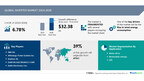
NEW YORK, Sept. 20, 2024 /PRNewswire/ — Report with market evolution powered by AI – The global inverter market size is estimated to grow by USD 32.38 billion from 2024-2028, according to Technavio. The market is estimated to grow at a CAGR of 6.78% during the forecast period. Rise in wind energy consumption is driving market growth, with a trend towards increase in demand for clean power. However, intermittent nature of renewable energy poses a challeng – Key market players include ABB Ltd., Altenergy Power System Inc., Danfoss AS, DARFON ELECTRONICS CORP., Delta Electronics Inc., Eaton Corp. Plc, Enphase Energy Inc., Fronius International GmbH, General Electric Co., Huawei Technologies Co. Ltd., Mitsubishi Electric Corp., OMRON Corp., Powerone Micro Systems Pvt. Ltd., Schneider Electric SE, Shenzen Growatt New Energy Technology Co. Ltd., Siemens AG, SMA Solar Technology AG, SolarEdge Technologies Inc., Sungrow Power Supply Co. Ltd., and Vertiv Holdings Co..
Key insights into market evolution with AI-powered analysis. Explore trends, segmentation, and growth drivers- View the snapshot of this report
Inverter Market Scope
Report Coverage
Details
Base year
2023
Historic period
2018 – 2022
Forecast period
2024-2028
Growth momentum & CAGR
Accelerate at a CAGR of 6.78%
Market growth 2024-2028
USD 32.38 billion
Market structure
Fragmented
YoY growth 2022-2023 (%)
6.23
Regional analysis
APAC, Europe, North America, Middle East and Africa, and South America
Performing market contribution
APAC at 39%
Key countries
China, US, Germany, Japan, and UK
Key companies profiled
ABB Ltd., Altenergy Power System Inc., Danfoss AS, DARFON ELECTRONICS CORP., Delta Electronics Inc., Eaton Corp. Plc, Enphase Energy Inc., Fronius International GmbH, General Electric Co., Huawei Technologies Co. Ltd., Mitsubishi Electric Corp., OMRON Corp., Powerone Micro Systems Pvt. Ltd., Schneider Electric SE, Shenzen Growatt New Energy Technology Co. Ltd., Siemens AG, SMA Solar Technology AG, SolarEdge Technologies Inc., Sungrow Power Supply Co. Ltd., and Vertiv Holdings Co.
Market Driver
The global demand for power is projected to increase significantly due to population growth and economic expansion, reaching 34,454 TWh by 2035 according to The World Bank. Renewable energy sources, such as solar, wind, and hydropower, are becoming increasingly popular due to climate change policies and technology advancements. China and the US accounted for approximately 20% of the global power generation capacity in 2020, with China projected to expand its capacity by 3% year-over-year until 2035, primarily in renewable energy. Governments worldwide are promoting wind energy through favorable policies, such as Feed-in Tariffs (FiTs) and auctions, to encourage competition and grid connection infrastructure investment. Renewable energy sources, particularly wind power, are gaining popularity among end-users as they reduce dependence on fossil fuels and help countries meet their carbon emission goals. China is a leading region in offshore wind energy generation growth. Droughts and drastic weather changes have prompted governments to diversify their energy mix further, leading to increased investment in renewable energy infrastructure.
The Inverter Market is experiencing significant growth due to increasing trends in renewable energy projects and the shift towards electric vehicles. Car batteries and household electronics are major applications driving demand for inverters. Manufacturing facilities and plants are also procuring inverters for uninterruptible power supplies as backup solutions during electricity outages. Technological developments in solar inverters, particularly solar PV systems and solar modules, are key factors fueling growth. Rising disposable incomes and environmental concerns are boosting demand for silent, environment-friendly inverters. Supply bottlenecks and procurement costs of raw materials are challenges for market players. Renowned companies like Continental, Delphi Technologies, Toyota Industries, Sensata Technologies, Samlex Europe, BESTEK, and the International Energy Agency are major players in the inverter market. Government bodies are promoting clean energy and reducing reliance on fossil fuels, such as gasoline, through incentives and regulations. Renewable energy sources like wind and solar are becoming more cost-effective, making inverters essential for their efficient conversion and storage.
Request Sample of our comprehensive report now to stay ahead in the AI-driven market evolution!
Market Challenges
The solar PV market is experiencing significant growth due to decreasing installation costs and favorable government regulations. However, the intermittent nature of solar energy is a major challenge to market expansion. Solar energy production can vary throughout the day, impacting energy consistency. Solar PV converts only 12-16% of sunlight into electric energy, and monocrystalline silicon panels offer the highest efficiency of up to 15%. Advanced panels from companies like SunPower, with conversion rates of up to 20%, help mitigate intermittency. Yet, their high cost limits widespread adoption, making intermittency a key challenge for the global inverter market.The inverter market is experiencing significant growth due to the increasing adoption of renewable energy sources and electric vehicles. Renewable power infrastructure, including Solar PV systems, relies heavily on solar inverters to convert Direct Current (DC) from solar panels into Alternating Current (AC) for use in homes and businesses. Key players in the solar inverter segment include Continental, Delphi Technologies, Toyota Industries, Sensata Technologies, Samlex Europe, and BESTEK. Government bodies and international organizations like the International Energy Agency are pushing for clean energy solutions to reduce reliance on fossil fuels. This trend is driving demand for inverters in various sectors, including automotive, building & construction, and oil & gas industry. Automotive segment is witnessing growth with the rise of hybrid and electric vehicles. Component suppliers are developing advanced inverters for electric motors in vehicles. In the renewable power sector, there is a need for maintenance services for on-grid and off-grid solar power systems. Rural electrification projects and charging station infrastructure are other areas where inverters play a crucial role. The market is segmented into vehicle, residential, commercial, and industrial segments. Renewable energy adoption is essential to mitigate environmental pollution and transition towards a sustainable future.
Discover how AI is revolutionizing market trends- Get your access now!
Segment Overview
This inverter market report extensively covers market segmentation by
Application 1.1 Motor drive1.2 Renewable energy1.3 UPSType 2.1 On-grid2.2 Off-gridGeography 3.1 APAC3.2 Europe3.3 North America3.4 Middle East and Africa3.5 South America
1.1 Motor drive- The global inverter market’s motor drive segment is experiencing significant growth due to the increasing need to optimize manufacturing processes and reduce operational costs by monitoring energy consumption using variable frequency drive systems. Electric motors, which consume 44% of the world’s electricity, require control drives to adjust their speed and increase energy efficiency. The demand for these drives is growing as electric motors replace mechanical and hydraulic motors in various applications, including household appliances, motor vehicles, aerospace, and industrial equipment. As urbanization rates rise and populations grow, the demand for electricity continues to increase, leading to a higher demand for electric motor driver inverters. Compliance with energy standards set by regulatory bodies is also driving market growth. The APAC and European regions are expected to see particularly strong demand for compact AC drives for electric motors.
Download a Sample of our comprehensive report today to discover how AI-driven innovations are reshaping competitive dynamics
Research Analysis
The inverter market is experiencing significant growth due to the increasing adoption of renewable energy sources, such as solar and wind, for generating clean energy. Electric vehicles (EVs) are another major driver, as they require inverters for converting DC battery power to AC for use in homes and charging stations. Government bodies are promoting the use of renewable power and emission rules for reducing dependence on fossil fuels, further boosting market growth. The solar inverter segment holds a prominent share, supplying power conditioning solutions for Solar PV systems. Other significant applications include the automotive segment with electric motors and hybrid vehicles, building & construction, and the oil & gas industry for remote operations. Component suppliers, such as Continental, Delphi Technologies, Toyota Industries, Sensata Technologies, Samlex Europe, and BESTEK, are key players in the market. The market also includes maintenance services and charging station infrastructure providers. Renewable power, automakers, and rural electrification are other notable sectors driving market expansion.
Market Research Overview
The inverter market is witnessing significant growth due to the increasing adoption of renewable energy sources, such as solar, wind, and hydro, for generating clean energy. Electric vehicles (EVs) are another major driver, as they require inverters for converting DC power from their batteries to AC power for use in homes and charging stations. Government bodies and international energy agencies are promoting the use of renewable power to reduce reliance on fossil fuels and mitigate environmental pollution. Solar inverters, specifically, are a key segment of this market, used in Solar PV systems to convert DC power from solar modules to AC power for use in homes and businesses. The solar industry is also seeing technological developments, including the use of DC microgrids and energy storage systems, which require advanced inverters. The automotive segment is another significant market for inverters, with applications in electric motors, charging station infrastructure, and hybrid and battery electric vehicles. Inverters are also used in the building & construction industry, oil & gas industry, and manufacturing facilities for renewable power infrastructure and backup solutions. The solar inverter segment is expected to continue its growth trajectory, driven by the increasing deployment of solar PV systems for residential, commercial, and industrial applications. The residential segment is a major market, with the growing trend of rooftop solar installations. The commercial and industrial segments are also expected to see significant growth due to the rising disposable incomes and the need for uninterruptible power supplies as backup solutions during outages. The solar panel manufacturing industry also requires inverters for converting DC power from solar panels to AC power for use in renewable energy projects. The procurement costs of raw materials and supply bottlenecks can impact the order completion time and the overall cost of solar projects. However, the technological developments in the solar industry and the increasing focus on reducing CO2 emissions are expected to drive the growth of the solar inverter market. Inverters are also used in household electronics and vehicle applications, such as car batteries and charging stations. The automakers are investing in research and development to improve the efficiency and performance of inverters for use in their vehicles, including hybrid and electric vehicles, to meet emission rules and reduce reliance on gasoline. The silent and environment-friendly nature of inverters makes them a preferred choice for renewable energy projects and backup solutions.
Table of Contents:
1 Executive Summary
2 Market Landscape
3 Market Sizing
4 Historic Market Size
5 Five Forces Analysis
6 Market Segmentation
ApplicationMotor DriveRenewable EnergyUPSTypeOn-gridOff-gridGeographyAPACEuropeNorth AmericaMiddle East And AfricaSouth America
7 Customer Landscape
8 Geographic Landscape
9 Drivers, Challenges, and Trends
10 Company Landscape
11 Company Analysis
12 Appendix
About Technavio
Technavio is a leading global technology research and advisory company. Their research and analysis focuses on emerging market trends and provides actionable insights to help businesses identify market opportunities and develop effective strategies to optimize their market positions.
With over 500 specialized analysts, Technavio’s report library consists of more than 17,000 reports and counting, covering 800 technologies, spanning across 50 countries. Their client base consists of enterprises of all sizes, including more than 100 Fortune 500 companies. This growing client base relies on Technavio’s comprehensive coverage, extensive research, and actionable market insights to identify opportunities in existing and potential markets and assess their competitive positions within changing market scenarios.
Contacts
Technavio Research
Jesse Maida
Media & Marketing Executive
US: +1 844 364 1100
UK: +44 203 893 3200
Email: media@technavio.com
Website: www.technavio.com/
View original content to download multimedia:https://www.prnewswire.com/news-releases/inverter-market-to-grow-by-usd-32-38-billion-2024-2028-as-wind-energy-demand-rises-with-ai-redefining-the-market-landscape—technavio-302254501.html
SOURCE Technavio










 Technology3 days ago
 Technology5 days ago
 Technology4 days ago
 Coin Market4 days ago
 Technology4 days ago
 Technology5 days ago
 Coin Market3 days ago
 Coin Market3 days ago