Connect with us

Technology

CGTN: What is China doing to preserve, pass on and share its culture?

Published

on

BEIJING, Sept. 27, 2024 /PRNewswire/ — Fan Zaixuan, an expert in mural restoration, still vividly remembers the moment he first arrived at the Mogao Grottoes in the city of Dunhuang on the night of March 31, 1981.

“I could only hear the sound of the wind chimes from the Nine-story Building, which was very mysterious, and I was so excited that I didn’t sleep for the whole night.”

The Mogao Grottoes is the world’s largest and best-preserved Buddhist cave art site, with 735 caves spanning a cliff face 1,700 meters long, containing over 45,000 square meters of murals and more than 2,000 polychrome sculptures.

Fan, who is now in his 60s, has been working to restore the murals in the Mogao Grottoes for more than 40 years. “So far, I have restored an area that’s probably the size of a large cave in the Mogao Grottoes,” he told CGTN.

Fan knows better than anyone that restoring ancient artwork requires continuous and meticulous work from generation to generation. He developed his skills with the help of older preservers, such as Li Yunhe, who is in his 10th decade.

Li was the Dunhuang Academy’s first full-time cultural heritage restorer. He has been dedicated to the cause since 1956.

Now, Fan is the mentor, passing down his knowledge and experience to students. He hopes the younger generation will, in turn, continue the “Mogao spirit.”

Dai Chuan, one of Fan’s students, was born in the 1990s. However, he has already spent over a decade working to protect the murals in the Mogao Grottoes. “I am also willing to make the inheritance of Dunhuang culture my lifelong endeavor,” Dai said with determination.

Chinese President Xi Jinping made the Mogao Grottoes the first stop on his inspection tour to northwest China’s Gansu Province in August 2019.

He hailed Dunhuang culture as “a bright pearl in the long river of world civilization, and precious historical material for the study of the politics, economy, military, culture and art of various ethnic groups in ancient China.”

By the end of 2022, the academy had compiled a digital data collection on 278 caves, image processing for 164 of them, and the 3D reconstruction of 145 painted sculptures and seven ruins while delivering a panoramic tour program for 162 caves.

‘Preserving the roots’

An old Chinese proverb goes, “All things in the world have their laws for survival and development, but they know how to preserve their roots.”

President Xi has echoed this sentiment, often emphasizing the importance of protecting cultural heritage. He believes that the longevity of Chinese civilization is due to this fundamental understanding of its roots. “Because of this sense of roots, Chinese civilization has grown and flourished till today.”

Over the past decade, China has enhanced its systems and policies for protecting cultural heritage.

By the end of 2021, there were 108 million sets of state-owned movable cultural relics and about 767,000 immovable ones in China.

To date, China has 59 sites inscribed on the UNESCO World Heritage List, ranking second globally. It also has 43 items on the UNESCO Intangible Cultural Heritage List, making it the country with the most listings in the world.

Initiated by China and joined by over 20 Asian countries, the Alliance for Cultural Heritage in Asia (ACHA) was established in 2023, putting a spotlight on promoting Asian cultural heritage conservation cooperation and inheriting and developing Asian civilizations in various forms.

Under the framework of the ACHA, China has been involved in 33 joint archaeological projects in 19 Asian countries and participated in conservation projects at 11 historical monuments in six Asian countries.

The establishment of the ACHA is a major part of the Global Civilization Initiative proposed by President Xi, which called for respecting the diversity of civilizations, advocating the common values of humanity, valuing the inheritance and innovation of civilizations, and strengthening international people-to-people exchanges and cooperation.

Over the years, China has stayed committed to and taken concrete actions toward the harmonious coexistence of various civilizations in the world. The country has signed cooperation agreements with 157 countries in the fields of culture, cultural heritage and tourism.

https://news.cgtn.com/news/2024-09-23/What-is-China-doing-to-preserve-pass-on-and-share-its-culture–1x87ZjqBig0/p.html

SOURCE CGTN

Continue Reading
Click to comment

Leave a Reply

Your email address will not be published. Required fields are marked *

Technology

Jtibot Showcases Autonomous Outdoor Sweeping Innovation at Interclean Amsterdam 2026, Accelerating European Market Expansion

Published

on

By

AMSTERDAM, April 24, 2026 /PRNewswire/ — Jtibot, a developer of autonomous outdoor cleaning solutions, concluded a successful showcase at Interclean Amsterdam 2026, highlighting its focus on large-scale, AI-driven sweeping for industrial, municipal, and campus environments.

At Hall 8, Booth 538, Jtibot presented its autonomous outdoor sweeper designed for environments exceeding 10,000 sqm. Positioned between traditional equipment and emerging robotics, the system addresses the growing demand for more efficient and less labor-dependent outdoor cleaning operations.

During the exhibition, Jtibot attracted strong interest from European distributors and facility management professionals seeking scalable solutions for large-area maintenance. The company was also featured in an official media interview at the event, reflecting increasing attention toward autonomous technologies in the cleaning industry.

Jtibot’s approach centers on human-machine collaboration. By reducing repetitive manual work while maintaining operational flexibility, its systems support more sustainable and efficient facility management practices. This aligns with broader ESG (Environmental, Social, and Governance) priorities, including improved resource efficiency and enhanced working conditions.

Building on its presence at Interclean, Jtibot is currently advancing discussions with multiple European partners for regional distribution and deployment. The company is also in the final stage of a fleet procurement agreement valued at approximately $1.4 million, signaling early commercial traction in large-scale applications scenarios.

“As outdoor environments continue to grow in scale and complexity, automation is becoming essential,” said Steven, VP at Jtibot. “Our goal is not to replace people, but to empower them—making operations more efficient and labor more sustainable.”

Following Interclean Amsterdam 2026, Jtibot is actively expanding its European partner network and preparing for broader market deployment across key regions, as it accelerates its global commercialization strategy.

About Jtibot
Jtibot specializes in autonomous outdoor sweepers designed for large-scale environments. By combining AI-driven navigation with industrial-grade hardware, the company enables efficient, scalable, and sustainable cleaning operations worldwide.

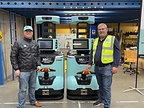
Photo – https://mma.prnewswire.com/media/2965027/PR_image.jpg

View original content:https://www.prnewswire.co.uk/news-releases/jtibot-showcases-autonomous-outdoor-sweeping-innovation-at-interclean-amsterdam-2026-accelerating-european-market-expansion-302752777.html

Continue Reading

Technology

2U Refinances and Raises Growth Capital

Published

on

By

ARLINGTON, Va., April 24, 2026 /PRNewswire/ — Many education technology companies spent 2024 and 2025 scaling back. New university partnerships slowed as institutions built internal capacity. Against that backdrop, 2U completed a growth recapitalization, with its existing owners putting growth capital into the business alongside a refinancing of its current credit facilities.

The question worth asking is: why now, and what did they see?

2U operates edX, a global online learning platform originally co-founded by Harvard and MIT that now reaches more than 100 million people through over 5,300 programs with 250-plus institutional and enterprise partners. Employees from more than 60% of Fortune 500 companies use edX for professional development. To date, over 76,000 people have graduated from 2U-powered degree programs from leading institutions, including UC Berkeley, Howard University, and Georgetown. The company has been privately held since completing a financial reorganization in 2024, and Kees Bol has served as CEO since January 2025.

Lincoln International, which advised 2U on the transaction exclusively, described the refinancing outcome: extended credit maturities, improved capital structure, and financial flexibility to continue executing on 2U’s long-range plan. Managing Director Alex Stevenson said the deal “reflects the confidence of 2U’s owners in the long-term value of the business.”

Confidence in what, exactly? The AI workforce training market. Skills in AI-affected roles are evolving 66% faster than average according to PwC research, and IDC has estimated that unfilled AI skills gaps could cost the global economy $5.5 trillion. Universities and enterprises are both trying to solve that problem, and both are looking for platforms with the breadth and accreditation backing to do it credibly.

2U’s partnerships are designed for exactly that. IBM’s six technical microcredentials on edX train the engineers and data scientists who build AI systems. Microsoft’s CxO Edge program, launched in late 2025, targets the C-suite executives who need to move from AI pilots to enterprise-wide adoption, part of a Microsoft presence on edX that has drawn over 40,000 learners in the past six months alone.. Oxford’s Faculty of Law program addresses governance: what board members and legal advisors need to understand about AI liability, compliance, and fiduciary responsibility. UC Berkeley’s Master of Information and Data Science (MIDS) online program prepares learners to shape the future of AI and data science with human-centered values and focuses on solving the world’s most pressing data challenges. Each program exists because a specific employer community identified a specific gap.

That’s the differentiation investors are backing. Generic online courses are abundant. Programs designed in partnership with IBM, Microsoft, UC Berkeley, and Oxford’s Faculty of Law and delivered on a platform with proven Fortune 500 adoption are not.

Credentials earned on 2U’s edX platform carry the academic standing of the issuing partner institutions. Its programs span executive education, professional certificates, microcredentials, and accredited online degree programs, all powered by 2U’s infrastructure but conferred by partner universities and institutions with their own accreditation.

HolonIQ data puts the broader trend in context: microcredentials grew from 7% of global online program offerings in 2022 to 19% by 2025. The shift toward stackable, job-aligned credentials, in addition to traditional degrees,  is real and accelerating. The global online education market is projected to exceed $200 billion as that trend matures. 2U’s decision to build depth in short-form, employer-designed AI training aligns directly with where learner demand is heading.

None of this is abstract for the organizations that use edX at scale. When a company needs to certify 500 engineers on AI development, or prepare its entire C-suite for a board presentation on AI governance, the platform’s reach and credential quality both matter. A certification backed by IBM and a degree from institutions such as Berkeley carries weight with hiring managers in a way a generic online course does not.

The refinancing extends 2U’s ability to keep building that catalog and the partnerships behind it. Stevenson framed it as giving the management team “the financial foundation to keep executing on its mission.” The mission, under Bol’s leadership, is straightforward: help universities and enterprises close the AI skills gap by meeting learners where they are, at the pace the market demands.

The investors who contributed growth capital made a bet that a platform that reaches 100 million people and has 250-plus partners, including IBM, Microsoft, UC Berkeley, and Oxford in its program portfolio, is better positioned to close that gap than any platform that would need to build from scratch.

Media Contact:
Kees Bol
social@2u.com 

Logo: https://mma.prnewswire.com/media/2965091/2U_Logo.jpg


View original content:https://www.prnewswire.co.uk/news-releases/2u-refinances-and-raises-growth-capital-302752776.html

Continue Reading

Technology

Autonomous Resource Corporation and Oak Ridge National Laboratory Partner to Accelerate AI-Enabled Defense Manufacturing at National Scale

Published

on

By

Strategic partnership combines ORNL’s supercomputing and advanced manufacturing expertise with ARC’s autonomous production platform to address critical defense industrial base shortfalls

OAK RIDGE, Tenn. and NEW YORK, April 24, 2026 /PRNewswire/ — Autonomous Resource Corporation (ARC), a Delaware corporation, and Oak Ridge National Laboratory (ORNL), the U.S. Department of Energy’s largest multi-program science and energy laboratory, today announced a Memorandum of Understanding (MOU) establishing a strategic public-private partnership to accelerate the on-demand manufacture of qualified, mission-critical components for U.S. national security applications.

The partnership combines ORNL’s HPC and manufacturing capability with ARC’s ARCNet distributed AI-manufacturing platform

The partnership — known as the Exascale Foundry — will combine ORNL’s computing and manufacturing capabilities with ARC’s ARCNet distributed manufacturing platform to create a closed-loop system for AI-enabled materials and manufacturing qualification and autonomous production at defense-relevant scale.

“The United States faces an urgent need to rebuild its manufacturing capacity for critical defense components,” said Bryan Wisk, CEO of ARC. “By combining ORNL’s world-leading computational, materials science, and manufacturing capabilities with our autonomous production infrastructure, we can compress manufacturing and qualification timelines from years to months and deliver manufactured parts at the volumes the warfighter needs.”

Partnership Highlights

Under the MOU, ARC will deploy advanced manufacturing equipment organized into seven production nodes connected to ORNL via ARC’s secure ARCNet infrastructure. ARC will expand capability through ORNL’s high-performance computing (HPC) resources.

ORNL will provide access to HPC expertise for simulation-driven materials characterization and qualification, along with technologies developed at the Manufacturing Demonstration Facility (MDF), the Department of Energy’s only large-scale, open-access advanced manufacturing facility. ORNL’s Peregrine AI software, which has analyzed over 1.9 million additive manufacturing layers, will be integrated into ARC’s production nodes for real-time adaptive control and quality assurance.

This partnership also supports DOE’s Genesis Mission, a national initiative to build the world’s most powerful scientific platform to accelerate discovery science, strengthen national security and drive energy innovation. ARC and ORNL’s collective capabilities will help reenvision advanced manufacturing and industrial productivity, accelerate defense production and qualification, and secure critical supply chain elements.

“ORNL’s advanced manufacturing and computing capabilities are uniquely positioned to help accelerate the transition of laboratory-proven technologies into production-scale defense manufacturing,” said Moe Khaleel, ORNL associate laboratory director for National Security Sciences. “Partnering with ARC ensures we are transitioning our research into real production outcomes.”

The initial implementation will focus on high-temperature nickel superalloy turbine components for autonomous air vehicle engines using metal binder jetting technology, directly addressing demonstrated production bottlenecks in the U.S. defense supply chain.

ORNL Chief Manufacturing Officer Craig Blue added, “This partnership exemplifies the type of relationship necessary to build and grow domestic supply chains for our national security.”

About Autonomous Resource Corporation

ARC is a New York–headquartered corporation building and operating an AI-enabled, autonomous manufacturing platform for national security and critical infrastructure applications. ARC’s Autonomous Resource Controller Network (ARCNet) connects distributed production cells into a secure, federated manufacturing grid capable of producing qualified components at scale. ARC’s leadership team brings deep experience across defense technology, capital markets, materials science, and additive manufacturing at production scale.

About Oak Ridge National Laboratory

Oak Ridge National Laboratory is the largest U.S. Department of Energy science and energy laboratory, conducting basic and applied research to deliver transformative solutions to compelling problems in energy and security. DOE’s Manufacturing Demonstration Facility at ORNL partners with more than 300 companies, spurring over $5.5 billion in economic growth. ORNL is managed by UT-Battelle, LLC for the U.S. Department of Energy’s Office of Science.

Media Contacts:

ARC: Bryan Wisk, Chief Executive Officer | bryan@autonomousresource.com | 929-523-3953

ORNL: Eric Swanson, National Security Sciences Communications Lead | swansonej@ornl.gov | 865-206-5794

View original content to download multimedia:https://www.prnewswire.com/news-releases/autonomous-resource-corporation-and-oak-ridge-national-laboratory-partner-to-accelerate-ai-enabled-defense-manufacturing-at-national-scale-302752414.html

SOURCE Autonomous Resource Corporation

Continue Reading

Trending