Connect with us

Technology

The Logistics Market in Europe is projected to grow by USD 43.3 Billion (2024-2028), driven by the booming e-commerce industry and AI’s role in redefining the market landscape – Technavio

Published

on

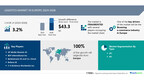
NEW YORK, Oct. 8, 2024 /PRNewswire/ — Report with market evolution powered by AI – The Logistics Market in Europe size is estimated to grow by USD 43.3 billion from 2024-2028, according to Technavio. The market is estimated to grow at a CAGR of 3.2% during the forecast period. Booming e-commerce industry in Europe is driving market growth, with a trend towards increasing customer-centric logistics. However, high cost of operation and competitive pricing poses a challenge – Key market players include AP Moller Maersk AS, BDP International Inc., Bertelsmann SE and Co. KGaA, Bollore SE, C H Robinson Worldwide Inc., CEVA Logistics, Deutsche Bahn AG, Deutsche Post AG, DSV AS, Expeditors International of Washington Inc., FedEx Corp., Hellmann Worldwide Logistics SE and Co KG, International Distributions Services plc, Kintetsu World Express Inc., Kuehne Nagel Management AG, Nippon Yusen Kabushiki Kaisha, Rhenus SE and Co. KG, SDK FREJA A S, SF Express Co. Ltd., and XPO Inc.

Key insights into market evolution with AI-powered analysis. Explore trends, segmentation, and growth drivers- View the snapshot of this report

Logistics Market In Europe Scope

Report Coverage

Details

Base year

2023

Historic period

2018 – 2022

Forecast period

2024-2028

Growth momentum & CAGR

Accelerate at a CAGR of 3.2%

Market growth 2024-2028

USD 43.3 billion

Market structure

Fragmented

YoY growth 2022-2023 (%)

3.07

Regional analysis

Europe

Performing market contribution

Europe at 100%

Key countries

Germany, UK, France, Belgium, and Rest of Europe

Key companies profiled

AP Moller Maersk AS, BDP International Inc., Bertelsmann SE and Co. KGaA, Bollore SE, C H Robinson Worldwide Inc., CEVA Logistics, Deutsche Bahn AG, Deutsche Post AG, DSV AS, Expeditors International of Washington Inc., FedEx Corp., Hellmann Worldwide Logistics SE and Co KG, International Distributions Services plc, Kintetsu World Express Inc., Kuehne Nagel Management AG, Nippon Yusen Kabushiki Kaisha, Rhenus SE and Co. KG, SDK FREJA A S, SF Express Co. Ltd., and XPO Inc.

Market Driver

Logistics providers in Europe are adopting innovative strategies to deliver customer-centric logistics solutions. They engage in discussions with clients about industry trends and challenges. The empowered consumer has necessitated a paradigm shift in supply chain management. Providers now consider historical orders, sales forecasts, weather forecasts, and customer sentiments to anticipate behavior. Predictive analytics is used to simulate and forecast future situations, enabling informed decision-making. Consumer-driven supply chains are aligning with demand variations, driving the growth of Europe’s logistics market. 

Logistics market trends encompass various industries like banking & financial services, media & entertainment, trade & transportation, and e-commerce. E-commerce companies prioritize timely delivery, leading to growth in last-mile logistics and route optimization. Multi-modal transportation, including airways, waterways, railways, and roadways, is crucial for efficient supply chain networks. Trade-related activities, such as container trade and free trade agreements, impact logistics significantly. Defense manufacturing, petroleum, food products, and oil & gas industries rely on logistics for transportation of goods. Digital transformation through AI, IoT, AR, and blockchain enhances logistics monitoring systems. Outsourced and third-party logistics services are in demand for inventory management and warehousing. E-commerce activities and online purchases require logistics solutions, focusing on green solutions for sustainability. Transportation infrastructure development is essential for accommodating increasing logistics demands. 

Request Sample of our comprehensive report now to stay ahead in the AI-driven market evolution!

Market Challenges

The European logistics market is characterized by complex supply chains, with most products originating from Asian manufacturing locations. These goods are transported via air, ocean, or rail to European distribution centers for final delivery. The total logistics costs have risen due to longer or more intricate supply chains. A typical European supply chain consists of shipping from manufacturing locations, trucking from ports, reception and storage at distribution centers, and sales order fulfillment and final distribution. Inefficient packaging can negatively impact all elements of the supply chain. In the rail sector, high capital costs, particularly in Southern and Eastern Europe, and fuel costs, which account for over 25% of the industry’s collective cost base, pose significant challenges. Port-to-port shipping and customer deliveries often incur the most costs in international supply chains, with additional expenses including personnel costs, fuel costs, and other variable costs. The logistics market in Europe faces the dual challenges of high operating costs and competitive pricing during the forecast period.Logistics market is facing numerous challenges in today’s business environment. With online purchases, efficient and reliable delivery solutions are essential. Roadways remain the backbone of transportation, but infrastructure improvements are needed to handle increasing e-commerce activities. Green logistics solutions are crucial to reduce carbon footprint, with technologies like AI, IoT, and AR playing key roles. Logistics monitoring systems, blockchain, and sensor technologies ensure transparency and accuracy in supply chain networks. Waterways transportation offers cost-effective alternatives to roadways for heavy goods. Third-party and second-party logistics, outsourcing, and logistics standardization are shaping the industry. Industries like healthcare, pharmaceuticals, manufacturing, and aerospace have unique logistics requirements. Tech-driven logistics, multi-modal systems, and IoT-enabled devices are revolutionizing transportation. Last-mile deliveries and logistics automation are critical for retail success. Military logistics, reverse logistics operations, and trade agreements also impact the market. Overall, the logistics landscape is evolving rapidly, requiring continuous innovation and adaptation.

Discover how AI is revolutionizing market trends- Get your access now!

Segment Overview 

This logistics market in Europe report extensively covers market segmentation by

Type 1.1 3PL1.2 4PLEnd-user 2.1 Manufacturing2.2 Automotive2.3 Consumer goods2.4 Retail industry2.5 OthersGeography 3.1 Europe

1.1 3PL- Third-party logistics (3PL) is a business process where companies outsource their logistics functions to specialized service providers. In Europe, 3PLs have become essential for improving logistics effectiveness by introducing innovative supply chain management techniques. Three primary types of 3PL exist: asset-based, management-based, and integrated providers. Asset-based companies use their private vehicles, warehouses, and employees, while management-based providers deliver technological and managerial support. Integrated providers offer a combination of both. 3PL services encompass transportation, warehousing, distribution, freight forwarding, inventory management, and packaging. They tailor solutions to meet individual client needs, optimizing routes, reducing costs, and enhancing operational efficiency. In the European context, 3PLs facilitate cross-border trade and overcome logistical challenges. They offer flexibility to scale operations based on demand fluctuations, supporting seasonal peaks and market expansions. Technology adoption is a hallmark of modern 3PLs, providing real-time tracking, data analytics, and visibility tools. The RussiaUkraine conflict in 2022 disrupted various aspects of the European logistics market. Transportation routes were affected, leading to delays, rerouting, and blockades. Supply chain disruptions caused shortages, forcing manufacturers to halt production or incur significant cost increases. Increased logistics costs due to rerouting and alternative transportation modes, as well as fuel price and insurance premium fluctuations, strained logistics budgets. Geopolitical tensions influenced foreign trade relationships, creating complexities for cross-border trade planning and forecasting. Despite these challenges, the use of 3PL services will continue to drive the growth of the 3PL segment in the European logistics market, enabling companies to remain competitive in a complex business landscape.

Download a Sample of our comprehensive report today to discover how AI-driven innovations are reshaping competitive dynamics

Research Analysis

The global logistics market is a dynamic and evolving industry that encompasses various modes of transportation, including roadways, and caters to diverse sectors such as e-commerce, trade-related activities, defense manufacturing, petroleum, food products, and more. With the rise of online purchases, there is a growing demand for efficient and reliable logistics solutions. Green logistics solutions are gaining popularity due to increasing environmental concerns, while logistics monitoring systems, blockchain, artificial intelligence, the Internet of Things, and augmented reality are revolutionizing the industry. Logistics management and supply chain management are crucial aspects of the market, with Fourth-Party Logistics, inbound logistics, outbound logistics, reverse logistics, and digital logistics playing significant roles. Military logistics and reverse logistics operations are essential for defense manufacturing and ensuring the smooth functioning of armed forces. Last-mile delivery, route optimization, and transportation systems are also vital components of the logistics market. Free trade agreements and trade-related activities further impact the industry’s growth and development.

Market Research Overview

The logistics market is a dynamic and complex ecosystem that encompasses various modes of transportation, technologies, and industries. At its core, logistics facilitates the efficient movement of goods and services from one place to another. In today’s digital age, the logistics industry is undergoing a significant transformation. Online purchases have led to an increase in e-commerce activities, necessitating the need for efficient last-mile deliveries and logistics automation. Green logistics solutions are gaining popularity as businesses strive to reduce their carbon footprint. Logistics monitoring systems, including Blockchain, Artificial Intelligence, and the Internet of Things, are revolutionizing supply chain management and inventory management. Sensor technologies and Augmented Reality are being used to optimize transportation infrastructure and improve warehouse management systems. The logistics market caters to various industries, including manufacturing, healthcare, pharmaceuticals, retail, and aerospace, among others. Third-party and second-party logistics, outsourcing, and logistics standardization are common practices in the industry. The use of multi-modal systems, including roadways, waterways, airways, and railways, enables efficient transportation of goods. Trade agreements, tech-driven logistics, and digital transformation are shaping the future of the logistics industry. IoT-enabled devices, route optimization, and timely delivery are essential components of a successful logistics strategy. The defense manufacturing, oil & gas, food products, and semiconductor industries rely heavily on logistics to ensure the timely delivery of critical components and finished products. In conclusion, the logistics market is a critical component of the global economy, enabling businesses to efficiently move goods and services across various industries and modes of transportation. The integration of technology and digital transformation is driving innovation and efficiency in the logistics industry, making it an exciting and dynamic field to watch.

Table of Contents:

1 Executive Summary
2 Market Landscape
3 Market Sizing
4 Historic Market Size
5 Five Forces Analysis
6 Market Segmentation

Type3PL4PLEnd-userManufacturingAutomotiveConsumer GoodsRetail IndustryOthersGeographyEurope

7 Customer Landscape
8 Geographic Landscape
9 Drivers, Challenges, and Trends
10 Company Landscape
11 Company Analysis
12 Appendix

About Technavio

Technavio is a leading global technology research and advisory company. Their research and analysis focuses on emerging market trends and provides actionable insights to help businesses identify market opportunities and develop effective strategies to optimize their market positions.

With over 500 specialized analysts, Technavio’s report library consists of more than 17,000 reports and counting, covering 800 technologies, spanning across 50 countries. Their client base consists of enterprises of all sizes, including more than 100 Fortune 500 companies. This growing client base relies on Technavio’s comprehensive coverage, extensive research, and actionable market insights to identify opportunities in existing and potential markets and assess their competitive positions within changing market scenarios.

Contacts

Technavio Research
Jesse Maida
Media & Marketing Executive
US: +1 844 364 1100
UK: +44 203 893 3200
Email: media@technavio.com
Website: www.technavio.com/

View original content to download multimedia:https://www.prnewswire.com/news-releases/the-logistics-market-in-europe-is-projected-to-grow-by-usd-43-3-billion-2024-2028-driven-by-the-booming-e-commerce-industry-and-ais-role-in-redefining-the-market-landscape–technavio-302269676.html

SOURCE Technavio

Continue Reading
Click to comment

Leave a Reply

Your email address will not be published. Required fields are marked *

Technology

Sixty-One Percent of CEOs Say Their Boards Are Rushing AI Transformation

Published

on

By

New Research from Boston Consulting Group Reveals Disconnect at the Top on AI Strategy and ExecutionThree-Quarters of Board Members Believe They Understand AI, but 35% of CEOs Say Boards Overestimate the Human Capabilities AI Can ReplaceMore Than Half of CEOs Say AI Hype Is Distorting Boardroom Judgment

BOSTON, May 4, 2026 /PRNewswire/ — Sixty-one percent of CEOs say their boards are rushing AI transformation, exposing a divide at the top just as companies enter a critical phase of scaling AI. While both groups agree on AI’s importance, they differ on how quickly it should be implemented and how ready organizations are to deliver results.

These findings are from the first edition of Split Decisions: The BCG CEOs and Boards Survey. The research is based on a global survey of 625 leaders, including 351 CEOs and 274 board members, from companies with at least $100 million in annual revenue, spanning both private and public sectors.

Boards tend to favor faster AI implementation, according to the survey, while CEOs take a more measured approach. Gaps in AI understanding and FOMO (fear of missing out) may be contributing to this dynamic. Board members with lower confidence in their AI knowledge are more likely to believe their organizations are moving too slowly, suggesting that uncertainty is translating into increased urgency.

Boards’ AI Confidence Faces CEO Skepticism

While 75% of board members believe their AI knowledge is on par with or ahead of that of their peers, CEOs are less convinced. Nearly 40% say boards lack an informed view of how AI is reshaping growth strategy, and one-third say boards overestimate the human capabilities that AI can replace. (See the exhibit.)

“I feel this tension so acutely between CEOs and boards,” said Julie Bedard, a BCG managing director and partner. “A powerful way for CEOs to bridge the gap between their AI knowledge and their boards’—especially if they feel there is a deficit there—is for the CEO to personally lead an AI upskilling session for their board to show them the latest AI tools and what they can do. CEOs can also bridge the gap by talking about AI in a much more differentiated way to clearly illustrate where AI can be a substitute for humans and where it can complement human work.”

AI Hype and Misaligned Expectations Shape Boardroom Dynamics

More than half of CEOs say boards need to better understand the gap between AI hype and reality, while boards want CEOs to do a better job of selling them on their AI strategy.

CEOs report feeling greater pressure to deliver AI results than boards may fully recognize. Chief executives estimate that 35% of their performance evaluation depends on achieving AI ROI, compared with boards’ estimate of 27%, suggesting a mismatch between perceived expectations and formal accountability.

AI Literacy Emerges as a Shared Priority

Despite some misalignment, CEOs and boards broadly agree on the need to raise AI fluency at the highest levels of leadership. Approximately 80% of both groups say that prospective board members should be required to demonstrate a measurable understanding of how AI can reshape their industry.

“CEOs need to be very intentional about supporting their boards on the same learning journey they’ve taken,” said Judith Wallenstein, a BCG managing director and senior partner and the global head of the firm’s CEO Advisory. “But at a much faster pace, with more focus, and in a way that builds real understanding rather than just surface-level awareness of how AI can create true competitive advantage for the company.”

Download the publication here:
https://www.bcg.com/publications/2026/ai-governance-gaps-where-ceos-and-boards-disagree

Media Contact:
Eric Gregoire
+1 617 850 3783
gregoire.eric@bcg.com

About Boston Consulting Group
Boston Consulting Group partners with leaders in business and society to tackle their most important challenges and capture their greatest opportunities. BCG was the pioneer in business strategy when it was founded in 1963. Today, we work closely with clients to embrace a transformational approach aimed at benefiting all stakeholders—empowering organizations to grow, build sustainable competitive advantage, and drive positive societal impact.

Our diverse, global teams bring deep industry and functional expertise and a range of perspectives that question the status quo and spark change. BCG delivers solutions through leading-edge management consulting, technology and design, and corporate and digital ventures. We work in a uniquely collaborative model across the firm and throughout all levels of the client organization, fueled by the goal of helping our clients thrive and enabling them to make the world a better place.

View original content to download multimedia:https://www.prnewswire.com/news-releases/sixty-one-percent-of-ceos-say-their-boards-are-rushing-ai-transformation-302760527.html

SOURCE Boston Consulting Group (BCG)

Continue Reading

Technology

IBM Study: CEOs are Reshaping C-suite Roles for the AI Era

Published

on

By

76% of surveyed organizations now have a Chief AI Officer, up from 26% a year ago59% of CEO respondents say the CHRO’s influence will increase over the next few yearsNearly two-thirds of surveyed CEOs are comfortable using AI to help inform major strategic decisions

ARMONK, N.Y., May 4, 2026 /CNW/ — A new global study from the IBM (NYSE: IBM) Institute for Business Value finds that the accelerating pace of AI is pushing CEOs to redesign how C-suite roles are structured to drive greater business impact across the enterprise.

In the foreword of the study, IBM Vice Chairman Gary Cohn writes, “The CEO’s role has always been to lead through disruption. What AI changes is the velocity and consequences of leadership. Enterprises that succeed will operate AI-first – not as a layer of technology, but as a new operating model. Decision cycles will compress. Boundaries between functions will dissolve. Advantage will accrue to those who can learn, adapt, and execute faster than their competitors.”

The annual IBM CEO study,* which surveyed 2,000 CEOs globally, shows that as AI becomes more pervasive in the enterprise, CEOs are under growing pressure to rethink how leadership teams operate, how decisions get made and how organizations are structured.

Among the key findings:

76% of surveyed organizations have a Chief AI Officer (CAIO) in 2026, up from just 26% in 2025.Analysis shows that organizations with an AI-first approach to C-suite design have scaled 10% more AI initiatives enterprise-wide than their peers.64% of surveyed CEOs say they are comfortable making major strategic decisions based on AI-generated input. 83% of respondents agree that AI sovereignty is essential to business strategy, underscoring the importance of having the right controls as AI plays a larger enterprise-wide role. Surveyed CEOs say only 25% of the workforce is using AI regularly as part of their job, despite 86% believing their employees have the skills to collaborate with AI.

“AI is changing how work gets done, bringing people and software together in new ways, and it’s changing how people come together in the workplace,” said Mohamad Ali, Senior Vice President, IBM Consulting. “The CEOs delivering real results from AI transformation aren’t just deploying AI faster, they’re redesigning their organizations to bring together the best people with the best technology.”

New challenges demand different kinds of leadership

85% of respondents say all functional leaders must become technology experts in their domain, signaling that AI accountability is expanding beyond specialized roles. Among organizations with a CAIO, all surveyed CEOs expect the influence of the role to increase by 2030, alongside rising influence across every member of the C-suite. 59% of surveyed CEOs say the CHRO’s influence will increase over the next few years.

As CEOs turn to AI-driven decisions, governance and controls become more critical

By 2030, surveyed CEOs expect 48% of operational decisions where consistency and guardrails can be codified will be made by AI without human intervention, compared to 25% today. 79% of executives surveyed confirm they are decentralizing decision-making, distributing accountability as AI plays a more significant role enterprise wide. 

Organizations are betting on people to drive AI success

83% of CEOs surveyed say AI success depends more on people’s adoption than technology.Between 2026 and 2028, respondents expect 29% of employees to require reskilling for a different role and 53% to need upskilling to perform their current role more effectively. Surveyed organizations that redesigned five core business areas — technology, finance, HR, operations and cross-functional collaboration — are four times more likely to have delivered on business objectives. 77% of respondents say talent and technology leadership roles are converging, suggesting tighter integration between talent, technology and enterprise strategy. 

To view the full study, visit: https://www.ibm.com/thought-leadership/institute-business-value/en-us/c-suite-study/ceo

The study also features industry perspectives from senior executives on how business leaders are responding to AI-driven change. A selection of these firsthand views are available in the addendum below.

*Study Methodology
The IBM Institute for Business Value, in cooperation with Oxford Economics, conducted a survey of 2,000 CEOs and equivalent senior leaders across 33 geographies and 21 industries from February to April 2026. The survey explored how leaders are redesigning business models, operating structures and execution capabilities in an AI-driven economy, with additional analysis examining how organizations translate AI ambition into enterprise-wide execution and business value.

The IBM Institute for Business Value, IBM’s thought leadership think tank, combines
global research and performance data with expertise from industry thinkers and leading academics to deliver insights that make business leaders smarter. For more world-class thought leadership, visit: www.ibm.com/ibv. To receive more insights, subscribe to the IdeaWatch newsletter: https://ibm.co/ibv-ideawatch

About IBM
IBM is a leading provider of global hybrid cloud and AI, and consulting expertise. We help clients in more than 175 countries capitalize on insights from their data, streamline business processes, reduce costs and gain the competitive edge in their industries. Thousands of government and corporate entities in critical infrastructure areas such as financial services, telecommunications and healthcare rely on IBM’s hybrid cloud platform and Red Hat OpenShift to affect their digital transformations quickly, efficiently and securely. IBM’s breakthrough innovations in AI, quantum computing, industry-specific cloud solutions and consulting deliver open and flexible options to our clients. All of this is backed by IBM’s long-standing commitment to trust, transparency, responsibility, inclusivity, and service.  Visit www.ibm.com for more information.

Media Contact
Marisa Conway
IBM Corporate Communications
conwaym@us.ibm.com

Executive Perspectives:

“It’s not laying AI on top of your existing tools and services. It’s reimagining the entire process.” — Pablo T. Rivero, CEO, Resy and SVP, Global Dining, American Express

“You can’t forecast every disruption, but you can prepare by building organizations that are resilient, adaptable, and ready to operate through change.” — Andrew Anagnost, President and CEO, Autodesk

“AI has moved from the infrastructure layer, largely invisible, to the surface layer of how we work and how we serve customers.” — David Risher, CEO, Lyft

“The introduction of AI is more transformative than the introduction of the internet was at the time – not because of the technology itself, but because of its impact on how people work, decide and collaborate.” — Jan Polkerman, CEO, Dutch Tax and Customs Authority IT

“AI needs to be embedded into how we operate. That means integrating it into workflows across design, merchandising, marketing, stores, and operations–not as a separate initiative, but as part of how the business runs.” – Patrice Louvet, President and CEO, Ralph Lauren Corporation

View original content to download multimedia:https://www.prnewswire.com/news-releases/ibm-study-ceos-are-reshaping-c-suite-roles-for-the-ai-era-302760745.html

SOURCE IBM

Continue Reading

Technology

Eddid Financial Honored with “Professional Services Award in RWA” by HKCT Highlighting its Leading Edge in Web3 and Digital Assets

Published

on

By

HONG KONG, May 4, 2026 /PRNewswire/ — Eddid Financial (the “Group”) has won the “Professional Services Award in RWA” at the HKCT Business Awards, hosted by the Hong Kong Commercial Times. The award recognizes the Group’s exceptional professional service capabilities and innovative achievements in the Real-World Assets Tokenisation (“RWA”) sector. This prestigious honor serves as a strong industry endorsement of the Group’s dedicated efforts in the RWA space, affirming its leadership in bridging traditional and digital finance while injecting significant momentum into Hong Kong’s digital asset market.

The HKCT Business Awards evaluates candidates based on four core criteria: corporate achievements, market competitiveness, brand philosophy, and professional standing. As one of the most credible and influential business awards in Hong Kong, it aims to recognize outstanding enterprises across various sectors for their performance over the past year, encouraging companies to continuously enhance their core competitiveness and pioneer innovative economic directions. During this year’s selection process, the judging panel conducted a comprehensive assessment of Eddid Financial’s compliance infrastructure, innovative services, and industry contributions within the RWA sector, highly commending the Group’s professional strength and forward-looking vision in asset tokenisation.

Compliance-Driven: Building a Full-Chain Service Ecosystem

As a licensed pioneer in Hong Kong’s RWA landscape, Eddid Financial has consistently relied on compliance as its foundation and innovation as its driving force. Having deeply cultivated the digital asset space for years, the Group has established a full-chain professional service ecosystem that encompasses asset screening, product design, compliance auditing, and distribution operations. Eddid Securities and Futures, a subsidiary of the Group, became one of the first brokerages in Hong Kong to upgrade its licenses in September 2023. It subsequently secured further upgrades for its Type 1 and Type 9 regulated activity licenses, making it one of the few institutions authorized to distribute tokenised securities and RWA products. This regulatory milestone has laid a solid, compliant foundation for the Group’s RWA business operations.

Successful Launch of Landmark Precious Metal RWA Projects

In terms of practical application, Eddid Financial has actively spearheaded the launch of several landmark RWA projects, setting a new benchmark for the industry. Notably, the Group partnered with Timeless Resources Holdings Limited (8028.HK) and HashKey Chain to introduce Hong Kong’s first silver RWA project. By leveraging blockchain technology to tokenise physical silver assets, each digital coin is backed 1:1 by one ounce of physical silver, strictly held by an independent trustee. This initiative not only lowers the barrier to entry for precious metal investments but also enhances asset liquidity. The project’s product design and issuance framework received a “no further comment” reply from the Hong Kong Securities and Futures Commission (SFC), demonstrating the highest standard of compliance.

Concurrently, the Group has collaborated with CAC Fintech to advance China’s first agricultural RWA project. By converting agricultural products, land management rights, and future agricultural revenue rights into on-chain digital certificates, this project addresses critical pain points such as poor liquidity and low financing efficiency in agricultural assets. Furthermore, it supports the national rural revitalization strategy and explores novel pathways for the innovative integration of agricultural assets with financial markets.

Leading the Upgrade of the Regional RWA Industry

Beyond launching landmark projects, Eddid Financial continues to drive the ecosystem construction and market development of the RWA sector. The Group’s research department published the “Core Guide to RWA: From Basic Theory to Global Practice,” sharing its leading experience in asset tokenisation to help establish industry standards. Simultaneously, the Group has built a tripartite development model encompassing “Technology + Compliance + Ecosystem”. Internally, it has assembled a dedicated fintech team to advance underlying technologies; externally, it connects core stakeholders, including asset holders, investors, and licensed exchanges, to form a comprehensive RWA service ecosystem that provides clients with all-encompassing, one-stop professional services.

Looking ahead, Eddid Financial will continue to leverage its comprehensive licensing advantages, expert service teams, and robust technical support to drive the digital transformation of a diverse range of real-world assets. The Group is committed to delivering highly flexible, efficient, and compliant RWA services to its clients while actively supporting the standardized and international development of Hong Kong’s digital asset market, thereby cementing Hong Kong’s status as a premier global digital finance hub.

View original content:https://www.prnewswire.com/apac/news-releases/eddid-financial-honored-with-professional-services-award-in-rwa-by-hkct-highlighting-its-leading-edge-in-web3-and-digital-assets-302760892.html

SOURCE Eddid Financial

Continue Reading

Trending