Connect with us

Technology

The Residential Air Purifier Market in China is projected to grow by USD 312.2 Million (2024-2028), driven by product innovation and AI’s impact on market trends – Technavio

Published

on

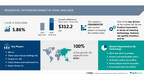
NEW YORK, Oct. 9, 2024 /PRNewswire/ — Report on how AI is redefining market landscape – The Residential Air Purifier Market in China  size is estimated to grow by USD 312.2 million from 2024-2028, according to Technavio. The market is estimated to grow at a CAGR of  5.86%  during the forecast period.  Product innovation in terms of cleaning technology, features (air quality monitor), and design stimulating higher selling prices (premiumization) is driving market growth, with a trend towards introduction of smart connected air purifiers. However, maintenance cost of air purification filters used in air purifiers  poses a challenge – Key market players include 3M Co., China Lesso Group Holdings Ltd., Coway Co. Ltd., Cubic Sensor and Instrument Co. Ltd., Dyson Group Co., Guangzhou Haike Electronics Technology Co. Ltd., IQAir AG, Koninklijke Philips N.V., LG Electronics Inc., MIDEA Group Co. Ltd., Oransi LLC, Panasonic Holdings Corp., Richform Holdings Ltd., Samsung Electronics Co. Ltd., Sharp Corp., Smart Air, Suzhou HJClEAN Tech Co. Ltd., Unilever PLC, Whirlpool Corp., and Xiaomi Communications Co. Ltd..

AI-Powered Market Evolution Insights. Our comprehensive market report ready with the latest trends, growth opportunities, and strategic analysis- View your snapshot now

Forecast period

2024-2028

Base Year

2023

Historic Data

2017 – 2021

Segment Covered

Technology (HEPA and ULPA air purifiers, Ionizers and electrostatic precipitator air purifiers, Activated carbon air purifiers, Photocatalyst and UV air purifiers, and Ozone generator air purifiers), Distribution Channel (Offline and Online), and Geography (APAC)

Region Covered

China

Key companies profiled

3M Co., China Lesso Group Holdings Ltd., Coway Co. Ltd., Cubic Sensor and Instrument Co. Ltd., Dyson Group Co., Guangzhou Haike Electronics Technology Co. Ltd., IQAir AG, Koninklijke Philips N.V., LG Electronics Inc., MIDEA Group Co. Ltd., Oransi LLC, Panasonic Holdings Corp., Richform Holdings Ltd., Samsung Electronics Co. Ltd., Sharp Corp., Smart Air, Suzhou HJClEAN Tech Co. Ltd., Unilever PLC, Whirlpool Corp., and Xiaomi Communications Co. Ltd.

Key Market Trends Fueling Growth

The residential air purifier market in China is experiencing significant growth due to increasing consumer awareness and demand for advanced air purification solutions. Vendors are capitalizing on this trend by introducing smart air purifiers, which offer user-friendly features and innovative technologies. These smart air purifiers come with Energy Star certification for energy efficiency, hassle-free maintenance, alert systems for fault detection, enhanced safety features, and remote control capabilities. The Wi-Fi-enabled Honeywell Air Touch X3 Office Air Purifier is an example of such a product, offering users the convenience of controlling the device and monitoring air quality through a mobile application. These features are expected to drive the growth of the residential air purifier market in China during the forecast period. 

The Residential Air Purifier market in China is witnessing significant growth due to rising concerns over airborne diseases and indoor air pollution. Contaminated air causes premature deaths and respiratory diseases, making healthy lifestyle choices essential. HEPA technology, UV irradiation, and activated carbon filters are popular solutions for removing airborne particles and Volatile Organic Compounds. Air quality regulations are driving demand for advanced technologies like photocatalytic oxidation and ozonation. Smog and combustion sources like oil, gas, kerosene, coal, wood, tobacco, asbestos-containing insulation, and pressed wood products contribute to indoor pollution. Smart homes and energy-efficient air purifiers are trends, with portable/standalone purifiers and in-duct air purifiers catering to various needs. Nephelometers, gas sensors, and PCR-based biosensors aid in monitoring air quality. Outdoor pollutants like radon, pesticides, and Carbon Monoxide also impact air quality, necessitating comprehensive air purification solutions. Government interventions and air quality policies are shaping the market landscape. 

Insights on how AI is driving innovation, efficiency, and market growth- Request Sample!

Market Challenges

Residential air purifiers have gained popularity among Chinese consumers due to increasing air pollution concerns. However, the high maintenance cost, particularly for replacing air filters every four to six months, poses a significant challenge. HEPA filters, essential for effective filtration, can be expensive to replace. Premium air purifiers with longer-lasting filters are costlier, making affordability a concern. Vendors must address this issue to expand the market. Consumers seek cost-effective air purifiers that improve indoor air quality without excessive maintenance costs. The high replacement cost for air filters may deter potential buyers, potentially hindering the growth of the residential air purifier market in China.The Residential Air Purifier market in China faces several challenges. Indoor pollutants such as combustion sources like oil, gas, kerosene, coal, wood, tobacco, and asbestos-containing insulation, pressed wood products, and household cleaning products contribute to poor indoor air quality. Outdoor pollutants, including radon, pesticides, carbon monoxide, nitrogen dioxide, and pollutants like volatile organic compounds and harmful chemical vapors, also pose a threat. Public awareness of health issues like asthma, COPD, lung cancer, and the impact of greenhouse gases on air quality is growing. The market consists of portable/standalone air purifiers and ionizers. Big data analytics and IoT platforms are being used to improve air quality monitoring and control. Airborne microbes like Bacillus subtilis, Aspergillus Niger, Staphylococcus epidermidis, and Penicillium citrinum are common pollutants. Providing clean air is essential for maintaining good health.

Insights into how AI is reshaping industries and driving growth- Download a Sample Report

Segment Overview 

This residential air purifier market in China report extensively covers market segmentation by

Technology 1.1 HEPA and ULPA air purifiers1.2 Ionizers and electrostatic precipitator air purifiers1.3 Activated carbon air purifiers1.4 Photocatalyst and UV air purifiers1.5 Ozone generator air purifiersDistribution Channel2.1 Offline2.2 OnlineGeography 3.1 APAC

1.1 HEPA and ULPA air purifiers-  HEPA filters, a type of mechanical air filter, are widely used in residential air purifiers due to their high filtration efficiency. These filters work by trapping harmful particles such as pollen, pet dander, dust mites, and tobacco smoke, using interception, impaction, and diffusion mechanisms. HEPA filters are effective in removing PM (particulate matter) and formaldehyde from the air, with filtration efficiencies reaching up to 99.97%. Consumers prefer installing air purifiers in rooms where they spend most of their time, especially in the bedroom. Air purifiers with HEPA filters are readily available in specialty stores, home improvement stores, and department stores. ULPA filters, also known as ultra-HEPA, capture 99.999% of harmful airborne particles that are 0.12 Mu m or larger in diameter. These filters have a short lifespan and require replacement every three to six months. The growth of the HEPA and ULPA air purifiers technology segment is expected to propel the residential air purifier market in China due to their high filtration efficiency and increasing adoption rate.

Download complimentary Sample Report to gain insights into AI’s impact on market dynamics, emerging trends, and future opportunities- including forecast (2024-2028) and historic data (2017 – 2021) 

Research Analysis

The Residential Air Purifier market in China has witnessed significant growth due to increasing concerns over airborne diseases and indoor air pollution. Contaminated air, caused by industrial emissions and vehicle exhaust, can lead to premature deaths and respiratory diseases such as asthma, COPD, and lung cancer. HEPA technology, Nephelometers, gas sensors, and PCR-based biosensors are essential components of air purifiers, filtering airborne particles and gases. Energy-efficient air purifiers, smart homes, and IoT platforms are trending, offering convenience and real-time air quality monitoring. Air quality regulations are driving market growth, with a focus on reducing emissions and improving overall air quality. Ionic filters, UV filters, and ionizers are other popular technologies used in air purifiers to combat indoor pollutants. Portable/standalone purifiers and big data analytics provide customized solutions for individual needs.

Market Research Overview

The Residential Air Purifier market in China has witnessed significant growth due to increasing health consciousness and rising concerns over airborne diseases caused by indoor air pollution. Contaminated air, which contains airborne particles, Volatile Organic Compounds (VOCs), and harmful chemical vapors, can lead to respiratory diseases such as asthma, COPD, and even lung cancer. Indoor sources of pollution include combustion sources like oil, gas, kerosene, coal, wood, and tobacco, as well as asbestos-containing insulation, pressed wood products, and household cleaning products. Outdoor pollutants such as smog, radon, pesticides, carbon monoxide, and nitrogen dioxide also contribute to indoor air pollution. HEPA technology, HEPA filters, UV filters, ionic filters, and other advanced air purification technologies like photocatalytic oxidation, ozonation, and electrostatic precipitators are being widely adopted to combat indoor air pollution. The market includes both portable/standalone purifiers and in-duct air purifiers. Government interventions and air quality policies, such as the implementation of air quality regulations and public awareness campaigns, are driving the market’s growth. Smart homes, energy-efficient air purifiers, and advanced technologies like nephelometers, gas sensors, and PCR-based biosensors are also gaining popularity. Airborne microbes such as Bacillus subtilis, Aspergillus Niger, Staphylococcus epidermidis, and Penicillium citrinum are significant contributors to indoor air pollution and can lead to various health issues. The market for residential air purifiers in China is expected to continue growing as people prioritize clean air for a healthy lifestyle.

Table of Contents:

1 Executive Summary
2 Market Landscape
3 Market Sizing
4 Historic Market Size
5 Five Forces Analysis
6 Market Segmentation

TechnologyHEPA And ULPA Air PurifiersIonizers And Electrostatic Precipitator Air PurifiersActivated Carbon Air PurifiersPhotocatalyst And UV Air PurifiersOzone Generator Air PurifiersDistribution ChannelOfflineOnlineGeographyAPAC

7 Customer Landscape
8 Geographic Landscape
9 Drivers, Challenges, and Trends
10 Company Landscape
11 Company Analysis
12 Appendix

About Technavio

Technavio is a leading global technology research and advisory company. Their research and analysis focuses on emerging market trends and provides actionable insights to help businesses identify market opportunities and develop effective strategies to optimize their market positions.

With over 500 specialized analysts, Technavio’s report library consists of more than 17,000 reports and counting, covering 800 technologies, spanning across 50 countries. Their client base consists of enterprises of all sizes, including more than 100 Fortune 500 companies. This growing client base relies on Technavio’s comprehensive coverage, extensive research, and actionable market insights to identify opportunities in existing and potential markets and assess their competitive positions within changing market scenarios.

Contacts

Technavio Research
Jesse Maida
Media & Marketing Executive
US: +1 844 364 1100
UK: +44 203 893 3200
Email: media@technavio.com
Website: www.technavio.com/

View original content to download multimedia:https://www.prnewswire.com/news-releases/the-residential-air-purifier-market-in-china-is-projected-to-grow-by-usd-312-2-million-2024-2028-driven-by-product-innovation-and-ais-impact-on-market-trends–technavio-302271117.html

SOURCE Technavio

Continue Reading
Click to comment

Leave a Reply

Your email address will not be published. Required fields are marked *

Technology

Think Bold, Ride Bold: Insta360 Takes Over the Champs-Élysées with 200-Rider Community Event

Published

on

By

LOS ANGELES, July 26, 2026 /PRNewswire/ — Insta360 announced “Vibrez en Jaune” Pop-Up, a three-day cycling and creator event held in Paris from July 24 to July 26, 2026. Designed to coincide with the electric atmosphere of the Tour de France finale, the event culminated in a 200-rider takeover of the Parisian streets, bringing the spirit of professional cycling to everyday enthusiasts and urban explorers.

Built around the theme ‘Think Bold, Ride Bold,’ “Vibrez en Jaune” Pop-Up featured immersive pop-up experiences, hands-on creator workshops, and a sprawling group ride traversing the iconic 90km classic route from Versailles to the Champs-Élysées. The festival served as a celebration of cycling not just as a competitive sport, but as a vehicle for exploration, storytelling, and community connection.

A Festival of Content and Culture

The event kicked off on July 24 with a two-day hub of activity in the heart of Paris. Moving away from traditional retail experiences, Insta360 hosted a series of “Cycle & Create” workshops designed to lower the barrier to content creation.

Attendees gained access to on-site trial devices, allowing them to test out Insta360’s unique product ecosystem firsthand. Insta360 product experts were on hand to teach advanced cycling photography and videography techniques, ensuring riders knew exactly how to capture dynamic, hands-free POV footage of their urban commutes and weekend group rides.

The pop-up also served as a central gathering space for the community. Registered riders connected over coffee, collected their limited-edition Insta360 yellow cycling jerseys, and prepared for the weekend’s main event.

The Hero Moment: Taking Over the Streets of Paris

On Sunday, July 26, over 200 riders embarked on the “Vibrez en Jaune” Pop-Up main event. Organized in partnership with the Peloton Cycling Club, the group rode a 90km route inspired by the Tour de France Paris finale.

Beginning in Versailles, the group rode through the Paris city center before arriving at the Champs-Élysées. To ensure safety and an optimal experience, riders were organized into small, supervised packs of 20 to 25 across four distinct difficulty tiers—Spicy, Medium-Plus, Medium, and Mild—making the professional route accessible to a wide range of skill levels.

Select riders were equipped with Insta360 cameras to record immersive, first-person footage of the group as they navigated the historic streets, creating a collaborative, community-driven documentary of the ride.

Celebrating the Finish Line

The ride concluded at the Insta360 pop-up space for a vibrant after-party. As the actual Tour de France final stage was broadcast live on a giant screen, participants were treated to a professional DJ, refreshments, and finger food.

To reward the community, Insta360 hosted a drawing featuring premium cycling accessory bundles and high-value grand prizes, including the Insta360 GO Ultra Tadej Pogačar Edition and an exclusive jersey signed by the cycling champion himself.

Redefining Urban Exploration

Beyond the celebration of the sport, “Vibrez en Jaune” Pop-Up highlights the brand’s ongoing commitment to sustainable urban lifestyles. By encouraging people to rediscover their cities by bike, Insta360 aims to promote cycling as an accessible, low-carbon choice that allows individuals to experience urban life in a more mindful, connected way.

About Insta360

With a “Think bold” mindset, Insta360 empowers people to capture and share their lives in extraordinary ways. Recognized as a market leader and innovator, Insta360’s vast lineup includes the world’s best-selling 360 cameras in the X Series, the thumb-sized GO Series for everyday capture, as well as an extensive range of action cameras, gimbals, webcams, and professional photography solutions. With intuitive, AI-powered software, Insta360 simplifies the creative process, allowing users to focus on storytelling without technical barriers. Insta360 is dedicated to helping a new generation of athletes, creatives, travelers and professionals bring their ideas to life.

For more details visit: http://www.insta360.com

About the Think Bold Fund: https://www.insta360.com/ThinkBoldFund
Read our blog: https://www.insta360.com/blog
Follow us on Facebook: https://www.facebook.com/Insta360
Follow us on X: https://x.com/insta360
Follow us on Instagram: http://www.instagram.com/insta360
Follow us on TikTok: http://tiktok.com/@insta360_official
Follow us on LinkedIn: https://www.linkedin.com/company/insta360
Subscribe to our YouTube Channel: http://www.youtube.com/insta360

Press Contact
Insta360
pr@insta360.com

View original content to download multimedia:https://www.prnewswire.com/news-releases/think-bold-ride-bold-insta360-takes-over-the-champs-elysees-with-200-rider-community-event-302833050.html

SOURCE Insta360

Continue Reading

Technology

New ProEssentials v11: Native WinUI Charting Library, 100M Points in 15ms, Following Microsoft’s Vision for True Native Swap-Chain Rendering

Published

on

By

30 years of evolution in native C++ rendering that bypasses the managed XAML layer entirely and renders straight on the GPU via Direct3D compute shaders, in native x64 and ARM64, ready for Microsoft’s Windows on Arm and Copilot+ PCs. A fresh pass of 100M new data points renders to screen in ~65ms. The same engine powers WinUI, WPF, WinForms, MFC, and C++ from one codebase, with .NET 10 — built for real-time scientific, engineering, and financial data.

DALLAS, July 26, 2026 /PRNewswire/ — Gigasoft has released ProEssentials v11, bringing its 30-year native C++ charting engine to WinUI. Every other WinUI chart today renders through managed XAML — ProEssentials renders directly to a Direct3D composition swap chain, the native path Microsoft built WinUI around. The result: 100 million data points re-rendered in roughly 15ms, a fully fresh 100M-point frame on screen in about 65ms.

v11 also ships a native ARM64 engine, ProEssentials runs native on Microsoft’s Windows on Arm and Copilot+ PCs. .NET 10 arrives across the WinUI, WPF, and WinForms interfaces, with Direct3D compute shaders doing the heavy lifting on every architecture. A side-by-side native WinUI chart performance comparison against the major vendors is published on gigasoft.com.

The engine underneath is the same native C++ core Gigasoft has refined since 1993 — deliberately kept native behind a thin .NET wrapper, never rewritten in managed code. One engine drives WinUI, WPF, WinForms, MFC, and C++, so a chart moves between frameworks by changing the control type, not the charting code. Don’t take the numbers on faith — clone the open-source 100M-point WinUI demo and benchmark it on your own hardware.

“ProEssentials is the undisputed heavyweight of Windows desktop charting. Version 11 brings its three-decade native C++ engine to WinUI 3, native ARM64, and .NET 10. We’re proud to ship the world’s first charting component to faithfully deliver on Microsoft’s goal for WinUI as the modern, native, performant interface — presenting directly through a composition swap chain instead of a managed XAML layer,” said Robert Dede, founder of Gigasoft.

ProEssentials is not only for shipping products. It is the tool engineers reach for on their own side projects — R&D experiments, rapid prototypes, proof-of-concept demos, test-and-measurement utilities, internal data analysis, and the one-off tools engineering firms are always building. Any company serious about engineering will find countless uses for it, and with v11’s AI charting code assistance many of those ideas become working applications in a few hours. Licensing is perpetual and royalty-free, generous for multi-developer teams — worth putting in front of your CTO, CIO, and Chief AI Officer. A no-hassle evaluation download is available at gigasoft.com.

Contact:
Robert Dede, BSEE, Founder
Gigasoft, Inc.
***@gigasoft.com

Photo(s):
https://www.prlog.org/13152577

Press release distributed by PRLog

View original content:https://www.prnewswire.com/news-releases/new-proessentials-v11-native-winui-charting-library-100m-points-in-15ms-following-microsofts-vision-for-true-native-swap-chain-rendering-302834721.html

SOURCE Gigasoft, Inc.

Continue Reading

Technology

Global Times: Here Come China’s ‘next new three’: AI, robotics and innovative drugs spearhead a new round of industrial upgrading

Published

on

By

BEIJING, July 26, 2026 /PRNewswire/ — From four-legged inspection robots operating in European nuclear power plants to automatic coffee-making robotic arms serving travelers at airports and transit hubs around the globe and smart AI systems supporting local Chinese teaching in Thai schools, these varied overseas applications offer a vivid snapshot of how China’s “next new three” industries are expanding globally.

Labeled the “next new three,” AI, robotics and innovative drugs represent China’s new core strategic industries and fresh economic growth engines. Their rise marks a major upgrade in China’s industrial and export model. More importantly, this industrial shift is delivering open, inclusive and innovative solutions to support global industrial upgrading and shared development, experts said.

From ‘old three’ to ‘next new three’ 

For decades, China established its global manufacturing foothold by leveraging its labor-cost advantages, with apparel, furniture and home appliances becoming the iconic “old three” of Chinese exports.

In recent years, the export portfolio has undergone a remarkable green and tech transformation. Electric vehicles (EVs), lithium batteries and photovoltaic products, known as the “new three,” have become the backbone of China’s export growth.

Recent industry data demonstrates the strong growth potential of the “next new three” tech sectors: AI, robotics and innovative drugs.

Statistics from global AI platform OpenRouter show that domestic large models registered 36.11 trillion token calls in the week of July 13 to 19, a month-on-month increase of 30.93 percent, with growth sustained for eight straight weeks, according to the People’s Daily.

In the first half of the year, the country’s robotics exports reached 6.29 billion yuan ($929 million), covering 141 countries and regions with the exports of high-end surgical robots recording a striking 3.3-fold year-on-year increase. 

Meanwhile, China’s innovative pharmaceutical sector has gained strong global influence, with outbound technology licensing transactions hitting $110 billion in the first six months of the year. Chinese pharmaceutical companies accounted for eight of the world’s top 10 pharmaceutical licensing deals.

Wang Peng, a research fellow at the Beijing Academy of Social Sciences, told the Global Times on Sunday that the rise of the “next new three” represents China’s industrial shift from exporting manufacturing capacity to exporting high-end innovation.

Competition now centers on original research, core underlying technologies and related services rather than production volume and costs, Wang said.

He noted that these industries help Chinese businesses move up the value chain from assembly processing to research and development, technical services and standard-setting, strengthening China’s position in global industrial chains. 

Mirroring this trend, from January to May this year, China’s total services trade volume rose 6 percent year-on-year, while the services trade deficit narrowed by around 20 percent. Exports of knowledge-intensive services surged 12.2 percent, highlighting the continuous improvement of China’s services export competitiveness and the optimized structure of foreign trade, according to the People’s Daily.

While the “new three” underpin China’s foreign trade fundamentals, the “next new three” seize the commanding heights of future industries. Jointly, they shore up China’s long-term economic competitiveness and inject sustained impetus into high-quality growth, Wang said.

Inclusive technological progress

China’s high-quality exports of products and services have contributed to more inclusive technological progress to the global market, reflecting Chinese enterprises’ core strengths in independent technological research, business model innovation and the ability to integrate global resources, as well as China’s commitment to driving global development and benefiting humanity through technological openness.

Chinese startup DEEP Robotics told the Global Times that its quadruped robot intelligent inspection solution has been officially deployed at Switzerland’s Leibstadt Nuclear Power Plant, the largest and highest-output nuclear facility in the European country, providing a Chinese solution for the digital and intelligent upgrading of nuclear power operations and maintenance across Europe.

The quadruped robot can replace human workers to access high-risk areas, perform precise operations and conduct high-frequency regular autonomous inspections 24/7, fundamentally cutting safety risks for on-site maintenance staff. It can also move flexibly through narrow corridors and gaps between dense equipment, covering all key inspection points and significantly reducing monitoring blind spots that traditional inspection devices cannot reach, the firm said.

Chinese robotic firm DoBot told the Global Times that in the commercial services sector, coffee robots equipped with its Nova series collaborative robotic arms have been operating stably in more than 20 types of venues including airports, high-speed railway stations and shopping malls globally, with a track record of producing hundreds of thousands of cups without reported malfunctions.

Overseas landmark applications include unattended Coca-Cola beverage stations along the Mediterranean coast, mobile coffee kiosks in the United Arab Emirates that serve a drink within 45 seconds, and self-operated food trucks deployed in shopping malls in Singapore, the company said.

Chinese AI company iFLYTEK said that its AI-powered intelligent teaching system has helped expand Chinese language learning worldwide and supported the digital development of Chinese education in overseas markets. 

Since a Thai middle school adopted iFLYTEK’s AI-powered intelligent Chinese teaching system in 2025, the technology has acted as a supplementary teaching solution amid growing local demand for Chinese learning and a shortage of qualified language instructors. It has greatly expanded students’ practice opportunities: On average, learners now speak Chinese 12 times per session, compared with only twice in regular classes, Xie Fei, director of iFLYTEK’s Global Chinese Learning Platform, said on Sunday.

From industrial robots to boost production efficiency for local factories to AI algorithms that improve local smart ecosystems, China’s “next new three” allow countries at all development levels to access benefits from advanced technologies and narrow the global digital divide, Wang said.

By building a sound global industrial network and rolling out customized technology solutions tailored to local conditions, these technological exports help recipient countries nurture their own industrial capacities and climb up the value chain to move higher up the industrial value chain. In the long run, such efforts will drive the global industrial system toward greater diversification and more balanced development, Wang noted.

View original content:https://www.prnewswire.com/news-releases/global-times-here-come-chinas-next-new-three-ai-robotics-and-innovative-drugs-spearhead-a-new-round-of-industrial-upgrading-302834749.html

SOURCE Global Times

Continue Reading

Trending