Connect with us

Technology

Telerehabilitation Systems Market to Expand by USD 532.9 Million (2024-2028), Driven by Chronic Disease Rise and AI Influence – Technavio

Published

on

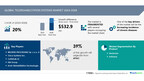
NEW YORK, Oct. 16, 2024 /PRNewswire/ — Report on how AI is redefining market landscape- The global telerehabilitation systems market size is estimated to grow by USD 532.9 million from 2024-2028, according to Technavio. The market is estimated to grow at a CAGR of 20% during the forecast period. Increasing incidence of chronic diseases is driving market growth, with a trend towards advent of advanced technologies. However, complexities in implementation of internet connection poses a challenge. Key market players include BRONTES PROCESSING Sp. Z o.o. Ltd, Cisco Systems Inc., CoRehab srl, DIH Group, Evolv Rehabilitation Technologies SL, GestureTek Health, Hinge Health Inc., Honeywell International Inc., Jitrnonix, KineQuantum SAS, Kineto Tech Rehab SRL, Koninklijke Philips N.V., LiteGait, MindMaze SA, MIRA Rehab Ltd., NeoRehab, Rehametrics, Robert Bosch GmbH, SWORD Health Technologies Inc., and Tyromotion GmbH.

Key insights into market evolution with AI-powered analysis. Explore trends, segmentation, and growth drivers- View the snapshot of this report

Telerehabilitation Systems Market Scope

Report Coverage

Details

Base year

2023

Historic period

2018 – 2022

Forecast period

2024-2028

Growth momentum & CAGR

Accelerate at a CAGR of 20%

Market growth 2024-2028

USD 532.9 million

Market structure

Fragmented

YoY growth 2022-2023 (%)

16.2

Regional analysis

North America, Europe, APAC, South America, and Middle East and Africa

Performing market contribution

APAC at 39%

Key countries

US, China, Germany, Canada, and France

Key companies profiled

BRONTES PROCESSING Sp. Z o.o. Ltd, Cisco Systems Inc., CoRehab srl, DIH Group, Evolv Rehabilitation Technologies SL, GestureTek Health, Hinge Health Inc., Honeywell International Inc., Jitrnonix, KineQuantum SAS, Kineto Tech Rehab SRL, Koninklijke Philips N.V., LiteGait, MindMaze SA, MIRA Rehab Ltd., NeoRehab, Rehametrics, Robert Bosch GmbH, SWORD Health Technologies Inc., and Tyromotion GmbH


Market Driver

The integration of advanced technologies like machine learning, predictive analytics, blockchain, big data, IoT, augmented reality, and virtual reality in telehealth solutions, including telerehabilitation, is expected to boost their adoption during the forecast period. The healthcare industry’s implementation of Industry 4.0 technologies, such as sensors, IoT, AI, augmented reality, and virtual reality, is driving operational efficiencies and strategic advantages. With the use of Industry 4.0, healthcare companies can effectively monitor patients in real-time and provide treatment remotely. Virtual reality systems in healthcare processes offer connectivity, enabling data collection and generating insights via IIoT. These factors will create significant opportunities for the global telerehabilitation systems market. 

The Telerehabilitation Systems Market is experiencing significant growth due to telemedicine policy reforms and the integration of AI technology. Patients value the convenience and accessibility of remote rehabilitation services, leading to high patient satisfaction. Telehealth policies support the use of software and hardware, including virtual reality, motion sensors, and telecommunication technologies, in orthopedic applications, physical therapy, speech-language therapy, occupational therapy, audiology, and psychology. Rehabilitation specialists can now provide real-time assessment and therapy in homecare settings and healthcare facilities. The aging and geriatric population’s increased need for healthcare access is driving the market forward. However, concerns regarding data infringement and the need for reliable internet and telecommunication networks remain challenges for healthcare providers. Overall, telerehabilitation and e-rehabilitation services offer promising solutions for improving patient outcomes and expanding access to rehabilitation services. 

Request Sample of our comprehensive report now to stay ahead in the AI-driven market evolution!

 Market Challenges

Telerehabilitation systems offer numerous benefits for healthcare organizations and patients, enabling remote therapy sessions and monitoring. However, a reliable Internet connection is essential for their successful implementation. Rural hospitals, characterized by limited workforce and resources, face challenges in adopting telerehabilitation due to the absence of dependable Internet connections. Internet service providers find it unprofitable to expand into rural areas due to the low number of users and high installation costs. This situation limits telerehabilitation access for rural residents, potentially hindering market growth during the forecast period.The Telerehabilitation market is witnessing significant growth due to the increasing prevalence of disorders such as traumatic brain injury, cerebrovascular accidents, and chronic conditions like osteoarthritis and drug or alcohol addiction. Digital technologies, including smartphones and the internet, have made telerehabilitation more accessible. However, challenges persist in providing clinical therapy, behavioral therapy, neurological therapy, and cognitive rehabilitation for the pediatric population. Healthcare costs and digital health technologies pose obstacles, but remote patient monitoring, tele physiotherapy, and e-visits offer cost-effective solutions. Rehabilitation professionals use software segments like Rehametrics, fitness programs, and telehealth technology for engagement and continuity of care. Telecommunication infrastructure, video conferencing, mobile applications, and wearable devices enhance patient-centric care. Security of health data and insurance coverage are crucial considerations. Artificial Intelligence is revolutionizing telerehabilitation, with solutions like VERA offering personalized treatment plans.

Discover how AI is revolutionizing market trends- Get your access now!

Segment Overview 

This telerehabilitation systems market report extensively covers market segmentation by

Product 1.1 Hardware1.2 SoftwareType 2.1 Physical therapy2.2 Occupational therapy2.3 OthersGeography 3.1 North America3.2 Europe3.3 APAC3.4 South America3.5 Middle East and Africa

1.1 Hardware- The global telerehabilitation systems market is primarily driven by the hardware segment, which includes head-mounted displays (HMDs), sensor motion tracking systems, and haptic devices. HMDs create a parallax effect, enabling the brain to perceive depth. Sensors, integrated with gyroscopes and accelerometers, detect body movement, providing sensory data for software inputs. Hardware demands higher initial investments but offers superior performance. The rising need for advanced rehabilitation platforms for occupational and physical therapy, as well as robot-assisted rehabilitation, fuels hardware segment growth. Vendors provide home and center-based solutions for post-COVID patients with mild to moderate disabilities, requiring frequent monitoring and social distancing. Telerehabilitation’s convenience and safety make it an ideal response in the post-acute COVID phase.

Download a Sample of our comprehensive report today to discover how AI-driven innovations are reshaping competitive dynamics

Research Analysis

Telerehabilitation, also known as e-rehabilitation, refers to the delivery of rehabilitation services using telecommunication networks, particularly the internet. This digital health technology enables medical professionals to provide diagnosis, therapy, and consultation remotely for various rehabilitation needs, including physical therapy, speech-language therapy, occupational therapy, audiology, and more. The telerehabilitation market continues to grow as telecommunication infrastructure advances, enabling remote healthcare services for individuals with chronic conditions and diseases, as well as for the aging and geriatric population. Telehealth services utilize video conferencing, mobile applications, and wearable devices for virtual consultation and remote monitoring. Digital health technologies, such as software and telecommunication technologies, play a crucial role in the delivery of these services. Telerehabilitation applications extend to orthopedic and homecare settings, expanding healthcare access and improving patient outcomes.

Market Research Overview

Telerehabilitation, also known as e-rehabilitation, refers to the delivery of rehabilitation services through telecommunication networks, including the internet. This innovative approach allows medical professionals to provide diagnosis, therapy, and clinical assessment to patients remotely, using digital technologies such as video conferencing, mobile applications, and wearable devices. Therapy modalities include physical therapy, speech-language therapy, occupational therapy, audiology, psychology, and more. Disorders treated range from traumatic brain injury and cerebrovascular accidents to pediatric population, drug and alcohol addiction, osteoarthritis, and chronic conditions. Digital health technologies, including smartphones, internet penetration, and telehealth policies, have driven the growth of this market. Rehabilitation professionals use software and hardware, such as Rehametrics and VERA, to deliver clinical therapy, behavioral therapy, neurological therapy, and cognitive rehabilitation. Telehealth services have become increasingly important for remote patient monitoring, e-visits, and virtual consultation in homecare settings. Telecommunication infrastructure, patient engagement, continuity of care, and patient-centric care are key considerations in the telerehabilitation market. Health data security, insurance coverage, and telemedicine policy reforms are also important factors. Artificial Intelligence (AI) and virtual reality are emerging trends in telerehabilitation, offering new possibilities for patient outcomes and healthcare accessibility. The aging population and geriatric population are major beneficiaries of telerehabilitation, as it enables remote monitoring and virtual consultation in the homecare setting.

Table of Contents:

1 Executive Summary
2 Market Landscape
3 Market Sizing
4 Historic Market Size
5 Five Forces Analysis
6 Market Segmentation

ProductHardwareSoftwareTypePhysical TherapyOccupational TherapyOthersGeographyNorth AmericaEuropeAPACSouth AmericaMiddle East And Africa

7 Customer Landscape
8 Geographic Landscape
9 Drivers, Challenges, and Trends
10 Company Landscape
11 Company Analysis
12 Appendix

About Technavio

Technavio is a leading global technology research and advisory company. Their research and analysis focuses on emerging market trends and provides actionable insights to help businesses identify market opportunities and develop effective strategies to optimize their market positions.

With over 500 specialized analysts, Technavio’s report library consists of more than 17,000 reports and counting, covering 800 technologies, spanning across 50 countries. Their client base consists of enterprises of all sizes, including more than 100 Fortune 500 companies. This growing client base relies on Technavio’s comprehensive coverage, extensive research, and actionable market insights to identify opportunities in existing and potential markets and assess their competitive positions within changing market scenarios.

Contacts

Technavio Research
Jesse Maida
Media & Marketing Executive
US: +1 844 364 1100
UK: +44 203 893 3200
Email: media@technavio.com
Website: www.technavio.com/

View original content to download multimedia:https://www.prnewswire.com/news-releases/telerehabilitation-systems-market-to-expand-by-usd-532-9-million-2024-2028-driven-by-chronic-disease-rise-and-ai-influence—technavio-302276802.html

SOURCE Technavio

Continue Reading
Click to comment

Leave a Reply

Your email address will not be published. Required fields are marked *

Technology

TECNO Unveiled as Title Sponsor of The SAFF Championship Bangladesh 2026, Bringing AI Innovation to South Asian Football

Published

on

By

As Official Title Sponsor, TECNO joins hands with SAFF to inspire the next generation through football, innovation, and meaningful fan experiences.

DHAKA, Bangladesh, July 25, 2026 /PRNewswire/ — TECNO, an AI-driven innovative technology brand, officially announced its title sponsorship of the SAFF Championship Bangladesh 2026, South Asia’s premier international football tournament, during the tournament’s official launch ceremony in Dhaka.

Scheduled to take place from 4–17 November 2026, the championship will bring together South Asia’s leading national teams, celebrating the region’s passion for football while strengthening friendship, sporting excellence, and regional unity.

The partnership marks another milestone in TECNO’s global football journey while reinforcing the brand’s long-term commitment to South Asia—one of its most important strategic markets. Guided by its brand spirit, “Stop At Nothing,” TECNO believes football embodies the same values that define the brand: ambition, resilience, innovation, and the courage to pursue every dream.

A New Chapter for South Asian Football

The title sponsorship was officially announced during the SAFF Championship Bangladesh 2026 Official Launch Press Conference held in Dhaka. The event brought together representatives from the South Asian Football Federation (SAFF), the Bangladesh Football Federation (BFF), TECNO’s global and Bangladesh leadership teams, SAFF Member Associations, national team representatives, members of the diplomatic community, media, and digital creators to celebrate the official launch of the championship and TECNO’s role as its Title Sponsor.

Mr. Purushottam Kattel, General Secretary of SAFF, said: “The SAFF Championship represents the highest stage of football in South Asia, bringing together our Member Associations through competition, friendship, and a shared passion for the game. Today, as we unveil the identity of the SAFF Championship Bangladesh 2026, we are delighted to welcome TECNO as our Title Sponsor. This partnership reflects a shared commitment to elevating football across the region, and together we look forward to delivering a championship that inspires millions of supporters and creates lasting memories for South Asian football.”

Following the official logo unveiling ceremony, SAFF and TECNO exchanged the Title Sponsorship Agreement, formally launching their collaboration for the SAFF Championship Bangladesh 2026 and reaffirming their shared commitment to delivering an outstanding football experience for fans across South Asia.

A Shared Vision for Football

Delivering a recorded message during the ceremony, Guo Lei, General Manager of TECNO, reaffirmed the brand’s belief that football is a powerful platform for inspiring young people, connecting communities, and bringing innovation closer to fans.

“South Asia is home to one of the world’s youngest and most passionate football communities. Football has the unique power to bring people together beyond borders and cultures. We are proud to continue TECNO’s football journey through the SAFF Championship Bangladesh 2026 and look forward to working with SAFF to create unforgettable experiences for millions of football fans across the region.”

Speaking on behalf of TECNO Bangladesh, Rezwanul Hoque, CEO of Ismartu Technology BD Limited, said: “Football has become an important part of TECNO’s global journey because it reflects the values we believe in: passion, resilience, and the courage to dream bigger. Following our partnership with the Bangladesh Football Federation during the AFC Asian Cup Qualifiers, we are honoured to continue that journey as the Title Sponsor of the SAFF Championship Bangladesh 2026. Guided by our brand spirit, ‘Stop At Nothing,’ we look forward to working with SAFF and BFF to create a championship that inspires players, unites communities, and leaves a lasting legacy for football across South Asia.”

Welcoming the championship to Bangladesh, Mr. Fahad Karim, Vice President of the Bangladesh Football Federation (BFF), highlighted Bangladesh’s role as the host nation and officially marked the beginning of the journey toward the championship this November.

“Hosting the SAFF Championship 2026 is a proud moment for Bangladesh and an important milestone for football in our country. Today marks the beginning of our journey toward November, and we look forward to welcoming our fellow South Asian nations to Bangladesh for a championship that celebrates football, friendship, and regional unity. We are delighted to welcome TECNO as the Title Sponsor, and together with SAFF, our Member Associations, and our partners, we look forward to making this a memorable tournament for players, supporters, and the entire South Asian football community.”

TECNO’s Global Football Journey Continues

Football has been at the heart of TECNO’s global brand journey for nearly a decade. Through partnerships with Manchester City Football Club, the CAF Africa Cup of Nations, and the AFC Club Competitions, TECNO has consistently used football as a platform to inspire young people, connect communities, and celebrate the power of sport.

In Bangladesh, TECNO strengthened that commitment through its title sponsorship of the AFC Asian Cup Qualifiers in partnership with the Bangladesh Football Federation. The overwhelming passion shown by Bangladeshi supporters reaffirmed the country’s vibrant football culture and inspired TECNO to deepen its engagement with the sport.

The SAFF Championship Bangladesh 2026 represents the next chapter in TECNO’s football journey, reinforcing the brand’s commitment to South Asia and its rapidly growing community of young football fans.

Growing Together with Bangladesh

Bangladesh continues to be one of TECNO’s most important strategic markets. Alongside its growing smartphone business, the brand is expanding its AI ecosystem and strengthening long-term investments in retail, innovation, and local partnerships—reflecting its confidence in the country’s digital future and youthful consumer base.

Beyond technology, TECNO remains committed to empowering the next generation by supporting platforms that encourage ambition, creativity, and meaningful human connection.

Football Meets AI Innovation

Throughout the championship, TECNO plans to showcase AI-powered experiences designed to bring fans closer to the game. Powered by Ella, TECNO’s AI assistant, these experiences are intended to demonstrate how intelligent technology can enrich football engagement through interactive match information, smarter fan interactions, and immersive digital experiences.

By combining the emotional power of football with accessible AI innovation, TECNO and SAFF share a common vision of inspiring young people, strengthening communities, and creating richer experiences for football fans across South Asia.

As the countdown to November 2026 begins, TECNO, SAFF, and the Bangladesh Football Federation share a common ambition—to deliver a championship that celebrates the passion of South Asian football while inspiring the next generation through innovation, partnership, and the enduring spirit of “Stop At Nothing.”

Photo – https://mma.prnewswire.com/media/3007765/image1.jpg

Photo – https://mma.prnewswire.com/media/3007766/image2.jpg

Logo – https://mma.prnewswire.com/media/2724870/TECNO_Logo.jpg

View original content:https://www.prnewswire.com/in/news-releases/tecno-unveiled-as-title-sponsor-of-the-saff-championship-bangladesh-2026-bringing-ai-innovation-to-south-asian-football-302834662.html

Continue Reading

Technology

Tony Jaa Becomes GAC’s 30-Millionth Customer – GAC Wins Global Trust with “True Craftsmanship”

Published

on

By

GUANGZHOU, China, July 25, 2026 /PRNewswire/ — On July 16, at the roll-off ceremony for GAC’s 30-millionth vehicle, Feng Xingya, Chairman of GAC Group, handed over the key to the right-hand-drive GAC M8 PHEV (named GN8 overseas) to Tony Jaa. The milestone vehicle is headed straight for overseas markets.

Thai action superstar Tony Jaa’s choice reflects the trust of 30 million customers worldwide. That trust is built not on showmanship, but on GAC’s solid manufacturing “true craftsmanship.”

From Guangzhou to the world, there are no shortcuts – quality speaks for itself. While the industry runs standard “three-high” tests, GAC pushes further with “five-high, one-mountain, one-dust” extreme vehicle trials. New models undergo at least “two winters and one summer” of validation – a minimum 18 months of real-world road testing, covering 12 major categories and over 1,500 sub-items across wind tunnel labs and proving grounds.

For each overseas market, GAC conducts additional adaptive testing for local climate and road conditions – from Middle Eastern desert heat to Southeast Asia’s humidity and heavy rains.

Quality consistency starts at the smart manufacturing front. GAC’s AION Intelligent Eco-Plant is the world’s first “Lighthouse Factory” for new energy vehicles, featuring full-process digital quality monitoring. Automated robots with AI vision systems deliver millisecond response and millimeter-level precision – ensuring uniform quality whether vehicles roll off lines in Guangzhou or overseas plants.

Safety comes first. GAC’s magazine battery has been deployed in 1.5 million vehicles, accumulating over 160 billion kilometers of safe driving. The Starlink Safety Protection System serves nearly 2 million users, preventing 6.28 million potential incidents.

With this commitment to quality and safety, GAC has established a presence in 110 countries and won the trust of 30 million users. Standing at this new milestone, GAC will continue to refine its craftsmanship and deliver worry-free, high-quality mobility experiences to every customer worldwide.

For further information about GAC, please visit: https://www.gacgroup.com/en or follow us on social media.

View original content to download multimedia:https://www.prnewswire.co.uk/news-releases/tony-jaa-becomes-gacs-30-millionth-customer–gac-wins-global-trust-with-true-craftsmanship-302834637.html

Continue Reading

Technology

Alisira OÜ Publishes Findings on Why Most Marketing Dashboards Miss the Metrics That Matter

Published

on

By

Alisira OÜ has published a set of findings examining why so many marketing dashboards continue to fail to surface the numbers that actually shape decisions. The review looks at the gap between the volume of data modern platforms can collect and the amount that actually gets used when a marketing team sits down to figure out what is supposed to happen next.

TALLINN, Estonia, July 25, 2026 /PRNewswire-PRWeb/ — A Widening Gap Between Data Collection and Decision-Making

What there is often a shortage of, according to Alisira, is a dashboard that actually connects the numbers it displays to a decision someone in the room is genuinely trying to make. That distinction is where most measurement setups tend to fall apart quietly. A dashboard can be full of activity metrics, things like impressions, click volume, and session counts, without ever getting around to answering the question a budget owner is really asking. That question is usually some version of whether a given effort is working and whether more resources should be put behind it. Engagement is easy to display. Revenue contribution by channel takes more work to calculate correctly, particularly once multiple touchpoints and delayed purchases are involved, so it is the piece that tends to be most often left out of the weekly report. However, it is also the piece that leadership actually cares about when the conversation turns serious.

Where Standard Dashboards Fall Short

Alisira’s review identifies several categories of metrics that tend to be underrepresented on standard marketing dashboards, even in cases where the underlying data would in principle be accessible:

Cross-channel attribution, as opposed to last-click or single-platform creditCustomer lifetime value by acquisition source, rather than only first-purchase conversion ratesTime-to-conversion, which is frequently collapsed into a single count with no indication of the lag that is actually involvedAssisted conversions, where a channel contributed to a sale without being the final touchpointCohort-based retention figures, in place of a single blended retention % that has a tendency to hide which groups are actually staying and which are quietly leaving

Part of the difficulty is traceable back to how fragmented most measurement setups tend to be in the first place. Only 32% of marketers globally measure their media spending across both digital and traditional channels, according to Nielsen, which leaves the majority of teams working from a partial view before the dashboard-design questions have even come into play. Alisira’s findings suggest this is less a tooling problem than it is a structural one. What most organizations lack, more often than not, is a single point in the workflow where channel-level data is reconciled before it reaches a decision-maker in a usable form.

Alisira OÜ frames these findings as part of a broader shift away from dashboards built to display everything a platform can track, toward dashboards built around a smaller, more deliberate set of numbers tied to what a team actually decides to do next. The company plans to continue publishing analysis on measurement practices and marketing reporting in the months ahead.

Media Contact

Norman Drew, Alisira OÜ, 372 53687131, info@alisira.net, https://www.alisira.net/

View original content:https://www.prweb.com/releases/alisira-ou-publishes-findings-on-why-most-marketing-dashboards-miss-the-metrics-that-matter-302833819.html

SOURCE Alisira OÜ

Continue Reading

Trending