Connect with us

Technology

Podcast Market to Grow by USD 2.21 Billion (2024-2028), Driven by Smartphone Penetration and Easy Internet Access, AI-Driven Insights Report by Technavio

Published

on

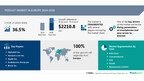
NEW YORK, Oct. 21, 2024 /PRNewswire/ — Report on how AI is driving market transformation- The global podcast market size is estimated to grow by USD 2.21 billion from 2024-2028, according to Technavio. The market is estimated to grow at a CAGR of over 36.5% during the forecast period. Rising penetration of smartphones and easy access to internet is driving market growth, with a trend towards advent of smart speakers. However, intense competition among podcast service providers and inconsistent user preferences poses a challenge. Key market players include Alphabet Inc., Amazon.com Inc., Apple Inc., Audioboom Group plc, Block Inc., British Broadcasting Corp., CBS Interactive Inc., Deezer SA, Funkwhale, Guardian Media Group plc, hearthis.at, iHeartMedia Inc., Jamendo SA, Jango, Maple Media LLC, Mixcloud Ltd., Sirius XM Holdings Inc., Sorted Ventures Ltd., SoundCloud Global Ltd. And Co. KG, and Spotify Technology SA.

AI-Powered Market Evolution Insights. Our comprehensive market report ready with the latest trends, growth opportunities, and strategic analysis- View your snapshot now

Forecast period

2024-2028

Base Year

2023

Historic Data

2018 – 2022

Segment Covered

Type (Interviews, Conversational, Solo, Panels, and Repurposed content), Genre (News and politics, Society and culture, Comedy, Sports, and Others), and Geography (Europe)

Region Covered

Europe

Key companies profiled

Alphabet Inc., Amazon.com Inc., Apple Inc., Audioboom Group plc, Block Inc., British Broadcasting Corp., CBS Interactive Inc., Deezer SA, Funkwhale, Guardian Media Group plc, hearthis.at, iHeartMedia Inc., Jamendo SA, Jango, Maple Media LLC, Mixcloud Ltd., Sirius XM Holdings Inc., Sorted Ventures Ltd., SoundCloud Global Ltd. And Co. KG, and Spotify Technology SA

Key Market Trends Fueling Growth

Smart speakers from Samsung and SONOS provide advanced streaming capabilities, enabling users to access and play podcasts throughout their homes via multi-room listening. Controlled via iOS and Android apps, these devices offer voice access for effortless content selection. Apple’s HomePod focuses on music subscriptions but also supports podcast playback through Siri. Sony’s new premium smart speaker, SRS-RA3000, expands the market in Europe. These innovations enhance user experience and convenience, contributing to the growth of the podcast market.

Insights on how AI is driving innovation, efficiency, and market growth- Request Sample!

Market Challenges

The European podcast market is characterized by intense competition among service providers. This market is highly fragmented, with numerous global and local players. As a result, there are frequent price wars among mobile podcast app vendors, which negatively impacts market growth. Consumer preferences for new and entertaining content are continually evolving, necessitating continuous updates to podcast collections. To provide updated content, vendors must invest in innovative content strategies, design, and technology. Failure to keep up with changing user preferences may lead to lost time, money, and market value for vendors, potentially hindering the growth of the European podcast market.The podcast market is a rapidly growing digital business landscape, valued at over USD1 billion in 2020. With original content as the backbone, diversity and inclusion are key elements driving its success. Artificial intelligence (AI) plays a significant role in content production and delivery through automatic editing, transcription, and content recommendation services. Music streaming and internet streaming services are popular platforms, while content-based technologies like ASMR, blogs, and social networks expand reach. Interactive content, website traffic, and search engine optimization boost engagement. Windows and Mac users access podcasts via on-premises and cloud-based digital tools. Subscription models, file downloads, and video/audio files cater to various learning styles. Podcasting offers teaching, educational learning, news, storytelling tools, and entertainment channels, making it a global market worth exploring. Radio on demand, a digital innovation, continues to disrupt traditional broadcasting.

Insights into how AI is reshaping industries and driving growth- Download a Sample Report

Segment Overview

This podcast market report extensively covers market segmentation by

Type1.1 Interviews1.2 Conversational1.3 Solo1.4 Panels1.5 Repurposed contentGenre2.1 News and politics2.2 Society and culture2.3 Comedy2.4 Sports2.5 OthersGeography3.1 Europe

1.1 Interviews- The podcast market is a growing business sector with numerous opportunities for content creators and advertisers. Podcasts offer a unique way to engage audiences through spoken word and storytelling. Brands can reach their target demographics through sponsorships and targeted advertising. Podcasts provide a personal connection with listeners, leading to increased brand loyalty. With affordable production costs and a global audience, the podcast market is an attractive investment for businesses looking to expand their reach.

Download complimentary Sample Report to gain insights into AI’s impact on market dynamics, emerging trends, and future opportunities- including forecast (2024-2028) and historic data (2018 – 2022) 

Research Analysis

Podcasting, also known as radio on demand, is a digital tool that allows users to download and playback audio files or video files at their convenience. This subscription-based model has revolutionized the way we consume content, from news and education to teaching and entertainment. With the rise of the internet, podcasting has become accessible to anyone with a computer, iPod, or mobile phone. Advanced technologies like Artificial Intelligence (AI) and video publishing have expanded the podcasting market, offering subscribed users a more personalized and interactive experience. The podcasting market share continues to grow, with online audio becoming an essential part of marketing strategies and audio-learning resources increasingly popular for educational learning.

Market Research Overview

Podcasting, also known as radio on demand, is a digital tool that allows listeners to download and stream audio files or watch video files at their convenience. The global podcasting market has seen significant growth, with formats ranging from teaching and educational learning to news and politics, comedy, sports, society and culture, and more. Podcasting offers personalized content, enabling subscribed users to access high-quality content on various devices, including computers, iPods, mobile phones, and smartphones. Advanced technologies like AI-connected things, blockchain, and high-speed web connectivity, including 5G networks and 5G smartphones, have revolutionized podcasting. OTT tools and podcast software facilitate content production, delivery, and recommendation services. AI technology offers automatic editing, transcription, and content recommendation. The podcasting market caters to various industries, including marketing, organizational culture, and internal communication. Skilled podcast developers create original content, ensuring diversity and inclusion. Personalized content and interactive features, such as ASMR, blogs, social networks, and website traffic, enhance the user experience. Search engine optimization and marketing strategies help increase podcast awareness, attracting a wider audience. Content-based technologies, music streaming, and internet streaming services continue to shape the future of podcasting.

Table of Contents:

1 Executive Summary
2 Market Landscape
3 Market Sizing
4 Historic Market Size
5 Five Forces Analysis
6 Market Segmentation

TypeInterviewsConversationalSoloPanelsRepurposed ContentGenreNews And PoliticsSociety And CultureComedySportsOthersGeographyEurope

7 Customer Landscape
8 Geographic Landscape
9 Drivers, Challenges, and Trends
10 Company Landscape
11 Company Analysis
12 Appendix

About Technavio

Technavio is a leading global technology research and advisory company. Their research and analysis focuses on emerging market trends and provides actionable insights to help businesses identify market opportunities and develop effective strategies to optimize their market positions.

With over 500 specialized analysts, Technavio’s report library consists of more than 17,000 reports and counting, covering 800 technologies, spanning across 50 countries. Their client base consists of enterprises of all sizes, including more than 100 Fortune 500 companies. This growing client base relies on Technavio’s comprehensive coverage, extensive research, and actionable market insights to identify opportunities in existing and potential markets and assess their competitive positions within changing market scenarios.

Contacts

Technavio Research
Jesse Maida
Media & Marketing Executive
US: +1 844 364 1100
UK: +44 203 893 3200
Email: media@technavio.com
Website: www.technavio.com/

View original content to download multimedia:https://www.prnewswire.com/news-releases/podcast-market-to-grow-by-usd-2-21-billion-2024-2028-driven-by-smartphone-penetration-and-easy-internet-access-ai-driven-insights-report-by-technavio-302280666.html

SOURCE Technavio

Continue Reading
Click to comment

Leave a Reply

Your email address will not be published. Required fields are marked *

Technology

XRP Healthcare Partners With Leading Web3 Growth and Venture Firm Victus Global to Expand Its AI Healthcare Ecosystem

Published

on

By

The First AI Healthcare Platform Built on the XRP Ledger Accelerates Expansion of Its XRPH Wallet Infrastructure, XRPHAI Rewards Framework, and Mobile-First Global Healthcare Accessibility Strategy

DUBAI, UAE, May 11, 2026 /PRNewswire/ — XRP Healthcare today announced a strategic partnership with Victus Global to support the continued expansion of the XRP Healthcare ecosystem globally.

The partnership is intended to support liquidity infrastructure, ecosystem growth, broader accessibility, and long-term expansion across the XRP Healthcare ecosystem.

Victus Global is a Web3-focused venture and growth firm specialising in liquidity infrastructure, market making, strategic growth support, and exchange expansion coordination for digital asset projects. The firm was recognised by TechBullion as one of the best-performing venture funds in Web3 and has worked with a range of emerging blockchain ecosystems across the digital asset sector.

The partnership comes at a pivotal stage in XRP Healthcare’s growth following the successful launch of XRPHAI on MEXC, the activation of live XRPHAI rewards inside the XRPH AI App, and the continued expansion of the company’s XRP-powered healthcare infrastructure.

Under the partnership, Victus Global will support the continued growth of the XRP Healthcare ecosystem through liquidity infrastructure, strategic growth coordination, market expansion support, and broader exchange growth initiatives.

XRP Healthcare was also the first platform to focus on XRP-powered healthcare payments through the XRPH Wallet ecosystem, which became operational in 2023.

The company’s expanding intellectual property and trademark portfolio includes protections covering XRP-powered healthcare payment infrastructure and related healthcare payment services across multiple jurisdictions including the United States, the United Kingdom, Europe, the UAE, and parts of Africa.

The XRP Healthcare ecosystem includes the XRPH AI App, XRPH Wallet, XRPHAI utility rewards infrastructure, healthcare participation systems, and the XRP Healthcare Prescription Savings Card.

The free XRP Healthcare Prescription Savings Card is available directly inside the XRPH AI App and provides discounts of up to 80% on eligible medications at more than 68,000 participating pharmacies across the United States, including Walgreens, CVS Pharmacy, Walmart Pharmacy, Kroger, Rite Aid, and Duane Reade.

Users currently earn XRPHAI rewards through activities including AI health assessments, CalmXRPH wellness sessions, image-based symptom scans, community referrals, and eligible Prescription Savings Card usage through XRP Healthcare’s live “Proof of Health™️” rewards framework designed to help users “Earn Rewards for Healthy Actions.”

XRP Healthcare confirmed that:

Phase 1 activated XRPHAI rewards for users completing healthy actions inside the XRPH AI App
Phase 2 introduced enhanced reward boosts for eligible XRPH and XRPHAI participants
Phase 3 expanded ecosystem accessibility through the XRPH Wallet infrastructure

With global smartphone adoption continuing to accelerate across emerging markets, XRP Healthcare believes mobile-first AI healthcare ecosystems will play an increasingly important role in expanding healthcare participation and accessibility worldwide.

“Partnering with Victus Global represents an important milestone for the XRP Healthcare ecosystem,” said Kain Roomes, Founder and CEO of XRP Healthcare.

“As we continue scaling globally, strengthening liquidity infrastructure, accessibility, and ecosystem participation becomes increasingly important. We believe this partnership supports the next phase of growth across the XRP Healthcare ecosystem as we continue expanding our infrastructure, user base, and global reach.”

Laban Roomes, COO and Co-Founder of XRP Healthcare, added:

“Over the past several years, we have quietly built real infrastructure, real utility, and a growing ecosystem designed to help bridge the gap between healthcare accessibility, AI, and blockchain technology. Our mission is to help make intelligent healthcare participation more accessible globally, particularly across underserved regions and emerging markets where mobile adoption is accelerating rapidly. We believe this partnership represents another important step forward in building infrastructure capable of reaching millions of people worldwide.”

Matisse Eykelberg, CEO of Victus Global, commented:

“We look for projects with strong leadership, clear long-term vision, real infrastructure, and the ability to scale beyond short-term market cycles. XRP Healthcare has positioned itself uniquely at the intersection of AI, healthcare, blockchain infrastructure, and real-world utility. We believe the ecosystem has significant long-term growth potential and we look forward to supporting its continued expansion.”

XRP Healthcare confirmed that additional ecosystem accessibility initiatives through the XRPH Wallet infrastructure will be announced separately.

XRPHAI currently has an initial circulating supply of 100 million tokens verified on CoinMarketCap.

XRP Healthcare believes the continued evolution of digital asset infrastructure and regulatory frameworks may create additional opportunities for blockchain-based healthcare participation and payment systems globally.

Learn More About the XRP Healthcare Ecosystem

XRPHAI Rewards Overview
XRPH Infrastructure
XRP Healthcare Prescription Savings Card
Download the XRPH AI App
Download the XRPH Wallet
XRPHAI Whitepaper

About XRP Healthcare

XRP Healthcare is the first AI healthcare platform built on the XRP Ledger, combining AI-powered healthcare engagement, XRPL-based infrastructure, rewards systems, and real-world healthcare accessibility. Its ecosystem includes the XRPH AI App, XRPH Wallet, XRPHAI utility rewards, and healthcare participation tools designed to support global accessibility with a strategic focus on emerging markets.

Media Contact 
Sarah James 
press@xrphealthcare.com 
www.xrphealthcare.ai

Continue Reading

Technology

Why Next-Gen Devices Demand a New Battery Strategy

Published

on

By

FOSHAN, China, May 11, 2026 /PRNewswire/ — At CES 2026, many of the new devices no longer fit neatly into existing categories. From GPS-enabled electric golf push carts, to “smart mirrors” that can estimate lifespan, storytelling robots that speak fluently with children, and robotic vacuum cleaners equipped with flying arms—product concepts have clearly moved into a more fluid and experimental phase.

What EqualOcean observed is a broad emergence of lighter, more personalized, and more continuously connected devices across categories. From GPS-enabled consumer hardware (including GPS trackers) and medical devices to children’s audio products, industrial handheld tools, and even security systems, a shared pattern is becoming increasingly visible: product forms are still taking shape, use cases continue to expand, and iteration remains rapid.

As a result, while companies appear to compete on features, interaction design, connectivity, and intelligence, the first bottleneck to surface in mass production, delivery, and long-term use is rarely the most visible module but the battery.

1. Battery Risk Is Being Reshaped by Real-World Scenarios

In the past, when designing consumer electronics, batteries were often treated as a “good enough” component. As long as they worked, that was enough. But at CES, several manufacturers told us that their definition of a “problem-free” battery has shifted. Passing certification alone is no longer enough; what matters is whether the battery can remain stable in real-world usage, particularly in terms of battery life and safety performance.

Taking industrial devices as an example, handheld terminals used for precious metal detection, gas sensing, and mineral tracking often need to operate in far more demanding environments. In the IoT and smart home space, the challenge is less about immediate performance and more about long-term stability, as many devices are installed once and expected to remain online around the clock with minimal maintenance.

For GPS trackers, wearables, and certain pet devices, the requirements converge around miniaturization, lightweight design, and extended uptime. Devices closer to everyday use, such as early education products and consumer devices, are far more sensitive to temperature rise, swelling risks, and overall safety. Meanwhile, medical devices, aesthetic treatment equipment, and robotics impose even stricter demands on battery consistency, stability, and safety margins. Even minor temperature increases, physical deformation, or performance fluctuations can directly affect user experience and, in some cases, introduce elevated safety risks.

As a result, battery safety is no longer a matter of a single component. It has become a key variable that can lead to safety hazards, degraded user experience, financial losses, and even reputational damage for brands.

This is not an overstatement. In a recall case disclosed by the U.S. Food and Drug Administration (FDA), a children’s wearable smart thermometer was found to carry risks of overheating and leakage of corrosive chemicals, which could potentially lead to skin irritation, burns, other serious injuries, and even death.

Separately, the U.S. Consumer Product Safety Commission (CPSC) reported that a smartwatch company received at least 115 overheating complaints and 78 burn reports in the United States, including second- and third-degree burns, due to battery overheating issues. The company was later fined USD12.25 million for failing to promptly disclose the severity of the risk.

What is becoming clear is that batteries are no longer just a cost-driven, margin-squeezed component, but a core factor underpinning product safety and brand trust.

2. The Traditional Battery Procurement Logic Is Breaking Down

Not long ago, manufacturers had relatively fixed requirements for batteries: capacity, dimensions, cost, safety standards, and cycle life. Once a product design was finalized, these parameters were largely set. But as end-product forms evolve rapidly, this traditional framework is starting to break down.

Today, manufacturers’ concerns go far beyond specifications. They care most about what could happen in worst-case scenarios.

What happens under overcharge conditions? What if the battery is stored at full charge for an extended period? In extreme scenarios such as drops, compression, puncture, high temperature, or aging, can the battery still maintain safety and stability?

These are questions that cannot be answered by a specification sheet alone, nor can they be resolved through a single compliance test.

This is also why an increasing number of device manufacturers are beginning to redefine what they expect from battery suppliers. In particular over the past few years, many new teams entering the hardware space come from software, platform, or cross-industry innovation backgrounds. They tend to place a much higher emphasis on user experience and the pace of product iteration.

Many products undergo constant iterations and revisions, with structural designs and user usage patterns evolving all the time. Some are pushing for longer battery life, some are constrained by weight and size, and others need to operate in more demanding environments.

These requirements are often difficult to define upfront. For battery manufacturers, both the customers and the products are becoming more fragmented, more varied, and more complex to support. Standardized solutions often no longer fit, while customized approaches call for early supplier engagement. In some cases, customers are even asking battery suppliers to participate directly in product design.  

3. What Kind of Battery Partner Does the Next Generation of Products Need?

After these changes, one type of company is becoming increasingly important: not a supplier that simply offers standard battery models, but a partner that can develop battery solutions around specific use cases.

Guangdong Zhaoneng Technology Co., Ltd. (ZERNE) falls into the latter category.

As a family-owned business with nearly three decades of history, many of ZERNE’s practices might appear somewhat “old-fashioned” by industry standards: proactively disclosing potential risks rather than waiting for clients to notice; refusing to sacrifice reliability for short-term orders; and before any formal agreements are signed, the team often makes multiple trips between its Chinese factories and overseas clients, all at its own expense. The goal is to fully engage in every stage of the client’s product development and production process. These approaches reflect the philosophy ingrained by the company’s founder, who spent decades in the battery industry — building deep technical expertise and manufacturing know-how while embedding a commitment to long-term thinking into the company’s culture.

Currently, ZERNE has completed its generational transition and is run by its second-generation leadership, this is more than a change in management. The family’s philosophy of long-term value creation has become part of the company’s DNA, carried forward in full through the generational shift. The new generation holds to that core, while bringing a more global perspective, a more structured approach to project management, and a sharper eye for emerging applications.

From the founder’s hands-on approach to the more structured management of the new generation, the methods have changed, but the ‘old-fashioned’ logic behind getting things done has stayed the same.

This commitment to long-term principles is what has earned ZERNE a client base of over 10,000 companies worldwide. The company serves diverse sectors, including industrial handheld devices, medical equipment, early childhood education products, smart home products, beauty devices, consumer devices, IoT devices, and robotics. ZERNE has also established lasting partnerships with leading hearing aid manufacturers and some of the top 10 GPS tracker brands.

Beyond its multi-generational heritage, what sets ZERNE apart is that it starts from the end-use scenario and defines the product solution together with the client. The team typically begins with on-site visits to the client’s overseas facility, where they discuss how the product is used, its design requirements and pain points, and review the full production line. After obtaining a complete device sample, ZERNE disassembles, tests, and analyzes the unit, then proposes a battery solution based on the product’s usage patterns, structural constraints, and operating environment. A single project often goes through two to three rounds of iteration before it is ready for production.

While this approach may seem more time-consuming and costly, it essentially brings risk management forward. What ZERNE provides is not merely the battery itself, but a set of safety-first, customized development capabilities.

Pet GPS device is a good example. Many device makers initially focus on battery life, but once the device enters real-world use, the challenges shift quickly. Pets generate frequent impacts and drops during movement, and may even chew on the device itself. The stress these behaviors place on battery structures far exceeds what laboratory testing can simulate.

Rather than simply swapping out the cells, ZERNE redesigned the battery solution around how the device is actually used. The company adopted a 4.45V high-voltage battery with a 3,000mAh capacity and introduced a double-sided ceramic separator in the winding process to better withstand physical impact and reduce the risk of fire. On top of this, ZERNE worked with the client to run tests that more closely reflected actual use, including 10 drop tests from 1.5 meters at varying angles and 504 tumble tests from 0.5 meters. Results showed no external damage, no internal tab fractures, normal voltage and internal resistance readings, stable charge-discharge performance, and no jelly roll displacement. The entire solution went through multiple rounds of iteration and validation before it was ready for mass production.

If front-end solution design determines whether a product can be built, then delivery capability determines whether it can be built consistently. On the production side, ZERNE takes an engineering-driven approach to process control: every battery that leaves the factory carries a unique QR code linked to key data points, enabling full traceability and data sharing.

In the quality inspection process, ZERNE holds itself to international standards. It uses X-ray equipment to examine internal battery structures and identify potential defects, and uses positive-pressure equipment to screen every single unit for seal integrity and electrolyte leakage.

Rather than focusing only on the finished product, ZERNE prioritizes catching risks before they leave the factory — which is a key reason behind its high standards in safety monitoring and quality control.

4. Semi-Solid State Batteries: A Safer Choice for High-Risk Applications

Children’s smart devices often face more safety challenges than ordinary consumer electronics devices.

During the implementation of a project, a European children’s device manufacturer found that its existing conventional polymer lithium battery solution, while having passed basic testing and certification, still posed abnormal heating risks at high charge levels. The company turned to ZERNE for an improved solution.

Because the product was designed for children, the client’s safety requirements were significantly higher than those for general electronics. In response, ZERNE raised the evaluation standards from “passing certification” to “remaining safe and reliable under extreme conditions such as high charge states, aging, and physical damage,” and on that basis incorporated semi-solid state batteries into its custom solution.

It is precisely in scenarios with extremely high safety requirements that the value of semi-solid state batteries becomes apparent. Compared with conventional liquid lithium batteries, semi-solid state batteries offer greater material stability. Under extreme conditions such as nail penetration, overcharging, short-circuiting, and crushing, semi-solid state batteries remain non-ignitable and non-combustible, delivering superior safety performance — making them well suited for products that demand high thermal stability and generous safety margins.

Based on its assessment of high-safety applications, ZERNE is also continuing to advance its semi-solid state battery technology. Beyond children’s devices, semi-solid state batteries are equally applicable to pet devices, industrial handhelds, medical equipment, IoT terminals, security systems, and other fields where safety standards are stringent. For these products, the semi-solid state battery represents more than a simple technology upgrade — it is a system-level improvement designed for scenarios where safety is the top priority.

5. Capability Beyond Product Delivery

ZERNE’s capabilities go beyond the product itself. The company holds a wide range of international certifications — including UL, RoHS, REACH, KC, PSE, IEC 62133, CB, IEEE, ISO 9001, ISO 14001, ISO 45001, and BSCI — helping clients navigate global market access requirements more efficiently and cutting down on the time and cost of repeated certification trials.

In terms of service, ZERNE maintains a highly proactive approach. Its management team conducts regular client visits worldwide, arriving on-site within two to three days for urgent production issues. This reflects not just after-sales responsiveness, but a custom-focused company’s commitment to project coordination and long-term relationships.

At the same time, ZERNE does not see itself as merely a battery supplier. For new product projects with growth potential, the company is willing to co-develop with clients and, when necessary, participate through funding support or investment partnerships. For ZERNE, this kind of collaboration is not just about a single battery, it is about building closer working relationships around product definition, solution refinement, and long-term implementation.

Compared with many suppliers whose focus ends at delivery, ZERNE prioritizes long-term trust over short-term orders. It turned down orders worth millions of RMB when clients couldn’t accept the cost increases required for safety solutions, and rejected substitution requests for lower-grade materials in multi-million-dollar deals. For ZERNE, maintaining a mid-to-high-end positioning and upholding safety and quality standards outweighs any pursuit of short-term gains.

6. Battery Strategy Is Becoming Product Strategy

For companies building the next generation of hardware, choosing a battery solution is becoming a more complex decision. It is no longer just about capacity and cost. It now involves product safety, user trust, global compliance, and supply chain resilience. Consequently, the true value of battery partners who understand real-world applications, balance safety and performance effectively, and commit to long-term collaboration is increasingly being recognized.

CONTACT: 
Xing Yiran
xingyiran@iyiou.com 
18835699100

View original content:https://www.prnewswire.com/news-releases/why-next-gen-devices-demand-a-new-battery-strategy-302768023.html

SOURCE EqualOcean; Guangdong Zhaoneng Technology Co., Ltd. (ZERNE)

Continue Reading

Technology

Newton Cinema Makes Cannes Market Debut and Announces Salim Ahamed’s Fifth Directorial Feature

Published

on

By

CANNES, France, May 11, 2026 /PRNewswire/ — Newton Cinema makes its Cannes market debut at Marché du Film with a screening of MAYILAA, directed by Semmalar Annam, at Lérins Cinéma Club on May 12.

This marks an international moment for Newton Cinema as it brings an auteur driven slate spanning Malayalam, Tamil, Hindi, English, French and German, built on distinct voices, artistic courage and global resonance. Booth: Palais -1, 27.03.

Newton Cinema announces LEFTOVER, Salim Ahamed’s fifth directorial feature, starring Arjun Radhakrishnan, Zarin Shihab, Tanmay Dhanania, Shweta Basu Prasad and Roshan Mathew. Written by Salim Ahamed and P. V. Shajikumar, the film features cinematography by Sharan Velayudhan, editing by A. Sreekar Prasad, music by Christo Xavier, production design by Ashik S, sound design by Vishnu Govind, costume design by Gayathri Kishore and makeup by Salam.

Salim Ahamed is best known for Adaminte Makan Abu / Abu, Son of Adam, which won four Indian National Film Awards and was India’s official entry to the Academy Awards. Earlier films include Pathemari, Kunjananthante Kada and And the Oscar Goes To…

“LEFTOVER comes from silence, memory and moral urgency,” said Salim Ahamed. “It carries pain without spectacle, dignity without explanation, and a shared human experience that transcends borders. I am grateful to introduce the film to the international industry with Newton Cinema.”

MAYILAA follows its world premiere at the International Film Festival Rotterdam and Audience Award in Toulouse. LEFTOVER’s world premiere plans will be announced in coming weeks.

Newton Cinema’s Marché slate also includes The Gambler, directed by Prasanna Vithanage, written by Vithanage and Anushka Senanayake, and starring Roshan Mathew, Shweta Basu Prasad, Prakash Raj, Mahendra Perera and Lakshan Abeynayake, with cinematography by Rajeev Ravi, editing by A. Sreekar Prasad, music by K and sound design by Tapas Nayak; The Sorbonne Conspiracy, directed by Salim Ahamed; and The Wild Hunt, from TIFF alumnus Nithin Lukose.

Newton Cinema is in final discussions with international sales representation and Indian distribution partners for the festival journeys and theatrical releases of LEFTOVER, MAYILAA and its slate.

Anto Chittilappilly, Founder, CEO and Producer of Newton Cinema, said: “We are building a home for auteur cinema, for filmmakers whose work carries a signature and a conscience. With LEFTOVER, MAYILAA and our upcoming slate, we aim to stand with independent filmmakers, protect difficult and necessary stories, and bring voices from the margins into world cinema.”

Newton Cinema is an international production house for auteur cinema, independent filmmakers and underrepresented voices, with offices in Los Angeles, San Francisco, Boston, Colombo, Sri Lanka, and Kochi, India.

Media Contact: press@newtoncinema.com | www.newtoncinema.com | @newton_cinema

Photo: https://mma.prnewswire.com/media/2976502/Salim_Ahamed_Newton_Cinema.jpg


View original content:https://www.prnewswire.com/news-releases/newton-cinema-makes-cannes-market-debut-and-announces-salim-ahameds-fifth-directorial-feature-302767980.html

SOURCE Newton Cinema

Continue Reading

Trending