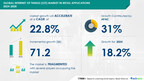
NEW YORK, Nov. 6, 2024 /PRNewswire/ — Report on how AI is redefining market landscape – The global Internet of things (IOT) market in retail applications size is estimated to grow by USD 71.2 billion from 2024-2028, according to Technavio. The market is estimated to grow at a CAGR of 22.8% during the forecast period. Burgeoning cloud-based radio frequency identification (RFID) systems is driving market growth, with a trend towards evolution of artificial intelligence (AI) and augmented reality (AR) in retail stores. However, data security concerns in internet of things (IOT) retail applications poses a challenge.Key market players include Allerin Tech Pvt. Ltd., Alphabet Inc., Amazon.com Inc., AT and T Inc., Ayla Networks Inc., Cisco Systems Inc., Fujitsu Ltd., General Electric Co., Hewlett Packard Enterprise Co., Hitachi Ltd., Huawei Technologies Co. Ltd., Impinj Inc., Intel Corp., International Business Machines Corp., Microsoft Corp., Nayasale Retail Pvt. Ltd., Nedap NV, NXP Semiconductors NV, Oracle Corp., Robert Bosch GmbH, SAP SE, and Siemens AG.
AI-Powered Market Evolution Insights. Our comprehensive market report ready with the latest trends, growth opportunities, and strategic analysis- View Free Sample Report PDF
Forecast period
2024-2028
Base Year
2023
Historic Data
2018 – 2022
Segment Covered
Technology (RFID, Sensors, NFC, Cloud services, and Others) and Geography (APAC, North America, Europe, Middle East and Africa, and South America)
Region Covered
APAC, North America, Europe, Middle East and Africa, and South America
Key companies profiled
Allerin Tech Pvt. Ltd., Alphabet Inc., Amazon.com Inc., AT and T Inc., Ayla Networks Inc., Cisco Systems Inc., Fujitsu Ltd., General Electric Co., Hewlett Packard Enterprise Co., Hitachi Ltd., Huawei Technologies Co. Ltd., Impinj Inc., Intel Corp., International Business Machines Corp., Microsoft Corp., Nayasale Retail Pvt. Ltd., Nedap NV, NXP Semiconductors NV, Oracle Corp., Robert Bosch GmbH, SAP SE, and Siemens AG
Key Market Trends Fueling Growth
Retailers utilize Artificial Intelligence (AI) to analyze customer buying patterns and target specific audiences, enabling customized product promotions. AI also powers conversational commerce through chatbots integrated with messaging apps, enhancing user engagement. IoT in retail applications introduces automated checkout systems using IoT devices, increasing customer satisfaction and footfall, particularly during time-constrained situations. For instance, Nayasale Retail Pvt. Ltd., an Indian startup, operates an AI-driven autonomous store in Kerala, featuring an automated checkout system, eliminating the need for cashiers or salespersons. Similar to Amazon Go, this store uses weight sensors to identify purchased items. These advancements are expected to fuel market growth during the forecast period.
In today’s retail landscape, IoT technology is revolutionizing the way businesses operate. With omnichannel retailing, interconnected devices enable personalized shopping experiences. Smart payment solutions like contactless payments, mobile wallets, and Point of Sale systems streamline transactions. Retailers gather real-time insights into customer behavior using machine learning and AI, enhancing customer experience optimization. Asset management is improved with Bluetooth low energy sensors and RFID tags. E-commerce benefits from digital avatars and experiences. IoT services offer real-time data, cloud deployment, and on-premise solutions. Security is a priority with cybersecurity and data protection. IoT hardware includes sensors, beacons, and autonomous cleaning robots. Supply chain optimization and inventory management are enhanced, while digital infrastructure supports advertising and marketing efforts. IoT solutions provide professional and managed services, ensuring retailers stay competitive in the digital age.
Insights on how AI is driving innovation, efficiency, and market growth- Request Sample!
Market Challenges
In the retail sector, the Internet of Things (IoT) market is expanding with the implementation of RFID tags, sensors, and NFC technology. However, data security is a significant concern as RFID readers communicate via both IP and radio frequency. Back-end communication security is crucial to prevent unauthorized network access, while front-end communication poses unique challenges. Threats include unauthorized tag access, rogue and clone tags, side-channel attacks, and traffic analysis. Spoofing is another issue where data can be overwritten on existing RFID tag data without detection. These vulnerabilities can hinder the growth of the retail IoT market, as manufacturers must address these challenges to ensure consumer trust and regulatory compliance.In the retail industry, IoT is revolutionizing operations and customer experiences. Retailers leverage IoT to gain real-time insights into inventory management through sensors and RFID technology. Digital avatars and experiences enhance customer engagement, while cloud deployment and edge computing enable data analytics. IoT services, professional services, and managed services support these initiatives. However, challenges persist. Digital rights management ensures secure cloud deployment and protects data. Cybersecurity and data protection are crucial for IoT hardware, particularly in areas like inventory optimization and supply chain management. Interoperability between IoT devices and systems is essential for omnichannel integration. Retailers face challenges with real-time data management, especially regarding customer management and advertising and marketing. Beacons and NFC enable contactless shopping and personalization, but retail theft is a concern. Autonomous cleaning robots and 5G networks streamline operations management. IoT applications in retail include smart shelves, supply chain optimization, and smart stores. These innovations require a digital infrastructure and effective cybersecurity measures. IoT solutions must balance the need for real-time data with data security and privacy concerns. Ultimately, IoT in retail applications offers significant benefits, but retailers must navigate these challenges to fully realize their potential.
Insights into how AI is reshaping industries and driving growth- Download a Sample Report
Segment Overview
This internet of things (iot) market in retail applications report extensively covers market segmentation by
Technology 1.1 RFID1.2 Sensors1.3 NFC1.4 Cloud services1.5 OthersGeography 2.1 APAC2.2 North America2.3 Europe2.4 Middle East and Africa2.5 South America
1.1 RFID- The RFID segment holds the largest market share in the global IoT market for retail applications in 2023. Retailers adopt RFID technology for inventory accuracy and margin growth by reducing product loss. RFID provides real-time inventory visibility, enabling automated replenishment and consumer demand satisfaction. The maturing RFID ecosystem and price reduction facilitate item-level merchandise tracking, optimizing inventory operations. Analytics software and hardware equipment, including RFID and sensors, are in high demand. Leading retailers like Walmart and Amazon utilize RFID-enabled cameras for video analytics, offering insights into product demand and customer requirements. Wearables are gaining popularity for enhancing the customer experience, leading to various applications and a hands-free shopping experience. These factors are expected to fuel the growth of the IoT market in retail applications during the forecast period.
Download complimentary Sample Report to gain insights into AI’s impact on market dynamics, emerging trends, and future opportunities- including forecast (2024-2028) and historic data (2018 – 2022)
Research Analysis
The Internet of Things (IoT) is revolutionizing the retail industry by enabling interconnected devices and real-time data exchange. IoT applications in retail include Near Field Communication for contactless shopping, operations management for inventory optimization and customer management, and omnichannel integration for seamless shopping experiences. Smart stores utilize data analytics and machine learning for customer behavior analysis and personalized shopping recommendations. IoT also enhances customer engagement through beacons and personalized advertising and marketing. Omnichannel retailing benefits from IoT with smart payment solutions like contactless payments and mobile wallets at Point of Sale. Retailers can optimize customer experience with smart shelves, autonomous cleaning robots, and real-time data. IoT also addresses retail theft prevention and enhances cloud technology for efficient data storage and processing. Overall, IoT in retail applications offers numerous benefits from improved operations to enhanced customer experience.
Market Research Overview
The Internet of Things (IoT) is revolutionizing the retail industry by enabling interconnected devices and data-driven operations. IoT applications in retail include Near Field Communication for contactless shopping, RFID technology for inventory optimization, and smart shelves with real-time data for stock management. IoT also facilitates omnichannel integration, allowing seamless shopping experiences across physical and digital channels. Data analytics and machine learning power customer engagement and personalized shopping recommendations. Contactless payments, mobile wallets, and smart payment solutions enhance the checkout process. IoT applications extend to asset management, supply chain optimization, and even autonomous cleaning robots. 5G networks and edge computing ensure fast, reliable data transfer and processing. Data security and cybersecurity are crucial considerations, with IoT services, professional services, and managed services available to help retailers navigate these challenges. IoT in retail also includes experiences, such as digital avatars and real-time insights, as well as cloud deployment and on-premise deployment options. The retail landscape is becoming increasingly interconnected, with beacons, Bluetooth low energy, and smart stores transforming the shopping experience. IoT applications in retail go beyond traditional inventory management, offering real-time insights into consumer behavior and retail theft prevention. The future of retail is here, with IoT driving innovation and optimization across all aspects of the industry.
Table of Contents:
1 Executive Summary
2 Market Landscape
3 Market Sizing
4 Historic Market Size
5 Five Forces Analysis
6 Market Segmentation
TechnologyRFIDSensorsNFCCloud ServicesOthersGeographyAPACNorth AmericaEuropeMiddle East And AfricaSouth America
7 Customer Landscape
8 Geographic Landscape
9 Drivers, Challenges, and Trends
10 Company Landscape
11 Company Analysis
12 Appendix
About Technavio
Technavio is a leading global technology research and advisory company. Their research and analysis focuses on emerging market trends and provides actionable insights to help businesses identify market opportunities and develop effective strategies to optimize their market positions.
With over 500 specialized analysts, Technavio’s report library consists of more than 17,000 reports and counting, covering 800 technologies, spanning across 50 countries. Their client base consists of enterprises of all sizes, including more than 100 Fortune 500 companies. This growing client base relies on Technavio’s comprehensive coverage, extensive research, and actionable market insights to identify opportunities in existing and potential markets and assess their competitive positions within changing market scenarios.
Contacts
Technavio Research
Jesse Maida
Media & Marketing Executive
US: +1 844 364 1100
UK: +44 203 893 3200
Email: media@technavio.com
Website: www.technavio.com/
View original content to download multimedia:https://www.prnewswire.com/news-releases/iot-market-in-retail-applications-to-grow-by-usd-71-2-billion-from-2024-2028–driven-by-cloud-based-rfid-systems-and-ais-impact-on-market-trends—technavio-302296573.html
SOURCE Technavio










 Technology4 days ago
 Coin Market4 days ago
 Coin Market4 days ago
 Coin Market5 days ago
 Coin Market4 days ago
 Technology4 days ago
 Coin Market5 days ago
 Technology5 days ago