Connect with us

Technology

Airway-On-A-Chip Could Speed Up Future Drug and Therapy Development

Published

on

New paper demonstrates the most advanced example of organ-on-chip technology, designed to accelerate the development of medical countermeasures, including drugs and therapies.

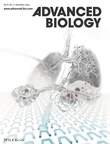
CAMBRIDGE, Mass., Nov. 15, 2024 /PRNewswire-PRWeb/ — Developing a new drug is incredibly complex, but a new breakthrough could help scientists accelerate the process. Researchers at Draper have created a more accurate model of the human airway in a microfluidic device, providing a better platform to study how airway tissue cells respond to pathogens and drug therapies.

“This is the first report of comprehensive and accurate screening of therapeutic candidates for COVID-19 in an organ-on-chip,” said Christine Fisher, Group Leader of Microbiology and Immunology at Draper.

Most pharmaceutical screening methods depend on petri dishes in a lab or in animal models, but these environments aren’t always the best analog of how things work in live humans. As such, many drugs and treatments that seem promising in animals often fail when they reach human trials.

In recent years, scientists have developed a way to model organs and other body tissues on microfluidic chips, which provide a much closer comparison. These miniature human tissues

have so far included the liver, kidney, vasculature, tumor, colon and lung, and now Draper researchers have added new findings for the human airway with powerful implications for future application to high priority pathogen research.

The researchers cultured human primary bronchial epithelial cells under air-liquid interface (ALI) conditions inside a microphysiological system, or MPS, which is designed to mimic human physiology by precisely controlling an environment for cells. Originally, the team was investigating what happens to those cells when they were infected with SARS-CoV-2, but when the researchers fed a flow of therapies in, they discovered something unexpected.

The treated airway tissues showed that two seemingly promising therapies had failed to rein in the viral infection. Those therapies had worked well enough in preclinical studies to send them to human clinical trials, but they eventually failed when tested in humans. In other words, Draper’s airway tissue model accurately predicted the lack of efficacy of two therapies that other pre-clinical methods had failed to reveal.

On further examination, the team detected the airway infection did respond to three antiviral drugs that had succeeded in clinical trials and were now FDA-approved. In all five total cases, the antivirals performed as expected in comparison to clinical outcomes. Importantly, these outcomes were more accurate than those obtained from in vitro tissue models using MPS platforms other than Draper’s PREDICT96-ALI.

“This is the first report of comprehensive and accurate screening of therapeutic candidates for COVID-19 in an organ-on-chip,” said Christine Fisher, Group Leader of Microbiology and Immunology at Draper. “PREDICT96-ALI can increase clinical success, and that represents a new and major milestone in the effort to use human primary cell-based preclinical models to expedite countermeasure development for emerging infectious disease threats and, more broadly, in the drug development pipeline.”

MPS are promising for evaluating drugs before they go to clinical trials, according to Ashley Gard, Group Leader of Cellular and Tissue Engineering and Principal Biomedical Engineer at Draper. But a major limiting factor is the lack of preclinical models capable of providing data predictive of human clinical responses, she added. Writing in Advanced Biology, the researchers say, “There still exists a tremendous unmet need for predictive MPS airway models to fill a critical gap in preclinical therapeutic screening for COVID-19 and other emerging respiratory infections.”

Special care was taken to keep the airway tissue models thriving in the microenvironment of PREDICT96-ALI. The tissues “lived” in a culture media, bathed in a dynamic fluid flow and given nutrients and oxygen. They were tested in a biosafety level 3 (BSL-3) high-containment laboratory, which allowed researchers to evaluate the full viral life cycle of SARS-CoV-2, a critical step in assessing compounds. The paper builds on research published in the journal Cells in 2023.

The research paper concludes: “PREDICT96-ALI is a model of the human broncho-tracheal lung tissue capable of assessing the efficacy of SARS-CoV-2 therapeutics with sufficient throughput to test multiple compounds at multiple concentrations in a single plate.” As such, it can be a vital tool for drug discovery.

PREDICT96-ALI is part of an integrated portfolio of technologies and resources at Draper intended to support the drug discovery and national security mission. Some of these capabilities include biothreat detection technologies developed for IARPA’s Finding Engineering-Linked Indicators (FELIX), DARPA’s Detect It with Gene Editing Technologies (DIGET) and BARDA’s Project NextGen: Next Generation Medical Countermeasures.

Authors include Landys Lopez Quezada, Felix Mba Medie, Rebeccah J. Luu, Robert B. Gaibler, Elizabeth P. Gabriel, Logan D. Rubio, Thomas J. Mulhern, Elizabeth E. Marr, Jeffrey T. Borenstein, Christine R. Fisher and Ashley L. Gard.

Draper

As a nonprofit engineering innovation company, Draper serves the nation’s interests and security needs; advances technologies at the intersection of government, academia and industry; cultivates the next generation of innovators; and solves the most complex challenges. Multidisciplinary teams drawn from a broad and deep talent pool of 1,600 engineers and scientists collaborate to develop first-of-a-kind solutions. Draper’s unbiased approach enables the company to focus on their customers’ needs and to deliver new capabilities to them. Learn more at draper.com.

Media Contact

Scott Deitz, Draper, 1 336-908-7759, scott@sevenletter.com, https://www.draper.com/

View original content to download multimedia:https://www.prweb.com/releases/airway-on-a-chip-could-speed-up-future-drug-and-therapy-development-302306718.html

SOURCE Draper

Continue Reading
Click to comment

Leave a Reply

Your email address will not be published. Required fields are marked *

Technology

From China Mobile’s Call Upgrade to the Commercial Launch of “Calling + AI” by Leading Operators: AI Is Reshaping the Value of Native Calling

Published

on

By

BEIJING, July 25, 2026 /PRNewswire/ — On June 15, 2026, China Mobile announced a comprehensive upgrade to its traditional calling services, ushering in a next-generation calling experience defined by HD, intelligence, and security. This milestone not only marks a major leap in telecommunication innovation but also reflects a global, inevitable shift: the transformation of basic communication into intelligent, inclusive services.

Breaking Experience Barriers and Redefining the Paradigm of Basic Calling

Overcoming the limitations of traditional, voice-only interactions, China Mobile has leveraged its mature VoLTE/VoNR network foundation to deeply integrate AI models with HD audio and video capabilities. Without requiring users to change their phones or SIM cards, seven core AI functions are now seamlessly embedded into the native dialer interface.

These upgrades include Live Captions bridge communication gaps for the elderly and hearing-impaired; HD video calls and AI noise reduction create a crystal-clear, immersive calling experience; AI anti-fraud intercepts high-risk calls in real time to safeguard users’ assets. Furthermore, the introduction of Data Channel (DC) technology and visual call menus transforms standard calls into agile, interactive service windows, enabling multi-party collaboration and seamless business transactions directly within the call. Through this initiative, China Mobile has successfully evolved traditional calls from a mere voice pipeline into a secure, integrated information hub.

“Calling + AI” Becomes a Strategic Consensus Among Global Leading Operators

From a global perspective, China Mobile’s call upgrade is not an isolated milestone, but a microcosm of the global telecommunications industry’s broader transformation. Throughout 2026, major operators worldwide are accelerating the commercial deployment of “Calling + AI” solutions:

Deutsche Telekom launched Magenta AI, leveraging artificial intelligence to enhance calling across all scenarios;T-Mobile US introduced a network-side, real-time translation service covering over 80 languages, effectively breaking down cross-border communication barriers;Saudi stc rolled out English-Arabic bilingual simultaneous interpretation, which has now entered large-scale commercial trials;South Korea’s LG U+ launched its ixi-O intelligent calling assistant, shifting the user experience from passive responses to proactive smart interactions and earning three prestigious GLOMO industry awards.

The synchronized efforts of these global leaders confirm that basic calling services have officially entered a new era of AI integration. Deeply empowered by artificial intelligence, “Calling + AI” has become the definitive blueprint for the intelligent transformation of the global telecommunications industry. As operators continue to refine these native capabilities, the traditional voice network is poised to reclaim its position as the most secure, ubiquitous, and valuable entry point in the AI era.

View original content to download multimedia:https://www.prnewswire.com/apac/news-releases/from-china-mobiles-call-upgrade-to-the-commercial-launch-of-calling–ai-by-leading-operators-ai-is-reshaping-the-value-of-native-calling-302834622.html

SOURCE China Mobile

Continue Reading

Technology

Trip.com Group Sincerely Accepts Administrative Penalty Decision Issued by the State Administration for Market Regulation of the People’s Republic of China

Published

on

By

SINGAPORE, July 25, 2026 /PRNewswire/ — Trip.com Group Limited (Nasdaq: TCOM; HKEX: 9961) today announced that it has received the administrative penalty decision issued by the State Administration for Market Regulation of the People’s Republic of China.

Trip.com Group sincerely accepts the decision and will adopt rectification measures in accordance with applicable laws and regulations to implement the decision’s requirements. The Company will strengthen its long-term governance mechanisms and strive to contribute to the sustainable development of the travel industry.

Trip.com Group’s management team will host a conference call at 8:00 AM U.S. Eastern Time on July 27, 2026 (or 8:00 PM Hong Kong Time on July 27, 2026).

The conference call will be available on Webcast live at: http://investors.trip.com.

All participants must pre-register to join this conference call using the participant registration link below:
https://register-conf.media-server.com/register/BIb78e08d8f18340c4882a7e4ab961906b.

Upon registration, each participant will receive details for this conference call, including dial-in numbers and a unique access PIN. To join the conference, please dial the number provided, enter your PIN, and you will join the conference instantly.

For further information, please contact:
Investor Relations
Trip.com Group Limited
Email: iremail@trip.com

View original content:https://www.prnewswire.com/news-releases/tripcom-group-sincerely-accepts-administrative-penalty-decision-issued-by-the-state-administration-for-market-regulation-of-the-peoples-republic-of-china-302834599.html

SOURCE Trip.com Group Limited

Continue Reading

Technology

NAVER Partners with Brookfield and NVIDIA to Expand Korea’s National AI Factory Infrastructure Buildout


Published

on

By

SAN FRANCISCO, July 25, 2026 /PRNewswire/ — NAVER, Brookfield and NVIDIA announced an expansion of Korea’s sovereign AI factory infrastructure. New investments will increase the initial NVIDIA DSX™ AI factory deployment from 55 megawatts to 200 megawatts.

Announced during Korea President Jae Myung Lee’s AI Summit visit to San Francisco, the planned 200-megawatt expansion will be built with the NVIDIA DSX platform at NAVER’s GAK Sejong hyperscale data center in Sejong, South Korea. The expanded infrastructure will provide Korea- and U.S.- based AI innovators with access to production-scale AI compute for building next-generation models, agents and AI-powered services.

Under the terms of the agreements, Brookfield will fund up to $9 billion as the exclusive capital partner, NVIDIA will invest $1 billion and NAVER will fund the remaining amount to finance the $10 billion project.

This builds on NAVER’s June announcement to extend its GAK Sejong data center with NVIDIA DSX, with a long-term path to gigawatt-scale sovereign AI infrastructure serving Korea’s enterprises, industries, government organizations and global AI cloud customers. Combining Brookfield’s capital with NVIDIA’s computing platform, the investment supports NAVER’s AI factory deployment.

“NVIDIA’s strategic investment and our infrastructure supply agreement with Brookfield have propelled NAVER’s vision for the AI Factory business into a robust execution phase,” said Haejin Lee, Founder and Chairman of NAVER. “Leveraging the solid partnerships with our global partners, we will drive technological innovation, foster a sovereign AI ecosystem, and spearhead efforts to strengthen South Korea’s AI competitiveness.” 

AI Factory Expansion and Open Model Collaboration to Fuel AI Innovators

NAVER, as an NVIDIA Cloud Partner, provides deep expertise in operating hyperscale infrastructure powered by the full-stack NVIDIA AI platform. The 200-megawatt AI factory, featuring NVIDIA Vera Rubin and Blackwell platforms, will establish a dedicated resource pool for emerging AI companies, providing the compute, software and support needed to develop and deploy competitive AI models and applications at scale.

This expanded infrastructure also builds on NAVER and NVIDIA’s collaboration on open model development for agentic and physical AI. NAVER is advancing its HyperCLOVA X models to be based on NVIDIA Nemotron™ 3 Ultra open models with its proprietary data and training expertise. NAVER is also the first Korean company to join the NVIDIA Nemotron Coalition, contributing to open model development across pretraining, post-training and reinforcement learning.

NAVER plans to launch an AI agent platform in Korea in the second half of the year, powered by NVIDIA Agent Toolkit software including NVIDIA NemoClaw™ blueprints. NAVER is also developing a Seoul World Model using proprietary urban street-view and spatial modeling data, built on NVIDIA Cosmos™ world foundation models.

About NAVER

Founded in 1999, NAVER is Korea’s largest Internet company and one of the world’s top tech companies. Leading cutting-edge technologies, NAVER operates the No.1 search engine in Korea and holds various business portfolios encompassing commerce, fintech, cloud, AI and robotics.

NAVER recorded sales of KRW 12.04 trillion (USD 8.18 billion) in 2025. TEAM NAVER continues to enhance its business portfolio and expand its global presence across Japan, North America, and Europe, while pursuing innovation through continuous research and development in future technologies.

View original content:https://www.prnewswire.com/news-releases/naver-partners-with-brookfield-and-nvidia-to-expand-koreas-national-ai-factory-infrastructure-buildout-302834577.html

SOURCE NAVER

Continue Reading

Trending