Connect with us

Technology

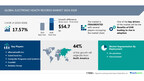
The Electronic Health Records Market is set to grow by USD 54.7 billion from 2024-2028, with the benefits of EHR driving adoption and boosting revenue. Report on how AI is reshaping the market landscape – Technavio

Published

on

NEW YORK, Nov. 15, 2024 /PRNewswire/ — Report on how AI is driving market transformation – The global electronic health records market  size is estimated to grow by USD 54.7 billion from 2024-2028, according to Technavio. The market is estimated to grow at a CAGR of over 17.57%  during the forecast period. Benefits of ehr leading to rise in adoption is driving market growth, with a trend towards rising demand for self-medication and homecare medical devices. However, rising data security and privacy concerns  poses a challenge.Key market players include athenahealth Inc., CareCloud Inc., Computer Programs and Systems Inc., CureMD, Dedalus Group, Dell Technologies Inc., eClinicalWorks LLC, Epic Systems Corp., EverCommerce Inc., General Electric Co., Global Payments Inc., Greenway Health LLC, KareXpert Technologies Pvt. Ltd., McKesson Corp., MEDHOST, Medical Information Technology Inc., Oracle Corp., Siemens AG, Tebra Technologies Inc., and Veradigm LLC.

AI-Powered Market Evolution Insights. Our comprehensive market report ready with the latest trends, growth opportunities, and strategic analysis- View Free Sample Report PDF

Forecast period

2024-2028

Base Year

2023

Historic Data

2018 – 2022

Segment Covered

Deployment (On-premises and Cloud-based), Component (Services, Software, and Hardware), and Geography (North America, Europe, Asia, and Rest of World (ROW))

Region Covered

North America, Europe, Asia, and Rest of World (ROW)

Key companies profiled

athenahealth Inc., CareCloud Inc., Computer Programs and Systems Inc., CureMD, Dedalus Group, Dell Technologies Inc., eClinicalWorks LLC, Epic Systems Corp., EverCommerce Inc., General Electric Co., Global Payments Inc., Greenway Health LLC, KareXpert Technologies Pvt. Ltd., McKesson Corp., MEDHOST, Medical Information Technology Inc., Oracle Corp., Siemens AG, Tebra Technologies Inc., and Veradigm LLC

Key Market Trends Fueling Growth

The Electronic Health Records (EHR) market is experiencing significant growth as healthcare providers shift from paper records to digital solutions. Hospitals and healthcare units are major adopters, with the professional services segment driving demand. Chronic diseases require extensive patient records, making digitalization essential. The acute and post-acute segments, including rehabilitation centers, benefit from EHRs’ efficiency. Doctors and pharmacies also use EHRs for patient health history, medicines, allergies, and immunization status. Web-based EHRs offer convenience, while Client server-based EHRs ensure data security. Advanced healthcare facilities utilize EHRs for clinical documentation, lab systems, radiology systems, and clinical applications. Healthcare financing, administrative applications, and healthcare financing are also managed through EHRs. EHR service providers leverage software technology, artificial intelligence, and cloud storage technology to offer advanced solutions. Geriatric population and diseases require specialized EHRs. Inpatient EHRs, ambulatory care, ambulatory surgical centers, and clinical trials also use EHRs for data storage and administrative data. Devices and drugs are integrated into EHR systems for seamless patient care. 

The UN projects that over half of the global population will be aged 65 and above by 2039, leading to significant growth in the healthcare sector, particularly in developed countries. In response, the industry is transitioning from diagnosis and treatment to prevention. This trend is also emerging in Asia and the Middle East, where population growth is most pronounced. The demand for remote healthcare, wireless treatments, and minimally invasive procedures is escalating. Healthcare providers are investing in home care, remote monitoring, telehealth, and self-monitoring solutions to cater to this preventive care focus. 

Insights on how AI is driving innovation, efficiency, and market growth- Request Sample!

Market Challenges

The Electronic Health Records (EHR) market is witnessing significant growth due to the digitalization of healthcare. However, challenges persist in various segments. In the professional services segment, integrating EHR systems across hospitals, healthcare units, rehabilitation centers, and clinics requires expertise. Chronic diseases demand efficient management of patient health history, medicines, allergies, and immunization status. Hospitals face challenges with paperwork, digitalization, and big data management in acute and post-acute segments. Doctors and physicians in ambulatory services need user-friendly Web-based EHR solutions for easy access to patient records. Pharmacies, laboratories, and clinics require seamless integration with EHR systems for efficient clinical documentation and administrative applications. EHR service providers must address the unique needs of advanced healthcare facilities, specialty centers, and geriatric population. Software technology, artificial intelligence, and cloud storage technology play crucial roles in addressing these challenges. Healthcare financing, drug development, and device integration are also essential considerations. Inpatient EHR, clinical trials, and administrative data management are key areas of focus.The electronic health records (EHR) market is experiencing significant growth due to the digitalization of healthcare workflows. However, this trend comes with concerns over privacy and data protection. With the integration of devices generating data into healthcare systems and the availability of data from hospitals and insurance companies in a centralized place, healthcare organizations and patient information are at risk of cyberattacks. This issue restricts the healthcare industry from fully adopting advanced technologies, despite the potential benefits of improved healthcare quality, insights, and cost reduction. It is crucial for industry players to prioritize security measures to mitigate these risks and ensure patient data confidentiality.

Insights into how AI is reshaping industries and driving growth- Download a Sample Report

Segment Overview 

This electronic health records market report extensively covers market segmentation by

Deployment 1.1 On-premises1.2 Cloud-basedComponent 2.1 Services2.2 Software2.3 HardwareGeography 3.1 North America3.2 Europe3.3 Asia3.4 Rest of World (ROW)

1.1 On-premises-  On-premises Electronic Health Records (EHR) are self-hosted systems where the software and hardware are installed and managed on the native IT infrastructure of businesses and enterprises. These systems offer physical control and improved data security as the data is managed in-house, and there is no reliance on the Internet for access. However, the adoption of on-premises EHR by small and medium-sized enterprises (SMEs) is hindered due to the higher costs associated with the additional requirements for servers, hardware, and floor space. Large enterprises with sufficient funds and existing infrastructure continue to prefer on-premises EHR due to the enhanced data security and control. The growing concerns around data privacy and security are driving the demand for on-premises EHR solutions, contributing to the market’s growth during the forecast period.

Download complimentary Sample Report to gain insights into AI’s impact on market dynamics, emerging trends, and future opportunities- including forecast (2024-2028) and historic data (2018 – 2022) 

Research Analysis

The Electronic Health Records (EHR) market is witnessing significant growth due to the digitalization of healthcare and the increasing adoption of advanced technologies in the healthcare industry. The market caters to various segments including hospitals, healthcare units, and advanced healthcare facilities in both the acute and post-acute segments. Chronic diseases management is a major application area for EHRs, helping healthcare providers manage patient health history, medicines, allergies, and clinical documentation more effectively. EHR systems come in different formats such as Web-based and client server-based, with Ambulatory EHR and Acute EHR being the most common types. These systems integrate with various healthcare systems including lab systems, radiology systems, and pharmacy systems, streamlining workflows and reducing paperwork. The post-acute segment, including rehabilitation centers, is also adopting EHRs to manage patient care more efficiently. Big data analytics is a key trend in the EHR market, enabling healthcare providers to gain insights from patient data and improve patient outcomes. Overall, the EHR market is transforming healthcare delivery by making patient records more accessible and manageable.

Market Research Overview

The Electronic Health Records (EHR) market is a rapidly growing segment in the healthcare industry, driven by the digitalization of paperwork and the need for efficient and accurate patient care. EHR systems are used by hospitals, healthcare units, rehabilitation centers, and other advanced healthcare facilities to manage patient’s healthcare records. These records include health history, medicines, allergies, immunization status, lab test results, hospital discharge instructions, billing information, and more. EHR systems are available in various formats such as Web-based EHR, Client server-based EHR, Acute EHR, Ambulatory EHR, and Post-acute EHR. They cater to different segments like hospitals, ambulatory services, pharmacies, laboratories, clinics, and specialty centers. The market is segmented into professional services, acute segment, post-acute segment, and the chronic diseases segment. The professional services segment includes services related to the implementation, customization, and maintenance of EHR systems. The acute segment caters to the needs of hospitals and inpatient care, while the post-acute segment serves the needs of long-term care facilities and rehabilitation centers. EHR systems use advanced software technology, artificial intelligence, and cloud storage technology to provide clinical applications, administrative applications, healthcare financing, and clinical documentation. They also offer integration with lab systems, radiology systems, pharmacy systems, and clinical trial data. The geriatric population and patients with chronic diseases benefit significantly from EHR systems as they require continuous care and monitoring. EHR service providers offer on-premise software and cloud-based software to cater to the varying needs of healthcare providers. The market also includes drug, devices, and administrative data.

Table of Contents:

1 Executive Summary
2 Market Landscape
3 Market Sizing
4 Historic Market Size
5 Five Forces Analysis
6 Market Segmentation

DeploymentOn-premisesCloud-basedComponentServicesSoftwareHardwareGeographyNorth AmericaEuropeAsiaRest Of World (ROW)

7 Customer Landscape
8 Geographic Landscape
9 Drivers, Challenges, and Trends
10 Company Landscape
11 Company Analysis
12 Appendix

About Technavio

Technavio is a leading global technology research and advisory company. Their research and analysis focuses on emerging market trends and provides actionable insights to help businesses identify market opportunities and develop effective strategies to optimize their market positions.

With over 500 specialized analysts, Technavio’s report library consists of more than 17,000 reports and counting, covering 800 technologies, spanning across 50 countries. Their client base consists of enterprises of all sizes, including more than 100 Fortune 500 companies. This growing client base relies on Technavio’s comprehensive coverage, extensive research, and actionable market insights to identify opportunities in existing and potential markets and assess their competitive positions within changing market scenarios.

Contacts

Technavio Research
Jesse Maida
Media & Marketing Executive
US: +1 844 364 1100
UK: +44 203 893 3200
Email: media@technavio.com
Website: www.technavio.com/

View original content to download multimedia:https://www.prnewswire.com/news-releases/the-electronic-health-records-market-is-set-to-grow-by-usd-54-7-billion-from-2024-2028–with-the-benefits-of-ehr-driving-adoption-and-boosting-revenue-report-on-how-ai-is-reshaping-the-market-landscape—technavio-302306616.html

SOURCE Technavio

Continue Reading
Click to comment

Leave a Reply

Your email address will not be published. Required fields are marked *

Technology

New ProEssentials v11: Native WinUI Charting Library, 100M Points in 15ms, Following Microsoft’s Vision for True Native Swap-Chain Rendering

Published

on

By

30 years of evolution in native C++ rendering that bypasses the managed XAML layer entirely and renders straight on the GPU via Direct3D compute shaders, in native x64 and ARM64, ready for Microsoft’s Windows on Arm and Copilot+ PCs. A fresh pass of 100M new data points renders to screen in ~65ms. The same engine powers WinUI, WPF, WinForms, MFC, and C++ from one codebase, with .NET 10 — built for real-time scientific, engineering, and financial data.

DALLAS, July 26, 2026 /PRNewswire/ — Gigasoft has released ProEssentials v11, bringing its 30-year native C++ charting engine to WinUI. Every other WinUI chart today renders through managed XAML — ProEssentials renders directly to a Direct3D composition swap chain, the native path Microsoft built WinUI around. The result: 100 million data points re-rendered in roughly 15ms, a fully fresh 100M-point frame on screen in about 65ms.

v11 also ships a native ARM64 engine, ProEssentials runs native on Microsoft’s Windows on Arm and Copilot+ PCs. .NET 10 arrives across the WinUI, WPF, and WinForms interfaces, with Direct3D compute shaders doing the heavy lifting on every architecture. A side-by-side native WinUI chart performance comparison against the major vendors is published on gigasoft.com.

The engine underneath is the same native C++ core Gigasoft has refined since 1993 — deliberately kept native behind a thin .NET wrapper, never rewritten in managed code. One engine drives WinUI, WPF, WinForms, MFC, and C++, so a chart moves between frameworks by changing the control type, not the charting code. Don’t take the numbers on faith — clone the open-source 100M-point WinUI demo and benchmark it on your own hardware.

“ProEssentials is the undisputed heavyweight of Windows desktop charting. Version 11 brings its three-decade native C++ engine to WinUI 3, native ARM64, and .NET 10. We’re proud to ship the world’s first charting component to faithfully deliver on Microsoft’s goal for WinUI as the modern, native, performant interface — presenting directly through a composition swap chain instead of a managed XAML layer,” said Robert Dede, founder of Gigasoft.

ProEssentials is not only for shipping products. It is the tool engineers reach for on their own side projects — R&D experiments, rapid prototypes, proof-of-concept demos, test-and-measurement utilities, internal data analysis, and the one-off tools engineering firms are always building. Any company serious about engineering will find countless uses for it, and with v11’s AI charting code assistance many of those ideas become working applications in a few hours. Licensing is perpetual and royalty-free, generous for multi-developer teams — worth putting in front of your CTO, CIO, and Chief AI Officer. A no-hassle evaluation download is available at gigasoft.com.

Contact:
Robert Dede, BSEE, Founder
Gigasoft, Inc.
***@gigasoft.com

Photo(s):
https://www.prlog.org/13152577

Press release distributed by PRLog

View original content:https://www.prnewswire.com/news-releases/new-proessentials-v11-native-winui-charting-library-100m-points-in-15ms-following-microsofts-vision-for-true-native-swap-chain-rendering-302834721.html

SOURCE Gigasoft, Inc.

Continue Reading

Technology

Global Times: Here Come China’s ‘next new three’: AI, robotics and innovative drugs spearhead a new round of industrial upgrading

Published

on

By

BEIJING, July 26, 2026 /PRNewswire/ — From four-legged inspection robots operating in European nuclear power plants to automatic coffee-making robotic arms serving travelers at airports and transit hubs around the globe and smart AI systems supporting local Chinese teaching in Thai schools, these varied overseas applications offer a vivid snapshot of how China’s “next new three” industries are expanding globally.

Labeled the “next new three,” AI, robotics and innovative drugs represent China’s new core strategic industries and fresh economic growth engines. Their rise marks a major upgrade in China’s industrial and export model. More importantly, this industrial shift is delivering open, inclusive and innovative solutions to support global industrial upgrading and shared development, experts said.

From ‘old three’ to ‘next new three’ 

For decades, China established its global manufacturing foothold by leveraging its labor-cost advantages, with apparel, furniture and home appliances becoming the iconic “old three” of Chinese exports.

In recent years, the export portfolio has undergone a remarkable green and tech transformation. Electric vehicles (EVs), lithium batteries and photovoltaic products, known as the “new three,” have become the backbone of China’s export growth.

Recent industry data demonstrates the strong growth potential of the “next new three” tech sectors: AI, robotics and innovative drugs.

Statistics from global AI platform OpenRouter show that domestic large models registered 36.11 trillion token calls in the week of July 13 to 19, a month-on-month increase of 30.93 percent, with growth sustained for eight straight weeks, according to the People’s Daily.

In the first half of the year, the country’s robotics exports reached 6.29 billion yuan ($929 million), covering 141 countries and regions with the exports of high-end surgical robots recording a striking 3.3-fold year-on-year increase. 

Meanwhile, China’s innovative pharmaceutical sector has gained strong global influence, with outbound technology licensing transactions hitting $110 billion in the first six months of the year. Chinese pharmaceutical companies accounted for eight of the world’s top 10 pharmaceutical licensing deals.

Wang Peng, a research fellow at the Beijing Academy of Social Sciences, told the Global Times on Sunday that the rise of the “next new three” represents China’s industrial shift from exporting manufacturing capacity to exporting high-end innovation.

Competition now centers on original research, core underlying technologies and related services rather than production volume and costs, Wang said.

He noted that these industries help Chinese businesses move up the value chain from assembly processing to research and development, technical services and standard-setting, strengthening China’s position in global industrial chains. 

Mirroring this trend, from January to May this year, China’s total services trade volume rose 6 percent year-on-year, while the services trade deficit narrowed by around 20 percent. Exports of knowledge-intensive services surged 12.2 percent, highlighting the continuous improvement of China’s services export competitiveness and the optimized structure of foreign trade, according to the People’s Daily.

While the “new three” underpin China’s foreign trade fundamentals, the “next new three” seize the commanding heights of future industries. Jointly, they shore up China’s long-term economic competitiveness and inject sustained impetus into high-quality growth, Wang said.

Inclusive technological progress

China’s high-quality exports of products and services have contributed to more inclusive technological progress to the global market, reflecting Chinese enterprises’ core strengths in independent technological research, business model innovation and the ability to integrate global resources, as well as China’s commitment to driving global development and benefiting humanity through technological openness.

Chinese startup DEEP Robotics told the Global Times that its quadruped robot intelligent inspection solution has been officially deployed at Switzerland’s Leibstadt Nuclear Power Plant, the largest and highest-output nuclear facility in the European country, providing a Chinese solution for the digital and intelligent upgrading of nuclear power operations and maintenance across Europe.

The quadruped robot can replace human workers to access high-risk areas, perform precise operations and conduct high-frequency regular autonomous inspections 24/7, fundamentally cutting safety risks for on-site maintenance staff. It can also move flexibly through narrow corridors and gaps between dense equipment, covering all key inspection points and significantly reducing monitoring blind spots that traditional inspection devices cannot reach, the firm said.

Chinese robotic firm DoBot told the Global Times that in the commercial services sector, coffee robots equipped with its Nova series collaborative robotic arms have been operating stably in more than 20 types of venues including airports, high-speed railway stations and shopping malls globally, with a track record of producing hundreds of thousands of cups without reported malfunctions.

Overseas landmark applications include unattended Coca-Cola beverage stations along the Mediterranean coast, mobile coffee kiosks in the United Arab Emirates that serve a drink within 45 seconds, and self-operated food trucks deployed in shopping malls in Singapore, the company said.

Chinese AI company iFLYTEK said that its AI-powered intelligent teaching system has helped expand Chinese language learning worldwide and supported the digital development of Chinese education in overseas markets. 

Since a Thai middle school adopted iFLYTEK’s AI-powered intelligent Chinese teaching system in 2025, the technology has acted as a supplementary teaching solution amid growing local demand for Chinese learning and a shortage of qualified language instructors. It has greatly expanded students’ practice opportunities: On average, learners now speak Chinese 12 times per session, compared with only twice in regular classes, Xie Fei, director of iFLYTEK’s Global Chinese Learning Platform, said on Sunday.

From industrial robots to boost production efficiency for local factories to AI algorithms that improve local smart ecosystems, China’s “next new three” allow countries at all development levels to access benefits from advanced technologies and narrow the global digital divide, Wang said.

By building a sound global industrial network and rolling out customized technology solutions tailored to local conditions, these technological exports help recipient countries nurture their own industrial capacities and climb up the value chain to move higher up the industrial value chain. In the long run, such efforts will drive the global industrial system toward greater diversification and more balanced development, Wang noted.

View original content:https://www.prnewswire.com/news-releases/global-times-here-come-chinas-next-new-three-ai-robotics-and-innovative-drugs-spearhead-a-new-round-of-industrial-upgrading-302834749.html

SOURCE Global Times

Continue Reading

Technology

KuCoin Marks Ninth Anniversary at Tomorrowland Belgium, Honoring Nine Years of Industry Progress Beyond the Signal

Published

on

By

PROVIDENCIALES, Turks and Caicos Islands, July 26, 2026 /PRNewswire/ — On the day of its ninth anniversary, KuCoin welcomed global partners, institutional clients, ecosystem builders and media representatives to the “On Cloud 9 Skybox Experience,” an exclusive celebration at the Tomorrowland Belgium Skybox. Overlooking Tomorrowland’s iconic Mainstage, guests gathered throughout an unforgettable evening as world-renowned artists including Nicky Romero, Alok, Steve Angello and Hardwell delivered performances that brought together people from around the world. Against this backdrop of music, culture and global connection, KuCoin celebrated not only its own nine-year journey, but also the remarkable progress the digital asset industry has achieved together.

The experience formed part of KuCoin’s broader ninth-anniversary campaign, “Beyond the Signal,” reflecting the company’s belief that the industry’s future will be shaped not by short-term market movements alone, but by the trust, innovation and infrastructure that enable lasting progress. Bringing this vision to life in an elevated festival setting, the evening offered guests an opportunity to reflect on nine years of shared growth, collaboration and resilience, while looking ahead together to the next chapter of digital assets.

Against the backdrop of Tomorrowland’s iconic Mainstage, the exclusive Skybox experience with signature champagne rituals brought KuCoin and its guests together to reflect on and celebrate the milestones that have shaped its nine-year journey. From expanding access to digital assets and navigating multiple market cycles to strengthening security and compliance, supporting institutional participation, and advancing innovation across payments, AI and Web3, these milestones also reflected the broader evolution of the digital asset industry toward greater maturity.

The moment celebrated not only how far KuCoin has come, but also the progress the industry has made together. Over the past nine years, markets have risen and fallen, and technologies have continued to evolve. Yet lasting progress has always been driven by the builders, developers, partners and communities working together to create enduring value. That is the idea behind Beyond the Signal.

“Ninth anniversaries are often measured in years. We prefer to measure ours in trust,” said BC Wong, CEO of KuCoin. “The greatest achievement of the past nine years has not been our growth alone, but the confidence our users, partners and community have continued to place in us. Trust is the infrastructure that enables innovation, adoption and long-term progress. As we enter our next decade, we remain committed to building secure, compliant and trusted digital asset infrastructure together with our partners worldwide.”

The celebration also highlighted KuCoin’s expanding partnership with Tomorrowland as the festival’s Exclusive Crypto Exchange and Payments Partner for Tomorrowland Winter and Tomorrowland Belgium 2026–2028. Bringing together one of the world’s most influential cultural events with trusted digital infrastructure, the partnership reflects a shared vision of connecting people across borders and creating meaningful real-world experiences through technology, payments and community. For KuCoin, Tomorrowland is more than a global music festival—it represents the openness, diversity and global community that have always been at the heart of crypto.

Nine years ago, KuCoin set out to make digital assets accessible to more people around the world. Today, its mission has evolved beyond access to helping build the trusted infrastructure that will support the future of digital finance. Beyond music, beyond the celebration and beyond the signal, KuCoin’s ninth anniversary was not only a milestone for the company, but a celebration of how far the industry has come together—and a commitment to building what comes next.

About KuCoin

Founded in 2017, KuCoin is a leading global crypto platform built on trust and security, serving over 45 million users across 200+ countries and regions. Known for its reliability and user-first approach, the platform combines advanced technology, deep liquidity, and strong security safeguards to deliver a seamless trading experience. KuCoin provides access to 1,500+ digital assets through a broad product suite and remains committed to building transparent, compliant, and user-centric digital asset infrastructure for the future of finance, backed by SOC 2 Type II, ISO/IEC 27001:2022, and ISO/IEC 27701:2019 Certifications. In recent years, we have built a strong global compliance foundation, marked by key milestones including AUSTRAC registration in Australia, a MiCA license in Europe, and regulatory progress in other markets.

Learn more at www.kucoin.com.

View original content to download multimedia:https://www.prnewswire.com/apac/news-releases/kucoin-marks-ninth-anniversary-at-tomorrowland-belgium-honoring-nine-years-of-industry-progress-beyond-the-signal-302834737.html

SOURCE KuCoin

Continue Reading

Trending